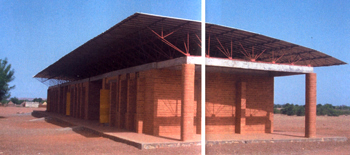
German trained architect, D. Francis Kéré, has designed a simple and beautiful mud brick school house in his homeland of Burkina Faso. More on the project at the German language website: www.fuergando.de
Translate to English at babelfish
Architecture, Art, Design, and Culture using of mud, clay, soil, dirt & dust.
German trained architect, D. Francis Kéré, has designed a simple and beautiful mud brick school house in his homeland of Burkina Faso. More on the project at the German language website: www.fuergando.de
Translate to English at babelfish
Ralph Patty, Chairman of the Agricultural Engineering Department, supervised the rammed earth research at South Dakota State College in the 1920s and 1930s. Patty’s research was published internationally as well as by SDSC and the USDA Rammed Earth Walls for Buildings- 1926 :Farmers’ Bulletin #1500.

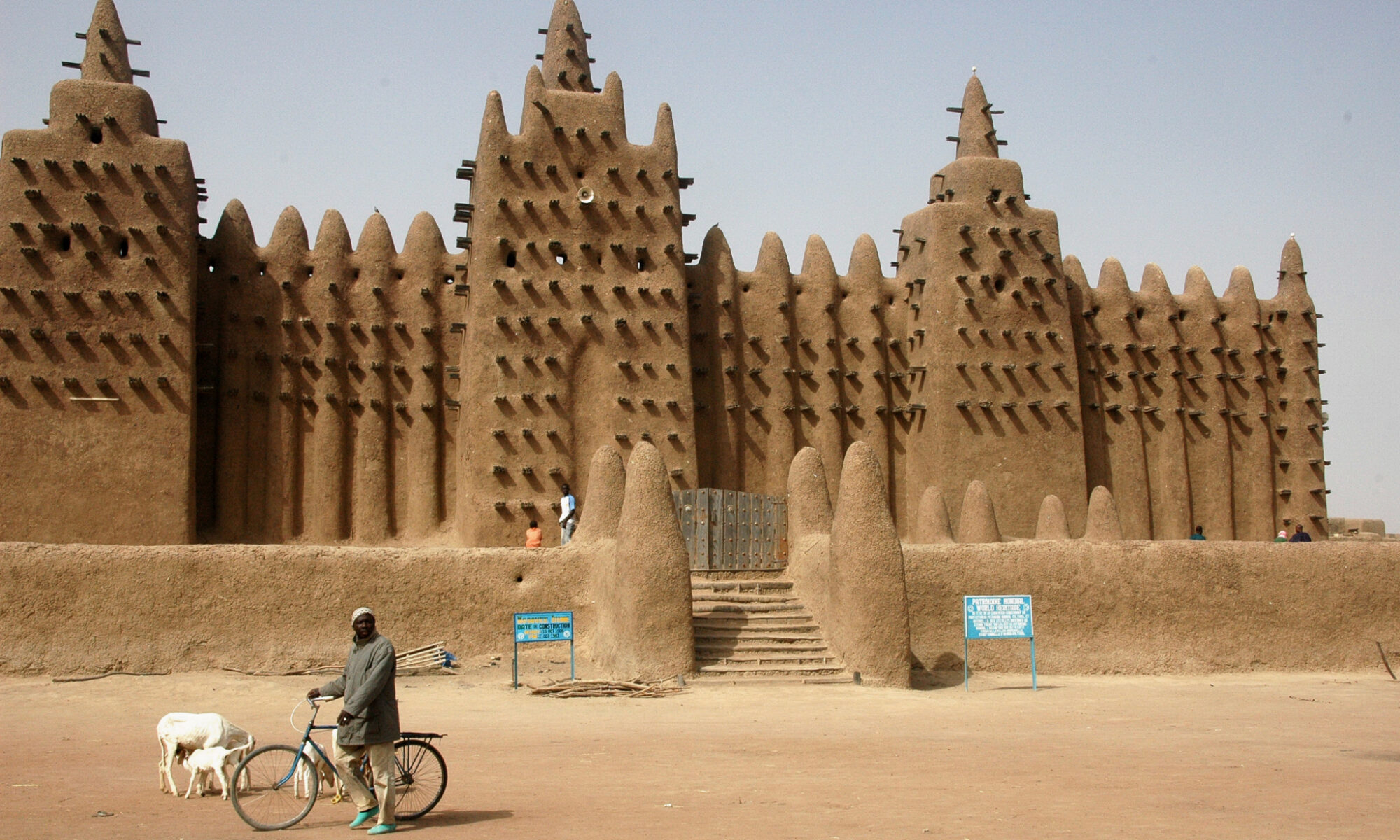
Banco: Adobe Mosques of the Inner Niger Delta by Sebastian Schutyser and Jean Dethier (author of Down to Earth) et al., is a beautiful book with photographs by Sebastian Schutyser that reveal a neglected African architectural heritage: village adobe mosques. His black-and-white images emphasize an artistic fusion of architecture and sculpture and exalt the strength and beauty of a craft that eludes globalization. The photos emphasize the grain and substance of clay smoothed by villagers’ hands or cracked by erosion, and highlight the solidity of the masonry and the sensuality of the textures. The texts that accompany these stunning pictures are by a leading expert on raw-earth architecture and by a major scholar on African vernacular architecture. Included is an appendix that documents all 500 of the principal adobe mosques of the Inner Niger Delta, with the names of the villages and geographical coordinates. For more information visit www.sebastianschutyser.com
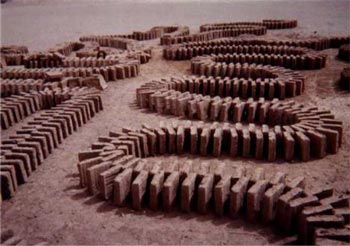
Sun dried mud bricks, called “Khesht” in Iran, are laid on their side to promote even drying. The patterns created in a landscape of mudbricks can also be considered as an aesthetic part of the process of building with earth. These bricks are being prepared for the restoration of the Naren Rampart in Yzad, Iran. Image by Dr. Hossein Massoud, 2001
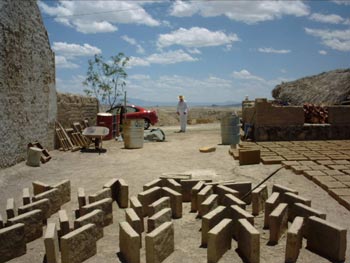
The pattern created by drying mud bricks, here in Ojinaga, Mexico, create a lanscape of building components that anticipate future processes. In the background is Simone Swan of the Adobe Alliance.
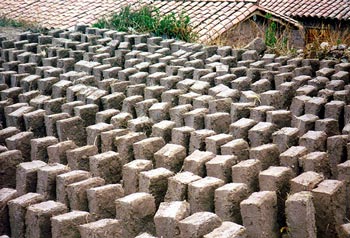
A field of adobes drying in Pisac, Peru.
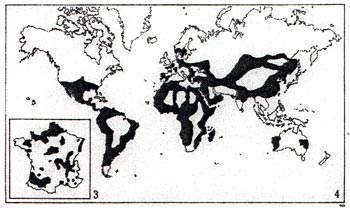
A map shows the areas on the planet where raw earth is used as a building material. The inset map on the lower left is France. More Earth Building Maps can be found at www.terracruda.com
Sentinel Plaza is an outdoor gathering place near Santa Cruz Linear Park whose dominant features are four rammed-earth monoliths that face Sentinel Peak.
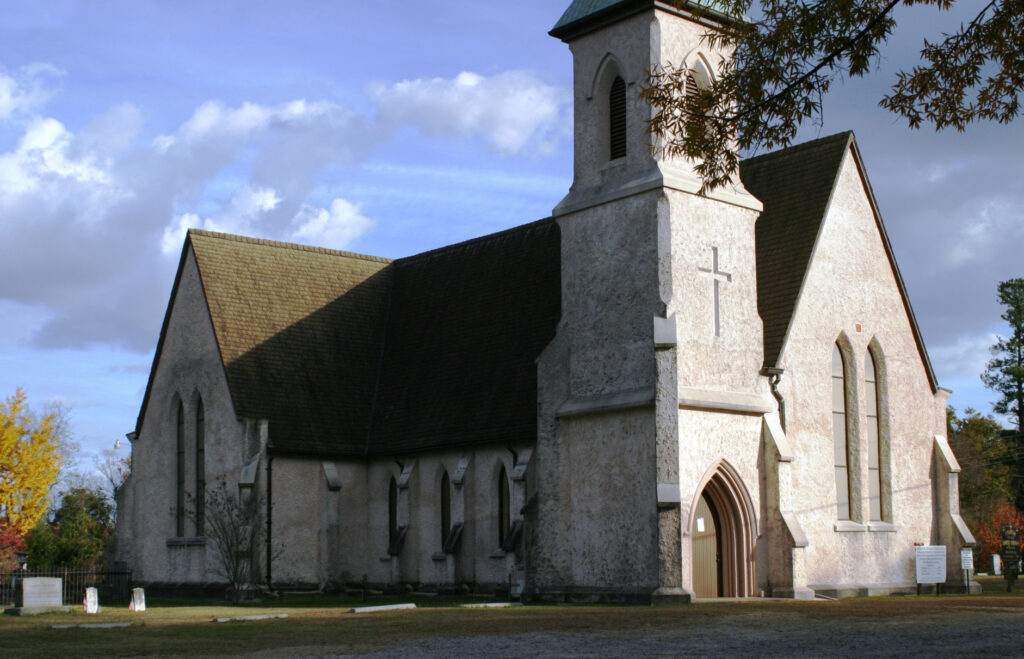
Leaders of the Church of the Holy Cross off S.C. 261 in Stateburg, a 150-year-old national landmark, sued both Orkin Exterminating Co. Inc. and Terminex Service Co. Inc. as well as an architect and contractor involved in the restoration of the church. The church, built between 1850 and 1852, was declared a national landmark in 1978. The building is of particular historic significance because of its unusual construction of rammed earth known as pise de terre.
More information available here: Holy Cross Church Restored
In the essay “The Renaissance of Rammed Earth” which was published in AMC Aspects magazine, January 2001, it is discussed that “Antonio Gaudi and Frank Lloyd Wright appreciated rammed earth. Gaudi showed great interest for the popular architecture. In 1884 he used rammed earth (called “tapial” in Spain) for the construction of the pavilions at the entrance to the farm of Eusebio Guell. Frank Lloyd Wright suggests rammed earth for the construction of buildings in his project for Broadacre City.”