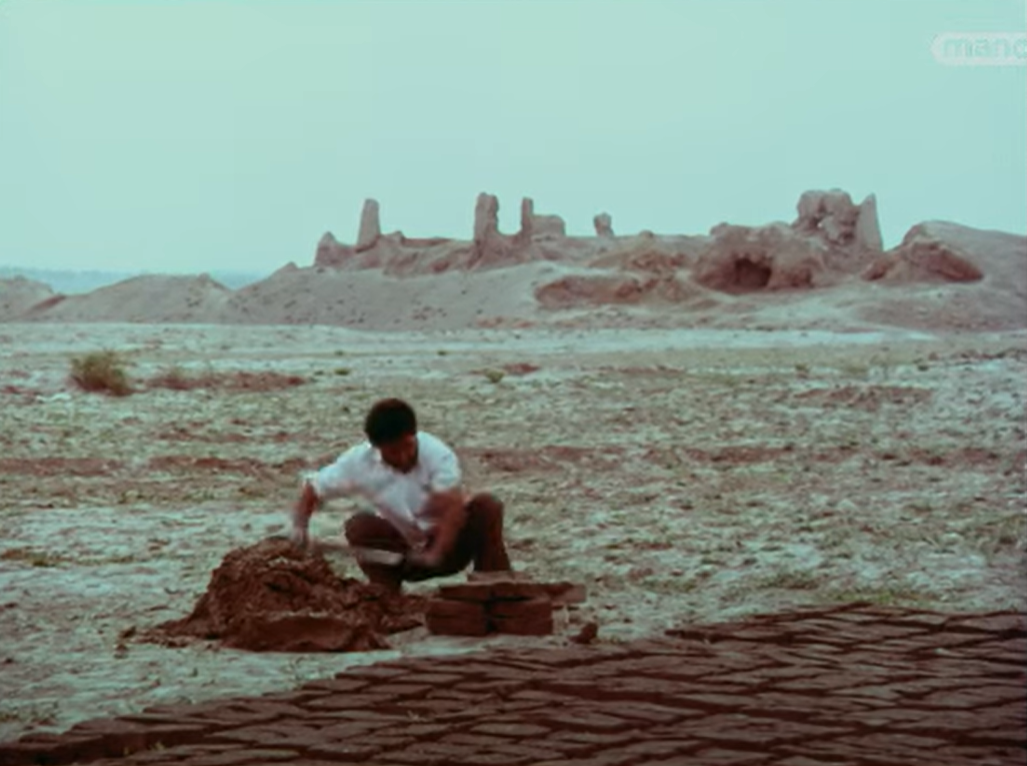
Haydar Yaghma, a humble yet prolific Iranian Poet, carved his legacy not only in verse but in the earth itself. Born into a life of labor, Yaghma spent his days shaping adobe bricks—a traditional craft in Iran’s sunbaked landscapes—while his nights were filled with the spirit of words and ideas. Despite his profession, Yaghma’s poetic talent soared; he composed over 5,000 verses that speak to the beauty of simplicity, the resilience of the working class, and the profound connection between humanity and the land. His verses, grounded in the experiences of everyday life, offer readers a raw and unfiltered view into the soul of a man who, though seemingly bound to the soil, found liberation in poetry. Haydar Yaghma remains an emblem of authenticity and passion in Persian literature, bridging the gap between the hands that labor and the mind that dreams.
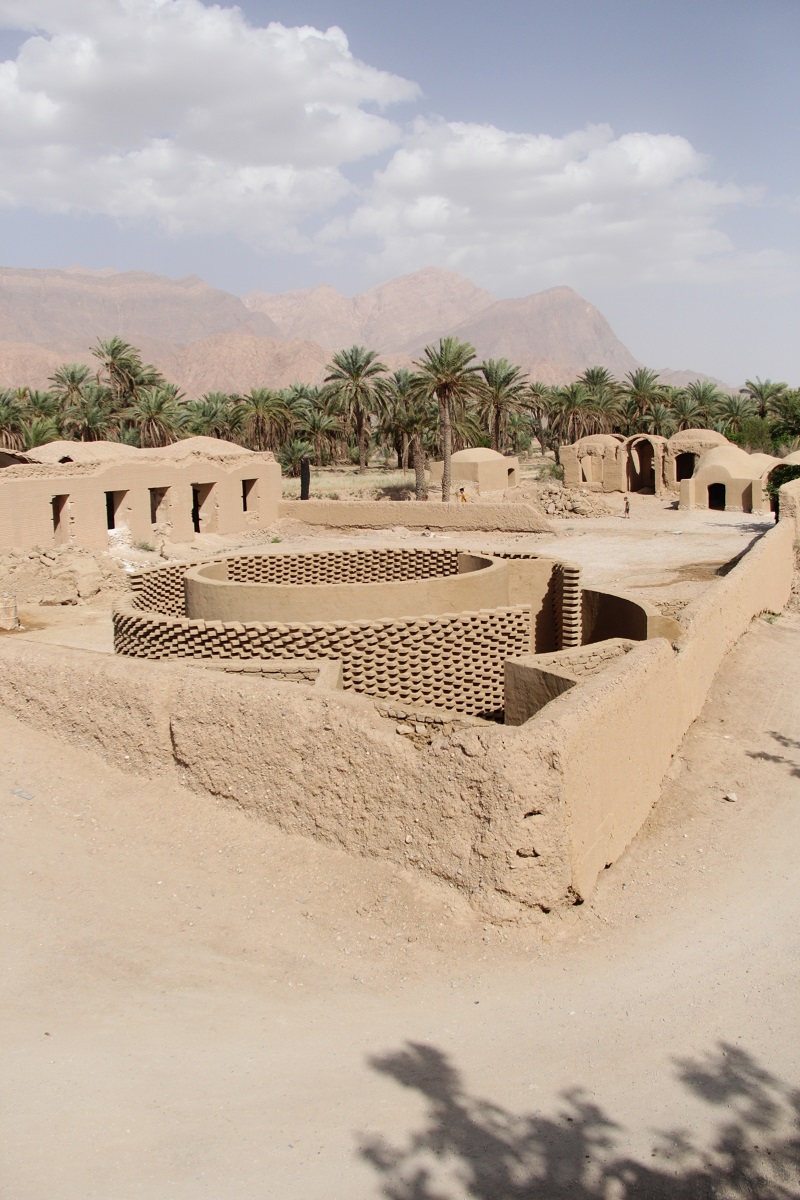
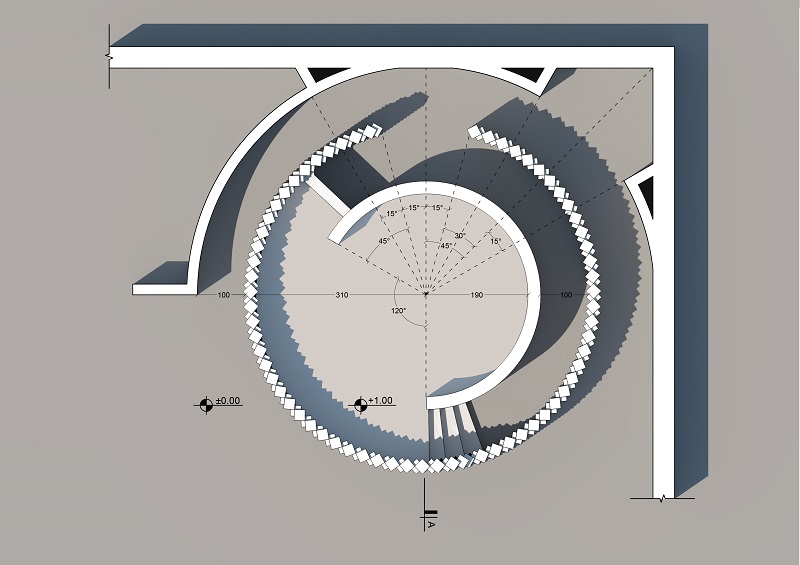
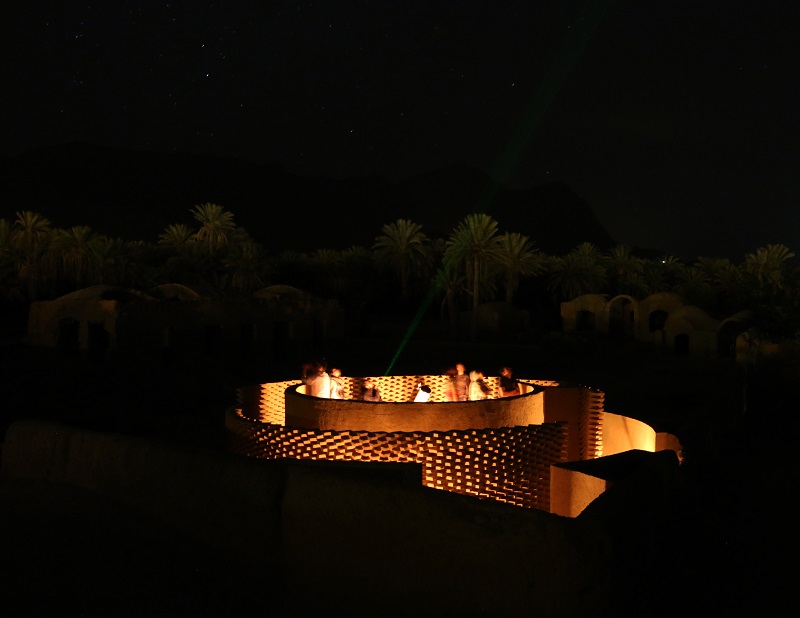
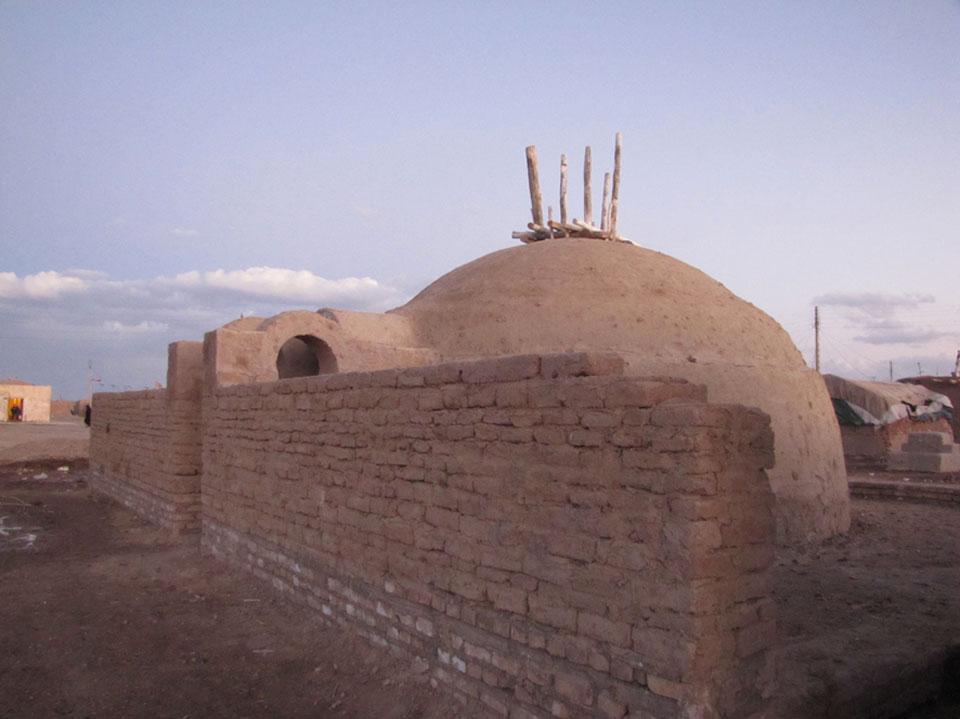
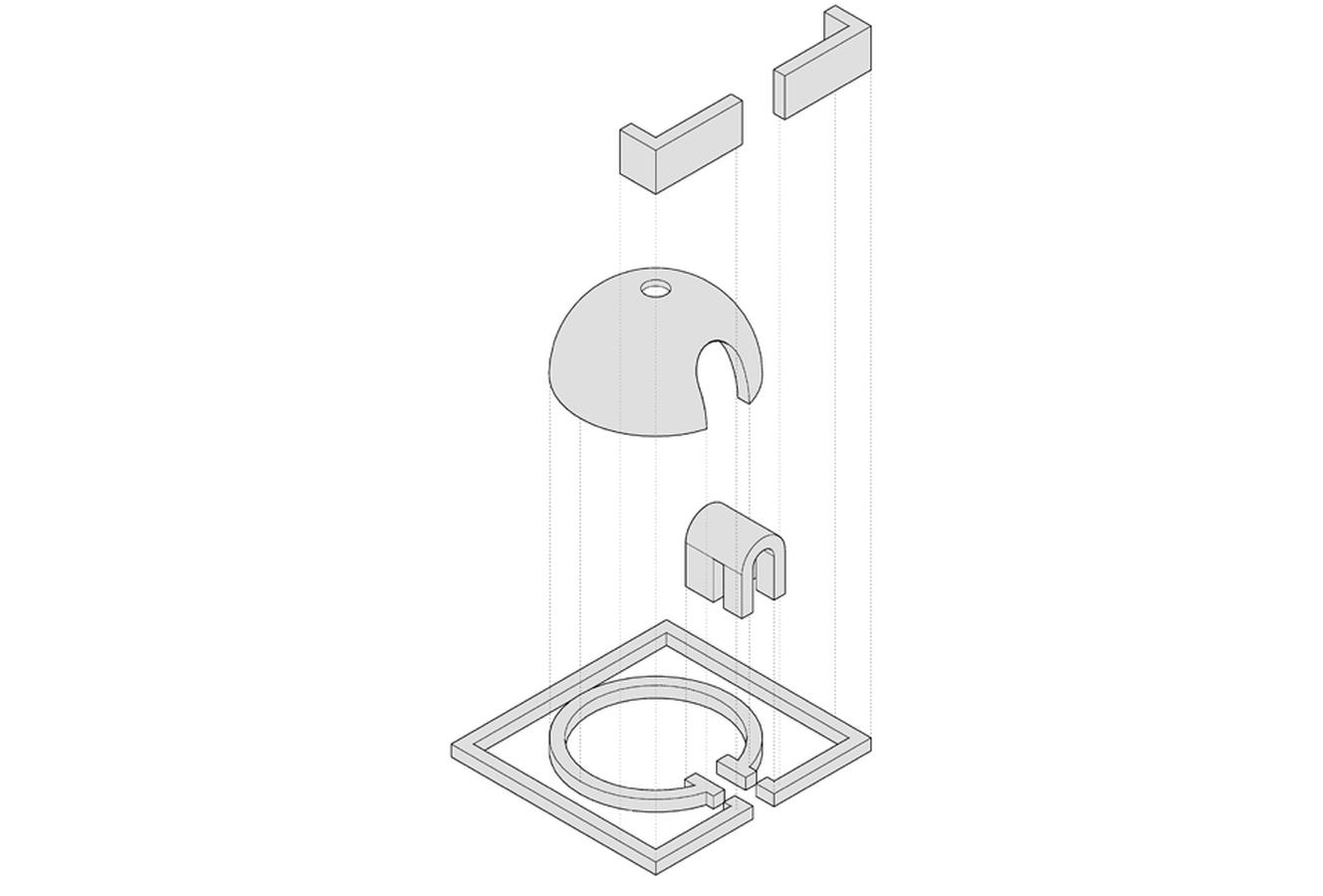
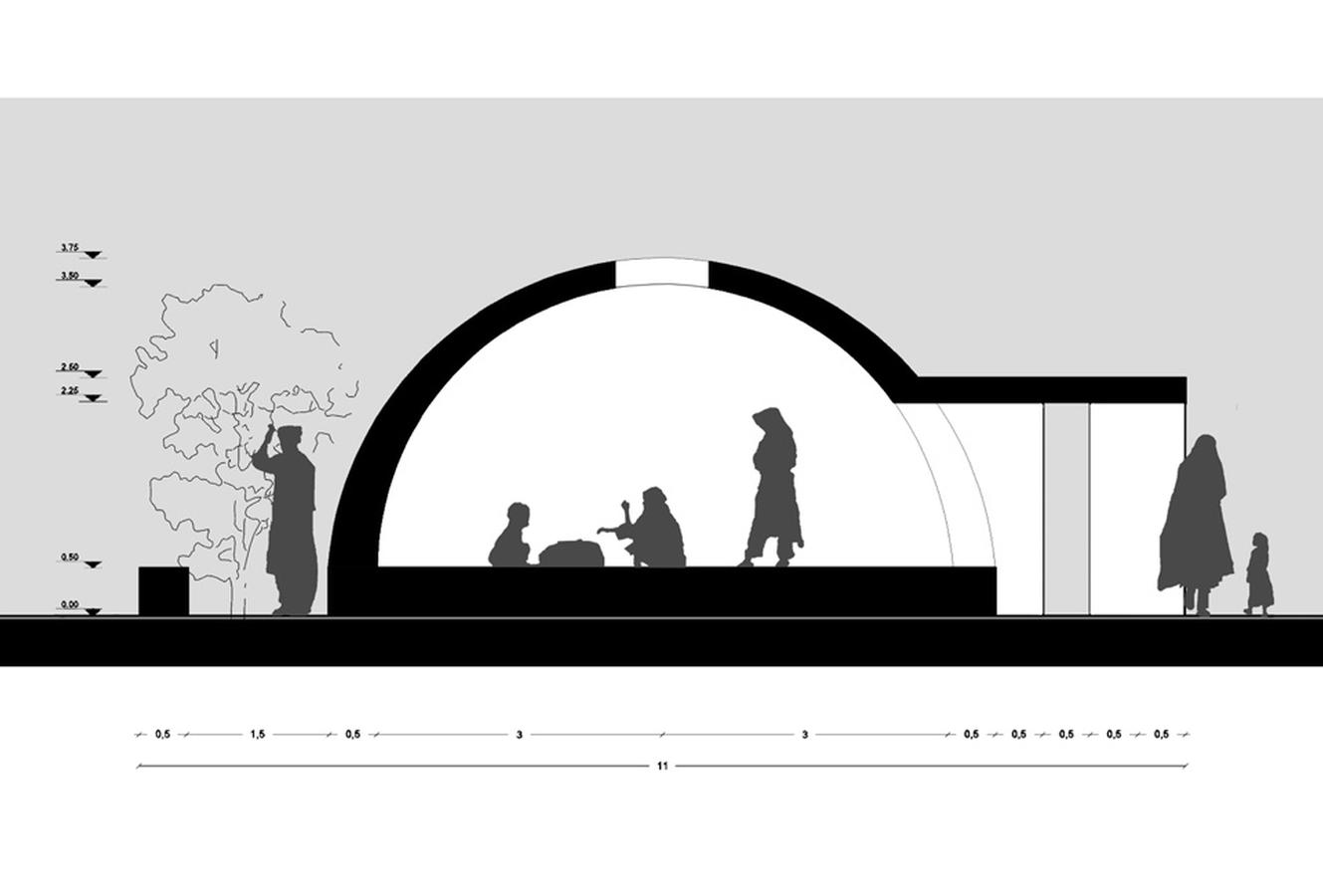
TheObservatory in the Desert is a public addition to a decaying mud village located in Esfahak, Iran, a village in the north-east of the country. The structure consists of mud brick and rammed earth walls, creating a concentric pattern that leads a person to the center raised platform between the highest walls; a perfect place for an observatory.
The project was conceived by the Contemporary Architects Association an organization based in Tehran, dedicated to “creating an environment where its teachers and students, equipped with a deep understanding of architectural knowledge, history, and theories, engage in meticulous observation of the current state with an analytical and research-driven approach,” and the Esfahak Mud Center (E.M.C) . The main lead of the project was Pouya Khazaeli, founder of Esfahak Mud Center (E.M.C), an organization whose aim is of reviving traditional clay and mud construction in Esfahak Village.
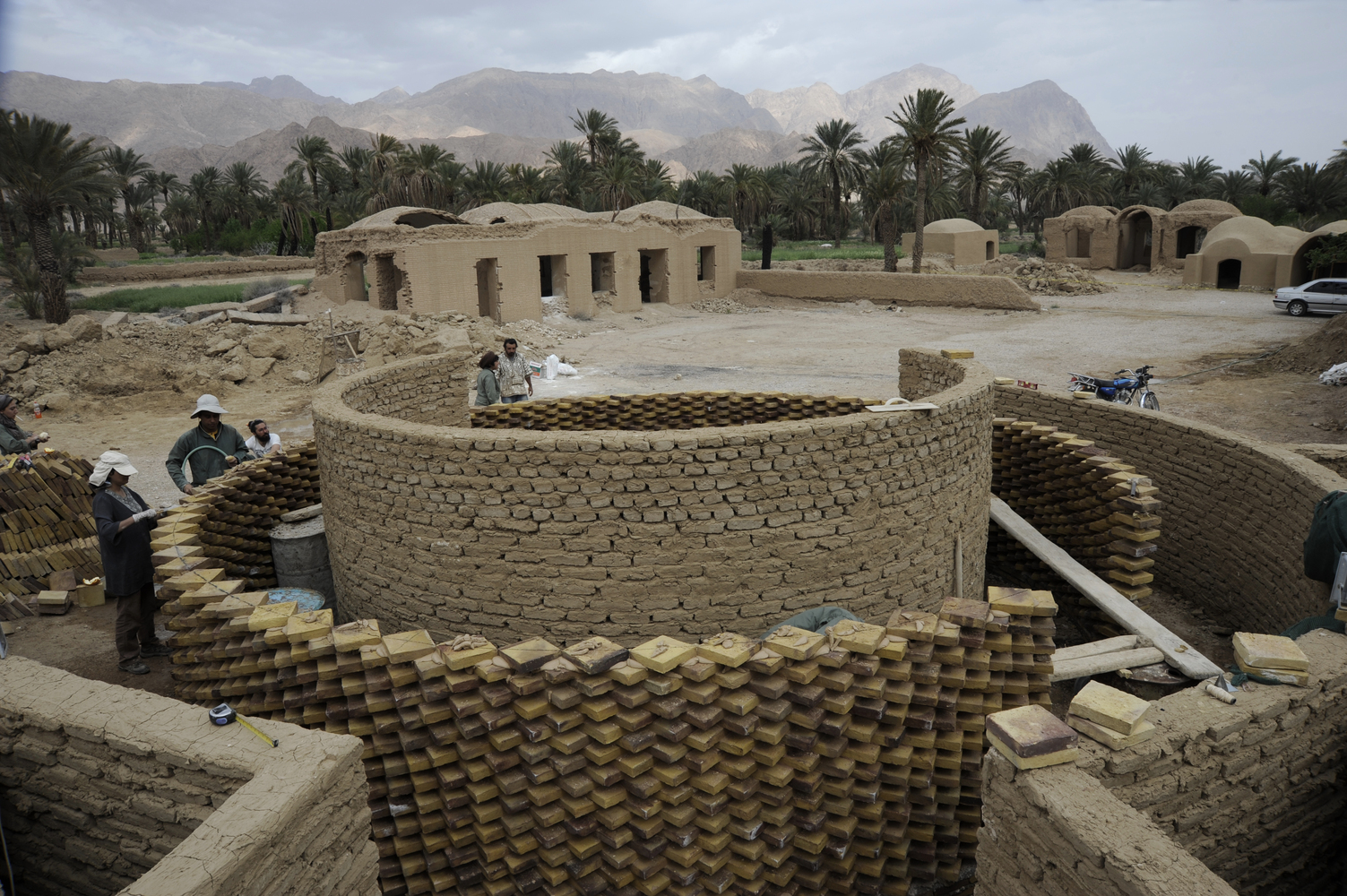
Together with selected students of the CAA, the group designed a model with clay to re-enact the process of building the structure. After understanding the patterns and modes of building, the group traveled to Esfahak and began moulding 20cm x 20cm bricks out of the found mud. As the moulds dried construction began with the original group, however eventually community members of all size, ability, and age came to the need of the designers.
Food was shared, stories were told, tea was served, and the process of building and designing turned into a community process; an intention the architects never set forth with.
The special 20cm x 20cm bricks were placed on the outside of the inner center at 45 degree rotation, reflecting the essence of the palm trees surrounding the space. A curved single person entry way leads you to the center of the structure, where the sky is framed by the circular opening.
The project inspired and engaged the locals, bringing life to an area that was surrounded by decaying structures and rubble. The group even received a “is this for us?” question from locals, with a resounding answer of “yes”. With all of the additional help and support from the community, the project took about 10 days. The Observatory in the Desert is a beautiful example of a cultural, communal, and material specific piece of architecture that was built locally by hand and engaged with active participants of all backgrounds.
Size: 69 square meters
Year: 2017
Photos: Anis Eshraghi
Architects: Amir Ali Zinati, Behnaz Motarjam, Aydin Emdadian, Sonia Begi, Bahar Mehdipour, Hamidreza Malekkhani, Ramtin Ramezani.
Advisor: Puya Khazaeli
Local colleagues: Mohsen Mehdizadeh, Mostafa Yaqoubi, Hossein Bagheri, Mehdi Hosseini
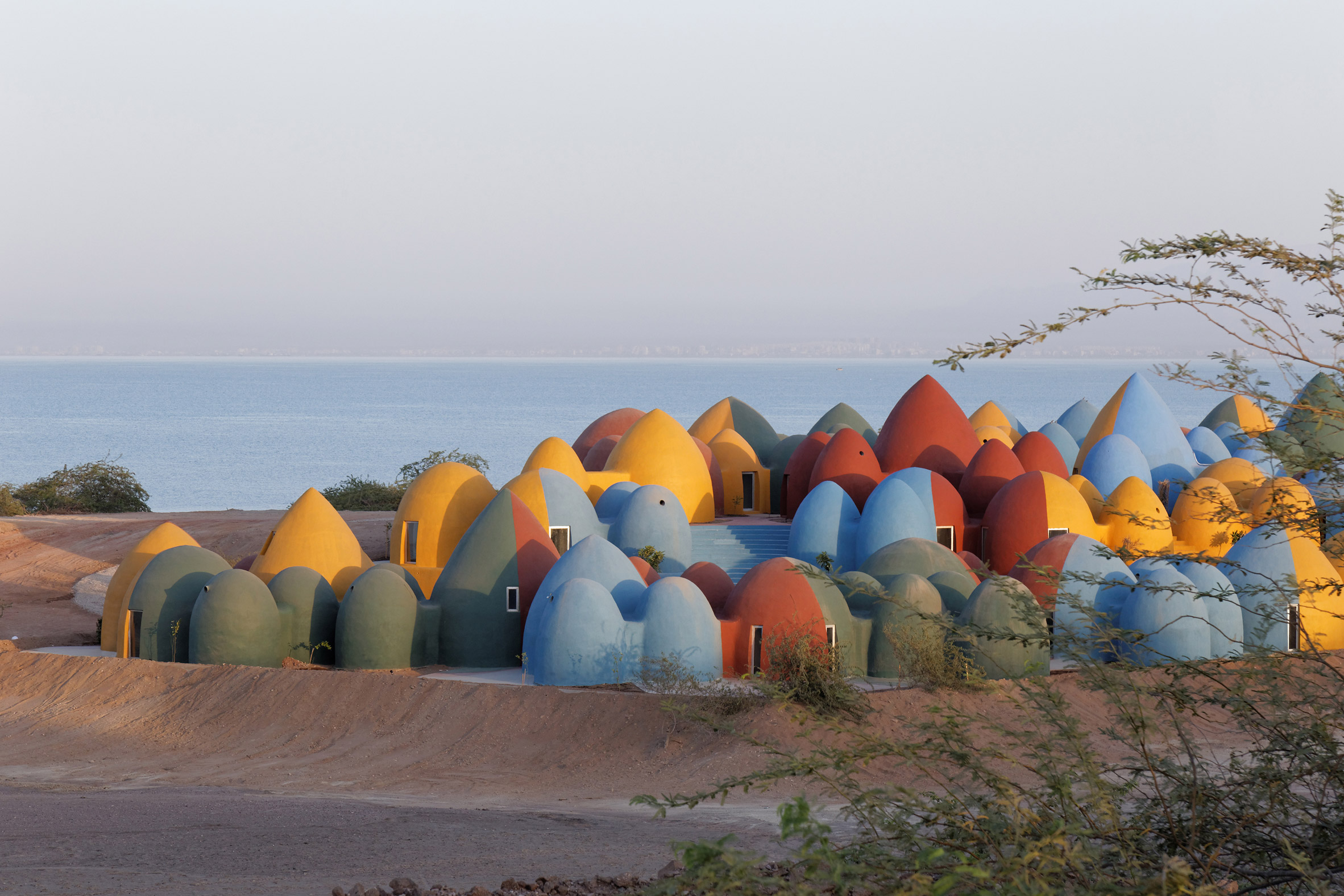
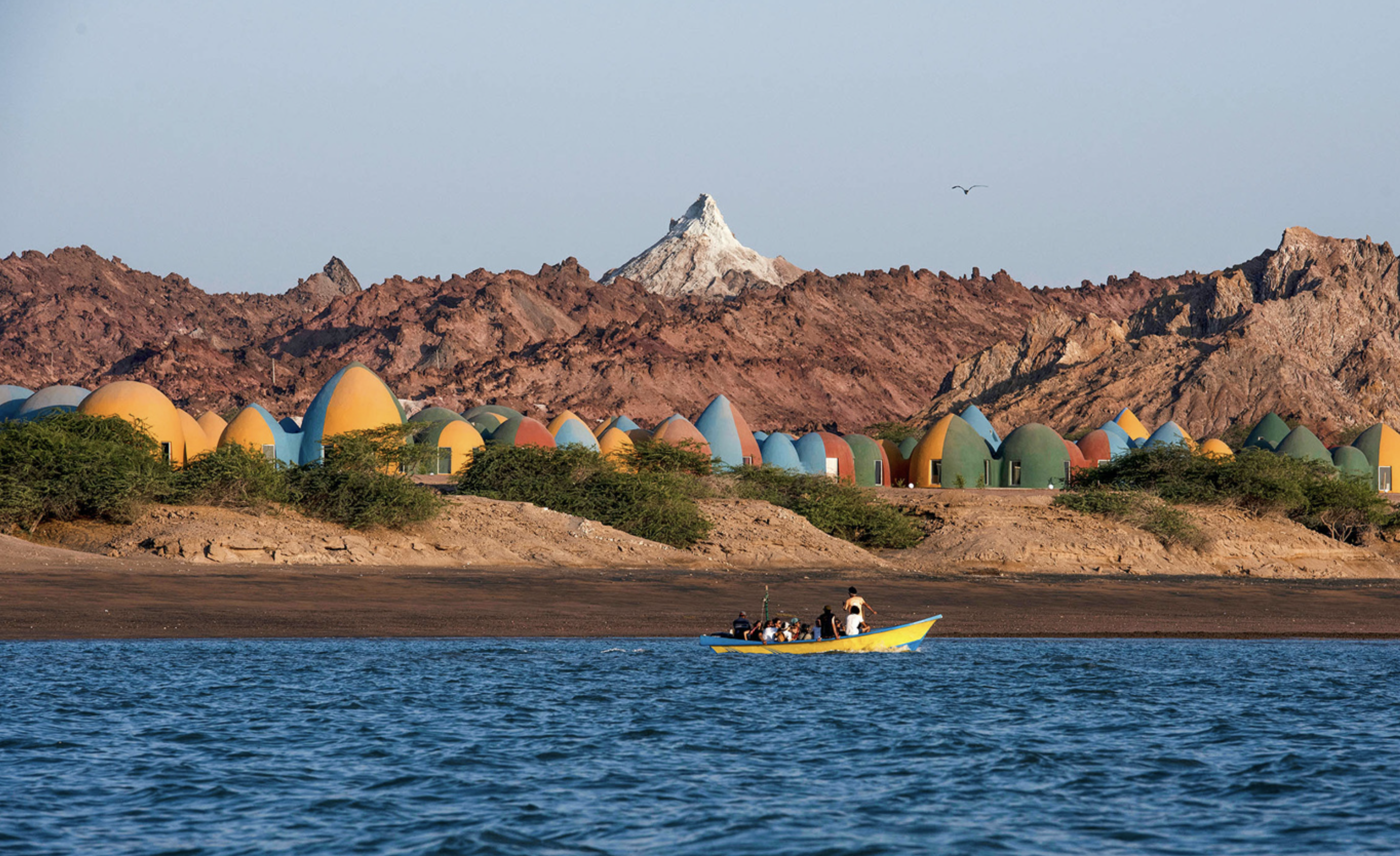
Iranian practice ZAV Architects drew on the colourful landscape of the island of Hormuz for this holiday community that is housed in around 200 brightly colored domes overlooking the Persian Gulf.
The project is a multitude of small-scale domes built with the superadobe technique of Nader Khalili, the innovative and simple technique using earth and sand packed into bags. Domes are familiar structures in the region. Their small scale makes them compatible with the building capabilities of local craftsmen and unskilled workers, which have been prepared for this project with previous smaller projects. Today they are trained master superadobe masons, as if Nader Khalili multiplied exponentially.
Built in an Afghan Refugee Camp in Kerman, Iran, the 100 meter square meter domed shelter is comprised of approximately 6,000 mud bricks.
Pouya Khazaeli, principal of Rai Studio and architecture professor at Azad University, Tehran and Ghazvin, notes: “Social sustainability in design is our main focus area here. It means to study how these refugees live, communicate, the meaning of privacy in their live, which materials they prefer and use for construction, which kind of construction techniques they use themselves, how much they spend normally to construct their own shelters….”
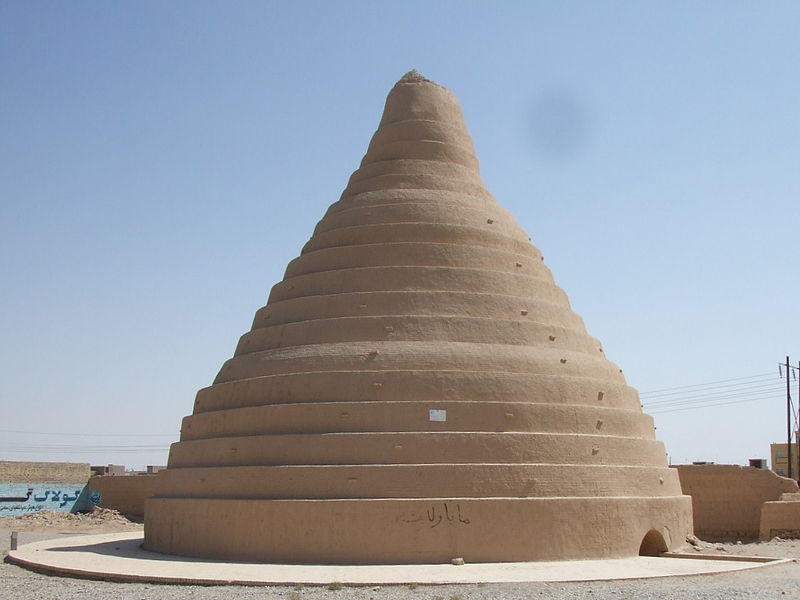
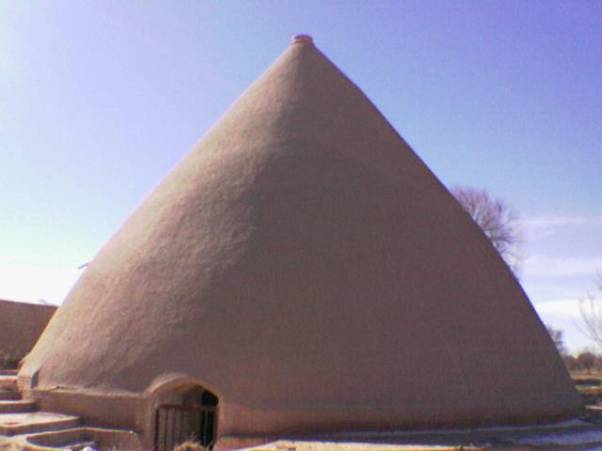
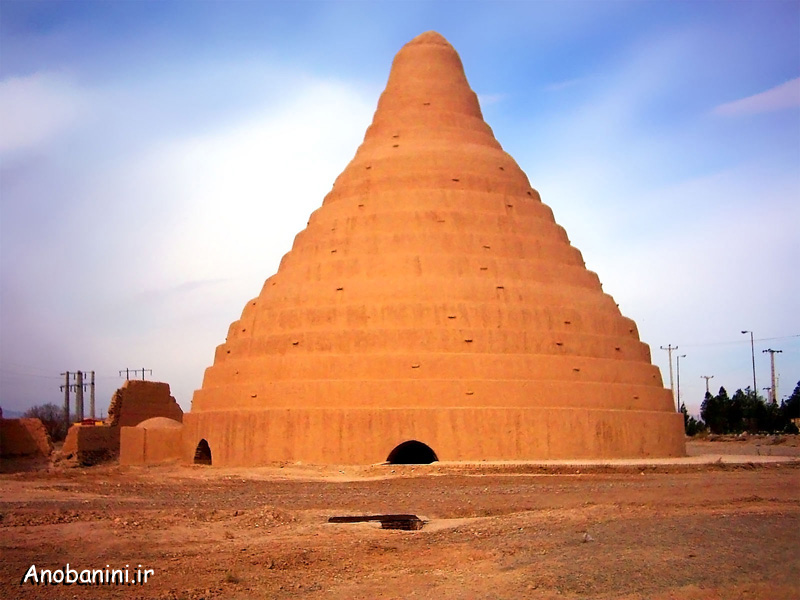
By 400 BC, Persian engineers had mastered the technique of storing ice in the middle of summer in the desert. The ice was brought in during the winters from nearby mountains in bulk amounts, and stored in a Yakhchal, or ice-pit. These ancient refrigerators were used primarily to store ice for use in the summer, as well as for food storage, in the hot, dry desert climate of Iran. The ice was also used to chill treats for royalty during hot summer days and to make faloodeh, the traditional Persian frozen dessert.
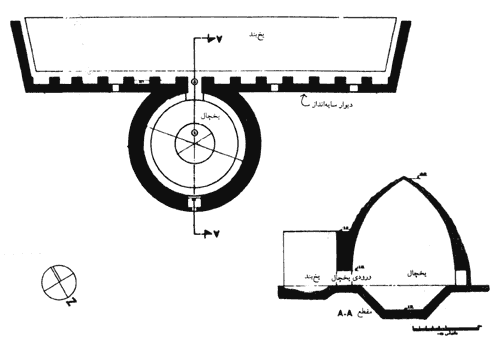
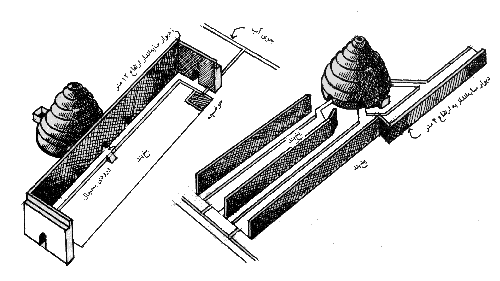
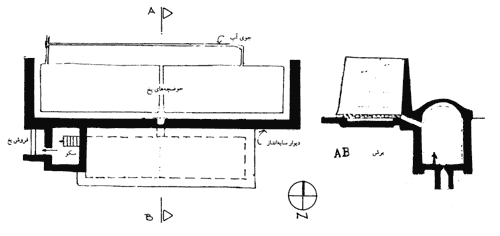
Aboveground, the structure is comprised of a large mud brick dome, often rising as tall as 60 feet tall. Below are large underground spaces, up to 5000m³, with a deep storage space. The space often had access to a Qanat, or wind catchand often contained a system of windcatchers that could easily bring temperatures inside the space down to frigid levels in summer days.
The Yakhchal have thick mud brick walls that are up to two meters thick at the base, made out of a special mortar called s?rooj, composed of sand, clay, egg whites, lime, goat hair, and ash in specific proportions, and which was resistant to heat transfer. This mixture was thought to be completely water impenetrable.
Meraji Yakhchal
The massive insulation and the continuous cooling waters that spiral down its side keep the ice stored there in winter frozen throughout the summer. These ice houses used in desert towns from antiquity have a trench at the bottom to catch what water does melt from the ice and allow it to refreeze during the cold desert nights. The ice is broken up and moved to caverns deep in the ground. As more water runs into the trench the process is repeated.
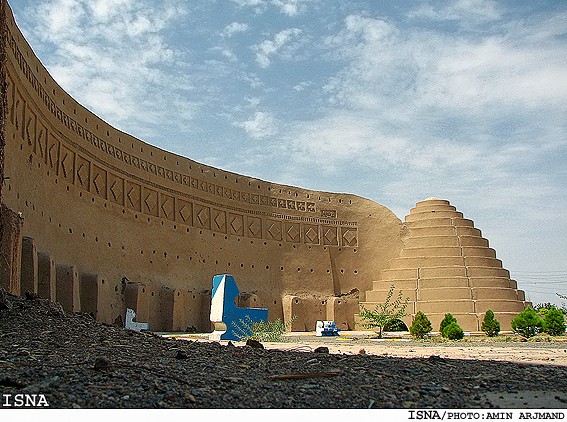
The twin ice-pits on Sirjan, Kerman Province, are surrounded by high walls and were constructed 108 years ago with mud-brick, the ice-pits are surrounded by high walls.
The Historical airport of Maybod in Yazd Province has been suggested by the Maybod Research Center as the center for the Adobe International Research Institute. Considering that Iran is an earthquake-prone country, establishing an international research institute for studying earthen structures would provide a proper basis for reengineering and strengthening of these structures. “Taking into account that Iran has the highest number of earthen constructions in the world, this decision would provide international facilities for preserving these monuments. Earthen constructions are parts of Iranian traditional architectural style which has a history of over 8000 years. Establishing an international center in Iran would promote Iran’s technical abilities in regards to earthen structures. Keeping in mind that Iran is an earthquake-prone country, the establishment of this center would also provide an opportunity to reengineer and strengthen our clay structures according to the international standards,” said Mohammad Hassan Khademzadeh, head of Mega Projects.
Earthen architecture in Iran and Central Asia: its conservation, management, and relevance to contemporary society, a celebration of the life and work of Robert Byron, will be held at the Institute of Archaeology, University College London, 12-13th November 2005. The aim of the conference is to bring together individuals involved in the conservation and management of the archaeological and architectural legacy of earthen architecture in Iran and Central Asia, to discuss current approaches, practical applications, new projects and the impact of work on local communities and contemporary society.
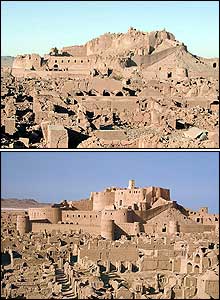
Some 26,000 lives were lost in the earthquake of 26 December last year, which levelled most recent housing, leaving about 80,000 people homeless, and damaged the ancient Bam Citadel. More:
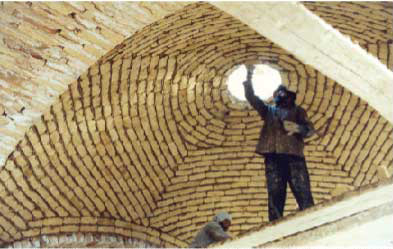
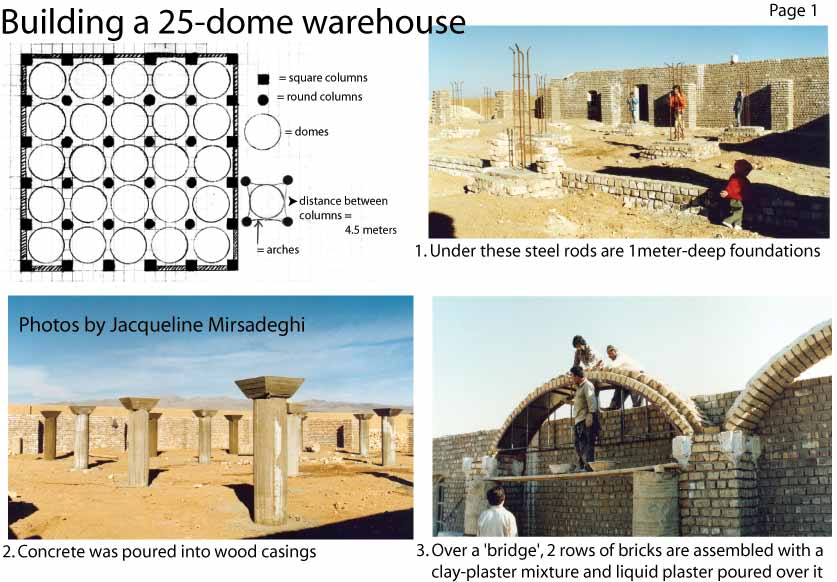
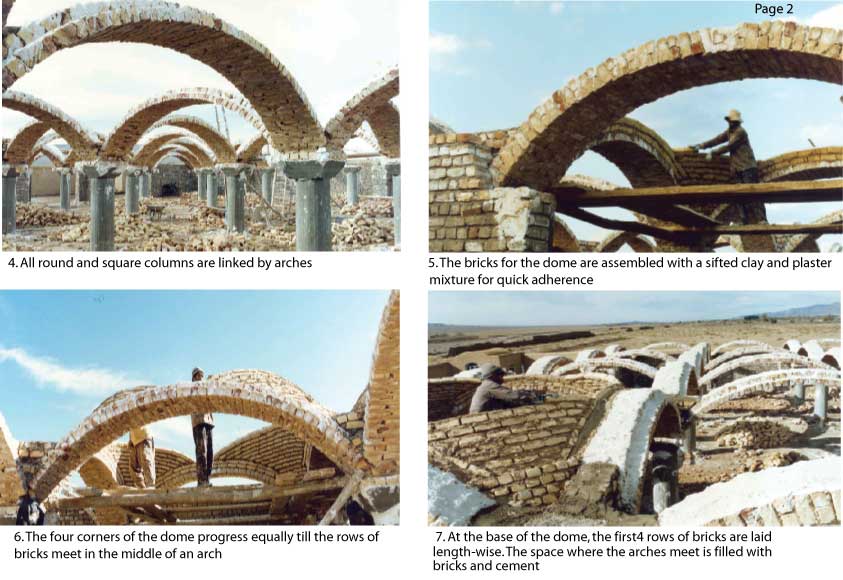
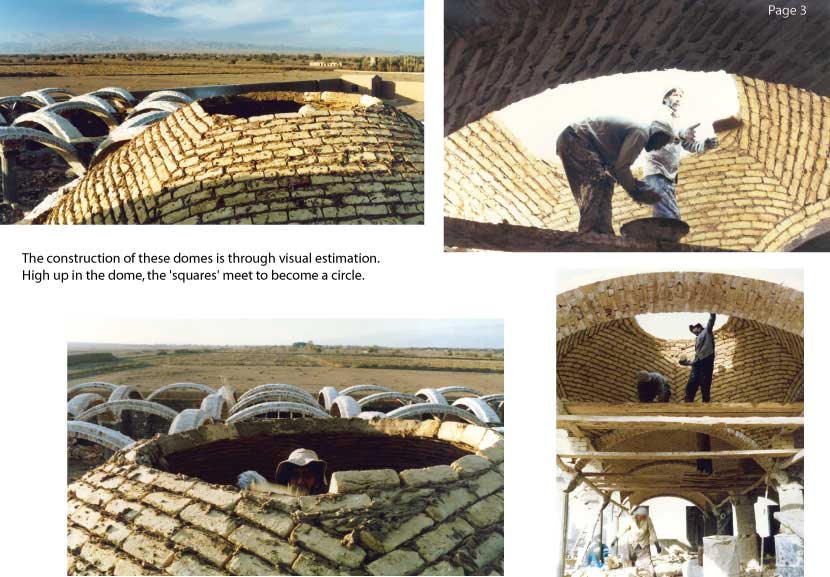
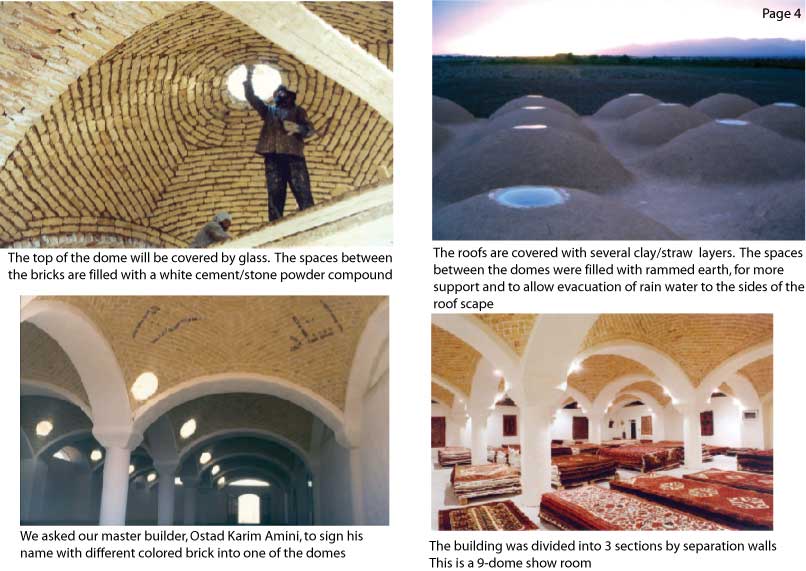
The photo above shows one of 25 domes used to construct a warehouse in Saveh, Iran (Markazi province, 130km south-west of Tehran) which has a climate with cold winters with occasional sub-freezing
temperatures and snow because of the altitude (1200 meters). The average rainfall is 40 millimeters/year. The materials used are cooked bricks, cement, clay, plaster, white cement as finish for inside walls, lime mixed with earth in the foundations, clay/straw for wall and roof insulation which enclose 620 square meters of space. The cost of construction (1999) was 50,000 US$ and took a total of 3 months to build. On average, every 2 days 3 domes were completed. The warehouse was constructed by Jacqueline Mirsadeghi. See more construction photos: | 1 | 2 | 3 | 4 |