Earth USA

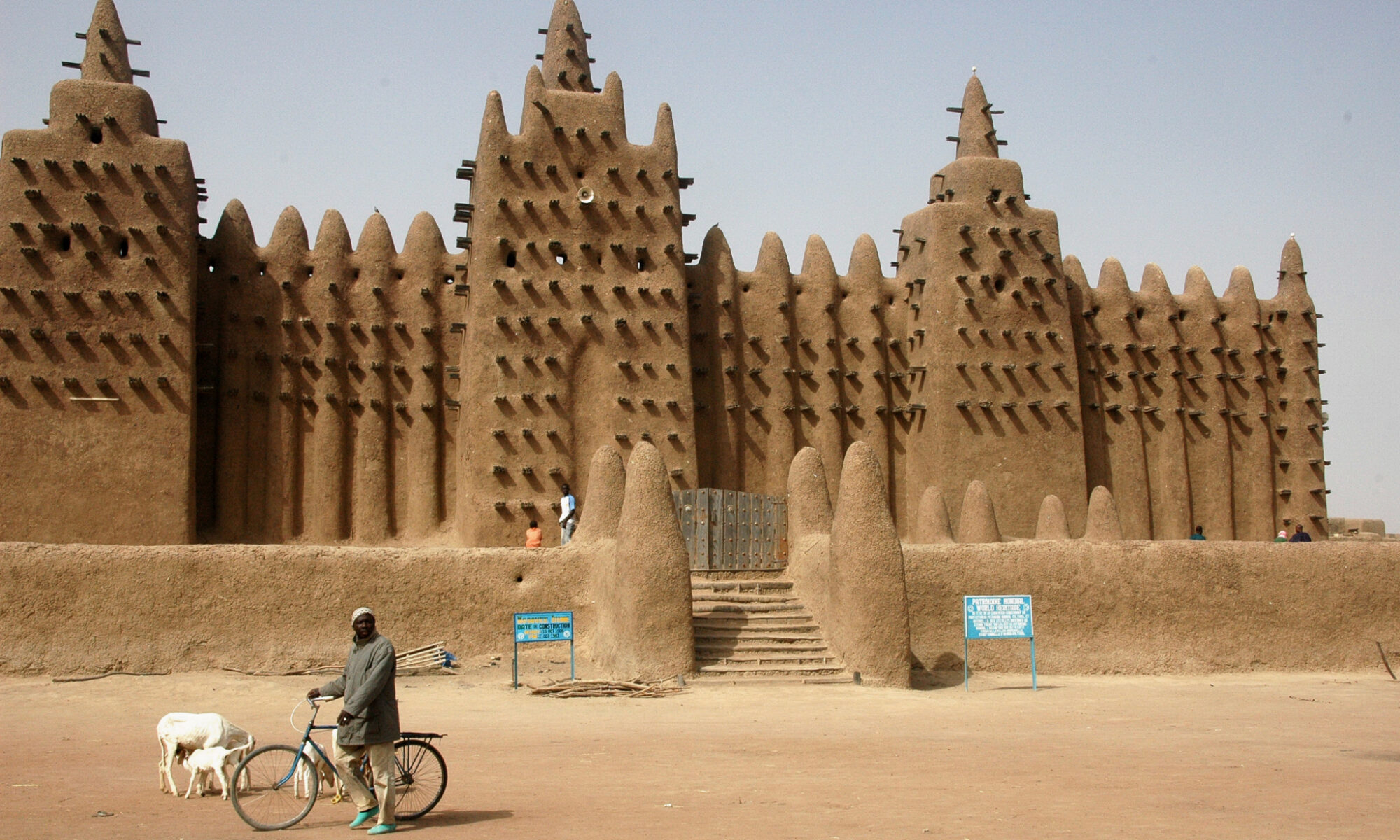
Earth USA is the biennial international conference on earthen architecture organized by Adobe in Action (AinA) in Santa Fe, New Mexico. It brings together architects, engineers, builders, and researchers to share advances in clay-based construction. Earth USA began in 2003 as “Adobe USA,” first held at Northern New Mexico College by the Adobe Association of the Southwest and dedicated to Paul Graham McHenry, and it has continued on a biennial basis since then. In 2011, the name formally changed to Earth USA for the sixth conference, held in Albuquerque, and since 2013 all subsequent conferences have taken place in Santa Fe. Key milestones include the adoption of a broader earthen-material scope beyond adobe, as well as expanded international participation.
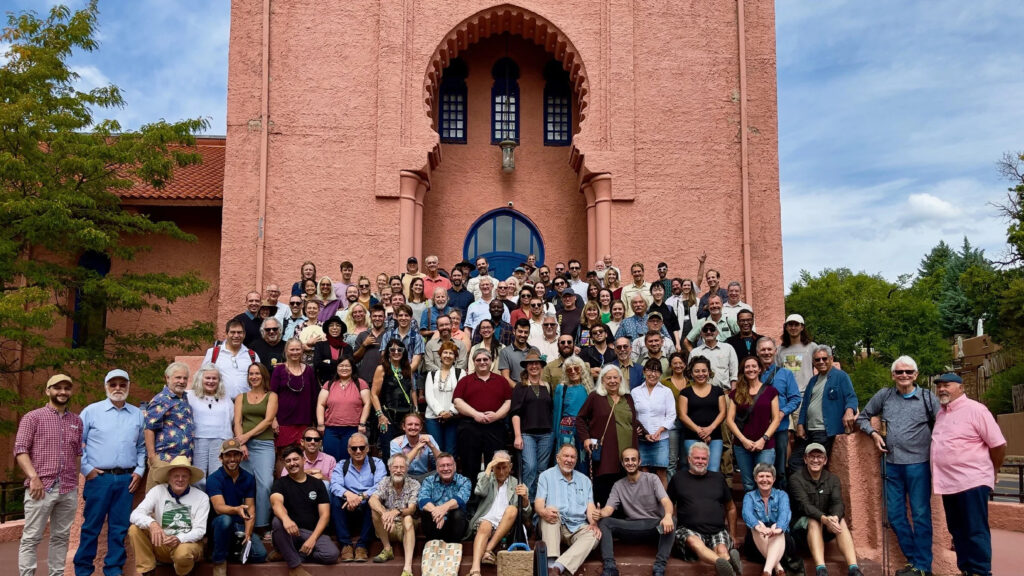
The Scottish Rite Center hosts the conference, reinforcing the event’s Southwestern adobe heritage. The Santa Fe venue also underscores the material focus: the Alhambra Theater is a pink adobe stucco building, and local expertise in adobe construction is abundant. Site tours have included Pueblo ruins, ancestral Spanish missions, and owner-built adobe homes throughout northern New Mexico. Typical Earth USA activities have featured on-site workshops, such as plastering demonstrations, as well as earthen installations; for example, past Earthbuilders’ Guild teams have built mud-brick stages and art displays on-site. In sum, the conference’s materials and form revolve around clay-rich architecture, celebrating both the traditional thick earthen walls of Santa Fe’s historic districts and cutting-edge earth technology.
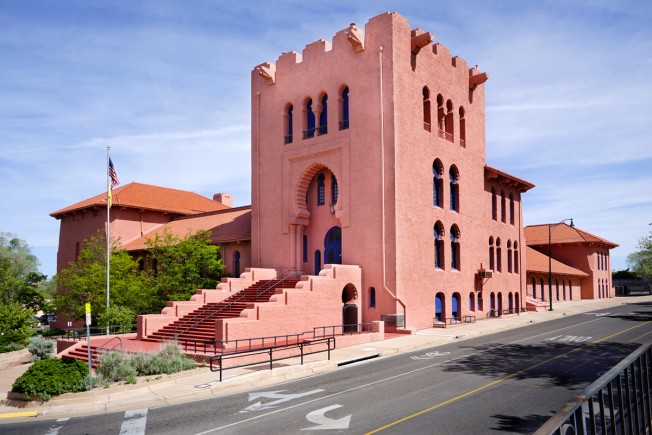
Earth USA is run by AinA, a New Mexico 501(c)(3) nonprofit organization dedicated to adobe and earthen-building education. AinA was founded by Mike Lopach and launched Earth USA to empower owner-builders. For Earth USA 2026, AinA’s Lisa Morey and Dan Krause co-preside on the board of AinA, and the Executive Director is Kurt Gardella, a certified adobe instructor who studied under Quentin Wilson at Northern New Mexico College. Gardella holds adobe construction certifications and leads AinA’s certificate program. He has been “a major organizer of Earth USA” while also teaching owner-builder courses. Lisa Morey is a civil engineer and designer, and co-founder of Colorado Earth LLC. She is the author of Adobe Homes for All Climates and holds a patent for reinforced adobe brick walls. Dan Krause is a retired ASU professor who became enamored with adobe while living in Arizona. He designed and built two of his own adobe homes, earning AinA’s Adobe Construction certificate in 2020. Collectively, the organizers combine academic and practical expertise to network experts, educate practitioners, and advance earthen construction worldwide. 
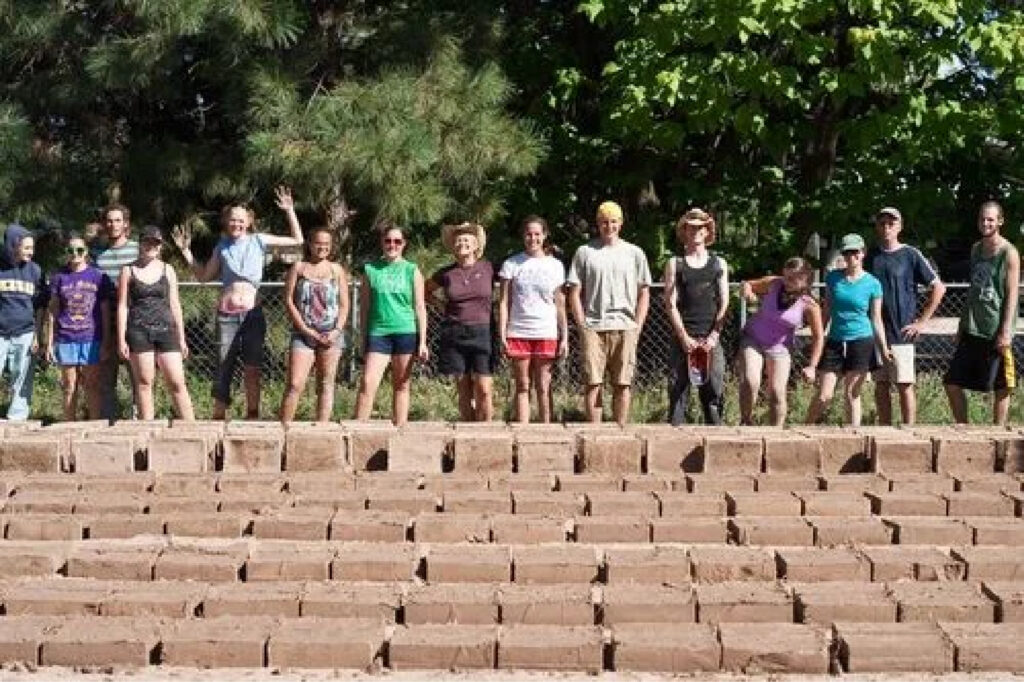
Each Earth USA conference follows a structured program with three days of presentations and posters, along with associated social and field activities. The format typically includes a Friday welcome keynote, all-day podium and poster sessions from Friday through Sunday, and Sunday afternoon tours to regional earth-building sites. For example, Earth USA 2024’s schedule featured invited talks on topics ranging from flood-proof adobe shelters to waste-earth reuse and seismic earth block design, alongside panels on owner-builder case studies and clay plaster techniques. All conferences include a Friday night reception sponsored by the Earthbuilders’ Guild and guided tours to adobe missions, historic homes, and new earth projects on Sunday. The scope of subjects is broad, and organizers note that the program reflects a wide field of interest, including adobe, rammed earth, compressed earth block, cob, and essentially any method that uses clay as a binder.

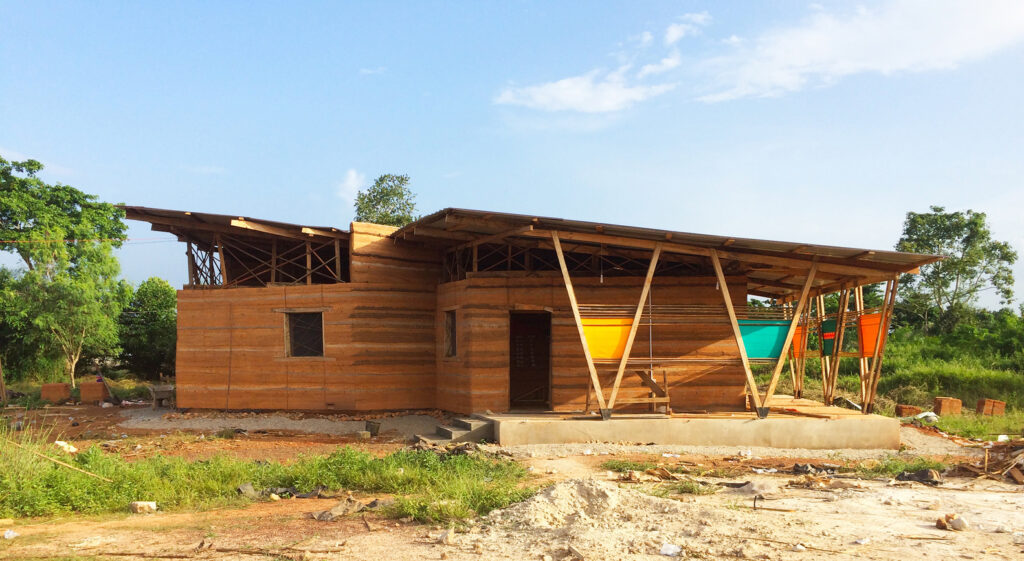
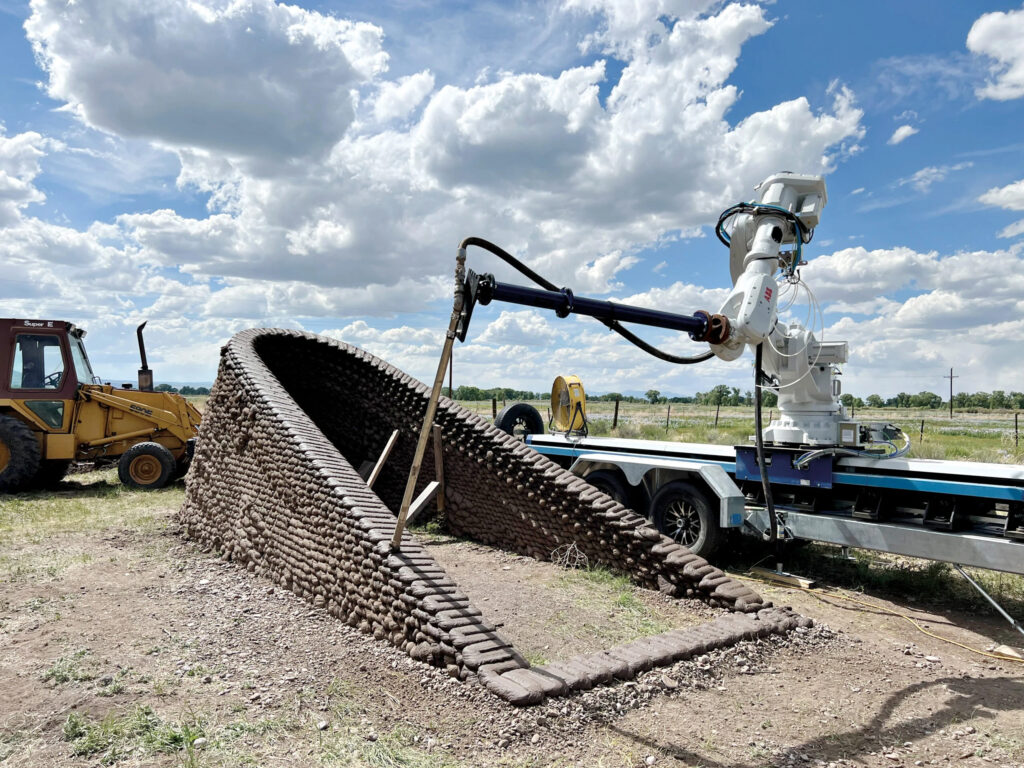
Key themes encompass the use of sustainable materials, including earth plasters and stabilized blocks; advancements in modern fabrication techniques such as 3D printing and robotics in earthen architecture; building science considerations ranging from thermal performance to seismic resilience; historic preservation; and social projects focused on affordable housing and owner-builder training programs. For instance, Earth USA has featured a keynote from, “Mud Frontiers,” by Ronald Rael (UC Berkeley) on 3D-printed earth architecture, as well as a session on a Ghanaian rammed-earth housing prototype, “Kente House,” by Angeles Hevia. Other sessions have addressed codes and policy, including Ben Loescher on U.S. earthen masonry standards and Stephen Colley on adopting adobe in building codes. Topics also include education, such as introducing clay into architecture curricula, and innovation, including rotational tampers for rammed earth.
Earth USA is attended primarily by architects, engineers, and builders interested in sustainable construction, but also by anthropologists, code officials, and environmental advocates. The gatherings are intentionally international and multidisciplinary, as reflected in a speaker roster that includes talks on building practices from India, Japan, and Norway. Attendees leave with a sense of community, supported by nightly informal receptions and a vibrant email newsletter, EarthUSA News, which keeps participants connected year-round. In sum, Earth USA operates as a volunteer-driven conference in which the organizing committee handles logistics and content curation, while academic partners disseminate the findings.

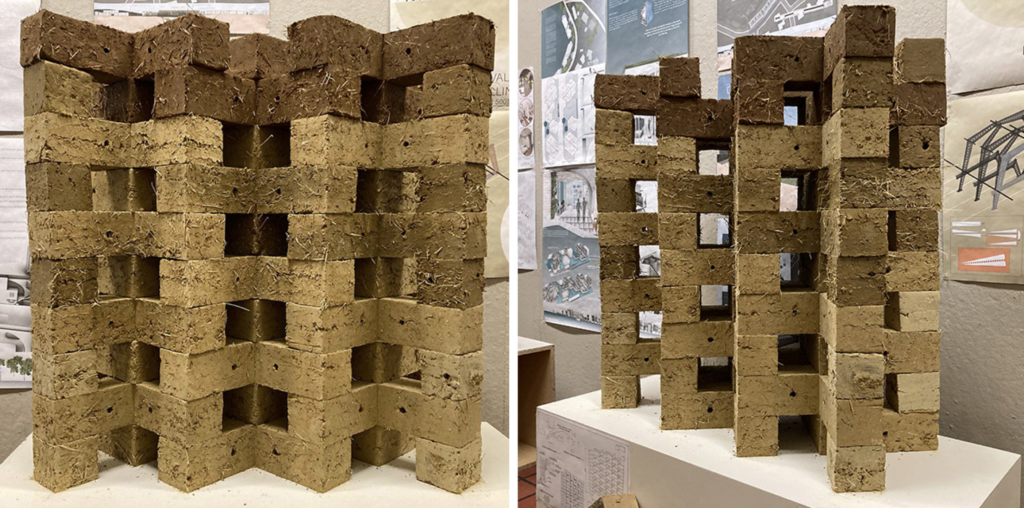
The program is fully documented in the conference proceedings and often carries American Institute of Architecture (AIA) continuing-education credits. Speakers come from universities, nonprofits, governments, and industries worldwide, and recent years have seen participants from 15 to 20 countries. Poster sessions provide a venue for shorter papers on topics such as material testing, vernacular research, and life-cycle analysis. Throughout, the conference emphasizes process, including peer-reviewed abstracts, international volunteer committees, and field demonstrations, as much as the building form itself. Many sessions delve into construction processes such as mix design, compaction, and curing, while others focus on form-finding and earth structures shaped by heritage or innovation.
As an organization, AinA solicits abstracts internationally through a call for papers reviewed by experts and publishes proceedings. For 2026, for instance, abstracts were due in February 2026 and full papers in June 2026. Registration is open to professionals, students, and owner-builders. Earth USA’s inclusive approach is also reflected in its leadership; for example, owner-builder Ethan Novikoff both presented and served on the AinA board, bridging practitioner and organizer roles. Sponsorship comes from allied nongovernmental organizations and firms such as the Earthbuilders’ Guild, the SFCC Adobe program, supporting organizations, and architecture firms.
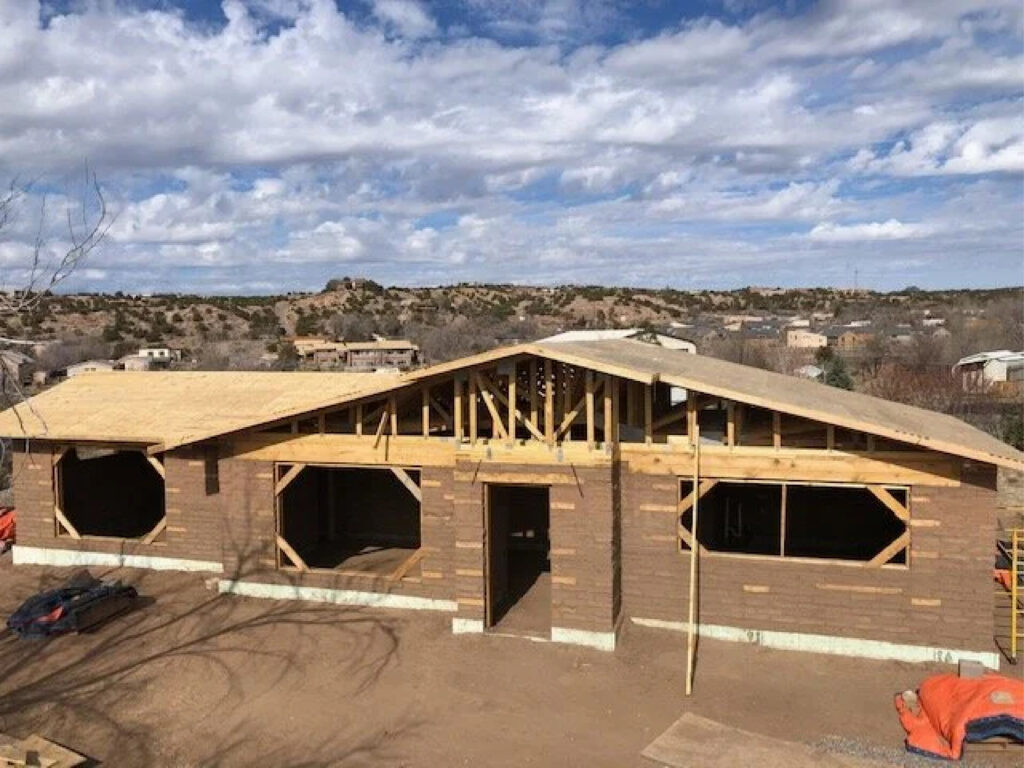
Earth USA presents a clear consensus that earthen materials are inherently sustainable, resilient, and culturally rich. Many presenters emphasize earth’s low carbon footprint and ease of reuse, as well as its climate-comfort benefits, thermal mass, and humidity buffering. There is a shared mission to reclaim these traditional techniques in a modern context. From an architectural perspective, the conference inspires both reflection and action. It demonstrates how ancient building methods can inform contemporary design, for example, how Pueblo-style thick walls inspire passive climate control, or how combining fibers and modern stabilizers can make cob livable in cold regions. On the technological side, sessions on 3D-printing clay and new tamping machines point toward a future in which even large-scale earth building is industrially feasible. The Earth USA community also exchanges practical solutions; one talk, for instance, detailed how to guide a cob house through building inspections, while others described integrating adobe into U.S. building codes. In conclusion, Earth USA galvanizes the earthen-construction movement. It has inspired new international collaborations, spurred educational initiatives, and reinforced advocates’ resolve to promote sustainable, beautiful architecture that can be made from the ground.

Citations:

  1. https://www.earthusa.org/
  2. https://www.adobeinaction.org/earth-usa-conference
  3. https://www.adobeinaction.org/
  4. https://www.earthusa.org/earthusa-news/2021/10/07/earthusa-news-bridge-issue
  5. https://www.adobeinaction.org/paul-mallory-project
  6. https://visioncreationadobe.com/2018/01/20/building-adobe-walls-in-winter/
  7. https://www.adobeinaction.org/board-of-directors#:~:text=Kurt%20Gardella%20specializes%20in%20online,Certification%20from%20The%20Earthbuilders%27%20Guild

Nka Foundation Announces the winners of the Mud House Design 2014 competition for Ghana.

The 1st prize winning design is Sankofa House by the design team: M.A.M.O.T.H from France

The 2nd prize winner is Eban Aya by Atelier Koe in Senegal

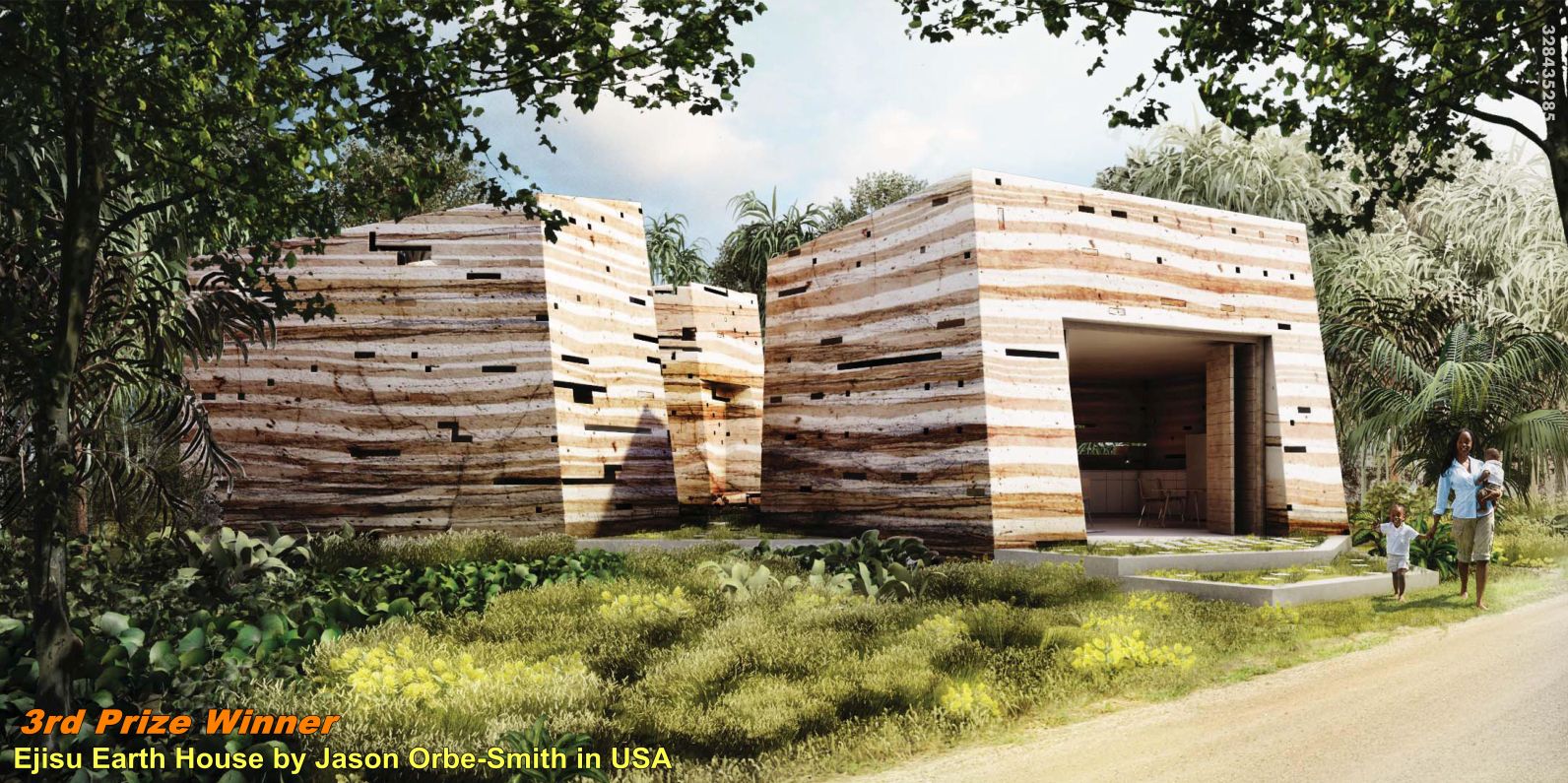
The 3rd prize is awarded to Ejisu Earth House by Jason Orbe-Smith in USA.

The competition was open to recent graduates and students of architecture, design and others from around the world. The challenge was to design a single-family unit on a plot of 60 x 60 feet to be built by maximum use of earth and local labor in the Ashanti Region of Ghana. The client of the design entry is the middle-income family at any township in the region. Total costs of constructing the design entry was capped at $6,000; land value was excluded from this price point. The competition was designed to: (1) to generate mud house design alternatives to be available free to everyone to appreciate, use, or improve them to generate more practical and contemporary design solutions for the region; and (2) to make possible the construction of the best design entries through building workshops to realize prototypes, as examples to the local people that mud architecture can be durable and beautiful.

The jury involved a preselection jury and grand jury by use of judging criteria involving functionality, aesthetics and technical matters. Twenty top finalists were chosen by the Preselection Jury of architects, professors and administrators with relevant expertise, which were forwarded to the Grand Jury of architecture professors and others who are established in earth architecture. From the Top 20 Design Entries, three prize-winning designs were selected. Prizes for first, second and third place consist of a commemorative plaque and a choice of cash reward or construction of winning design in Ghana. Every design team of the Top 20 Design Entries receives a certificate of recognition.

What is next?

BUILDING WORKSHOPS: THE PROTOTYPING CHALLENGE
Nka Foundation is issuing a challenge to builders, architecture professors and architects worldwide who know how architecture is localized, uses the means and the materials available in the site to create a friendly building to the environment. Join us as a workshop director or a participant to realize the winning designs from our 2014 Mud House Design competition in the Ashanti Region of Ghana. Each prototyping workshop will run for about 10 weeks. Participants can join at any time and participate for a minimum of 1 month. Students can use the workshop opportunity to fulfil the academic requirements for their stage/internship, thesis, or volunteer just for learning-by-doing on a vernacular architecture project. Here are all submitted design entries: http://nkaprojects.boards.net/thread/30/submitted-entries-1st-list Please, take a look!

For more information contact info@nkafoundation.org / www.nkafoundation.org.

Mud House Design 2014 Competition

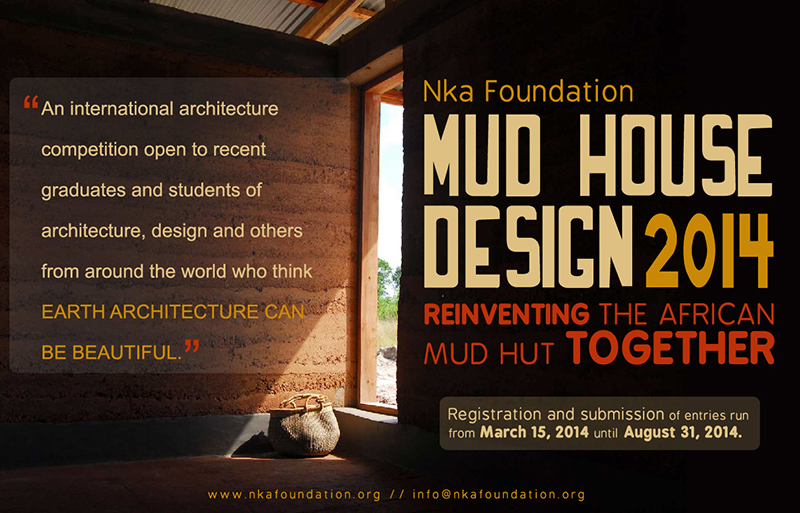
Nka Foundation invites entries for Mud House Design 2014, an international architecture competition open to recent graduates and students of architecture, design and others from around the world who think earth architecture can be beautiful. The challenge is to design a single-family unit of about 30 x 40 feet on a plot of 60 x 60 feet to be built by maximum use of earth and local labor in the Ashanti Region of Ghana.

This is the design problem: In Ghana, as in other countries in West Africa, stereotypes about buildings made of earth persist because of poor construction. From the cities to the low-income villages, use of concrete – despite its dependence on imported resources – is considered indispensable for building. Yet an excellent, cheap and local alternative called laterite, red earth, is available everywhere in Ghana. The long-term goal is to enable the Ghanaian population and lots of other places, to overcome the stigma that mud architecture is architecture for the very poor.

Registration and submission of entries runs from March 15, 2014 until August 31, 2014. For additional information, see the competition Website: http://www.nkafoundation.org/competitions.html and the registration page: https://www.eventbrite.com/e/mud-house-design-competition-tickets-10697036123

The 12th International Photo Competition

The 12th International Photo Competition on “Earthen architectures: landscapes of architectures” is an initiative of the Municipality of Casalincontrada, in the Italian province of Chieti and the Documentation Centre on Earth Architectures, Terrae onus Association The “rediscovery” of the knowledge linked to earthen architecture recomposed in images, like tiles of a mosaic made of people, things, material and places. Images that could be interpreted as “surviving structures” or “new scenarios”, as well as architectures of the territory, memories and situations.

El X Congreso Internacional de Arquitectura de Tierra

El X Congreso Internacional de Arquitectura de Tierra tendrá lugar los días 27, 28 y 29 de septiembre, en Cuenca de Campos, provincia de Valladolid. El día 27 el congreso comenzará en Valladolid, en la Escuela Técnica Superior de Arquitectura. El 28 y el 29 nos desplazaremos desde Valladolid a Cuenca de Campos. Se disfrutará de una visita al laboratorio y un taller de tierra a cargo de José María Sastre. El grupo TIERRA os anima a participar en el congreso, como asistentes y sobretodo presentando ponencias, con el objeto de poner en común nuestros conocimientos.

www5.uva.es/grupotierra/2013xcongreso.html

EBUK 2014: Earth Building United Kingdom Conference

The 2014 EBUK conference “Training in Earth Building: from design to construction” will be held in Norwich on 14th February 2014. The broad conference theme includes education and training in building with earth, training in the structural and thermal design of earth buildings, training in safe and reliable construction methods and in the appropriate use of earth as a building material. The conference will showcase design, construction, conservation and research in the UK. Papers and presenters will engage with the conference theme and broader context of building with earth in the UK.

www.ebuk.uk.com

SIACOT Chile 2013

El 13° Seminario Iberoamericano de Arquitectura y Construcción con Tierra (SIACOT) Valparaíso 2013, promovido por la Red Iberoamericana PROTERRA y organizado por el instituto profesional Duoc UC de la Pontificia Universidad Católica de Chile a través de su carrera de Restauración Patrimonial, tiene como finalidad reunir a los científicos, profesionales y técnicos que trabajan en torno al tema de la arquitectura, conservación y construcción con tierra, interesados por los amplios potenciales de este material. Se trata de una oportunidad de difusión y discusión, donde se evaluarán el estado actual de la investigación científica, de los proyectos, e innovaciones tecnológicas en marcha, así como los avances globales de la difusión de esta temática.

www.siacotchile2013.cl

Kerpic’13

The third International Conference on kerpic’13 – New Generation Earthen Architecture: Learning from Heritage, to be held on 11-14 September 2013, in Istanbul, Turkey. The focus of the conference has evolved from new generation of earthen architecture, environment and health care, towards disaster prevention. We hope that it will bring together the related disciplines of architects and engineers, on material, construction, marketing and environmental science to create database, technology watch and strategy.

A workshop will be organized on site where all the participants can take part. Social and cultural program will offer an interesting historical tour and a distinguished dinner will welcome you. Post Congress program will be a tour to various sites of Turkey. Fore more information visit http://www.kerpic.org/2013/

Earth USA 2013

Earth USA 2013 is the Seventh International Conference on Architecture and Construction with Earthen Materials initiated by Earth USA. The conference organizer is Adobe in Action.

The formal conference will take place on October 4 and 5, 2013 in Santa Fe, New Mexico, USA. October 6th will be dedicated to local earthbuilding tours and excursions. The conference is being held at the New Mexico Museum of Art in the St. Francis Auditorium (107 West Palace Avenue, Santa Fe, NM 87501). Earth USA 2013 indicates a wider field of interest than previous conferences and will include adobe, rammed earth, compressed earth block (CEB) and monolithic adobe (cob). Any material or method that uses clay as a binder is considered.

Earth USA 2013 is now accepting abstract submissions (due April 14, 2013) for conference presentations. For more information visit http://earthusa.org/

Building Local


Building Local is a design-build studio that will explore and discuss the aesthetic, assembly and tectonic qualities of local materials: earth, stone, fique, bamboo and wood, engaging students in a series of workshops that will culminate in the design and construction of an efficient and innovative farmhouse. The studio will take place in Barichara, a colonial town located in the North Western region of Colombia. It is open to graduate and upper-level undergraduate students (juniors and seniors) who are interested in engaging in the explorations of these techniques and their use in contemporary architecture.

The studio is organized by:

Maria Carrizosa, a licensed architect in Colombia and holds an undegraduate degree in architecture from Universidad de Los Andes and a dual Master’s degree in Architecture, and City and Regional Planning from UC Berkeley. Her design practice in Colombia ranges from institutional to housing projects, developing two award-winning projects for a public library and a music school in rural communities. She has been involved in architectural education in both Colombia and the US and continues her participation as a guest juror in the College of Environmental Design and as an Adjunct Professor at the Diablo Valley Community College. Maria is interested in collaborative practices in both architecture and planning to provide communities with the necessary tools to improve and shape the spaces they live in.

Ana Maria Gutierrez, the co-founder of Organizmo, an organization that promotes the principles of permaculture, bio-architecture and the implementation of intuitive technologies. She holds a BFA in Architectural Design from the Parsons School of Design and Master in Interactive Telecomunication ITP from New York University.

Adriana Navarro, who holds a dual Master’s degree in Architecture, and City and Regional Planning from the University of California at Berkeley. Born and raised in Colombia (S.A), she received a BS Arch (Honors) from the University of Virginia in 2004. After working for Rafael Viñoly Architects, and OPX Global in Washington DC, Adriana moved to California to begin her graduate studies in 2007. As a 2010 John K. Branner Fellow, Adriana traveled the world, focusing her research, FAVELA CHIC, on socio-cultural aspects of design, particularly analyzing the role and relationship between architecture, planning and urban informality. Adriana is founder of the blog FAVELissues.

For more information visit http://buildinglocal.wordpress.com