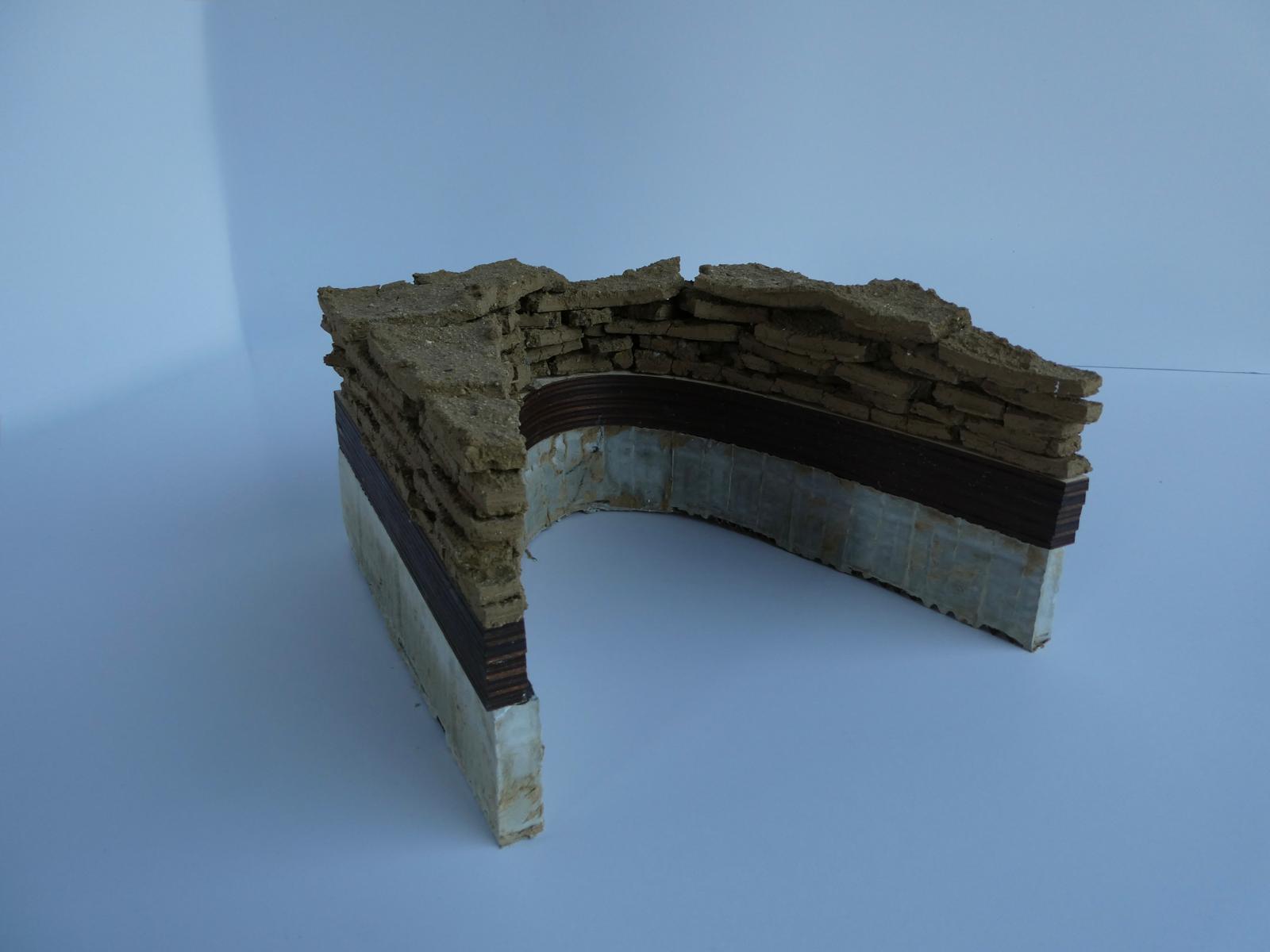
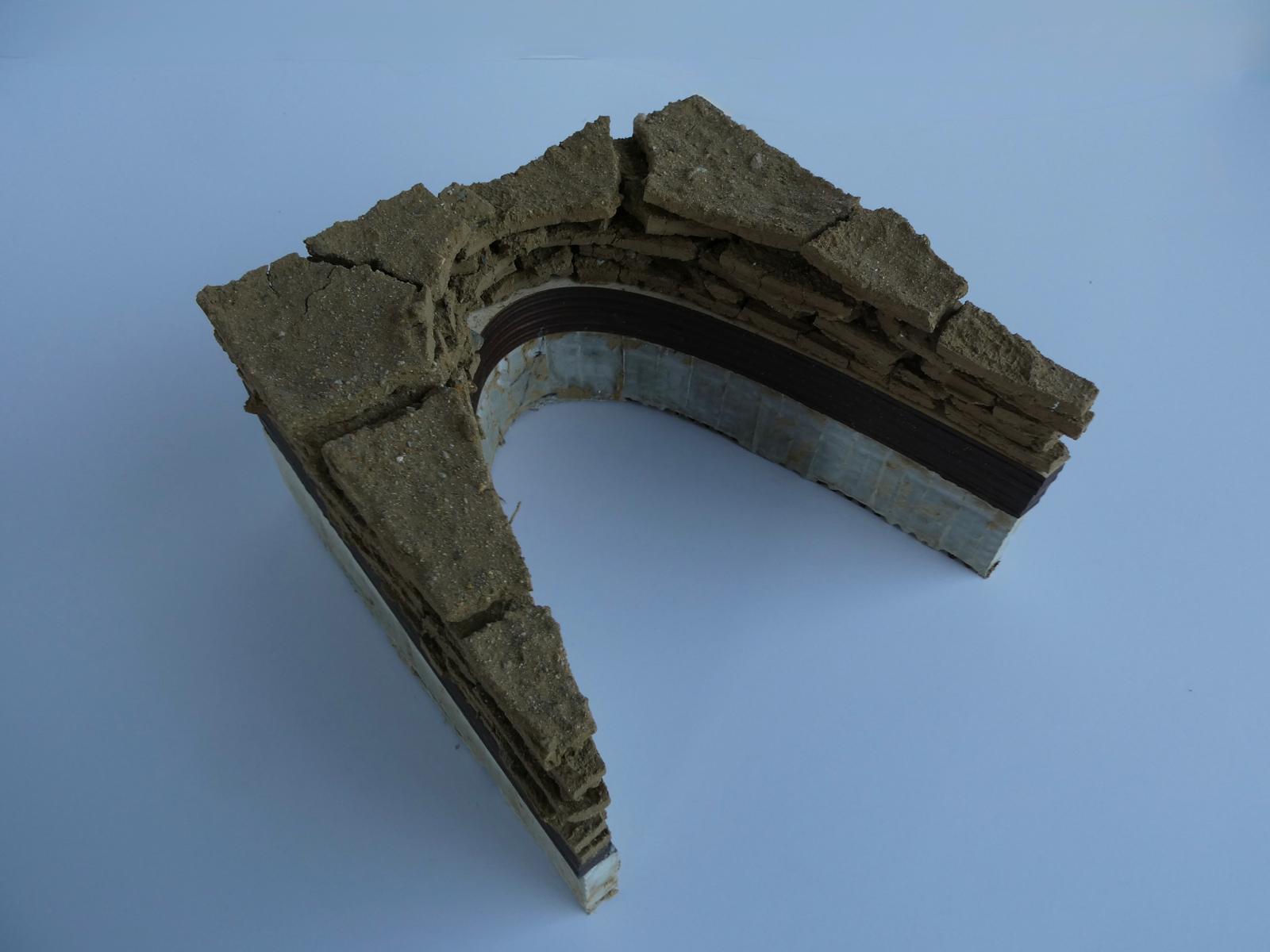
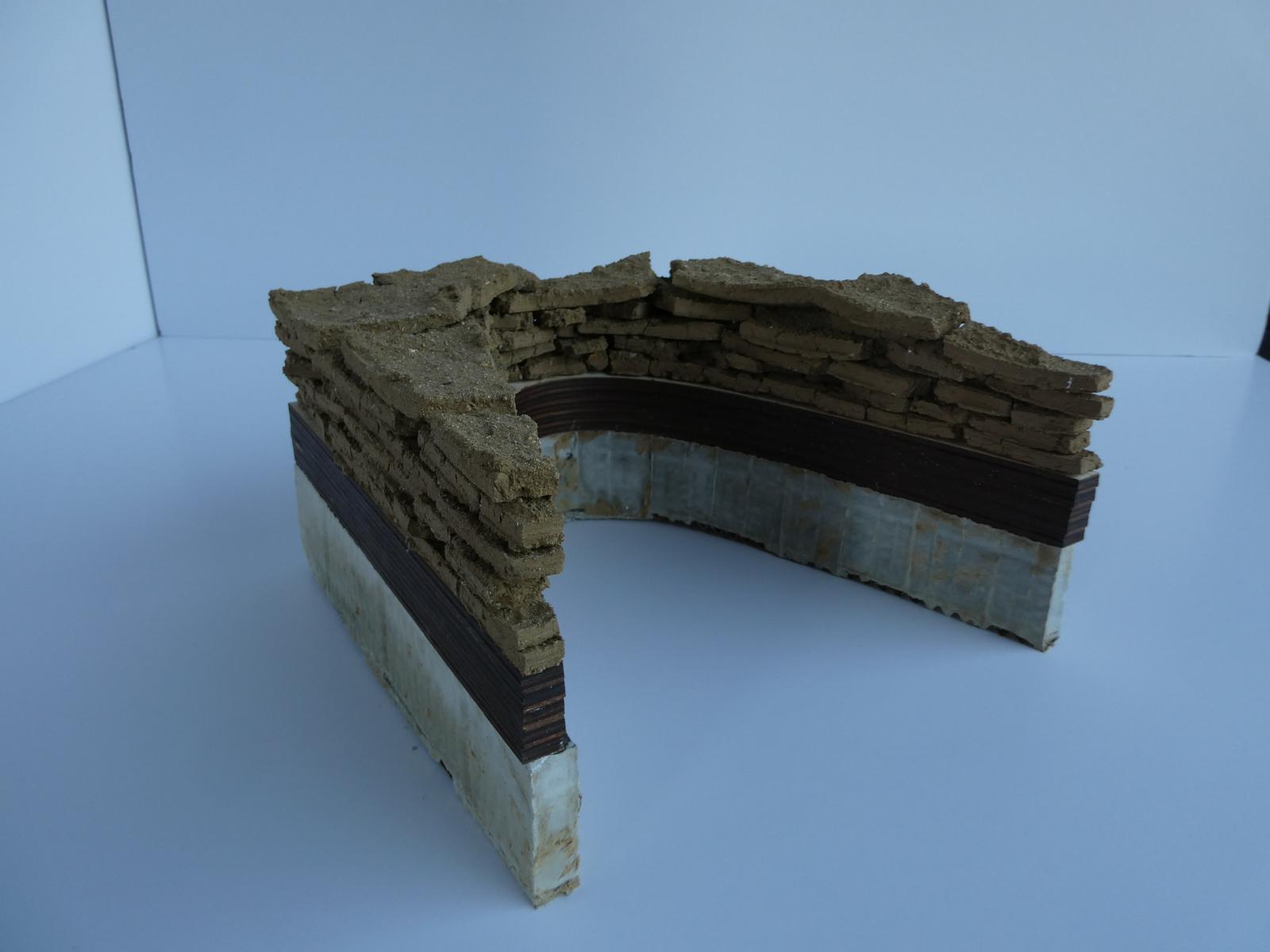
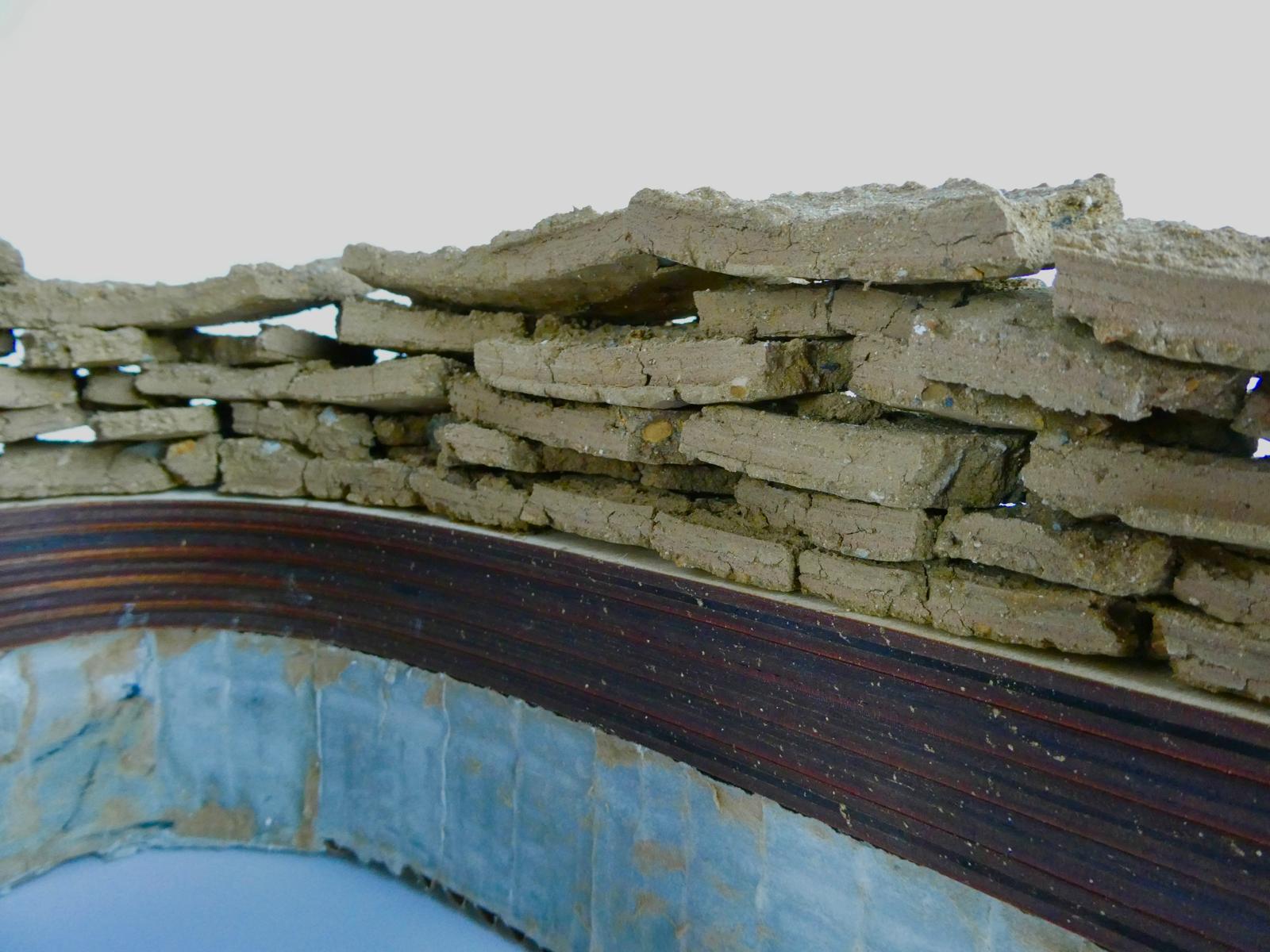
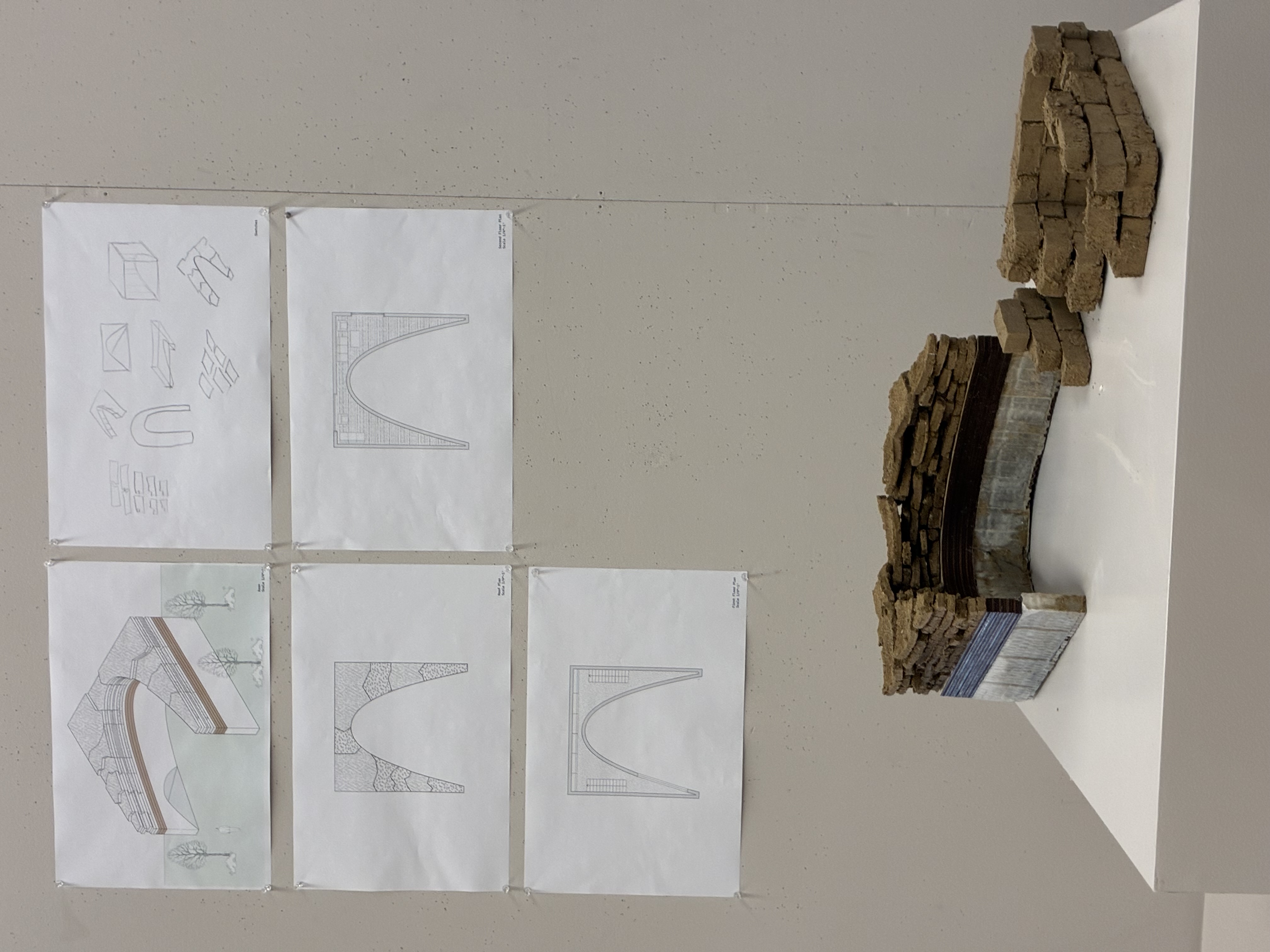
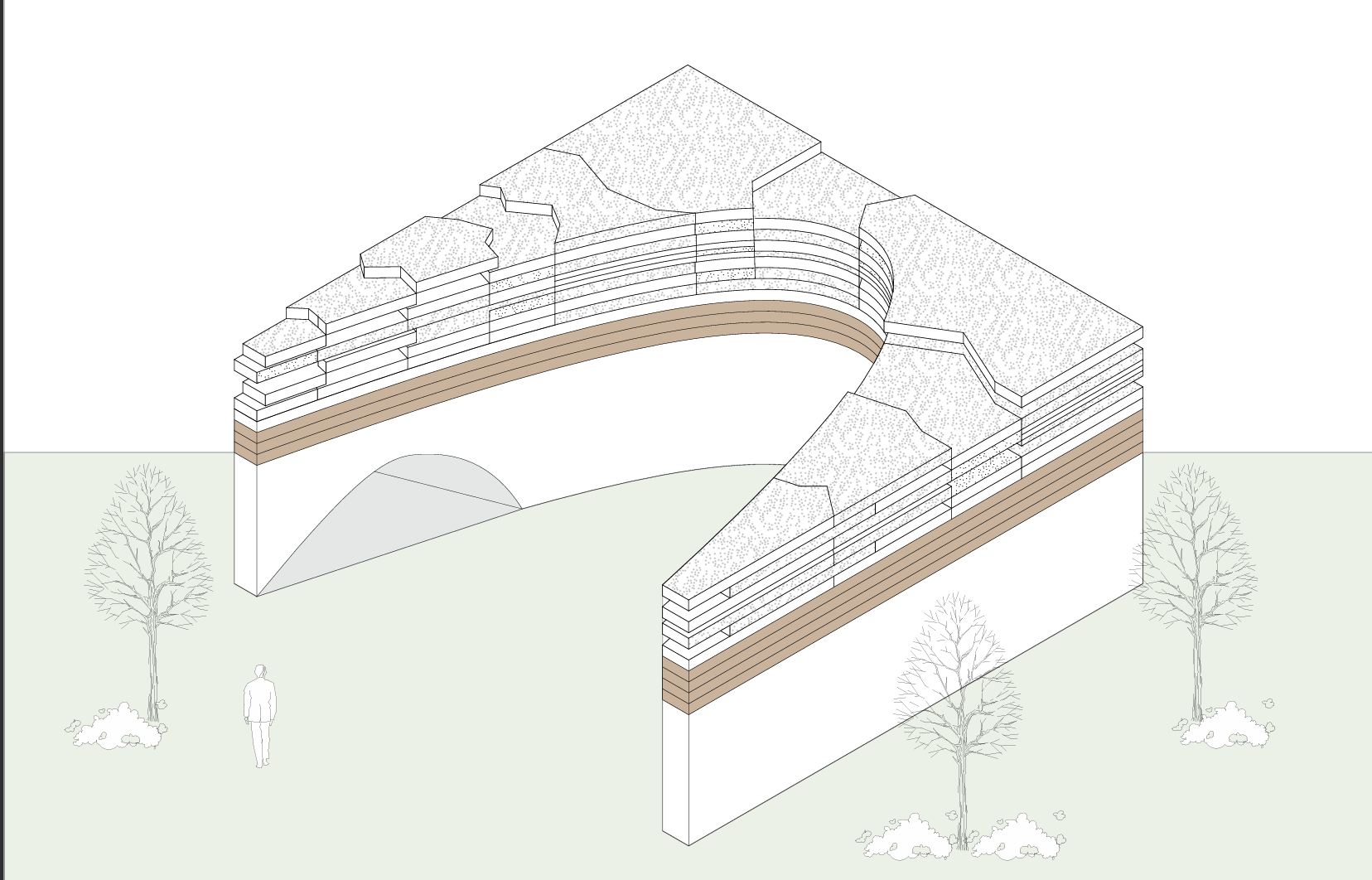
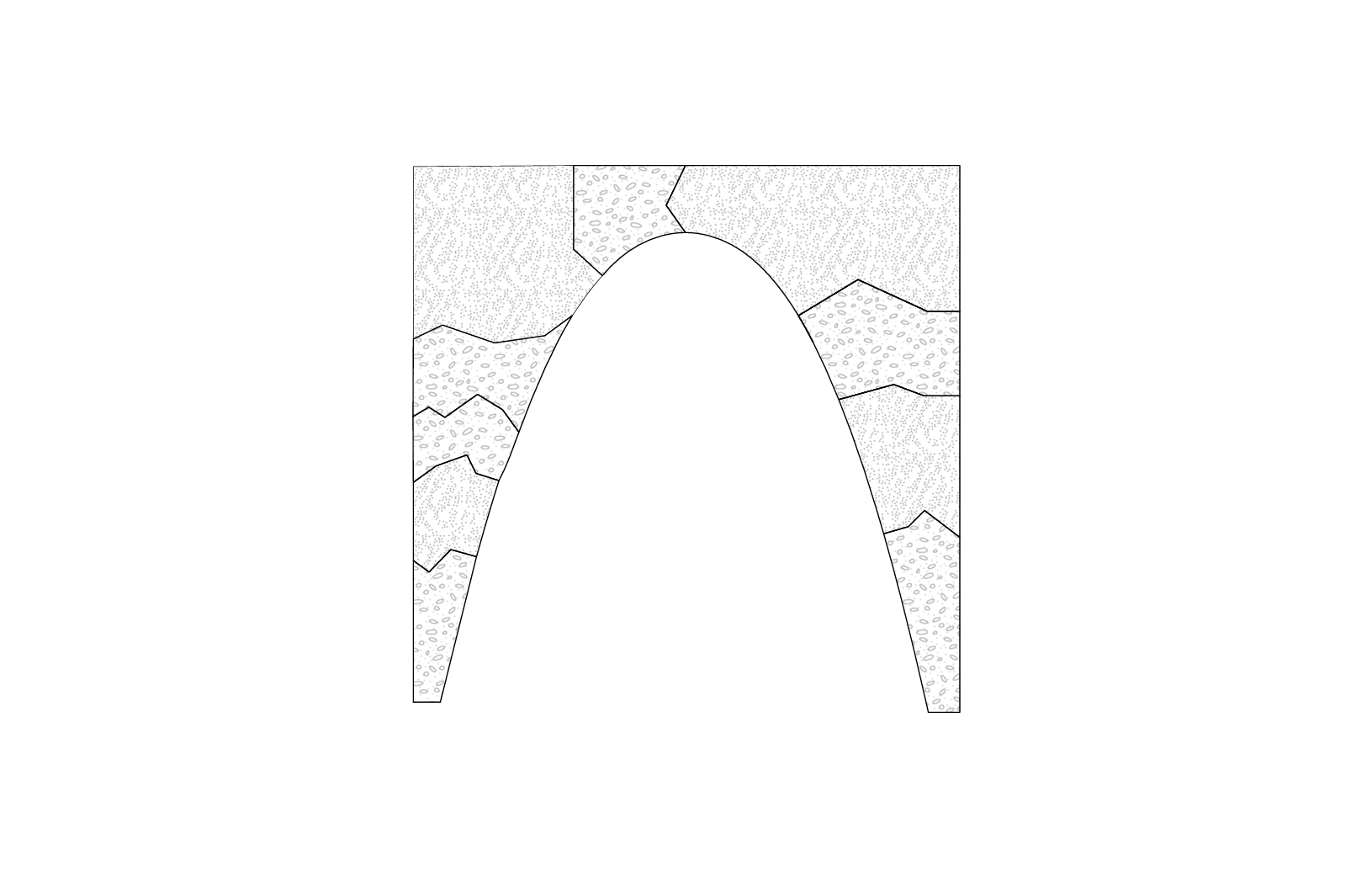
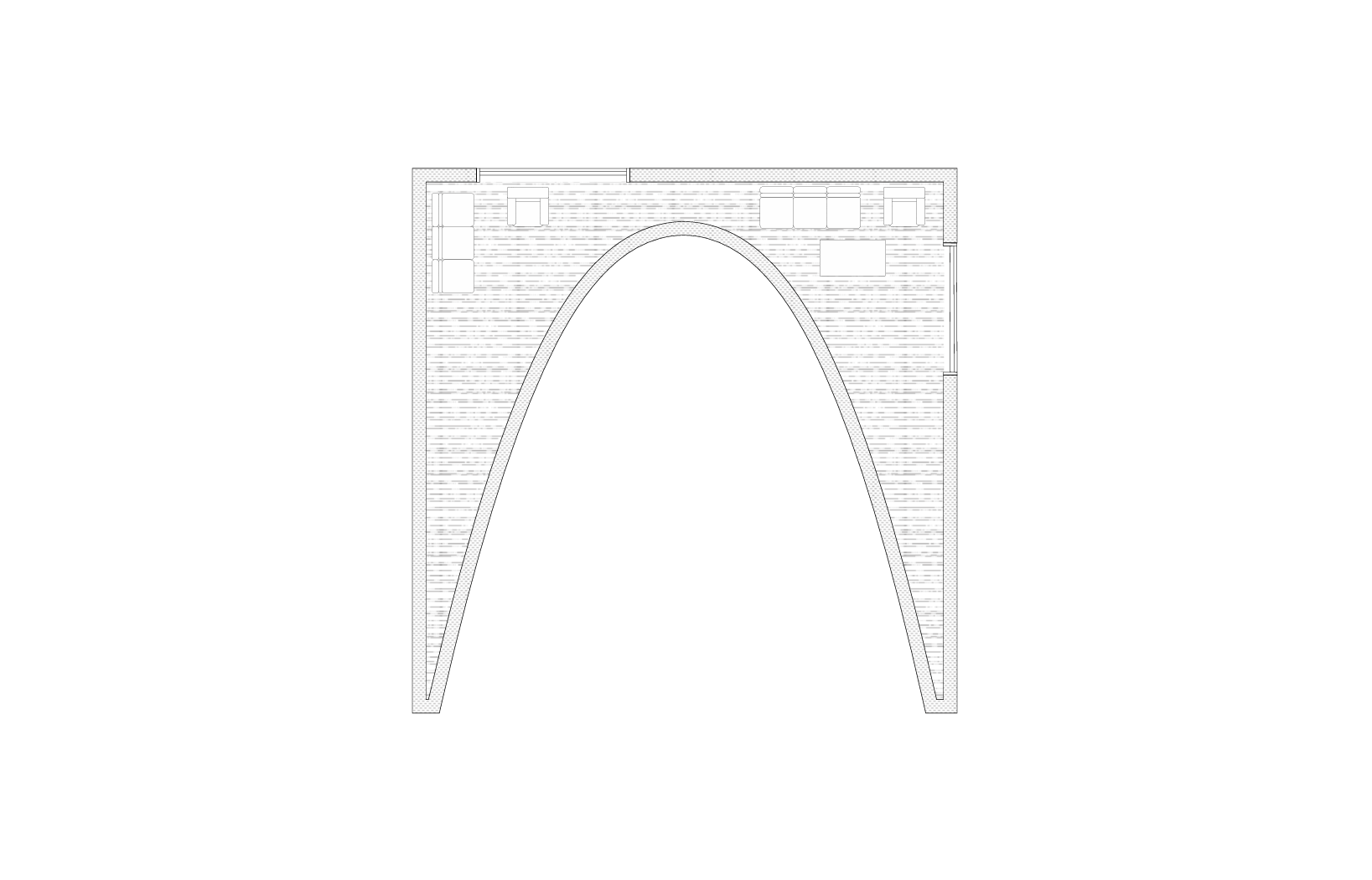
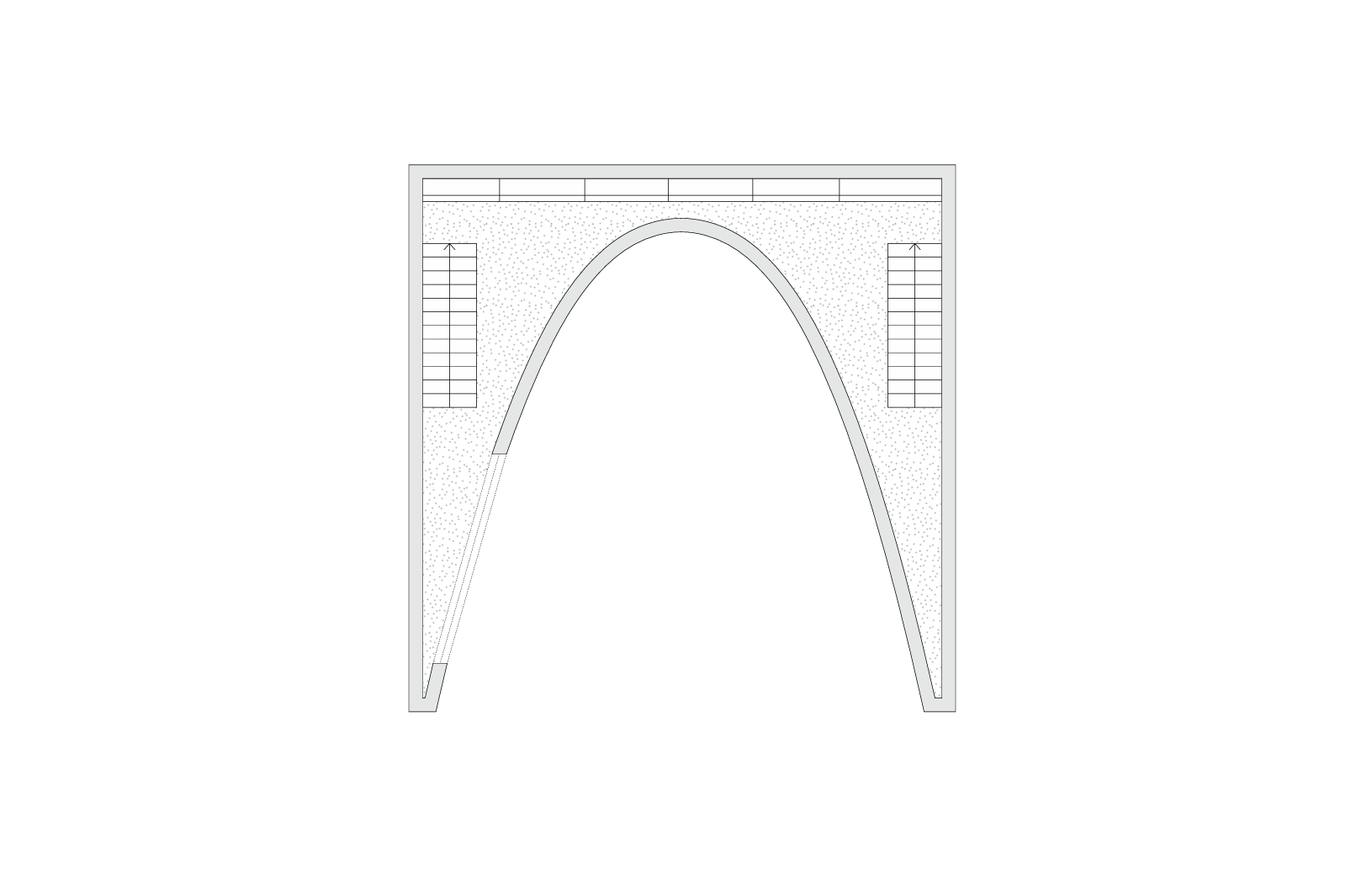
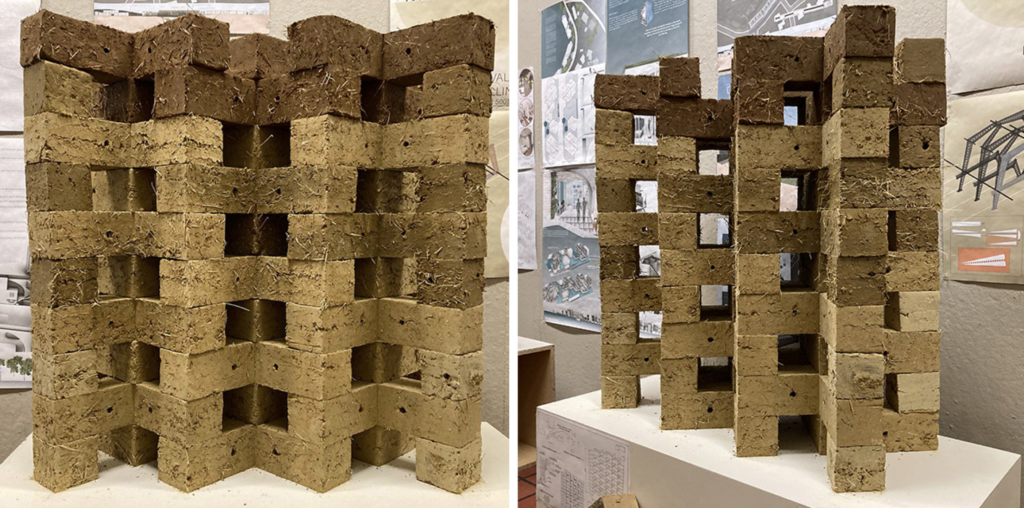
Our project and model arises from a study about the intersection between mud with high clay content used to make adobe bricks and it’s relationship to the earth adjacent materials of wood and rockite.
This project was inspired by a corner in room 5 of the Macha Village Center, which uses all three materials in a very cohesive, layered manner. However, instead of using rammed earth (the earthen material in the Macha Village Center), our adobe was inspired by dried, cracked, sun-baked earth and its unique pattern in desert environments. Our bricks are meant to resemble the rugged natural landscape, as opposed to the clean, uniform look of many adobe brick projects.
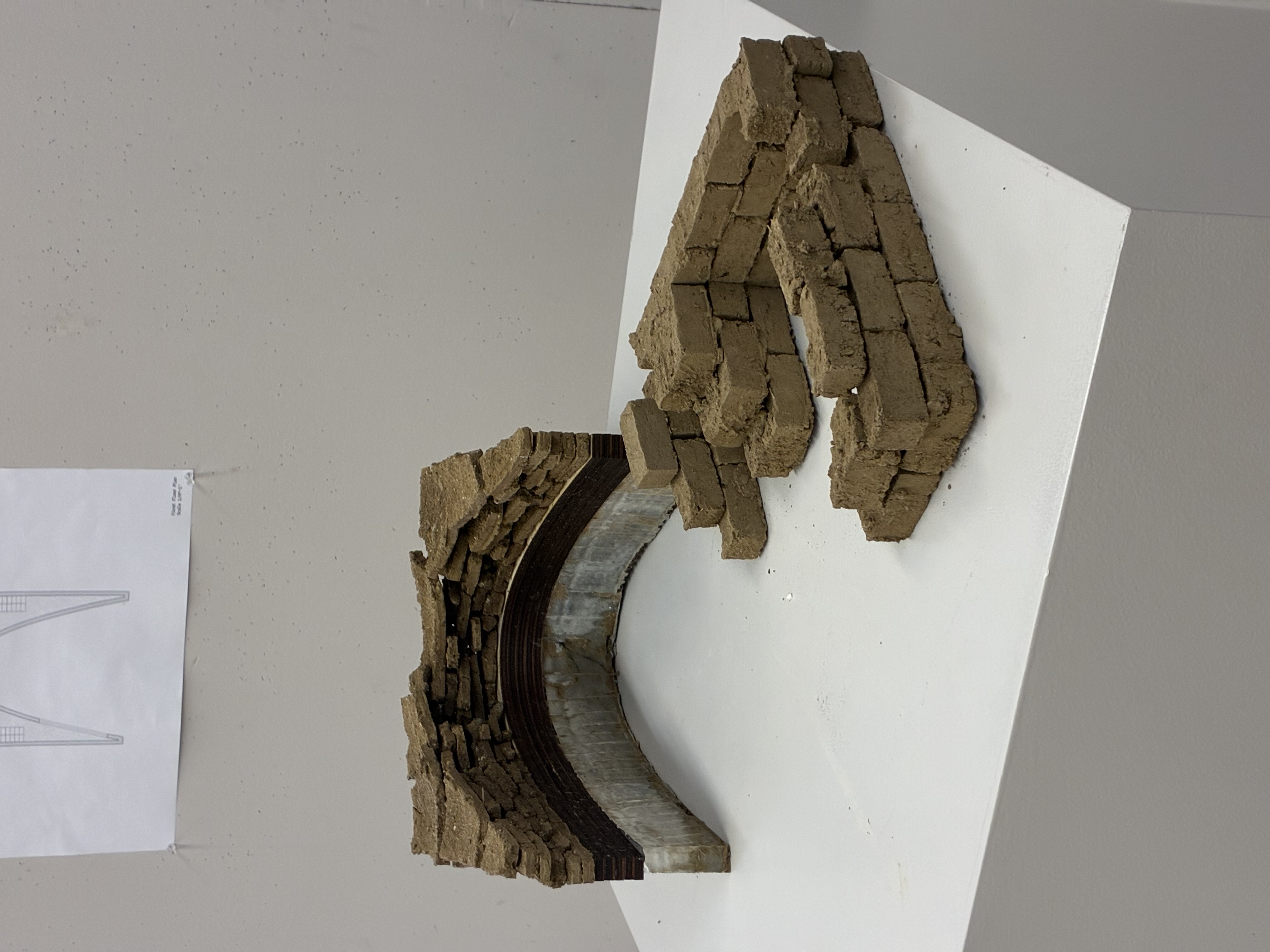
We used a cardboard form reinforced with wood panels to create the rockite base. We used a the laser-cutter for the layers of wood. For the adobe, we used 6 thin forms and let the abode crack in natural ways when releasing the material from form. Our adobe was high in clay content, and we mixed in a lemon starry soda hoping to make the bricks lighter in color.
We were interested in our models functionality as a building; however, the unique dimensions of this project make habitability difficult. Our model is best viewed as an art piece, an homage to the ancient technique of adobe brick making and its intersection with common construction materials in contemporary buildings.
The adobe bricks to the right of our model serve as an example of the aforementioned clean, uniform abode bricks and highlight the contrast in our approach to the material.
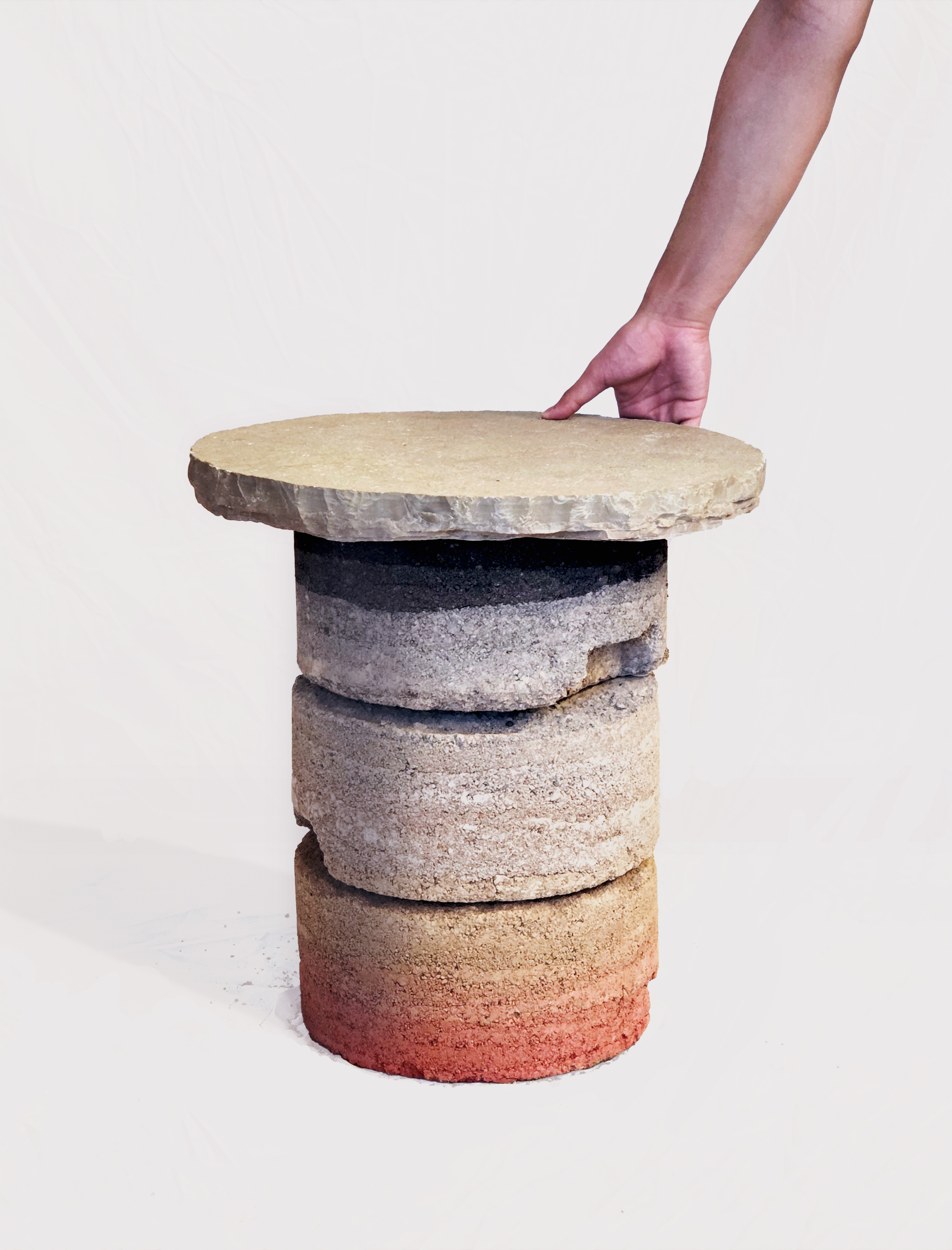
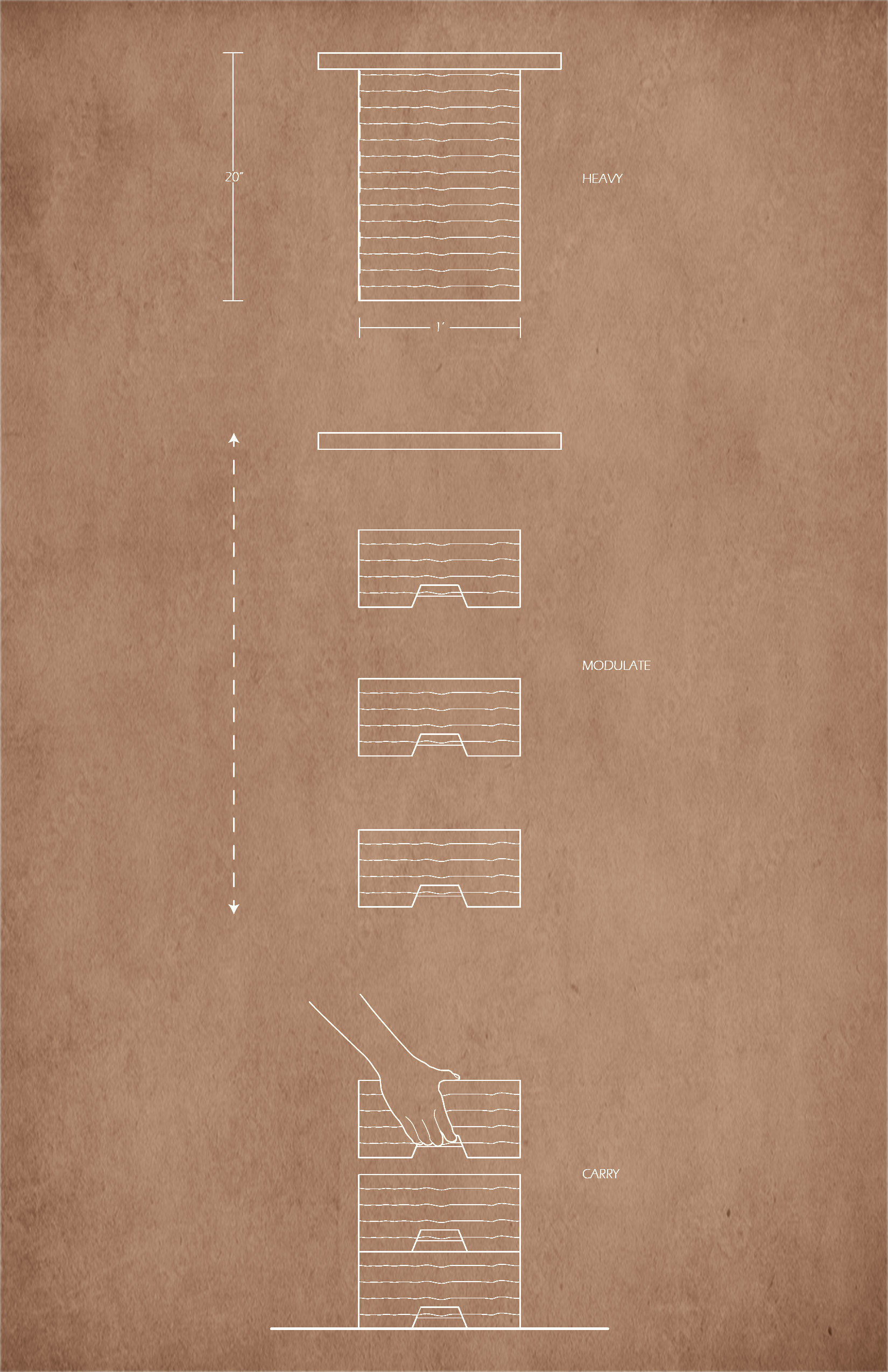
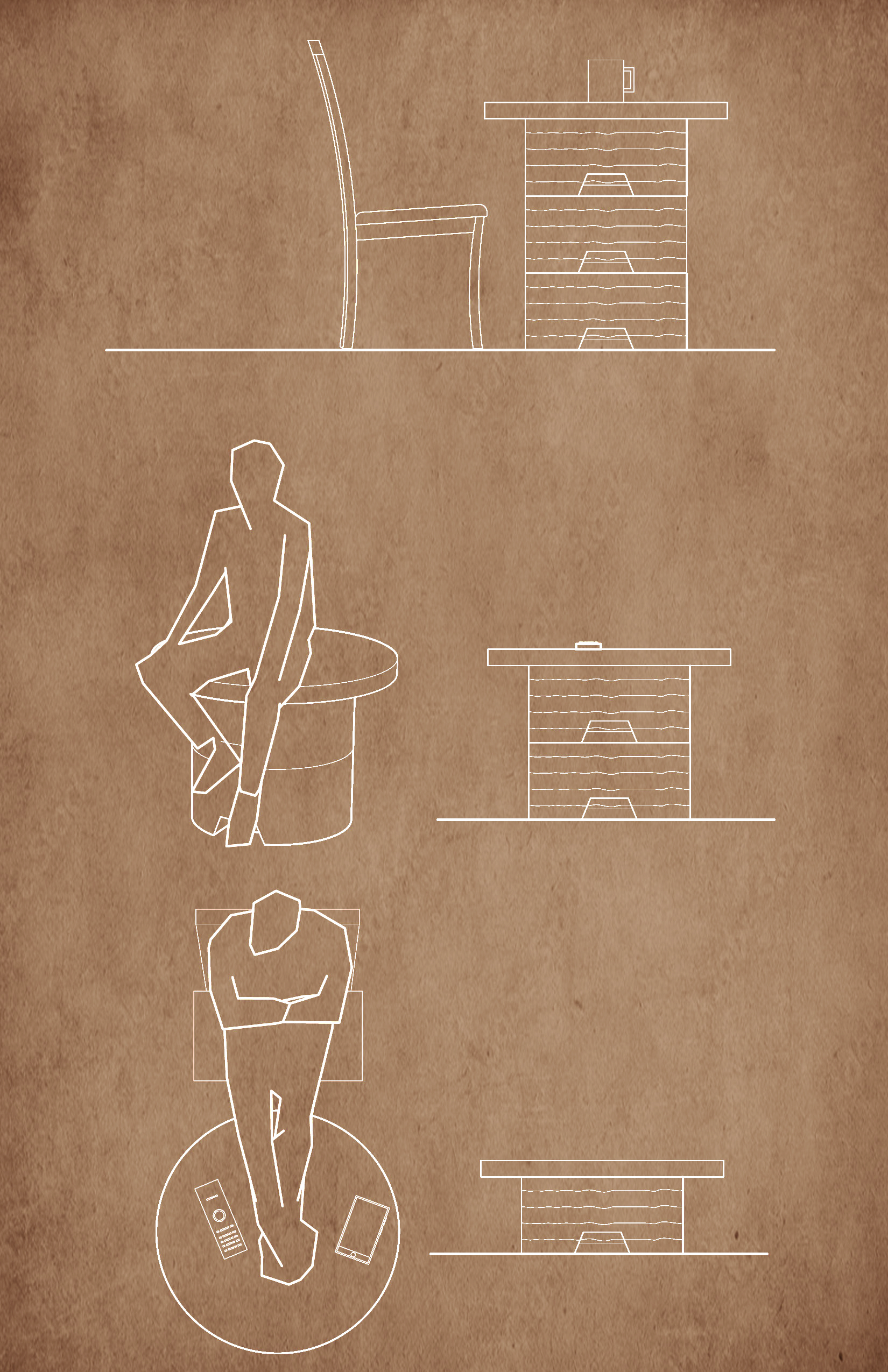
This project consists of a series of experiments aimed at prototyping a design for a rammed-earth coffee table.
modularity for the purpose of carrying
Intended to adhere to a series of constituents concerning weight, modularity, and color, this rammed earth prototype was designed such that it could be disassembled into smaller, more manageable components. These constraints led the designers to a prototypical model consisting of cylindrical blocks weighed down by a raw stone tabletop, ensuring that each module remains in compression and does not shift. The blocks themselves are rammed into a formwork, creating handles for carrying, easing transportation. Each module weighs ~35lbs and features a mixture of pigments that create a customizable gradient.
Ratios and Gradients
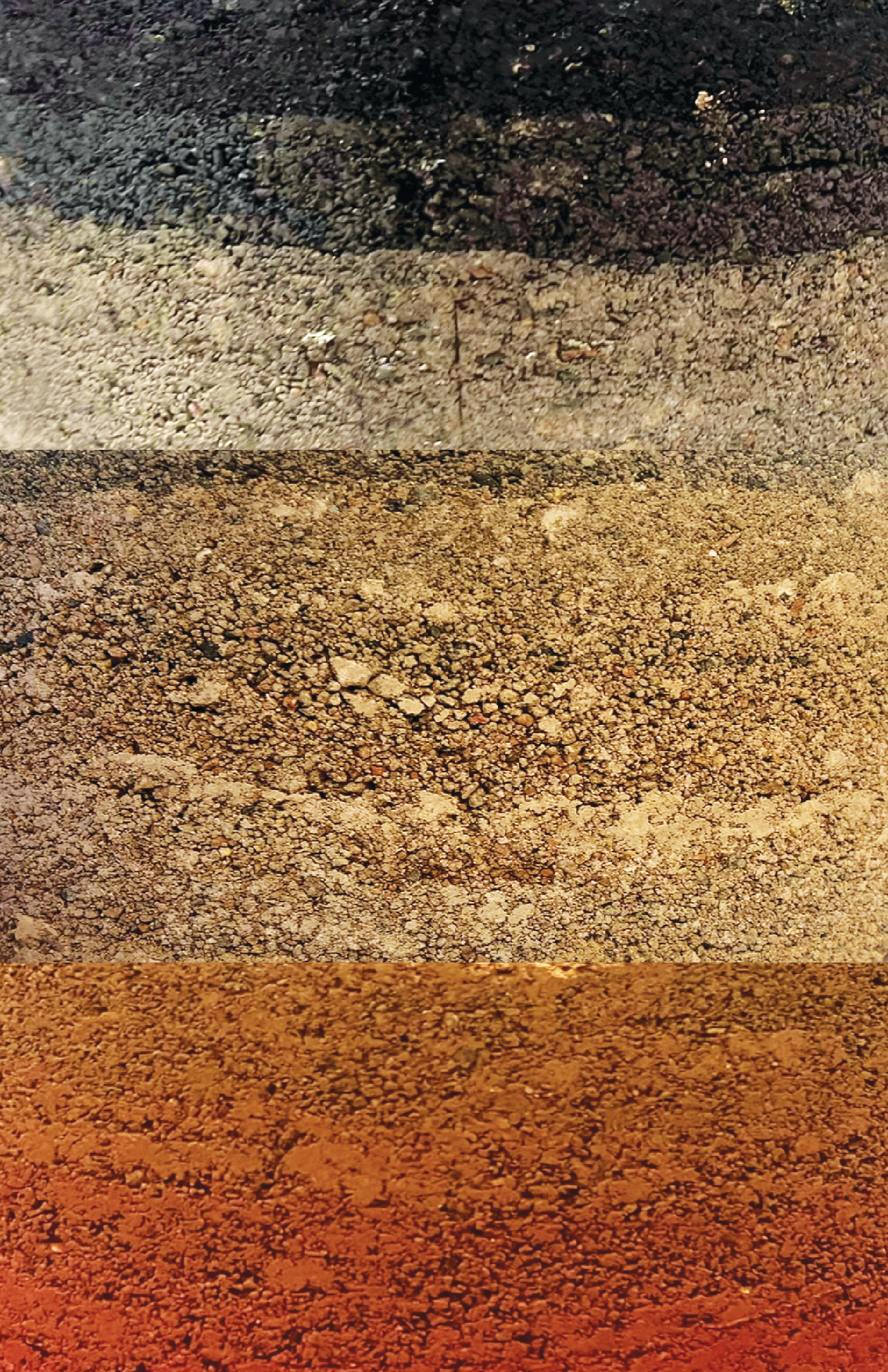
This project also sought to examine the aesthetic sensibilities of rammed earth as a construction material for furniture. Prototyping rammed-earth furniture necessitated extensive studies concerning the mixture of different soils and pigments to create colorful gradients for each module.
Rough, rocky earthen qualities are achieved through a basic mixture of soil from varying regions, alongside ~15% sand, ~20% gravely clay to provide enrichment. These mixtures were then enriched with increasing quantities of pigment (including charcoal and iron) to allow each rammed layer to take on a more saturated color during the production of each earthen module.
Form-work and “Molds”
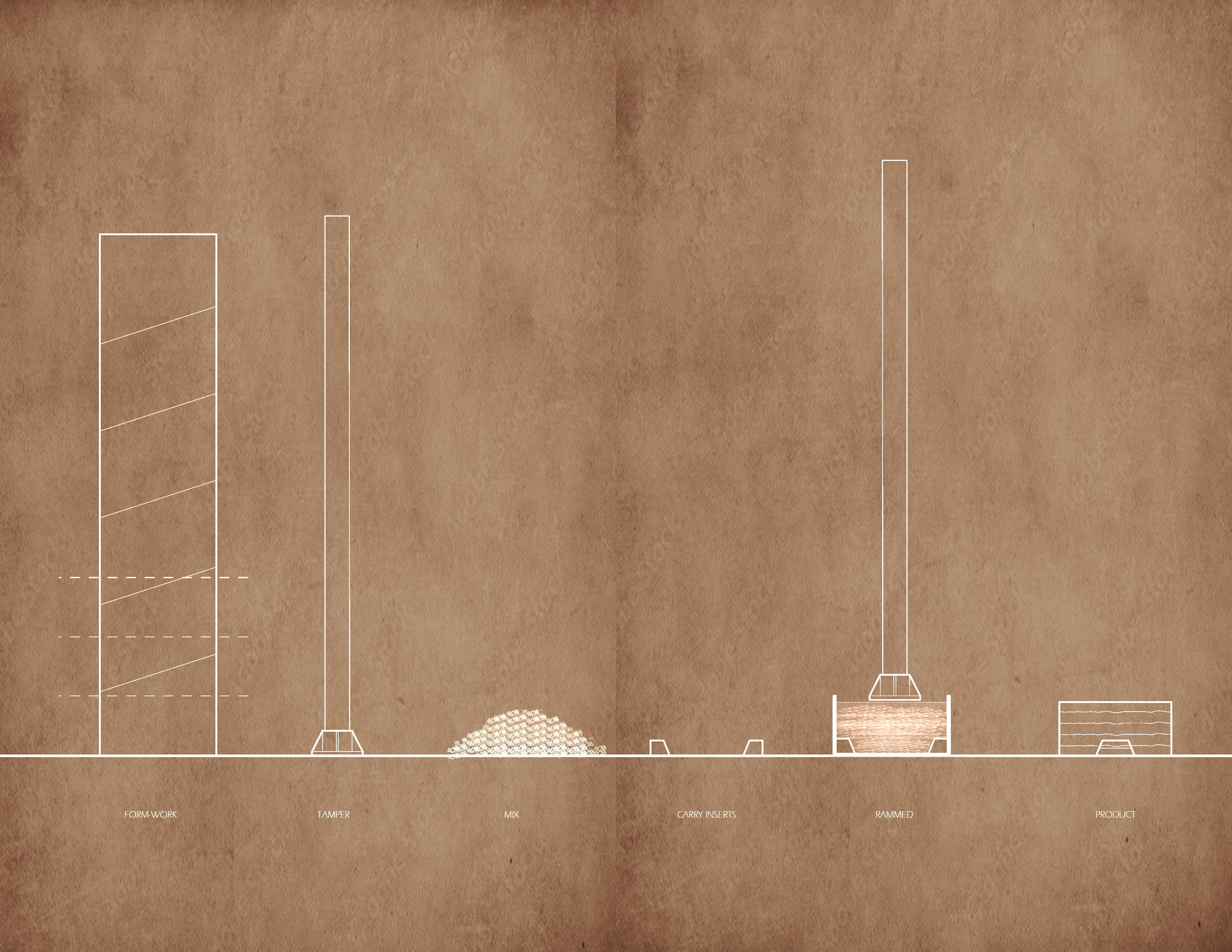
primary tools
The contents of rammed earth require a formwork to take on the desired shape after settling. The foundation of this formwork, chosen for its size, shape, and flexibility, was a concrete form tube, often known by its brand name of Sonotube. These form tubes come in a variety of different sizes, meaning that the techniques we developed to create these rammed earth pieces can be transferred based on the desired scale.
If we had just used the sonotube, the outcome would simply be a cylinder. The next step was incorporating the physical additions that allow for handling and modularity. Utilizing 3d prints as a negative, mixed in with conventional building techniques such as cut and shaped wood, inserts were created that fit into the sonotube to create indents and features in the otherwise normal cylinder. These included handling grips, for ease of movement of the final product, to central cavities, reducing the overall weight, and even attempts at projections on the top surface to fit right into the handling grips, to help with positioning and balance of the pieces once put together.
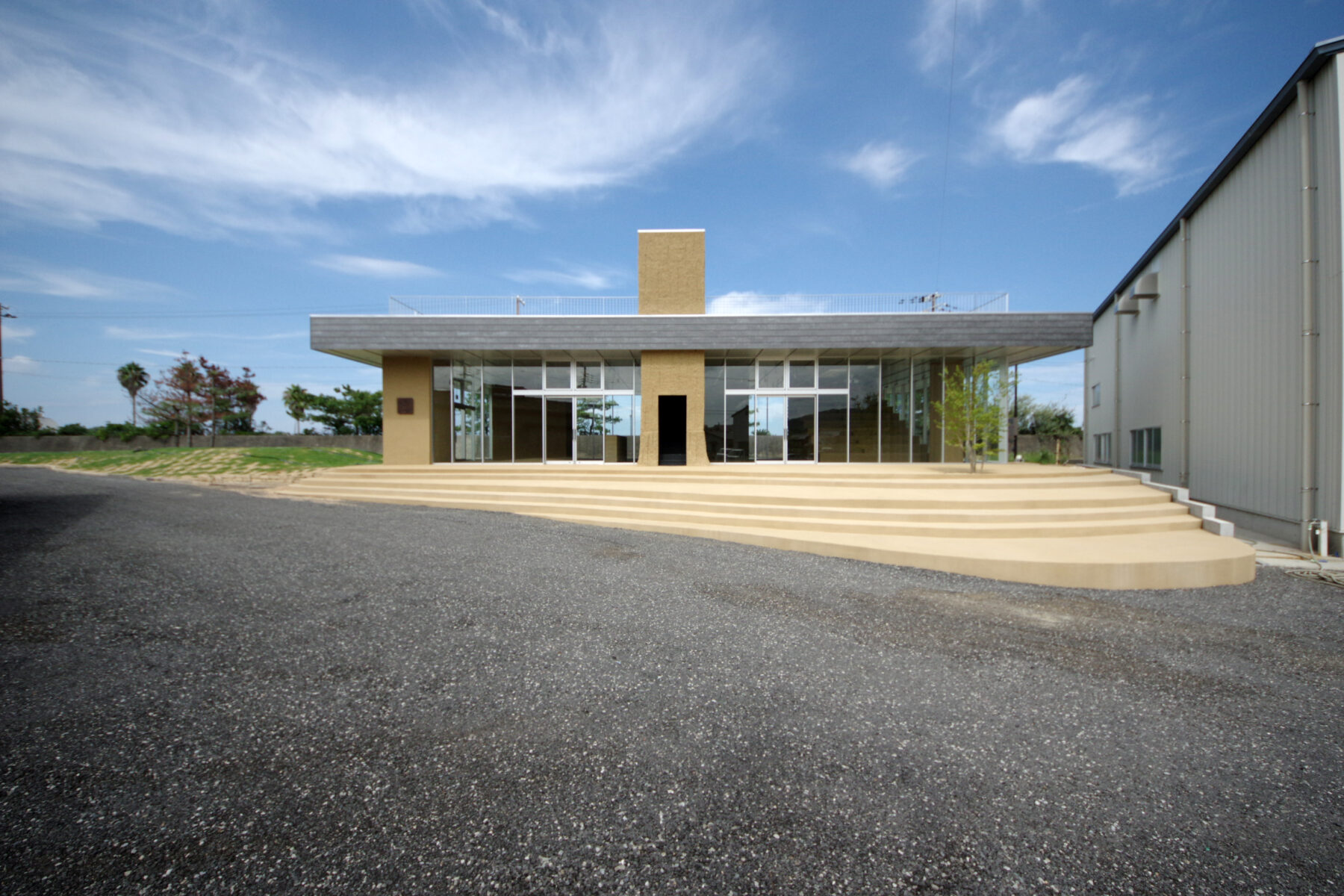
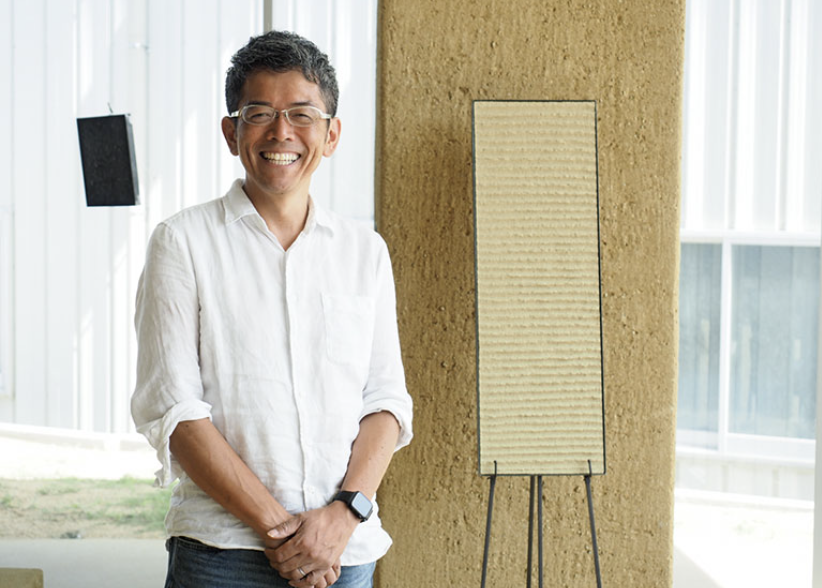
Shido Soil Museum was designed by HIRAMATSUGUMI, an architecture practice based on Awaji Island, Japan. They are exploring a form of architecture that naturally emerges from the land on which we now stand—architecture in its essential state. The project was developed in collaboration with Kinki Kabezai, a long-established manufacturer of earthen wall materials, as a space dedicated to the exploration, display, and public rethinking of soil as an architectural medium.
Project Information
Location: Awaji, Hyogo, Japan Completion: 2022 Opening: 2023 Area: approx. 181 m² Program: Museum / exhibition space / material experience center
Shido Soil Museum is not conceived as a conventional museum, but as an immersive environment where soil becomes the main subject of space, material expression, and public engagement.
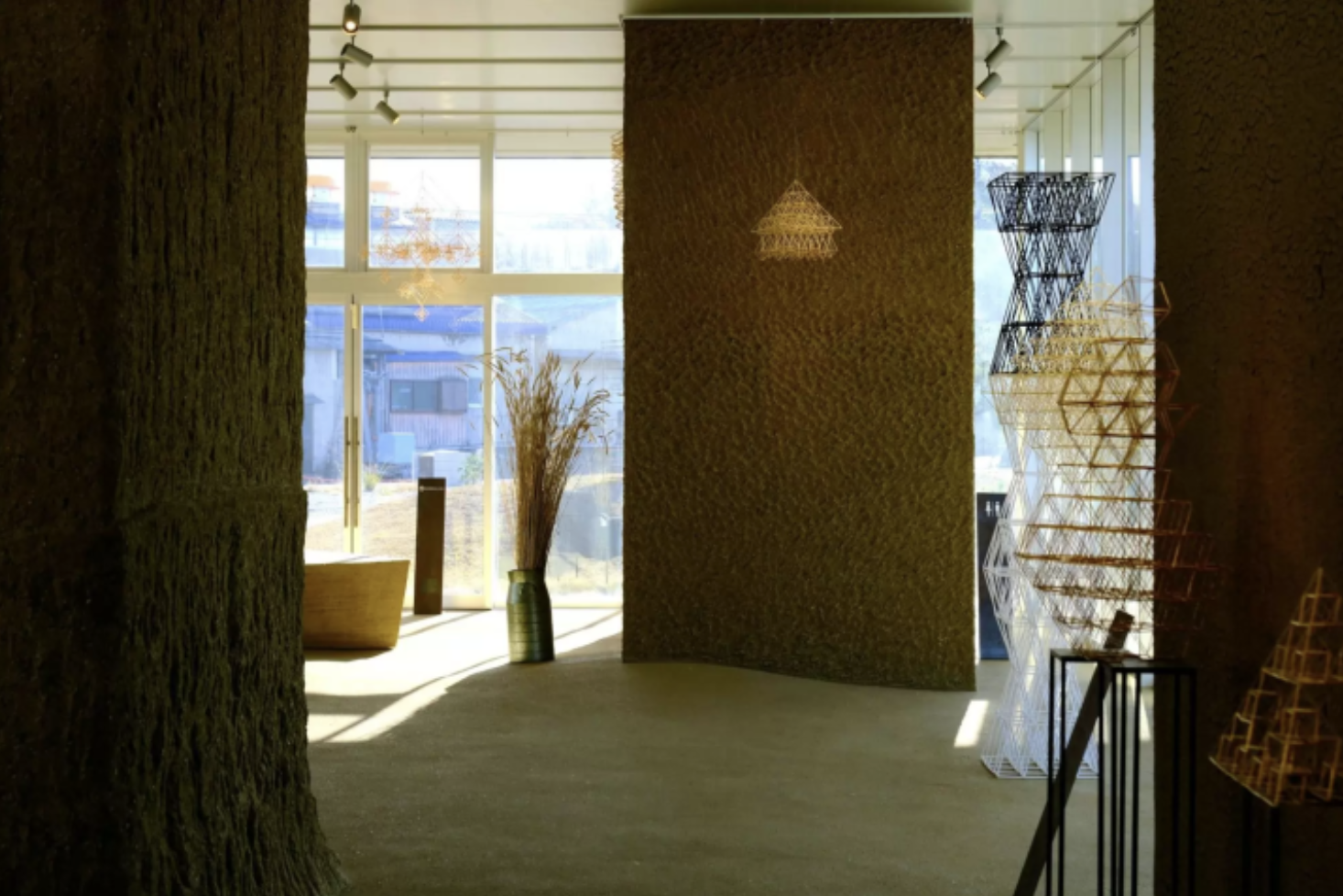
The project reconsiders soil not as a hidden or secondary construction material, but as a visible and experiential medium. Rooted in the idea of “Jimon”—patterns and traces formed by geological movements, topography, and the surface of the earth—the museum translates the imagery of strata, erosion, rupture, and terrain into architectural space.
Rather than presenting soil as a nostalgic or purely vernacular material, the design frames it as a contemporary spatial language. Walls, floors, and surfaces evoke excavated ground, exposed layers, and cracked earth, turning the building into a spatial interpretation of the land itself.
The project makes extensive use of Awaji soil, drawing on the island’s long history of earthen construction and craft. Soil is employed not only as a building finish but as the central medium through which color, texture, thickness, and tactility are expressed.
What is especially significant is that the project does not rely on a single earthen technique. Instead, it presents a broad spectrum of soil-based applications, including rammed earth elements, layered earthen walls, thick plastered surfaces, carved textures, and earthen flooring. Through these varied treatments, soil is revealed as a material of both technical and sensory richness.
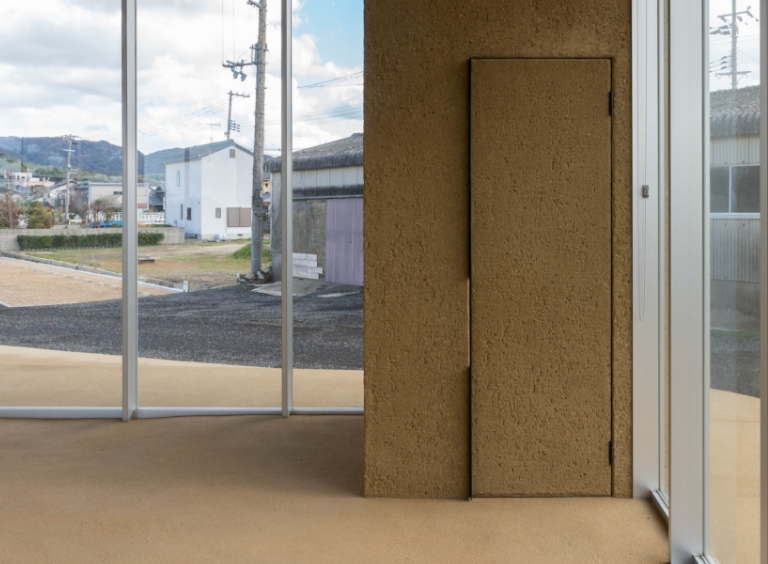
One of the most compelling aspects of the museum is its use of localized wall-making techniques to produce distinct spatial atmospheres. Certain walls recall rammed earth construction, where compacted layers create a sense of geological depth and mass. Others are formed through thick earthen plaster and hand-finishing techniques, allowing cutting, scraping, cracking, and layering to remain visible on the surface.
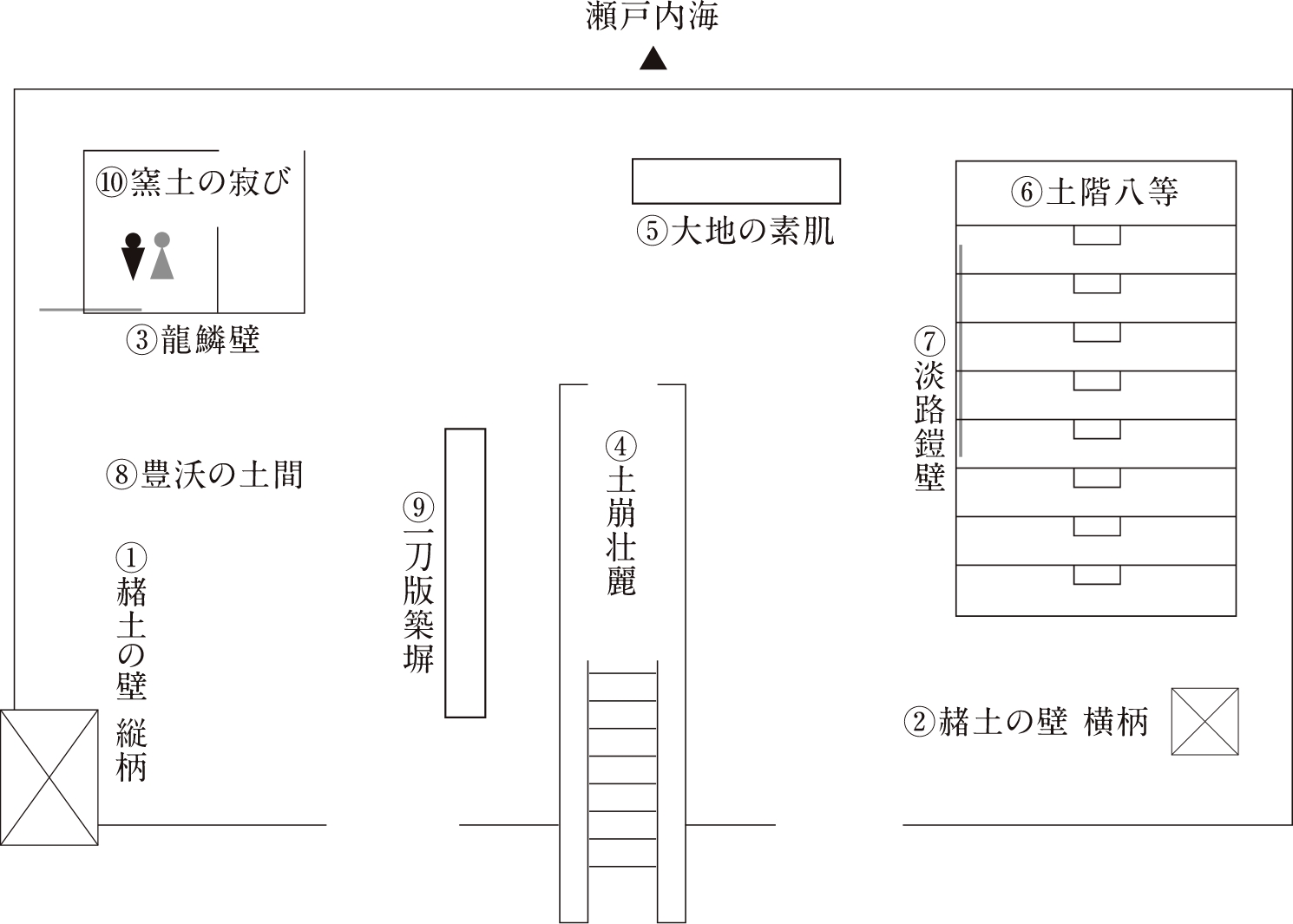
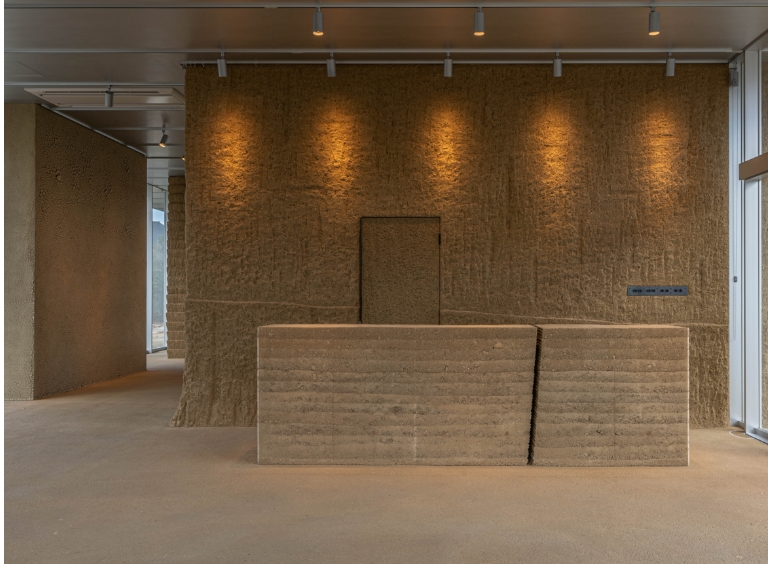
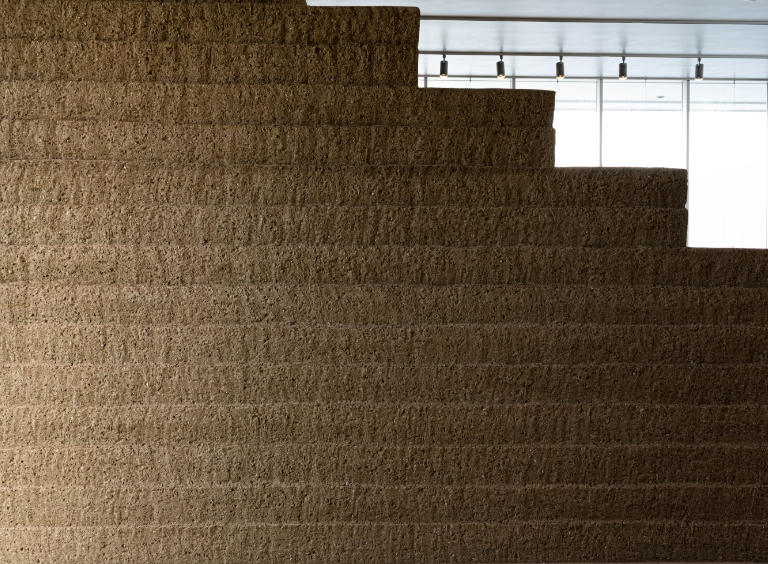
This wall directly adopts the logic of traditional Japanese rammed earth construction. Soil is placed into formwork and compacted layer by layer, producing a dense, stratified mass. A deliberate vertical cut is then introduced into the wall, intensifying the image of a fractured geological layer. This technique emphasizes mass, compression, and stratification, while turning the wall into a spatial representation of tectonic rupture.
One-Cut Rammed Earth Wall
2. Red-Ochre Wall(赭土の壁)
This wall is made by mixing a small amount of iron oxide into Awaji soil. Its surface is then carved and shaped with a trowel to produce textures resembling a cut mountainside or exposed earth section. Here, the focus is less on structural mass and more on color modulation and sectional expression, allowing the wall to evoke the visual depth of geological terrain.
Red-Ochre Wall
3. Dragon-Scale Wall(龍鱗壁)
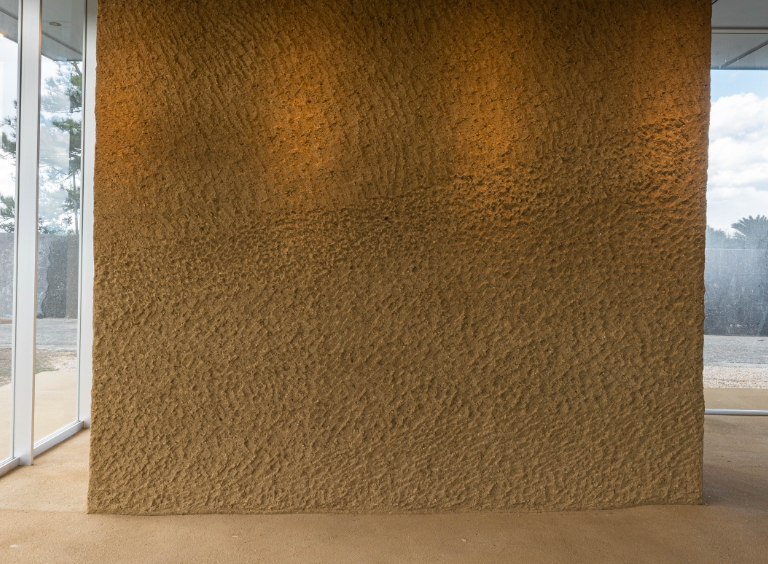
The Dragon-Scale Wall is formed through repeated plastering and carving, generating a highly articulated surface texture. Rather than presenting soil as a flat finish, this method highlights its capacity for ornament, rhythm, and tactile richness, transforming the wall into a textured field that captures light and shadow.
Dragon-Scale Wall
4. Magnificent Collapse(土崩壮麗)
This technique uses an unusually thick earthen coating to evoke the dramatic face of an excavated cliff or collapsed earth section. Its significance lies in its exaggerated thickness and sculptural presence, pushing earthen finishing beyond conventional wall treatment and toward an effect of erosion, weight, and exposed terrain.
Magnificent Collapse
5. The Bare Skin of the Earth(大地の素肌)
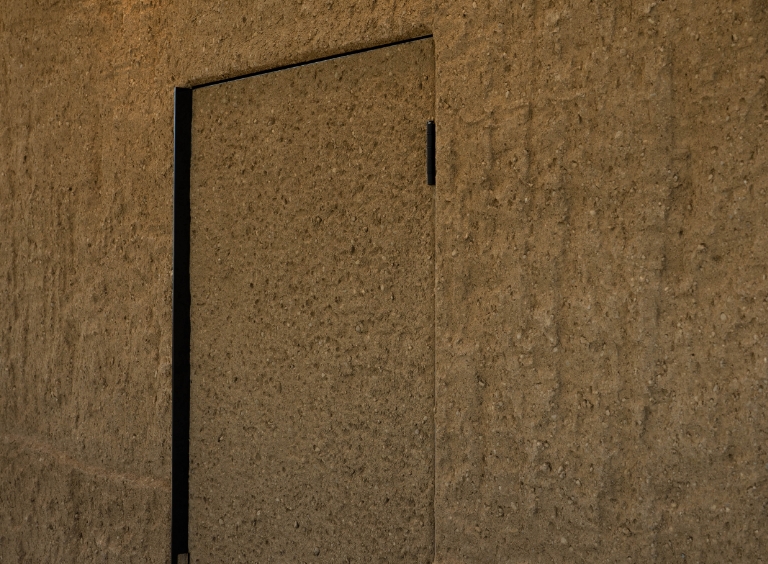
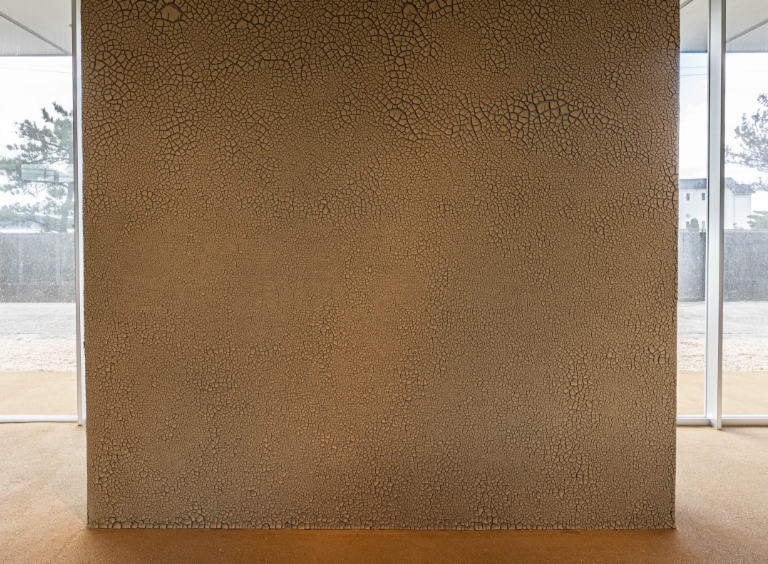
In this treatment, common additives such as reinforcing fibers or stabilizing materials are intentionally reduced. The wall is allowed to dry and crack naturally through the interaction of soil and water alone. Instead of concealing fragility, this method turns shrinkage, cracking, and imperfection into the very expression of the surface. It presents earth in a more raw and vulnerable state, where instability itself becomes an aesthetic quality.
The Bare Skin of the Earth
6. Earthen Steps of Hierarchy(土階八等)
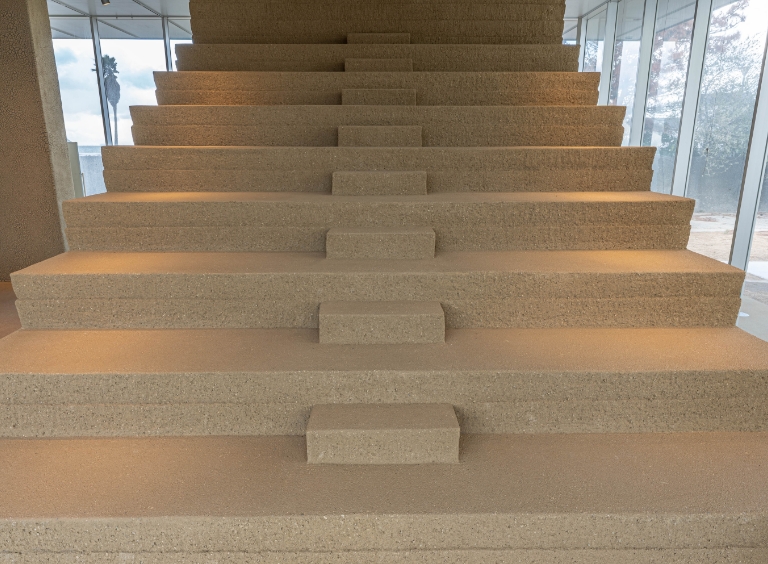
This installation takes its motif from the four-character phrase “Doka Santō”—a reference to the humble palace life of Emperor Bi of Qin, who is said to have governed an era of peace while living simply. Drawing from this idea, the design expresses a presence that is materially modest yet spatially dignified, like a palace in character.
This technique is less about wall-making itself and more about the symbolic use of earthen mass as architectural form. By shaping soil into stepped geometry, it gives earth a sense of monumentality and ceremonial presence, showing how a humble material can still convey gravity, order, and spatial authority.
Earthen Steps of Hierarchy
7. Awaji Armor Wall(淡路鎧壁)
This work adopts the yoroi-kabe technique—traditionally used in earthen boundary walls for cultural heritage sites and vernacular architecture—but reinterprets it here by reversing its usual vertical orientation. Through this inversion, the wall more strongly emphasizes a sense of weight, density, and the raw ruggedness of the earth.
Awaji Armor Wall
8. Fertile Earthen Floor(豊沃の土間)
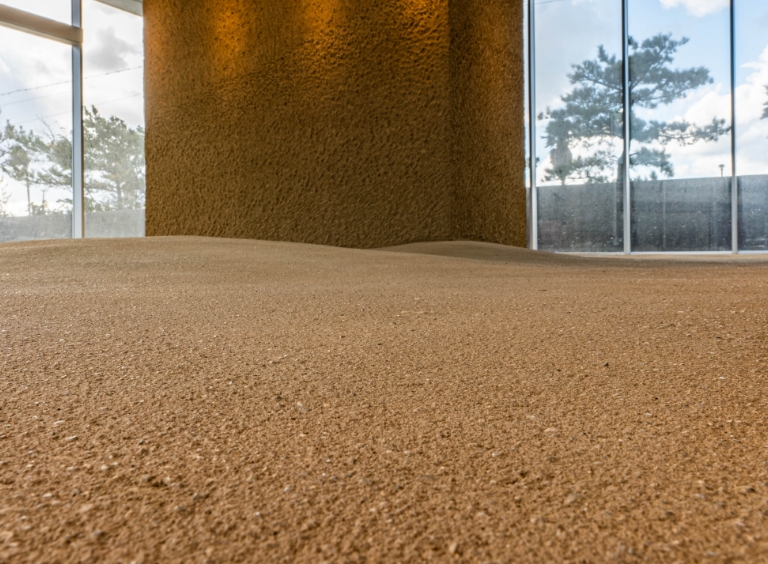
The dramatically undulating earthen floor represents the earth itself as a swelling, rising ground plane. In doing so, it overturns the conventional assumption that an interior earthen floor should be finished flat according to architectural norms.
Fertile Earthen Floor
9. The Rust of Clay Tiles(窯土の寂び)
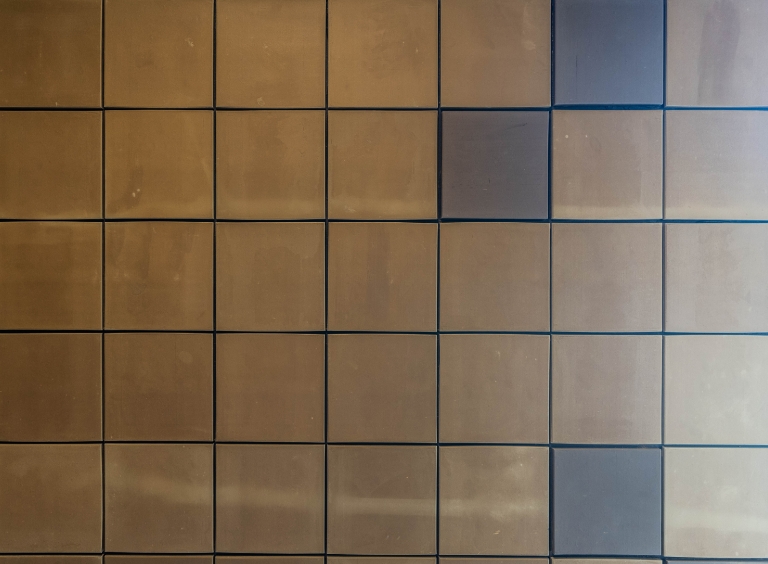
This work incorporates Awaji clay roof tiles, one of the island’s local ground-based industries. The tiles on the wall are intentionally left unfired so that, over time, they darken with age, expressing a weathered quality akin to the patina and quiet austerity associated with a tea room.
This technique is especially compelling for its emphasis on time and material aging. By refusing to complete the tiles through firing, the project allows change, darkening, and imperfection to become part of the design. It presents earth not as a fixed finish, but as a medium that continues to transform, carrying associations of patina, memory, and wabi-sabi-like atmosphere.
The Rust of Clay Tiles
Sensory Experience and Related Activities
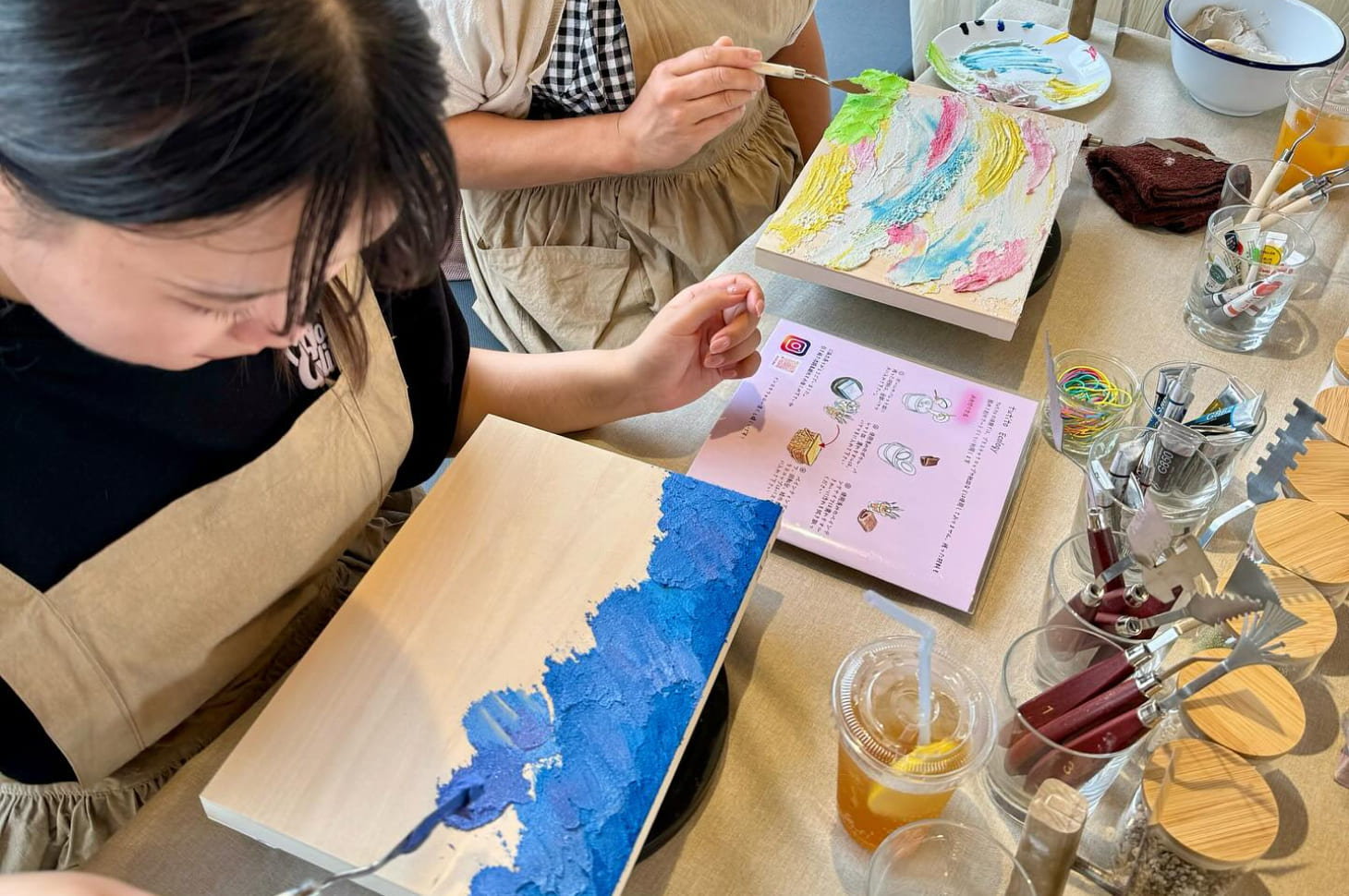
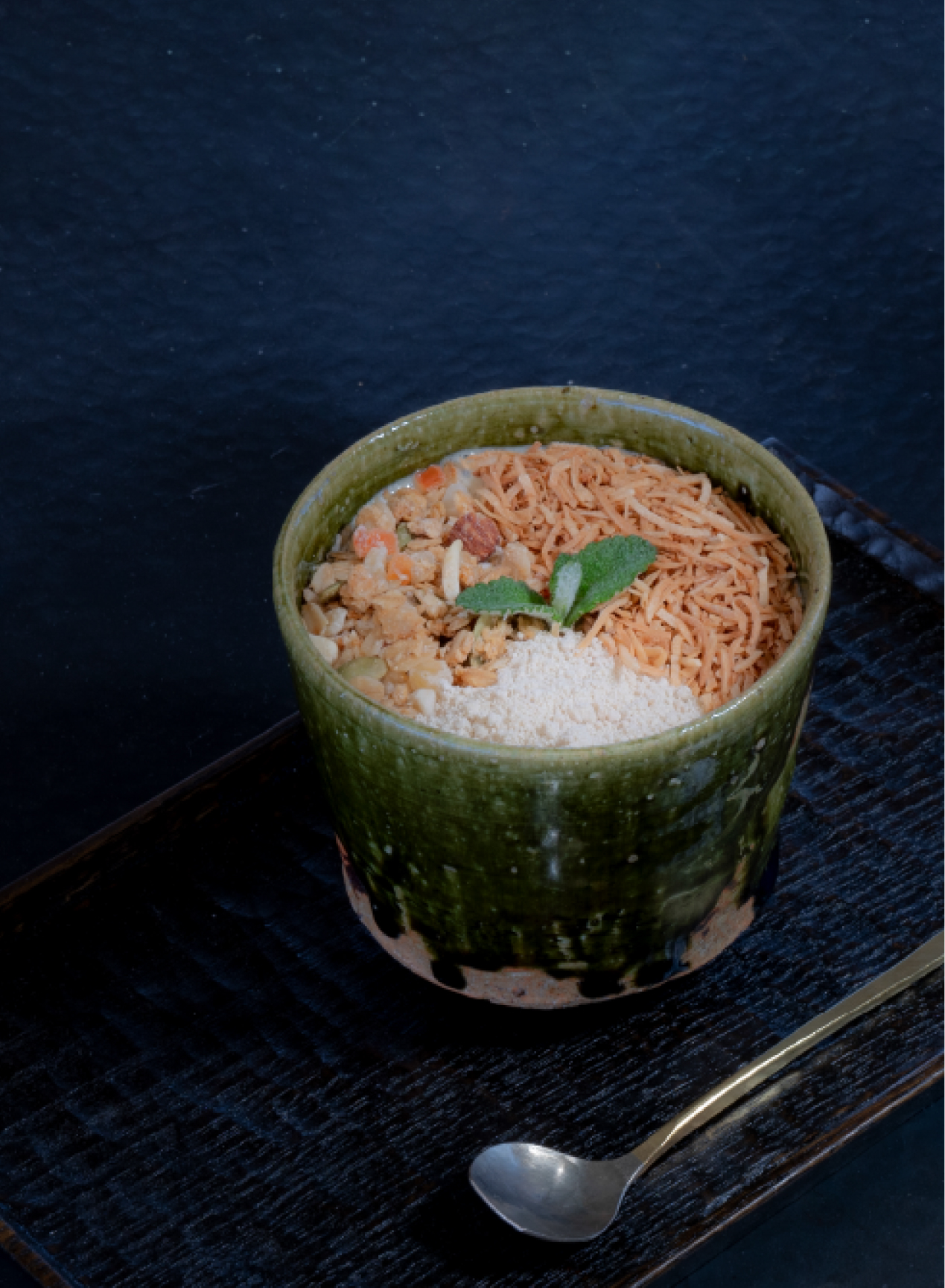
The museum also hosts a range of hands-on art workshops that invite visitors to touch and work with soil. In the café, several foods are designed to mimic the visual appearance of earth, and some even incorporate edible soil-like material, including diatomaceous earth.
“Touch” – soil texture art workshop“Eat” – diatomaceous earth
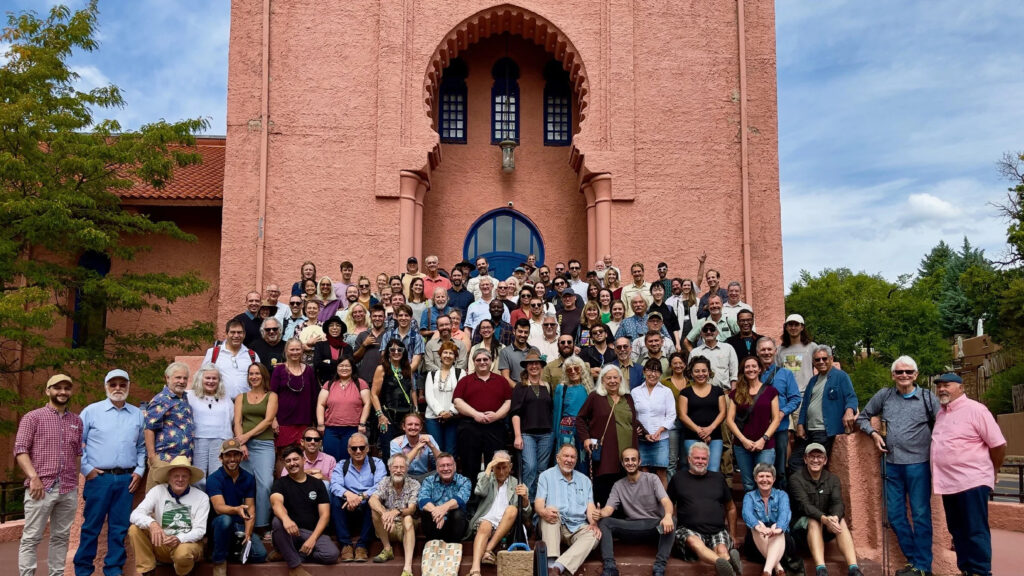
Earth USA is the biennial international conference on earthen architecture organized by Adobe in Action (AinA) in Santa Fe, New Mexico. It brings together architects, engineers, builders, and researchers to share advances in clay-based construction. Earth USA began in 2003 as “Adobe USA,” first held at Northern New Mexico College by the Adobe Association of the Southwest and dedicated to Paul Graham McHenry, and it has continued on a biennial basis since then. In 2011, the name formally changed to Earth USA for the sixth conference, held in Albuquerque, and since 2013 all subsequent conferences have taken place in Santa Fe. Key milestones include the adoption of a broader earthen-material scope beyond adobe, as well as expanded international participation.
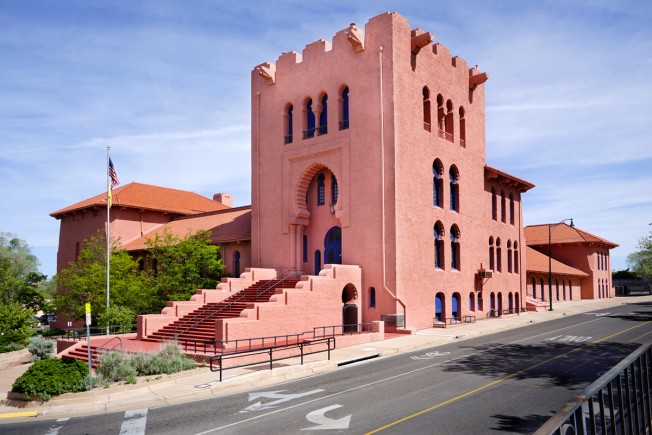
The Scottish Rite Center hosts the conference, reinforcing the event’s Southwestern adobe heritage. The Santa Fe venue also underscores the material focus: the Alhambra Theater is a pink adobe stucco building, and local expertise in adobe construction is abundant. Site tours have included Pueblo ruins, ancestral Spanish missions, and owner-built adobe homes throughout northern New Mexico. Typical Earth USA activities have featured on-site workshops, such as plastering demonstrations, as well as earthen installations; for example, past Earthbuilders’ Guild teams have built mud-brick stages and art displays on-site. In sum, the conference’s materials and form revolve around clay-rich architecture, celebrating both the traditional thick earthen walls of Santa Fe’s historic districts and cutting-edge earth technology.
Earth USA is run by AinA, a New Mexico 501(c)(3) nonprofit organization dedicated to adobe and earthen-building education. AinA was founded by Mike Lopach and launched Earth USA to empower owner-builders. For Earth USA 2026, AinA’s Lisa Morey and Dan Krause co-preside on the board of AinA, and the Executive Director is Kurt Gardella, a certified adobe instructor who studied under Quentin Wilson at Northern New Mexico College. Gardella holds adobe construction certifications and leads AinA’s certificate program. He has been “a major organizer of Earth USA” while also teaching owner-builder courses. Lisa Morey is a civil engineer and designer, and co-founder of Colorado Earth LLC. She is the author of Adobe Homes for All Climates and holds a patent for reinforced adobe brick walls. Dan Krause is a retired ASU professor who became enamored with adobe while living in Arizona. He designed and built two of his own adobe homes, earning AinA’s Adobe Construction certificate in 2020. Collectively, the organizers combine academic and practical expertise to network experts, educate practitioners, and advance earthen construction worldwide.
Each Earth USA conference follows a structured program with three days of presentations and posters, along with associated social and field activities. The format typically includes a Friday welcome keynote, all-day podium and poster sessions from Friday through Sunday, and Sunday afternoon tours to regional earth-building sites. For example, Earth USA 2024’s schedule featured invited talks on topics ranging from flood-proofadobe shelters to waste-earth reuse and seismic earth block design, alongside panels on owner-buildercase studies and clay plaster techniques. All conferences include a Friday night reception sponsored by the Earthbuilders’ Guild and guided tours to adobe missions, historic homes, and new earth projects on Sunday. The scope of subjects is broad, and organizers note that the program reflects a wide field of interest, including adobe, rammed earth, compressed earth block, cob, and essentially any method that uses clay as a binder.
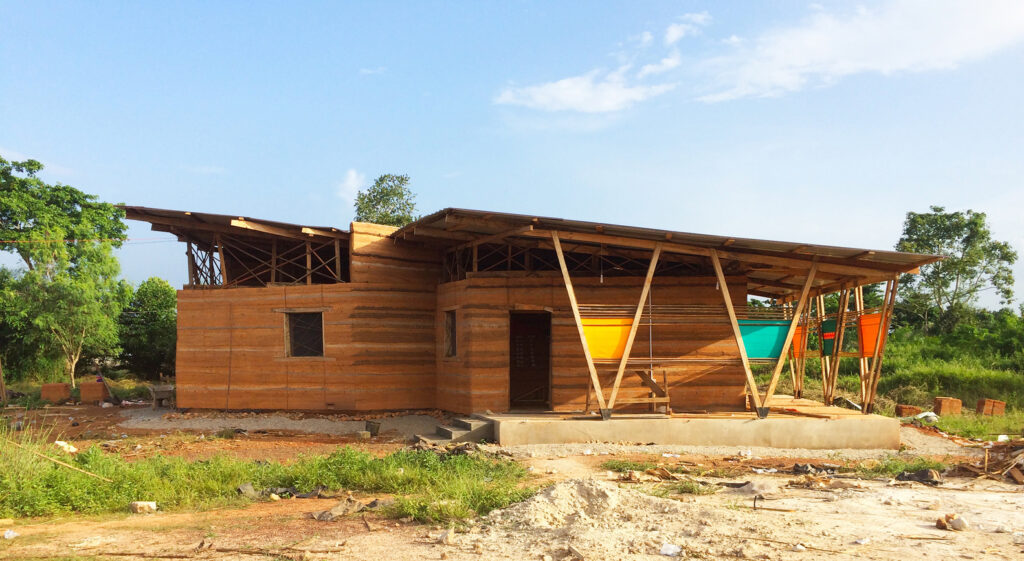
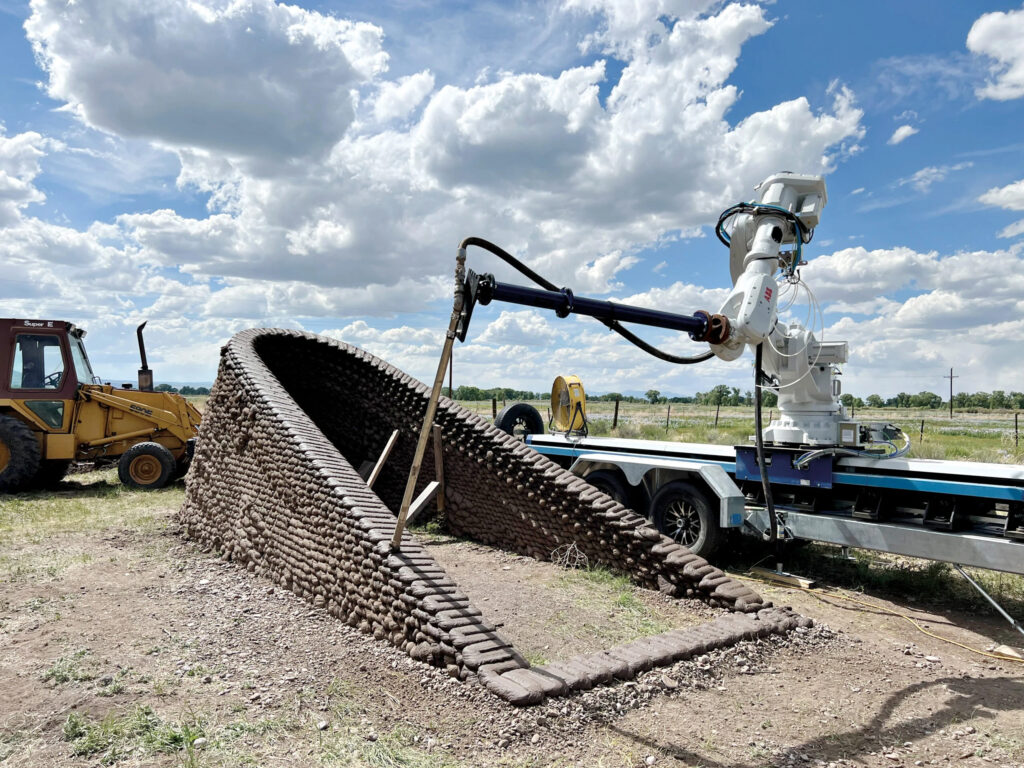
Key themes encompass the use of sustainable materials, including earth plasters and stabilized blocks; advancements in modern fabrication techniques such as 3D printing and robotics in earthen architecture; building science considerations ranging from thermal performance to seismic resilience; historic preservation; and social projects focused on affordable housing and owner-builder training programs. For instance, Earth USA has featured a keynote from, “Mud Frontiers,” by Ronald Rael (UC Berkeley) on 3D-printed earth architecture, as well as a session on a Ghanaian rammed-earth housing prototype, “Kente House,” by Angeles Hevia. Other sessions have addressed codes and policy, including Ben Loescher on U.S. earthen masonry standards and Stephen Colley on adopting adobe in building codes. Topics also include education, such as introducing clay into architecture curricula, and innovation, including rotational tampers for rammed earth.
Earth USA is attended primarily by architects, engineers, and builders interested in sustainable construction, but also by anthropologists, code officials, and environmental advocates. The gatherings are intentionally international and multidisciplinary, as reflected in a speaker roster that includes talks on building practices from India, Japan, and Norway. Attendees leave with a sense of community, supported by nightly informal receptions and a vibrant email newsletter, EarthUSA News, which keeps participants connected year-round. In sum, Earth USA operates as a volunteer-driven conference in which the organizing committee handles logistics and content curation, while academic partners disseminate the findings.
The program is fully documented in the conference proceedings and often carries American Institute of Architecture (AIA) continuing-education credits. Speakers come from universities, nonprofits, governments, and industries worldwide, and recent years have seen participants from 15 to 20 countries. Poster sessions provide a venue for shorter papers on topics such as material testing, vernacular research, and life-cycle analysis. Throughout, the conference emphasizes process, including peer-reviewed abstracts, international volunteer committees, and field demonstrations, as much as the building form itself. Many sessions delve into construction processes such as mix design, compaction, and curing, while others focus on form-finding and earth structures shaped by heritage or innovation.
As an organization, AinA solicits abstracts internationally through a call for papers reviewed by experts and publishes proceedings. For 2026, for instance, abstracts were due in February 2026 and full papers in June 2026. Registration is open to professionals, students, and owner-builders. Earth USA’s inclusive approach is also reflected in its leadership; for example, owner-builder Ethan Novikoff both presented and served on the AinA board, bridging practitioner and organizer roles. Sponsorship comes from allied nongovernmental organizations and firms such as the Earthbuilders’ Guild, the SFCC Adobe program, supporting organizations, and architecture firms.
Earth USA presents a clear consensus that earthen materials are inherently sustainable, resilient, and culturally rich. Many presenters emphasize earth’s low carbon footprint and ease of reuse, as well as its climate-comfort benefits, thermal mass, and humidity buffering. There is a shared mission to reclaim these traditional techniques in a modern context. From an architectural perspective, the conference inspires both reflection and action. It demonstrates how ancient building methods can inform contemporary design, for example, how Pueblo-style thick walls inspire passive climate control, or how combining fibers and modern stabilizers can make cob livable in cold regions. On the technological side, sessions on 3D-printing clay and new tamping machines point toward a future in which even large-scale earth building is industrially feasible. The Earth USA community also exchanges practical solutions; one talk, for instance, detailed how to guide a cob house through building inspections, while others described integrating adobe into U.S. building codes. In conclusion, Earth USA galvanizes the earthen-construction movement. It has inspired new international collaborations, spurred educational initiatives, and reinforced advocates’ resolve to promote sustainable, beautiful architecture that can be made from the ground.
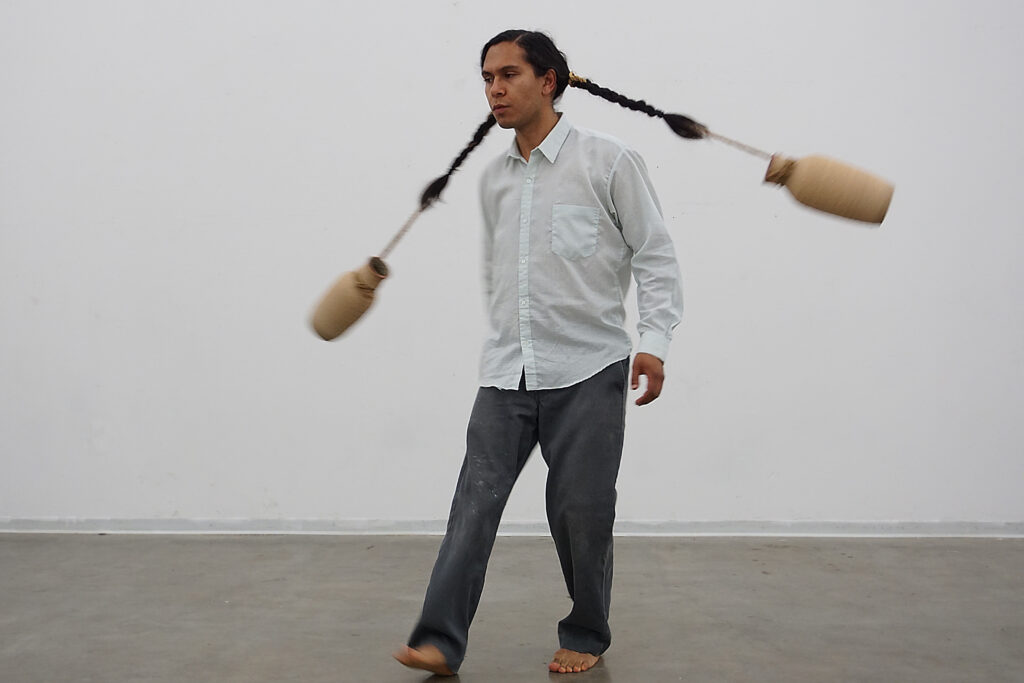
Cortez performing El Descanso En La Gloria, (Rest when I am Dead), 2017
Armando Guadalupe Cortés was born in Urequío, Michoacán, México and raised in Wilmington, California. He graduated with an MFA from Yale School of Art 2021 and a BA from UCLA in 2012 . ¿Y LA GENTE? from 2020, blends sculpture and performance to explore themes of memory, myth, history, geography, experience and materiality.
Rammed Earth Columns before the performance
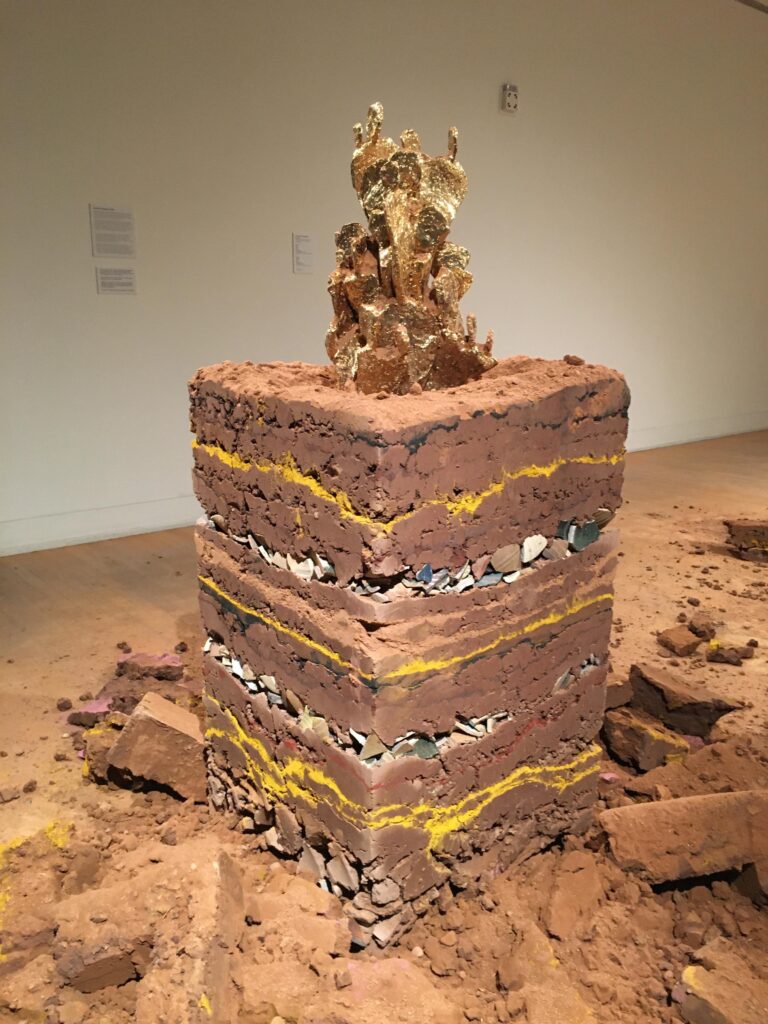
¿Y LA GENTE? (And the People?) 2020 Installation and performance Clay, earth, iron oxides, stoneware Each pillar 64” x 24” x 24”
Film still of the performance at ASU Art Museum, 2020
During the performance of ¿Y LA GENTE? Cortes excavates the rammed earth columns surrounded by musicians and dancers of his native Mexican heritage. Once revealing a gold ceramic sculpture within each column, one resembling a nopal cactus and the other a milling stone, Cortes exits the gallery leaving the deconstructed pillars to remain for the rest of the exhibition.
Revealed Nopal CactusRevealed milling stone
Through blending performance and sculpture, he is able to question the dichotomy between myth and fiction as an antonym to history. Growing up in two worlds has lead Cortés to a fantastical take on the ordinary. He incorporates the multitude of symbols and identities from his family of farmers, migrants, manufacturers, office professionals, and professors in his material palette and choice of dress. In contrasting the mythical or in this case the colorful and culturally rich materiality with his business casual clothing, he illustrates the parallelism and tension within his life and work. This re-assembling of materials and cultural symbolism is crucial to how Cortes seeks to challenging notions of spectacle and viewership.
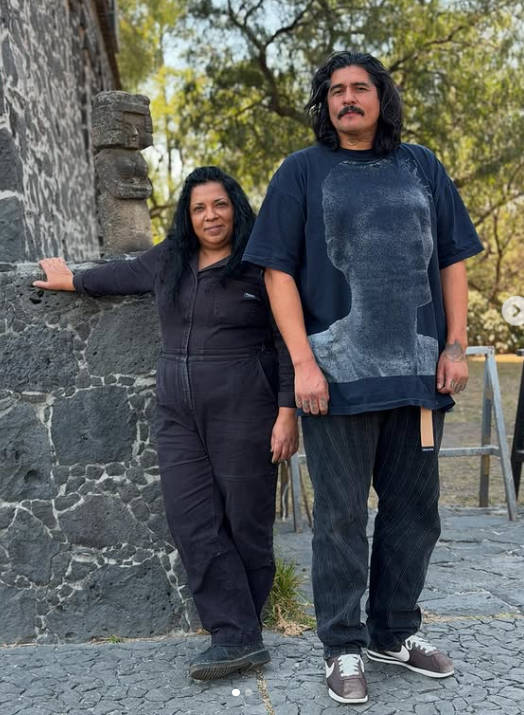
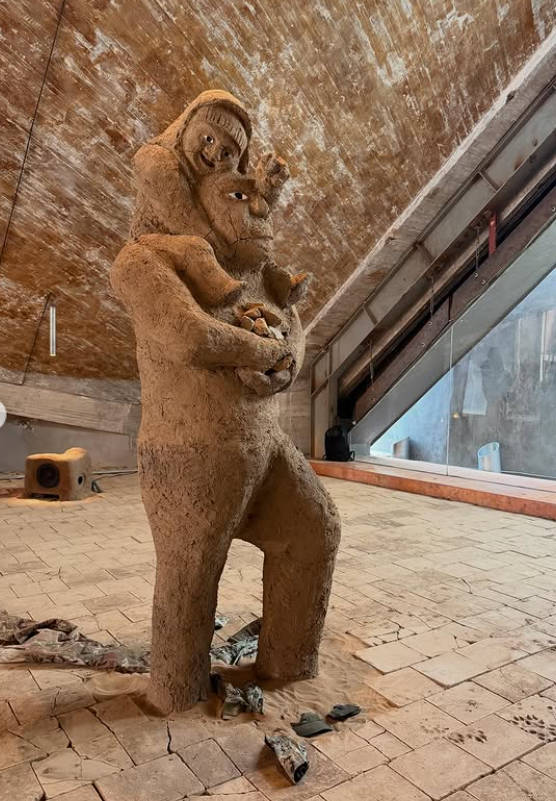
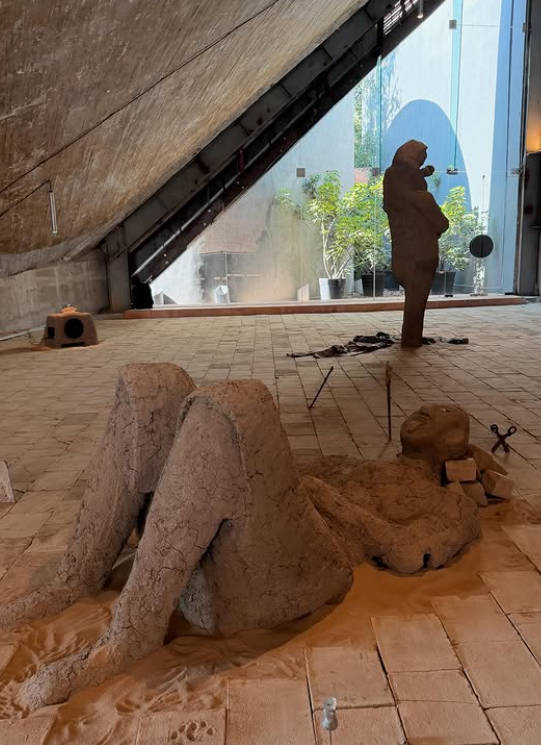
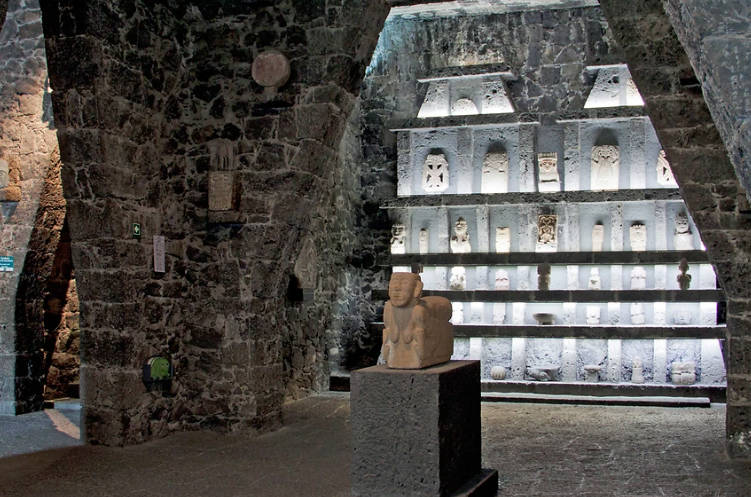
The rebellion of objects, part of Art Week 2026 in Mexico, brings together Beatriz Cortez (Salvador, artist and scholar in Latin American Literature) and Rafa Esparza (USA, performance artist, work with installations constructed from adobe bricks) in an exhibition conceived from their collaboration and artistic link, developed specifically to dialogue with the architecture, the collection and the territory of the Anahuacalli Museum.
The practices of Beatriz Cortez and Rafa Esparza share a constant concern with how historical narratives are constructed and how these affect displaced, migrant, or racialized communities. Their works propose imagining futures that are not determined exclusively by dominant discourses, but by alternative forms of knowledge, care, and relationship with the world.
Beatriz Cortez and Rafa Esparza
The exhibition proposes rethinking the collection from the perspective of memory, community, and spirituality, understanding objects not as static pieces but as carriers of energy and meaning , capable of activating new forms of relationship within the museum.
Through the serpent and the volcano as symbolic axes, the exhibition addresses the earthly journey, displacement —including the migrant experience— and the possibility of imagining different futures from contemporary art.
The rebellion of objects at the Anahuacalli Museum
The snake as a metaphor for displacement
One of the central themes of the exhibition is the serpent , understood as a symbol of movement, transit, and earthly journeys. In this sense , its presence alludes both to symbolic journeys within the museum and to real displacements of communities and bodies, including the migrant experience to the United States.
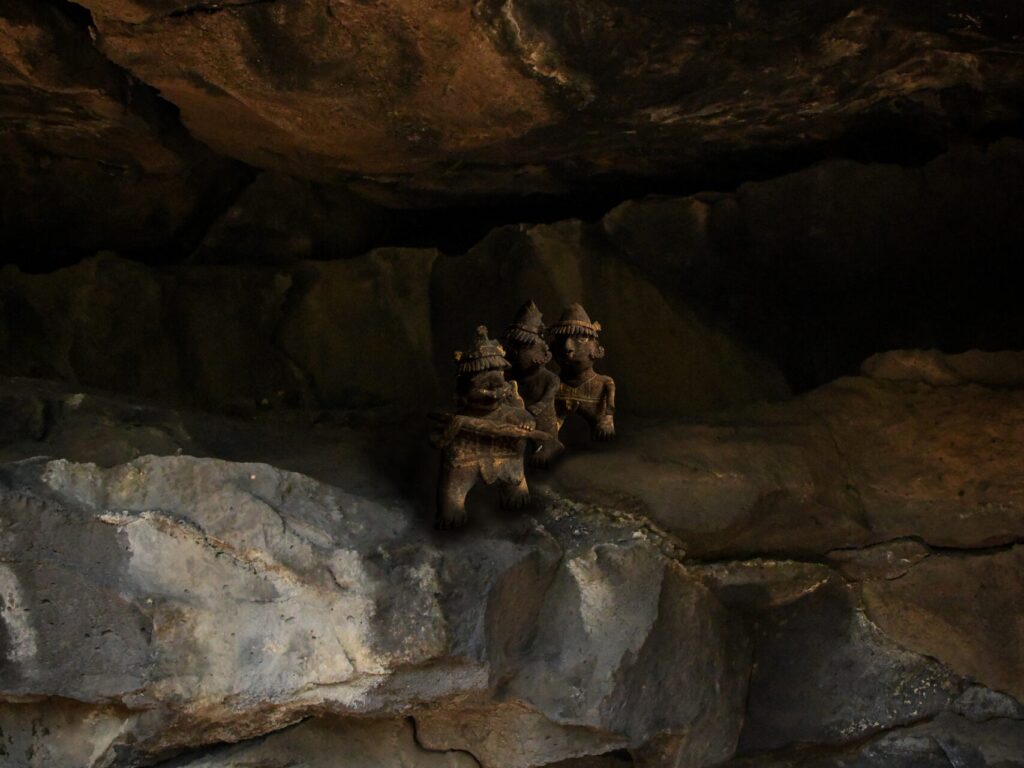
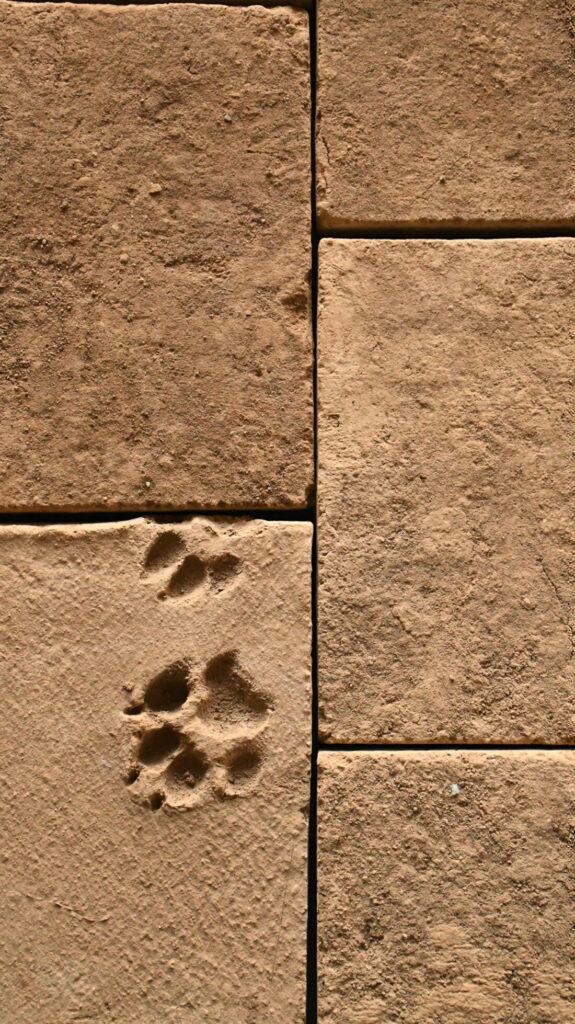
Detail of The Rebellion of Objects exhibition at the Anahuacalli MuseumDetail of The Rebellion of Objects exhibition at the Anahuacalli MuseumDetail of The Rebellion of Objects exhibition at the Anahuacalli Museum
Taken together, the exhibition proposes experiencing the museum from a different perspective. Thus , the space ceases to be merely a place of contemplation and becomes an active territory where the relationships between objects, bodies, and memory remain open.
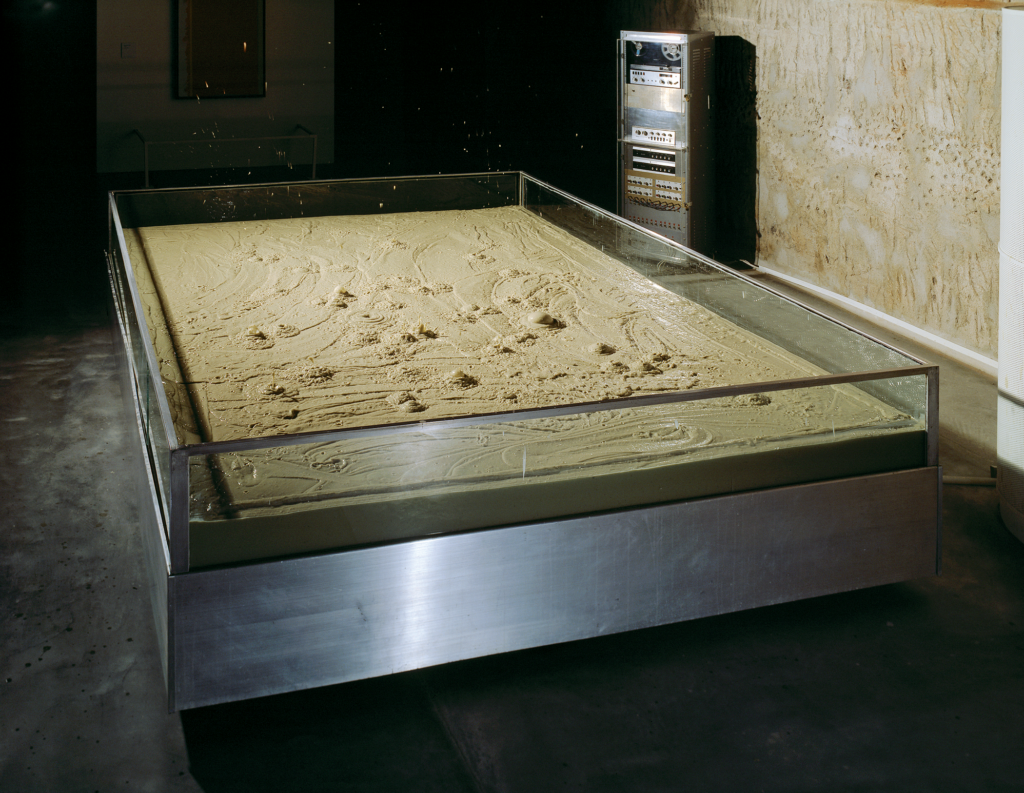
Robert Rauschenberg, Mud Muse, 1968–71; Moderna Museet, Stockholm, gift of the New York Collection
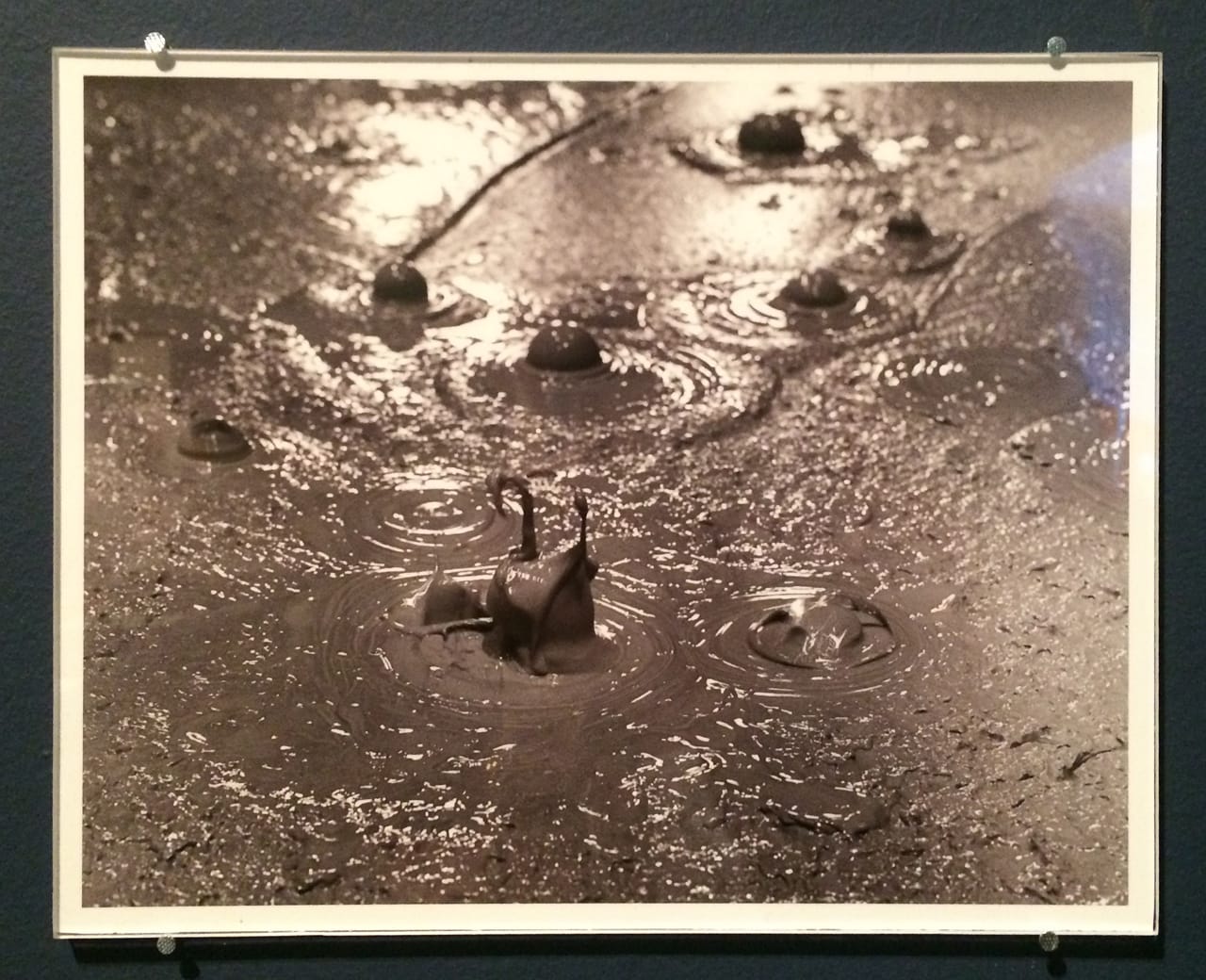
Mud Muse, a kinetic artwork created between 1968 and 1971 by American artist Robert Rauschenberg, in collaboration with engineers from Teledyne( through the Art & Technology program at the Los Angeles County Museum of Art), is a large aluminum-and-glass vat that contains an enormous amount of mud, weighing thousands of pounds. Although considered mud by standard terminology, its more appropriate content appellation is bentonite, an absorbent, swelling clay composed of montmorillonite, from weathered volcanic ash.
The mixture is stirred to a distinctive viscosity in the vat, over the course of several hours or days. The primary allure of the art piece is the bubbles produced with the aid of pulsing air valves that are located beneath the surface of the mud. This is connected to an adjacent prerecorded soundtrack that emits sound from a 1960s reel-to-reel. The sound pushes air through the valves, resulting in a physical manifestation of sound emission. Rauschenberg imagined different audio stimuli, including traffic noises, police sirens, and, most ambitiously, real-time sounds made by visitors that would be picked up by a hanging microphone. In the end, he decided that Mud Muse, when officially displayed for the public, would “play itself,” essentially a recursive loop of the audio made by the bubbles.
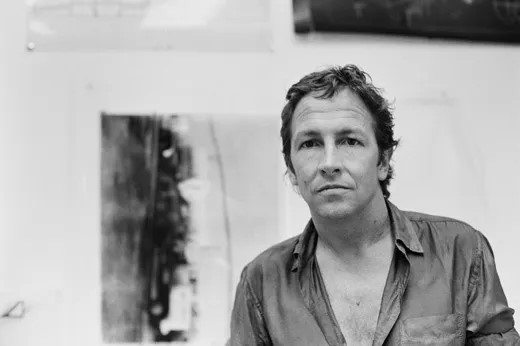
American artist Robert Rauschenberg
Rauschenberg (1925-2008), born in Port Arthur, TX, is considered a pioneer in the art scene due to his early adaptations of technology in his work, such as radios, electric lights, and clocks, as well as his more renowned printmaking works. His endeavors into kinetic art began in 1960, after meeting Swiss artist Jean Tinguely. Together, they created several kinetic works alongside engineer Billy Klüver, such as Oracle (1962–65), a sonic sculptural environment, and Soundings (1968), an immersive, voice-activated sound and light installation. This era, which was marked by technological innovation and space exploration, ultimately played a pivotal role in Rauschenberg’s creation of Mud Muse.
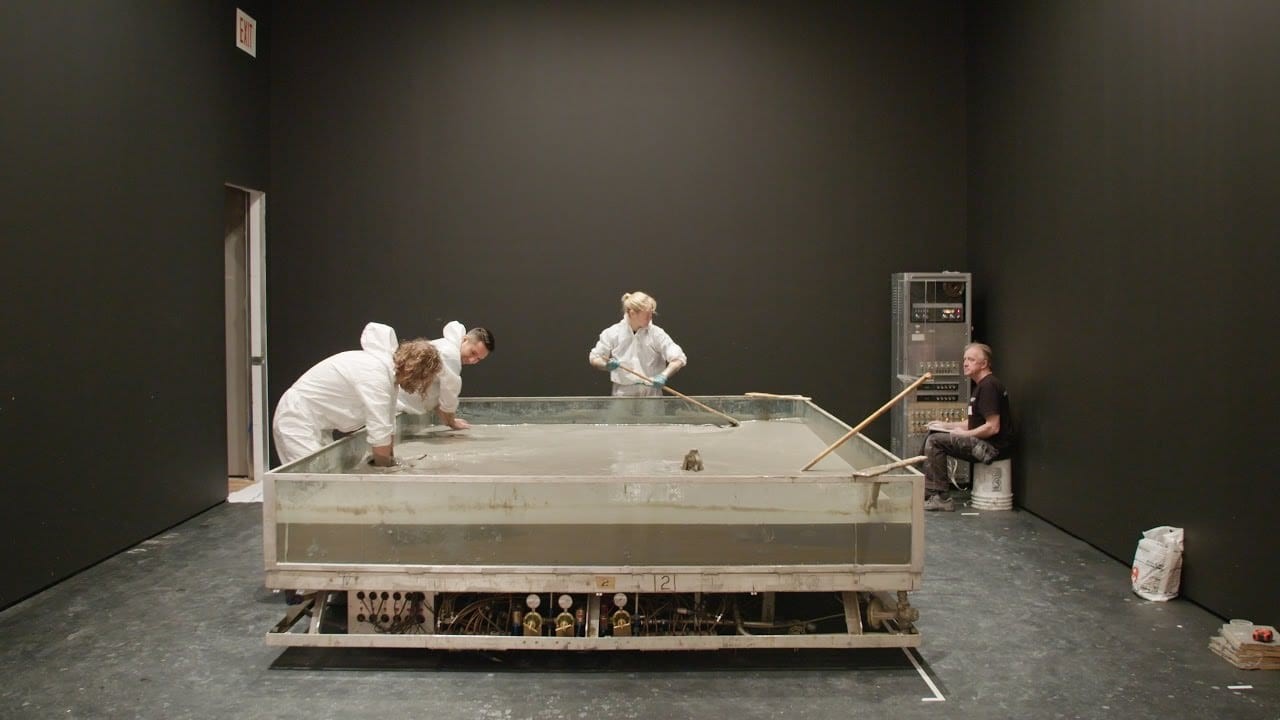
Gunnar Marklund(right) installing Mud Muse
In modern days, Mud Muse acts as a tradition passed down through the years. The current installer, Gunnar Marklund, notes that “The audio equipment and its cabinet are quite old and require maintenance and repair on occasion. And there are sixty-four valves in the bottom of the pool, and they do get clogged; I have to check them every time and clean them as needed.” Occasionally, during installation, he experiments with different music to activate the bubbling (in New York recently, ABBA). Overall, the knowledge he has gained over 19 years, he passes on to future generations.
Mud Muse 1968–71
In recapitulation, Mud Muse acts not only as a visual experience, but one that activates hearing, smell, and touch, allowing the public to have a holistic and interactive participation with the piece. It collides two opposing worlds of ancient material and modern technology, creating a piece of art that has withstood the tests of time and continues to bewilder audiences.
Location: He now lives and works in Chongqing and Dali.
Xi’s art, which is always gentle – even to the point of being hard to discern, built as it often is from organic matter and placed amongst leaves, moss, stones, and bark – is also, in fact, making a very bold and visionary proposal.
Nature and Self
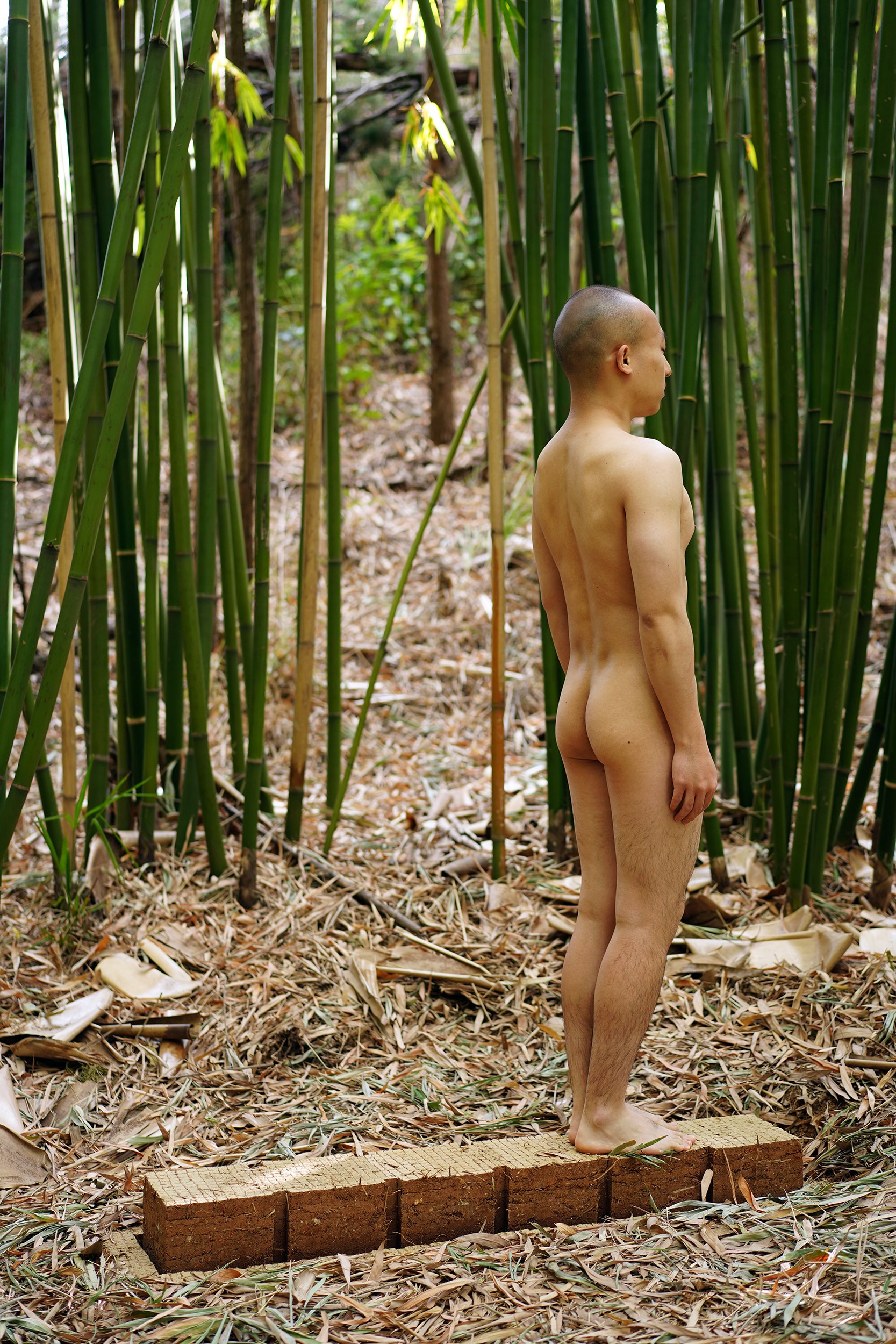
Xi’s proposal is this: that Self and Nature need not be separate entities. He is not expressing or documenting or representing either Self or Nature. Instead, he is exploring ways that Self and Nature relate and interpenetrate. He is actively demonstrating that one is part of the other. Thus, his interventions into Nature are a ‘working with’ Nature’s materials and a ‘working with’ Nature’s seasons and Nature’s cycles of time. If we see his naked body becoming part of the work, it is not to promote the ego of the artist, or to titillate – it is to make the far bolder assertion that we, as human beings, are part of Nature’s constant motion and materiality.
“The soil is part of us. We are part of the soil. The bamboo forest is part of us. We are part of the bamboo forest. We are as vulnerable as Nature, as porous, as interdependent, as constantly changing, as borderless.”
In his artistic practice rooted in human interventions into nature, the creator Xiguan Lei becomes a subtle orchestrator, leaving vanishing trails and marks that seamlessly blend with the natural landscape yet bear the unmistakable imprint of human hands. Reminiscent of land art pioneers like Richard Long or Robert Smithson, the artist engages in a poetic dialogue with the environment, crafting ephemeral installations that challenge the boundaries between the natural and the man-made.
Geometric Concepts
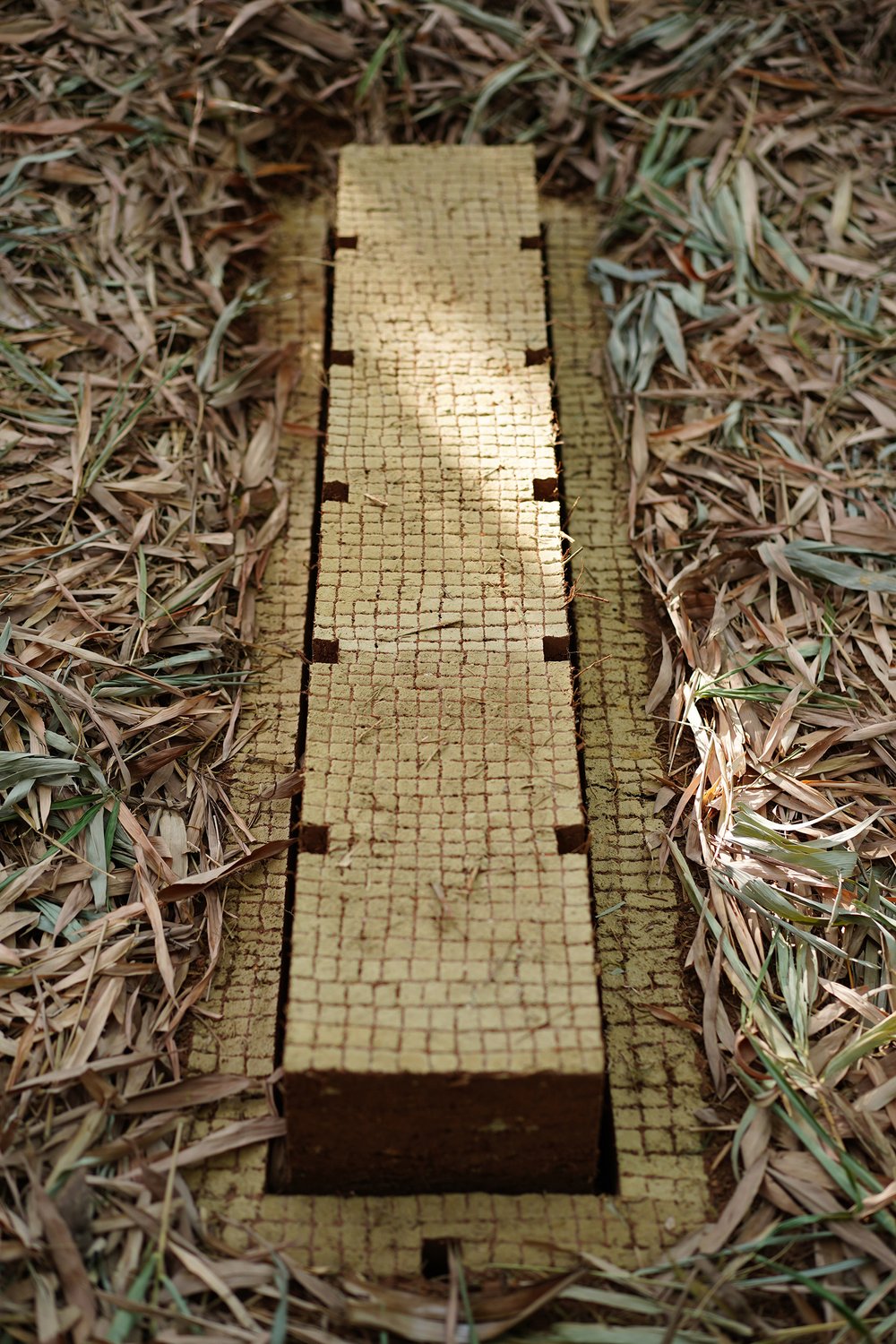
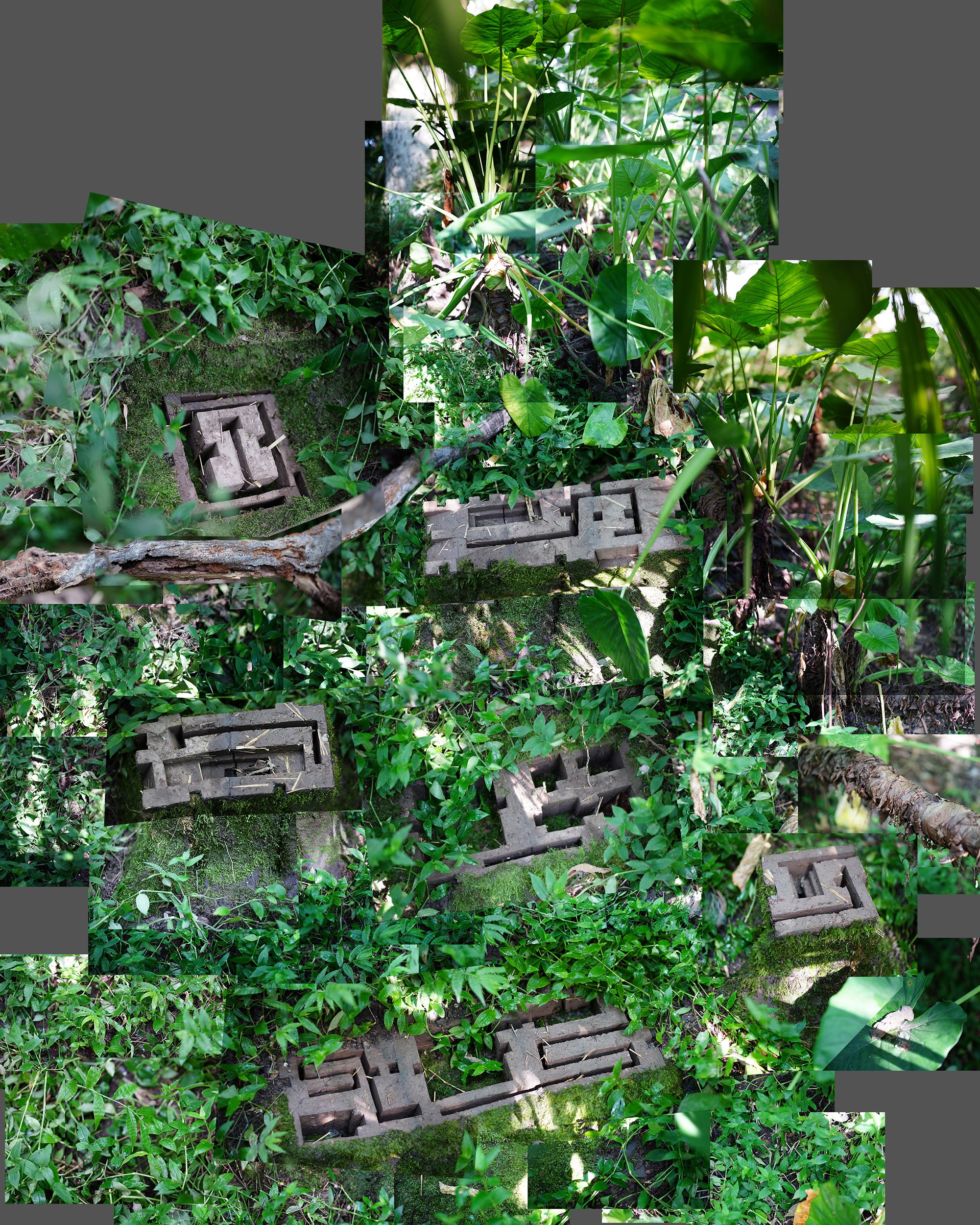
Xi’s methodology is influenced by Descartes’ and Spinoza’s geometric concepts including Rectangular Setup and Extension, Einstein’s theory of space, and the mathematical ideas of Euler and Gauss. He lays out the material in a particular shape, size, volume, and manner. We can see the sharp and hard edges and minimalism everywhere in the various forms of adobes and plants, with parts of the works independent of and also participating in the whole. Xi advocates that the viewer “walk through” the landscape and perceive the deep connection with nature. Put together, the images of their works both reveal the sense of mystery and miracle, where artistic phenomena are created and disappear in the rhythm of nature.
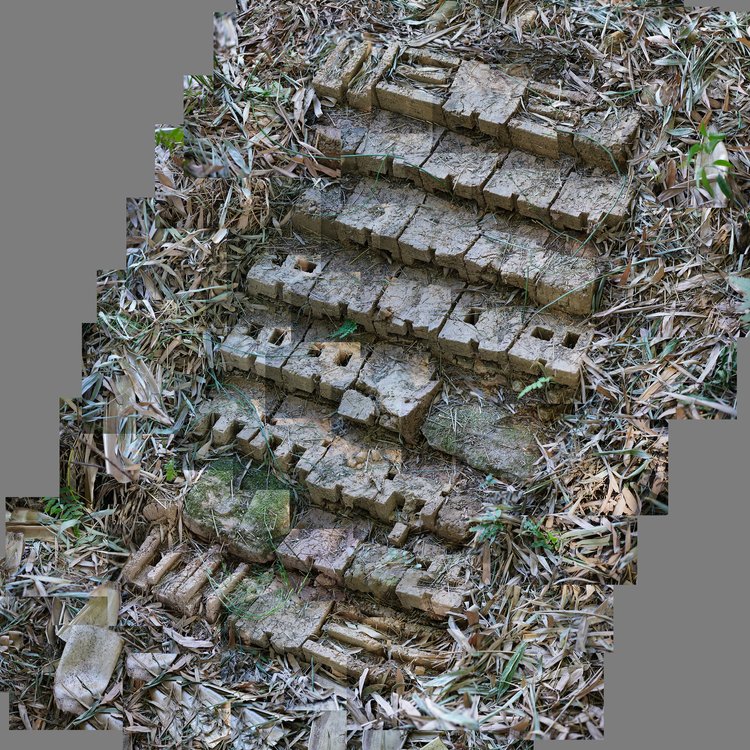
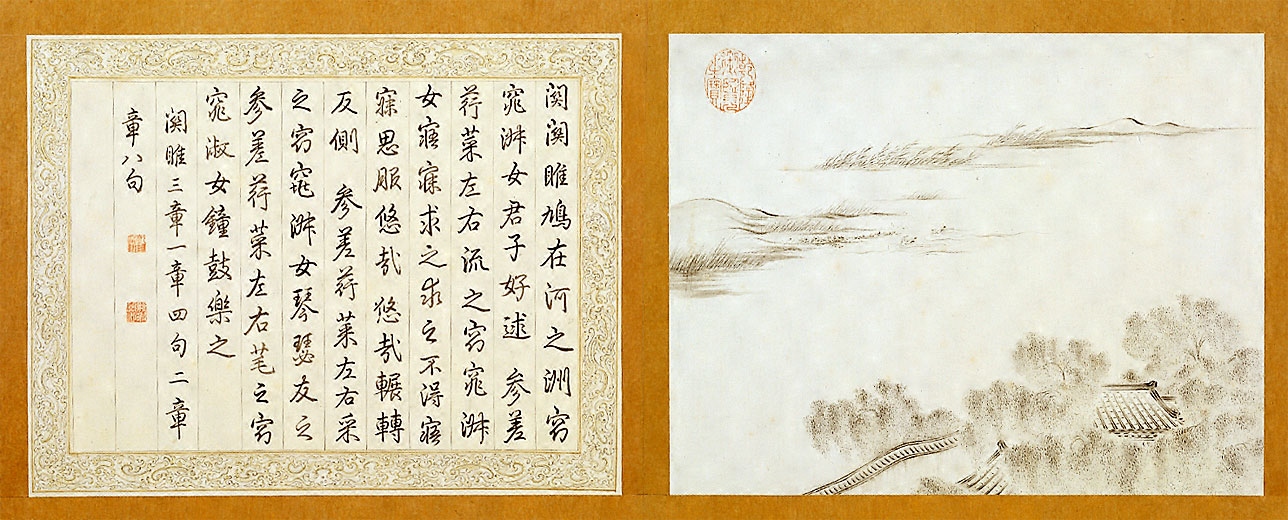
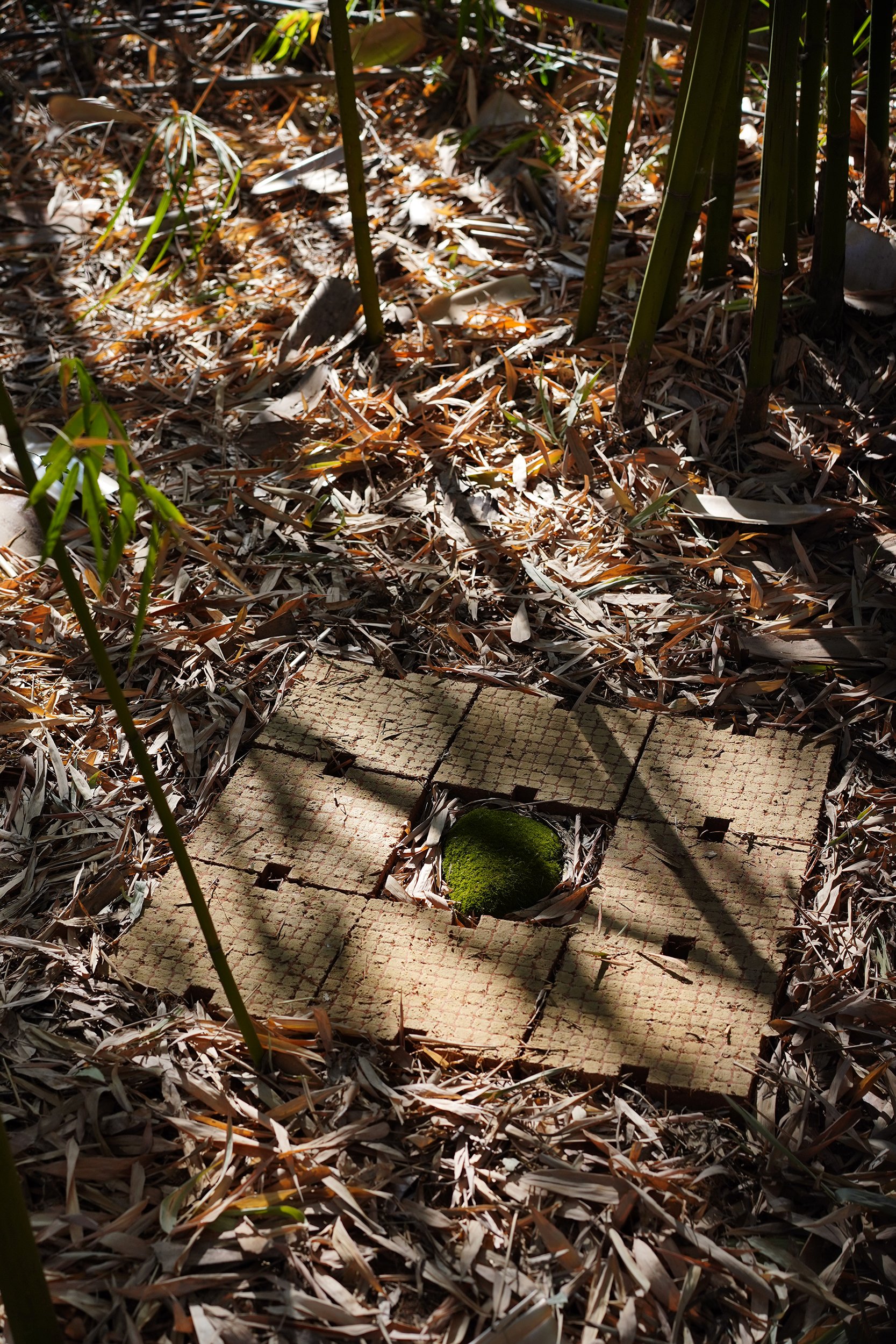
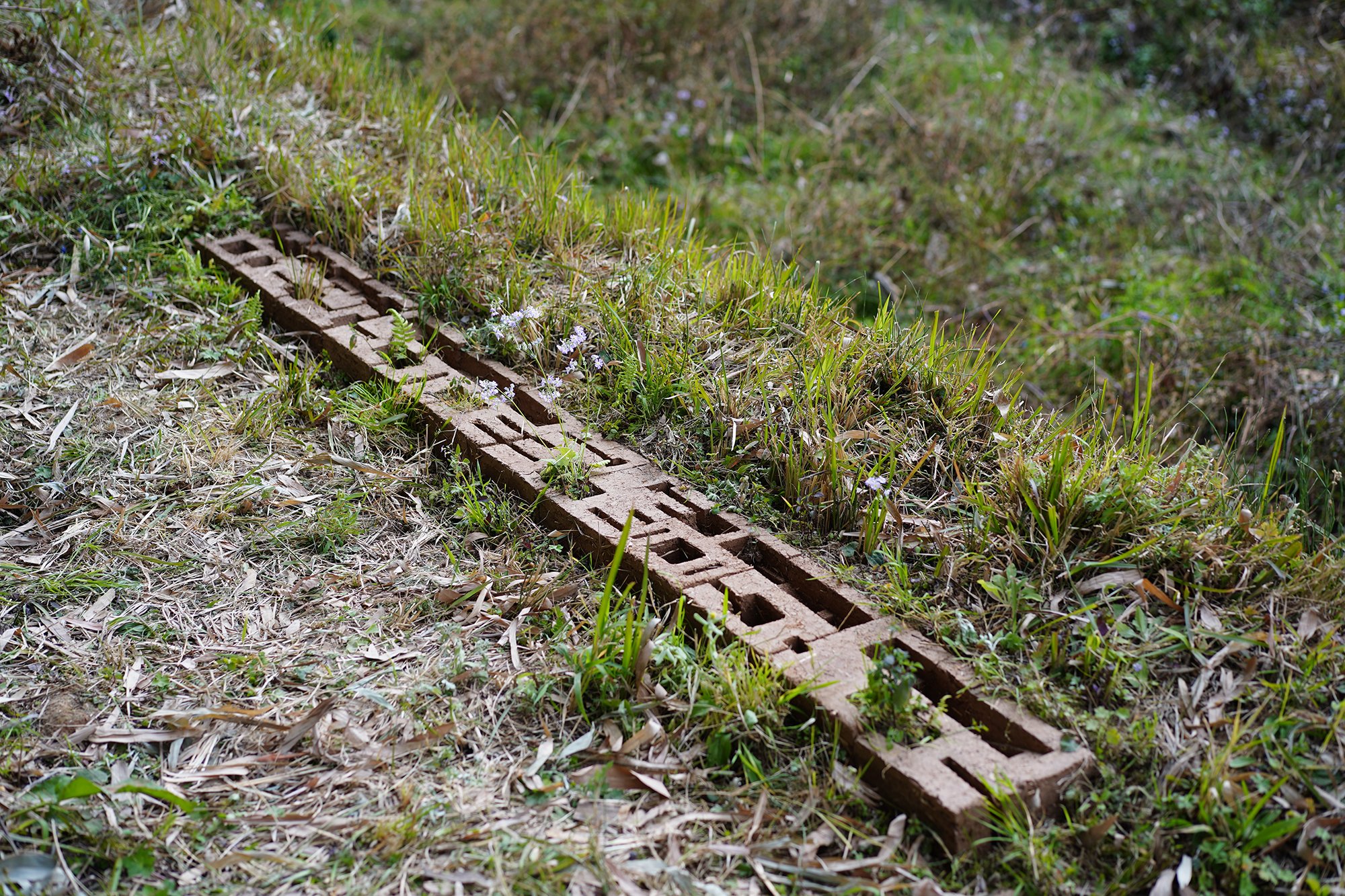
Xi gathers material on the spot including soil and plants to create his works. Surrounded by mosses, ferns, and seed plants, the hand-made adobes are arranged solidly in a structural manner. This is the most iconic series of his works whose titles are quoted from classical Chinese literature: the Book of Songs and theSongs of Chu, such as It is Nice to be in the Garden, There is a Sandalwood (乐彼之园,爰有树檀)(2019), Swoop Flies that Falcon, Dense that Northern Wood (鴥彼晨风,郁彼北林)(2020), and The Appearance and Height of the Lush Plants Match Beautifully (纷緼宜修)(2020). Xi borrows these responses from ancient Chinese philosophers to the rhythms of nature, alluding to the unity of the abstract structure and figurative content in his works, and the fusion of classical Eastern aesthetics with Western spatial geometry. Legitimately, Xi calls his works “Land Art” rather than installations or sculptures. In terms of Land Art, it uses nature as the creative medium, and always emphasizes the visual form of the site-specific context, looking for an organic integration between the works and nature. One Issues from the Dark Valley and Removes to the Lofty Tree (出自幽谷,迁于乔木) (2019) , one of the series of adobes, created in 2019 and eroded back to the land during the rainy season in 2021, which is a vivid projection of the journey of human life.
Lei’s work does not need – and probably not always meant – to be contained in a gallery or put against a wall because this would undermine his core artistic if not philosophical purpose: this is only in nature, out in the open air, where Lei’s adobes turn to be his art. This is out there that time can do his essential share, that is slowly absorbing as a sound graft Lei’s adobes as they are designed to be. Lei’s structures, given the infinite potential of adobes, can take all sort of forms: they can be seen as burial site or places of meditation – see “1120 Conversations I had with Moss and a Rock”, “I’m Walking in the Field”.
Once build or installed in nature, Lei’s structures slowly fade away, change form and aspect over time and may eventually disappear. This is a key point about Lei’s artworks: as they are made from earth, they are designed to evolve when placed on the ground, slowly and silently, and possibly completely disappear. This gives the opportunity for the observer to witness not a still artwork but an evolution, that is the exact opposite of a still life: real life. We cannot but notice the humility of Lei’s artistic approach. From a Chinese viewpoint, the reference to Taoism comes readily to the mind when trying to understand Lei’s artistic approach. Laozi Tao Te Ching, to put it in a few poor words, teaches us that all things come from a unique energy, transforms, fades away and recycle in the “logos”.
Xiguan Lei’s artistic practice holds a significant role within the contemporary environmental discourse framed by the Anthropocene. As we grapple with the profound impact of human activities on the planet, his installations and sculptures serve as poignant reflections and catalysts for conversations surrounding humanity’s relationship with the environment in this epoch. The ephemeral nature of his works mirrors the transience inherent in the Anthropocene era. The marks left by the artist’s body and other interventions evoke the impermanence of our impact on the environment, fostering a contemplation of the evolving and often precarious balance between human activity and the natural world.
Lei considers his art “a grand and silent game of building blocks”. He also told that those adobes could be considered words. That begs the question of their meaning. Just as the stones used in ancient civilization building, Lei’s adobes talk to anyone willing to listen. But the observer has to be tender ear because Lei’s art is elegant and subtle enough only to whisper. As to what it is whispering, “The Tao that can be told is not the eternal Tao”. This is how much Xiguan Lei’s art can offer: a glance at eternity.
N. Dash was born in Miami Beach, Florida, in 1980. She earned a BA from New York University in 2003 and an MFA from Columbia University, New York, in 2010. Now, Dash lives and works in New York and Taos County, New Mexico.
Dash’s work in sculpture, painting, and photography is the product of a unique, multipart creative practice that seeks to register lived experience and bodily intelligence through material. Her works, primarily made of natural items such as linen and adobe, give physical form to the intangible and the imagined.
During 2010 to 2020, N. Dash’s work started to be included in group exhibitions in many different museums. Dash also has presented solo exhibitions at White Flag Projects, Saint Louis (2013) and Hammer Museum, Los Angeles (2014–15).

In 2022, N. Dash has one solo exhibition in Europe at Stedelijk Museum voor Actuele Kunst (S.M.A.K.), named “earth”. In this exhibition, she still uses what could be considered common materials, such as jute, mud, and string. But the earth referenced in the exhibition title is a constant, often used as a ground, which is a capstone in earth art.
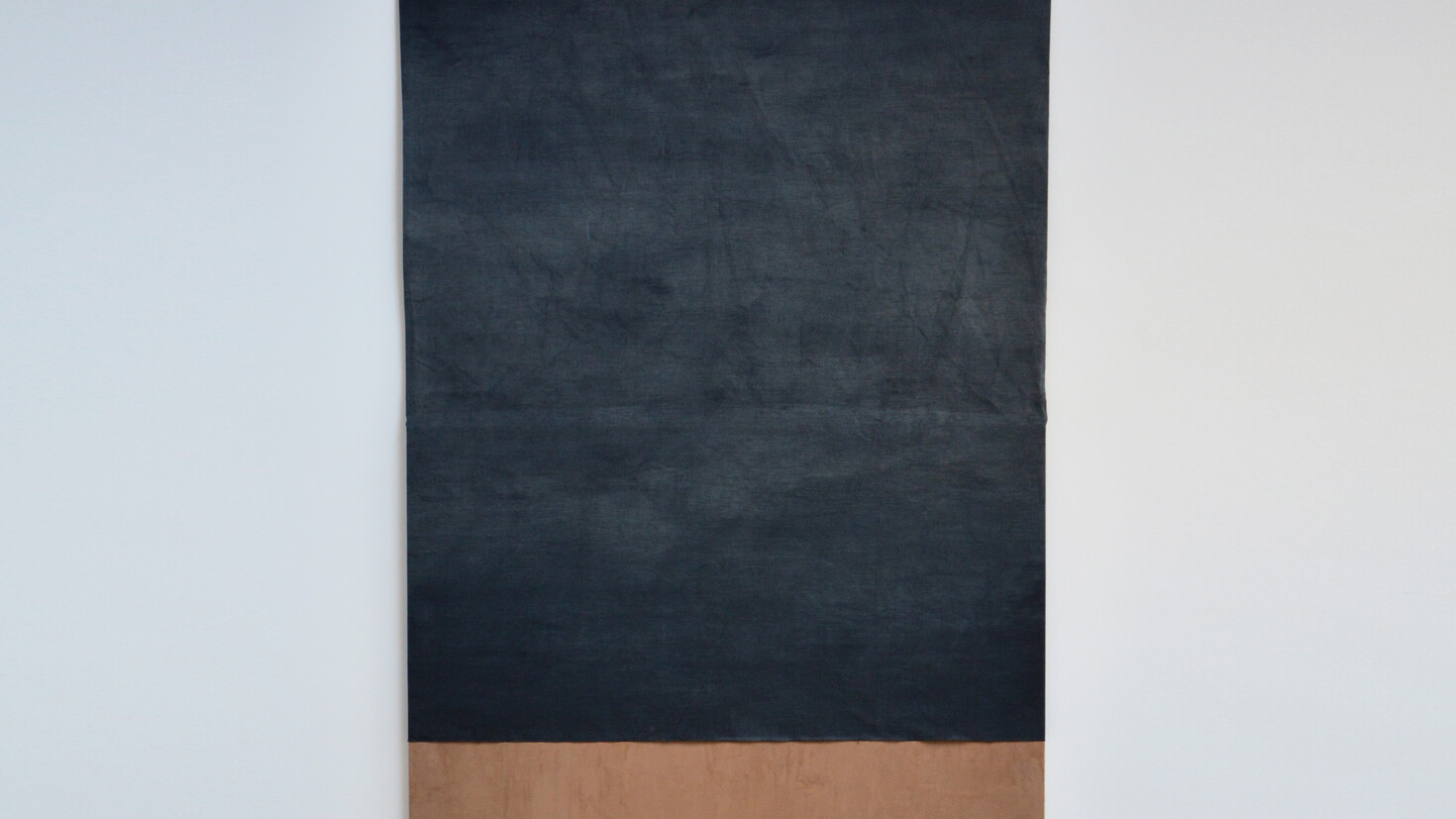

Dash composes her works—which are usually Untitled—using discrete units, never disturbing the integrity of a given unit. Her works always used nature material and create without meaning which explains that “Art can be no meaning.” By looking her works in two different viewing positions, people can get very different feeling. For example, this work named Unititled, looks like a light-blue panel is placed high up on the wall, and it is only when we move in closer that we perceive the skeins of string that are suspended from the panel. This kind of formal play has charged undertones in our time. The subjection of the natural world to the present economy of images transposes materials into essentially aesthetic contexts.
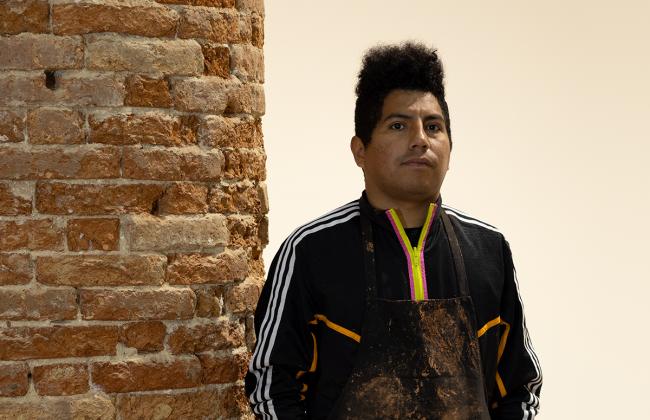
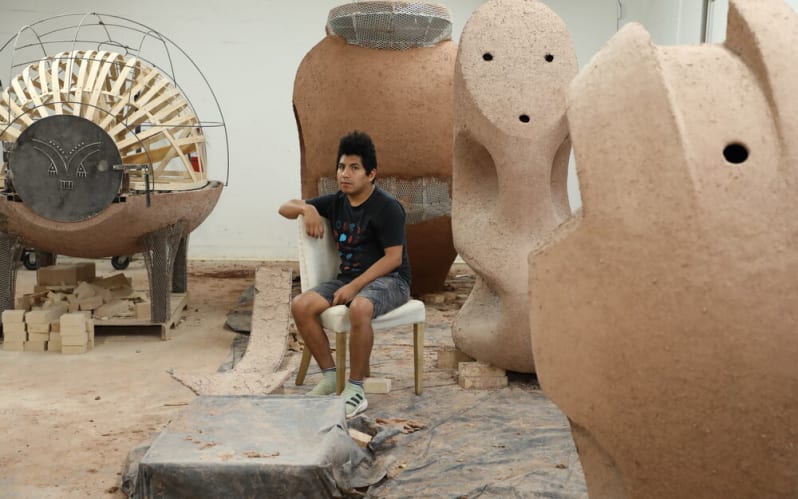
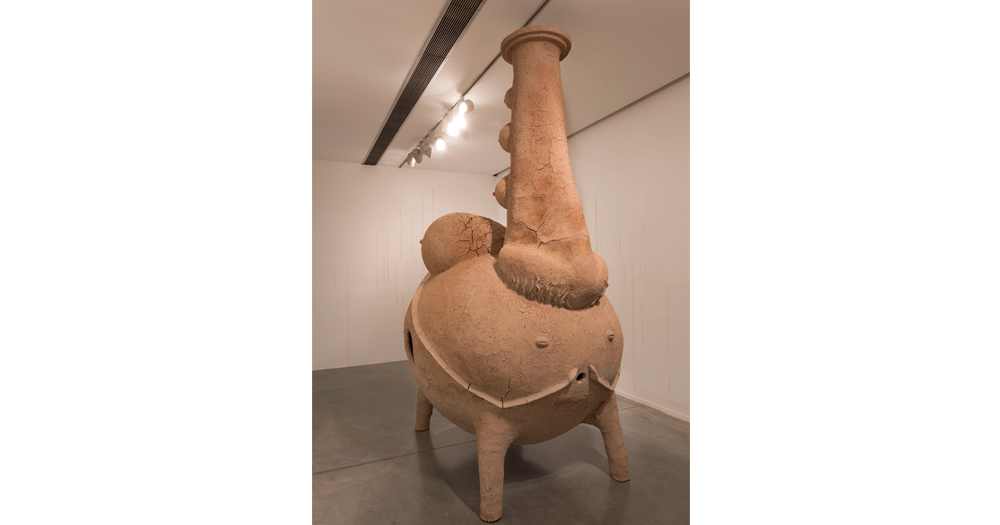
Gabriel Chaile, born in 1985 in Tucumán, Argentina (Northern region of Argentina), describes himself as a “visual anthropologist.” He works with a variety of mediums and concepts, but notably through large earthen sculptures with forms reminiscent of distinctive ceramics of the Condorhuasi-Alamito peoples (c. 400 BCE–CE 700, Catamarca, Argentina) (BAMPFA). Chaile works through a concept he calls “the genealogy of form”, which he uses in his work to express the humanity and history of the form of these special objects, which he feels have been left out of education and museums in his life. His large earthen sculptures often anthropomorphize these distinct ceramic forms, breathing life into them from the anthropological histories or mythologies, as well as contemporary social references. He has had his work featured at the Venice Bianale 2022, Art Basel 2018, BAMPFA and more.
Art Basel
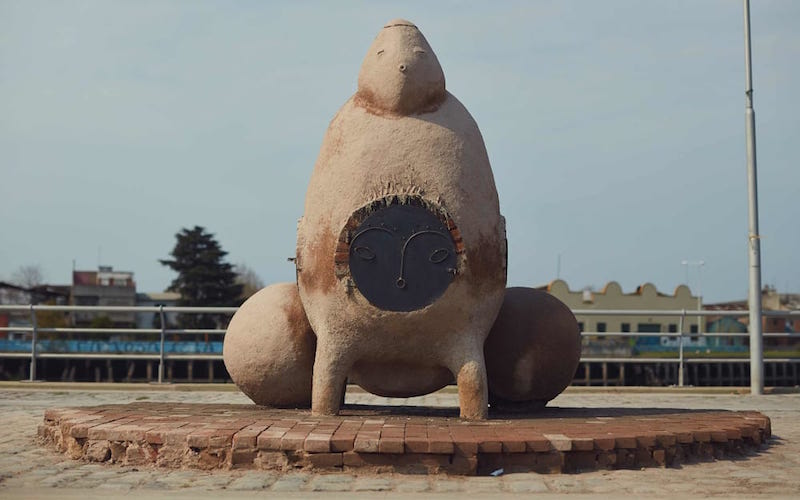
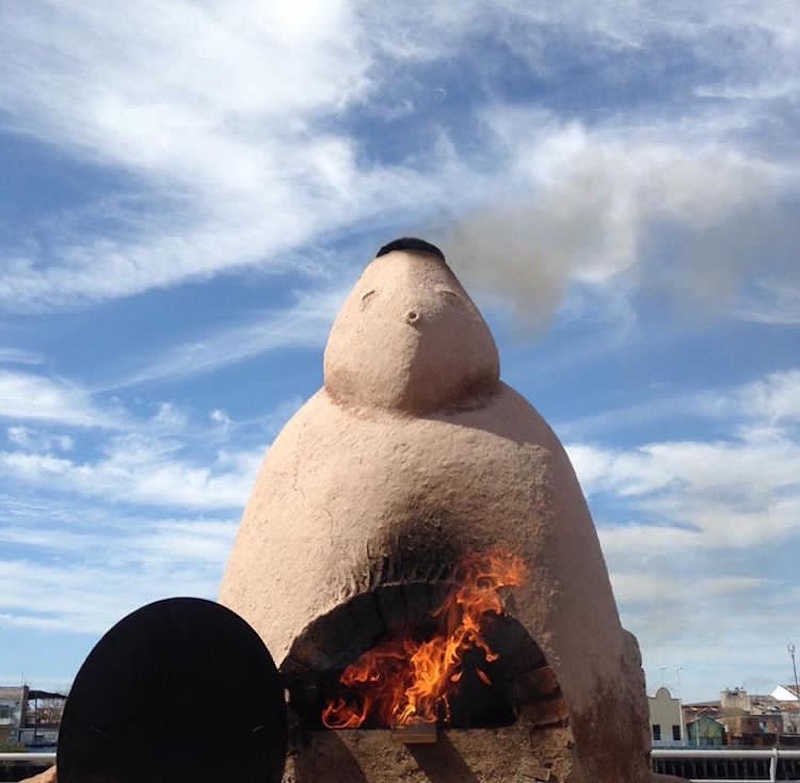
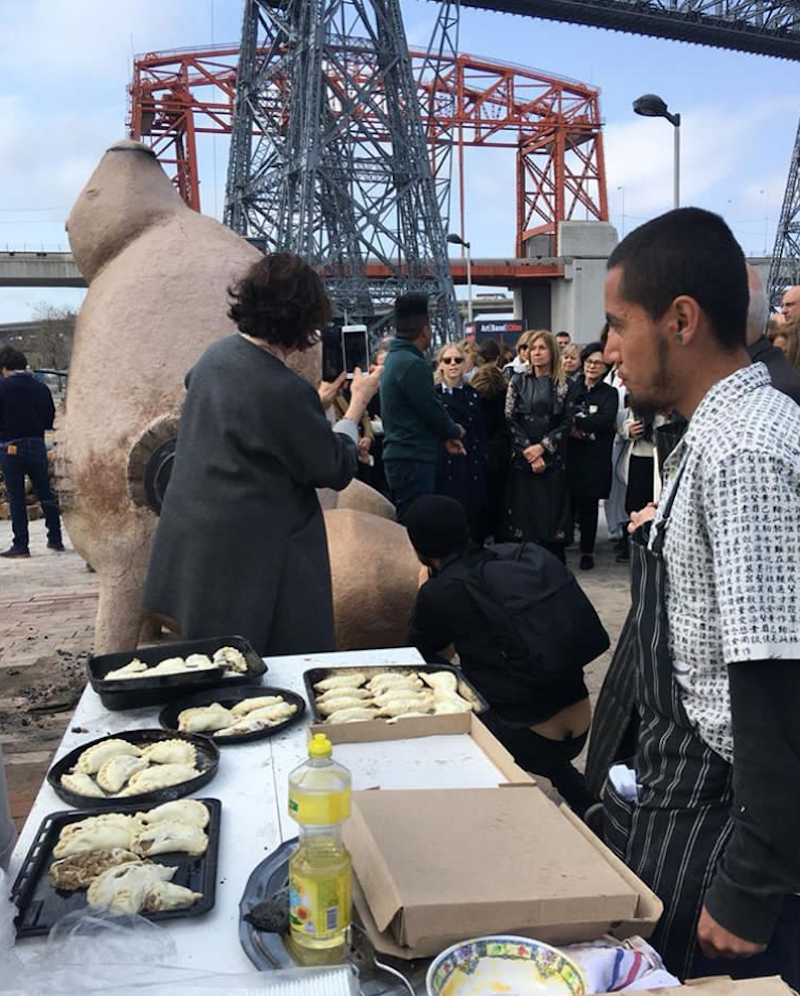
Chaile works with self-described “very simple, basic, and also symbolic” materials, namely clay and adobe. He states his familiarity with clay, both as a building material, and as a vital part of the kitchen and culture through clay ovens. Because of this anthropological and cultural value he sees in the kitchen and cooking, many of his sculptural works are also clay ovens, such as the piece featured in Art Basel Cities 2018, “Portrait of Diego Nuñez.”
Portrait of Diego Nuñez, Gabriel Chaile, Art Basel Cities 2018
Video: (Art Basel) Meet the Artists | Gabriel Chaile:
Video Transcript:
Chaile: “What I would have liked, if I hadn’t been an artist, is to be a preacher or an archeologist. There was something about being a communicator and a researcher that I liked. I define myself as a visual anthropologist because I try to understand behavior through visual elements. From that I draw conclusions, and construct theories about my works, which I then apply to the community, and our current state in this world.
I try to understand things through their shape. The elements that I use are, generally, very simple, basic, also symbolic. I’ve always been familiar with clay, and with construction and building materials. Also the idea of the kitchen, the role of the clay oven, the life of the working class. I’ve been using bricks and eggs a lot lately, two shapes with potential. One is life and the other is a culture. There wasn’t any great artistic influence at home, In the academic sense. But my family has always been very artisanal, very much into using their hands. I feel a strong bond with Tucumán. It has a lot of history. The indigenous resistance was one of the stronger ones… I think I somehow soaked all of that up.
My project for ‘Rayuela’ consists of a public sculpture, which is a clay oven sculpture based on an iconic portrait situated in the neighborhood of La Boca: the portrait of Diego Núñez. It commemorates a young man who was killed in 2012. Generally speaking, my project relates to a concept I call ‘the genealogy of form.’ I look at the history of form. It relates to the archeological museums, to the history of artifacts. The evolution of those objects produced by the indigenous cultures mainly in the northwest of the country.
I also work with a concept that I call ‘necessity engineering’. It’s created from objects that no longer have their primary use. For example, a fridge that no longer works can be used as a cupboard or a bookshelf. I’m really touched by this. Lastly, creativity as an element that replaces necessity where aesthetic considerations are not important. Besides academic education, I was influenced by religious education, and the idea of the ‘miraculous’ to demand much more from materials than what they can offer. My work’s also connected to the resistance and my family’s Peronist history, their struggle, the magical aspect of the miraculous, and the environment of poverty. That’s why I return to the primitive forms of indigenous morphology.
I also have indigenous ancestry. They influence me in that sense too. I feel there’s a world view that can be linked to all these things. It’s difficult for me to define what art means to me. I think there’s something magical in art. It makes me think I can build many things, even things that I didn’t get to be, like a preacher or an archeologist. And I can operate from this place. It’s a space for illusion. Like… yeah, that’s it.”
Patricia, 2017. Sculpture, adobe, iron, bricks and eggs. 320 x 150 x 210 cm
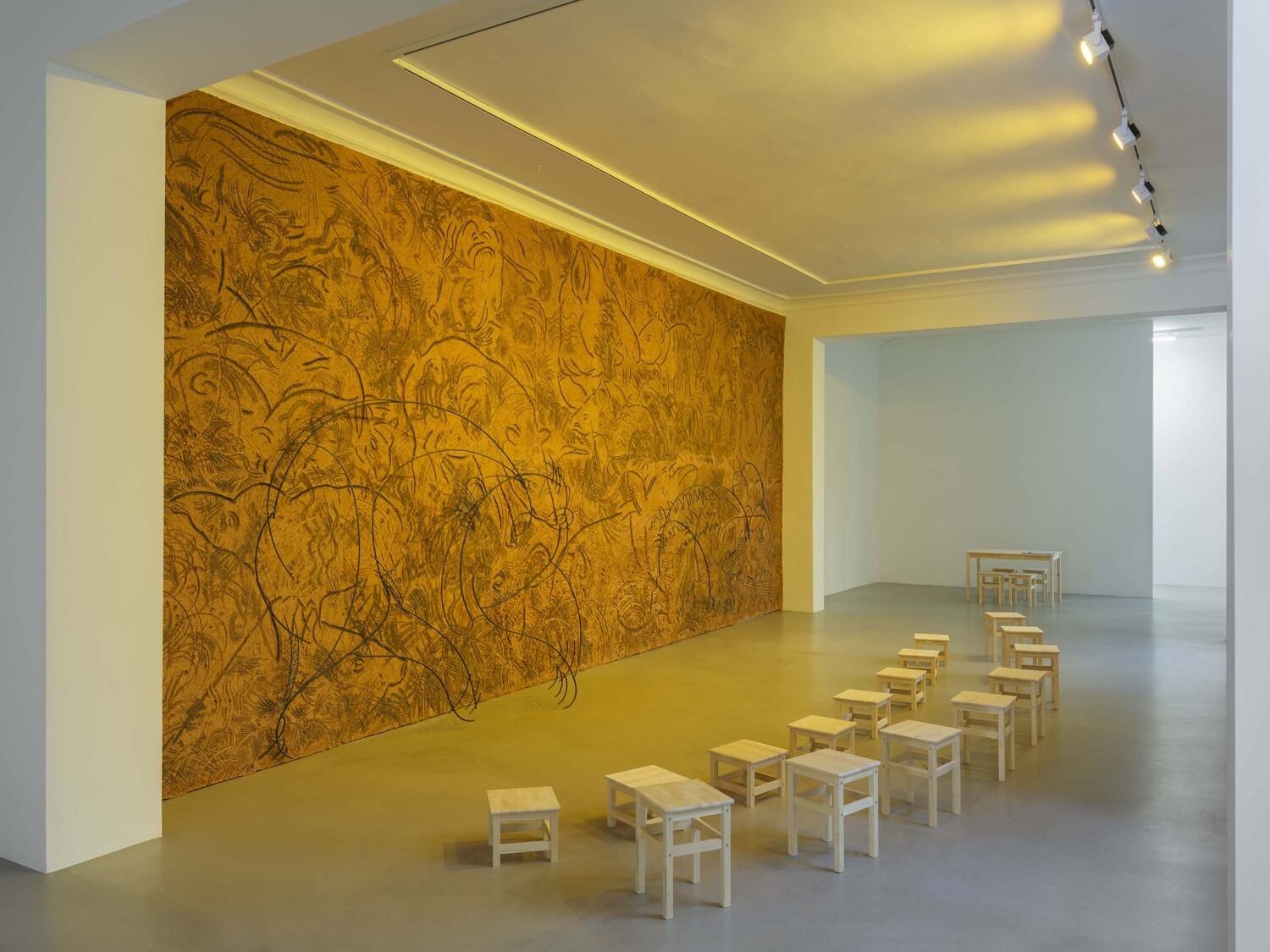
Gabriel Chaile, Selva Tucumana, 2024. Adobe, wood, metal structure, charcoal, two metal sculptures