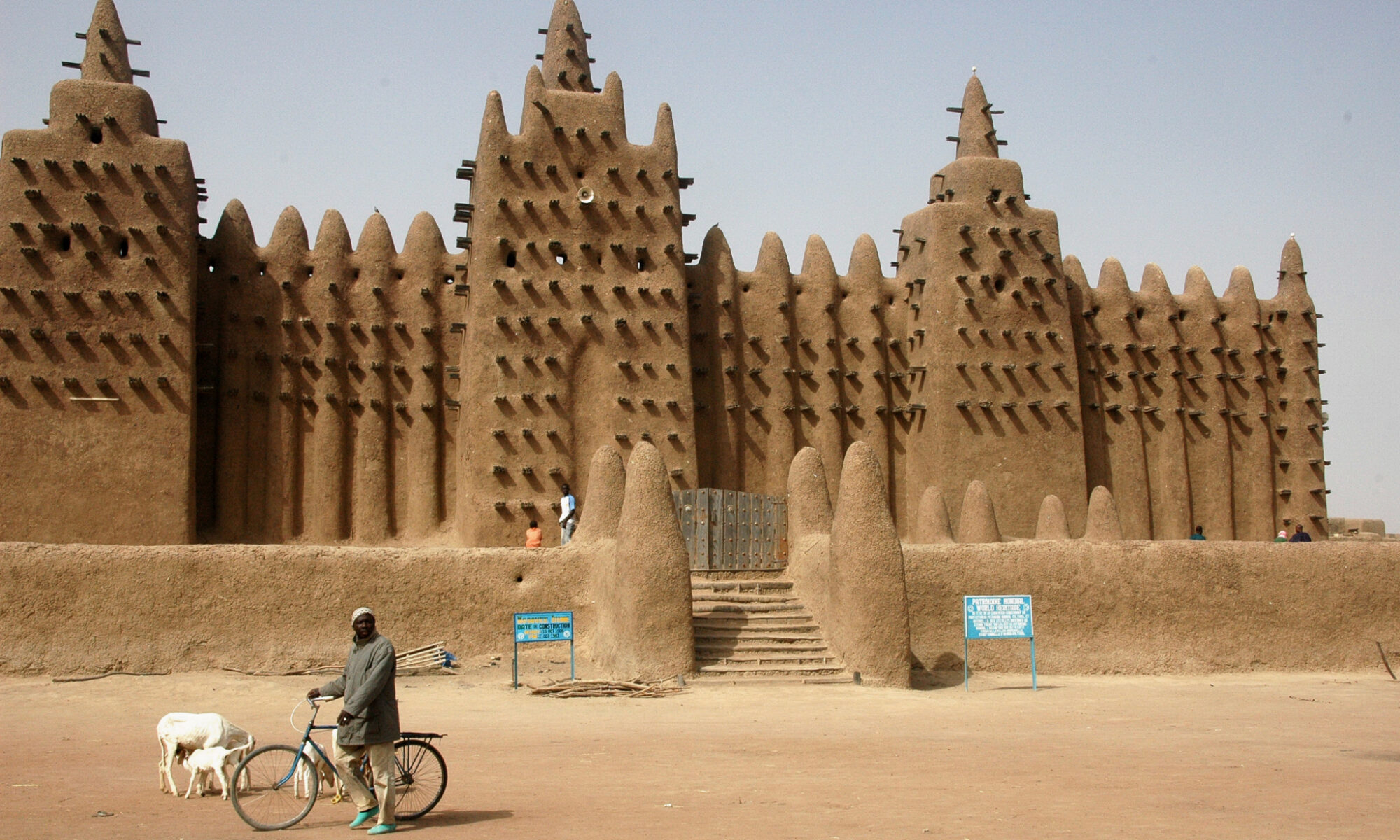
Earth USA is the biennial international conference on earthen architecture organized by Adobe in Action (AinA) in Santa Fe, New Mexico. It brings together architects, engineers, builders, and researchers to share advances in clay-based construction. Earth USA began in 2003 as “Adobe USA,” first held at Northern New Mexico College by the Adobe Association of the Southwest and dedicated to Paul Graham McHenry, and it has continued on a biennial basis since then. In 2011, the name formally changed to Earth USA for the sixth conference, held in Albuquerque, and since 2013 all subsequent conferences have taken place in Santa Fe. Key milestones include the adoption of a broader earthen-material scope beyond adobe, as well as expanded international participation.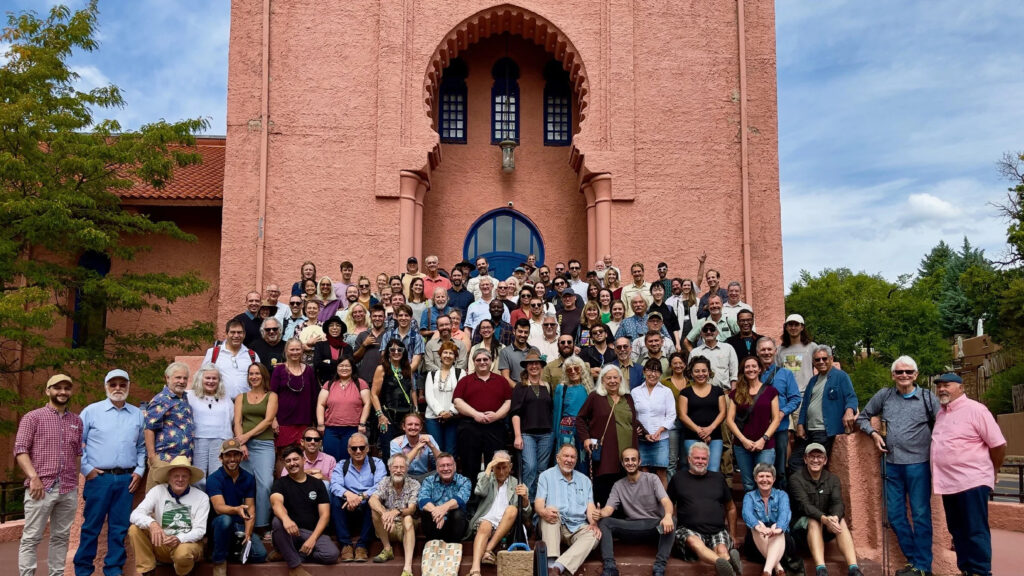
The Scottish Rite Center hosts the conference, reinforcing the event’s Southwestern adobe heritage. The Santa Fe venue also underscores the material focus: the Alhambra Theater is a pink adobe stucco building, and local expertise in adobe construction is abundant. Site tours have included Pueblo ruins, ancestral Spanish missions, and owner-built adobe homes throughout northern New Mexico. Typical Earth USA activities have featured on-site workshops, such as plastering demonstrations, as well as earthen installations; for example, past Earthbuilders’ Guild teams have built mud-brick stages and art displays on-site. In sum, the conference’s materials and form revolve around clay-rich architecture, celebrating both the traditional thick earthen walls of Santa Fe’s historic districts and cutting-edge earth technology.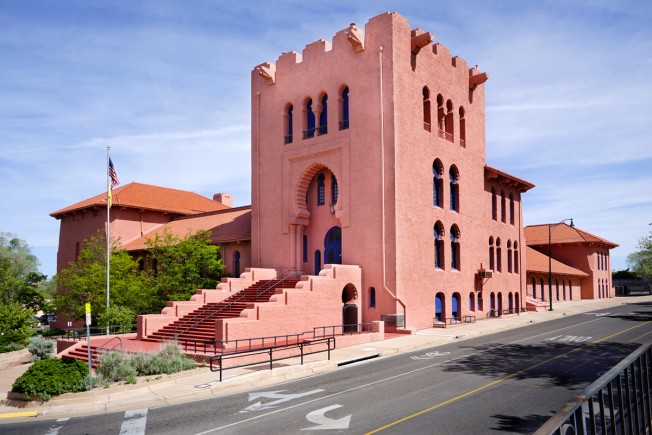
Earth USA is run by AinA, a New Mexico 501(c)(3) nonprofit organization dedicated to adobe and earthen-building education. AinA was founded by Mike Lopach and launched Earth USA to empower owner-builders. For Earth USA 2026, AinA’s Lisa Morey and Dan Krause co-preside on the board of AinA, and the Executive Director is Kurt Gardella, a certified adobe instructor who studied under Quentin Wilson at Northern New Mexico College. Gardella holds adobe construction certifications and leads AinA’s certificate program. He has been “a major organizer of Earth USA” while also teaching owner-builder courses. Lisa Morey is a civil engineer and designer, and co-founder of Colorado Earth LLC. She is the author of Adobe Homes for All Climates and holds a patent for reinforced adobe brick walls. Dan Krause is a retired ASU professor who became enamored with adobe while living in Arizona. He designed and built two of his own adobe homes, earning AinA’s Adobe Construction certificate in 2020. Collectively, the organizers combine academic and practical expertise to network experts, educate practitioners, and advance earthen construction worldwide. 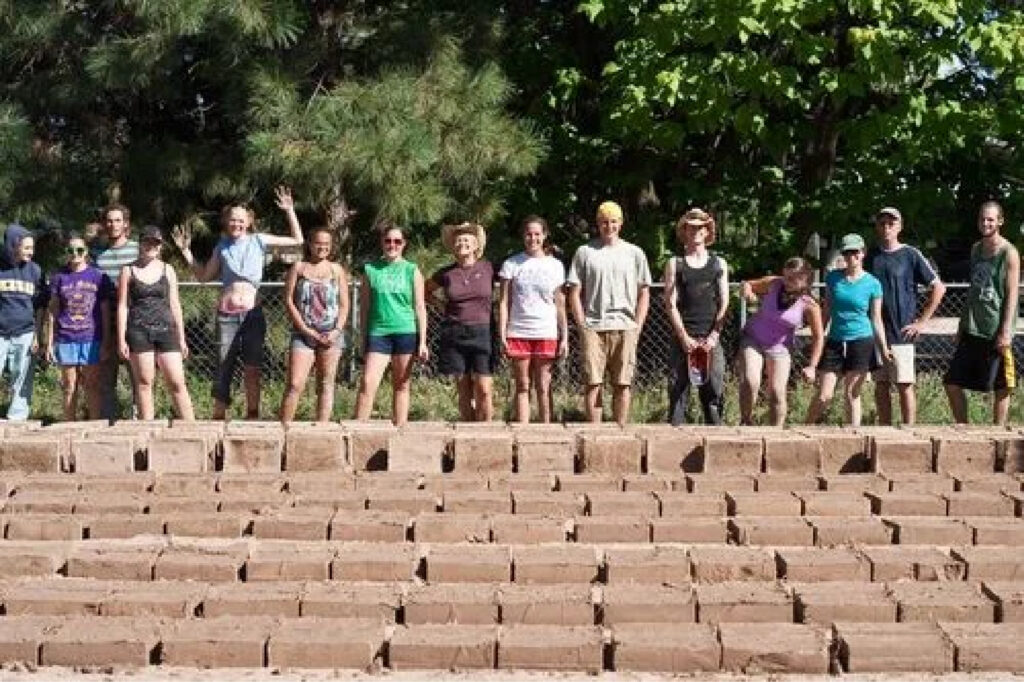
Each Earth USA conference follows a structured program with three days of presentations and posters, along with associated social and field activities. The format typically includes a Friday welcome keynote, all-day podium and poster sessions from Friday through Sunday, and Sunday afternoon tours to regional earth-building sites. For example, Earth USA 2024’s schedule featured invited talks on topics ranging from flood-proof adobe shelters to waste-earth reuse and seismic earth block design, alongside panels on owner-builder case studies and clay plaster techniques. All conferences include a Friday night reception sponsored by the Earthbuilders’ Guild and guided tours to adobe missions, historic homes, and new earth projects on Sunday. The scope of subjects is broad, and organizers note that the program reflects a wide field of interest, including adobe, rammed earth, compressed earth block, cob, and essentially any method that uses clay as a binder.
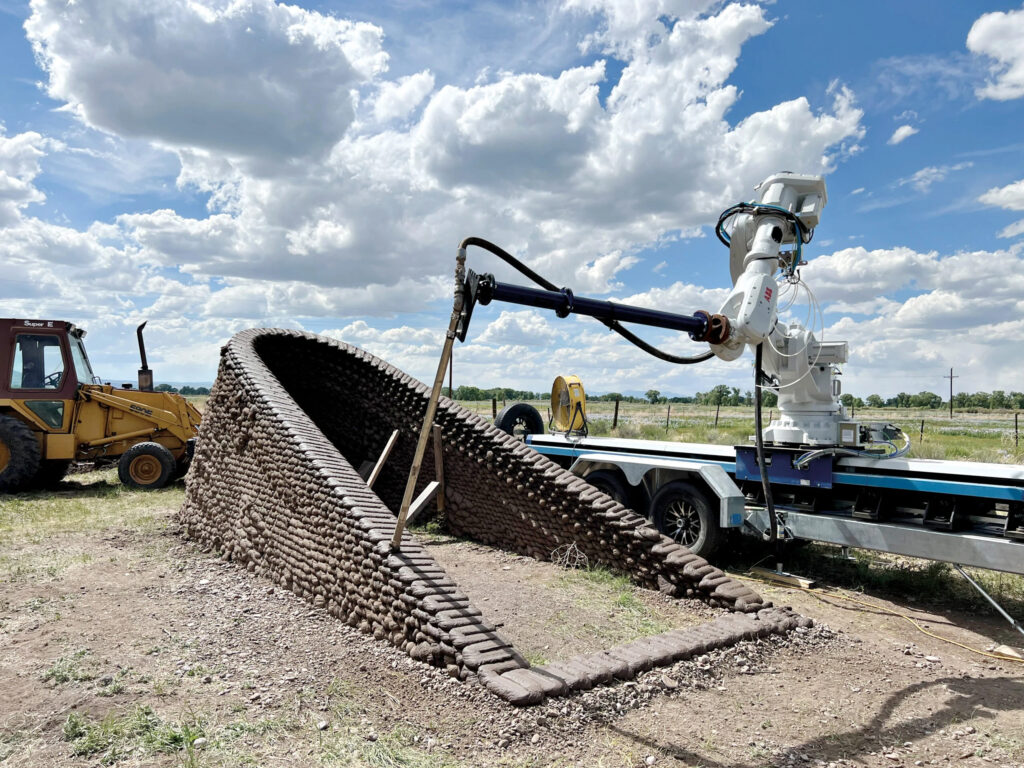
Key themes encompass the use of sustainable materials, including earth plasters and stabilized blocks; advancements in modern fabrication techniques such as 3D printing and robotics in earthen architecture; building science considerations ranging from thermal performance to seismic resilience; historic preservation; and social projects focused on affordable housing and owner-builder training programs. For instance, Earth USA has featured a keynote from, “Mud Frontiers,” by Ronald Rael (UC Berkeley) on 3D-printed earth architecture, as well as a session on a Ghanaian rammed-earth housing prototype, “Kente House,” by Angeles Hevia. Other sessions have addressed codes and policy, including Ben Loescher on U.S. earthen masonry standards and Stephen Colley on adopting adobe in building codes. Topics also include education, such as introducing clay into architecture curricula, and innovation, including rotational tampers for rammed earth.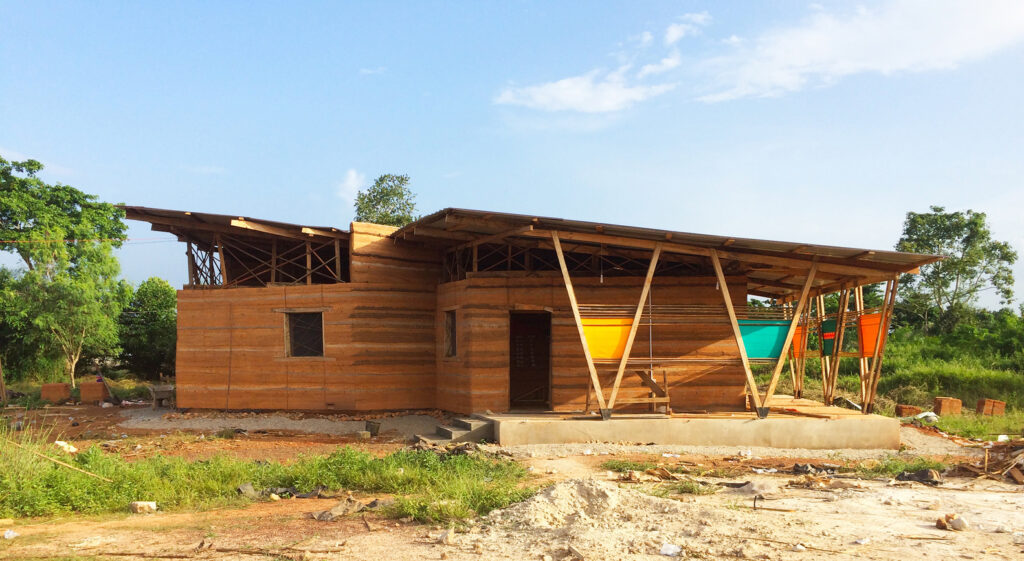
Earth USA is attended primarily by architects, engineers, and builders interested in sustainable construction, but also by anthropologists, code officials, and environmental advocates. The gatherings are intentionally international and multidisciplinary, as reflected in a speaker roster that includes talks on building practices from India, Japan, and Norway. Attendees leave with a sense of community, supported by nightly informal receptions and a vibrant email newsletter, EarthUSA News, which keeps participants connected year-round. In sum, Earth USA operates as a volunteer-driven conference in which the organizing committee handles logistics and content curation, while academic partners disseminate the findings.

The program is fully documented in the conference proceedings and often carries American Institute of Architecture (AIA) continuing-education credits. Speakers come from universities, nonprofits, governments, and industries worldwide, and recent years have seen participants from 15 to 20 countries. Poster sessions provide a venue for shorter papers on topics such as material testing, vernacular research, and life-cycle analysis. Throughout, the conference emphasizes process, including peer-reviewed abstracts, international volunteer committees, and field demonstrations, as much as the building form itself. Many sessions delve into construction processes such as mix design, compaction, and curing, while others focus on form-finding and earth structures shaped by heritage or innovation.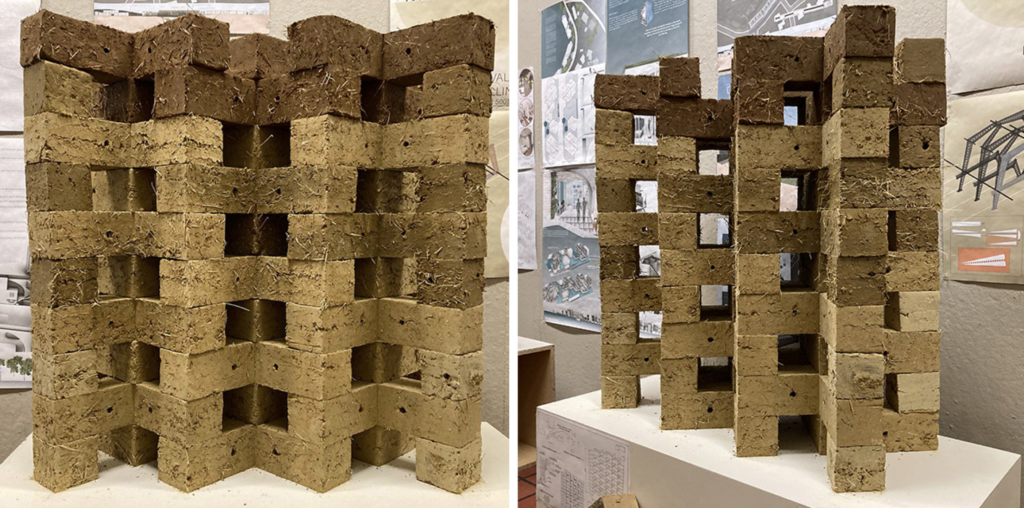

As an organization, AinA solicits abstracts internationally through a call for papers reviewed by experts and publishes proceedings. For 2026, for instance, abstracts were due in February 2026 and full papers in June 2026. Registration is open to professionals, students, and owner-builders. Earth USA’s inclusive approach is also reflected in its leadership; for example, owner-builder Ethan Novikoff both presented and served on the AinA board, bridging practitioner and organizer roles. Sponsorship comes from allied nongovernmental organizations and firms such as the Earthbuilders’ Guild, the SFCC Adobe program, supporting organizations, and architecture firms.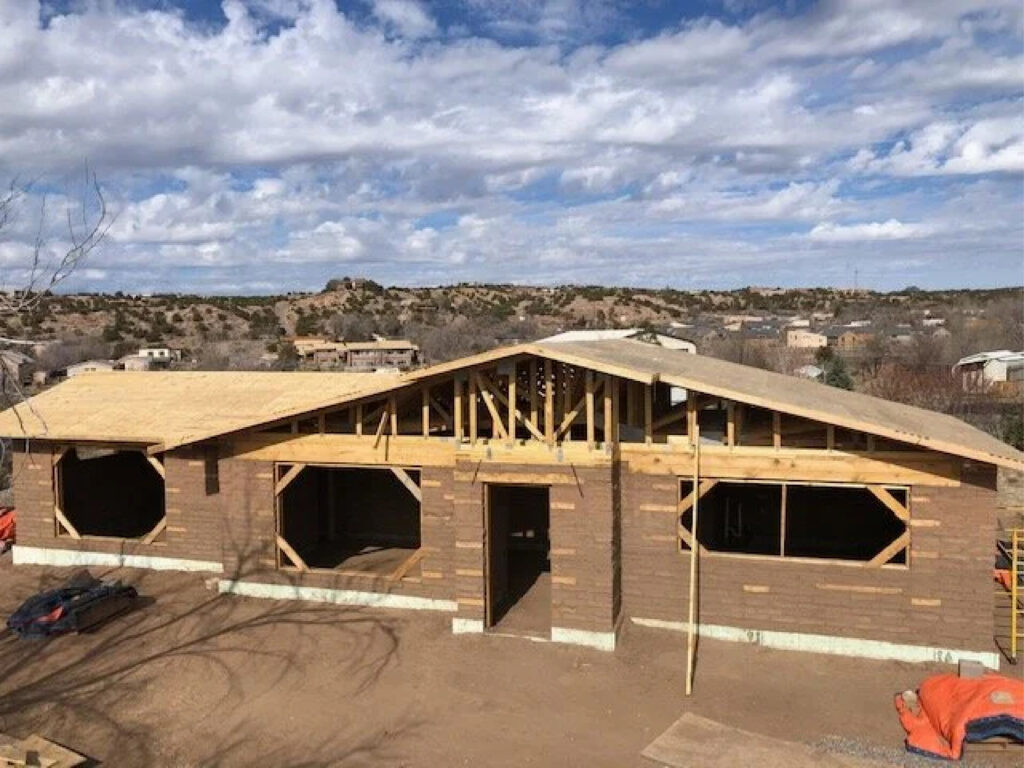
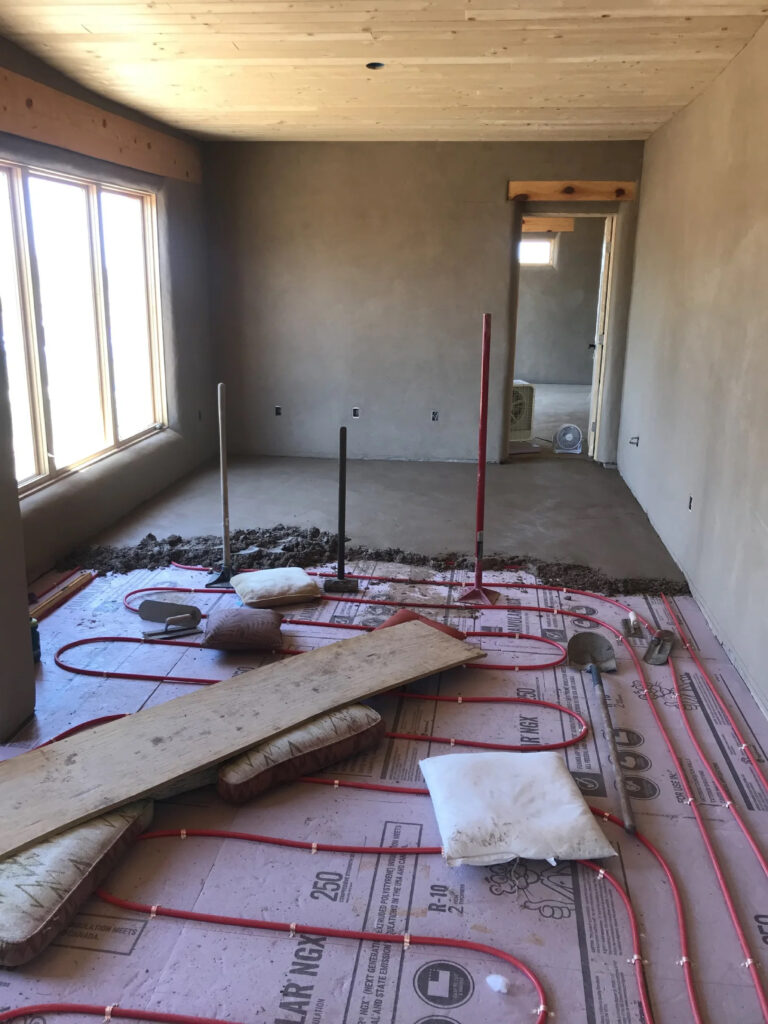
Earth USA presents a clear consensus that earthen materials are inherently sustainable, resilient, and culturally rich. Many presenters emphasize earth’s low carbon footprint and ease of reuse, as well as its climate-comfort benefits, thermal mass, and humidity buffering. There is a shared mission to reclaim these traditional techniques in a modern context. From an architectural perspective, the conference inspires both reflection and action. It demonstrates how ancient building methods can inform contemporary design, for example, how Pueblo-style thick walls inspire passive climate control, or how combining fibers and modern stabilizers can make cob livable in cold regions. On the technological side, sessions on 3D-printing clay and new tamping machines point toward a future in which even large-scale earth building is industrially feasible. The Earth USA community also exchanges practical solutions; one talk, for instance, detailed how to guide a cob house through building inspections, while others described integrating adobe into U.S. building codes. In conclusion, Earth USA galvanizes the earthen-construction movement. It has inspired new international collaborations, spurred educational initiatives, and reinforced advocates’ resolve to promote sustainable, beautiful architecture that can be made from the ground.
Citations:
- https://www.earthusa.org/
- https://www.adobeinaction.org/earth-usa-conference
- https://www.adobeinaction.org/
- https://www.earthusa.org/earthusa-news/2021/10/07/earthusa-news-bridge-issue
- https://www.adobeinaction.org/paul-mallory-project
- https://visioncreationadobe.com/2018/01/20/building-adobe-walls-in-winter/
- https://www.adobeinaction.org/board-of-directors#:~:text=Kurt%20Gardella%20specializes%20in%20online,Certification%20from%20The%20Earthbuilders%27%20Guild