Save the Heritage of Hassan Fathy

Save the Heritage of Hassan Fathy is an International Association based in Geneva (Switzerland), founded in February 2008 to safeguard the heritage of the Egyptian architect, Hassan Fathy.
His works constitute a patrimony of outstanding value which belongs to the cultural world heritage. The Association’s objectives are the following:

  • Raising the awareness of the public opinion about the importance of the work of the Egyptian architect
  • Providing a platform of exchanges between the concerned Institutions (public and private) and Universities
  • Promoting protection and conservation projects to safeguard this outstanding heritage

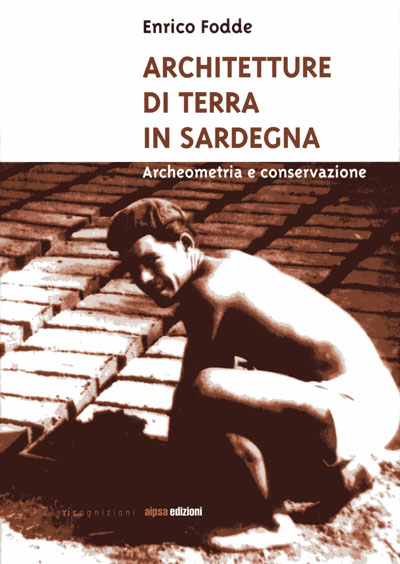
Arcitetture di Terra in Sardegna

The book Arcitetture di Terra in Sardegna, the first of its kind on the subject, presents the results of new research into Sardinia’s indigenous tradition of earthen architecture. Author Enrico Fodde explores the cultural context of these buildings and describes practical techniques for the conservation of this unique and rapidly diminishing heritage. By interviewing craftsmen with first hand knowledge of working on these structures and by means of laboratory analysis of the materials involved — principally mud brick and lime — Dr Fodde explores the mechanisms of decay and proposes methods suitable for repairing buildings in need of restoration. Case studies are presented to show how different methods of repair have worked out in practice. Finally, consideration is also given to ways in which the results of this work might form the basis of research into other building traditions in the Mediterranean basin and elsewhere.

Chapel of Reconciliation

Built by architects Peter Sassenroth und Rudolf Reitermann in 1999, this small chapel made of rammed earth replaces the former Church of Reconciliation, a historicist church built in 1894 which happened to be situated on the death strip when the Berlin wall was erected in 1961. The old church stood there vacant and isolated, abused as a guarding tower for East German border patrol, until it was finally blown up by East Germany in 1987 – just two years before the wall eventually was torn down itself. the community of the former church decided it wanted to have its church back. The completed chapel is enveloped by a wall made of rammed earth, composed out of clay and smaller pieces of bricks of the exploded church. For more information visit the Chapel of Reconciliation home page.

Eartha

EARTHA, The East Anglian Regional Telluric Houses Association, is an organization whose aims and objectives are to encourage the development of expertise and understanding in all aspects of earth building in the east of England by:

Establishing a network of people from various professions and trades all of whom have an interest in the study, maintenance and promotion of earth buildings in the east of England: through links with ICOMOS it will join with other networks in the United Kingdom and worldwide.

Providing a forum for discussion of issues relating to earth building in the east of England.

Providing advice on the repair and maintenance of earth buildings through an information service, the publication of technical guidance and the organisation of practical demonstrations, exhibitions and seminars.

Establishing mutually beneficial links with groups and individuals working with earth buildings in the other parts of the Britain and abroad.

Collaborating with other networks to prepare and publish information manual covering all aspects of the construction, repair and maintenance of earth buildings including composite structures, daubs, renders and plasters.

Encouraging and supporting training in the field of earth building and associated skills.

Encouraging the revival of appropriate earth building techniques for new building construction and investigating the potential of the material for low energy buildings.
L’Association Nationale des Professionnels de la TERRE Crue

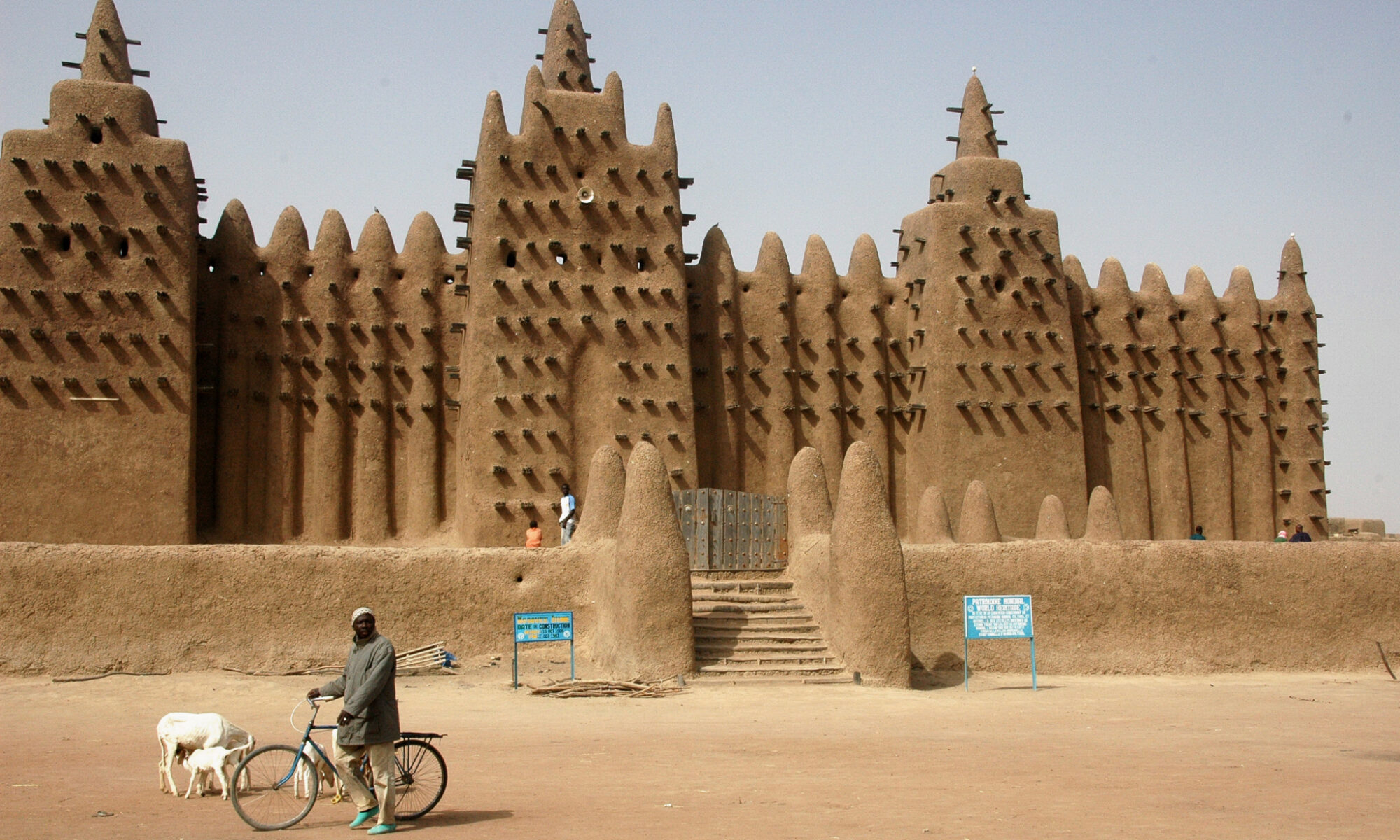
L’Association Nationale des Professionnels de la TERRE Crue fédère les acteurs et actrices de la construction en terre crue en France. Elle regroupe des artisans et des chefs d’entreprise, des producteurs de matériaux, des architectes, des ingénieurs, et des organismes de formation professionnelle. Elle accueille aussi des représentants d’organismes régionaux (parcs…) ou d’autres associations développant des activités dans le domaine de l’architecture de terre (valorisation des patrimoines nationaux, architecture contemporaine, recherche sur les matériaux et les techniques…).

Modern Concrete Grew from Traditional Rammed Earth

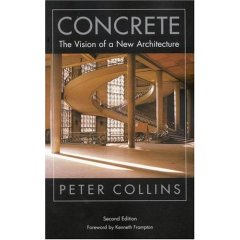
In the book Concrete: The Vision of a New Architecture Peter Collins describes how the origins of modern concrete evolved from technological developments pertaining directly to the traditional use of rammed earth in France. He writes:
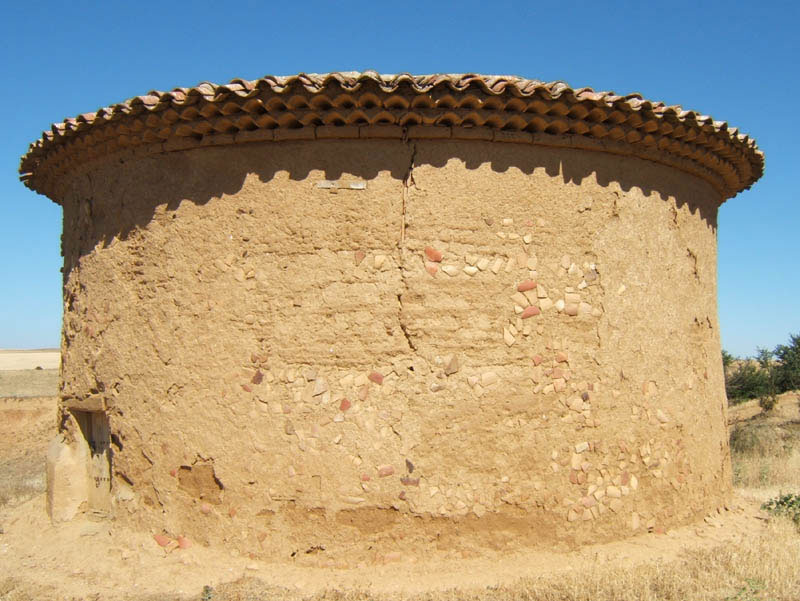
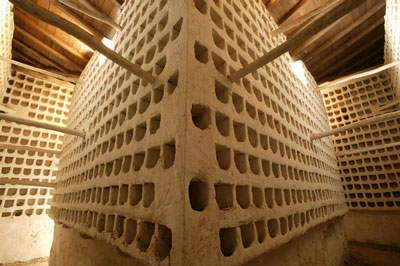
“…when concrete did again come into use as a building material, it evolved from an entirely independent, and much more humble origin: pisé [rammed earth]. The peculiarity of pisé construction thus lay not only in the economy of using earth as a building material, but in the process whereby a building was moulded into shape, and it was inevitable that sooner or later some far-sighted individuals should appreciate the revolutionary possibilities of this method of construction, and seek to extend it by improving on the material used. The most obvious improvement was to increase the cohesion of the earth by mixing in a binding material such as mortar, and this had in fact already been done by [Jean-Baptiste] Rondelet when repairing the château in Ain. It was left to others to experiment with suitable hard aggregates, and produce modern concrete, or, as it was termed in French, béton. The first of the pioneers was an ingenious but ambitions building labourer named François Cointeraux.” – Peter Collins, Concrete: The Vision of a New Architecture (Montreal: McGill-Queen’s University Press, 2004), 20-21.

United Bottle

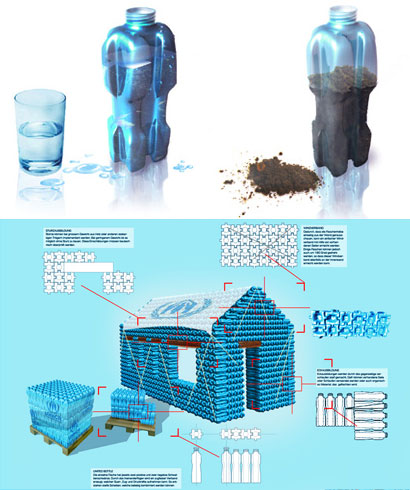
The Zürich based architecture office INSTANT (Dirk Hebel & Jörg Stollmann with Tobias Klauser) has designed a water bottle that can be recycled and filled with local soil and stacked to form temporary shelter. The concept, called UNITED_BOTTLE can be used by Governments and NGOs to distribute water locally and regionally and be able to upcycle the bottle as a building material in combination with found materials such as sand, earth and natural insulation materials such as animal hair. The simple water bottle would operate as a container for the awareness of the next crisis.

The Citizens’ Initiative Pavilion

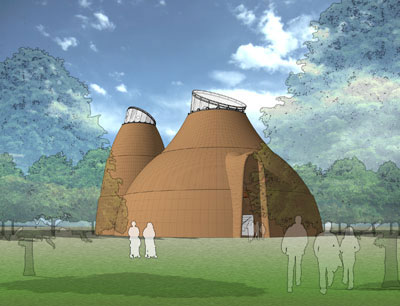
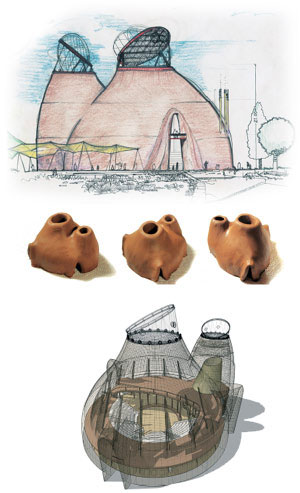
The Citizens’ Initiative Pavilion, known as El Faro, is the work of architect Ricardo Higueras. Designed to be constructed for the Expo Zaragoza 2008 the pavilion is to represent society’s vigour and ability to innovate in the face of the challenges posed by water.

The section gives information on the Pavilion’s onsite location, its spaces and building features. Inspired by traditional ceramics, the pavillion will be constructed with natural materials like bamboo and mud mixed with straw.