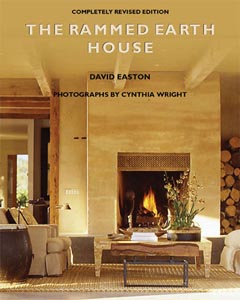
The Rammed Earth House: Revised Edition

Architecture, Art, Design, and Culture using of mud, clay, soil, dirt & dust.
The Rammed Earth House: Revised Edition
“Mixing and applying mud plaster to adobe brick is more than a skill; it’s a tangible reconnection to the land – and the past.” Read about the restoration of the Casa de Estudillo, a historic landmark in Old Town San Diego State Historic Park.
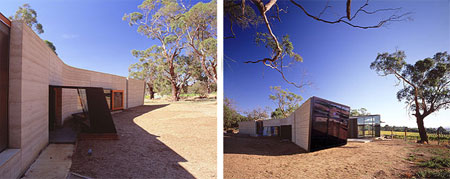
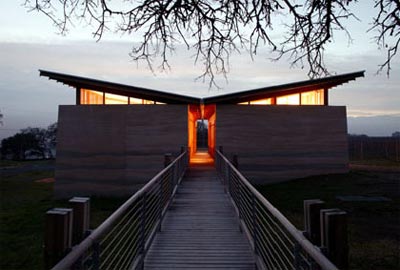
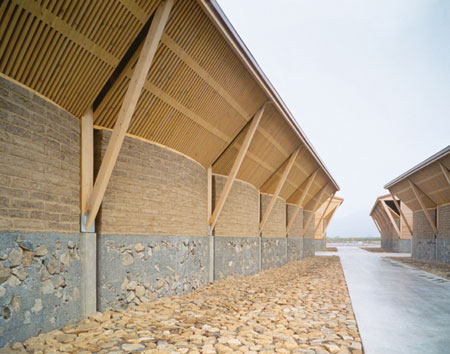
Many wineries and residences among vineyards employ earth in the construction of buildings. Often, the same earth to grow grapes is ideal for use as a building material.
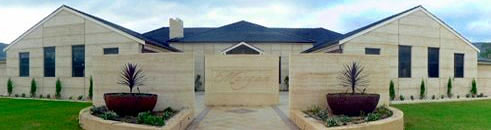
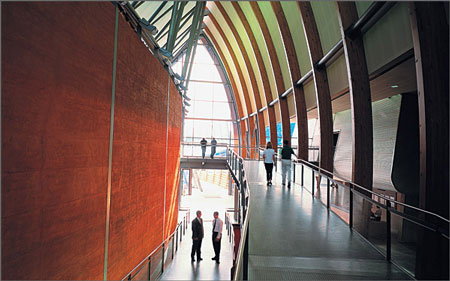
Margan Tasting Room and Restaurant
The list goes on and on: [ Fetzer Winery Administration Building | Moorooduc Estate | Texas Hills Vineyard | Adinfern Estate | Wing Canyon Vineyard | Home Hill Winery ]
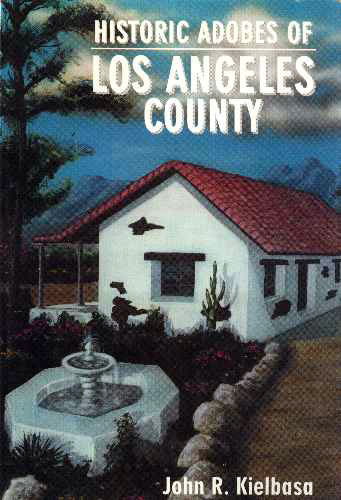
The book, Historic Adobes of Los Angeles County
As demolition looms, scholar moves to preserve historic Juana Briones house on film.
[ Save the house | Research Paper | Previously ]
The oldest house in Palo Alto, California is a 160-year-old building constructed of a unique hybrid system that combines techniques found in rammed-earth and cob, traditionally known as encajonado. Known as the Juana Briones House, this historic work of earthen architecture is now slated to be demolished. After nine years of legal battles, the city of Palo Alto has agreed to issue a demolition.
Spanish Colonial : or Adobe Architecture of California, 1800-1850
“Node 1” is a conceptual architecture project by French Architect François Roche which lacks most of the usual architectural accoutrements: blueprints, material suppliers, subcontractors. Instead, Roche imagines a programmable assembly device dubbed the “viab,” a construction robot capable of improvising as it assembles walls, ducts, cables, and pipes. A viab would produce structures that are not set and specific, but impermanent and malleable – merely viable – made of a uniform, recyclable substance like adobe.
The closest thing to a viab today is a modest mud-working robot, called “contour crafter”, invented by Behrokh Khoshnevis, a professor of engineering at the University of Southern California. Two years ago, California-based architect Greg Lynn was talking to Khoshnevis about the same topic. [ 1 | 2 | 3 ]
In a laboratory in Los Angeles early this year, a robot armed with a concrete pump built its first wall. Just a small wall, about a yard wide, a foot high and an inch thick, but beautifully formed in a graceful oval sweep. Iranian born engineer Behrokh Khoshnevis has tested his prototype with cement but believes adobe, a mix of mud and straw that is dried by the Sun, could be suitable. The chief advantages of the Contour Crafting process over existing technologies are the superior surface finish that is realized and the greatly enhanced speed of fabrication. The success of the technology stems from the automated use of age-old tools normally wielded by hand, combined with conventional robotics and an innovative approach to building three-dimensional objects that allows rapid fabrication times. Professor Khoshnevis believes that his technology will make it possible to build a house from foundation to roof in less than 24 hours: “Our goal,” he says, “is to be able to completely construct a one-storey 185-square-metre home on site in one day, without using human hands.”
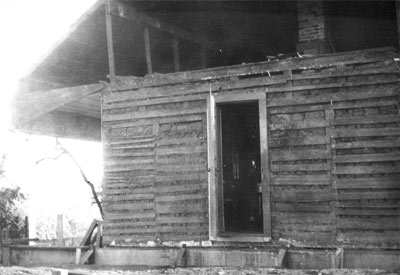
Juana Briones was known as a healer who raised a big family, opened her door to many in need and persevered to win a divorce from an abusive husband — something unheard of in the early 1800s. In 1844 she bought the 4,400-acre Rancho La Purisima Concepcion and lived there until not too long before her death in 1889. What Briones advocates have been trying to do for several years now is preserve the part of the house that’s built of a very unusual construction called encajonado, an old rammed-earth technique that exists in only three other houses in California. On the Juana Briones Heritage Foundation Website, the house is described as Palo Alto’s oldest, with a construction date of 1846. In May a judge is expected to issue a decision that will make the difference between a house repaired and a house demolished.