Node 1 and Contour Crafting

“Node 1” is a conceptual architecture project by French Architect François Roche which lacks most of the usual architectural accoutrements: blueprints, material suppliers, subcontractors. Instead, Roche imagines a programmable assembly device dubbed the “viab,” a construction robot capable of improvising as it assembles walls, ducts, cables, and pipes. A viab would produce structures that are not set and specific, but impermanent and malleable – merely viable – made of a uniform, recyclable substance like adobe.

The closest thing to a viab today is a modest mud-working robot, called “contour crafter”, invented by Behrokh Khoshnevis, a professor of engineering at the University of Southern California. Two years ago, California-based architect Greg Lynn was talking to Khoshnevis about the same topic. [ 1 | 2 | 3 ]
Casa Grande

casagrande1.jpg

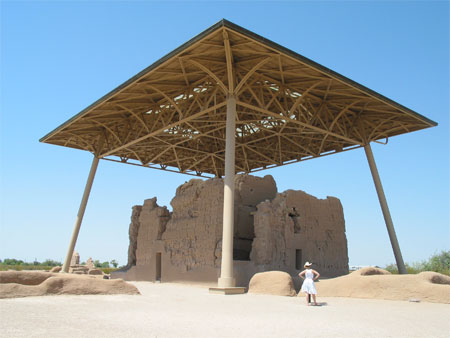
Perhaps nowhere is the blending of modernity and the tradition of earth building more evident than at the Casa Grande Ruins National Monument. Casa Grande was constructed between ad 1200-1450 by the Native American Hohokam near Phoenix, Arizona. In 1928, Frederick Law Olmsted Jr., son of Frederick Law Olmsted the landscape architect most famous for the earthwork of Central Park in New York City, was acting as an adviser to the National Park Service. The desire by the National Park service was to create a shelter that both protected the ruins, while allowing them to have hierarchical presence. The Olmsted Jr. design was completed on December 12, 1932.

The Adobe Alliance

The Adobe Alliance is an organization committed to building low-cost energy efficient housing that is climatically and environmentally compatible and to fill widespread needs for sustainable, salubrious housing while enhancing the unique landscape of the Big Bend region of West Texas and other desert environments through the utilization of mud-brick as a primary material in these endeavors

Vault Building Workshop

On November 4-6, 2005, The Adobe Alliance will offer an intensive vault-building workshop. The group shall be limited to 20. We will build, as usual by hand, the beginnings of a vault since it takes two weeks to complete one. The first courses are the most difficult as it is essential to master the technique of inclining the first bricks properly against the back wall which will support part of the load of the vault (most of the load descends in exquisite equilibrium into the 18″ width of the earthen brick wall.) Hands-on instruction is given by project manager/ adobera Jesusita Jimenez and theory by Simone Swan, designer.Bring work clothes, hat, gloves, heavy shoes, sun protection, a bucket, a float and water. Primitive camping available on site but without water. Lodgings are available in Presidio and Ojinaga, Mexico (across the bridge). Potluck meals at Swan House and/or Thai catering. Participants are also invited during the three weeks prior to the workshop in order to build the sustaining walls for the vaulted roof. Interns receive room and board, first come first served! If an intern wishes to join our work in plastering between November 6th and 10th, please write us. Cost is $250 by October 20, $300 thereafter. Scholarships available. Download poster (PDF)

Earth Architecture at Cranbrook

cranbook.jpg

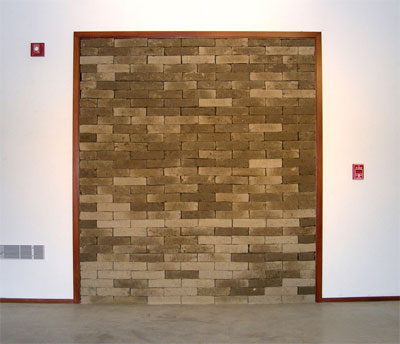
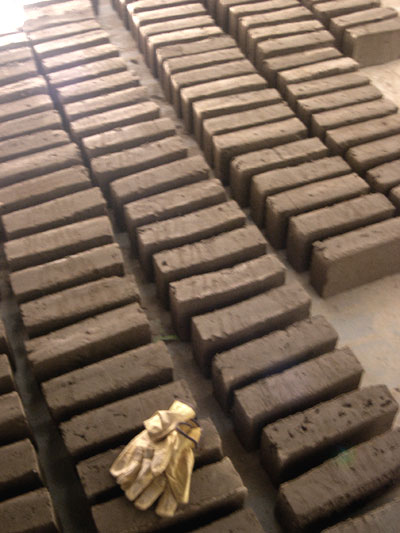
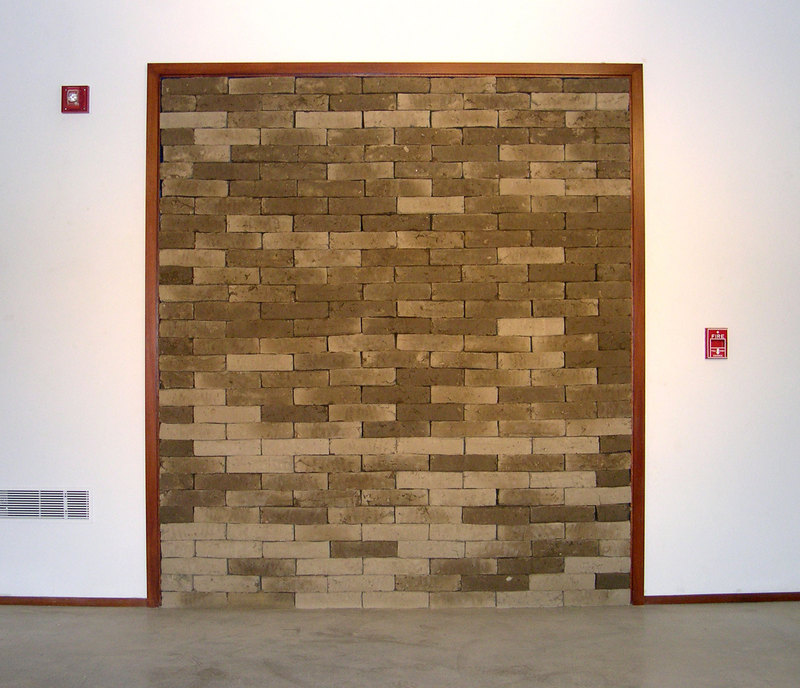
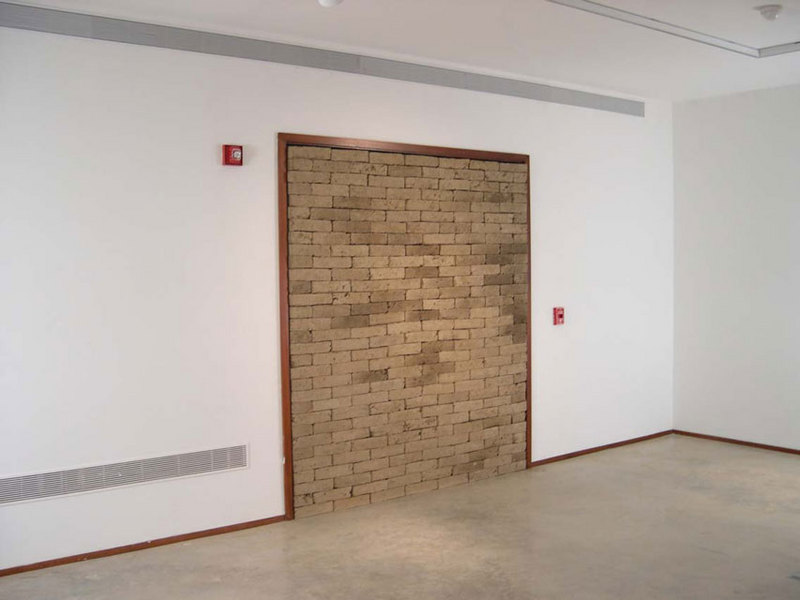
Ginger Krieg, Dharmesh Patel, Paul Puzzello and Juan Torres, Students from the Cranbrook Department of Architecture, are experimenting with Hand formed soil/clay bricks. (non-fired) They built a wall from the bricks utilizing random soil found in the Detroit metro area. The dimensions of the bricks were 3″ x 6″ x 12″ comprised of only sifted soil and water. In the 10-day project approximately 400 bricks were produced. More images 1| 2 | 3