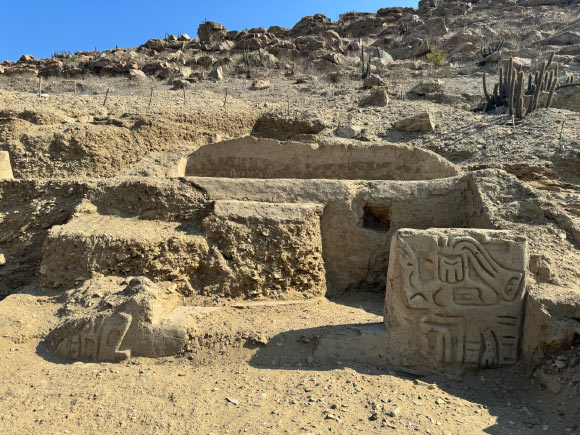
 A 4,000-year-old ceremonial temple and associated performance space was recently uncovered at the archaeological site of La Otra Banda in the Zaña Valley, located in the Lambayeque region of northern Peru. The excavation, conducted in 2024 and led by archaeologist Luis Muro Ynoñán of the Field Museum and the Pontifical Catholic University of Peru, revealed the remains of a complex constructed primarily from mud and clay, buried beneath layers of sand.
The structure dates to approximately 2000–3000 BCE and is considered one of the earliest known examples of monumental religious architecture in the Andean region. It significantly predates later civilizations such as the Moche, Nazca, and Inca, including Machu Picchu by roughly 3,500 years.
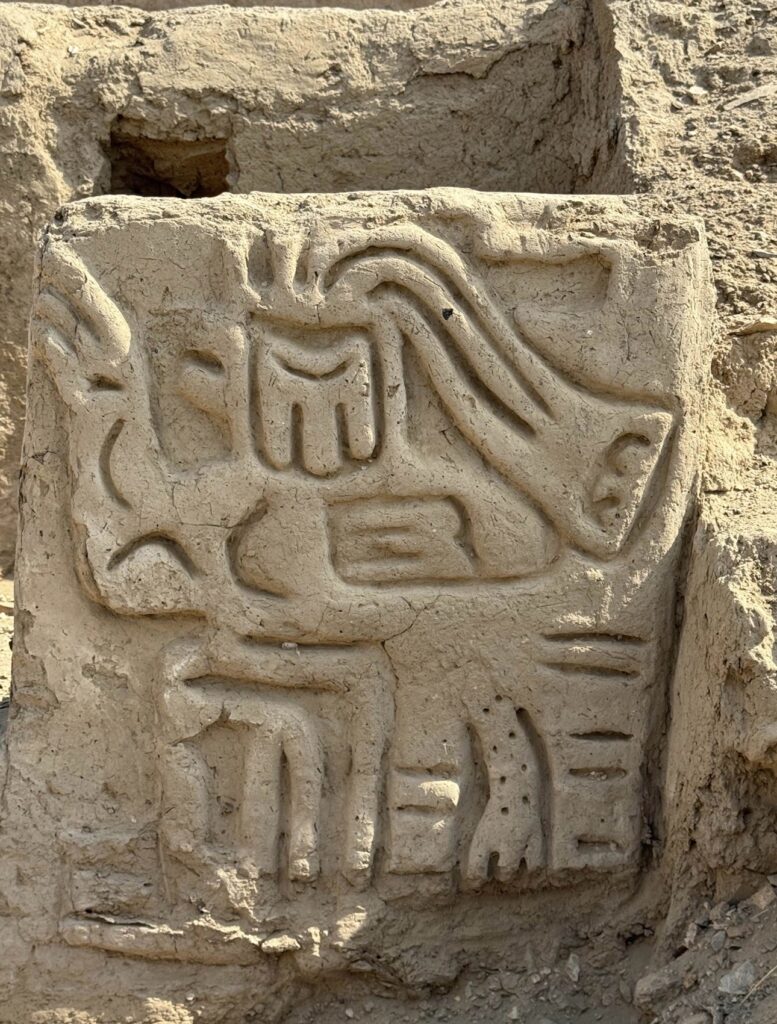
Excavations revealed enclosed temple spaces alongside a small theater-like area featuring a stage platform and staircase, suggesting that the site was used for ritual performances, possibly for a restricted audience. Decorative elements include high-relief carvings of mythological figures, notably anthropomorphic beings with human bodies and bird-like features, which provide evidence of early symbolic and cosmological systems.
Archaeologists also discovered the skeletal remains of three individuals within the temple, one of whom appears to have been buried with offerings, indicating ritual funerary practices associated with the site.
This discovery offers important insight into the emergence of organized religion in the Andes, suggesting that complex belief systems and ceremonial architectures were already developing in the region during the Initial Period. It highlights the role of architecture as a medium for ritual, performance, and social organization in early human societies.