Ancient Mud Brick Pyramid Discovered

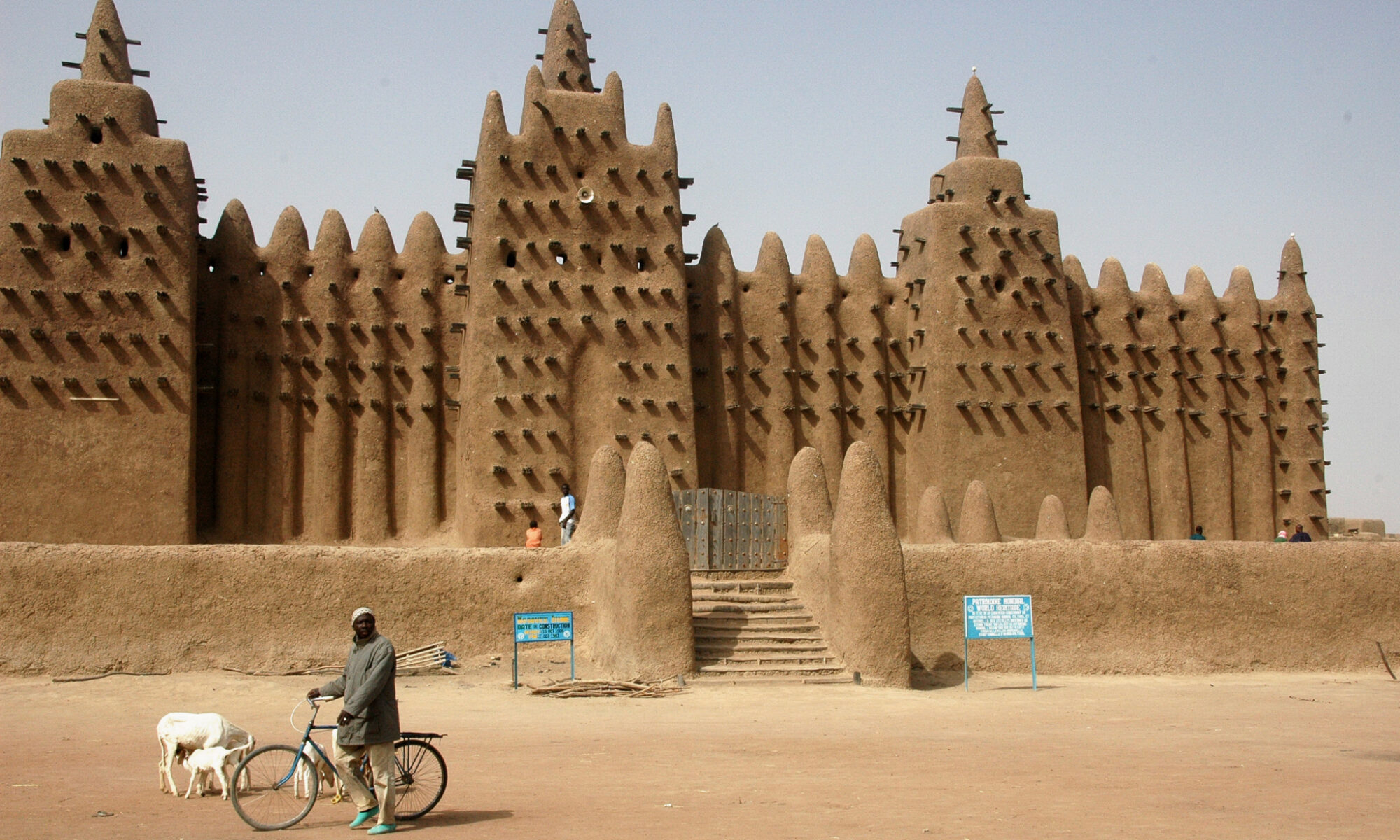
A new remote sensing technology has peeled away layers of mud and rock near Peru’s Cahuachi desert to reveal an ancient adobe pyramid, Italian researchers announced on Friday at a satellite imagery conference in Rome. The researchers investigated a test area along the river Nazca. Covered by plants and grass, it was about a mile away from Cahuachi’s archaeological site, which contains the remains of what is believed to be the world’s biggest mud city.

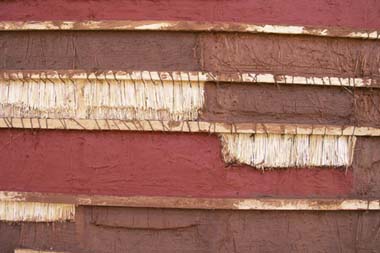
HOMEmade – Family Houses in Bangladesh

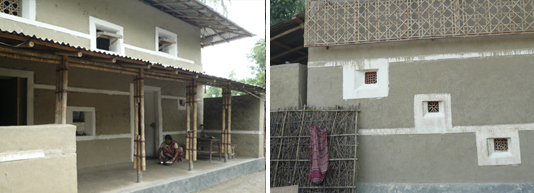
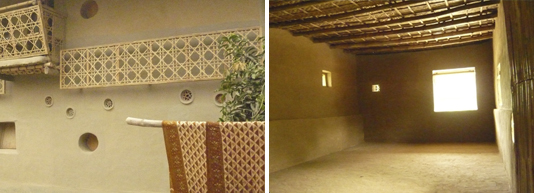
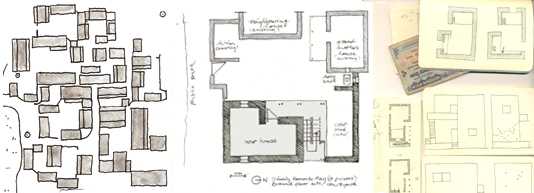
Architect Anna Heringer has recently completed three projects that were winners of the world architecture community awards. These three family houses are the results of a hands-on workshop for students and young architects conducted in a remote rural area of Bangladesh. Eight students of the BRAC University in Dhaka (Bangladesh) as well as five Students from the University of Art in Linz/ projectstudio BASEhabitat (Austria) came to a small and remote village in the North of Bangladsh, Rudrapur, to continue what has started with the Handmade METI-School: to work together with the local people on a model for a sustainable, modern architecture in a dynamic process. The goal of the HOMEmade project is to improve the living conditions of the local population and to strengthen national identity while maintaining the current high level of sustainability with regard to home construction. This is accomplished by building three model houses for low-income village families designed by young local architects and built by local craftsmen who have been trained in the modern mud and bamboo building techniques. It is the expectation that the young architects will be able to carry their knowledge and skills to other regions of Bangladesh and the trained labor will be able to use their skills to build other modern mud homes in the region.
Ancient Rammed Earth Observaory

Only recently rediscovered. An ancient site in the port of Qingdao has revealed the oldest known observatory in China. The Chinese Astronomy Society, learned of the finding at its annual convention. Experts point to historical evidence, that the Langya Observatory in east China’s Shandong Province, was built during the Warring States Period— more than 22-hundred years ago. The three-storey structure stands about nine meters. The original structure was made of rammed earth. The observatory was evidently erected as a site for studying the stars as well as for monitoring conditions at sea. [ Watch ]

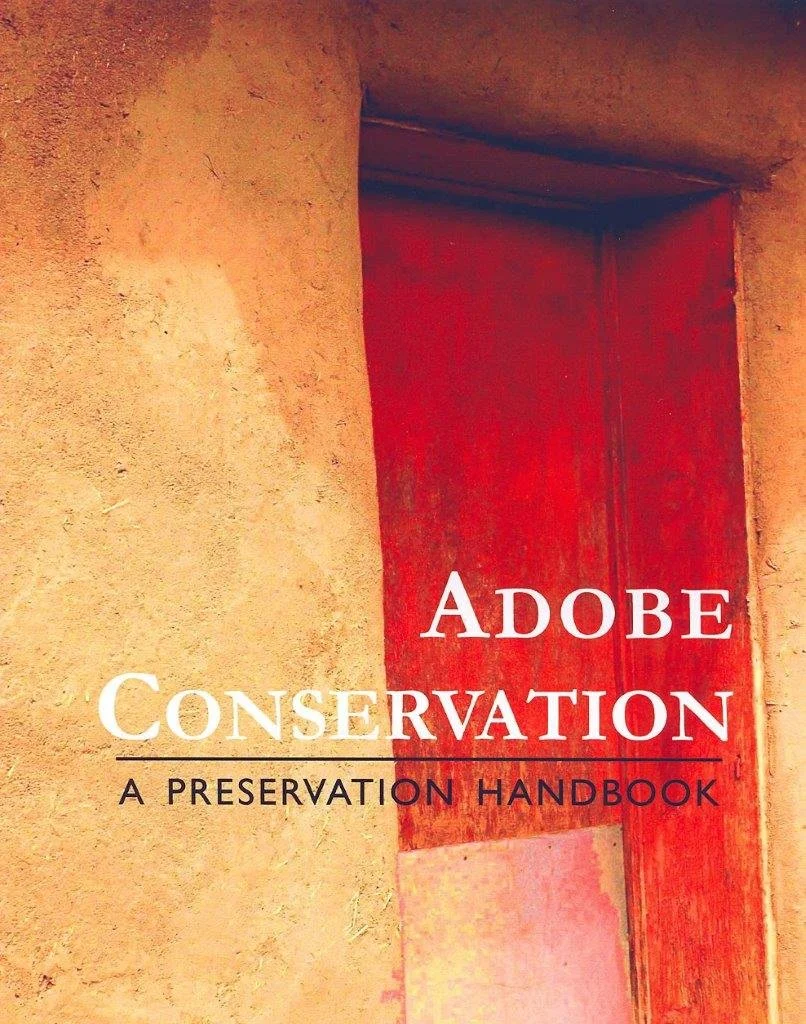
Adobe Conservation: A Preservation Handbook

Adobe Conservation: A Preservation Handbook is a richly illustrated guide is acknowledged as the best source for expert, field-tested information on the care and maintenance of historic adobe buildings–from small vernacular structures to the great Spanish Colonial missions. As a true ‘how-to’ manual, it presents a user-friendly and straightforward approach to the assessment, maintenance, preservation and restoration of earthen buildings based on time-tested techniques. Subjects include: architectural styles and materials; tools and equipment; materials and supplies; emergency shoring; moisture testing in adobe walls; material selection, mixing and testing; making adobe bricks; repairing and rebuilding adobe walls; repairing cracks in adobe walls; mud and lime plastering; earthen and lime finishes; removing contra paredes; repairing corbels; inspecting vigas and corbels; splicing vigas; compliance with State and Federal cultural resource protection legislation; glossary of terms; and bibliography.

Cornerstones Community Partnerships in Santa Fe, New Mexico is devoted to the preservation of the architectural heritage and community traditions in New Mexico and the American Southwest. Through its nationally honored technical assistance, applied learning and traditional building skills programs, Cornerstones has assisted more than 300 rural Hispanic and Native American communities with the preservation of historic and culturally significant earthen buildings. Cornerstones has developed and utilized the techniques in this book throughout the American Southwest since 1986.

North American Rammed Earth Builders’ Association

The North American Rammed Earth Builders’ Association (NAREBA) is a not for profit entity that offers the opportunity for its members to share in the passion for working with earthen materials and to contribute to the advancement of RE construction. NAREBA builders share a resource base of over 150 years of collective building experience and have committed to building RE walls with the highest standards in the industry.

AdobeUSA 2009

The 5th Adobe Conference of the Adobe Association of the Southwest, AdobeUSA 2009, will take place May 15 and 16, 2009 in El Rito, New Mexico on the campus of co-sponsor Northern New Mexico College in Cutting Hall Auditorium.

Call for Papers Schedule:
November 15, 2008: Abstracts due. One page maximum on 8-1/2? x11? paper.
December 15, 2008: Notification of paper acceptance.
January 15, 2009: AdobeUSA begins accepting full paper submissions.
February 15, 2009: All full paper due. 7-page maximum including graphics.

Subject Categories:
Education and Technology Transfer
Heritage and Conservation/Preservation
Techniques, Materials and Their Properties (including Seismic and Thermal)
Earthbuilding in Contemporary Architecture

Submit abstracts by mail, fax or e-mail (attached as a DOC file using our template above) to:
Quentin Wilson, Speakers Committee
PO Box 426, El Rito, NM 87530
Fax: 1-505-581-9156
e-mail: qwilson@nnmc.edu

Presentation Details:
Presenters will have 20 minutes for presentation and 10 minutes to answer questions. Time limits will be carefully monitored. Full papers for publication must be submitted in DOC format.

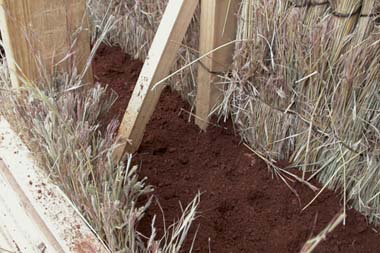
How To Build a Compressed Earth Block Home

Hallock’s Colorado-based company, Earth Block Inc, has developed an especially efficient and affordable process for earth block production. “Earthen walls have always been the best,” Hallock said during a press tour of the Baja, Mexico facility where he oversees the production of compressed earth blocks (CEBs) for construction at The Villages of Loreto Bay. Compressed earth blocks were chosen for the new resort community because they can be made economically from local materials. CEBs are also energy-efficient and durable. “Bugs don’t eat them and they don’t burn,” Hallock said. The How-To begins here.

Tebogo Home for Handicapped Children

Orange Farm is a township in the southwest of Johannesburg. The social situation is characterised by poverty, AIDS and unemployment. The appearance of the development is dominated largely by buildings or shacks made mostly of sheet metal, corrugated iron or parts of cars. In summer it can become unbearably hot in these shacks (up to 45°C), while during winter nights it can be noticeably cold (to 2°C).

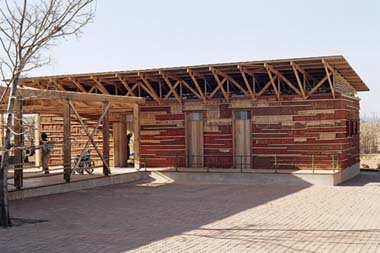
BASE habitat was commissioned by the Tebogo Home for Handicapped Children. The Austrian NGO SARCH set up this contact for us. The home for almost 50 children had become too small. In a group of 25 students we planned and built a dining building with a new kitchen, and a therapy building with sanitary facilities. A generously dimensioned pergola, a garden hall, connects the buildings with each other. The buildings we erected in Tebogo have a pleasant indoor climate throughout the year – without the use of energy. In this way we were able to reduce the fluctuation in temperature to only 9°C. Local workers, above all women, were integrated in the project. The building materials were acquired directly from the township: concrete blocks, earth, clay, straw, timber, grass mats – to strengthen the local economy and to make later repetition easier. One of the main aims was to make buildings that suited the needs of the children. They received a home that conveyed a sense of security and joy in living.

Clan Homes in Fujian

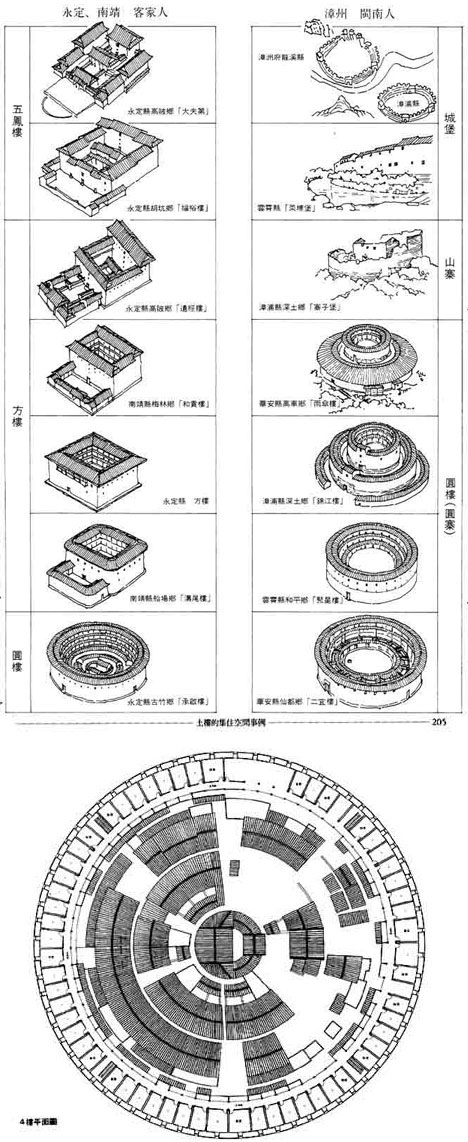
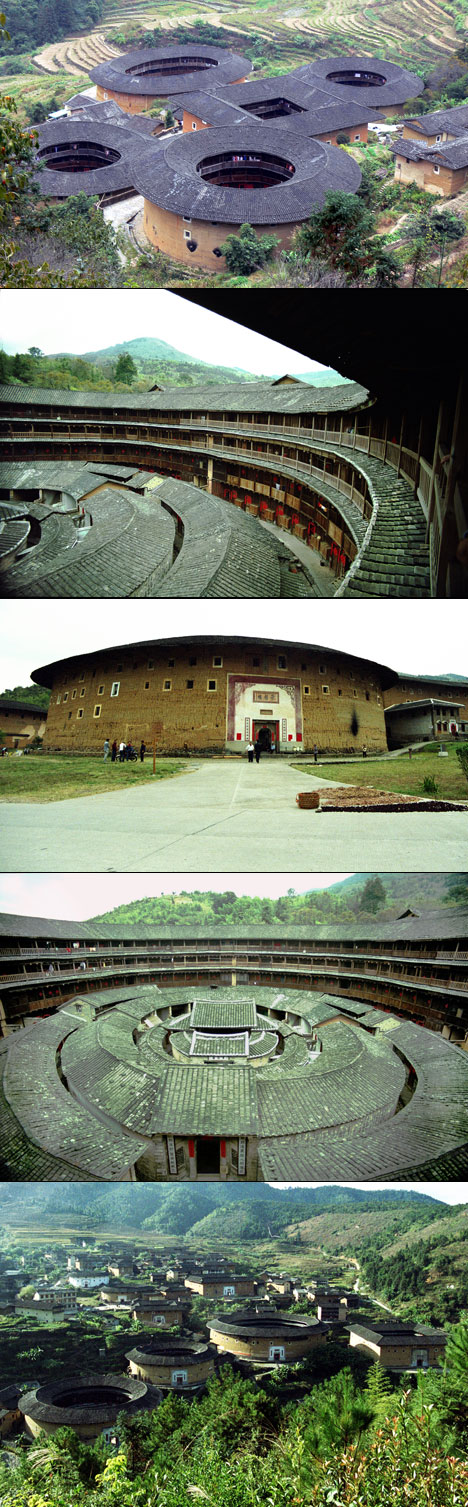
Clan homes in Fujian by Jens Aaberg-Jørgensen, originally published in Danish in ARKITEKTEN no. 28, November 2000, pp. 2–9, is an exceptional resource of photos, drawings and documentation of the round, rammed earth miniature circular castles, constructed from the 11th to 20th centuries that are shared by entire clans; their circular shapes, single point of entry, and weapons portholes were designed to optimize defense. As we reported previously, the structures were recently protected by UNESCO.


Photo Credit

[ via Core 77 ]