Terra 2008

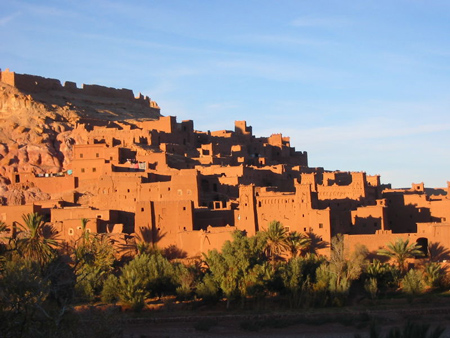
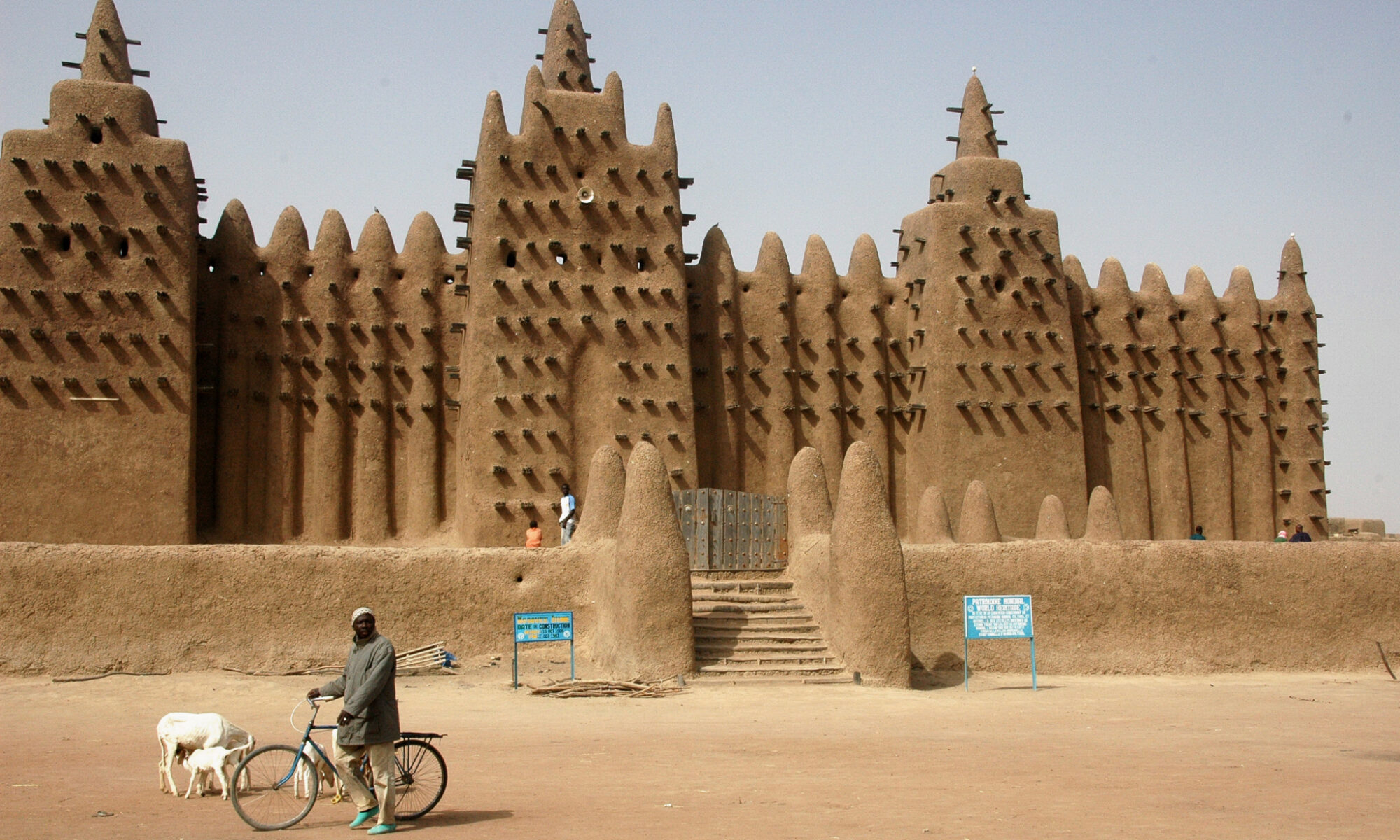
Earthen architecture, the world’s oldest and most widespread existing type of building, has been used in some of the world’s simplest shelters and most impressive monuments, such as the Great Wall of China, the missions of the American Southwest, and the city of Timbuktu. Nearly one half of the world’s population—about three billion people on six continents—lives or works in buildings constructed of earth. 

Grand or humble, earthen structures are threatened by encroaching development and changes in the environment – including the introduction of modern building materials and an exodus of residents from traditional villages and towns into large cities – as well as by natural disasters such as earthquakes and flooding. Not only are the buildings disappearing at an alarming rate, so is the traditional knowledge of how to build and conserve these important structures.

Significantly, roughly 20 percent of the architecture on the World Heritage List today is constructed of earth, but the public is largely unaware of these historic treasures.

The 10th International Conference on the Study and Conservation of Earthen Architectural Heritage, titled Terra 2008, is organized by the Getty Conservation Institute (GCI). It will bring together more than 300 international experts from the fields of conservation, anthropology, architecture and engineering, scientific research, site management and sustainable development of earthen architectural heritage to assess the state of earthen architecture worldwide and the latest scientific research in this field.

Terra 2008 will be held February 1–5, 2008, in Bamako, Mali, at the Centre International de Conferences de Bamako, a modern facility located in the city center.The conference is co-sponsored by the Ministry of Culture of Mali and will be held in French and English.

“Traditionally, earthen architecture has received less attention in the conservation field than structures made from more robust materials. Ironically, in most places in the world, earth is the conventional building material,” said Tim Whalen, director of the Getty Conservation Institute. “For more than 20 years, the GCI has advanced thinking and practice in the conservation of earthen architecture. The beauty and vulnerability of these structures demands our attention.”

Whalen further added, “The Getty Conservation Institute is delighted to work with the Ministry of Culture of Mali to host the Terra 2008 conference.”

Mali’s earthen buildings are renowned worldwide for their aesthetic beauty and diversity—architecture that brings with it major preservation challenges. The conference provides a unique opportunity to discuss these problems in situ in sub-Saharan Africa, and is the first time the earthen architecture professional community has met in Africa.

In conjunction with the conference, public programming also will be offered, highlighting the beauty and significance of earthen architecture in Mali and around the world. Outreach activities will include exhibitions at the National Museum of Mali and at the Memorial Modiba Keita, film screenings, and live construction demonstrations by Mali’s celebrated masons.

This is the 10th conference to be organized by the earthen architecture community since 1972. Terra 2008 is organized by the GCI and the Ministry of Culture of Mali, in collaboration with Africa 2009, the Centre International de la Construction en Terre- Ecole Nationale Supérieure d’Architecture de Grenoble (CRATerre – ENSAG), International Council on Monuments and Sites South Africa (ICOMOS South Africa), International Centre for the Study of the Preservation and Restoration of Cultural Property (lCCROM), and the World Heritage Centre, under the aegis of the International Scientific Committee for Earthen Architectural Heritage of the International Council on Monuments and Sites (ICOMOS). Numerous international organizations will also facilitate the participation of specialists from all regions of Africa as well as Latin America, Asia, and the Middle East.

For more information on the conference, visit: http://www.getty.edu/conservation/field_projects/terra/mali_conference.html

Proyecto Hornero

Proyecto Hornero es un grupo interdisciplinario que aborda la construcción con materiales naturales y el manejo sustentable de energía. Surgió en mayo del 2002 como iniciativa de un grupo de estudiantes de Agronomía y Arquitectura de la Universidad de la República (UdelaR), respondiendo a la situación generada por el tornado que destruyó infraestructuras de la zona granjera del sur de Uruguay. [ Blog ]

Adobe Repository for Buddha Statue

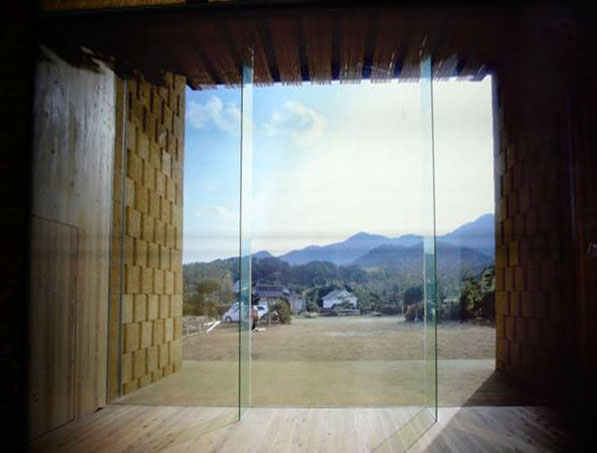
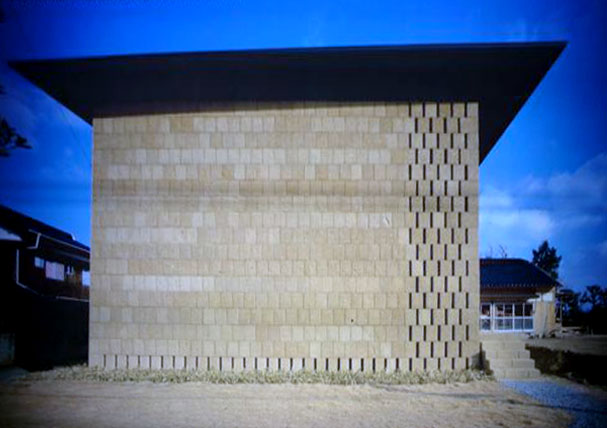
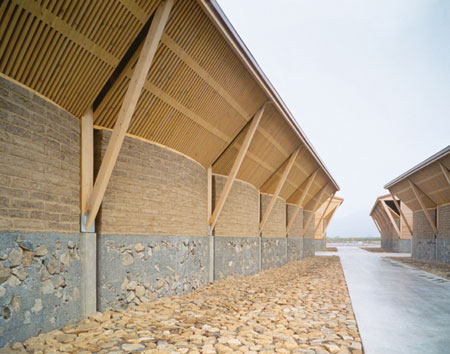
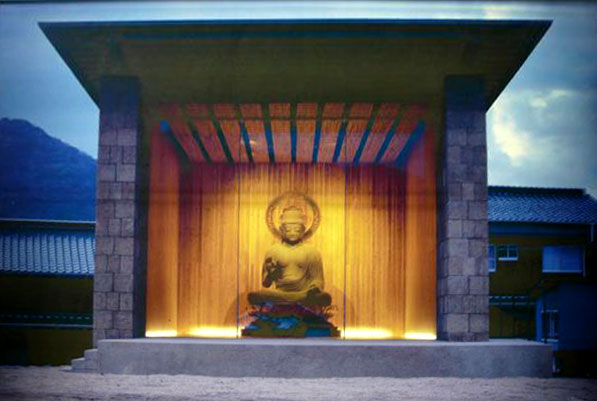
The Adobe Repository for Buddha Statue was designed by Kengo Kuma and Associates in 2001-2002 in Toyoura-Gun, Yamaguchi Prefecture, Japan. It is designed to accommodate and exhibit the wood carved statue of Timber Amida (Amidabha) Tathabata. The periphery walls of the site are constructed in hanchiku, or rammed earth, Kuma decided to further utilize this technique in the architecture by using what appears to be compressed earth block, even though it is called out as adobe (mud brick).

Chapel of Reconciliation

Built by architects Peter Sassenroth und Rudolf Reitermann in 1999, this small chapel made of rammed earth replaces the former Church of Reconciliation, a historicist church built in 1894 which happened to be situated on the death strip when the Berlin wall was erected in 1961. The old church stood there vacant and isolated, abused as a guarding tower for East German border patrol, until it was finally blown up by East Germany in 1987 – just two years before the wall eventually was torn down itself. the community of the former church decided it wanted to have its church back. The completed chapel is enveloped by a wall made of rammed earth, composed out of clay and smaller pieces of bricks of the exploded church. For more information visit the Chapel of Reconciliation home page.

Novoram

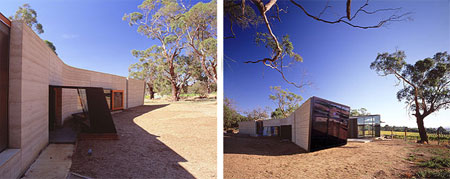
John Novotny, a Melbourne resident, has developed a very simple and innovative method of rammed earth construction that results in houses massively cheaper than conventional ones and with amazing environmental benefits. Mixing the ancient universal simplicity of earth with modern engineering principles, Novotny developed a concrete-jacket rammed-earth wall system (“Novoram”) that is simple to construct and structurally robust. The resulting walls are built mostly of earth but have a thin concrete jacket and concrete posts integrated into the wall.

Earth Architecture and Wine

Many wineries and residences among vineyards employ earth in the construction of buildings. Often, the same earth to grow grapes is ideal for use as a building material.


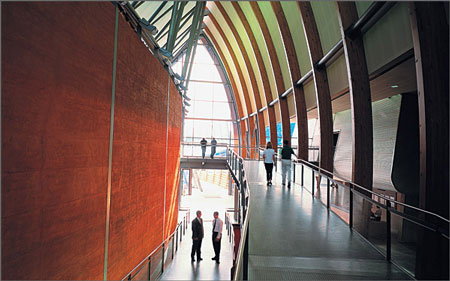
National Wine Centre


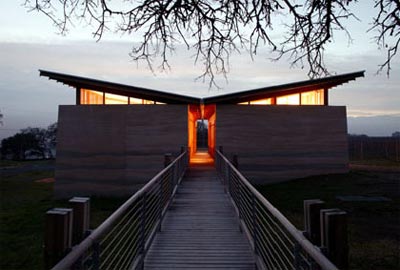
Vineyard Residence


Residence at Meteor Vineyards


Bodega en Los Robles


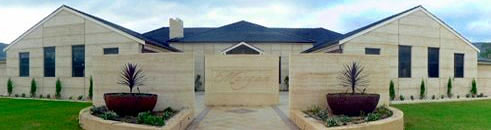
Margan Tasting Room and Restaurant

The list goes on and on: [ Fetzer Winery Administration Building | Moorooduc Estate | Texas Hills Vineyard | Adinfern Estate | Wing Canyon Vineyard | Home Hill Winery ]

Eartha

EARTHA, The East Anglian Regional Telluric Houses Association, is an organization whose aims and objectives are to encourage the development of expertise and understanding in all aspects of earth building in the east of England by:

Establishing a network of people from various professions and trades all of whom have an interest in the study, maintenance and promotion of earth buildings in the east of England: through links with ICOMOS it will join with other networks in the United Kingdom and worldwide.

Providing a forum for discussion of issues relating to earth building in the east of England.

Providing advice on the repair and maintenance of earth buildings through an information service, the publication of technical guidance and the organisation of practical demonstrations, exhibitions and seminars.

Establishing mutually beneficial links with groups and individuals working with earth buildings in the other parts of the Britain and abroad.

Collaborating with other networks to prepare and publish information manual covering all aspects of the construction, repair and maintenance of earth buildings including composite structures, daubs, renders and plasters.

Encouraging and supporting training in the field of earth building and associated skills.

Encouraging the revival of appropriate earth building techniques for new building construction and investigating the potential of the material for low energy buildings.
L’Association Nationale des Professionnels de la TERRE Crue

L’Association Nationale des Professionnels de la TERRE Crue fédère les acteurs et actrices de la construction en terre crue en France. Elle regroupe des artisans et des chefs d’entreprise, des producteurs de matériaux, des architectes, des ingénieurs, et des organismes de formation professionnelle. Elle accueille aussi des représentants d’organismes régionaux (parcs…) ou d’autres associations développant des activités dans le domaine de l’architecture de terre (valorisation des patrimoines nationaux, architecture contemporaine, recherche sur les matériaux et les techniques…).