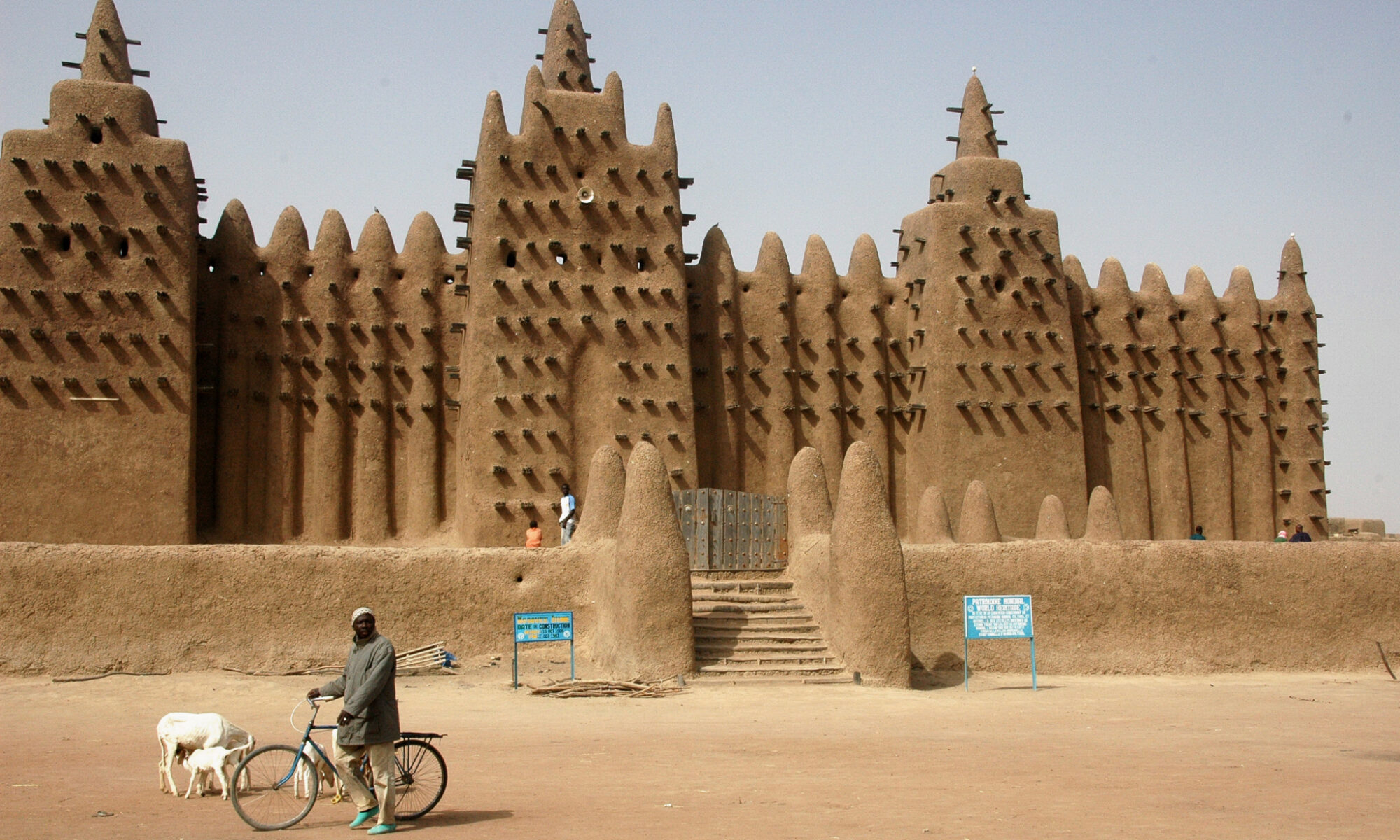
The New York Earth Room, 1977, is the third Earth Room sculpture executed by artist Walter de Maria, the first being in Munich, Germany in 1968. The second was installed at the Hessisches Landesmuseum in Darmstadt, Germany in 1974. The first two works no longer exist. The New York Earth Room has been on long-term view to the public since 1980. This work was commissioned and is maintained by Dia Art Foundation and is an interior earth sculpture comprised of 250 cubic yards of earth (197 cubic meters) over 3,600 square feet of floor space (335 square meters) with a 22 inch depth of material (56 centimeters). The total weight of the sculpture is 280,000 lbs. (127,300 kilos).
Nader Khalili
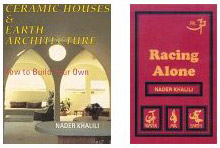
Iranian born Nader Khalili, California architect/author is the world renowned Earth Architecture teacher and innovator, and author. He has been a licensed architect in the State of California since 1970, and has practiced both in the U.S. and abroad. Click here to visit Khalili’s website: Cal-Earth, The California Institute for Earth Art and Architecture.
His books, Ceramic Houses and Earth Architecture: How to Build Your Own and Racing Alone document his life of searching for a method to fire mud houses and turn them to stone by firing and glazing an entire building after it is constructed from clay-earth on site.
Los Angeles Greater Metropolitan Area Adobes
Among the Things to do in Los Angeles are visit the 103 adobe sites where adobe buildings once stood, or visit the 76 extant historic adobe structures listed by region below:
Los Angles County (12)
Orange County (10)
San Diego (17)
Santa Barbara (20)
Ventura (13)
Inland Empire (4)
The Architecture of Mud
The Architecture of Mud, a film by Caterina Borelli and Pamela Jerome, is shot in the Hadhramaut region in the south east of Yemen which well known for its mudbrick architecture. Throughout the centuries, the population has developed very sophisticated building techniques and created a unique architectural environment.
Mali
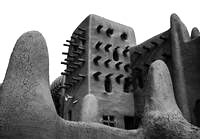
Brazilian photographer Jose Luis Berzal sends a link to a series of beautiful photos of adobe architecture from his recent trip to Mali.
ABCTerra
The Brazilian Association of Earth Builders – ABCTerra, established in 1997, is a non governmental organization whose goals are to disseminate, stimulate and promote the development of the architecture constructed of raw earth in Brazil.
Portugese language website. Translate at babelfish.
Rural Studio

The book, Rural Studio: Samuel Mockbee and an Architecture of Decency documents several rammed earth structures designed and built by Auburn School of Architecture students in Hale County, Alabama.
Yazd 2003
The Ninth Conference on the Research and Protection of Unbaked Mud Monuments opened at Dowlatabad Garden and was attended by a number of world experts. Speaking at the inaugural ceremony, Head of Yazd province Cultural Heritage Department Seyed Mohammad Beheshti reiterated the importance of the unbaked mud monuments and the inherent complexities of the material.
Home Cheap Home
For an increasing number of determined people, the Australian dream is not just owning your own home. It is building it. This seems especially true in Victoria, where one in five of the $7.9 billion worth of domestic building jobs is done by ownerbuilders. Many, such as Melbourne journalist, Murray Johnson, do not have any building experience, but manage to erect impressive homes. Johnson, 45, began his mud brick house when spiralling Melbourne house prices ruled him out of the market at the end of the 1990’s.
National Wine Centre of Austrailia
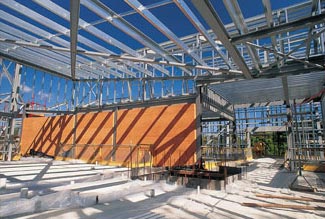
The National Wine Centre of Australia, located in Adelaide, South Austrailia, was designed by Grieve Gillette and Cox Architects. According to the builder, Mitchell Builders, it contains the largest rammed earth wall in Austrailia. Soil taken from all leading wine districts was used in the construction of the wall, which makes up the center spine of the building. The architecture emerges from this spine much like a grape vine from the soil. More construction photos of the Centre are available at the National Wine Centre website and more info and photos can be found at www.archidose.org