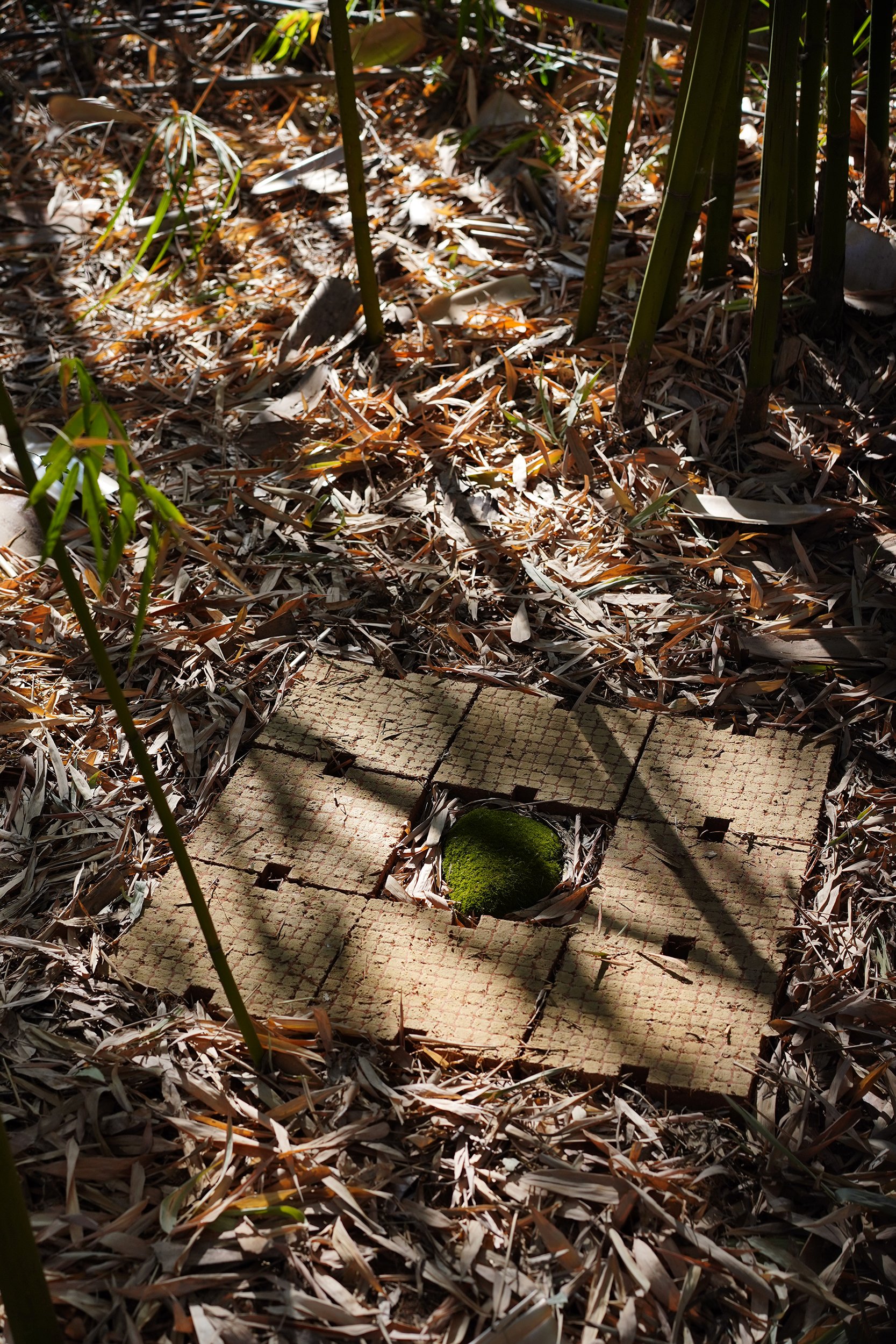
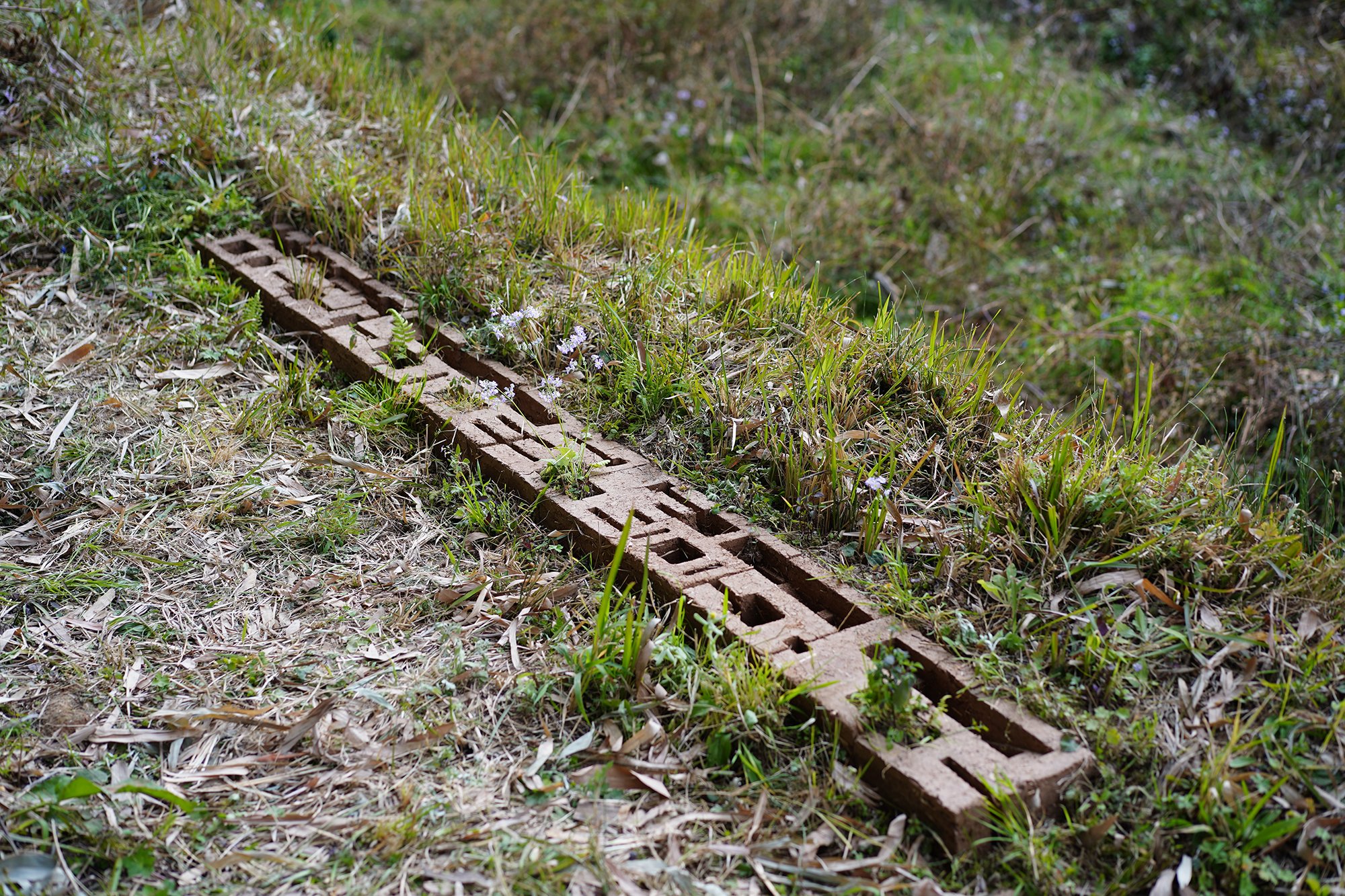
The observatory in the desert was a project brought on by the Contemporary Architects Association that sought to revive tradition of clay and mud construction in the Esfahan Village in Iran with a beautiful communal piece. This work is described thoroughly in the following post. What is there not to love about this project? In this work of art, meticulously arranged mud bricks and rammed earth wallsmake a seamless experience.
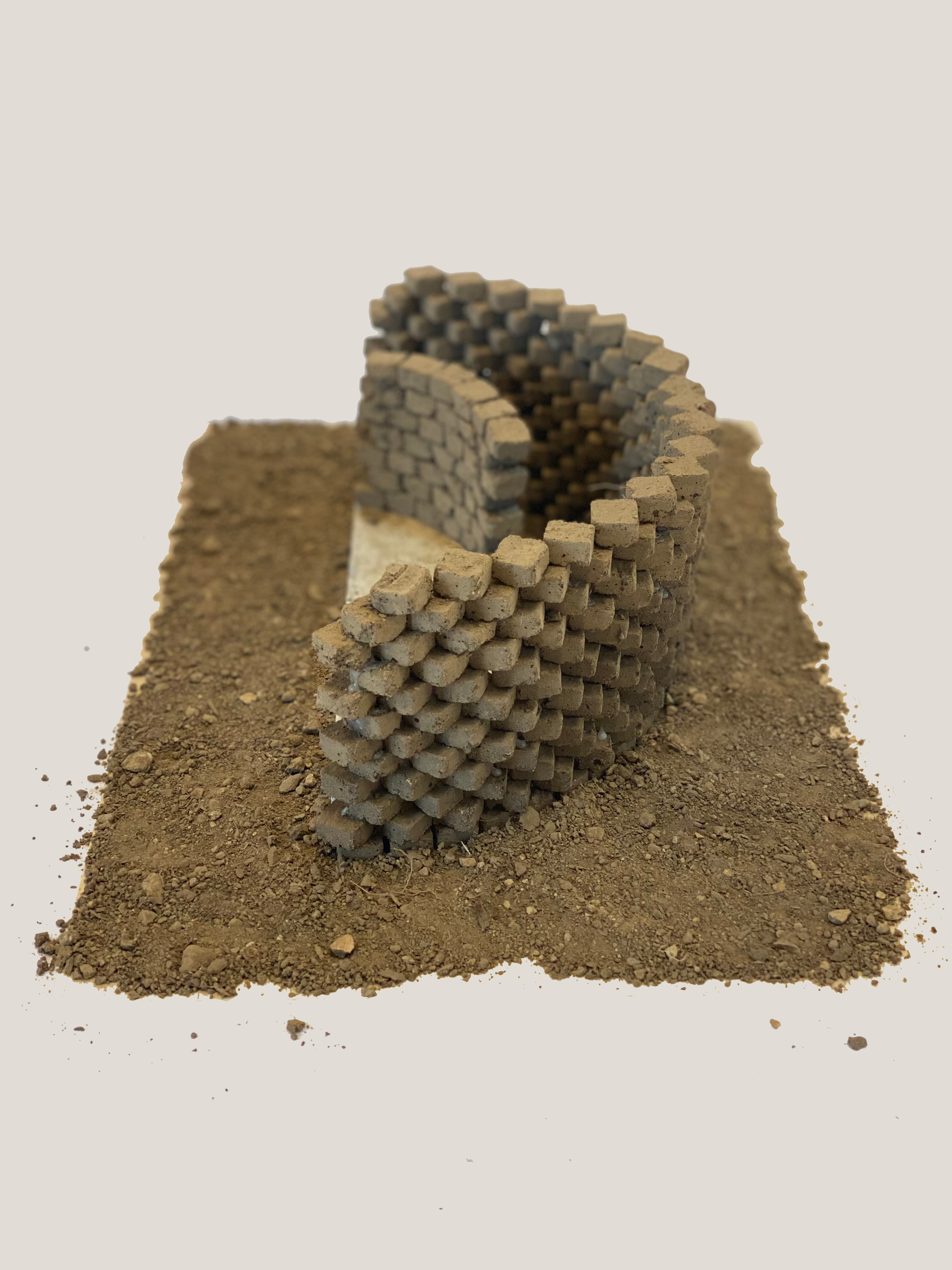
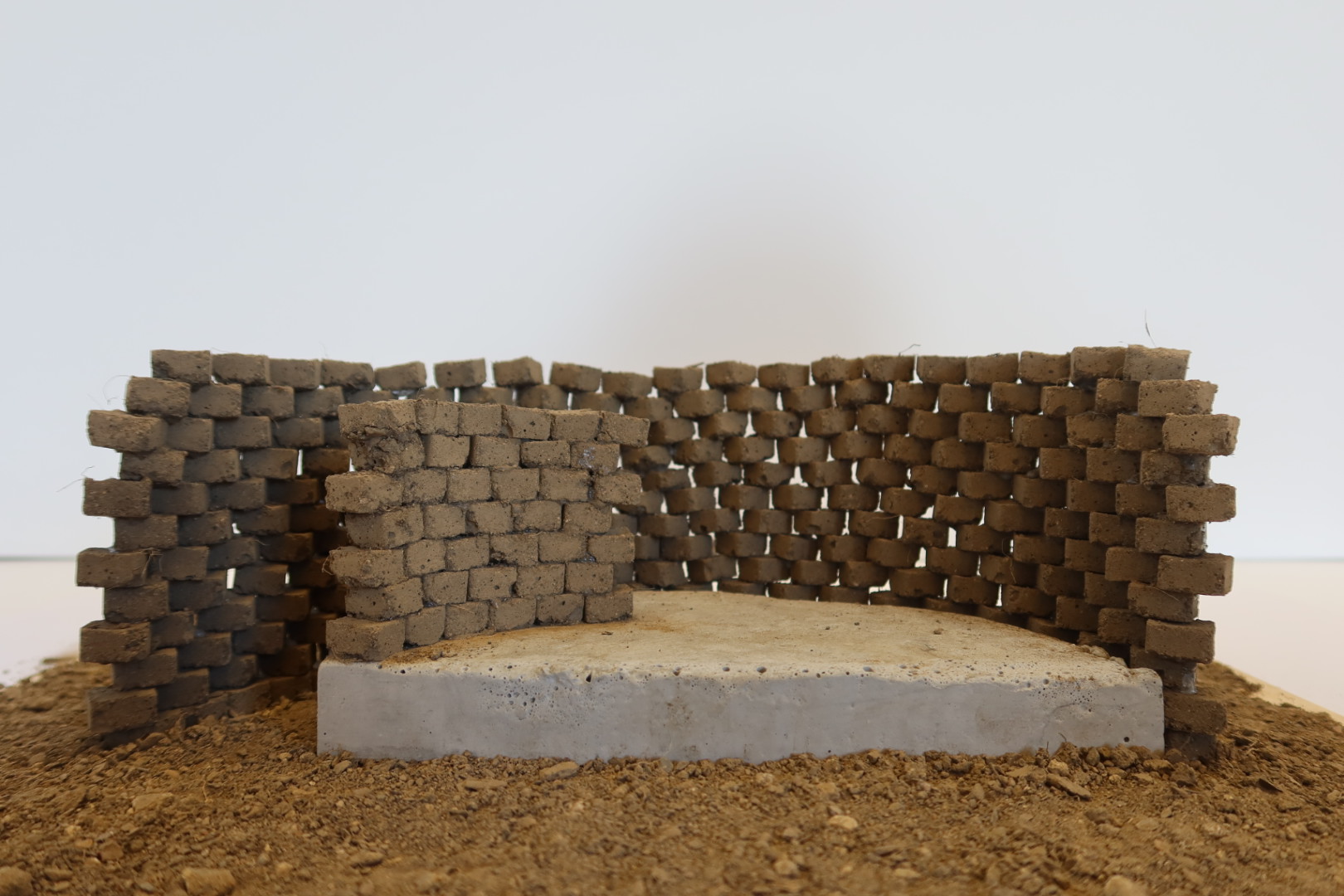
Our group, Eryn King, Lucy Knopf and Camilla Faustinelli were blown away by this project when it was presented by one of the students in the class Earthen Material Practices in Contemporary Art and Architecture . We just had to recreate it.
The final pushed groups to build a model at 1/2” = 1’scale, focusing on a specific building technique with earth we had studied.
Our group decided to focus on the mud brick.
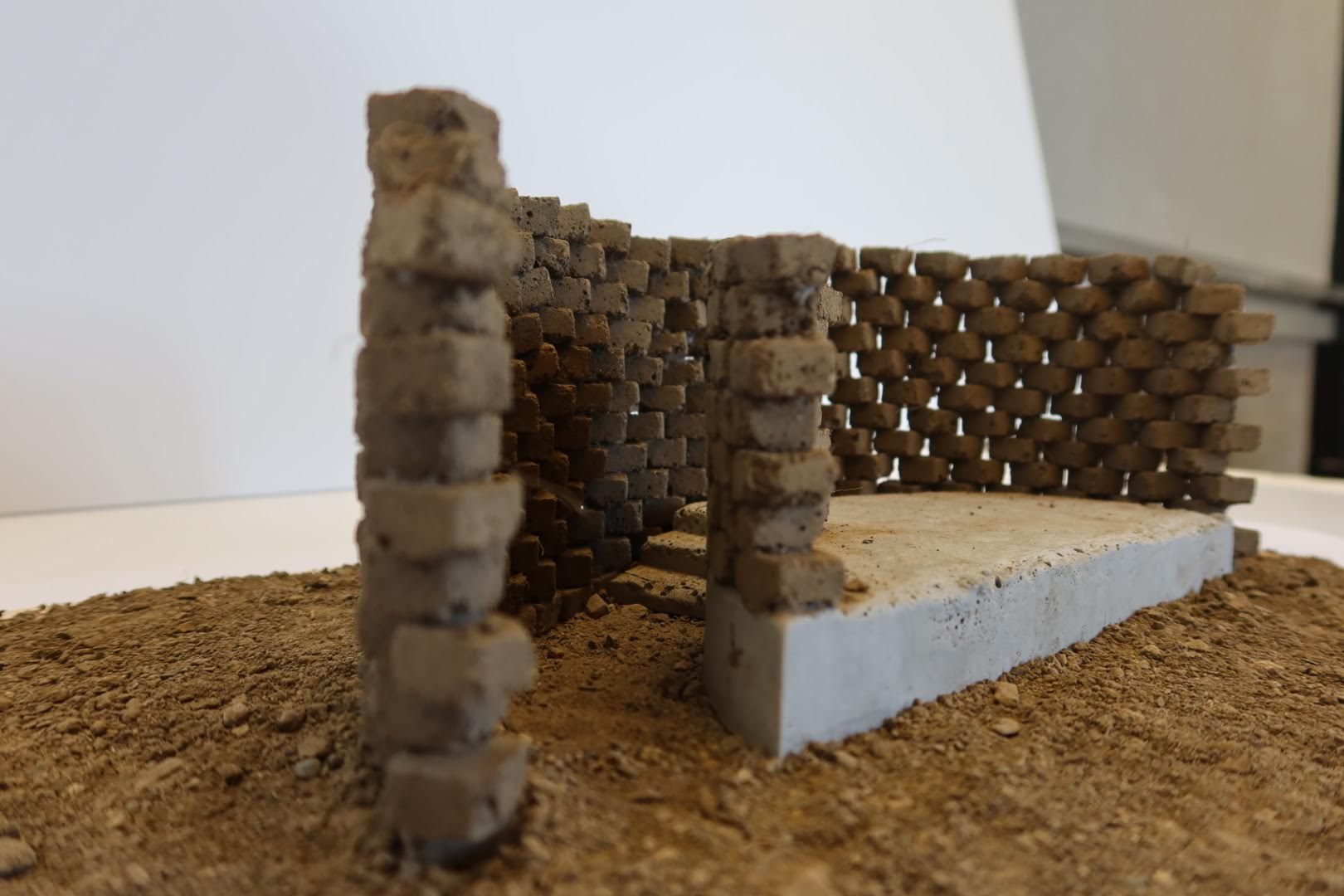
For such an endeavor, we decided to change the design a bit. Because we weren’t going to focus on rammed earth walls, we made all of the construction using mud bricks even if the interior circle is supposed to be a rammed earth wall in the actual project.
Construction process:
Collecting the mud : Mud for the bricks was collected in the San Pablo coastline area, as well as a backyard in Elmwood, Berkeley.
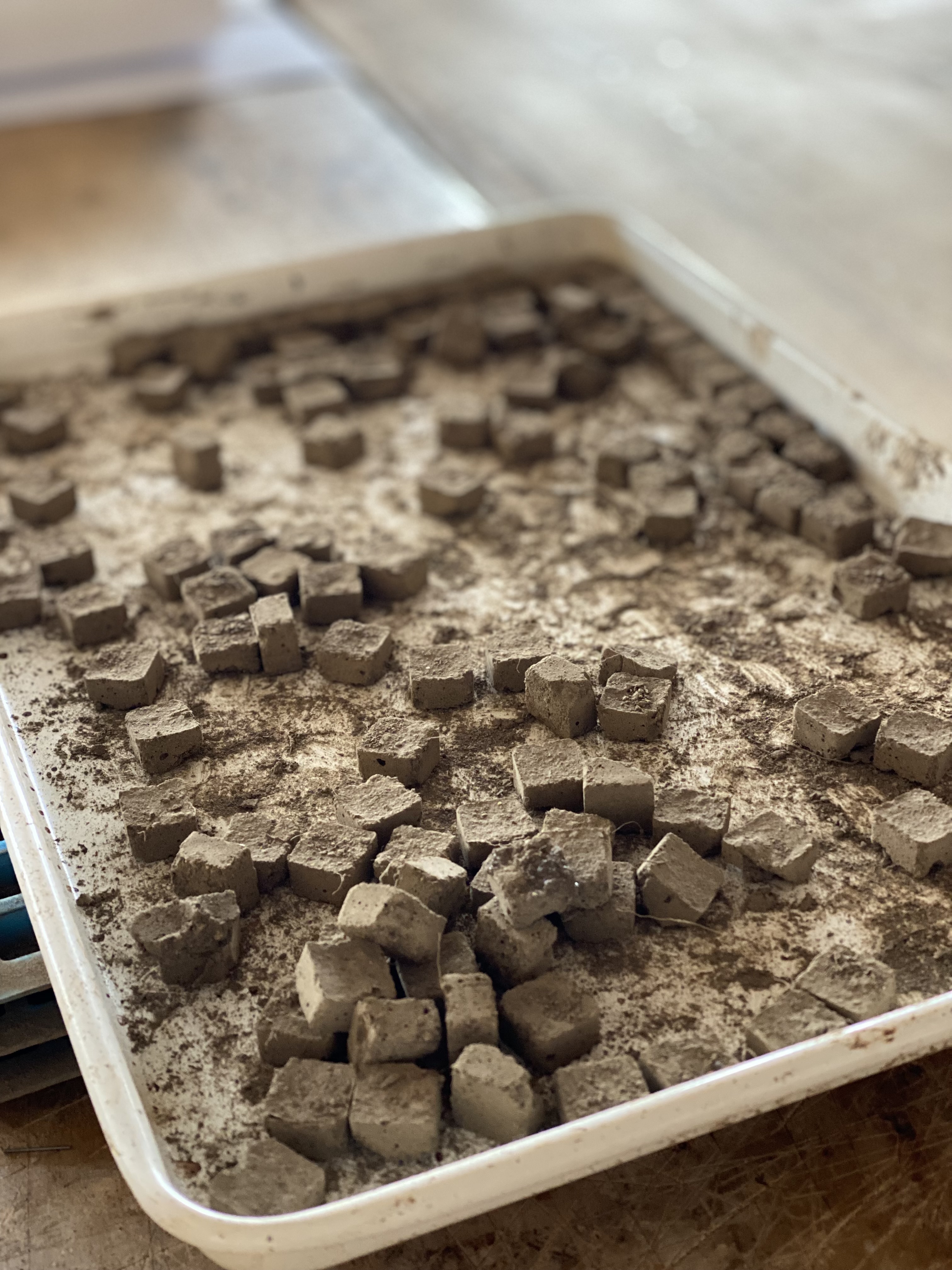
Making the bricks: Mud was pressed into silicone molds, then left to dry in the sun for several days.
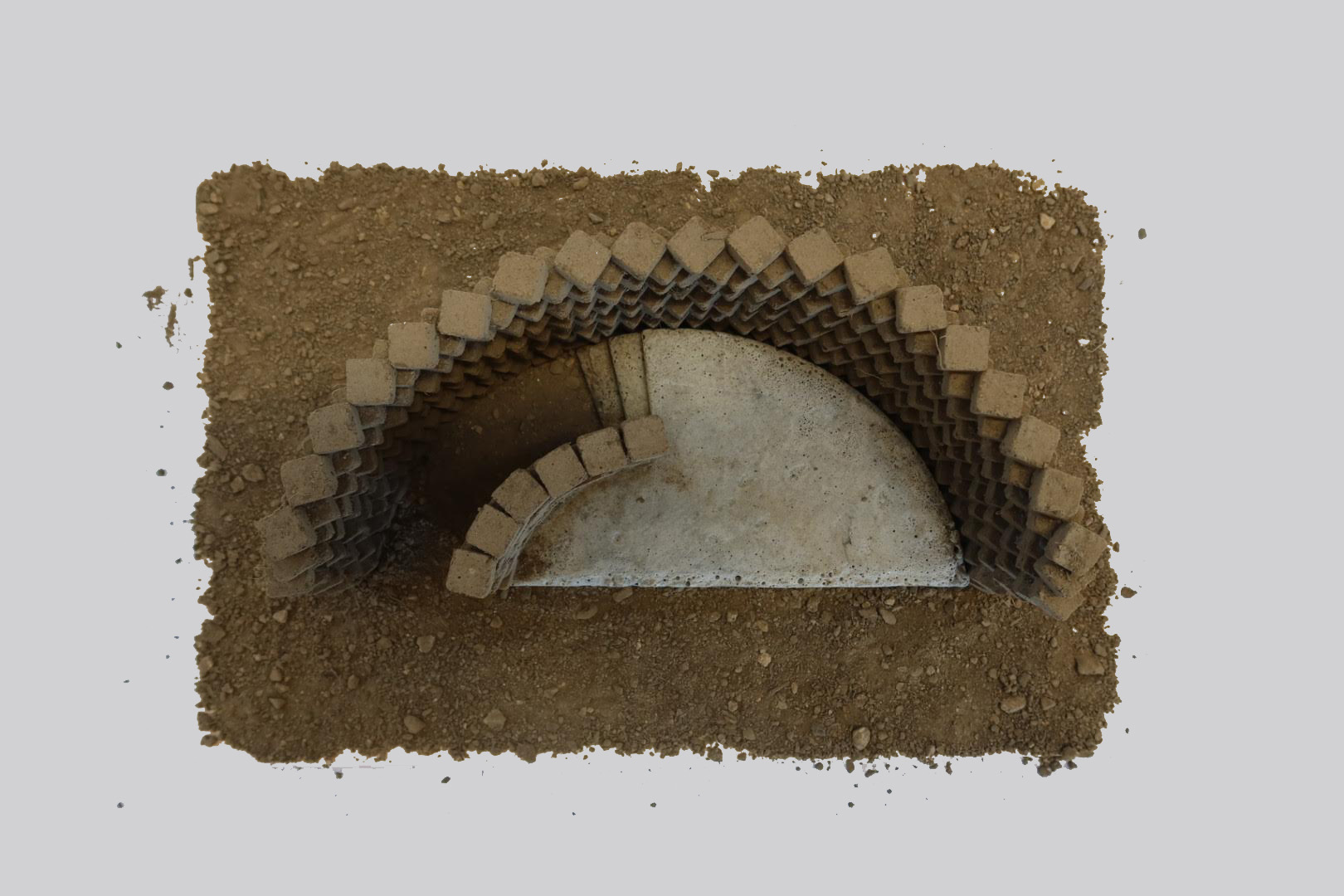
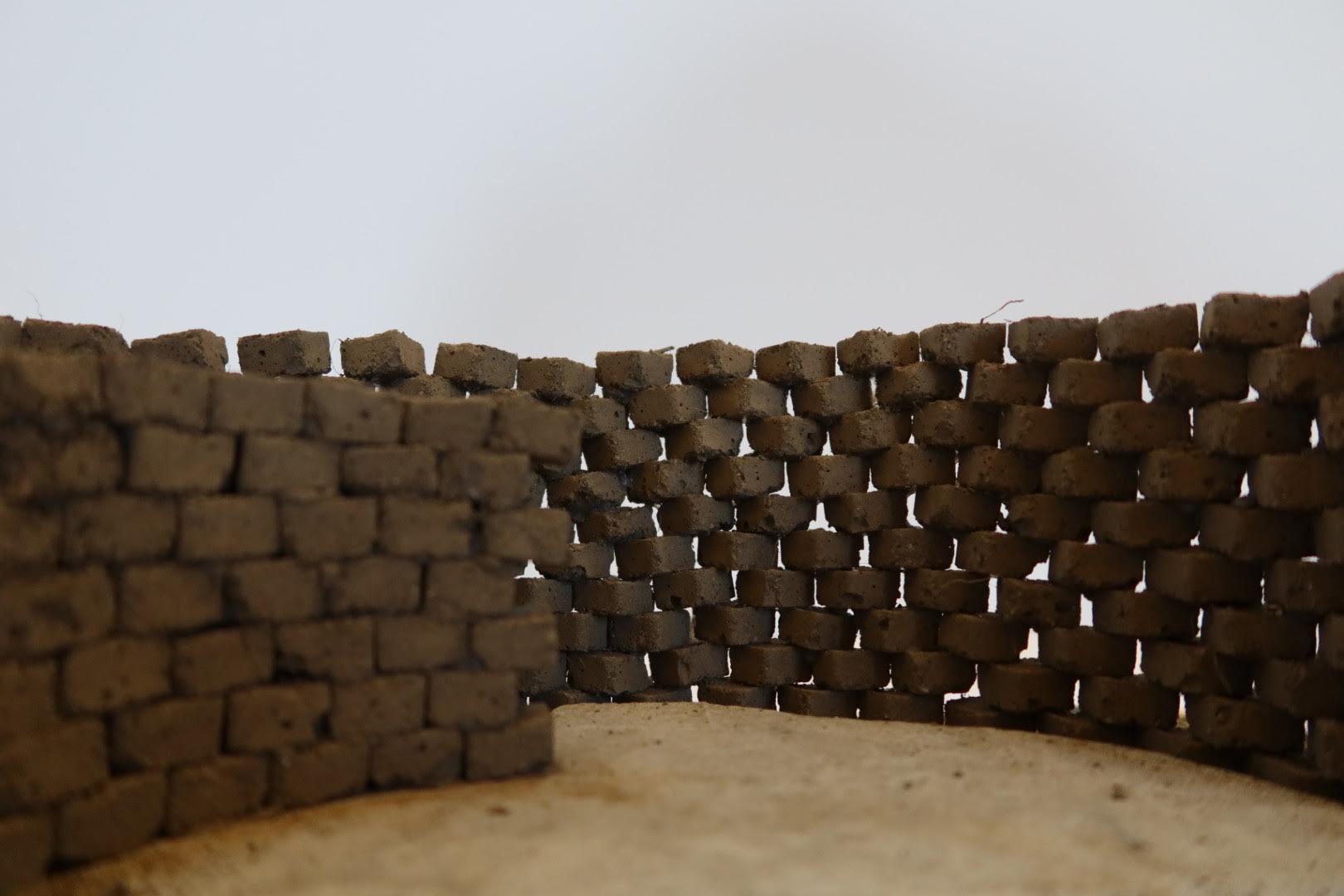
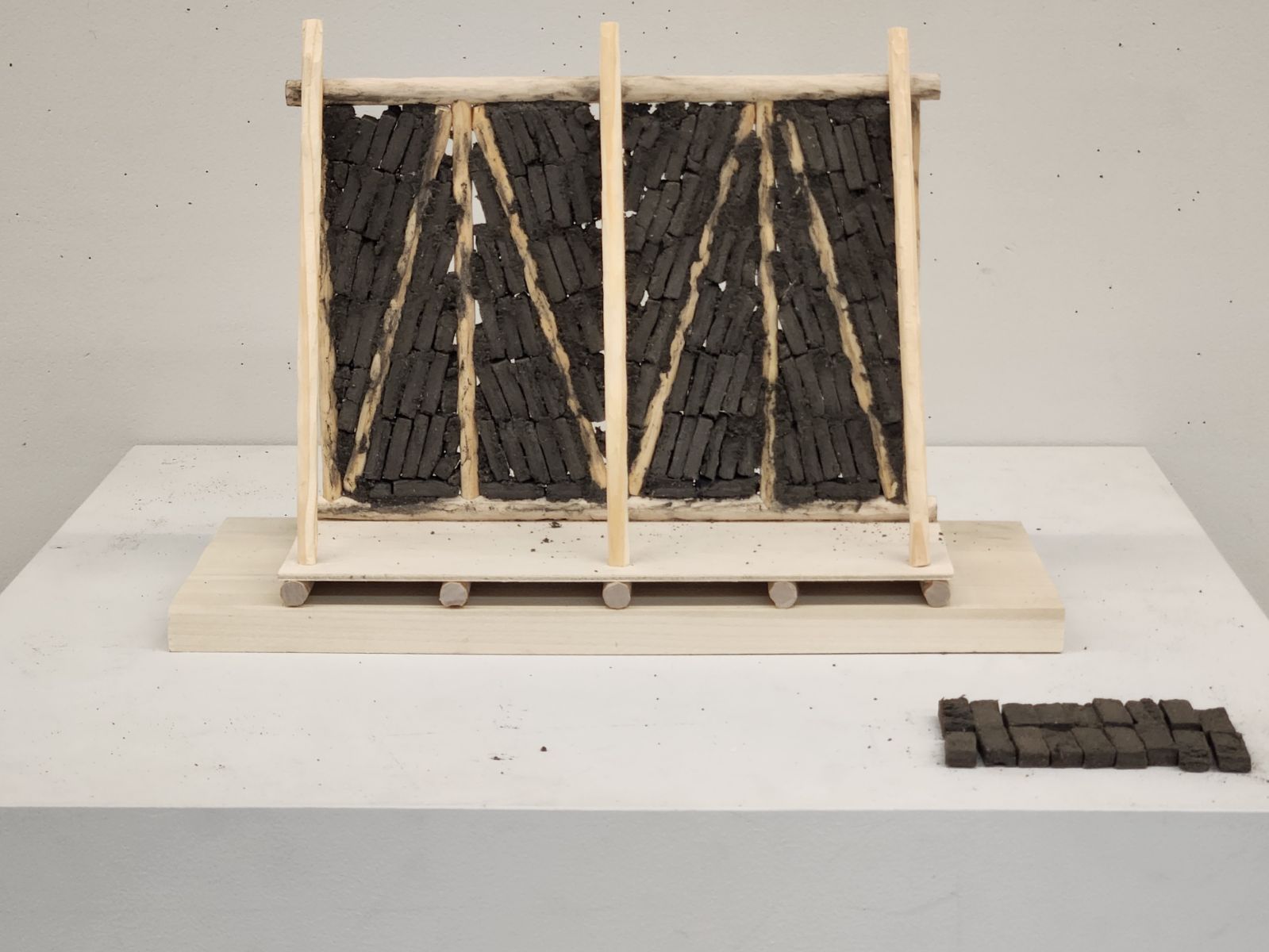
Building: With a concrete base, we stacked the bricks in a 45 degree angle on the outside, and not angled on the inside to act as the rammed earth wall on the actual project. This is where texture and consistency of our collected dry mud came to play, making some pieces more fragile than others.
Building this observatory was a meticulous project, but it’s incredible how making something makes you understand why it’s so special. What a beautiful project. Our group hopes to one day see the project in person.
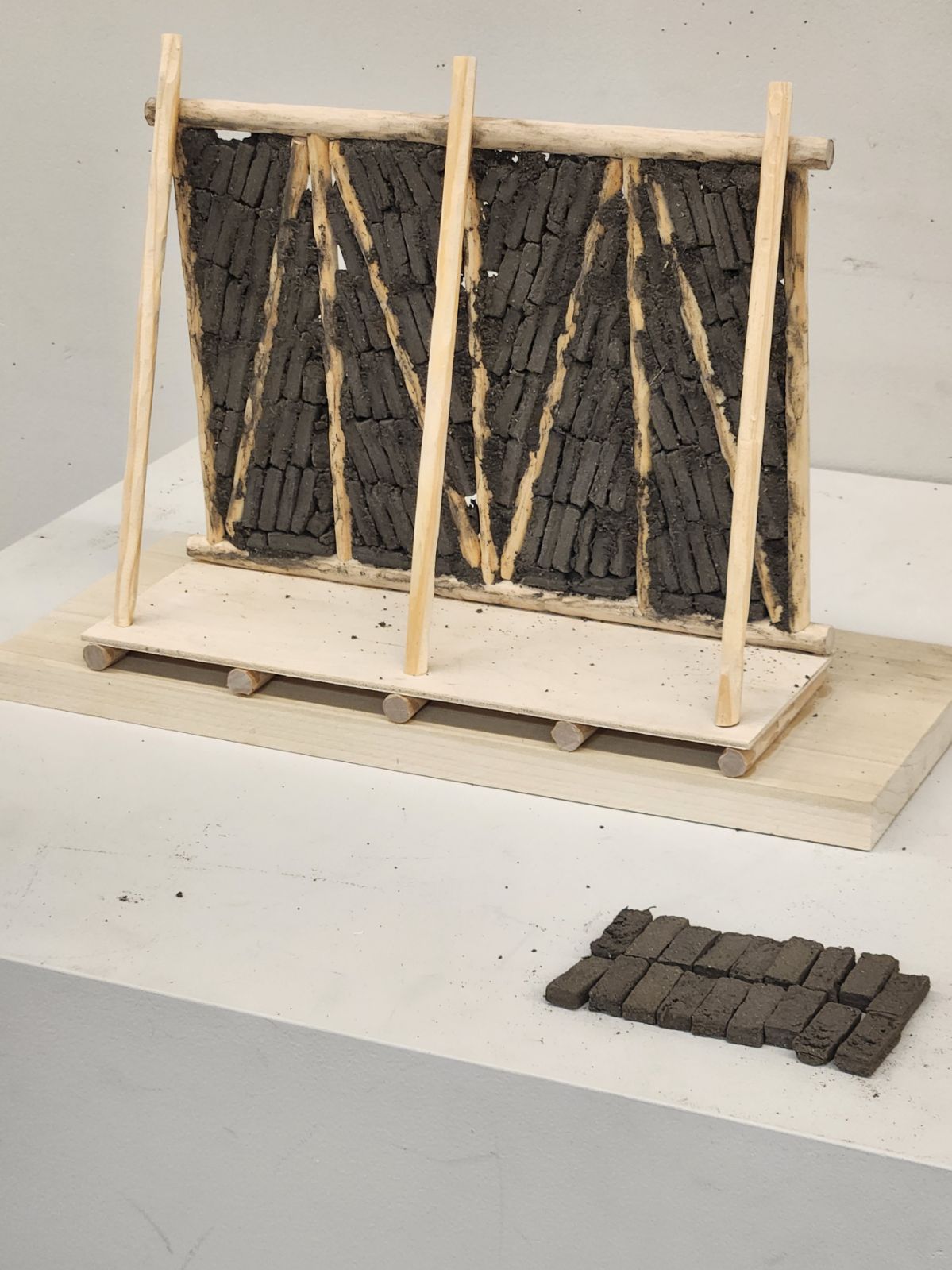
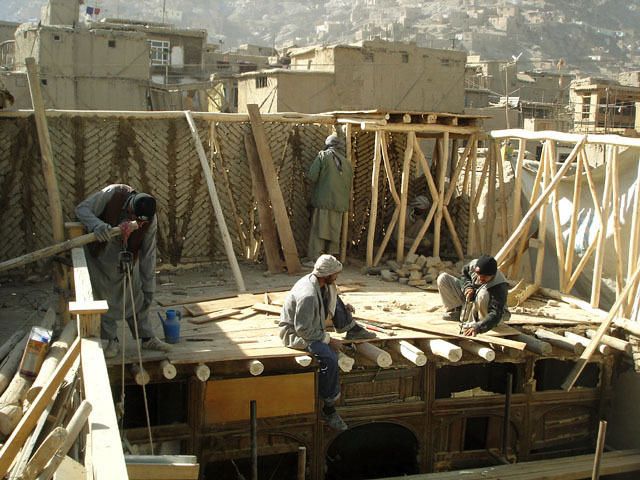
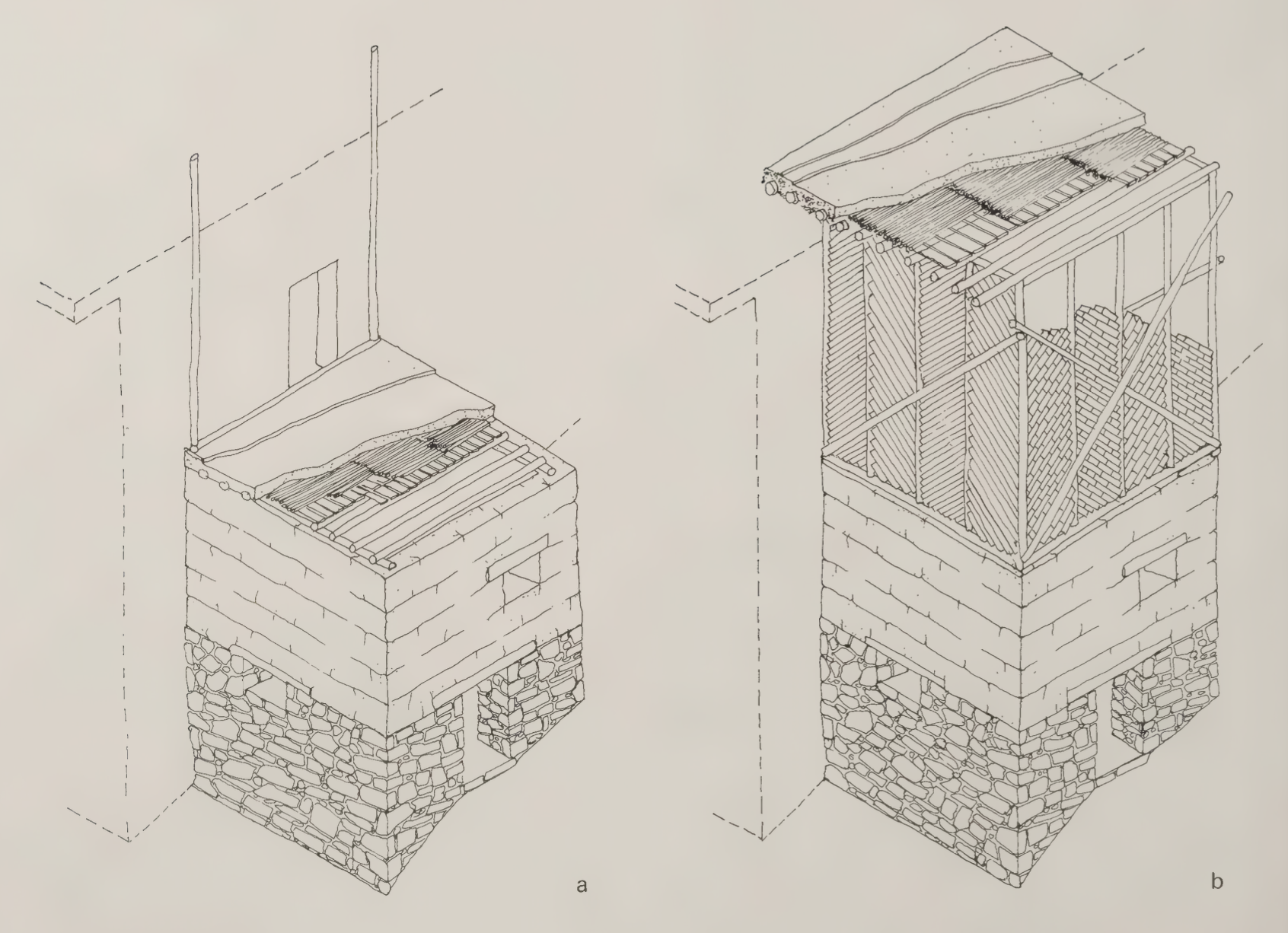
Senj (سنج) is a traditional Afghan wood framing technique. It is a lightweight, flexible, and modular system designed to be placed on upper levels of structures within earthquake prone regions of Afghanistan.
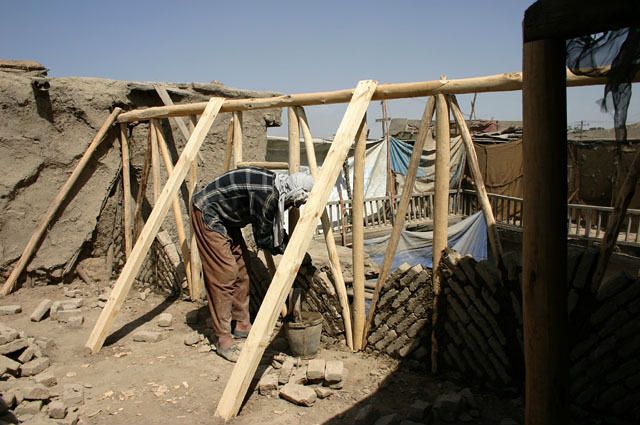
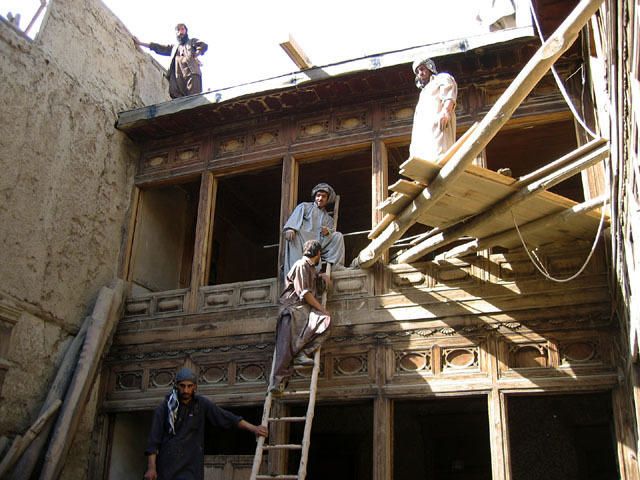
Amin House Restoration, Kabul, Afghanistan 2004-2005. https://www.archnet.org/sites/5585Filling of timber parapet frame with mud-bricks. Amin House Restoration, Kabul, Afghanistan 2004-2005. https://www.archnet.org/sites/5585
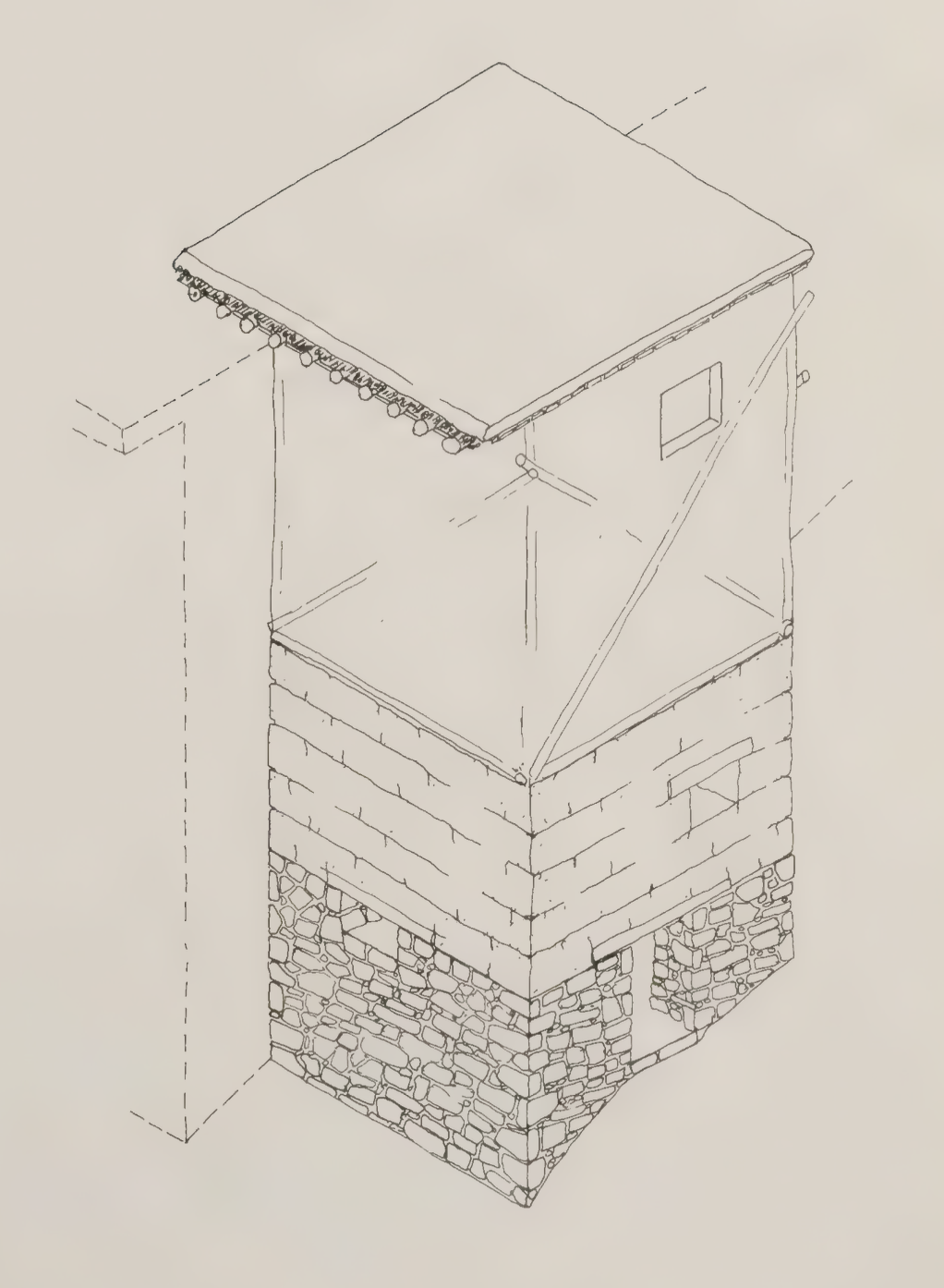
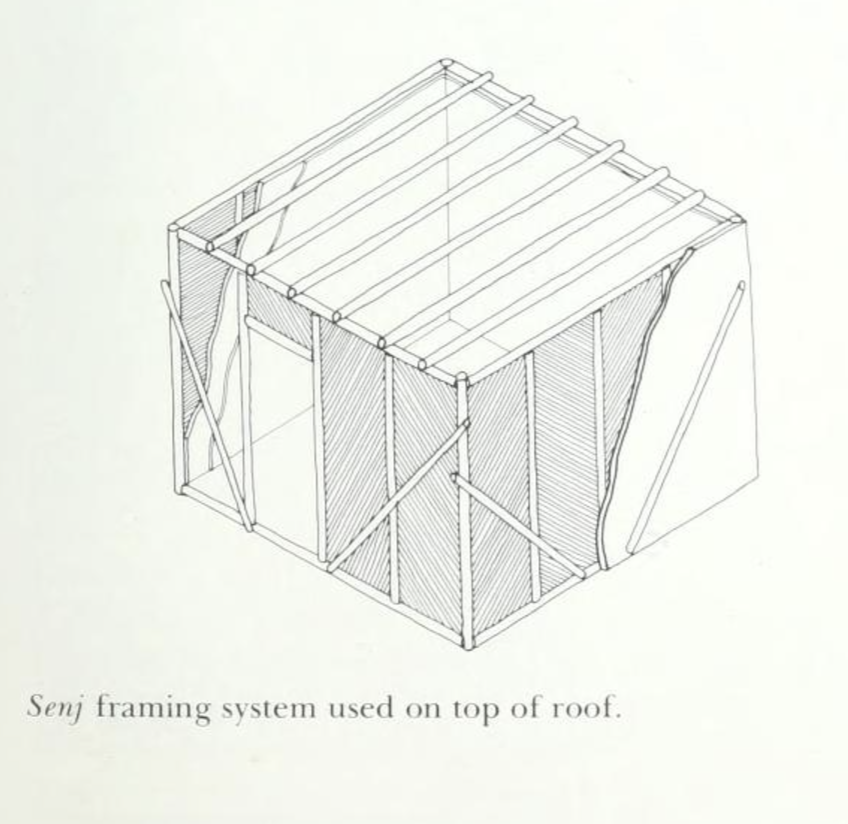
The frame is constructed with poplar poles on a flat surface and is joined together to create square or rectangular walls. The horizontal poles are around 15-20cm in diameter, and the vertical/diagonal poles around 10-15cm. They are joined by mortise and tenon about 1m apart, where they are then filled with sun-dried bricks, placed at a diagonal relationship between the vertical and diagonal poles.
Drawings from the book Afghanistan: An Atlas of Indigenous Domestic Architecture p.154
The infilled brick frames are then plastered with a mud and straw mixture on both the interior and the exterior facades. It seems that over time, however, the diagonal poles have been integrated into the complete frame, plastered over and completely hidden. Notice this drawing:
Drawing showing the exposed poplar diagonal pole, from the book Afghanistan: An Atlas of Indigenous Domestic Architecture p.153Drawing showing the exposed poplar diagonal pole, from the book Traditional architecture of Afghanistan p.187
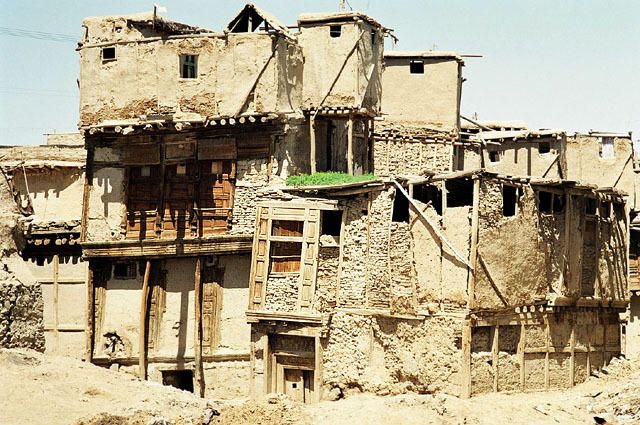
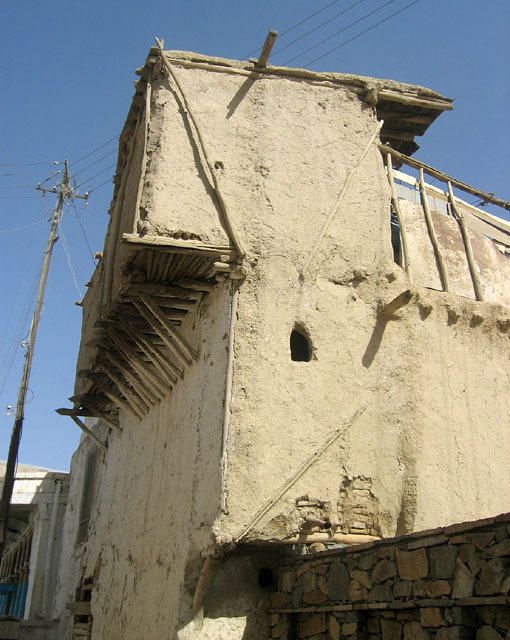
The diagonal bracing pole is left exposed outside of the plaster, as seen in these photos:
Vernacular Housing of Kabul, 2006, https://www.archnet.org/sites/5610.Vernacular Housing of Kabul, 2006, https://www.archnet.org/sites/5610
Here on the left side wall, all poles have been plastered over and no remnants of the structure are exposed. Could the strength have increased by having the diagonals be integrated into the frame, rather than existing on the exterior of it?
Amin House Restoration, Kabul, Afghanistan 2004-2005. https://www.archnet.org/sites/5585
In Afghanistan: An Atlas of Indigenous Domestic Architecture, the authors state that diagonal poles are *nailed* at the exterior corners to stabilize the frame, not integrated within the frame itself. It is beautiful to witness the underlying structure with the poplar poles exposed as such in the older buildings, and saddening to see that design decision disappear over time. Even more so it is a shame the patterning that the bricks create are also plastered over and disappear. We wonder how senj technology can be re-contextualized contemporarily to become a textural, aesthetic, modular device while also supplying firm, structural integrity to a design.
Thank you so much to Professor Ronald Rael for opening the doors of knowledge, wisdom, research and discovery of ancestral design within the context of Architecture at UC Berkeley.
As architecture students, we (Sascha Fawaz and Pedram Modaresi) built a dome structure/prototype merging pottery vessels with clay construction. Inspired by the Reviving Al Nazlah Center (Oriental Group Architects and Hamdy El-Setouhy) in Egypt, our installation transforms clay pots into architectural elements.
Our project focused on using pots as modular units for construction, integrating them into both the facade and roof. Domes and curved surfaces formed the core of our design, emphasizing spans and spaces that feel timeless yet innovative.
We were fascinated by the dialogue between ancient techniques and modern design sensibilities in the precedent project, reflecting a deep respect for craftsmanship while pushing the boundaries of what’s possible with humble materials like clay and pottery. It not only bridges the gap between past and present but also exemplifies the potential for sustainability, cultural revival, and community empowerment through architecture.
We layered clay and pottery in sequential phases. Our initial dome structure received embedded pots, adhesive coating with strong glue, and curing time.
We added a second clay layer to strengthen the form, followed by targeted drilling to reveal the pots from the interior of the dome . We filled joints with a second layer of clay for more stability and sanded the surface for a refined finish.
The completed dome sits on a brick foundation, raising it above ground level. Our project demonstrates the potential of traditional materials in contemporary architecture, combining ancient pottery techniques with modern structural approaches.
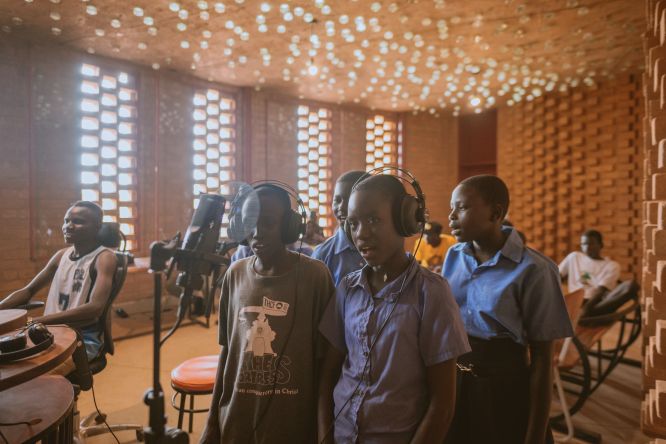
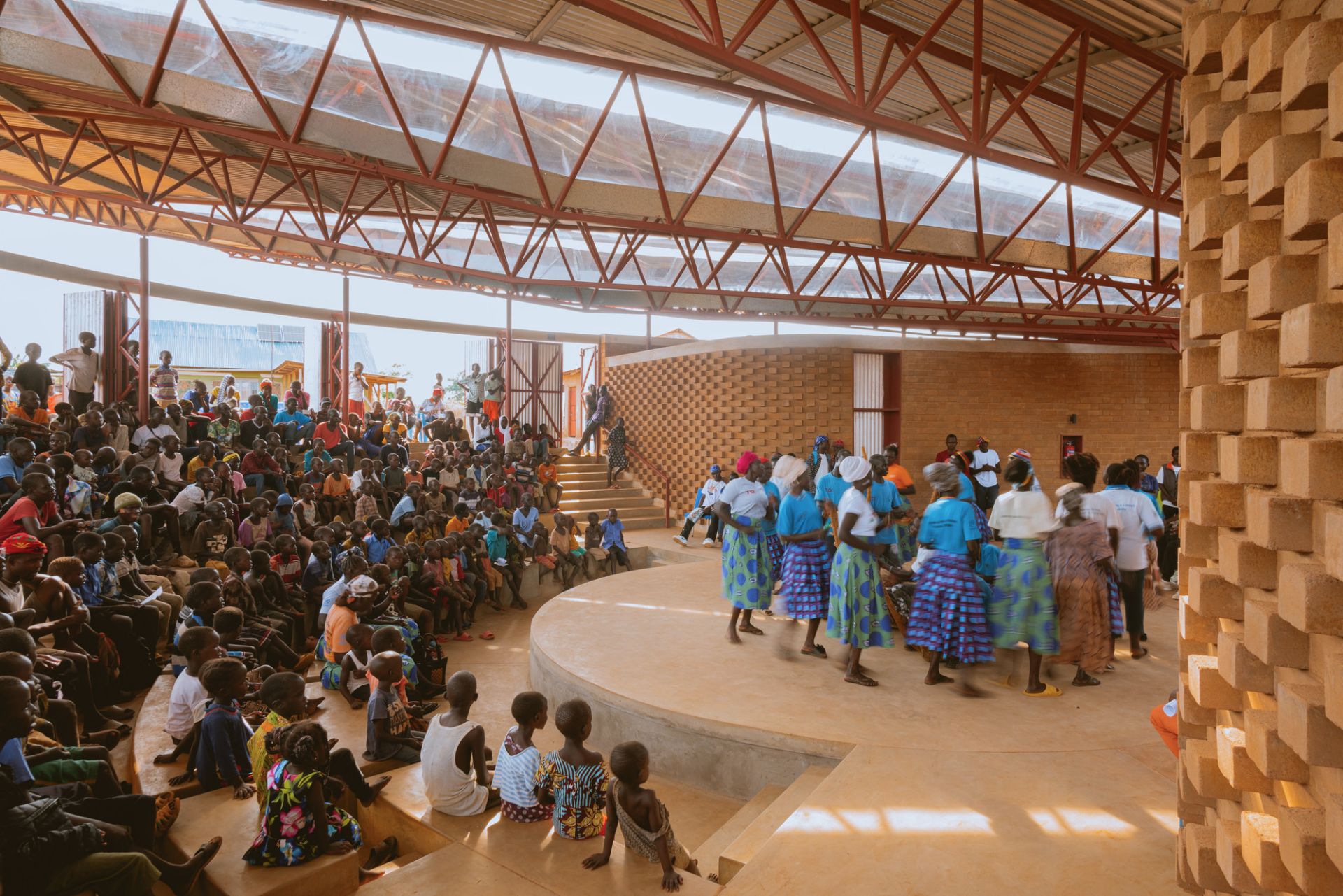
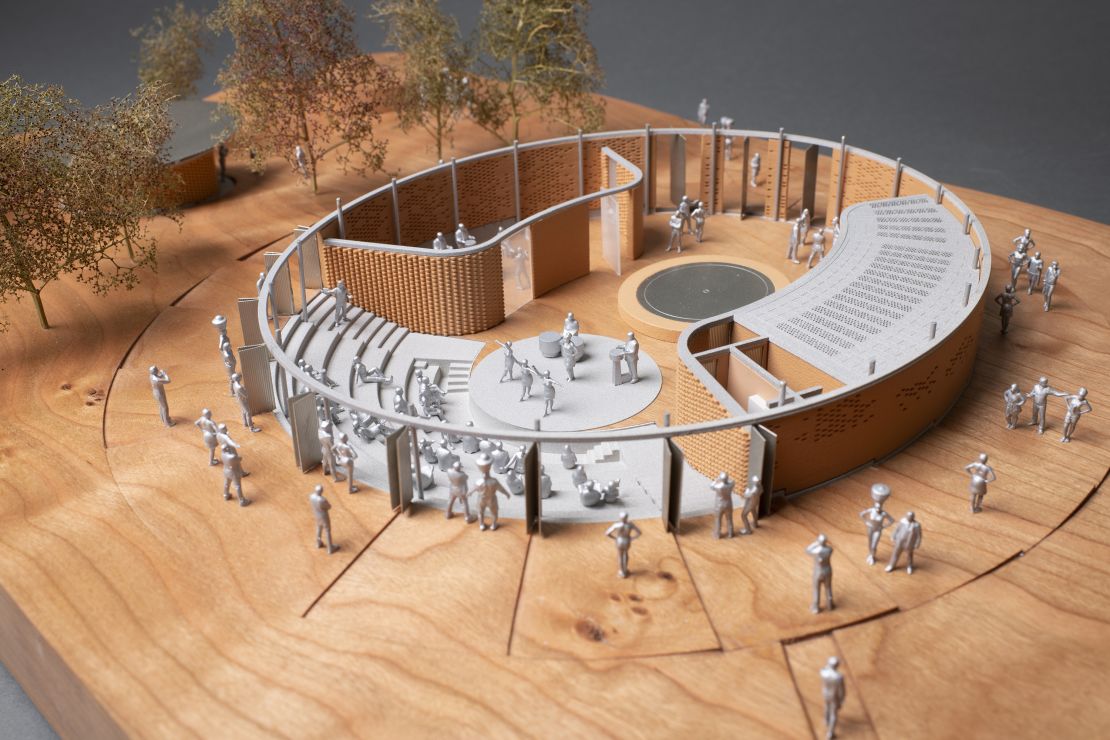
The Bidi Bidi Performing Arts Center is an earthen amphitheater serving the South Sudanese refugee community in Northern Uganda. This art center was designed in collaboration with Hassel Studios, To: Studios, architecture practice LocalWorks, and engineering firm Arup. This space was created as a community gathering space, a performance venue , and a music school; with classrooms, music training spaces, and a recording studio.
The design of the amphitheater utilizes local and easily accessible materials for it’s walls which are made from hand pressed earth bricks. The earthen walls are protected from weathering by its roof structure. The positioning of the bricks allows daylight and ventilation to permeate all spaces. These specific brick patterns have a relationship with music. The brick absorbs and diffuses sound in the performing space, classroom, and recording studio, further optimizing the spaces acoustically.
The center roof design is shaped like a funnel, which collects to rainwater This rainwater then provides water to the community and supports essential facilities such as the tree nursery and vegetable garden located outside the center.
Bidi Bidi allows for a a place for dance, music and performance; a unionization between refugees and local communities in Northern Uganda. Allowing for a cultural connection from refugees’ birth countries, the art center creates a space for love and peace.
Location: Bidi Bidi, Uganda
Completed Year: 2024
Collaborators: LocalWorks, Arup, The Landscape Studio, To.org
Design team: Xavier De Kestelier, Joanna Lesna, Sarah Huc, Nikolaos Argyros, Jonathan Irawan
Located in Iztapalapa, Mexico City, the Center for the Blind and Visually Impaired is designed to address the unique sensory and social needs of its users.
The center was established as part of the government’s initiative to address the pressing need for services in one of the city’s most densely populated and underserved districts. Iztapalapa not only has one of the highest populations in Mexico City but also the largest concentration of visually impaired residents making this essentially very critical.
Photograph by Luis Gordoa
Constructed from volcanic rock, the boundary wall encloses the complex on all sides, acting as both an acoustic barrier and a retaining wall for earth relocated from nearby areas. While its exterior is minimal and unadorned, the interior facade transforms into varied banks that shift in shape, height, and orientation, forming a series of intimate courtyards. These enclosed outdoor spaces enhance sensory experiences, offering quiet, reflective areas for users within the bustling district.
Drawing Courtesy of Taller de Arquitectura Mauricio RochaDrawing Courtesy of Taller de Arquitectura Mauricio Rocha
Materiality is vital in this project as it enhances spatial perception, activating the senses as sources of experience and information. Organized into rectangular prisms with concrete frames and flat roofs, each section varies in size, light intensity, and material weight to make spaces easily identifiable. Rammed earth was also chosen for its contrasting textures to the volcanic rock to provide tactile cues that aid navigation.
Photograph by Luis GordoaDrawing Courtesy of Taller de Arquitectura Mauricio Rocha
The floor plan functions as a series of “filters” extending from the entrance, beginning with administrative offices, a cafeteria, and utility spaces. This layout, combined with sensory materials, allows users to navigate intuitively.. Overall, this thoughtful space prioritizes accessibility and engagement, creating an environment that fosters independence, and comfort.
References:
“Center for the Blind and Visually Impaired / Taller de Arquitectura-Mauricio Rocha” 11 Aug 2011. ArchDaily. Accessed 17 Mar 2026.
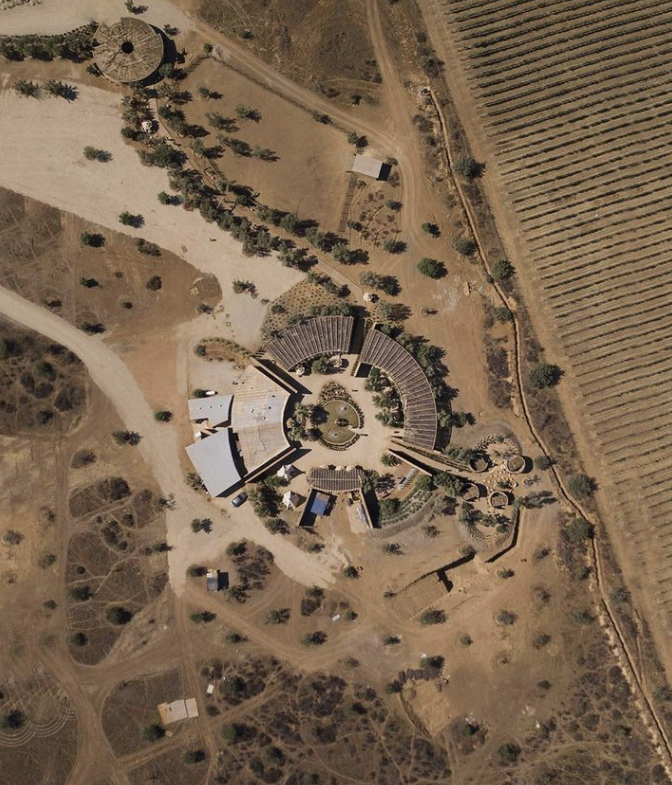
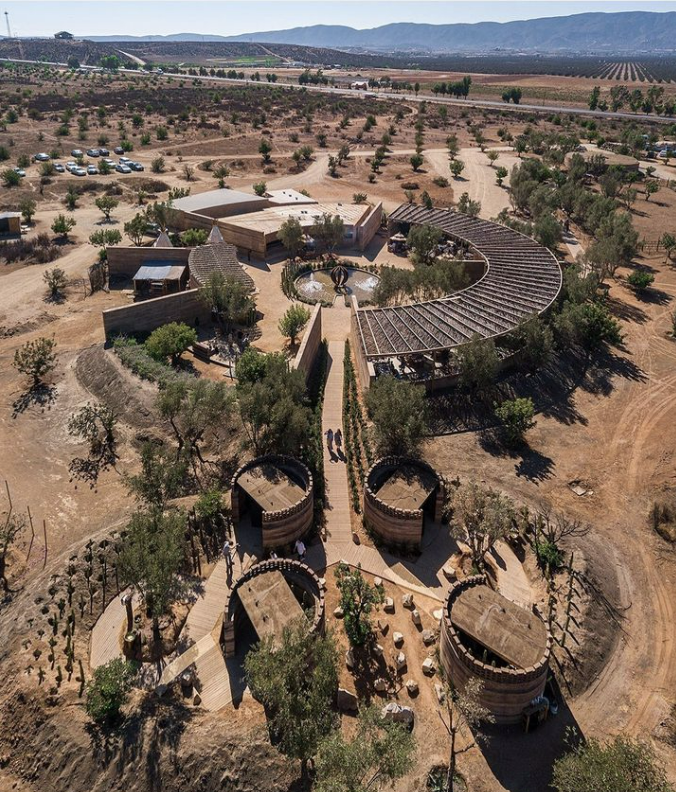
Based in Monterrey, Mexico, Diseño Norteño is an architecture firm celebrated for merging modern innovation with the cultural heritage of northern Mexico. Their projects are designed to respect the natural environment, utilizing local materials and reinterpreting traditional techniques with a contemporary twist. With a multidisciplinary team, they have become known for creating spaces that reflect regional identity while delivering functional and forward-thinking design solutions.
Photo by Diseño Norteño
The “OJA” project, located in the serene landscapes of Coahuila, Mexico, showcases Diseño Norteño’s dedication to sustainability and elegant design. “OJA” serves as a harmonious retreat, blending seamlessly with its natural surroundings. The project draws inspiration from traditional northern Mexican architecture, adapted to a modern context, to create a sanctuary that respects and enhances its environment.
Photo by Diseño Norteño
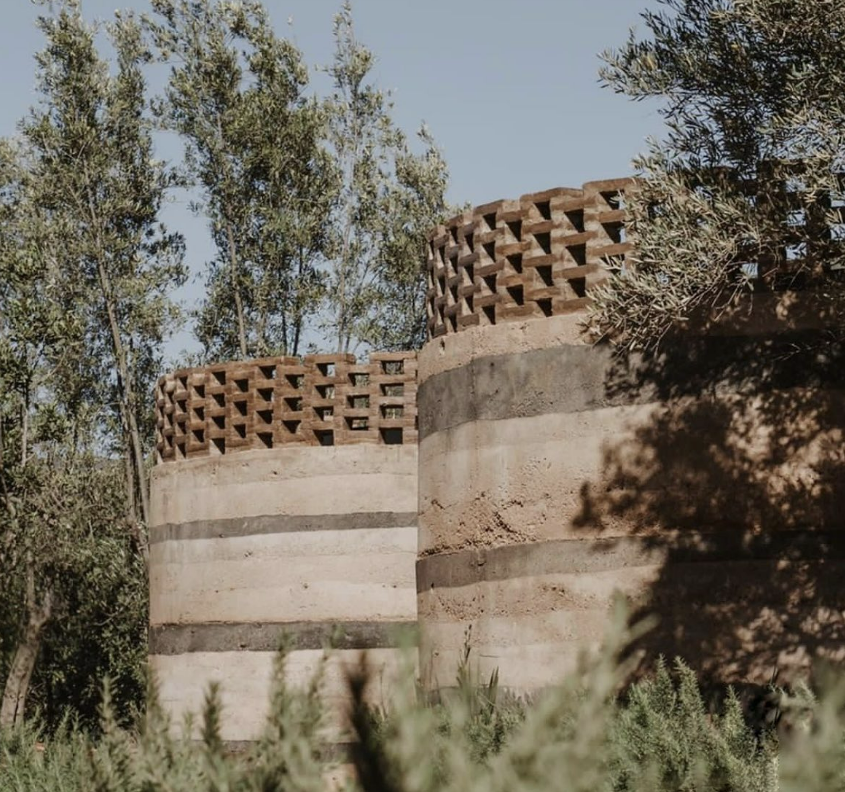
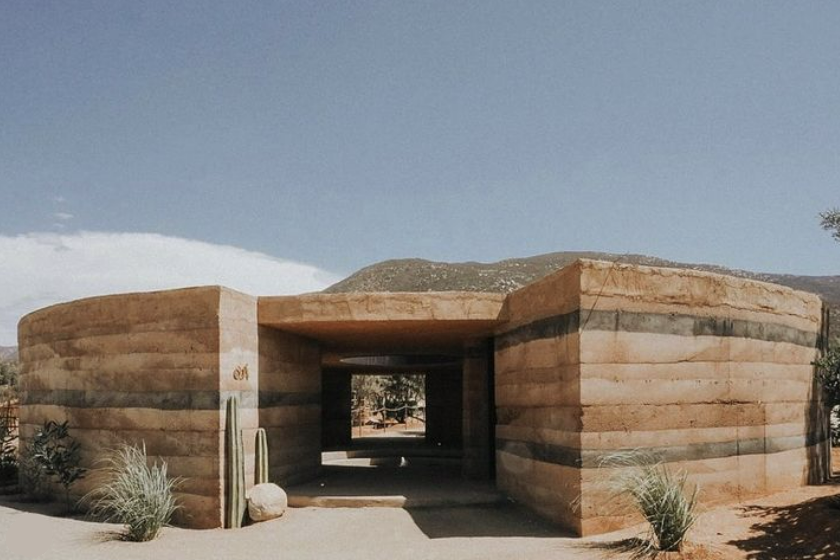
Key materials used in the “OJA” project include compressed earth, which is a contemporary twist on traditional earthen construction. This material not only provides excellent thermal insulation, keeping the indoor environment comfortable year-round, but also minimizes environmental impact by utilizing locally sourced resources. Recycled wood plays a significant role as well, adding warmth and a rustic charm to the interiors, creating inviting spaces that feel both cozy and grounded. Additionally, local stone is incorporated for its durability and aesthetic qualities, establishing a strong connection between the building and its natural surroundings. This thoughtful selection of materials enhances the visual appeal of the structure while reinforcing the project’s commitment to eco-friendliness and sustainability. By choosing materials that are both beautiful and environmentally responsible, “OJA” embodies a harmonious relationship between design and nature.
Photo by Diseño Norteño
“OJA” employs several passive design techniques to improve sustainability. The building is oriented to maximize natural light and promote cross ventilation, reducing reliance on artificial heating and cooling. Large windows and strategic shading devices protect the interiors from excessive heat, while modern systems like rainwater harvesting and solar panels further enhance self-sufficiency. Together, these elements create a beautiful, functional space that reflects a harmonious blend of traditional practices and contemporary innovations, reinforcing the project’s commitment to ecological and cultural sustainability.
References
(n.d.). Diseño Norteño – Tijuana. Retrieved November 5, 2024, from https://d-n.mx/
From Personal Experience to Architectural Innovation
Francis Kéré’s journey to build the Gando School Library began with his own childhood experiences. As a young student in rural Burkina Faso, Kéré had to travel 40 kilometers to reach the nearest school, where he studied in poorly lit, badly ventilated classrooms. These difficult learning conditions left a lasting impression that would shape his future work.
While studying architecture in Germany, Kéré made a crucial decision: he would use his education to build a better school for his village. In 1998, he established “Bricks for Gando,” a foundation to support this vision. By 1999, despite significant economic and logistical challenges, he began designing the primary school with support from his community and foundation funds.
Smart Design for Harsh Conditions
Kéré designed the school in 1999 with four key factors in mind: cost, climate, available materials, and building methods. He knew the building needed to stay cool in extreme heat, use local materials, and be built by village residents.
The Building Layout
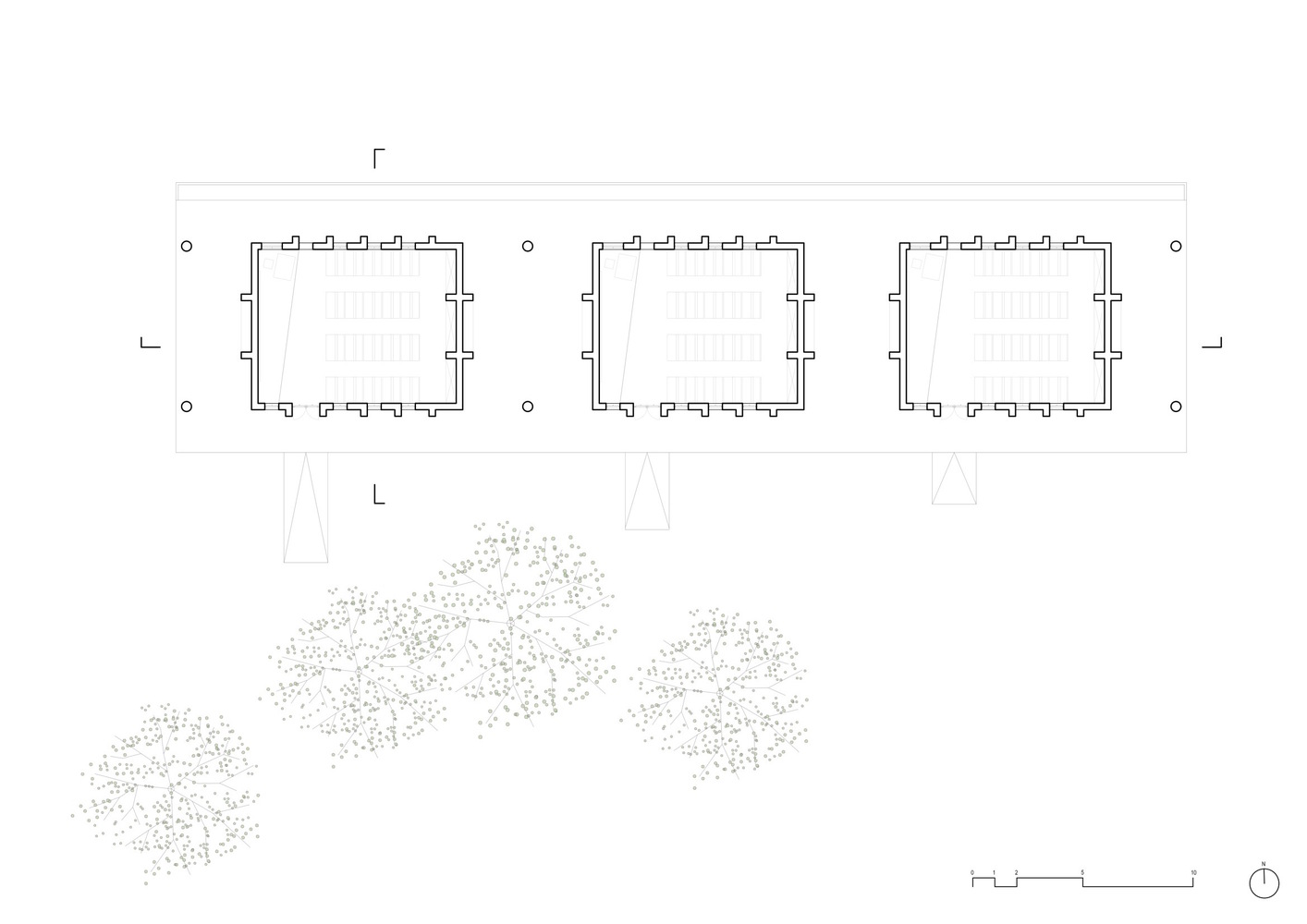
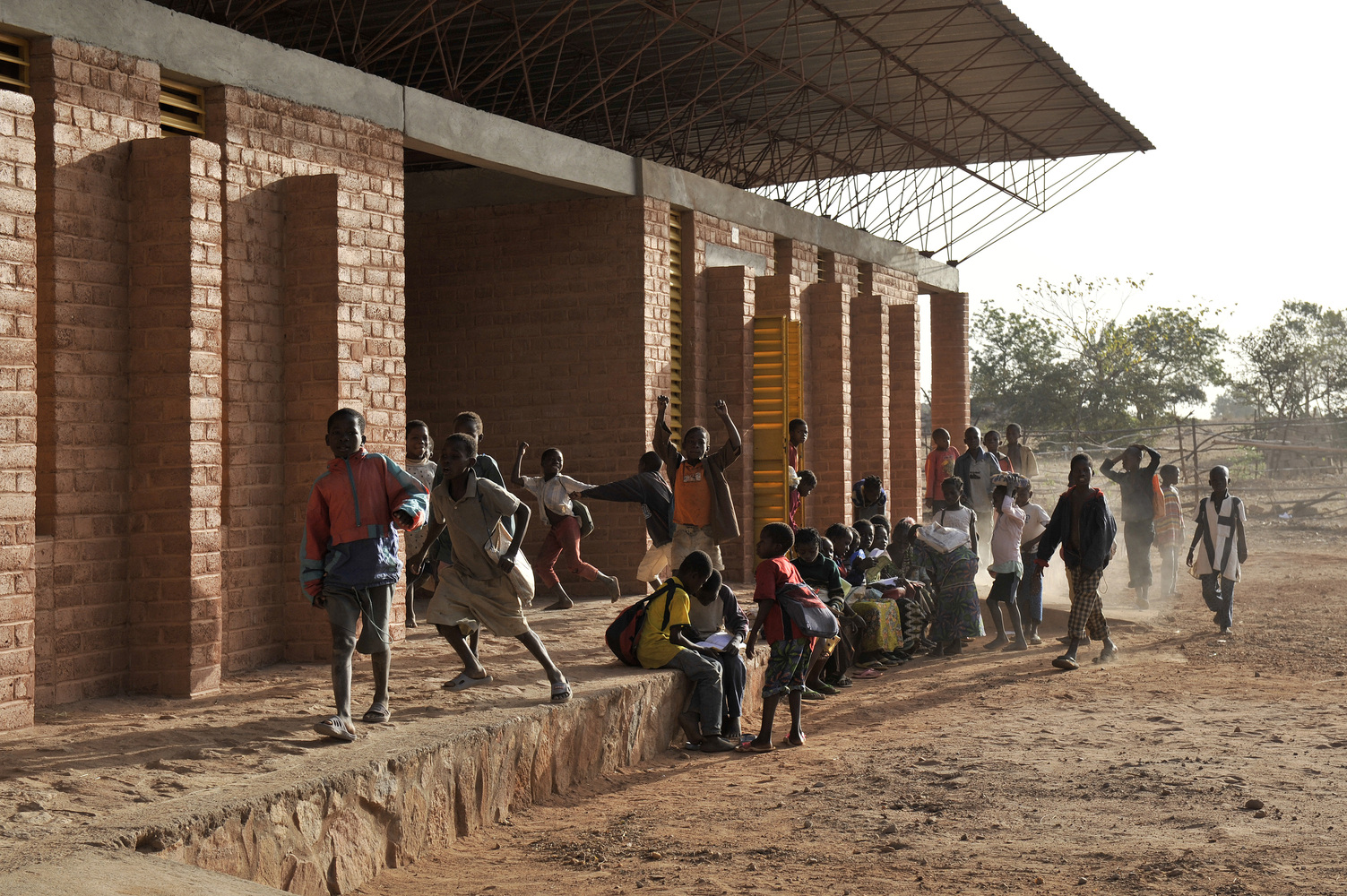
The school features three classrooms arranged in a straight line. Between them, covered outdoor areas serve as play spaces and extra teaching rooms. This simple layout helps air move through the building while providing shade for outdoor activities.
Natural Cooling System
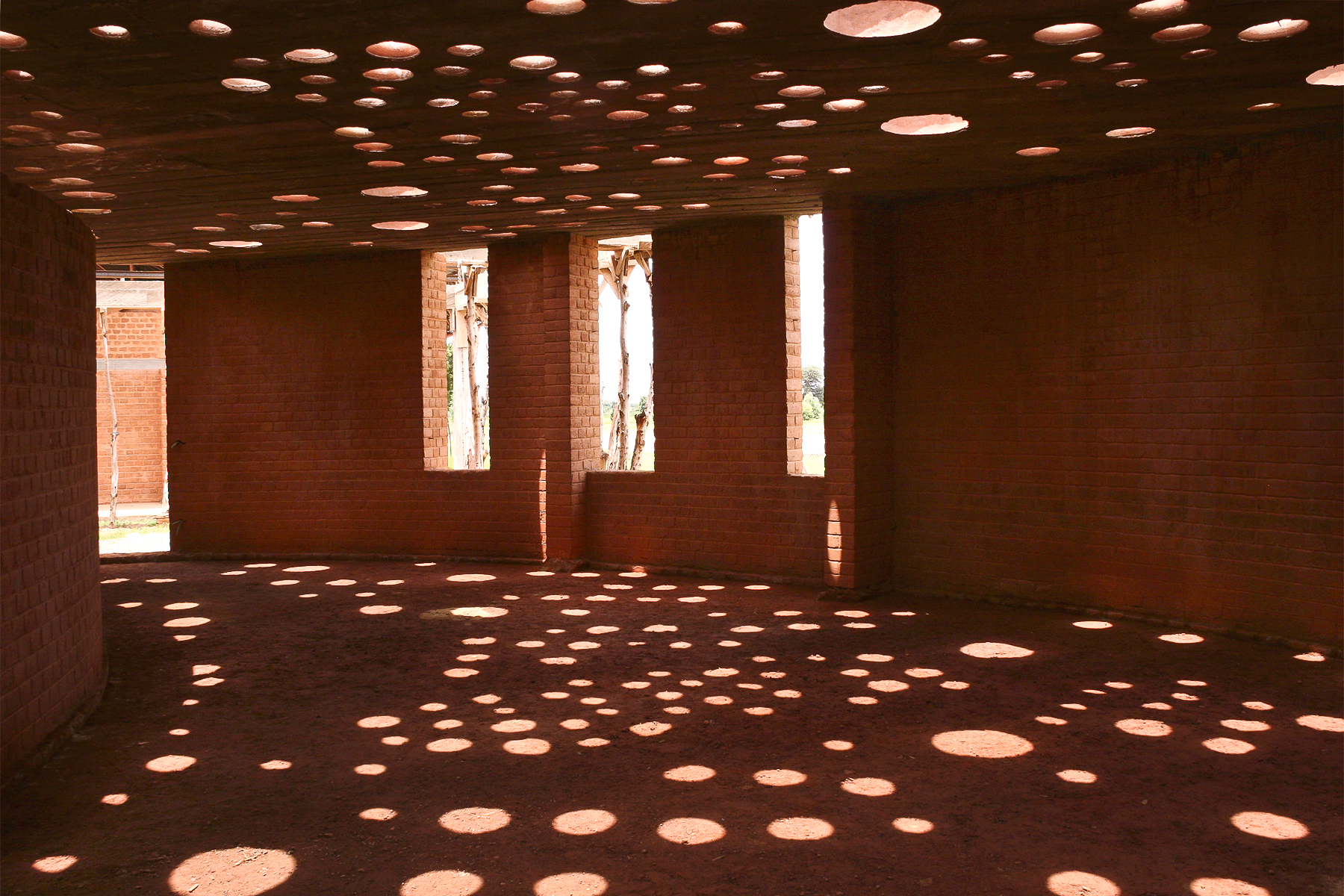
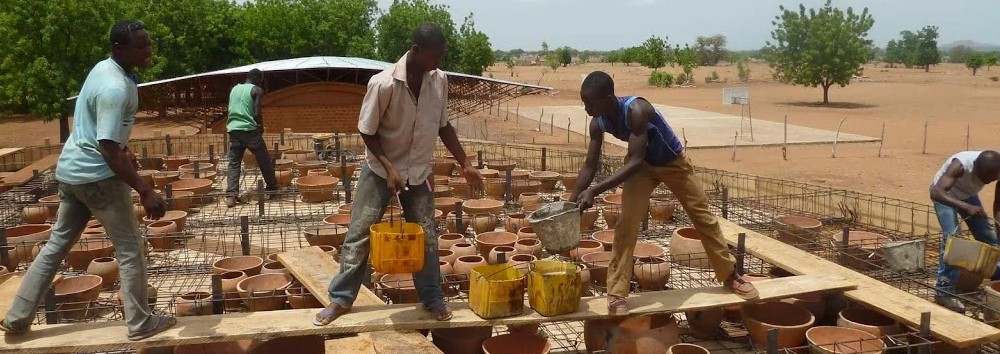
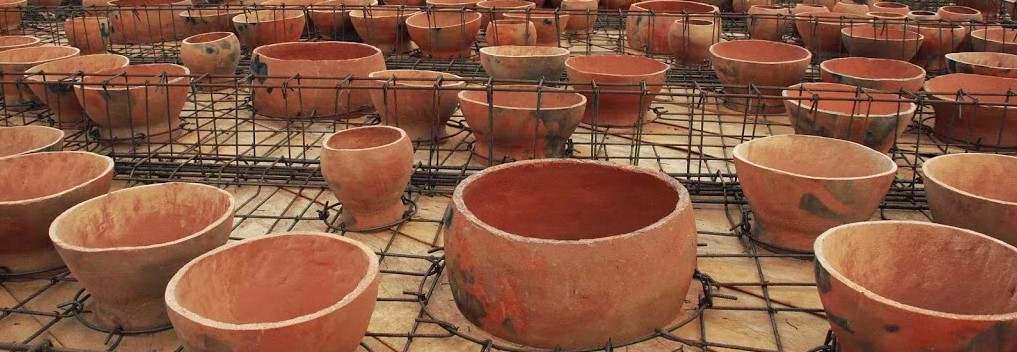
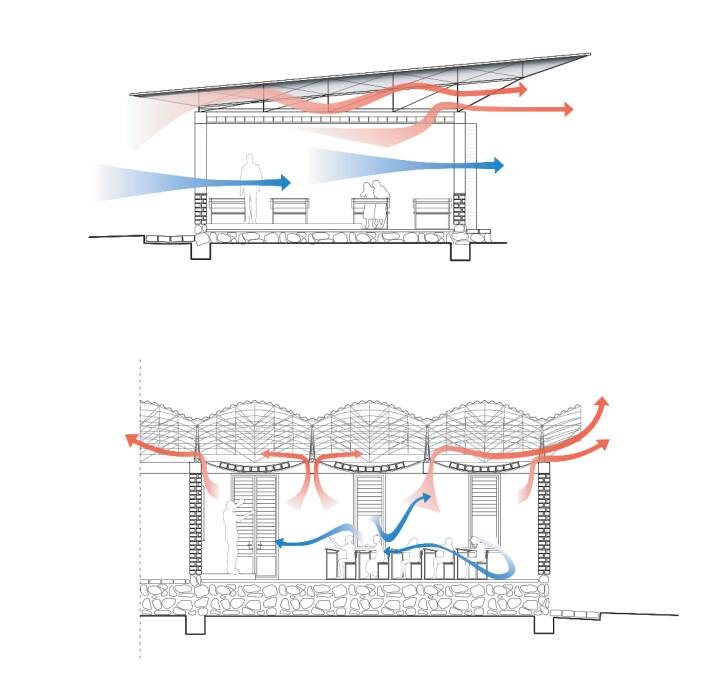
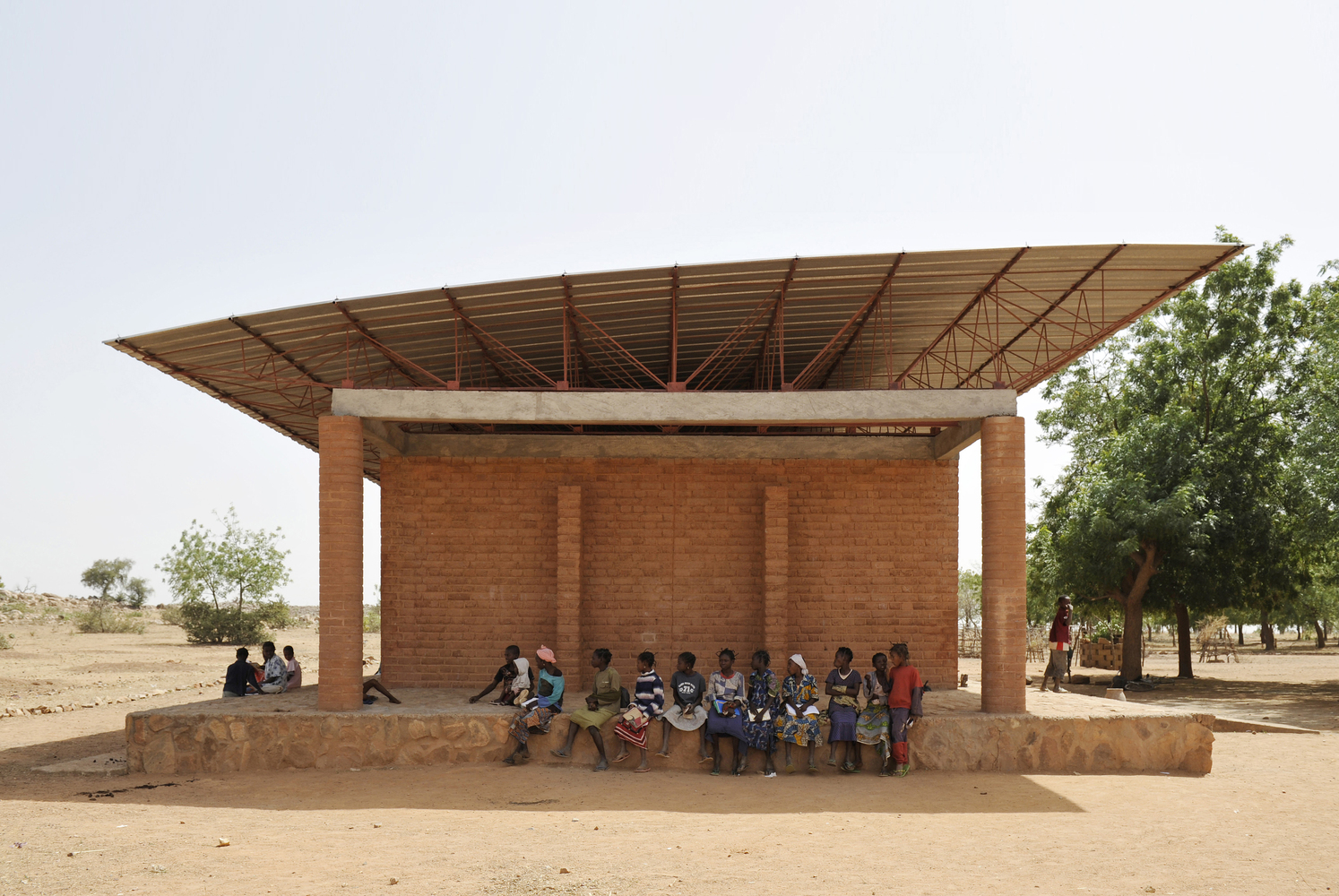
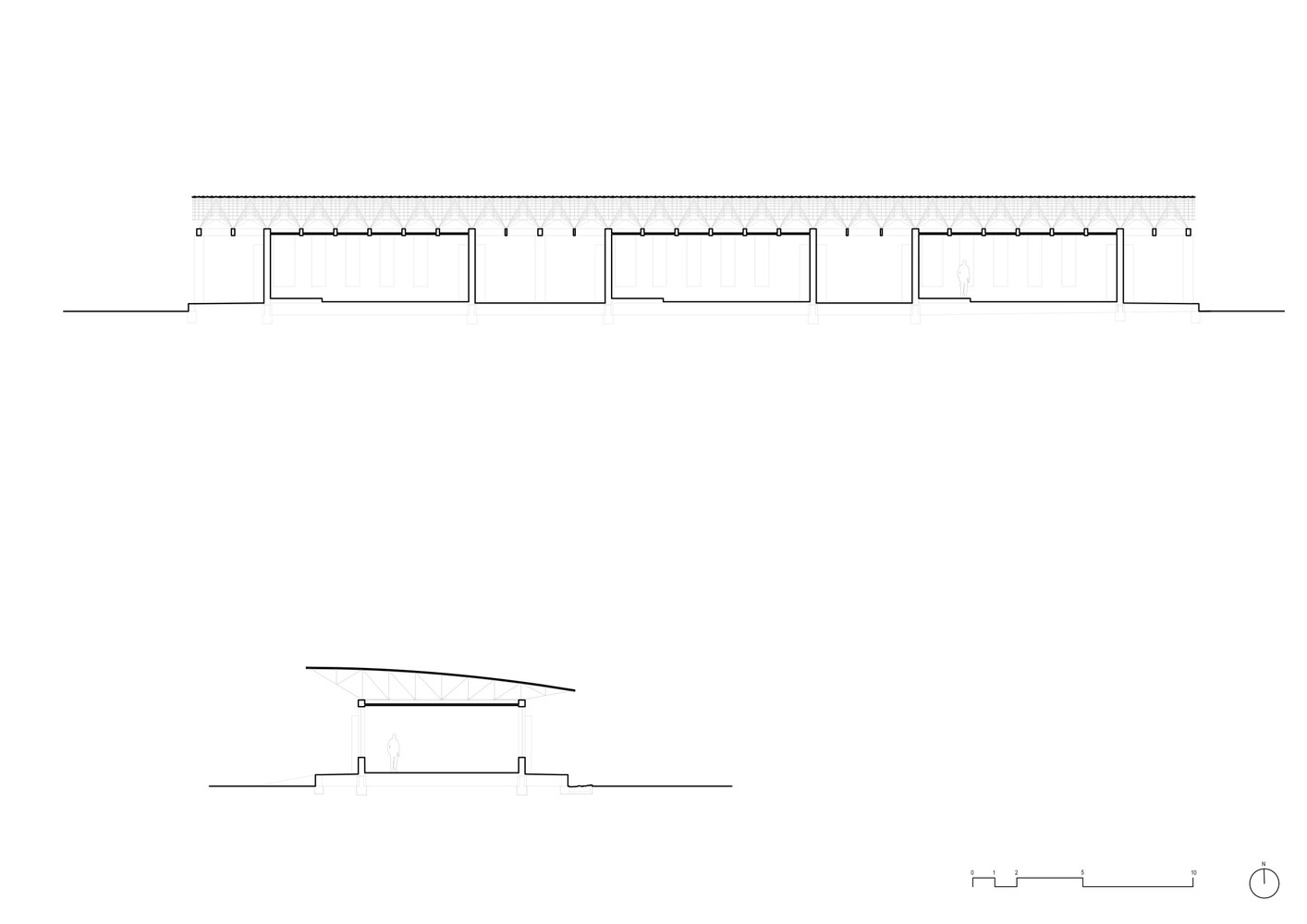
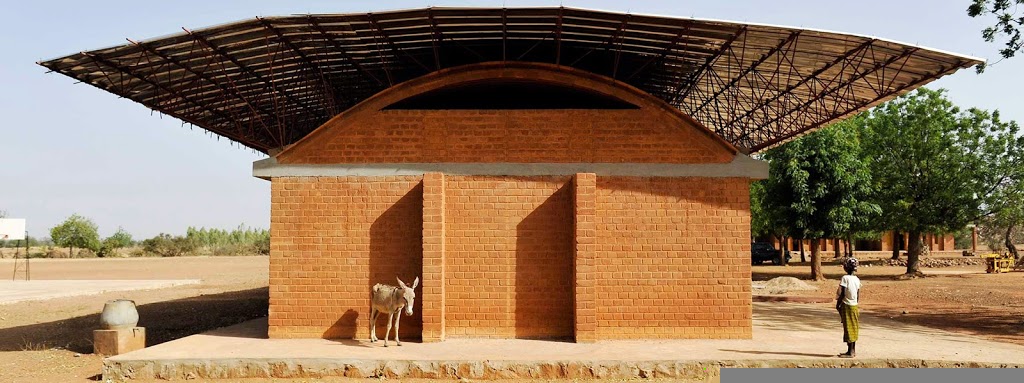
Instead of using expensive air conditioning, Kéré created an innovative ventilation system. He raised the metal roof above the clay brick ceiling using steel bars and light trusses. This design lets cool air enter through windows while hot air rises through holes in the ceiling and escapes through the gap under the raised roof. The roof extends far beyond the walls, protecting them from rain and creating extra shade.
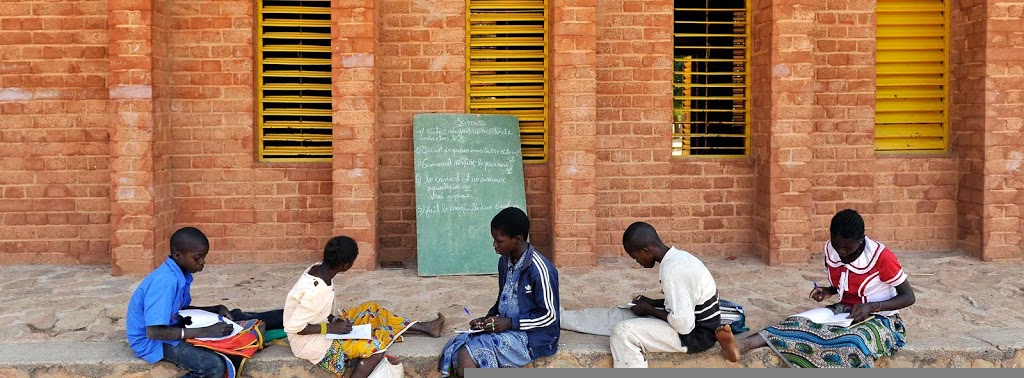
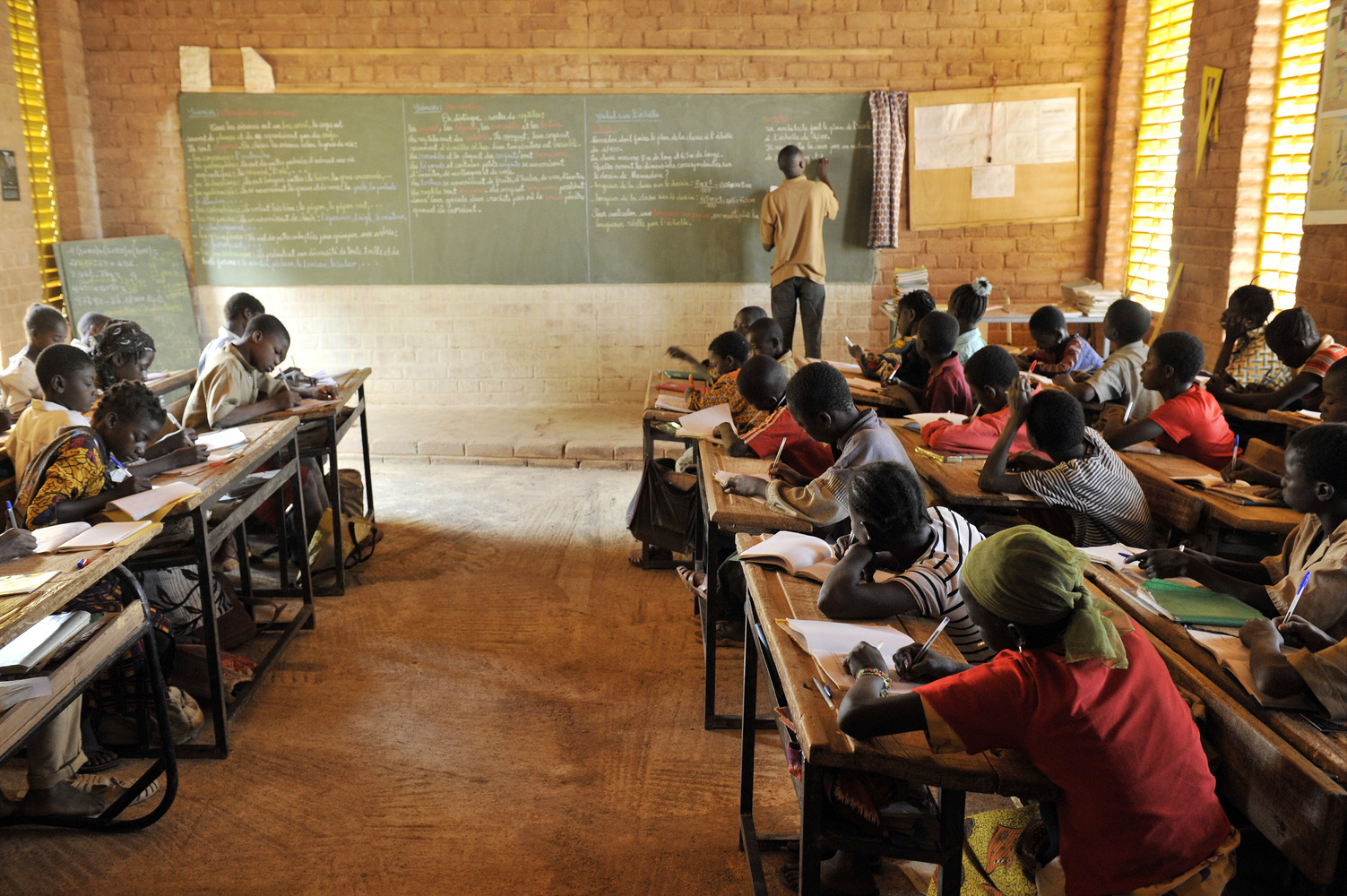
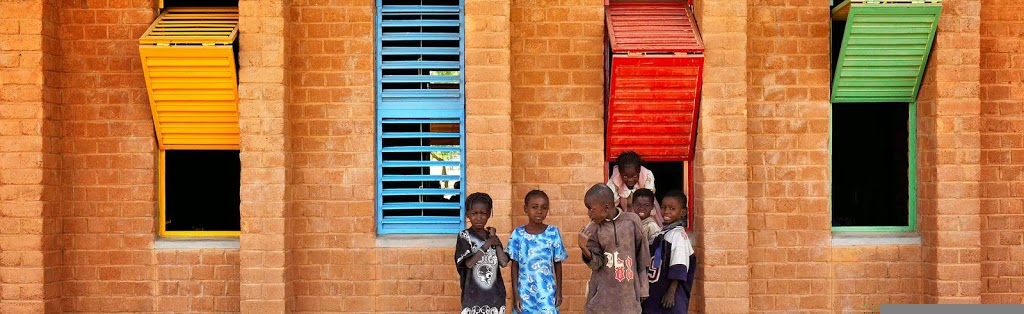
The walls use compressed earth blocks made from local clay, strengthened to last longer than traditional mud bricks. Concrete beams support the ceiling, which uses more compressed earth blocks with special holes for ventilation. The metal roof protects everything below while helping move hot air out of the building.
Every person who worked on the school came from Gando. During construction, villagers learned new building skills while sharing their knowledge of traditional methods. These skills spread through the community, leading to more building projects in Gando and nearby villages.
Award-Winning Impact
In 2001, the completed school won the Aga Khan Award for Architecture. The judges praised its “elegant and simple design using basic construction techniques.” More importantly, it proved that buildings could be:
Made entirely from local materials
Built by local people
Comfortable without expensive cooling systems
Strong enough to last many years
Perfect for their climate and community
Beyond the Classroom
The primary school did more than provide a place to learn. It showed a new way to build in hot climates using simple materials and smart design. The success led Kéré to design more buildings in Gando, including teacher housing and later, the library.
The Gando Primary School challenged common ideas about building in Africa. It proved that:
Traditional materials could work better than modern ones
Local builders could create advanced buildings
Natural cooling could replace air conditioning
Simple design could solve complex problems
Architecture could grow from community needs
Growing to Meet Community Needs
The success of the Gando Primary School led to its first expansion just two years after opening. In 2003, faced with rising student numbers, Kéré designed an extension that built on the original’s proven solutions while introducing subtle innovations.
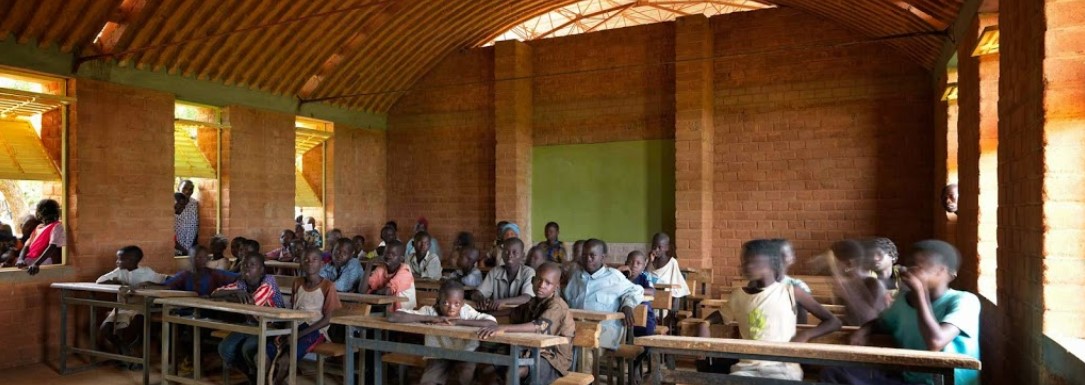
He kept the core elements that worked well – local clay blocks for walls, the signature raised roof for ventilation, and the protective deep overhangs.
However, he refined the cooling system by replacing the flat perforated ceiling with a curved vault design. This new ceiling featured carefully spaced gaps in its brick pattern, creating a more effective “breathing” surface that drew cool air in through the windows while letting hot air escape through the vault. The extension, built again by community members who had gained experience from the first project, showed how Kéré’s sustainable design principles could evolve while staying true to their original purpose.
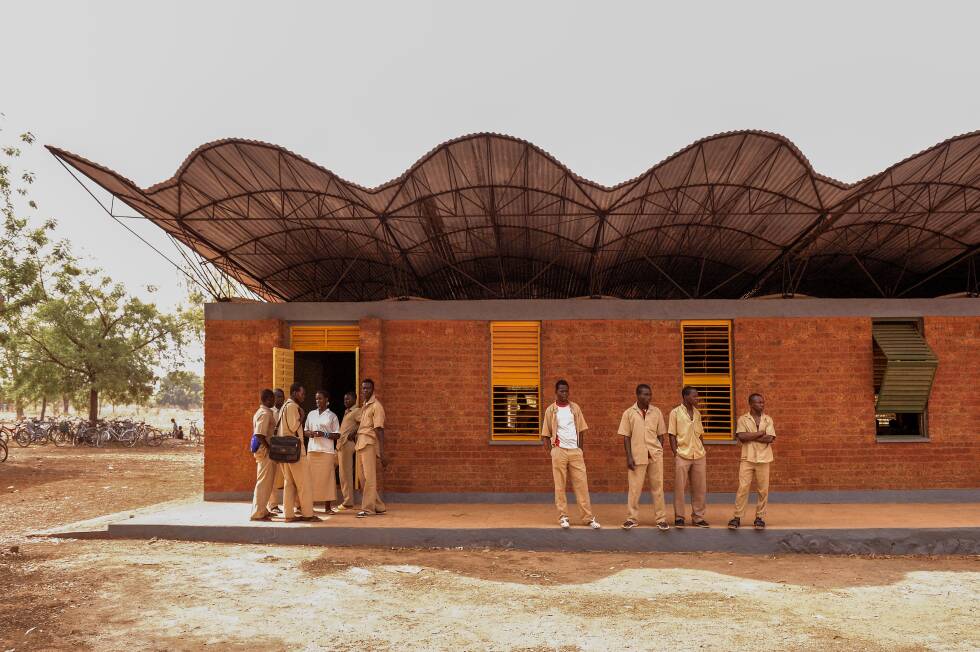
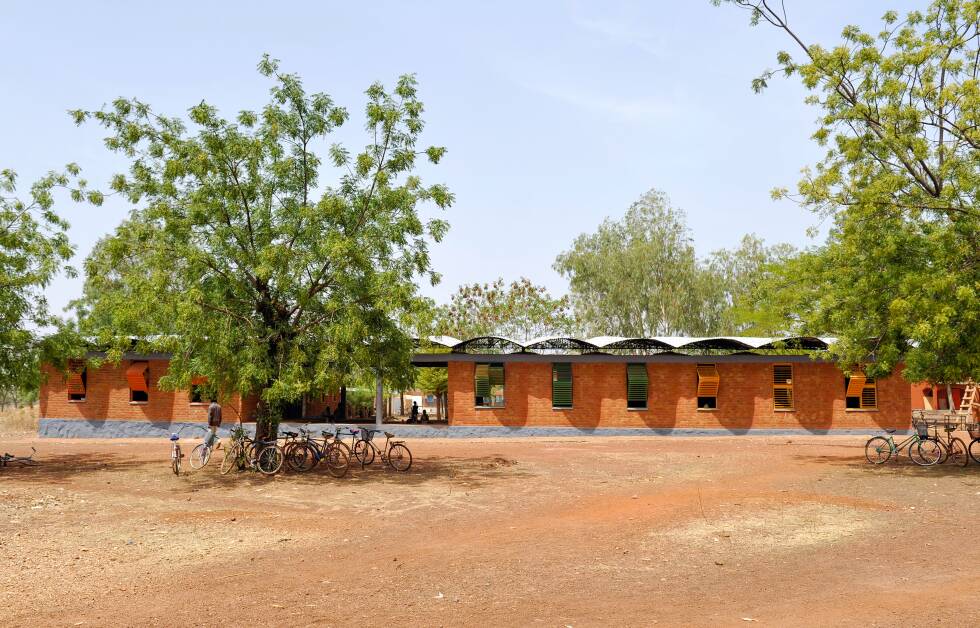
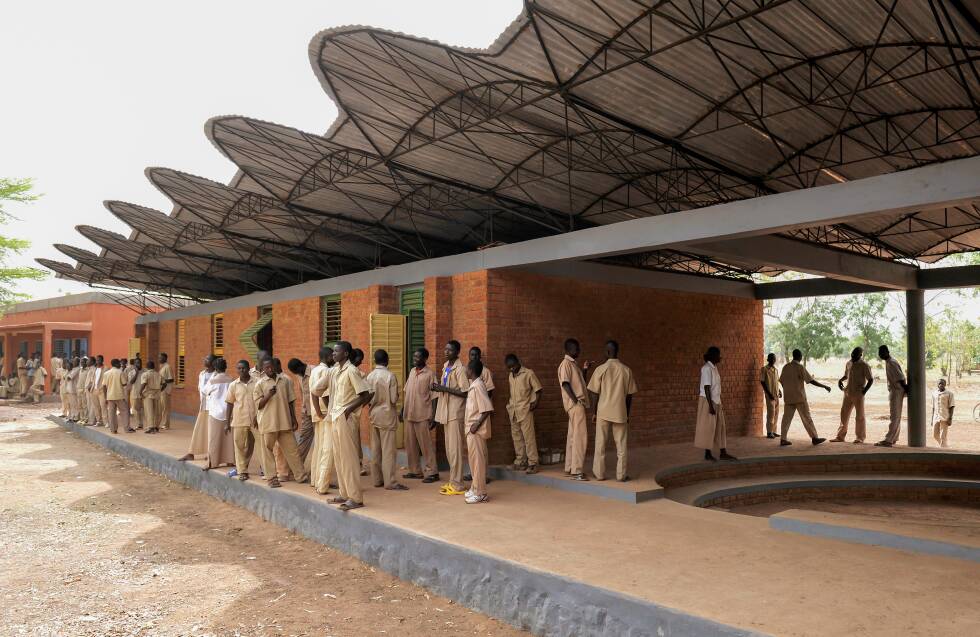
Students in front of Dano Secondary School. Photo by Erik-Jan Ouwerkerk.
Project Info:
Status: Completed
Date: 2006-2007
Site: Dano, Burkina Faso
Size: 370 sqm
Client: Dreyer Foundation, Munich
Collaborators: EGC (Entreprise Générale de Construction)
Awards: 6th edition of the International Sustainable Architecture Prize, special mention 2008. Global Award for Sustainable Architecture 2009. BSI Swiss Architectural Award 2010
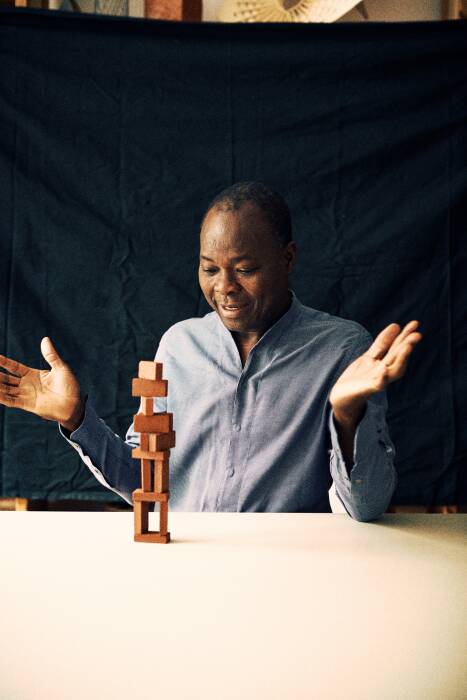
Francis Kere
Architect: Francis Kere, 2022 Pritzker Prize Winner
Shade over sitting Area of Dano Secondary School. Photo by Kéré Architecture.
Having established its expertise with successful school building projects in Gando, Kéré Architecture was commissioned to build the Dano Secondary School in Burkina Faso. The building was designed from the outset with the goal of making it environmentally sustainable and appropriate to its specific climatic conditions.
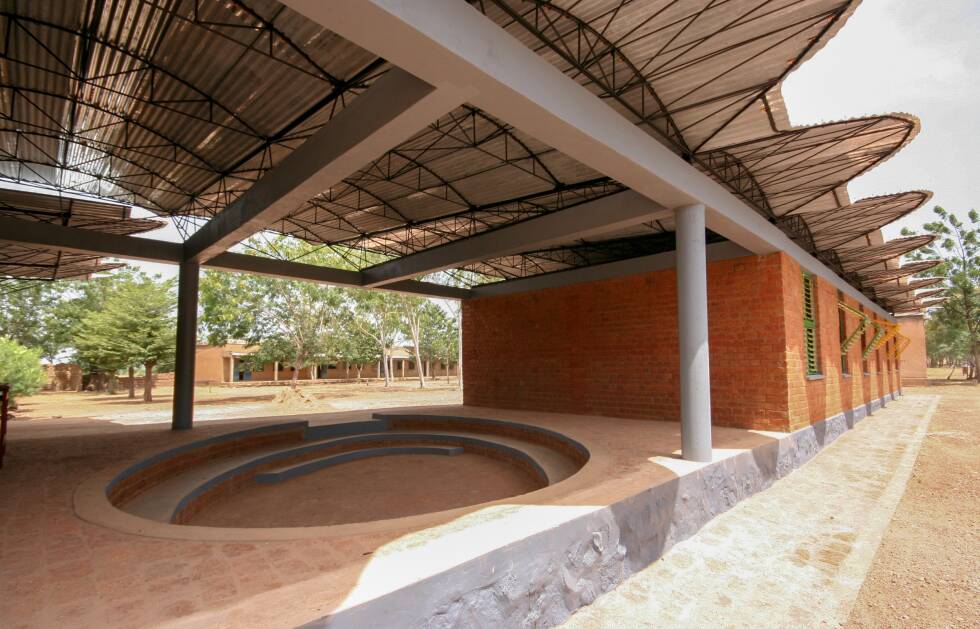
The school consists of three classrooms, a computer room, office space and a shaded seating area sunken below ground level to host more informal learning sessions.
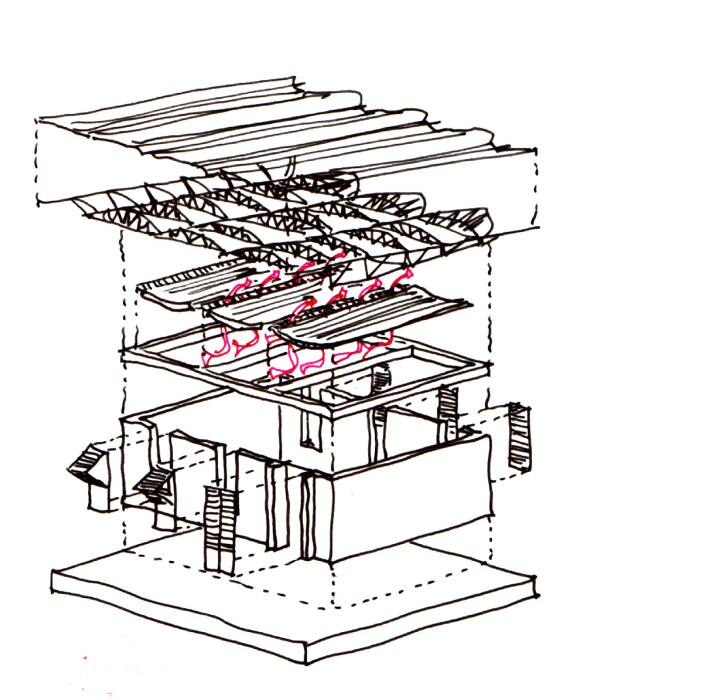
Sketch of Dano Secondary School by Francis Kéré.Dano Secondary School_Kéré Architecture. Photo by Erik-Jan Ouwerkerk.
The laterite stone used for the main body of the building is abundantly available in the region and lends the walls their rich reddish-brown tone. The material is an excellent source of thermal mass, helping to absorb the ambient heat inside the building.
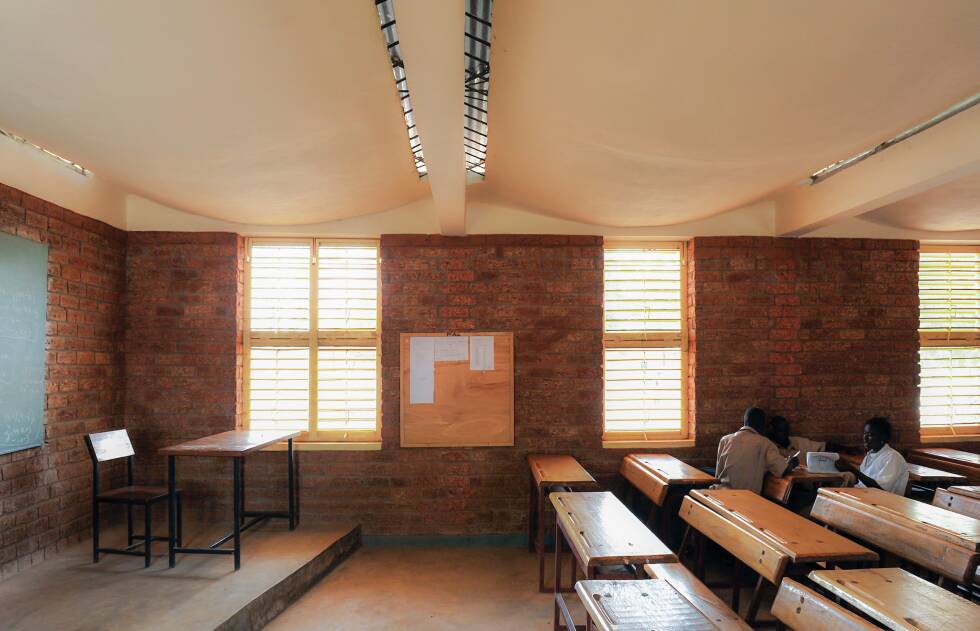
Interior of classroom at Dano Secondary School. Photo by Erik-Jan Ouwerkerk.
Upside-down plaster vaults reminiscent of draped fabric hang above the classrooms, diffusing indirect sunlight to make the space brighter without increasing its temperature. Gaps are introduced between the modular plaster elements, allowing hot air to travel upwards.
Climate Diagram of Dano Secondary School.Students at the Dano Secondary School. Photo by Erik-Jan Ouwerkerk.
An elegant truss structure, shaped like the body of a fish, holds up the corrugated metal roof. The roof undulates along the length of the building, silhouetted against the bright sky. Its generous overhang, combined with the building’s east-west orientation, helps to reduce the impact of direct sunlight. (Kere Architecture)
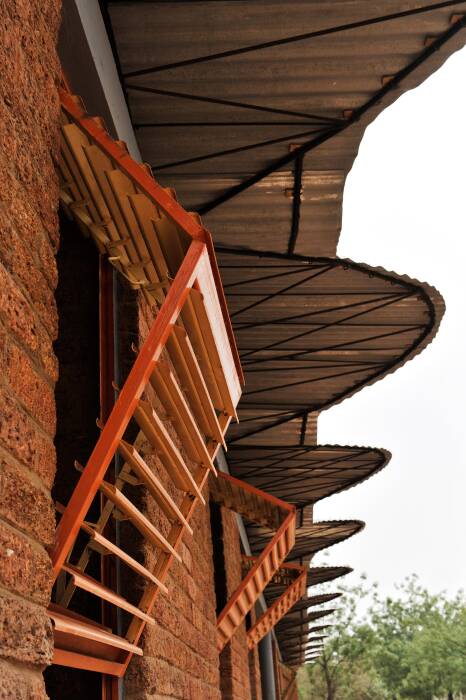
Window of Dano Secondary School. Photo by Erik-Jan Ouwerkerk.
The load-bearing masonry walls are made of laterite, an iron-rich soil found in the area that hardens when exposed to air. Villagers shaped the red bricks with basic tools. “This is very important — they don’t need to buy a new tool to do this building,” emphasizes Kéré. In constructing the walls, the architect opted to use less mortar than is typically applied in bricklaying. His goal: to “let the material be seen like it is,” while also boosting the walls’ strength.
To protect the building from the elements, Kéré developed an undulating, corrugated tin roof that hovers several feet above the building and is supported by an elegant truss system made of common rebar. Aesthetically striking, the roof’s wavelike form also has a pragmatic function: Water is channeled into the folds and funneled off the roof, away from the building. (Architectural Record)
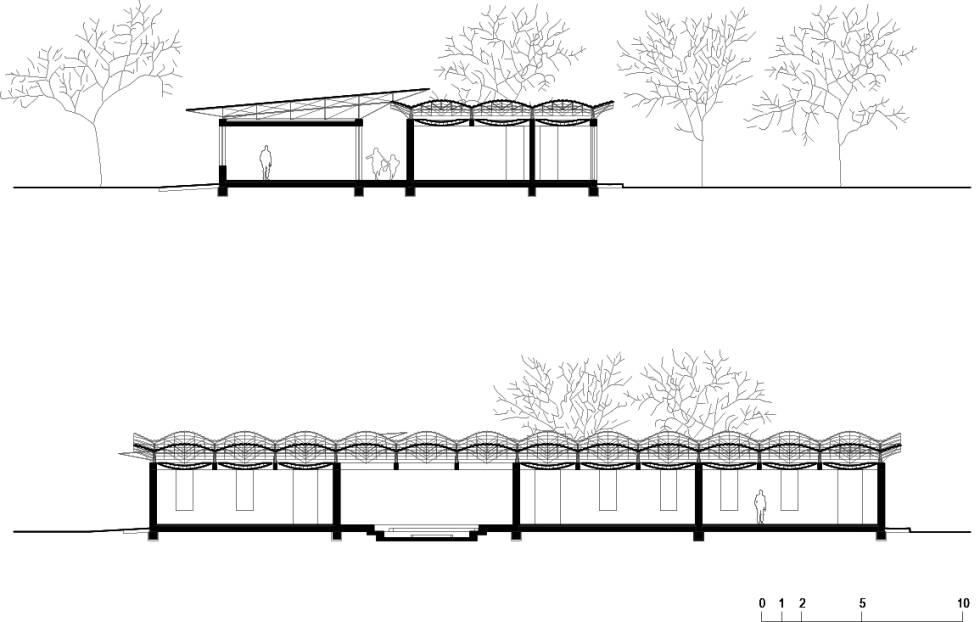
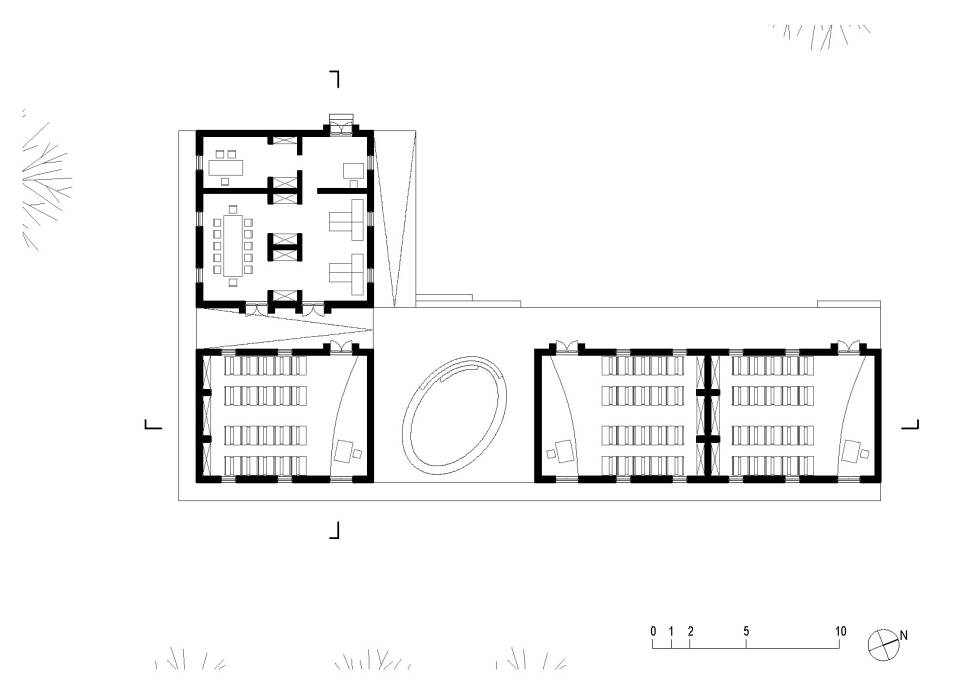
Section of Dano Secondary School.Plan of Dano Secondary School.
CONTENT WARNING:graphic descriptions of art installations and construction. ie sexual violence, murder, blood.
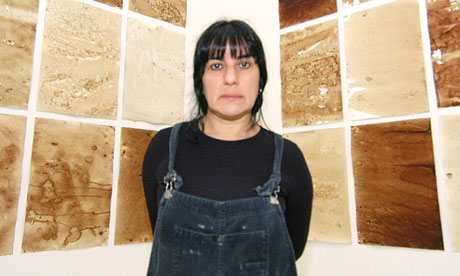
Teresa Margolles, born in 1963, is an artist from Mexico City. Teresa is considered a conceptual artist, with a focus on the impacts of violence and death, specifically in her home country of Mexico, and Latin America as a whole.
Bernd Kammerer
In her early adulthood, she went to school and studied to become a forensic pathologist. She then worked in the morgue, and witnessed the ways in which bodies, and the lives lost resulting in these bodies, were unnoticed. The violence of her home and surroundings became the subject of much of her artistic work. Margolles went on to create an artists’ collective named SEMEFO in the 1990s.
“When I was working with SEMEFO I was very interested in what was happening inside the morgue and the situations that were occurring, let’s say, a few meters outside the morgue, among family members and relatives. But Mexico has changed so violently that it’s no longer possible to describe what’s happening outside from within the morgue. The pain, loss and emptiness are now found in the streets.” Teresa Margolles, 2009.
Margolles has a pattern of using natural earthen and human materials in her work, such as water, dirt, sand, sweat, blood, fat, and tissue. These materials are used to tell her story through the art pieces and installations, all with a focus on violence, erasure, destruction, and death.
Recovered Blood, 2009
Recovered Blood, as shown above, was created using the mud-soaked clothes that were used to clean the sites of drug-related murders throughout Mexico.
Mesa y dos bancos, 2013
This table and benches were created using a mixture of concrete and organic material harvested from the grounds of the site of a murder on the Northern Mexico and US border.
Vaporizacion, 2001
This installation was created using the water used to wash corpses in the morgue in Mexico. This water was then dispersed throughout the space using two fog machines.
Joyas, 2007
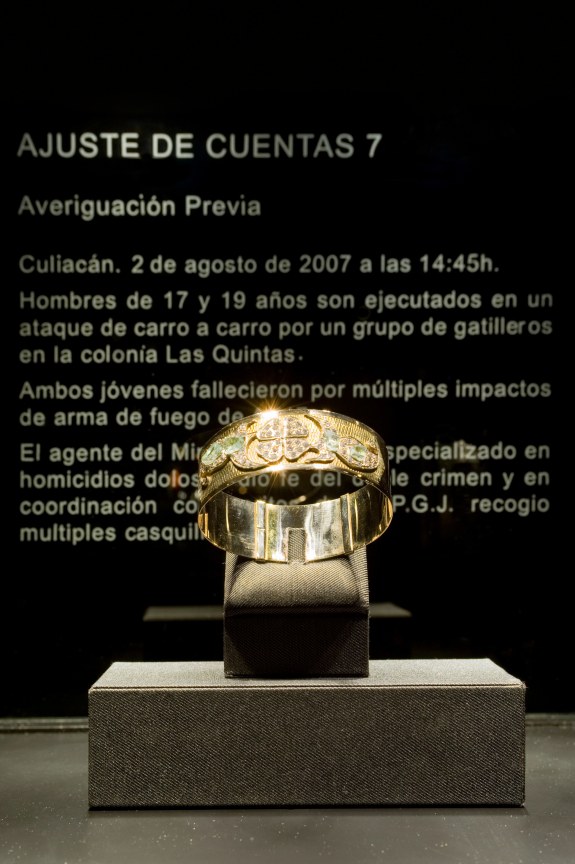
This piece of jewelry was created with shattered glass fragments sourced by Margolles from a local gunfight in Mexico. She then collaborated with a local jeweler to create a piece of jewelry that resembles one a powerful gang member might wear.
Lote Bravo, 2005
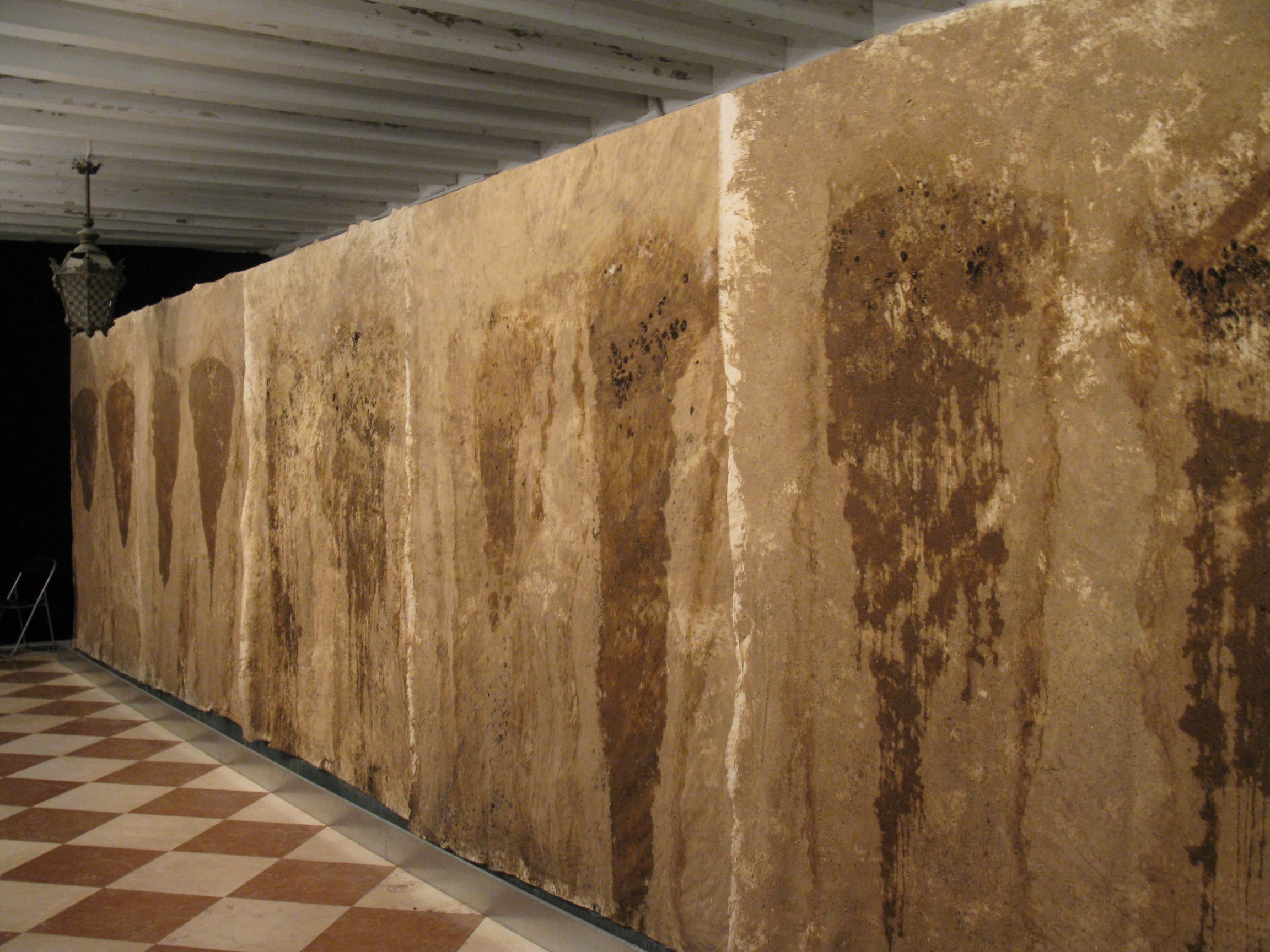
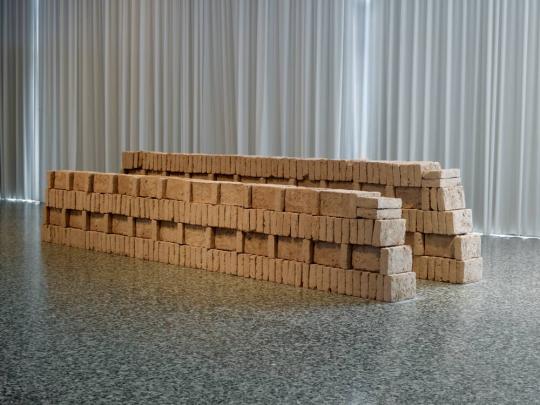
This installation, Lote Bravo, in Mexico consisted of adobe bricks. The bricks were mixed and made out of soil and earth harvested from the site of murders and burials of Mexican women found along the border of the United States and Mexico. These women were often determined to be sexually assaulted at the site of their death.
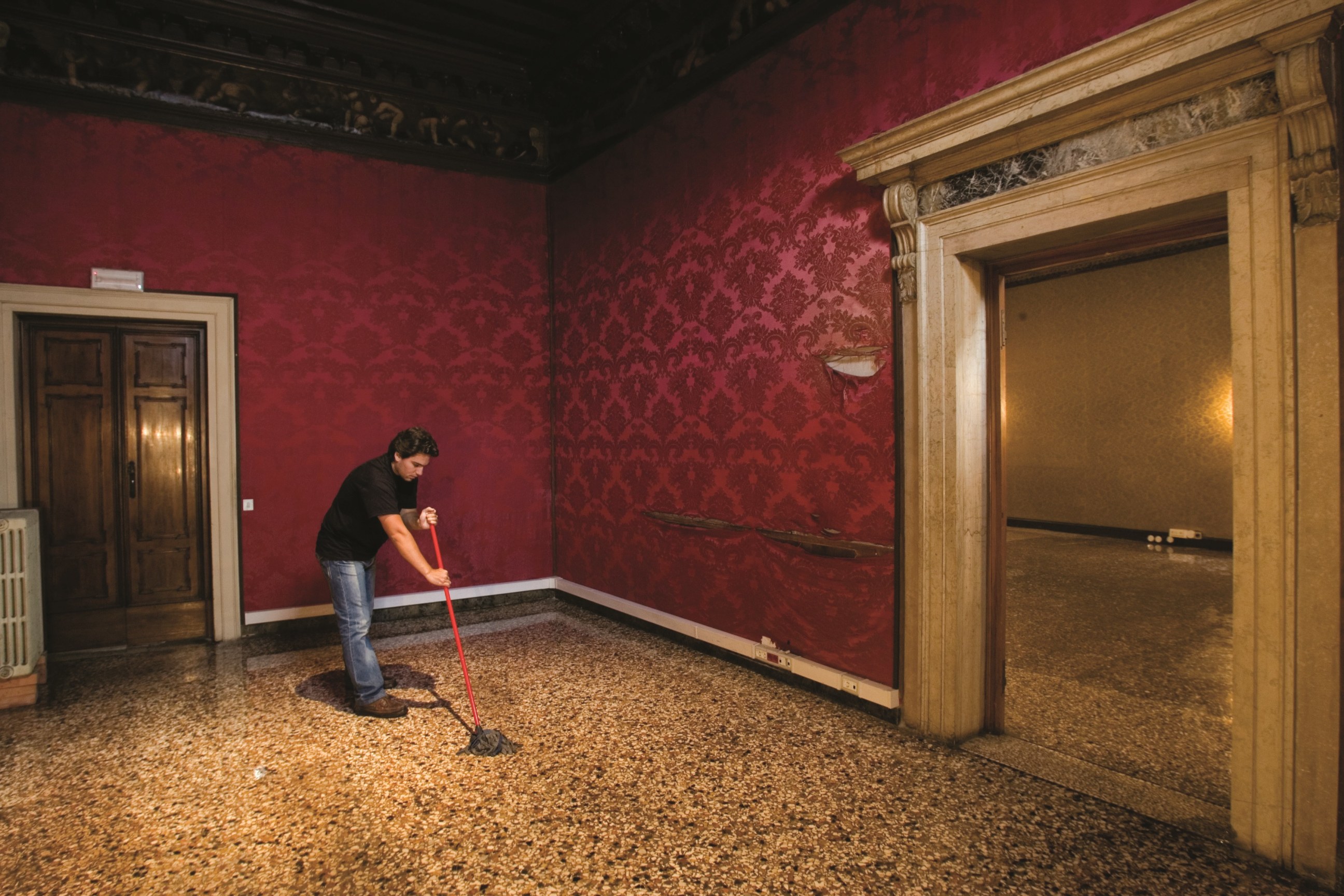
Cleaning, 2009.
This exhibit featured an hourly mopping of the floor, however the cleaning liquid that was used contained blood from individuals murdered in Mexico.
Herida, 2010.
This installation consisted of a seam in the wall, filled with human fat which was gathered from corpses of murdered people in Mexico.
Marlene Pista de Baile del club ‘Mona Lisa’, 2016
In addition to conceptual and performance art, Margolles is also a photographer. In this particular collection, she focuses on the destruction of clubs in Juarez and throughout Mexico. In the image above, Margolles captures Marlene, a transgender woman standing on what remained of the dance floor of the club she worked at, Mona Lisa.
Composed of 726 plaster face castings, they were created from the faces of only trans, nonbinary, and gender nonconforming individuals from both Mexico and the United Kingdom.
Castello di Rivoli Museo d’Arte Contemporanea, Torino, Italy; Centre Georges Pompidou, Paris, France; Colección Centro de Arte Dos de Mayo, Mostoles, Madrid, Spain; Colección Fundación ARCO, Madrid, Spain; Des Moines Art Center, Des Moines, IA; Fotomuseum Winterthur, Switzerland; FRAC Lorraine, Metz, France; Hirshhorn Museum and Sculpture Garden, Washington, D.C.; Kunsthaus Zürich, Switzerland; Colección Jumex, Mexico City, Mexico; Musée d’Art Contemporain, Montreal, Canada; Museion Museo d’arte moderna e contemporanea, Bolzano, Italy; Museo Universitario Arte Contemporáneo, Mexico City, Mexico; Museo Tamayo Arte Contemporáneo, Mexico City, Mexico; Museum für Moderne Kunst, Frankfurt, Germany; Museum of Modern Art in Warsaw, Poland; National Gallery of Canada, Ottawa, Canada; Neue Nationalgalerie, Berlin, Germany; Pérez Art Museum, Miami, FL; Philbrook Museum of Art, Tulsa, OK; Phoenix Art Museum, Phoenix, AZ; Tate Modern, London, UK and The Museum of Fine Arts, Houston, TX.
Awards:
Artes Mundi Prize and the Prince Claus Award for Culture and Development in 2012.
53rd Venice Biennale in 2009 for What Else Could We Talk About?
Location: He now lives and works in Chongqing and Dali.
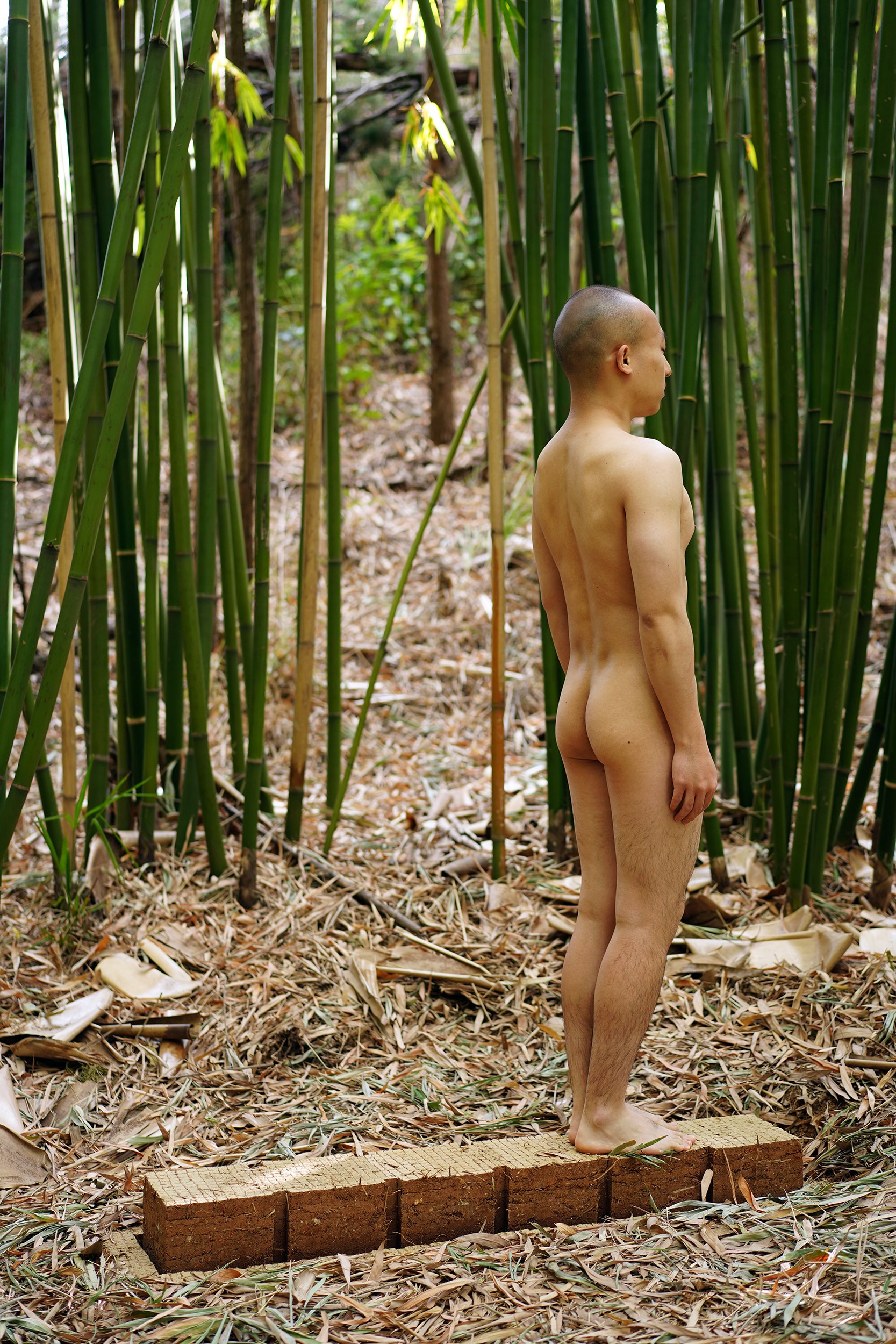
Xi’s art, which is always gentle – even to the point of being hard to discern, built as it often is from organic matter and placed amongst leaves, moss, stones, and bark – is also, in fact, making a very bold and visionary proposal.
Nature and Self
Xi’s proposal is this: that Self and Nature need not be separate entities. He is not expressing or documenting or representing either Self or Nature. Instead, he is exploring ways that Self and Nature relate and interpenetrate. He is actively demonstrating that one is part of the other. Thus, his interventions into Nature are a ‘working with’ Nature’s materials and a ‘working with’ Nature’s seasons and Nature’s cycles of time. If we see his naked body becoming part of the work, it is not to promote the ego of the artist, or to titillate – it is to make the far bolder assertion that we, as human beings, are part of Nature’s constant motion and materiality.
“The soil is part of us. We are part of the soil. The bamboo forest is part of us. We are part of the bamboo forest. We are as vulnerable as Nature, as porous, as interdependent, as constantly changing, as borderless.”
In his artistic practice rooted in human interventions into nature, the creator Xiguan Lei becomes a subtle orchestrator, leaving vanishing trails and marks that seamlessly blend with the natural landscape yet bear the unmistakable imprint of human hands. Reminiscent of land art pioneers like Richard Long or Robert Smithson, the artist engages in a poetic dialogue with the environment, crafting ephemeral installations that challenge the boundaries between the natural and the man-made.
Geometric Concepts
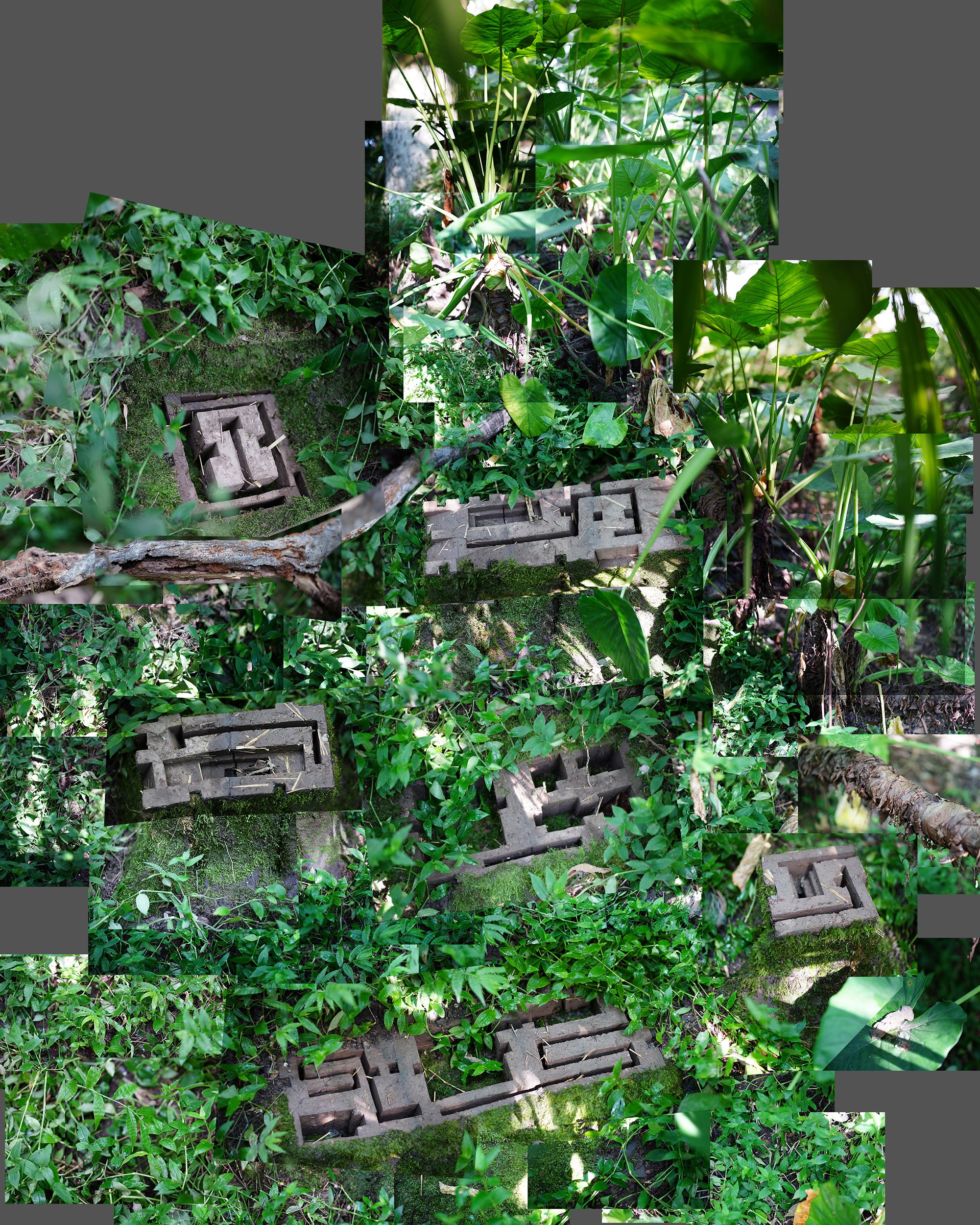
Xi’s methodology is influenced by Descartes’ and Spinoza’s geometric concepts including Rectangular Setup and Extension, Einstein’s theory of space, and the mathematical ideas of Euler and Gauss. He lays out the material in a particular shape, size, volume, and manner. We can see the sharp and hard edges and minimalism everywhere in the various forms of adobes and plants, with parts of the works independent of and also participating in the whole. Xi advocates that the viewer “walk through” the landscape and perceive the deep connection with nature. Put together, the images of their works both reveal the sense of mystery and miracle, where artistic phenomena are created and disappear in the rhythm of nature.
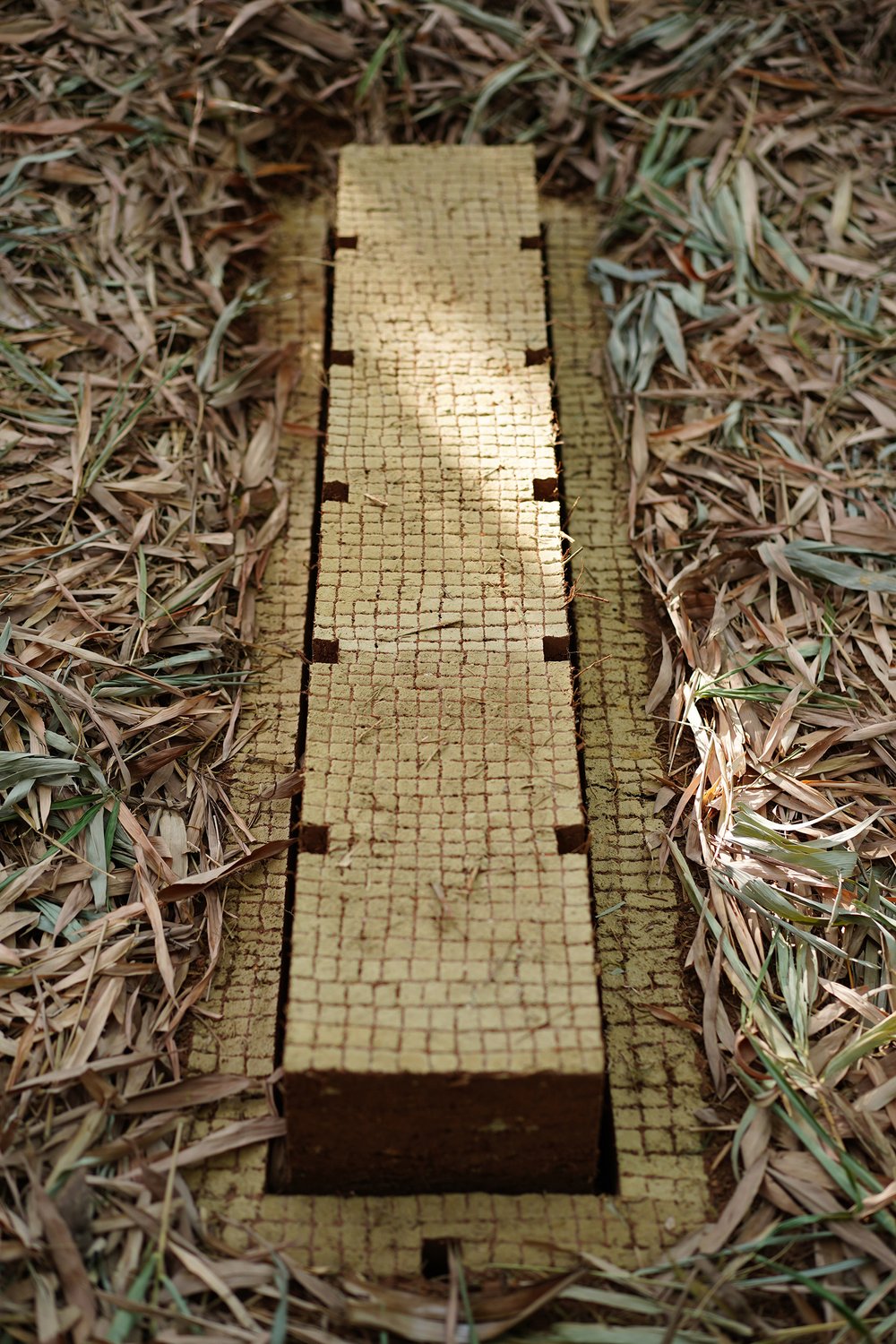
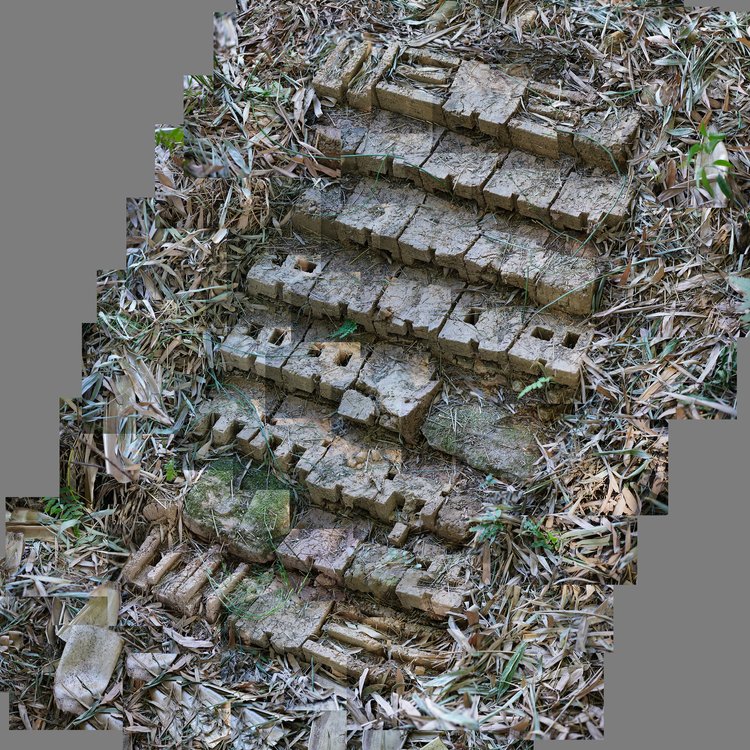
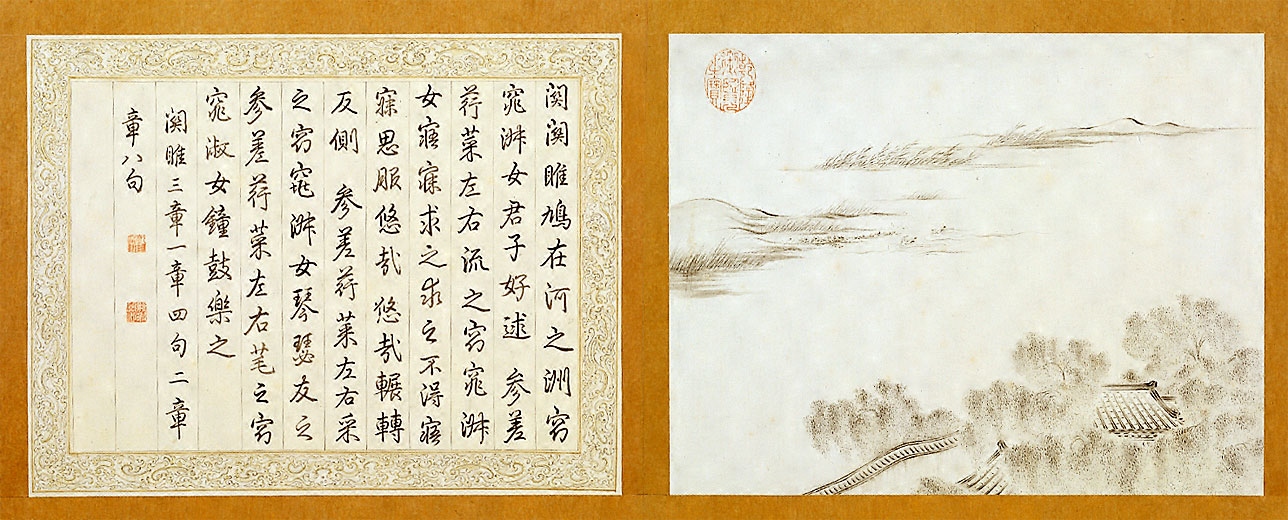
Xi gathers material on the spot including soil and plants to create his works. Surrounded by mosses, ferns, and seed plants, the hand-made adobes are arranged solidly in a structural manner. This is the most iconic series of his works whose titles are quoted from classical Chinese literature: the Book of Songs and theSongs of Chu, such as It is Nice to be in the Garden, There is a Sandalwood (乐彼之园,爰有树檀)(2019), Swoop Flies that Falcon, Dense that Northern Wood (鴥彼晨风,郁彼北林)(2020), and The Appearance and Height of the Lush Plants Match Beautifully (纷緼宜修)(2020). Xi borrows these responses from ancient Chinese philosophers to the rhythms of nature, alluding to the unity of the abstract structure and figurative content in his works, and the fusion of classical Eastern aesthetics with Western spatial geometry. Legitimately, Xi calls his works “Land Art” rather than installations or sculptures. In terms of Land Art, it uses nature as the creative medium, and always emphasizes the visual form of the site-specific context, looking for an organic integration between the works and nature. One Issues from the Dark Valley and Removes to the Lofty Tree (出自幽谷,迁于乔木) (2019) , one of the series of adobes, created in 2019 and eroded back to the land during the rainy season in 2021, which is a vivid projection of the journey of human life.
Lei’s work does not need – and probably not always meant – to be contained in a gallery or put against a wall because this would undermine his core artistic if not philosophical purpose: this is only in nature, out in the open air, where Lei’s adobes turn to be his art. This is out there that time can do his essential share, that is slowly absorbing as a sound graft Lei’s adobes as they are designed to be. Lei’s structures, given the infinite potential of adobes, can take all sort of forms: they can be seen as burial site or places of meditation – see “1120 Conversations I had with Moss and a Rock”, “I’m Walking in the Field”.
Once build or installed in nature, Lei’s structures slowly fade away, change form and aspect over time and may eventually disappear. This is a key point about Lei’s artworks: as they are made from earth, they are designed to evolve when placed on the ground, slowly and silently, and possibly completely disappear. This gives the opportunity for the observer to witness not a still artwork but an evolution, that is the exact opposite of a still life: real life. We cannot but notice the humility of Lei’s artistic approach. From a Chinese viewpoint, the reference to Taoism comes readily to the mind when trying to understand Lei’s artistic approach. Laozi Tao Te Ching, to put it in a few poor words, teaches us that all things come from a unique energy, transforms, fades away and recycle in the “logos”.
Xiguan Lei’s artistic practice holds a significant role within the contemporary environmental discourse framed by the Anthropocene. As we grapple with the profound impact of human activities on the planet, his installations and sculptures serve as poignant reflections and catalysts for conversations surrounding humanity’s relationship with the environment in this epoch. The ephemeral nature of his works mirrors the transience inherent in the Anthropocene era. The marks left by the artist’s body and other interventions evoke the impermanence of our impact on the environment, fostering a contemplation of the evolving and often precarious balance between human activity and the natural world.
Lei considers his art “a grand and silent game of building blocks”. He also told that those adobes could be considered words. That begs the question of their meaning. Just as the stones used in ancient civilization building, Lei’s adobes talk to anyone willing to listen. But the observer has to be tender ear because Lei’s art is elegant and subtle enough only to whisper. As to what it is whispering, “The Tao that can be told is not the eternal Tao”. This is how much Xiguan Lei’s art can offer: a glance at eternity.
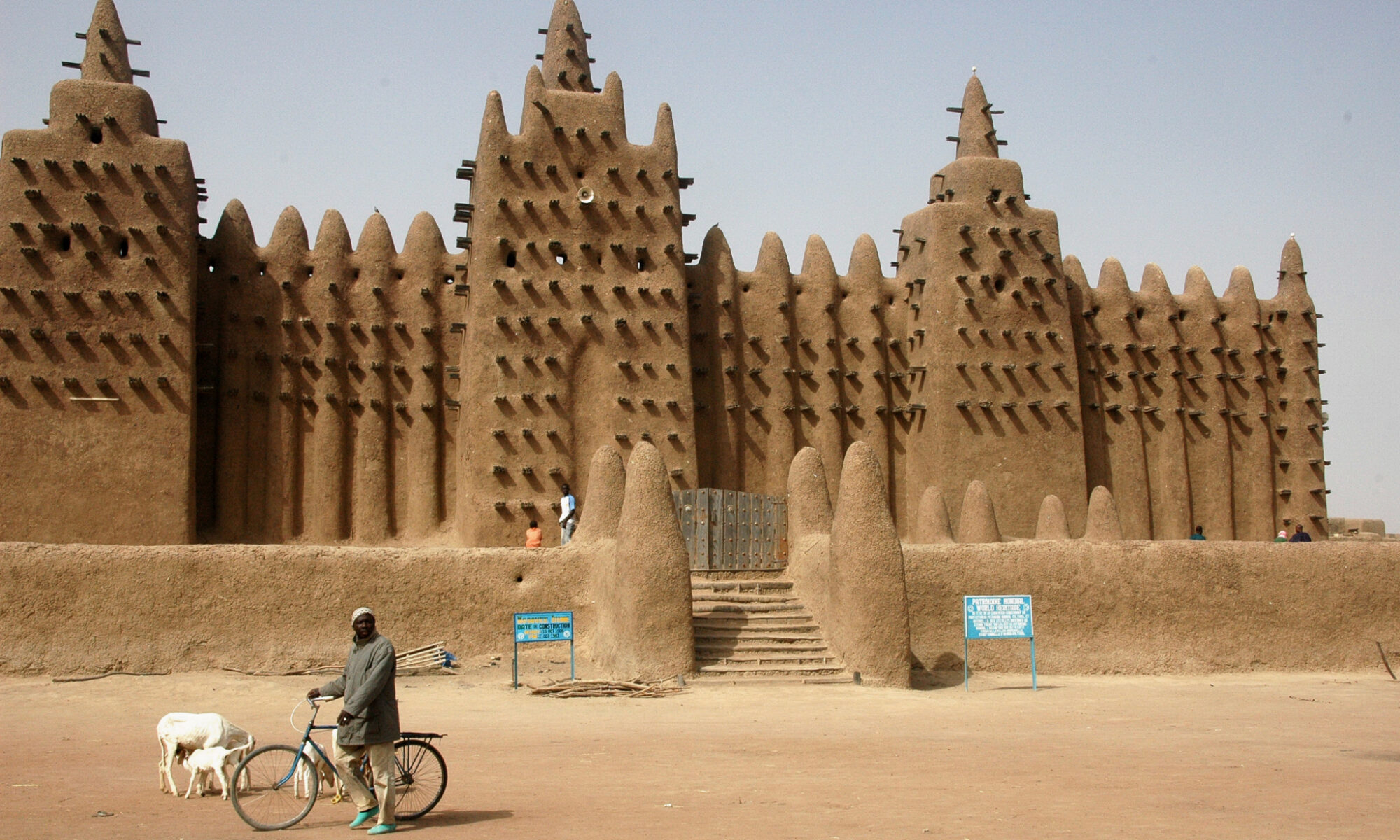
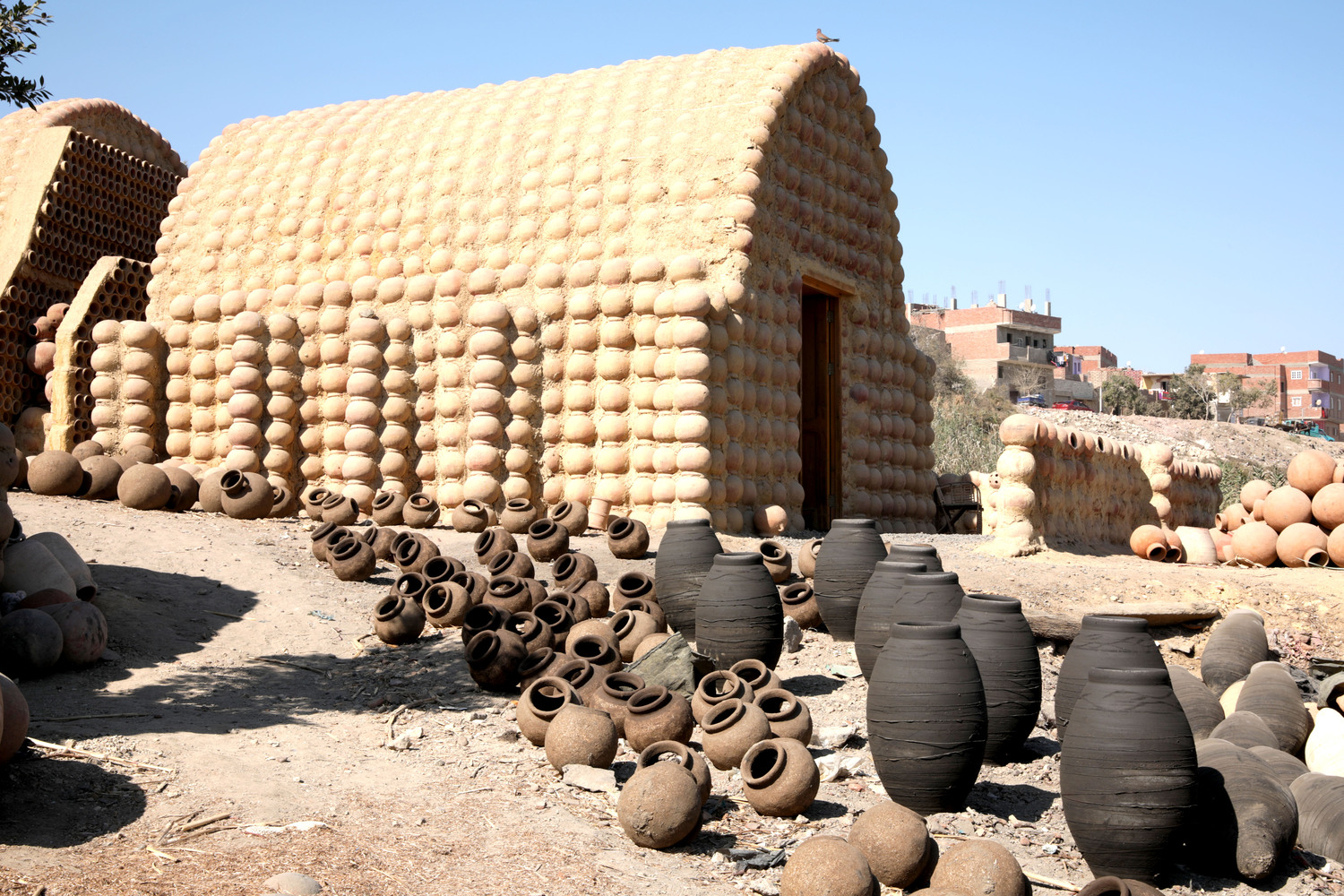
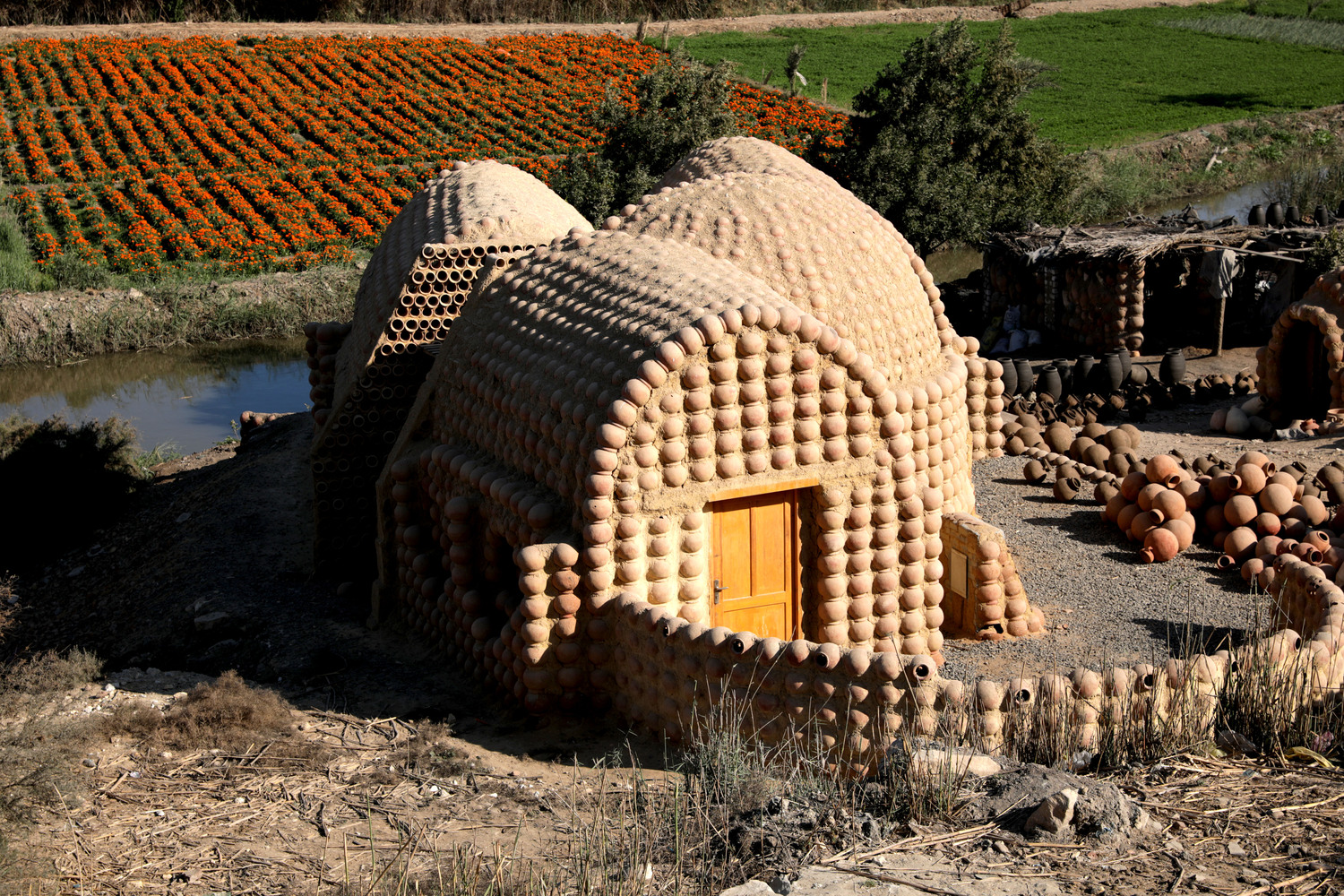 Reference images from the Al Nazlah Center by Hamdy El-Setouhy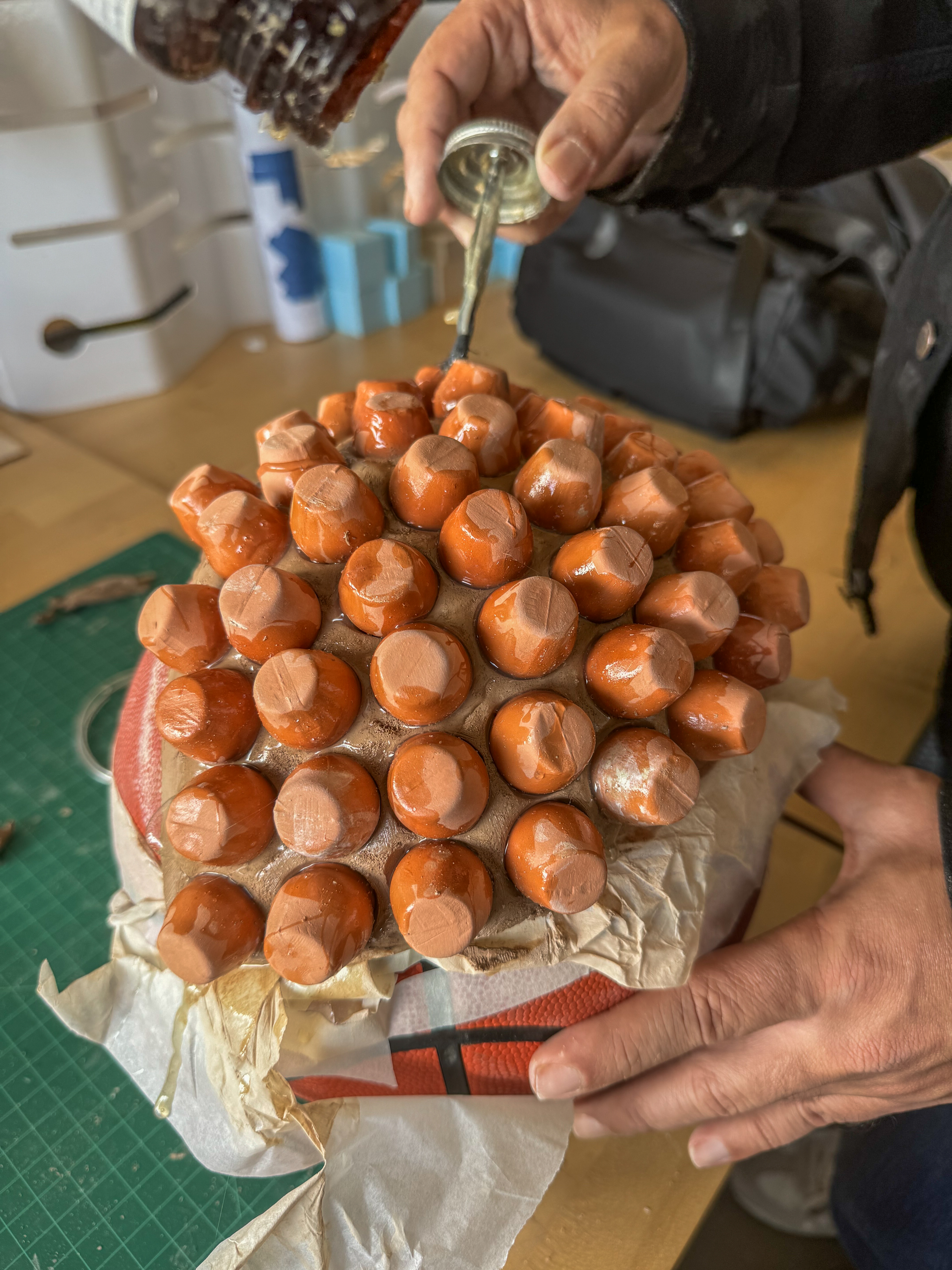
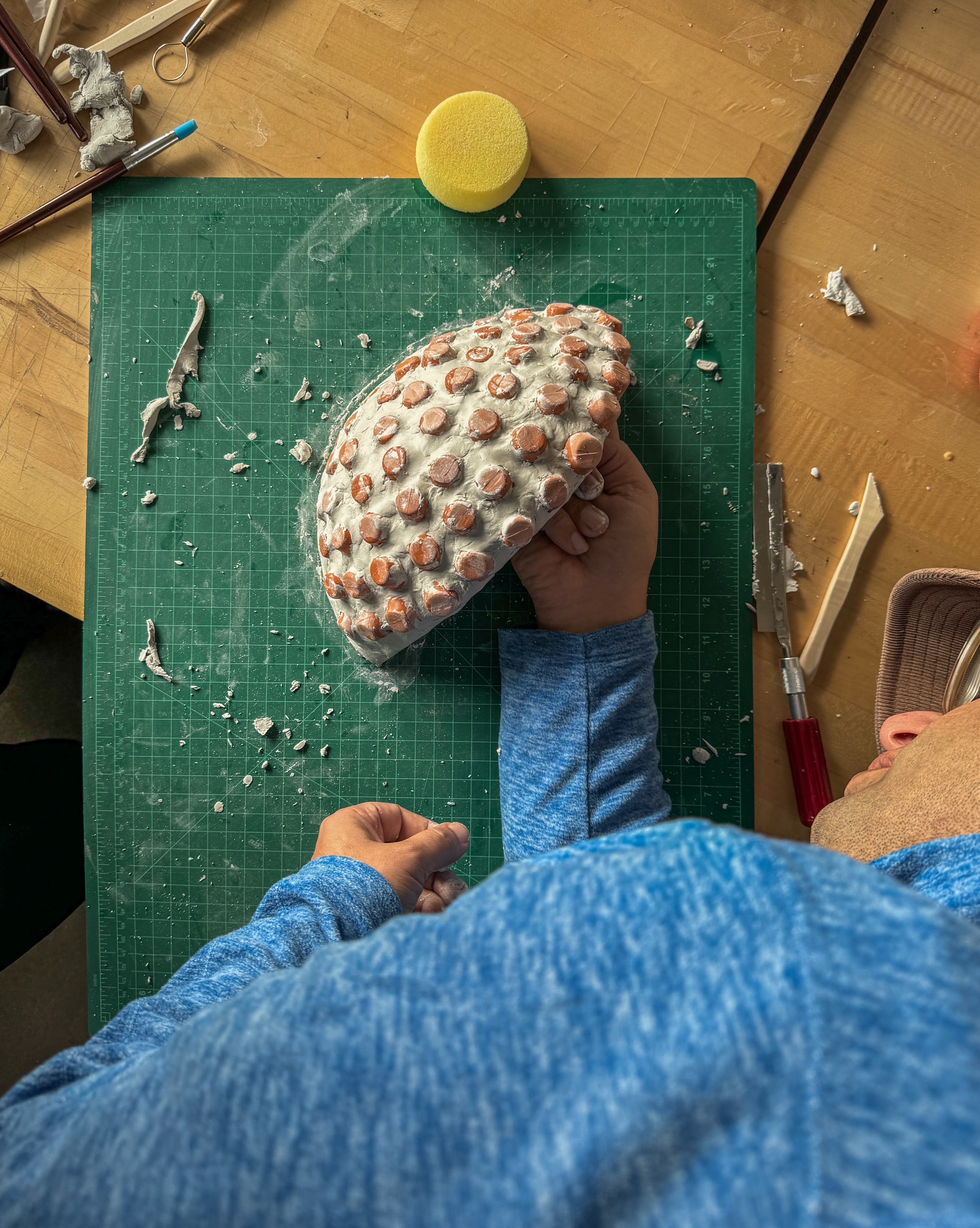
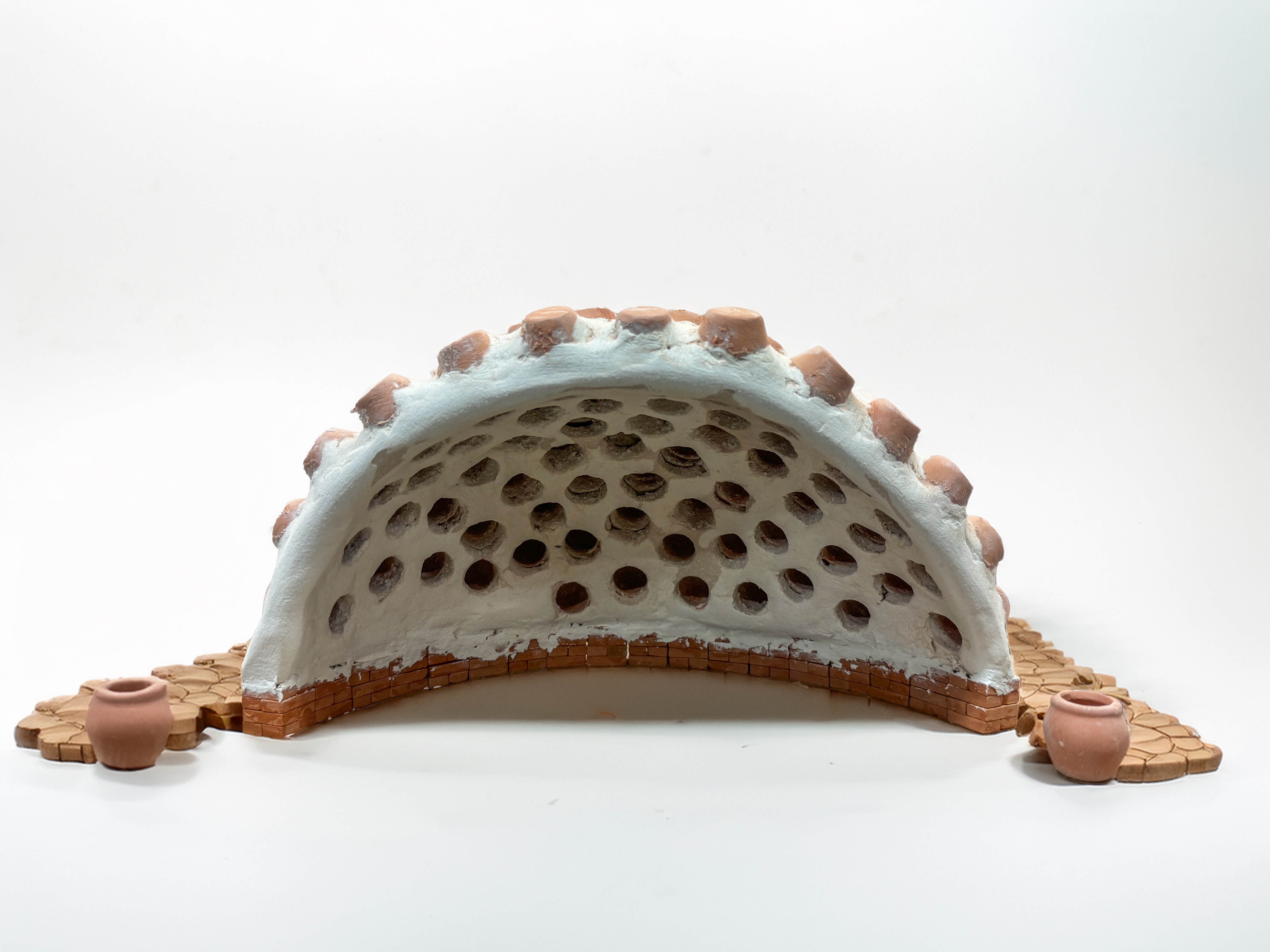 Proposal dome model. Scale: 1/4″=1′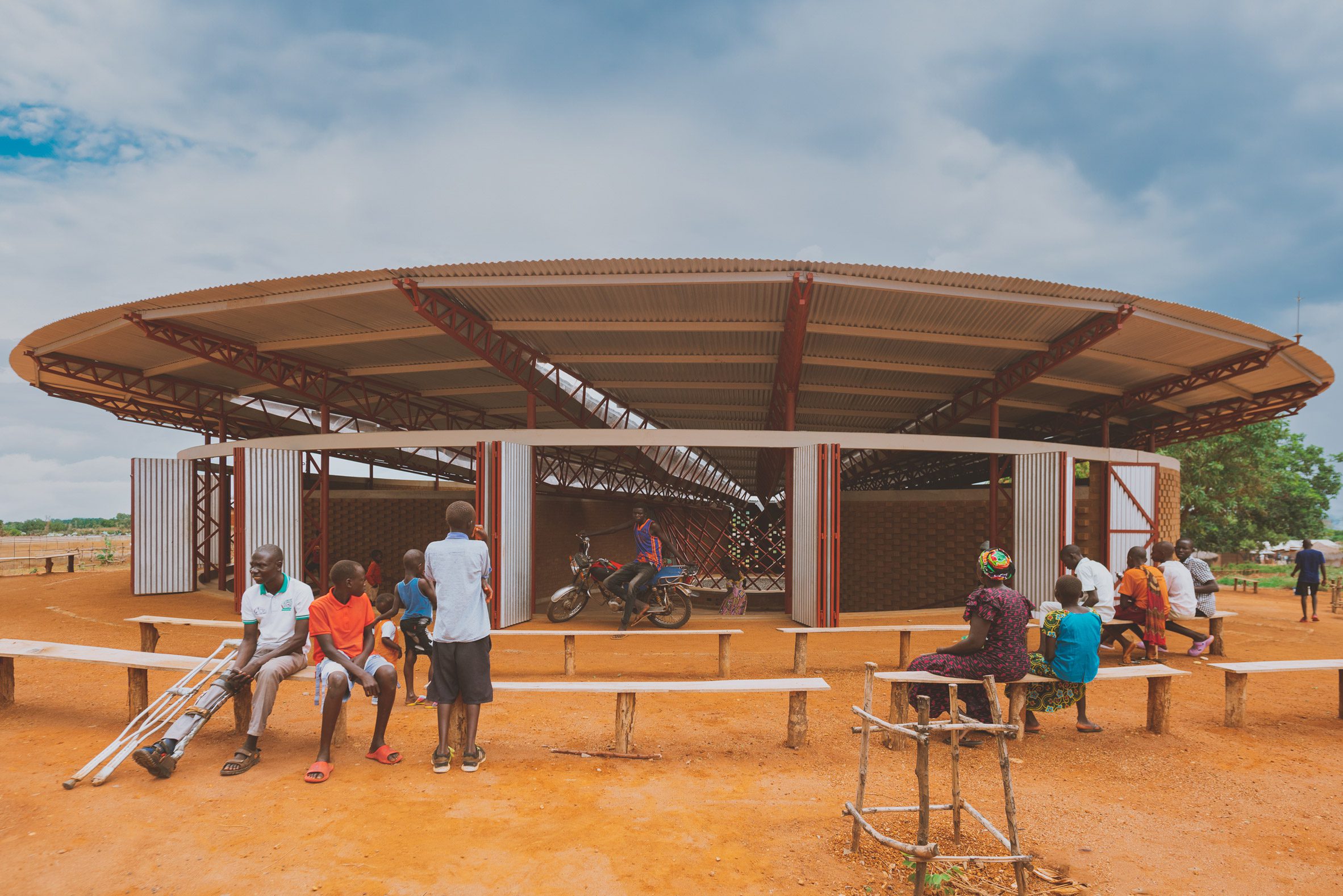




 Interior of the vaulted ceiling classroom