LEHM 2008 – Call for Papers

The Dachverband Lehm e.V. is the German Association for Building with Earth. Every four years the DVL organises an international conference and trade fair on building with earth in a different earth building region in Germany together with an excursion in the region. After the conferences in 1994, 1997, 2000 and 2004, the LEHM 2008 is the 5th such event organised by the Dachverband Lehm e.V. Each of these events has attracted several thousand visitors. In addition to organising a high-profile conference programme, a central aspect is the presentation of new innovations in earth building products and technologies through a trade fair that takes place parallel to the conference. For more information visit the conference website.

Inno-native Earthen Architecture

Joe Osae-Addo, a Ghanaian-born architect, living in Los Angeles was determined to build with the materials found primarily in rural areas of his native country: timber and mud brick. Because mud brick doesn’t exist in cities in Ghana, Addo had to build his own during the construction of his own home. He coined a phrase for his approach to contextual modern architecture: “inno-native.” Listen to an interview with Joe Osae-Addo where he talks about his inno-native approach.

Frank Lloyd Wright Rammed Earth


In 1941 Frank Lloyd Wright began the Cooperative Homesteads project in Madison Heights, Detroit Michigan. The homes were to cost $1,400 and to keep the costs low they utilized berm and rammed earth construction. It is said that the would be occupants for the houses were drafted during World War II and construction ceased. Read More [ 1 | 2 | 3 ]

Handmade School

SCHOOL1.jpg

Architects Anna Heringer and Eike Roswag from Linz and Berlin have realized a beautiful school that is a recipient of The Architectural Review Awards for Emerging Architecture.

Refining the local technique of using very wet loam to build walls, the school has a brick foundation, a damp proof course, and walls made of a mixture of loam and straw, the latter acting as a form of reinforcement. The loam and straw are combined by getting cows and water buffalo to tread them in. The ‘Wellerbau’ technique employed here involves building a 700mm high wall layer, leaving it to dry for two days, and trimming off with a spade. A further drying period is followed by the addition of the next layer.

[ The Architectural Review | Handmade School Web Site ]

10th International Conference on the Study and Conservation of Earthen Architecture

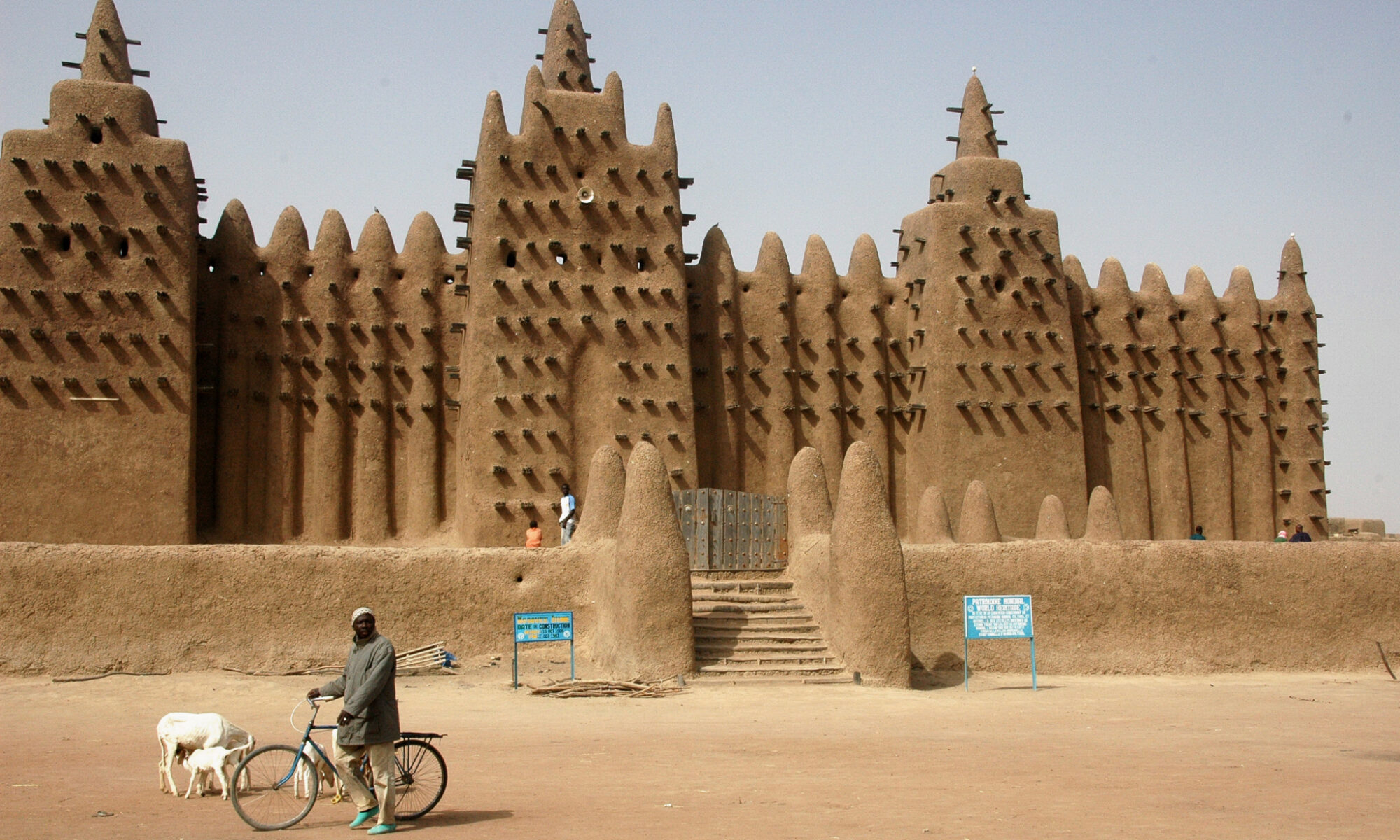
The 10th International Conference on the Study and Conservation of Earthen Architecture will be held in February 2008 in Bamako, Mali, West Africa. The conference is organized by the Getty Conservation Institute and the Ministry of Culture of Mali with the collaboration of Africa 2009, CRATerre-ENSAG , ICOMOS South Africa, and the World Heritage Centre, under the aegis of ICOMOS and its International Scientific Committee on the Earthen Architectural Heritage. Three hundred international specialists in the fields of earthen architecture, conservation, archaeology, scientific research and site management are expected to attend.

Rammed Earth in Spain Videos

Via google video, videographer Paul Jaquin has ammassed a collection of videos of rammed earth in spain. Read synopsis and watch the videos by clicking below:

Rammed earth at Lorca castle, a tour of the outside of the building, and a view across the valley.

Rammed earth wall at Palma del Rio in southern Spain. Constructed around 1171, and probably 6m high.

Conclusive proof that some rammed earth is absolutely fine in the rain. Here a castle at Alcala de Guadaira is observed in the middle of a rainstrorm with no detrimental effect to the fabric of the wall.

A video tour of Banos de la Encina castle, built in 967 from rammed earth.

Rammed earth wall at Novelda in southern Spain. This is a view inside a hole in the wall, proving that rammed earth can provide some arching or tensile action. Novelda castle was built around 1171 duringthe Almohad dynasty in Spain.

A tour of the inside of Villena castle in southern Spain. Constructed in rammed earth in 1172, it is a very well preserved rammed earth castle.

Rammed earth wall in Cordoba.