
The book, Rural Studio: Samuel Mockbee and an Architecture of Decency documents several rammed earth structures designed and built by Auburn School of Architecture students in Hale County, Alabama.
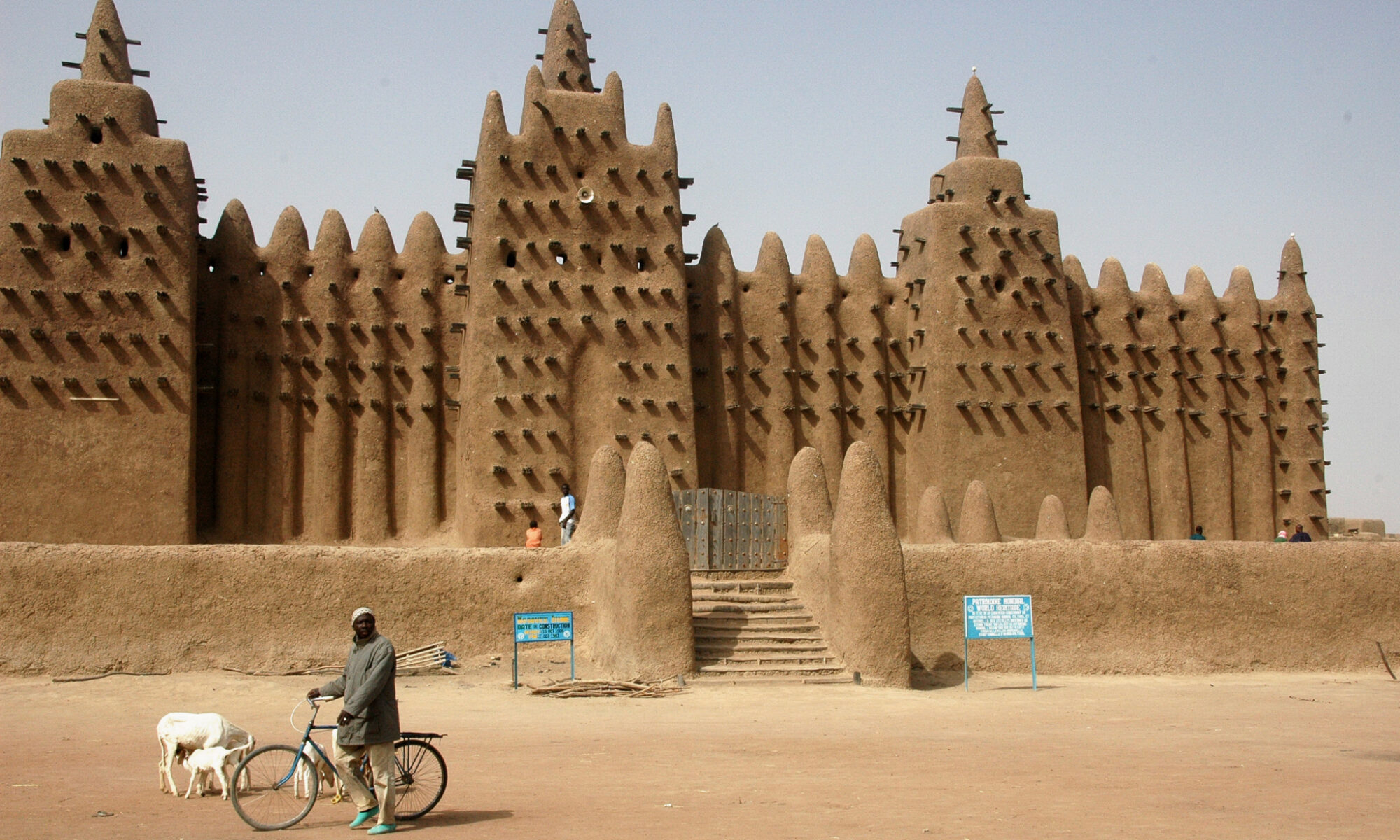
Architecture, Art, Design, and Culture using of mud, clay, soil, dirt & dust.
The book, Rural Studio: Samuel Mockbee and an Architecture of Decency documents several rammed earth structures designed and built by Auburn School of Architecture students in Hale County, Alabama.
The LEHM 2004 is the 4th international conference and trade fair for building with earth and will be held at the famous Leipziger Messe in Leipzig, Germany, October 27-30th, 2004. The conference will coincide with the denkmal 2004, one of the largest trade fairs worldwide for reconstruction and conservation. The previous denkmal 2002 attracted more than 18,000 visitors from 35 countries with more than 400 exhibitors from 15 countries.
In Germany as in many other parts of the world, earth is used as a building material in conservation work. The LEHM 2004 conference will focus on “Earth in Building Conservation”. The Dachverband Lehm e.V. extends an open invitation to all interested professional colleagues to submit thematic relevant contributions and papers for the LEHM 2004 conference as well as for a poster session which will be exhibited parallel to the conference. The theme of the conference programme will include the following subject areas:
– Earthen building: a thousand years of building culture
– UNESCO world heritage – building with earth
– New earthen building technology in conservation practice
– New projects forum (as a permanent conference feature)
Candidates wishing to present a paper or poster at the conference are requested to submit a short overview (abstract) of not more than 500 words. Submissions can be in German or English. More details, submission information and deadlines are available from: www.dachverband-lehm.de/lehm2004
Butabu: Adobe Architecture of West Africa by architectural photographer James Morris and Professor of African Art and Architecture at Harvard University, Suzanne Preston Blier, shows the sublime sculptural beauty, variety, ingenuity, and originality of Sahalian Architecture in the West African countries of Mali, Niger, Nigeria, Togo, Benin, Ghana, and Burkina Faso where people have been constructing earthen buildings for centuries.
The Handbook for Building Homes of Earth, published by the Peace Corps Information and Collection Exchange, is available on-line with chapters discussing adobe, rammed earth, compressed earth and other relevant technologies and methods.
Dachverband Lehm is a German organization interested in promoting the culture of building with earth. The association sees itself as an umbrella organization for all those interested in earth and earthen building. The organization coordinates and concentrates the various activities of its members. Dachverband Lehm was established in 1992 as an association to promote the culture of building with earth and to represent all those interested or working in the field. Today they are the internationally recognised representative in Germany for clay and earth building. Their work in establishing technical building regulations, the “Lehmbau Regeln”, and their vocational training programme “Specialist for Building with Earth”, recognized by the Chamber of Trade and Commerce, are exemplary in Germany.
Their website offers a series of interesting links regarding international earth building.
The Rammed Earth House written by David Easton, describes the beauty and grace of rammed earth construction. The photographs of different structures, both modern and ancient, by Cynthia Wright, create a breathtaking glimpse into a building technique that is as old as human history, but exactly suitable for today’s resource-conscious and environmentally friendly building needs. Rammed Earth Works, established in 1978, has distinguished itself as one of the world’s leading company in the research and development of modern earth construction technologies. Founder David Easton is the internationally recognized developer of PISE, Terratile, the Easton forming system for rammed earth and cast elements, and construction systems for engineered earth walls which are code compliant and compatible with current building trades.
The Gaiapolis Foundation, in Sofia, Bulgaria, is a non-profit non-government organization who address the investigation, dissemination, and application of different earthen building technologies (adobe, rammed earth and cob) for the construction of social housing.
Ralph Patty, Chairman of the Agricultural Engineering Department, supervised the rammed earth research at South Dakota State College in the 1920s and 1930s. Patty’s research was published internationally as well as by SDSC and the USDA Rammed Earth Walls for Buildings- 1926 :Farmers’ Bulletin #1500.

Banco: Adobe Mosques of the Inner Niger Delta by Sebastian Schutyser and Jean Dethier (author of Down to Earth) et al., is a beautiful book with photographs by Sebastian Schutyser that reveal a neglected African architectural heritage: village adobe mosques. His black-and-white images emphasize an artistic fusion of architecture and sculpture and exalt the strength and beauty of a craft that eludes globalization. The photos emphasize the grain and substance of clay smoothed by villagers’ hands or cracked by erosion, and highlight the solidity of the masonry and the sensuality of the textures. The texts that accompany these stunning pictures are by a leading expert on raw-earth architecture and by a major scholar on African vernacular architecture. Included is an appendix that documents all 500 of the principal adobe mosques of the Inner Niger Delta, with the names of the villages and geographical coordinates. For more information visit www.sebastianschutyser.com
In the essay “The Renaissance of Rammed Earth” which was published in AMC Aspects magazine, January 2001, it is discussed that “Antonio Gaudi and Frank Lloyd Wright appreciated rammed earth. Gaudi showed great interest for the popular architecture. In 1884 he used rammed earth (called “tapial” in Spain) for the construction of the pavilions at the entrance to the farm of Eusebio Guell. Frank Lloyd Wright suggests rammed earth for the construction of buildings in his project for Broadacre City.”
