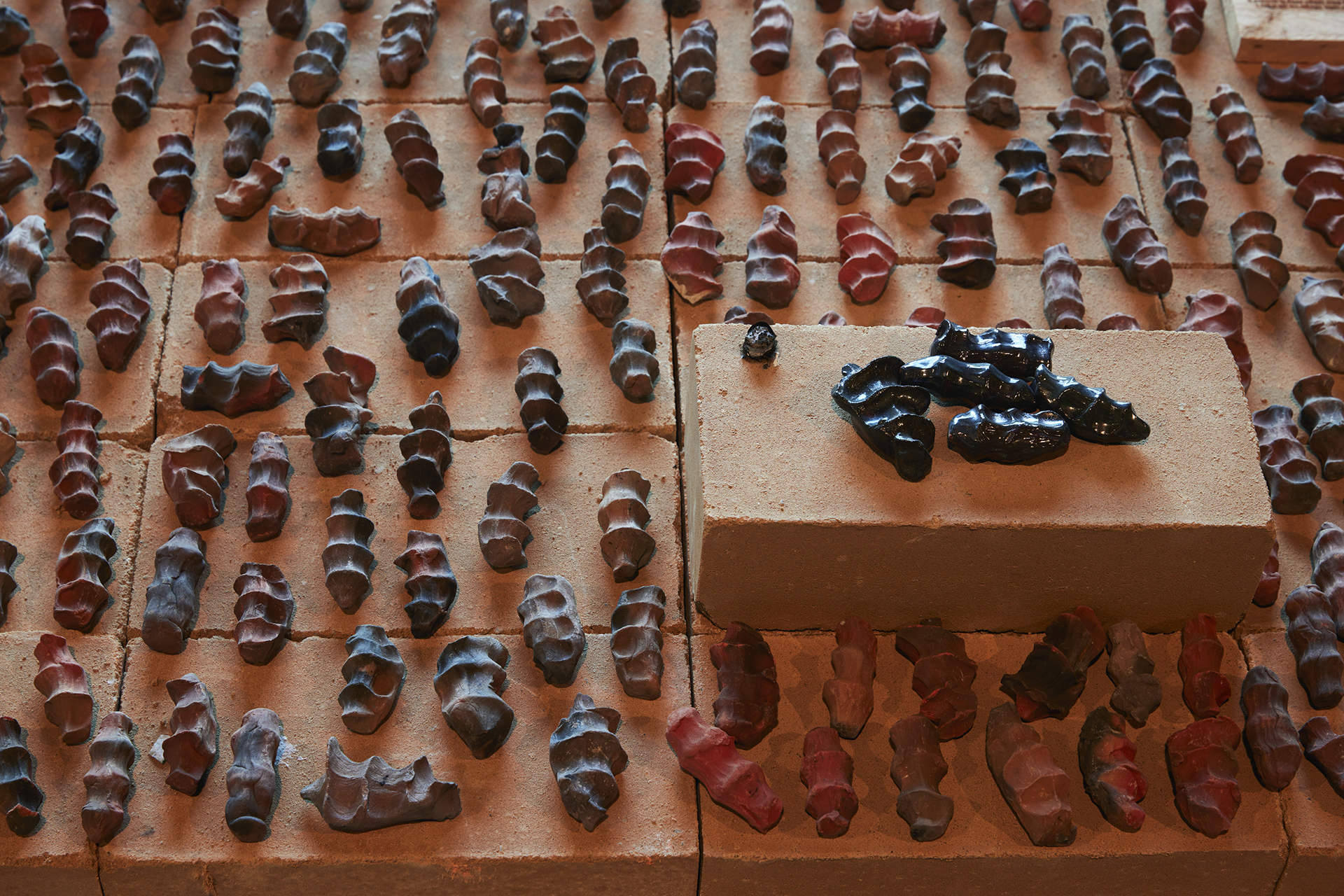
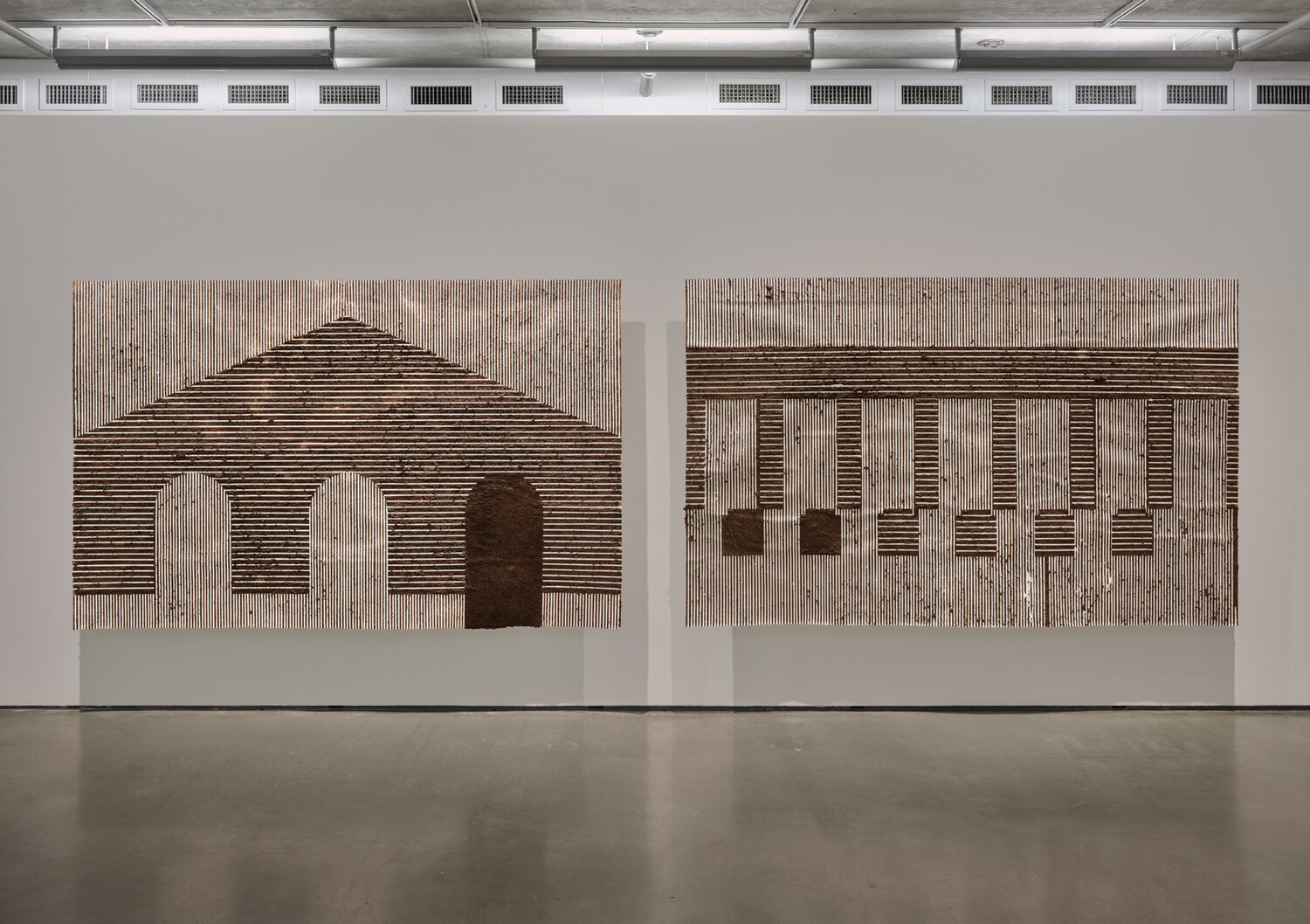
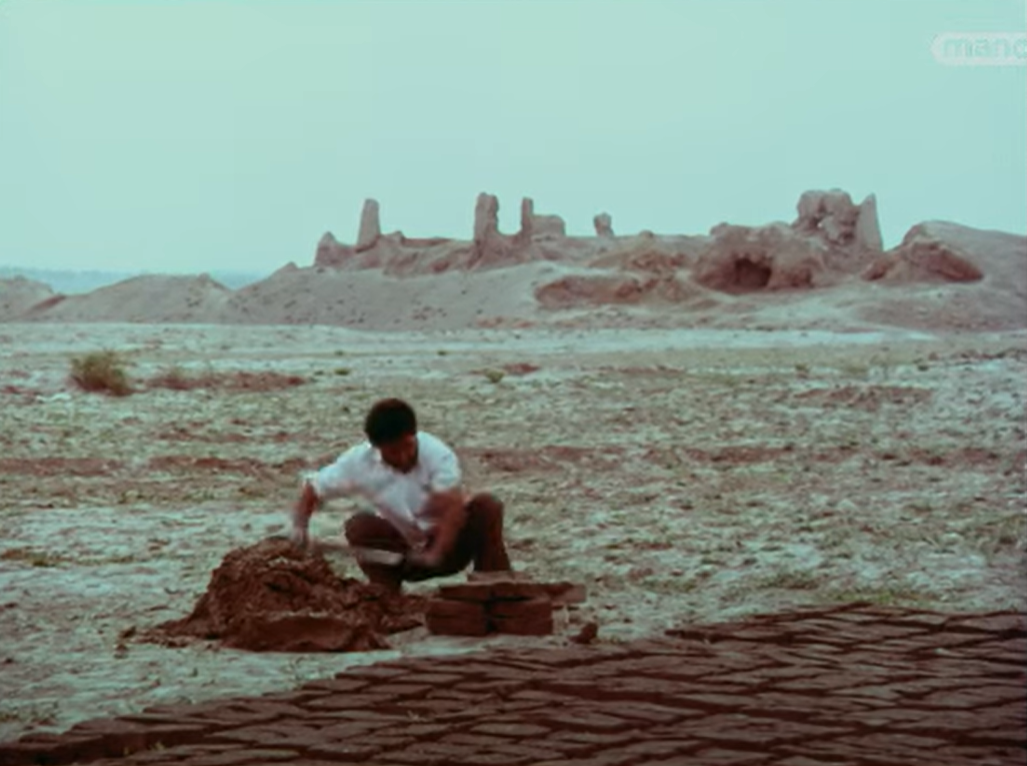
Haydar Yaghma, a humble yet prolific Iranian Poet, carved his legacy not only in verse but in the earth itself. Born into a life of labor, Yaghma spent his days shaping adobe bricks—a traditional craft in Iran’s sunbaked landscapes—while his nights were filled with the spirit of words and ideas. Despite his profession, Yaghma’s poetic talent soared; he composed over 5,000 verses that speak to the beauty of simplicity, the resilience of the working class, and the profound connection between humanity and the land. His verses, grounded in the experiences of everyday life, offer readers a raw and unfiltered view into the soul of a man who, though seemingly bound to the soil, found liberation in poetry. Haydar Yaghma remains an emblem of authenticity and passion in Persian literature, bridging the gap between the hands that labor and the mind that dreams.
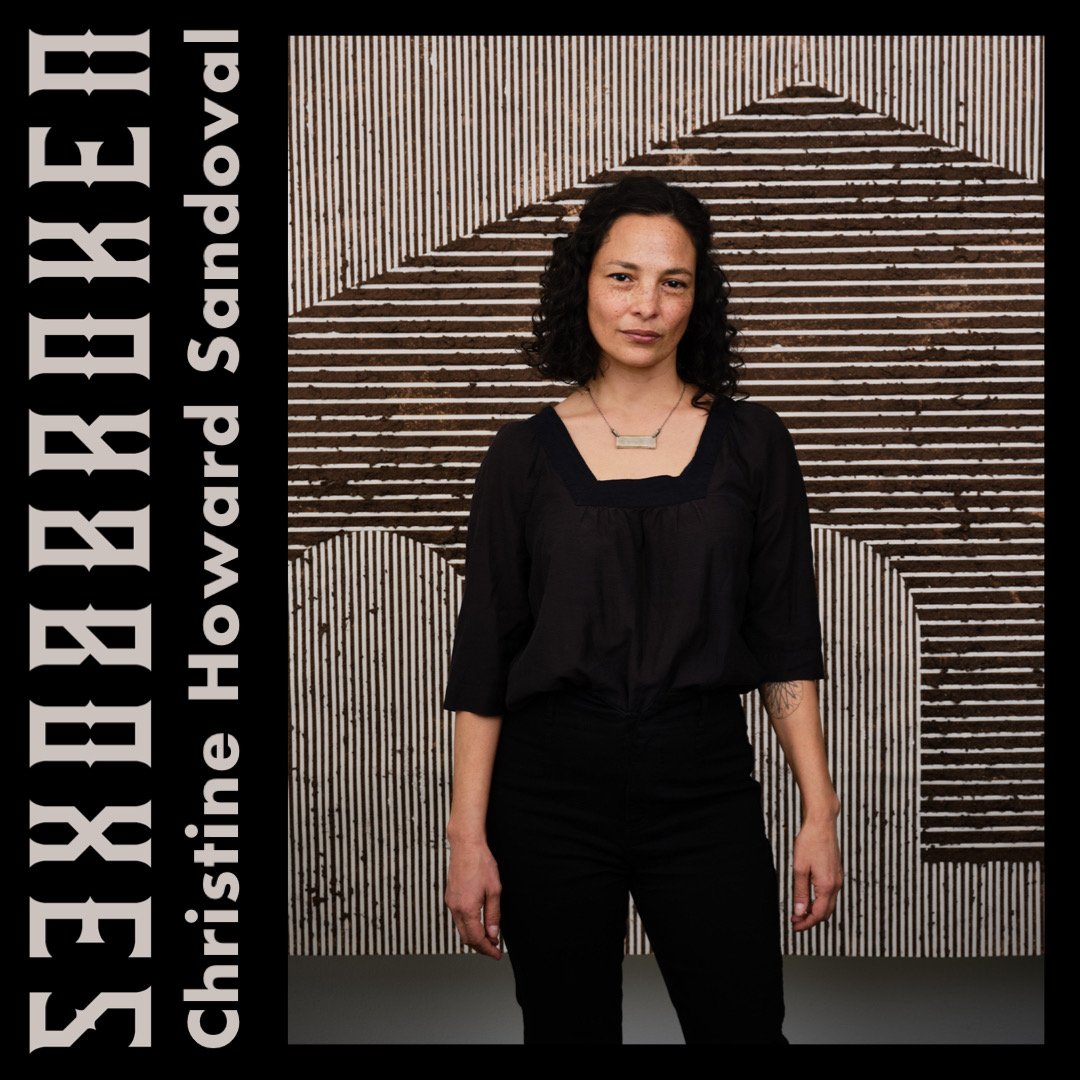
Sandoval is an interdisciplinary artist working across media including sculpture, installation, performance, and public art. Her versatile practice allows her to express her conceptual interests through a variety of artistic forms.
Sandoval is currently an Assistant Professor of Interdisciplinary Praxis in the Audain Faculty of Art at Emily Carr University (Vancouver, BC). Howard Sandoval is an enrolled member of the Chalon Nation in Bakersfield, CA. As an artist and writer engaging with timely ecological and social justice issues, Sandoval’s practice is situated within important contemporary conversations around environmentalism, indigeneity, and cultural representation.
As someone of Mexican and European American descent, Sandoval’s multifaceted cultural heritage is a core influence on her artistic vision and the themes she explores.
Her work often engages with questions of land, place, and indigenous environmental knowledge, reflecting her connection to the American Southwest region where she is based.
This cultural hybridity and commitment to representing marginalized perspectives is a key aspect of Sandoval’s artistic identity.
Education and Career:
Sandoval has formal training in the arts, holding a BFA from the University of New Mexico and an MFA from UC Davis.
Her educational background has provided her with a strong technical foundation to realize her conceptual ideas across different mediums.
Over the course of her career, Sandoval has exhibited her work internationally and received prestigious awards and grants, indicating her recognition within the contemporary art world. Howard Sandoval has been awarded numerous residencies including: UBC Okanagan, Indigenous Art Intensive program (Kelowna, BC), ICA San Diego (Encinitas, CA), Santa Fe Art Institute (Santa Fe, NM), Triangle Arts Association (New York, NY).
Examples of her work:
-Coming Home, August 21 – October 31, 2021
“In Coming Home Christine Howard Sandoval explores the history of California Indigeneity and its relationship to the archive, a place in which collective memory is stored. In California, the documentation constructed by settlers embodies a narrative of erasure but is also embedded with the seeds of Indigenous knowledge paramount to the reconstruction of Indigenous language, cultural practices, and relationships to the land. Howard Sandoval works with the archive to trace the migration of her Chalon Ohlone ancestors, telling the story of her community, her family, and her coming home to California.”
-The green shoot that cracks the rock, May 27 – July 16, 2022
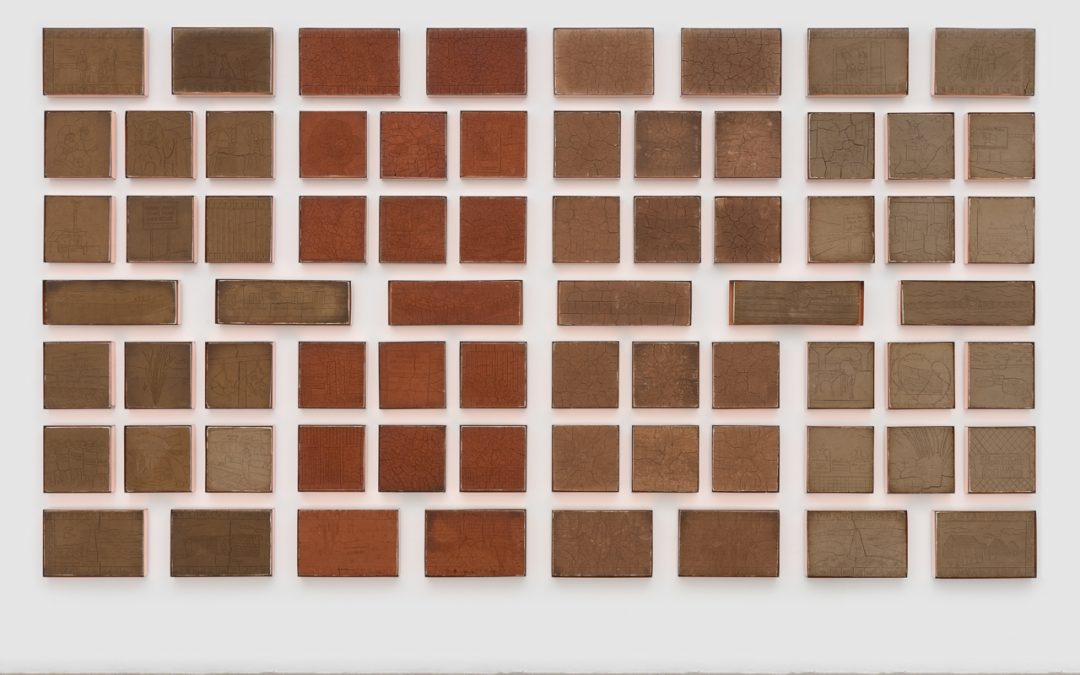
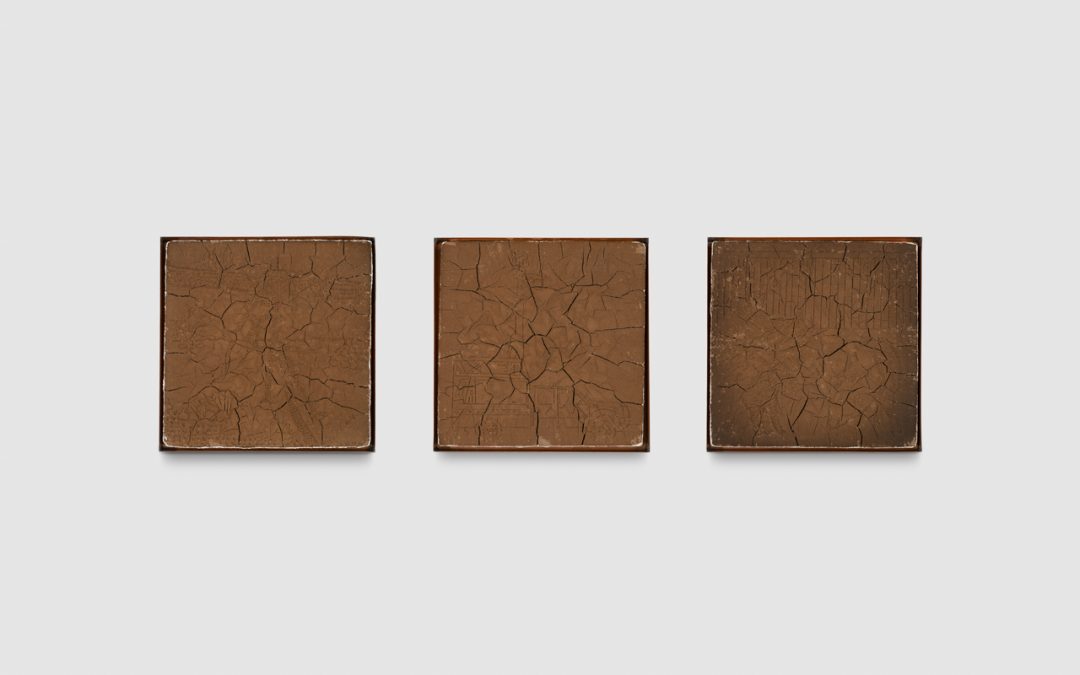
“Howard Sandoval’s embodied work confronts the complex history and innate interconnection of land and body. As she traces a path to her ancestral home, the artist scrutinizes the narrative of erasure in early North American settler’s records and reassigns power through documentation of embedded Indigenous cultural practices. Her poetic oeuvre seeks to weave a collective awareness back to nature by means of a more cyclical and deepened relationship with land and place.
The land, as an ever-evolving being, plays a central role in Howard Sandoval’s visual language. Taking adobe as her main medium, the artist explores its inherent properties of historical, familial and ecological histories. Adobe mud requires a bodily process to mix soil (sand, silt and clay), water and often straw to form a workable, malleable and ultimately structural material. In this ongoing investigation, she emphasizes the intentionally omitted history of forced labor, land theft, and the violent genocidal actions Indigenous people experienced.”
Jackie Amézquita (Quetzaltengo, Guatemala, b.1985) lives and works in Los Angeles, California. She is an artist with a multidisciplinary practice. Her research is articulated through the use of material and forms associated with pre-Columbian cultures. Amézquita creates public performances, installations, and objects that fuse indigenous mythologies with contemporary community engagement.
Amézquita received her M.F.A. from the University of California, Los Angeles, in 2022 and her B.F.A. from Art Center College of Design, Pasadena, CA, in 2018. She has exhibited with The Hammer Museum, LACE (Los Angeles Contemporary Exhibitions) CA, LAND (Los Angeles Nomadic Division) CA, 18th St Art Center CA, The Armory Center of the Arts CA, Vincent Price Art Museum CA, The Annenberg Space for Photography CA, Human Resources Los Angeles CA, MAD (Museum of Art and Design) NY. Amézquita is the recipient of the Mohn Public Recognition Award (2023), Mohn Land Award (2023), Andy Warhol Foundation for the Arts Los Angeles Art Fund (2022), and National Performance Network Fund (2022). Amézquita has been featured in the Los Angeles Times, ARTnews, and The Art Newspaper, LA. Weekly, hyperallergic, Walker Art Center magazine.
Works
SOIL
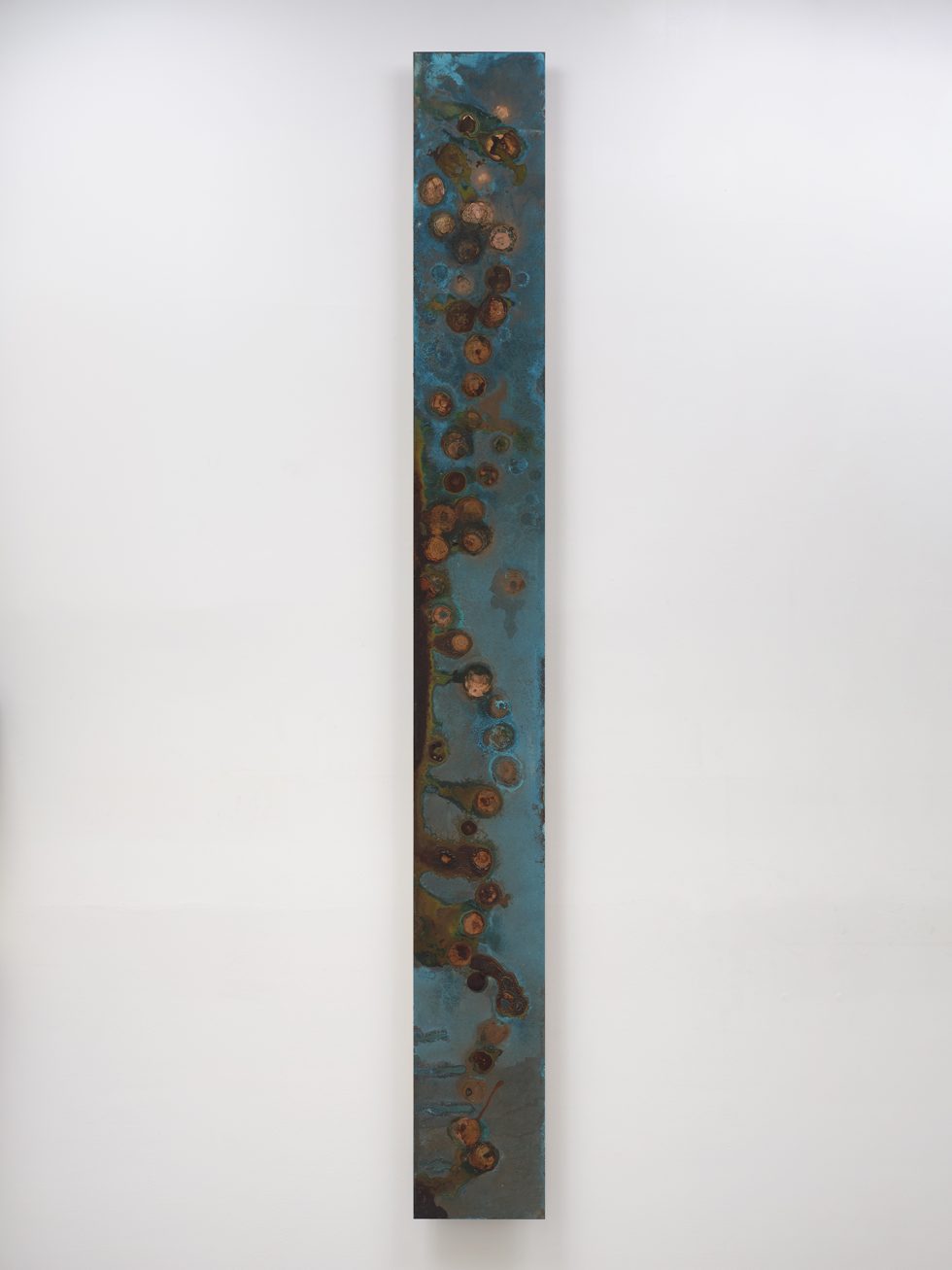
Soil source from the 1,951 mile border that connects the U.S and Mexico, corn masa, salt, cal (dehydrated lime), rain water, framed with copper.
Copper
Banana, salt incubated over a period of five months on copper
Fiber
Pasadena, California
Dimensions: 40’X40’
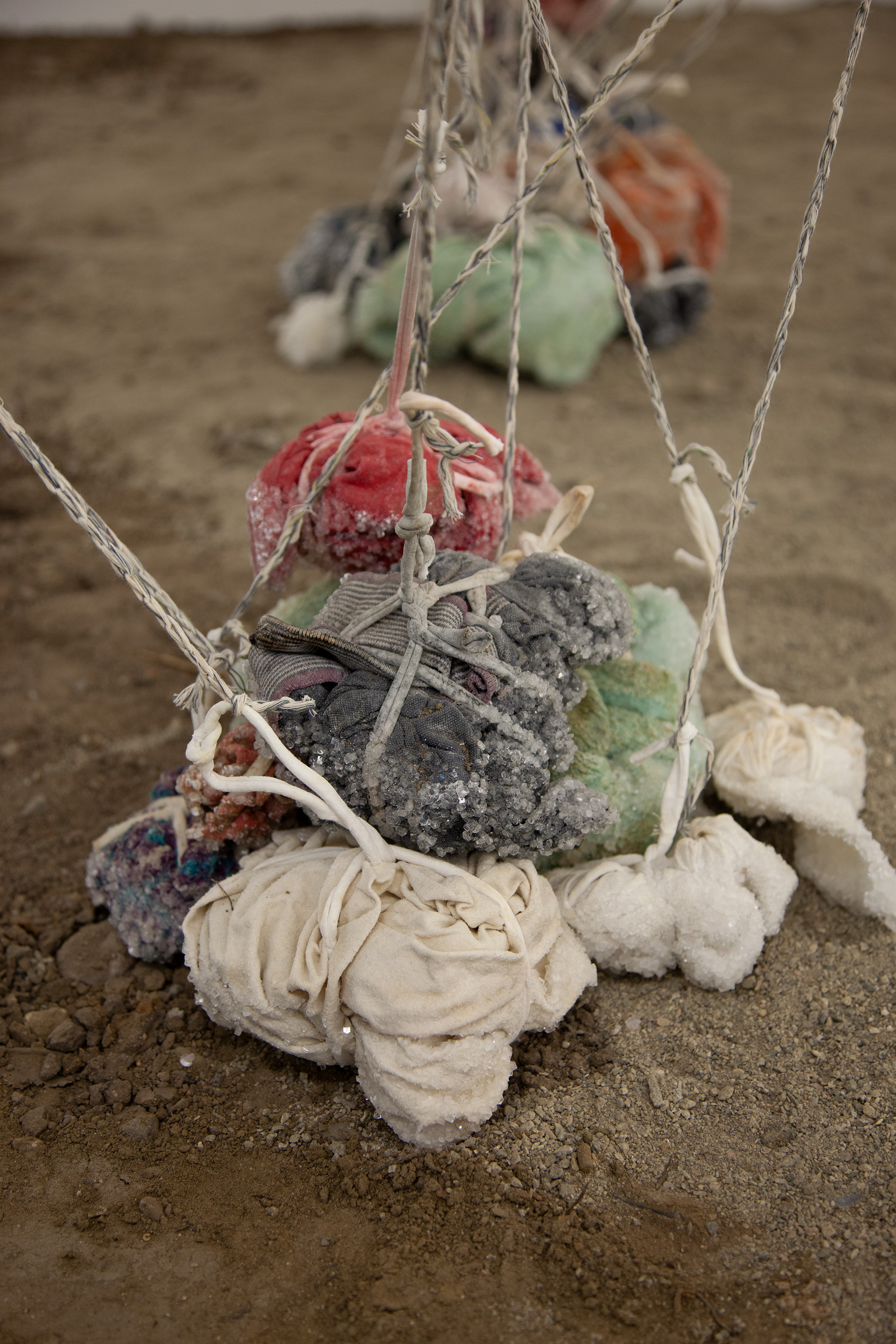
Sueños Fértiles, 2018 (Fertile Dreams) looks at the journey thousands of people make across different border entries into the United States. In this installation, I’m interested in the transformation that happens to a body upon entering a new space, as well as the effect of this interaction on the space. This exhibition is the next evolutionary stage of my previous installation, Mi Ultimo Suspiro, 2017 (My Last Breath). In Sueños Fértiles, I reconnect the remains of the clothing and towels that soaked all the water from the previous installation by casting them with salt, forming crystallized bundles of memories.
Door/Loom: Construction wood, screws, nails, woven clothing from people that migrated from different parts of the world, fiber crochet chains, 100% American soil, 45% traveled 150 miles South West of Pasadena, 5% traveled 140 miles south of Pasadena, 45% traveled 5.1 miles west of Pasadena, and 5% traveled 2.5 miles east of Pasadena (The soil was transported in the home depot buckets), acquired clothes from the different border that connects the US and Mexico, laundry detergent and salt (Crystals were formed inside the home depot buckets), 100 % Latin American string, Home Depot rags and towels from Mi Ultimo Suspiro.
Dimensions variable
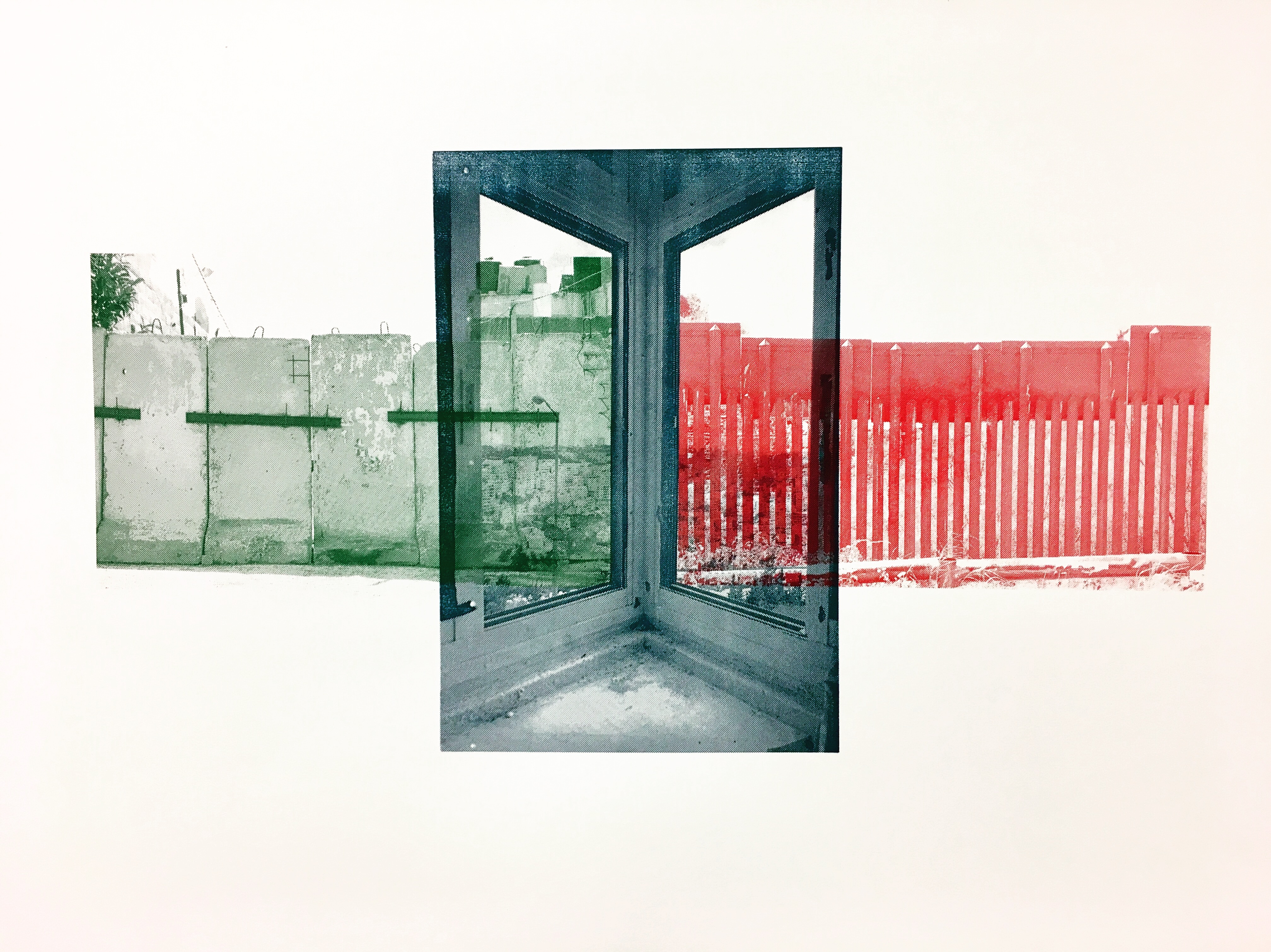
In Between Borders, 2017 is a silkscreen of three photographs taken in 2016 of the border of Ramallah in Palestine, the US border of San Ysidro, CA, and Tijuana, BC, Mexico, and a window in Jerusalem, Israel.
Public works
A collaborative performance during AMBOS Project with Tanya Agüiñiga.
Douglas, Arizona-US, and Agua Prieta, Sonora-Mexico
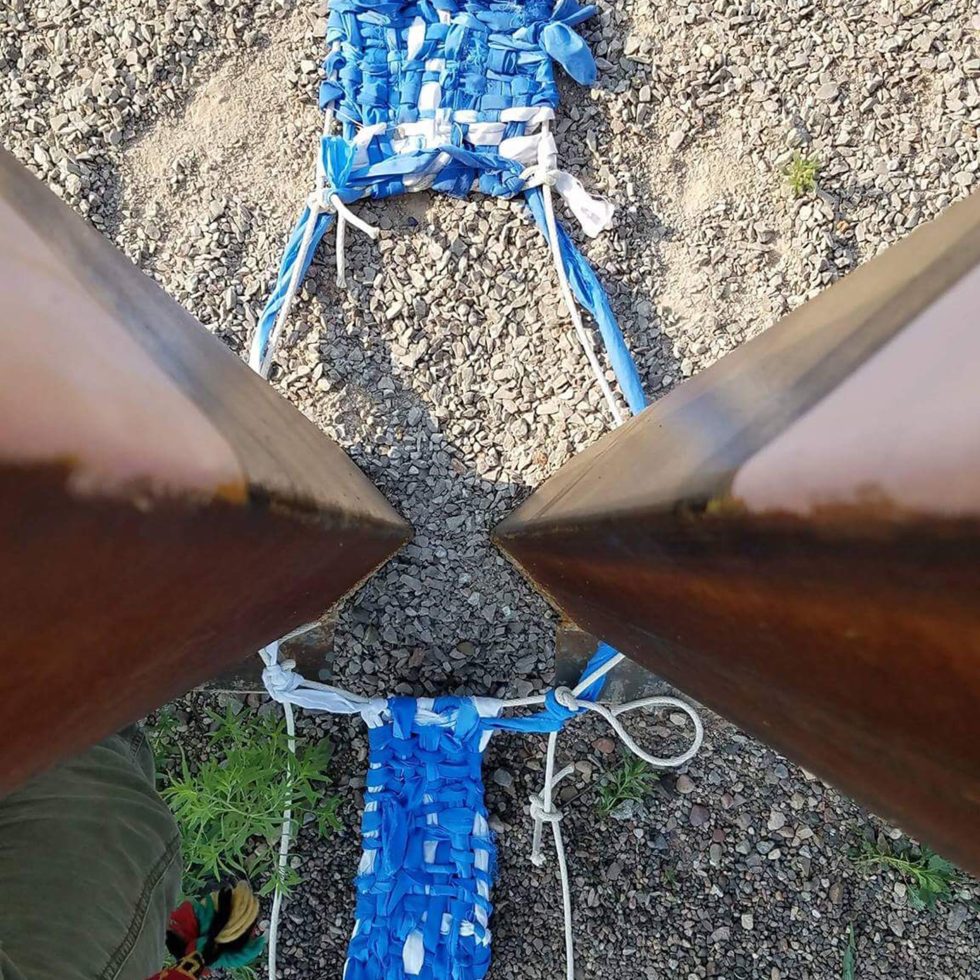
Backstrap weaving is a time-honored technique that requires a long, narrow loom wrapped around the waist of the weaver and secured to a stationary object. In tension, Tanya Aguiñiga and Jackie Amézquita’s bodies serve as stationary as both the body and the stationary object weave from one side to the other side of the border fence. Agüiniga and Amézquita received training in back strap weaving from Mayan women in Chiapas and Guatemala, respectively. Aguiñiga is a staunch advocate for honoring pre-colonial cultures and knowledge through the art of backstrap weaving while also maintaining a strong connection to physical labor. Meanwhile, Amézquita sees weaving as a way of reconnecting to one’s cultural identity and ancestral knowledge.
The border fence united the two artists during an activation at the border. Aguiñiga was stationed in Douglas, Arizona, while Amézquita was in Agua Prieta, Sonora, Mexico, in full view of the US Border Patrol. This location holds immense significance for Amézquita, who attempted to enter the US undocumented as a teenager to reunite with her mother in 2003.
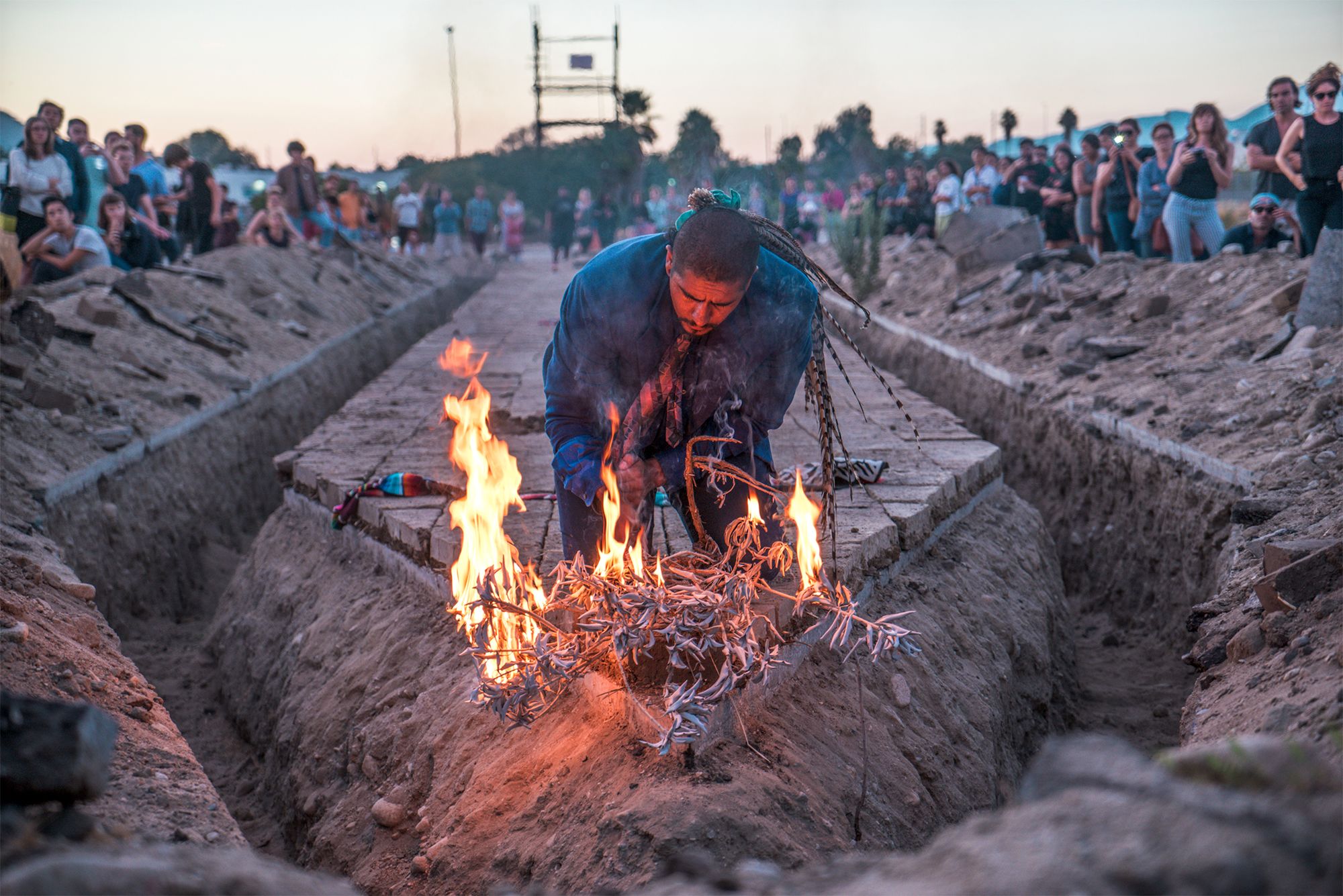
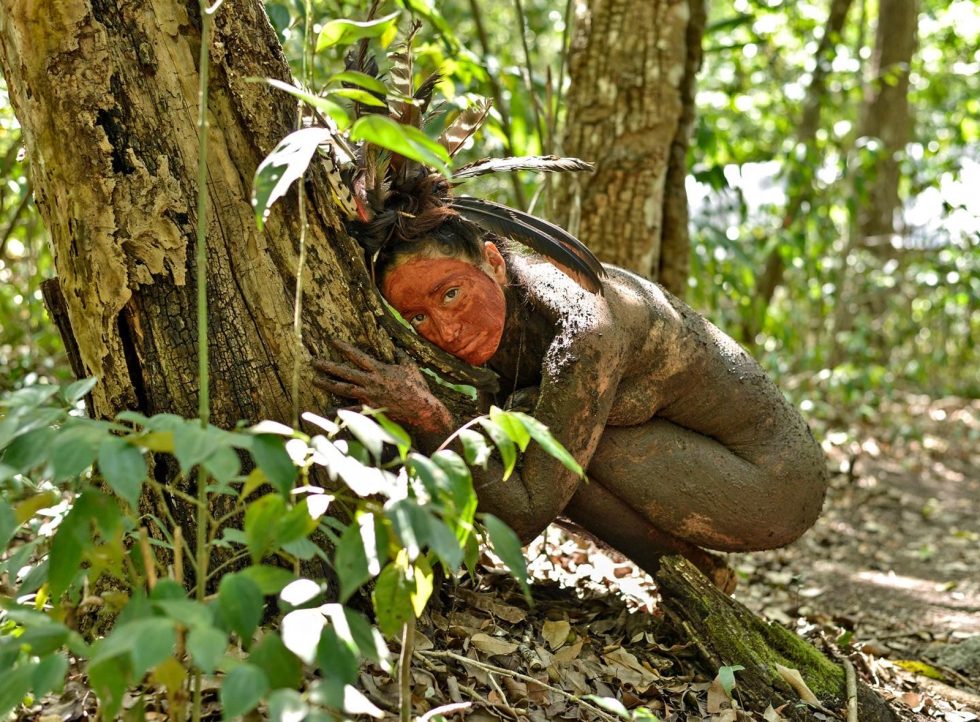
It’s an activation in Nakbe, approximately 13 kilometers south of El Mirador in Guatemala. Nakbe is one of the oldest cities in the region currently occupied by Petén Itzá. Archaeological excavations in the area suggest that the city is from the formative period or pre-classic 1400 BC. It’s believed that the city collapsed in 100-200 AD. Amézquita thinks of soil as an archive that holds the memory of the past. During this activation, the environment witnessed the integration between human and nonhuman entities. The actions of Amézquitas’s body in space serve as a conduit of reconnection between the past, the present, and the future. The feathers on her head were found during the journey, acknowledging the animal entities that inhabit the place.
Attending to the wound: a wake, a waiting, a witnessing 2023
Performance with LaRissa Rogers 23:49 min
Documentation provided by LACE, edited by Vladimir Santos.
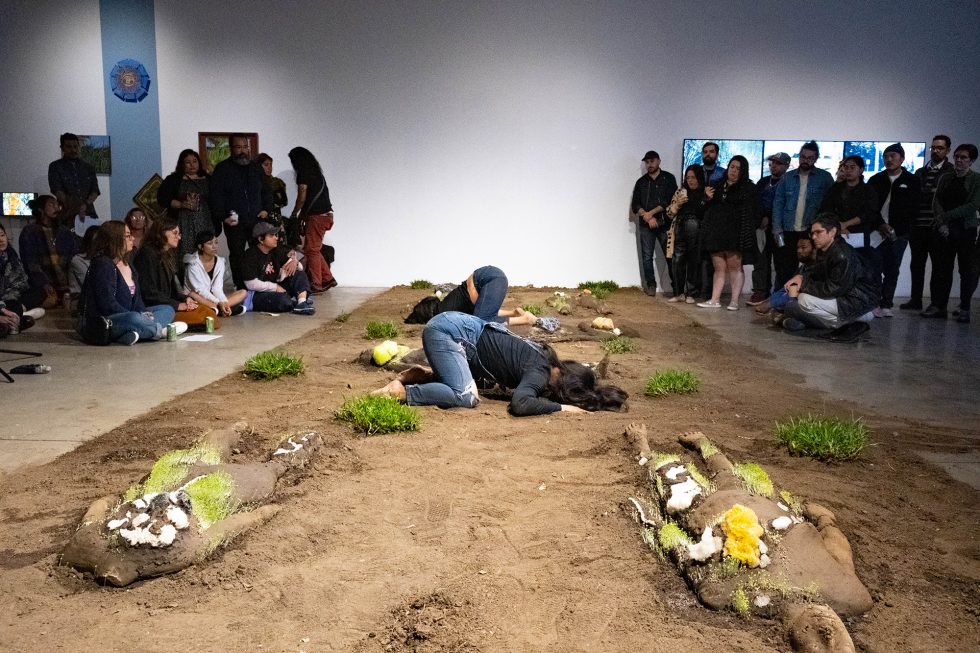
attending to the wound: a wake, a waiting, a witnessing is a performance activating a collaborative installation of Hieroglyphs of metaphysical lacerations, drawing from previous works A Poetic of Living 2019 by LaRissa Rogers and Sueños Fértilez 2,018 by artist Jackie Amézquita. Using Black Care by Calvin Warren as a point of departure, the performance starts at sunset and works through grief, solidarity, and weight transfer. The performance addresses the five stages of grief: denial, anger, bargaining, depression, and acceptance.
The artist Andy Goldsworthy in “Leaning Into the Wind.” Credit:Thomas Riedelscheimer/Magnolia Pictures
Andy Goldsworthy is an international based artist born in England. His art process is known for integrating and creating with the natural environment. Working as both sculptor and photographer, Goldsworthy crafts his installations out of rocks, ice, leaves, or branches, cognizant that the landscape will change, then carefully documents the ephemeral collaborations with nature through photography.
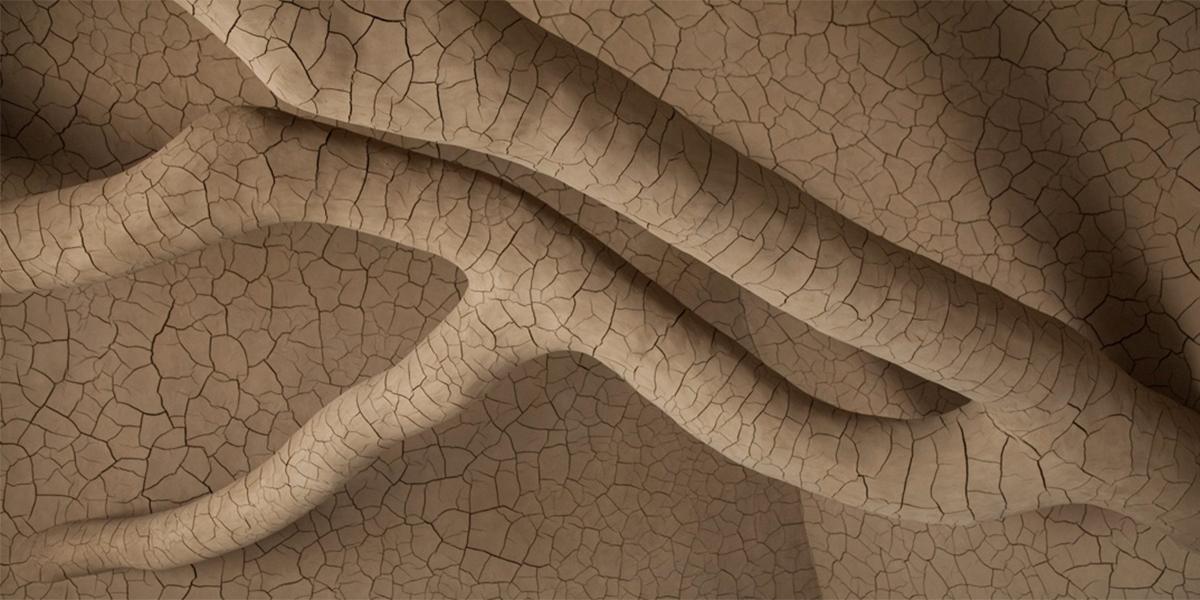
Goldsworthy has numerous art installation and creations. However, his art installation, Earth Wall, utilizes rammed earth and eucalyptus branches to illustrate simulated layers of earthen materials as an art form and not as a structural material.
Andy Goldsworthy, Earth Wall, 2014, Photograph by The Chronicle’s Sam Whiting.
In order to construct this installation Goldsworthy and his team collected curved eucalyptus branches from San Francisco’s Presidio. Then they installed a sphere of branches onto a wall before the formwork for the rammed earth wall is installed.
After which, a shutter formwork was constructed in front of the wall. Then locally sourced Presidio earth mixed is poured into the forms, and ramming begins. Rammers carefully compact earth around the twisted ball of Eucalyptus branches. Once poured, the formwork is removed revealing a freshly packed rammed earth wall and the center point of the ball of gnarled eucalyptus branches.
Once hardened, Goldsworthy excavates the rammed earth from around the gnarled eucalyptus wood.
For a more detailed visualization view this video.
Andy Goldsworthy continues exploring the relationship between art and the natural environment. His ability to become attuned to his environment mentally, physically, and emotionally, creates a unique perspective of the human and natural world.
“We often forget that WE ARE NATURE. Nature is not something separate from us. So when we say that we have lost our connection to nature, we’ve lost our connection to ourselves.”
– Andy Goldsworthy
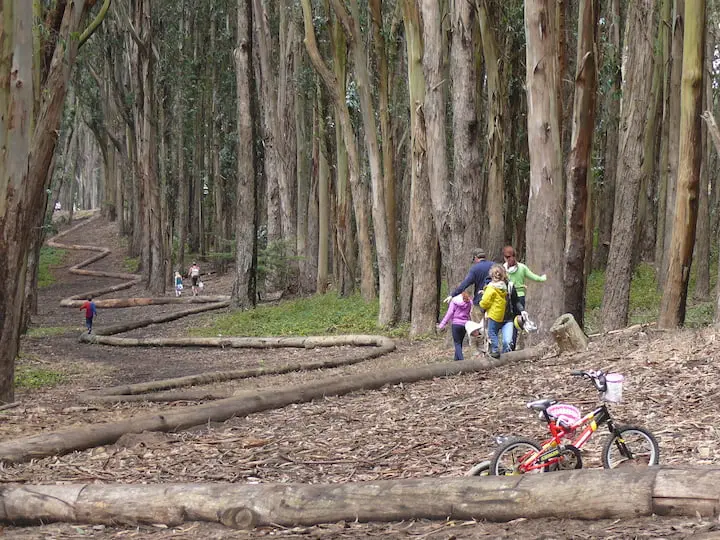
Andy Goldsworthy, “Wood Line“, 2011, Photograph by Brian Vahey.
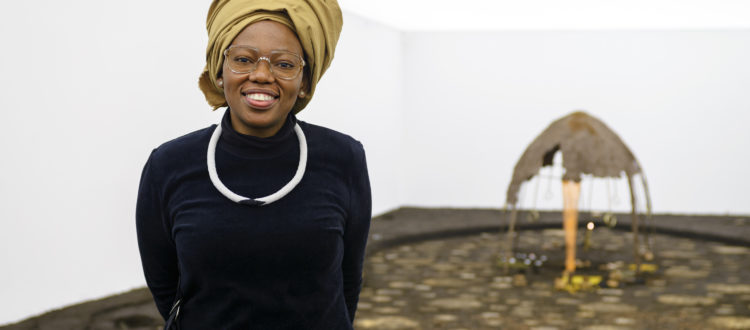
Dineo Seshee Bopape Portrait. Photo Curtesy of “Senator Recommends”
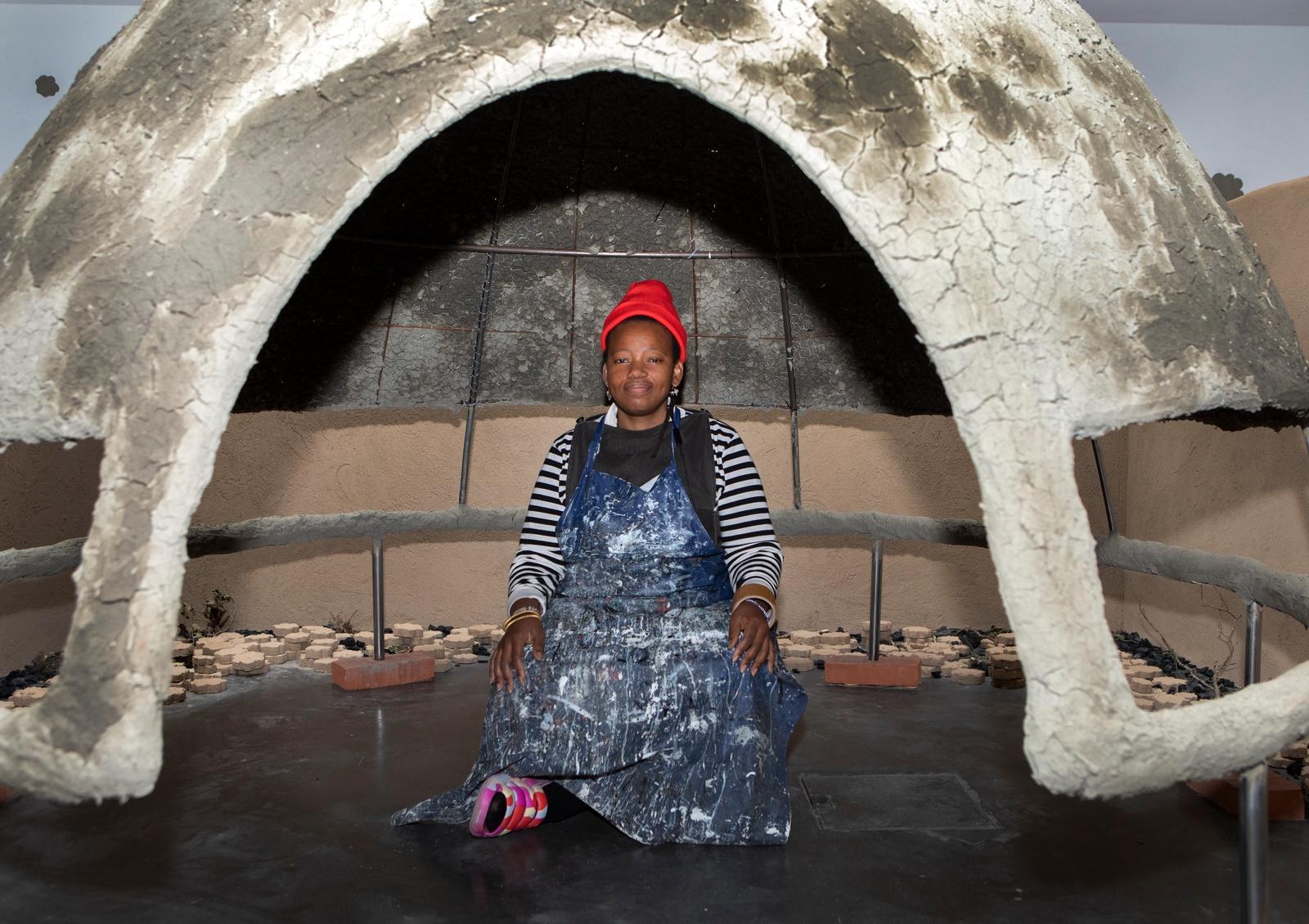
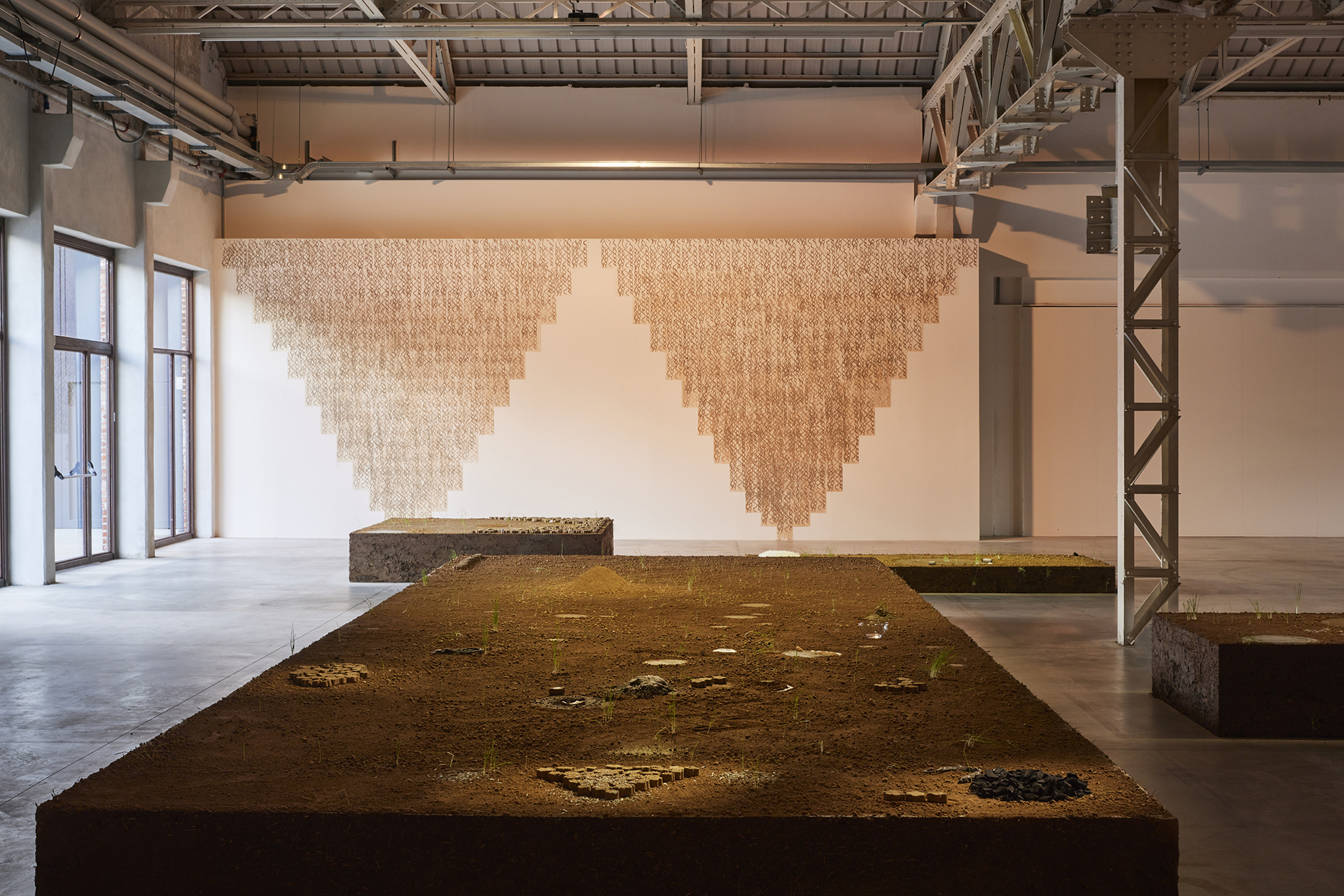
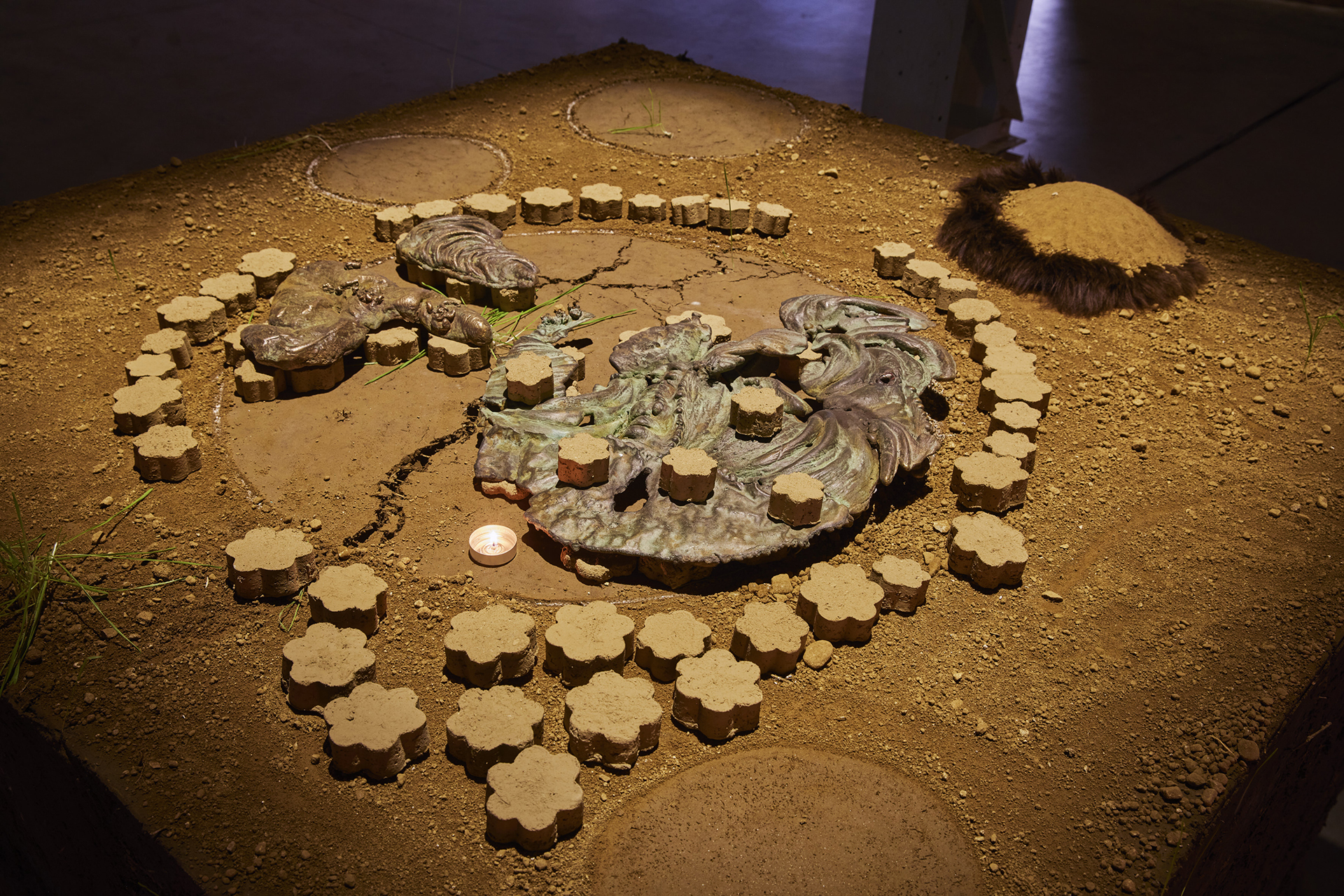
Dineo Seshee Bopape is a South African contemporary artist known for her multimedia installations, video art, sculptures, and performances, in which she incorporates organic materials like soil (EARTH), coal, ash, and clay. Her environmental installations delve into themes of memory, identity, and belonging, pushing visitors to experience soil in a completely different way.
Bopape’s art draws heavily on African cosmologies, oral histories, and indigenous knowledge systems, addressing the complexities of belonging and displacement. Born in Polokwane, South Africa, the artist takes from her own experience and weaves narratives that investigate archetypes and myths in which the female figure plays a central role.
Her practice reflects on the body, emotions, trauma, and the unseen or spiritual dimensions of life. Her installations evoke layered meanings and leave room for ambiguity. Viewers must therefore engage with both material and metaphor.
This exposition asks the question: What Memories are preserved in Stones, Water, and Earth?
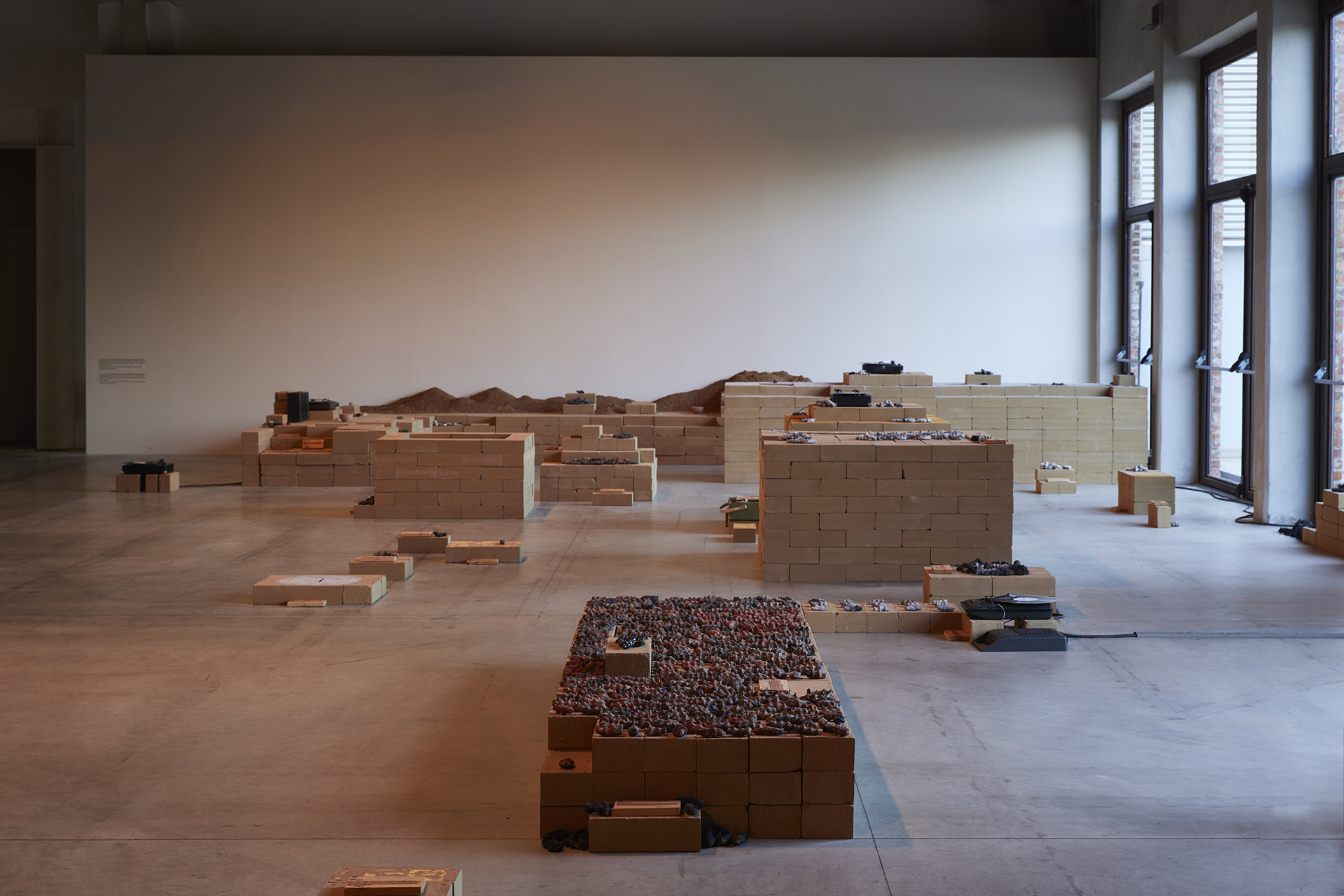
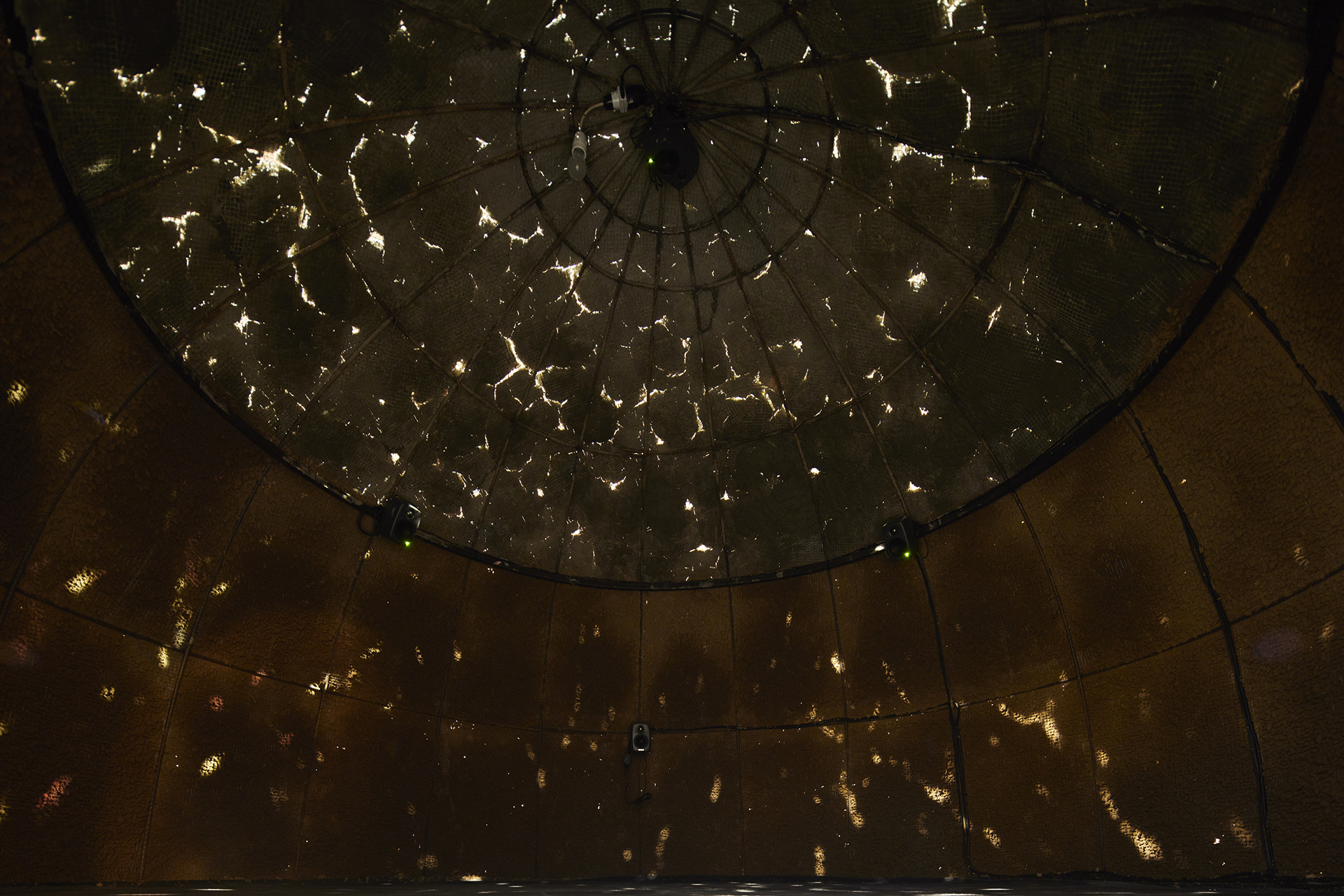
Here, historical and geographical references are brought together, to reflect on the memory, and more specifically the transmission of memory through natural elements like water and earth, and the use of sounds and words as healing. The installation draws on the symbolic use of earth, organic elements, and rituals, alluding to ancestral connections, healing practices, and African cosmologies. “Moswara’marapo” translates from Sesotho to “the smell of bones,” which adds a layer of meaning to the work, suggesting ideas of mortality, memory embedded in the earth, and the cycles of life and death.
“Born in the first light of the morning [moswara’marapo]” is just one example of the ways Dineo Seshee Bopape translates memory, spirituality, and materiality into powerful artistic experiences. But her work extends far beyond this single installation. From “Untitled (Of Occult Instability) [Feelings]” to “More/Moreana,” Bopape’s art challenges us to engage deeply with themes of identity, healing, and historical trauma.
Her use of natural elements like soil, water, and ash does more than reflect the material world—it urges us to question our relationship with these elements. Her work invites us to consider how land and memory are intertwined and how ancestral knowledge persists within the earth and within us. Through her installations, Bopape reminds us that nature is not just a backdrop to human experience but a living archive that holds our histories, traumas, and hopes for transformation.
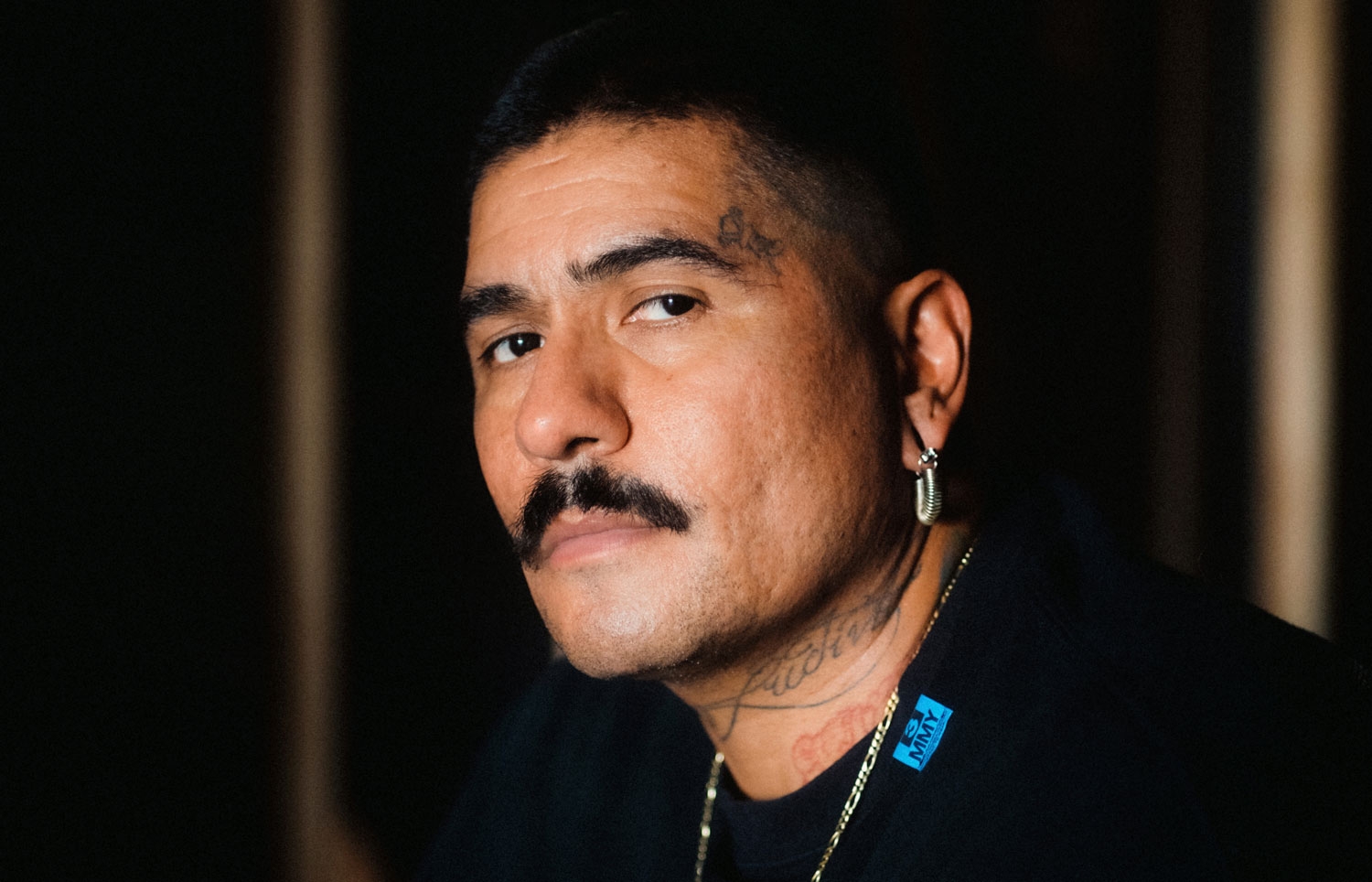
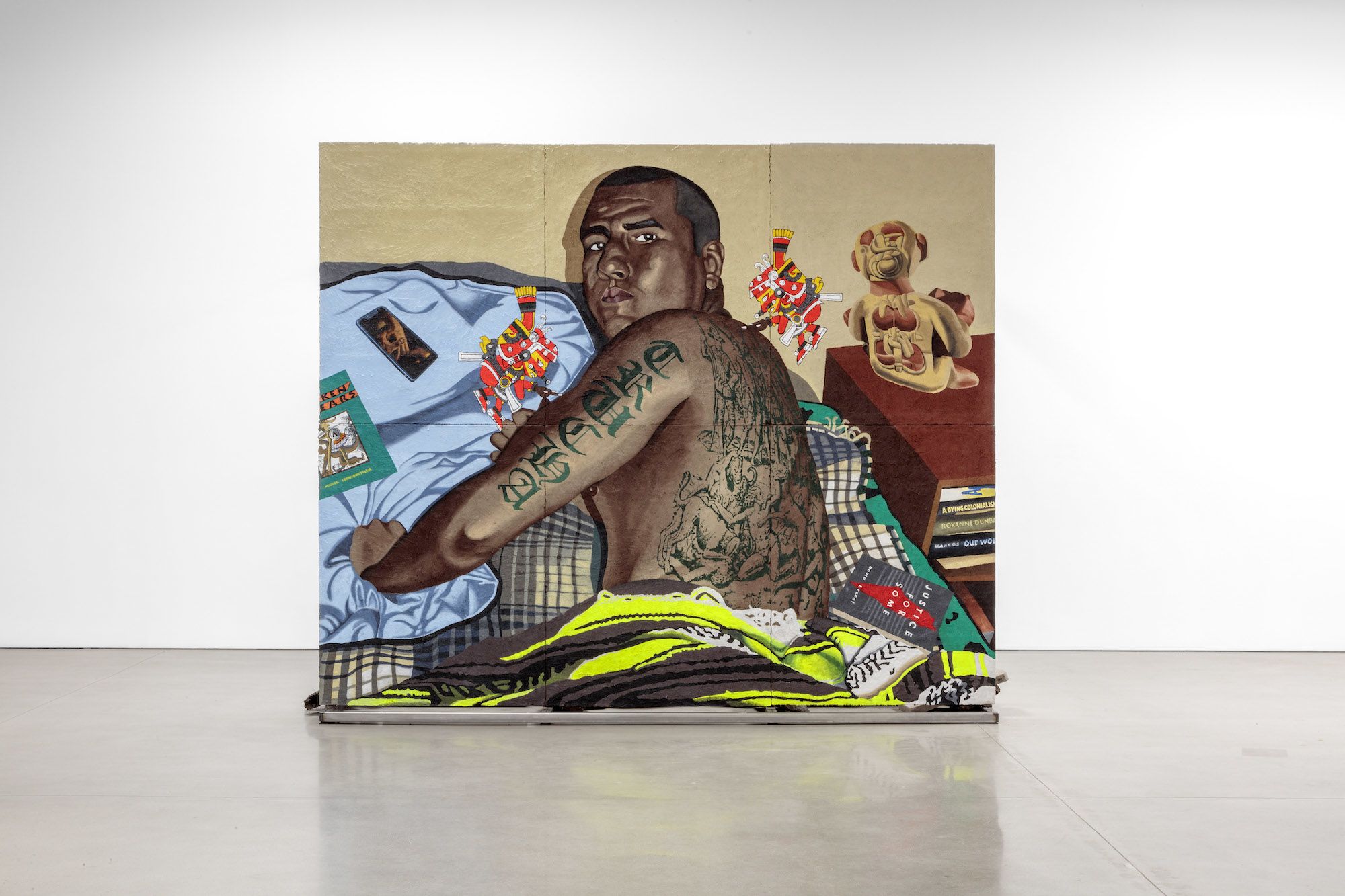
Rafa Esparza is a Los Angeles-based multidisciplinary artist, known for exploring the intersections of history, identity, and place through his work. Born and raised in East L.A., Esparza draws inspiration from his Mexican-American culture. His installations, performances, and sculptures delve into themes of colonization, queer identity, and environmental concerns, critiquing ideologies, power structures and binaries. Esparza frequently collaborates with other artists and his community, including his family members.
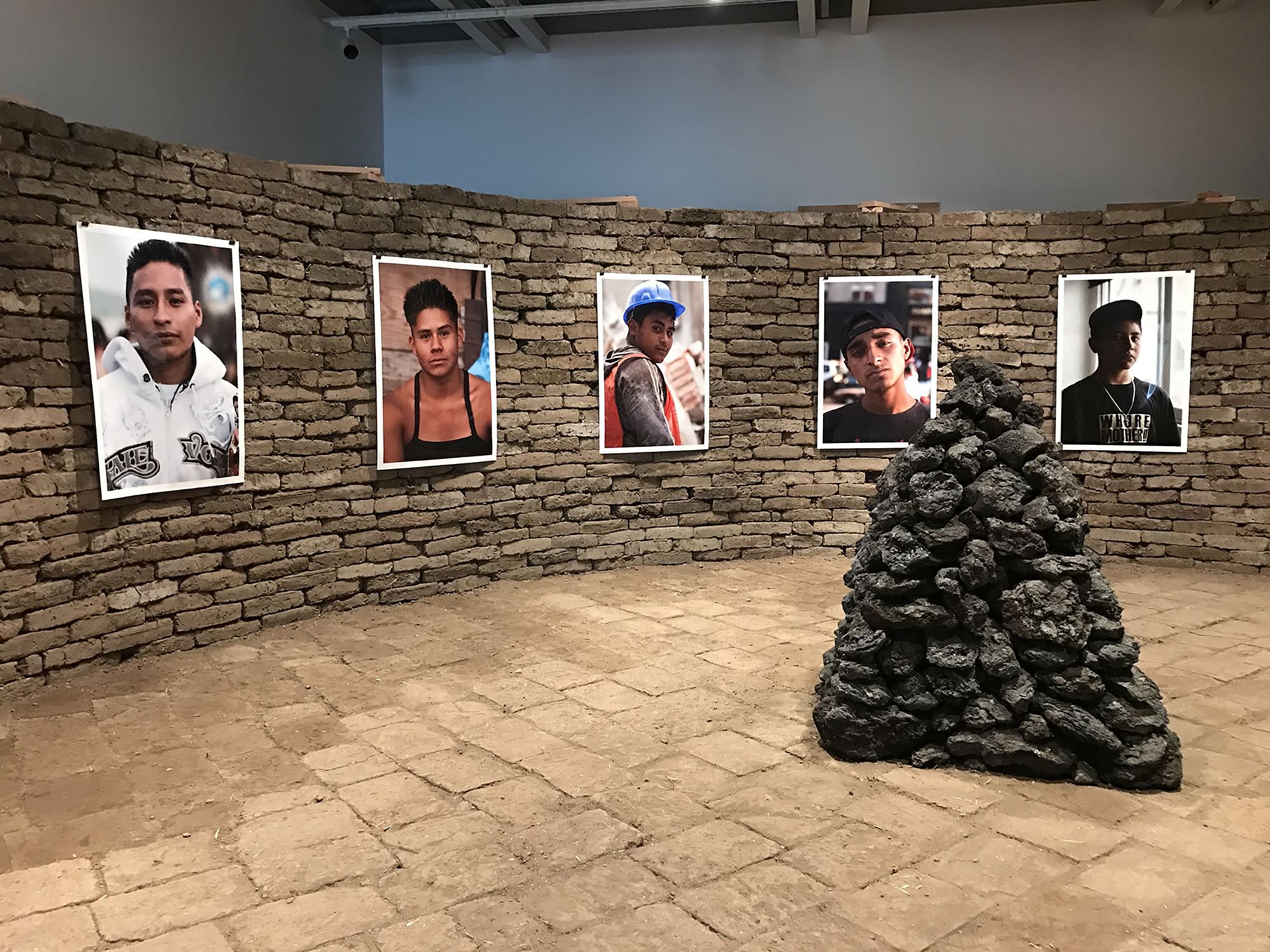
At the Edge of the Sun (2024), Jeffrey Deitch, Los Angeles
His most prominent works consists of building adobe structures in unconventional spaces, such as the Los Angeles River and art galleries. This in reference to both his familial roots and indigenous building traditions they also emphasize the labor and traditional skills involved.
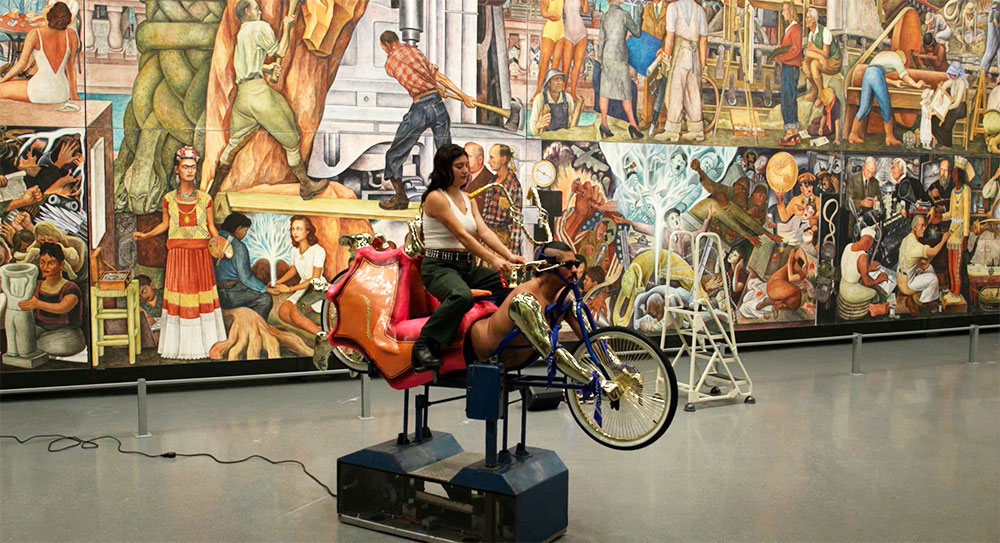
Corpo RanfLA: Terra Cruiser 4everz (2023), SFMOMA
“I just knew that adobe had a special place in his own personal history, and I thought it could be a good way to start having conversations about some guidance that I needed at the time as a young person coming into adulthood. What it did, in fact, was allow us to share space without being at each other’s necks, while he passed down this way of working with land”
Rafa Esparza, on mending his relationship with his father through earth
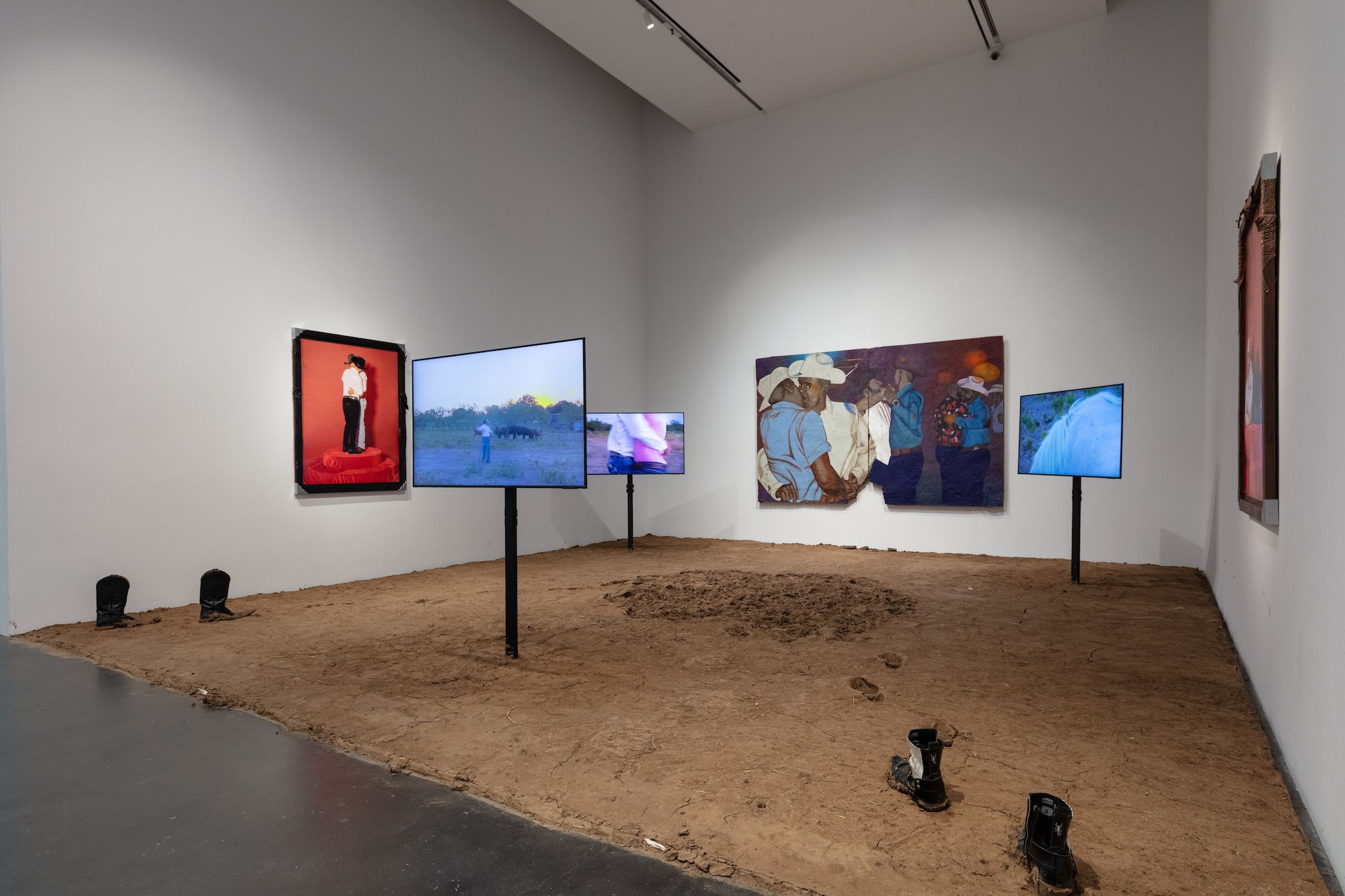
Cowboy (2023), Museum of Contemporary Art, Denver
Esparza challenges institutional frameworks and addresses socio-political issues (e.g. immigration, race, and marginalization). His work, at its core, is about storytelling and resistance, using art as a platform to engage with broader discussions on identity and systemic injustice.
In Whitney’s 2017 Biennial, in New York City, Rafa Esparza’s Figure/Ground: Beyond the White Field, created an immersive microclimate. What was once, a white cubed gallery is covered in what Esparza calls “brown matter,” adobes; a mixture of hay, clay, horse dung, and water from the LA River, baked under California sun, and transported across U.S. coast’s. By invitation fellow queer artists to become adoberos, and helped to collectively created nearly five thousand adobes for the installation.
Whitney Biennial (2017), Whitney Museum of American Art, New York
“Brown matter” or adobe is used not only in reference to skin color, but also a broad range of conversations on race, nationality, ethnicity, and gender and the intersections therein. Most especially, concerns surrounding the 2016 U.S. Presidential election of Trump.
To complete the installation, five other artists were invited to exhibit their mixed-media artwork within the adobe rotunda. The adobe rotunda plays is both an artwork itself and a space for exhibiting the work of others (figure and ground).
building: a simulacrum of power (2014), Bowtie Project, Los Angeles
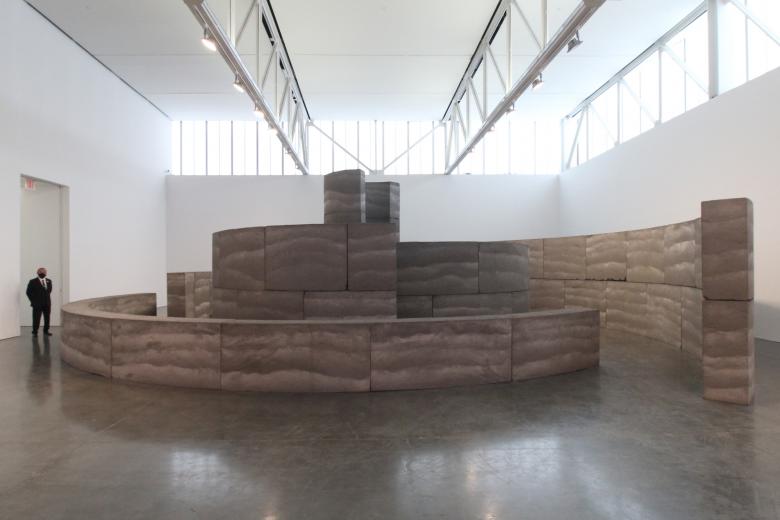
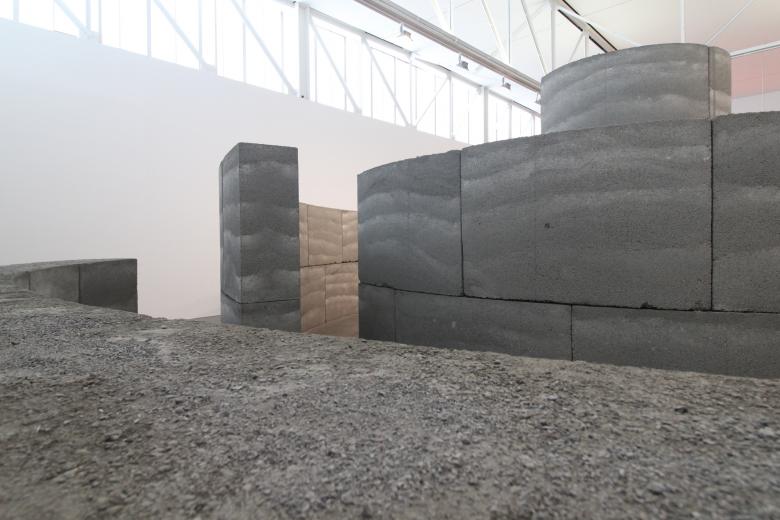
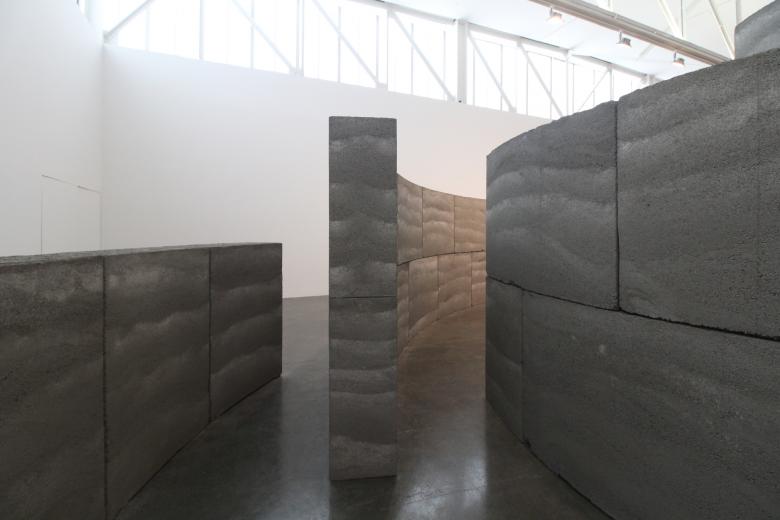
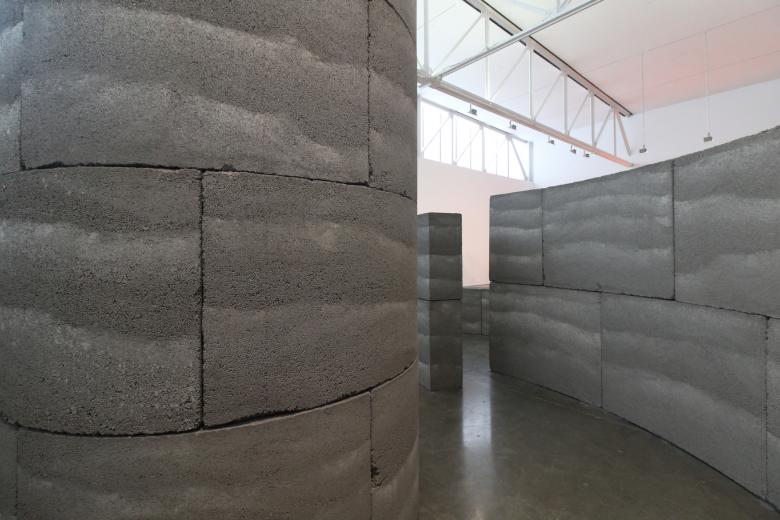
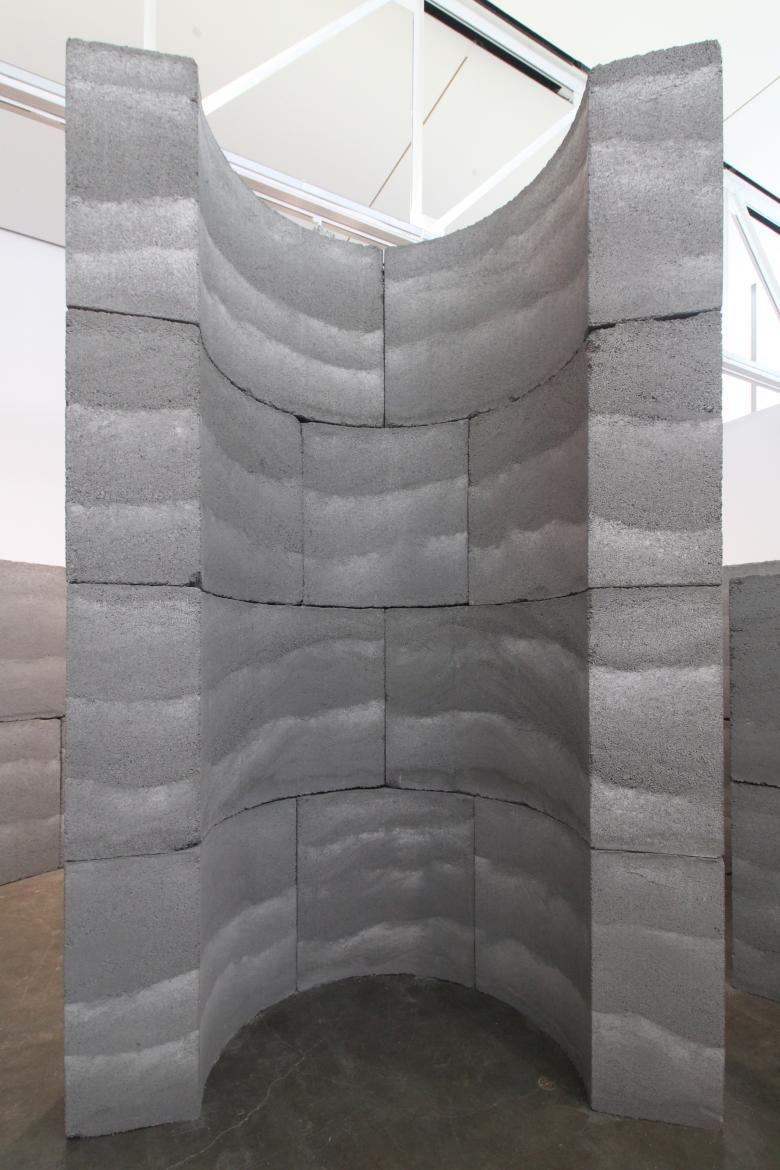
‘Asaase’ takes the form of a labyrinthine, walls made from stacked blocks increasing in height toward a “conical vertex” in the center. The British architect’s first large sculpture was one piece to Social Works, a group exhibition of a dozen Black artists, curated by Antwaun Sargent, to engage with social space “as a community-building tool.”
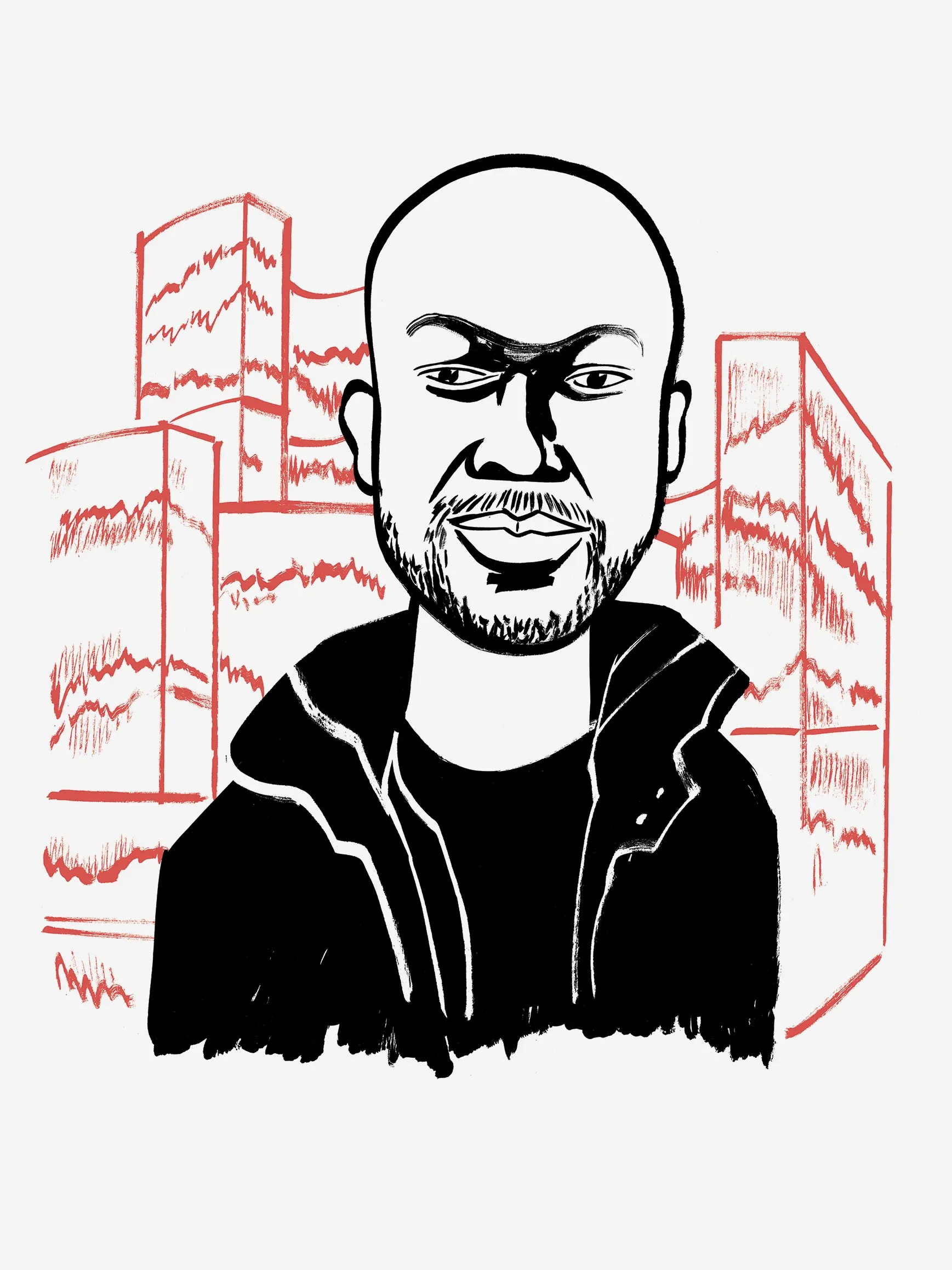
João Fazenda
“It’s this idea of construction that works across many modes of sensory perceptions….it’s designed to create moments where the audience is just in – between earth. This is something people have forgotten how to do.”
Constructing the rammed earth blocks began with a combination of crushed limestone and schist from New York, with the tops of the shorter walls at the perimeter revealing some of the loose aggregate from the process.
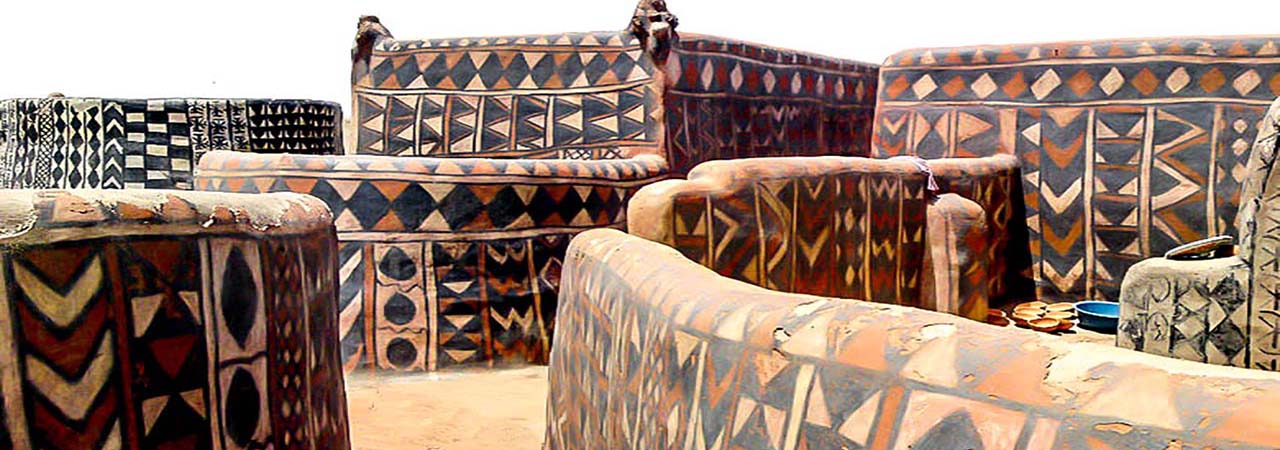
Tiébélé Royal Complex, Burkina Faso
The ‘Asaase’ project incorporates a sense of collective memory and aims to evoke a deeper connection with the land, specifically traditional black architecture and historical identities. References to historic works of West African architecture such as the Tiébélé royal complex in Burkina Faso and the walled city of Agadez in Niger, can be seen in the sculpture’s maze form.
The project reflects on the unique essence of a place, drawing connections between the present and the past by examining Black communal spaces across the African continent. It delves into how these spaces served as central hubs for families and communities to gather.
The curved walls invite visitors to explore the spaces between the gallery walls and the piece before entering the spaces inside. These overlapping walls mean there are numerous ways to encounter and move through the installation.
‘Asaase’ contemplates the idea of fragments—both in terms of physical spaces and the buildings constructed from the earth—that provided the backdrop to everyday life for Black individuals, symbolizing a connection to heritage and history. What Adjaye describes as “fragments of chambers,” can be demonstrated the most by the niche at the center of the maze.
Lehm Ton Erde is the website of the renowned Austrian clay artist and rammed earth builder, Martin Rauch, who is responsible for the construction of projects such as the Chapel of Reconciliation in Berlin, Germany.
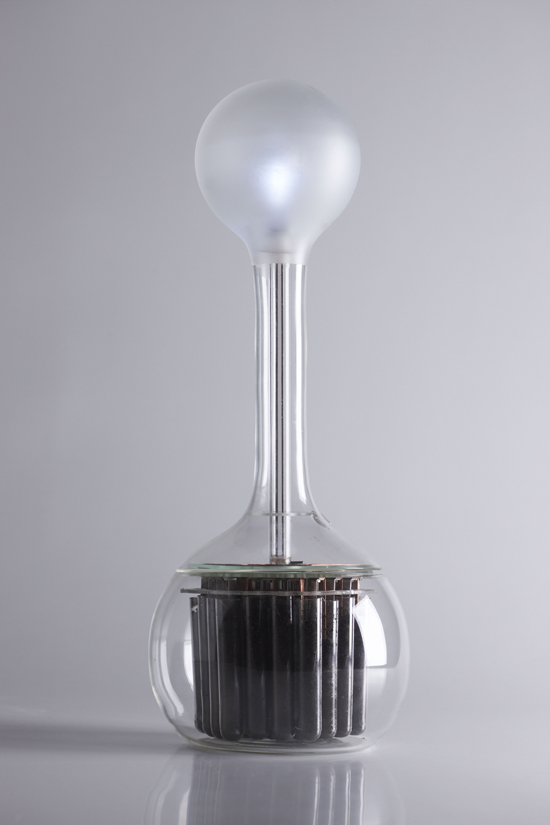
We previously reported on the Mud Clock that runs off electricity generated by soil. The Soil Lamp, designed by Design Academy Eindhoven student Marieke Staps and recently exhibited during Milan Design Week 2008, is another electricity-producing soil innovation whereby the metallic strips of zinc and the minerals and organisms in damp soil chemically react with one another to initiate a constant electrical current that lights up an LED. Perhaps an entire earthen house can run all the appliances within using this technology.
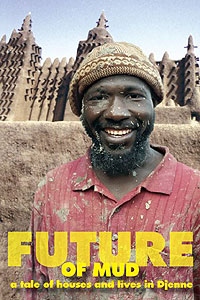
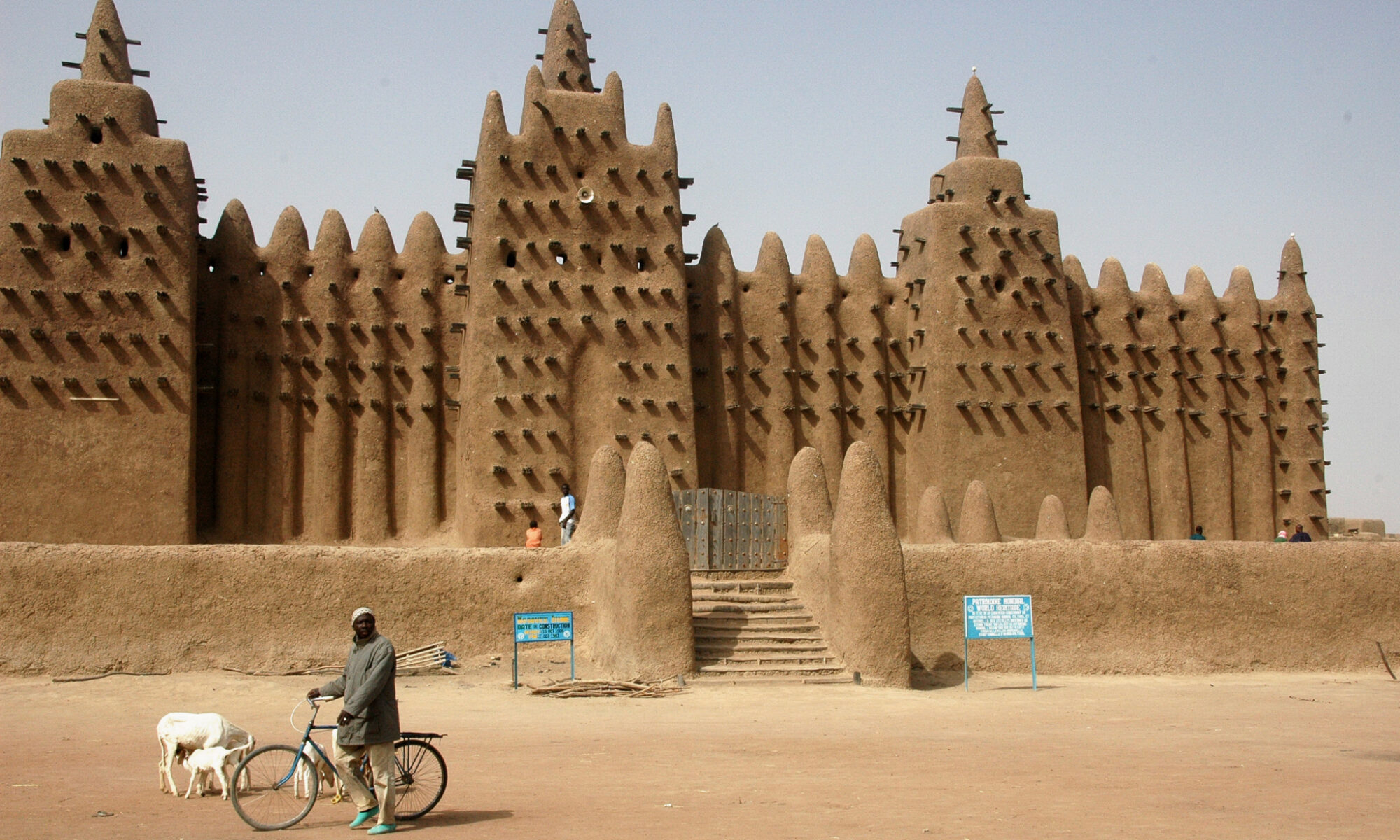
The Future of Mud: A Tale of Houses and Lives in Djenne, a new film by Susan Vogel and presented by the Musée National du Mali, is the story of Komusa, master mason and heir to the secrets of Djenne architecture. He hopes his son will continue the family profession and maintain their world heritage city – but Djenne is connected to a global world now, and competing ideas about the future have arrived. Documentary footage and staged scenes tell an intimate story of family tensions, contemporary building practices, and the precarious future of the renowned mud architecture of Mali.
Treehugger writes of the film:
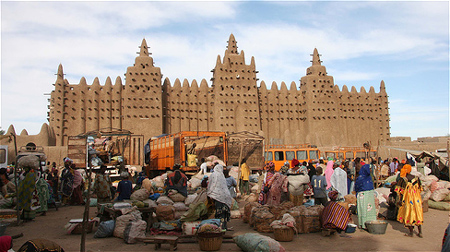
A “collective connection to earthen architecture is best seen in the film’s footage of the annual re-plastering of the town’s pride, the Great Mosque, which is the world’s largest earth building, in addition to being a distinguished UNESCO World Heritage site. The first earthen structure here on this site dates back to the 13th century and is re-plastered every year. The day-long, annual festival is truly a communal affair, with plenty of foreign tourists gawking on and filming the orderly chaos.”
The Future of Mud: A Tale of Houses and Lives in Djenne
Co-Produced with Trevor Marchand and Samuel Sidibé.
Edited by Harry Kafka. Music by Issa Bagayogo. In Bamana, French, English with English subtitles. Color, 58 minutes. Distributed by FRIF.com. Available fall 2007.

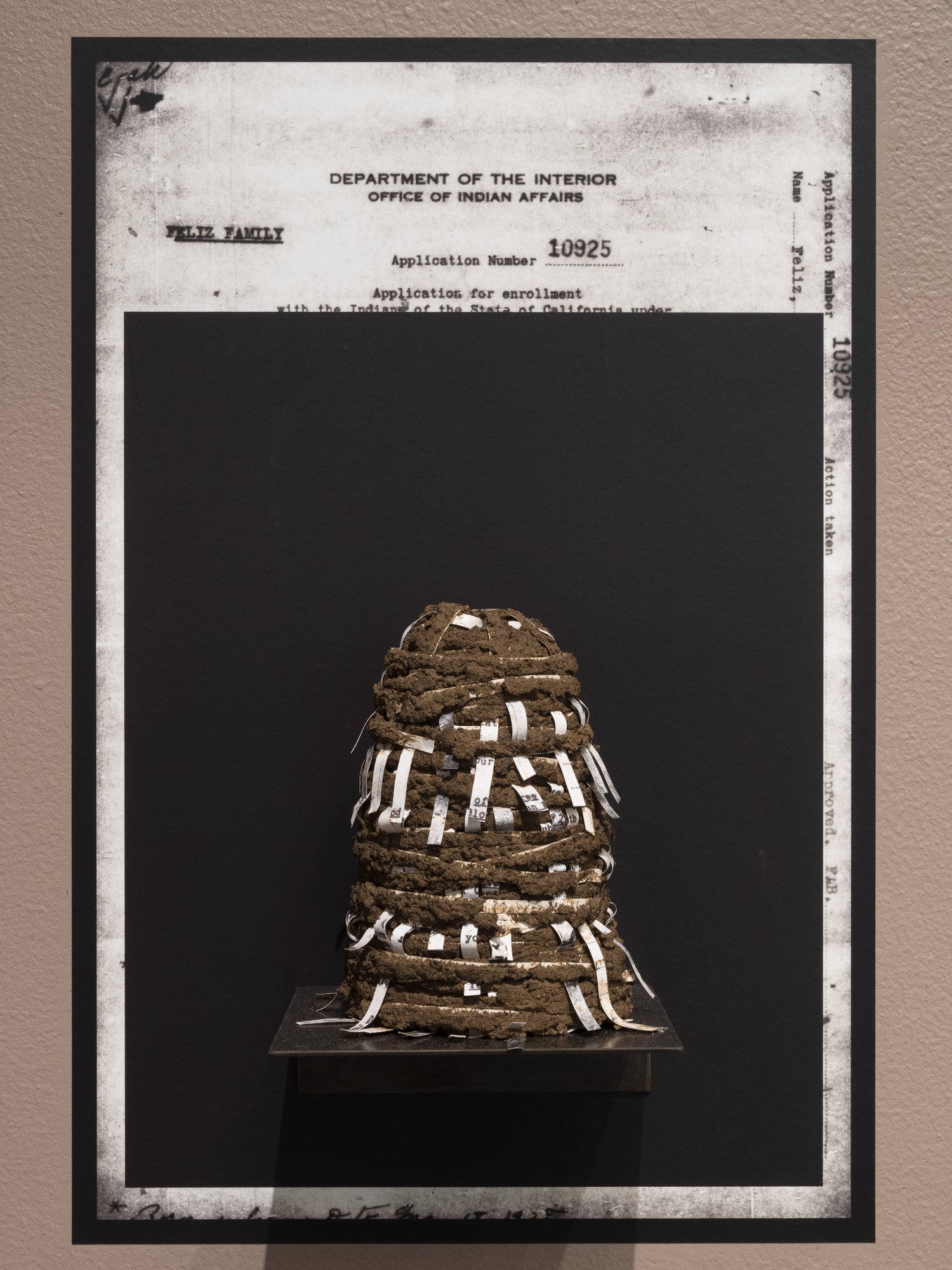
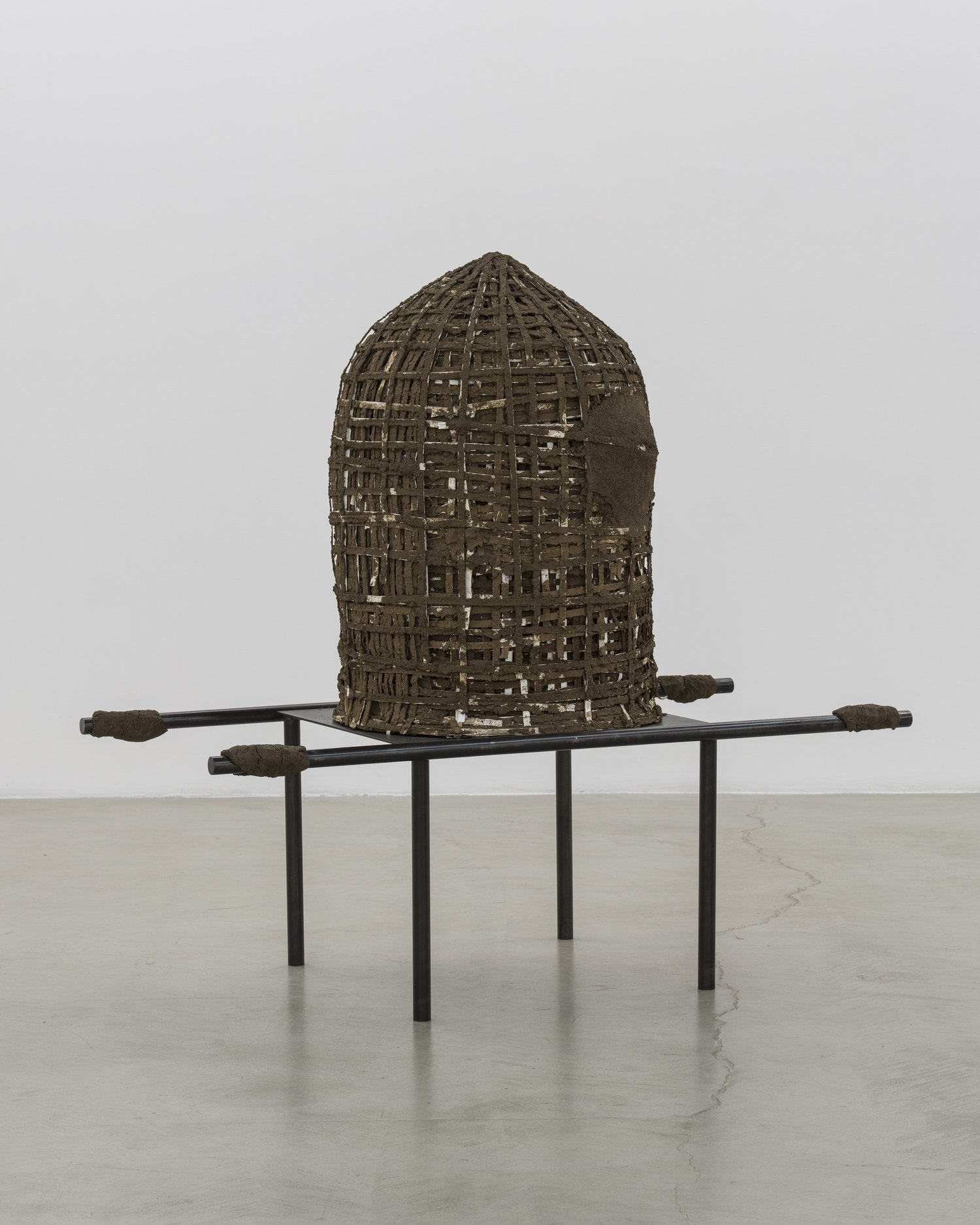
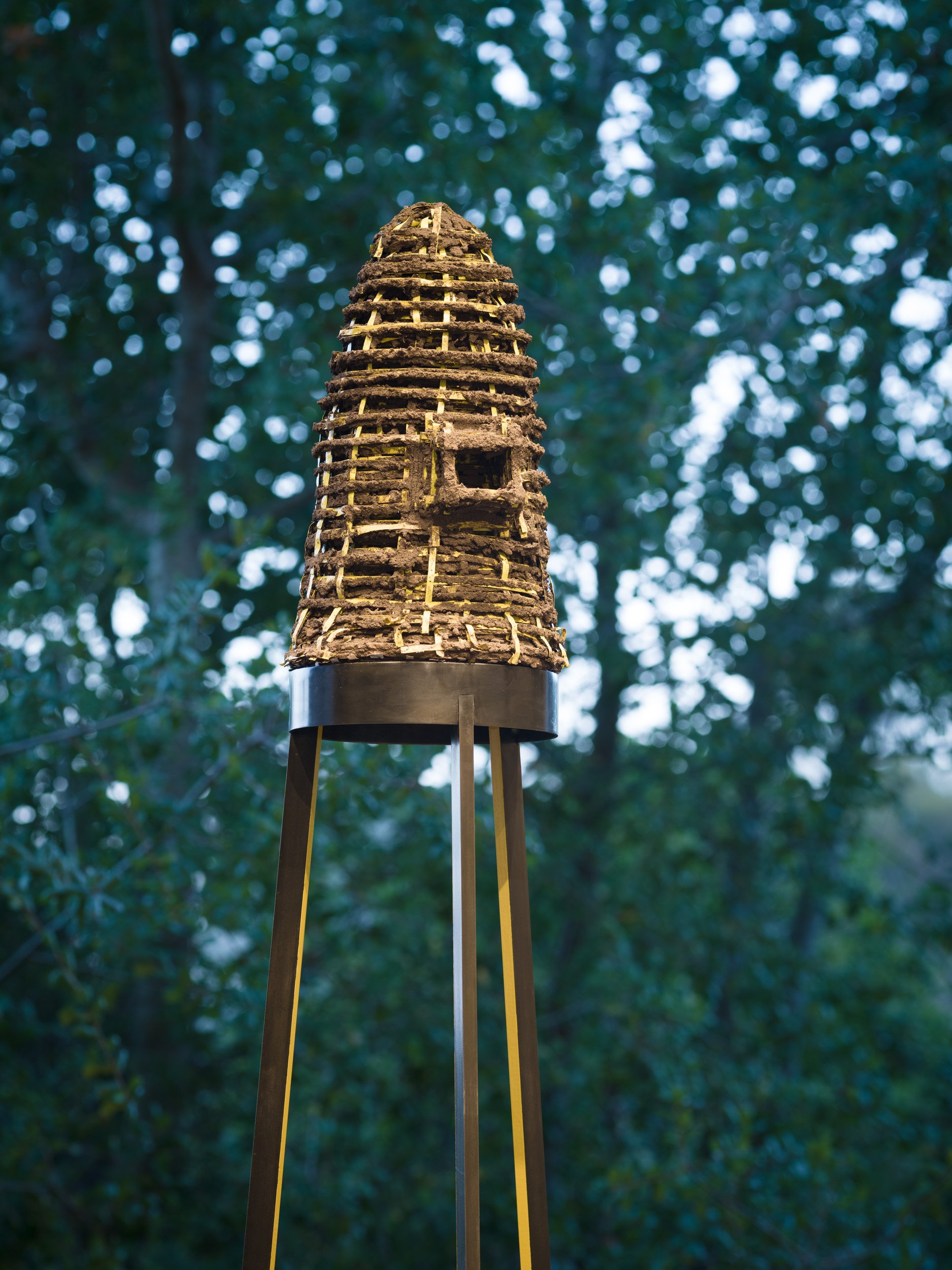 Surveillance Mound, 2021, adobe mud, tape, steel, wood, wire, paint, 89.5H X 19W X 19D inches.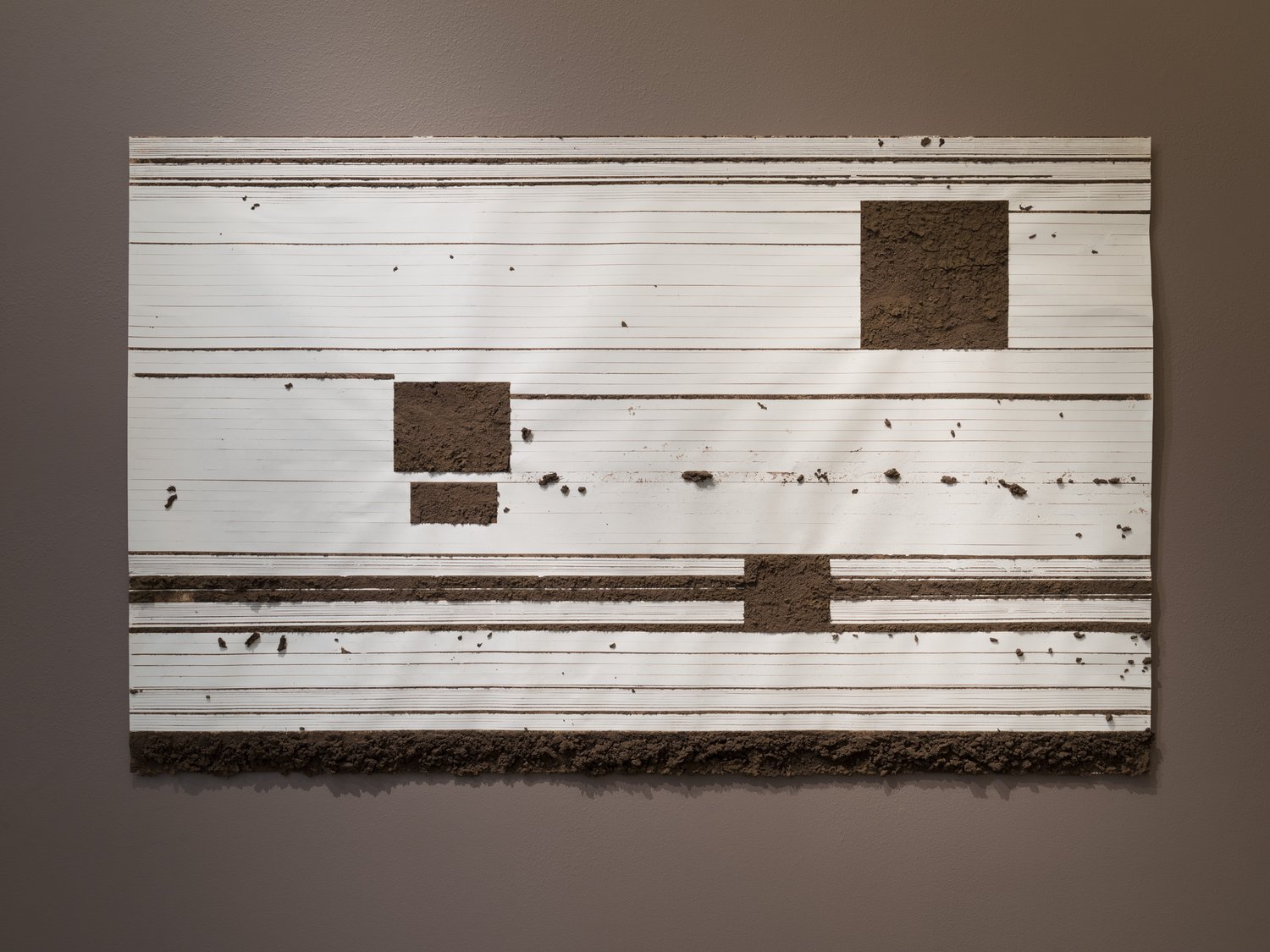
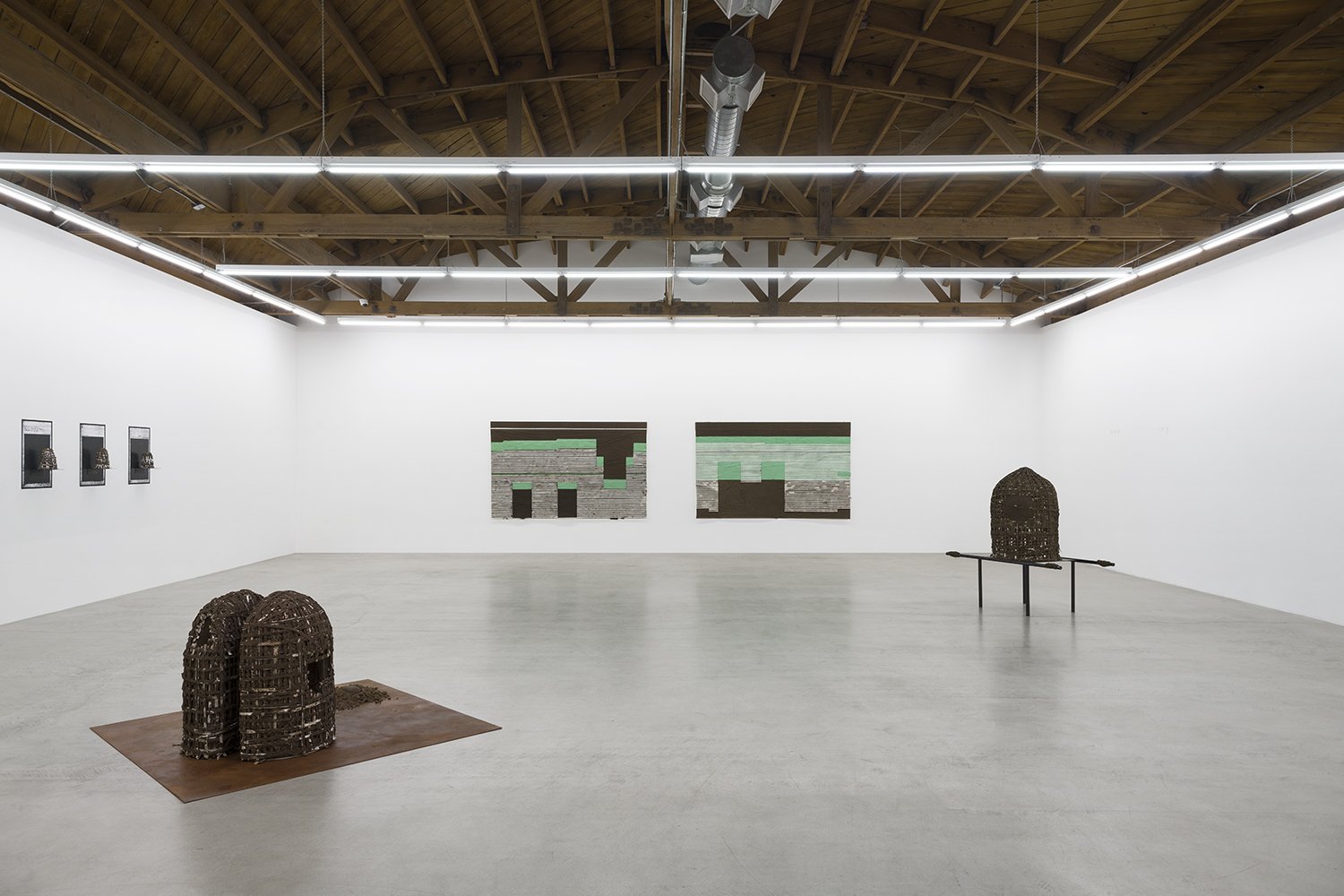 Installation view, the green shoot that cracks the rock, parrasch heijnen gallery, LA, 2022.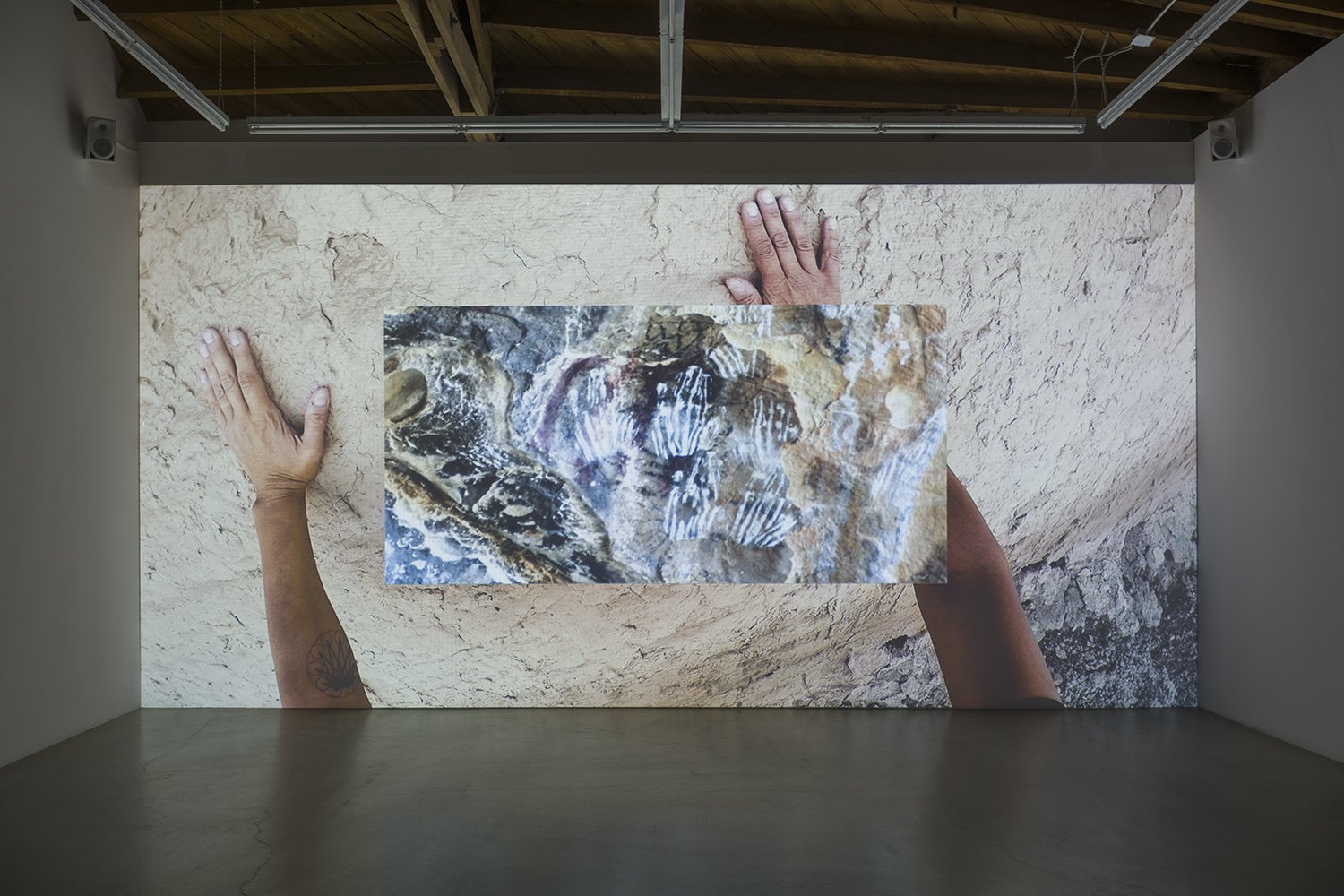
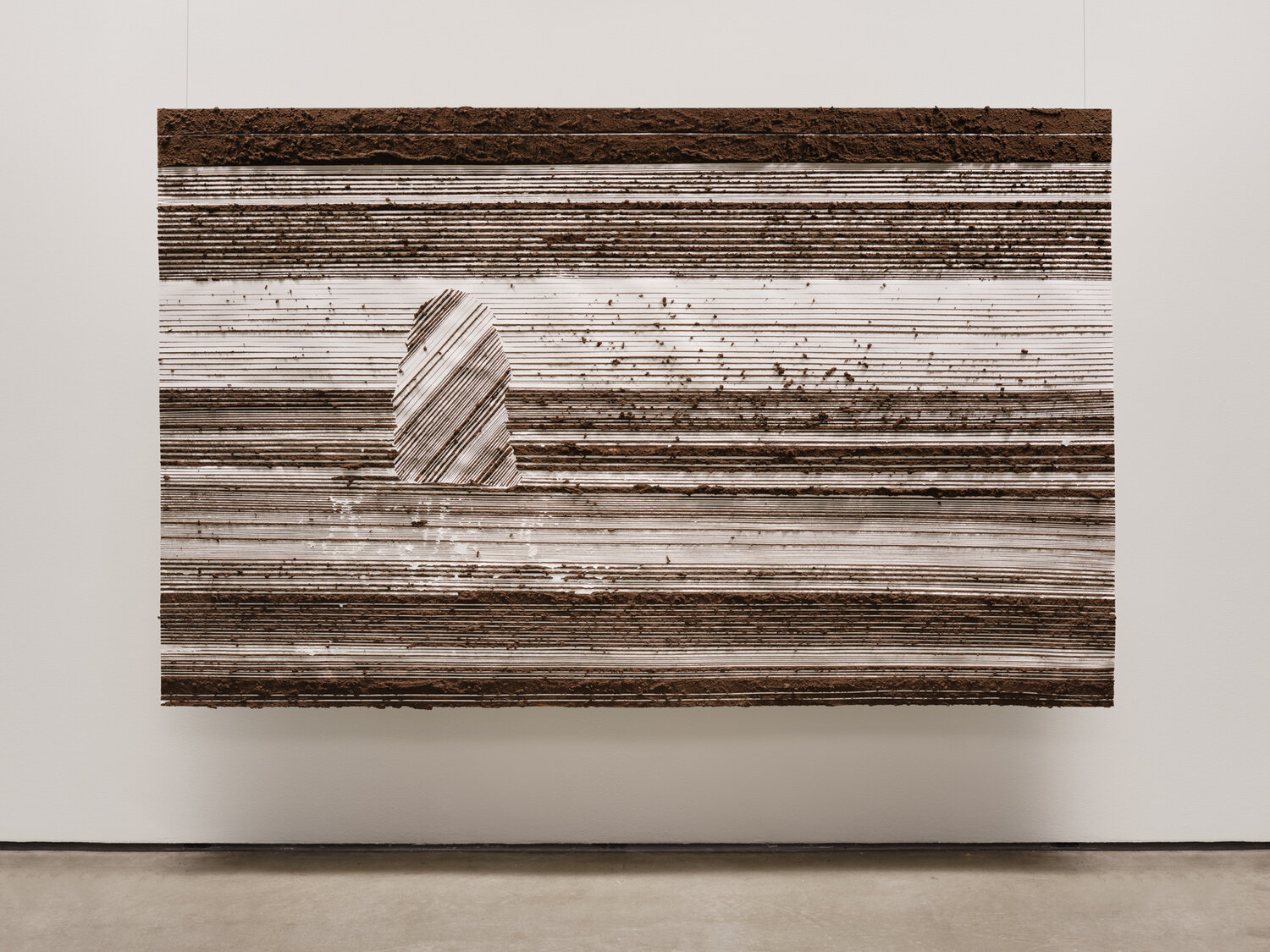
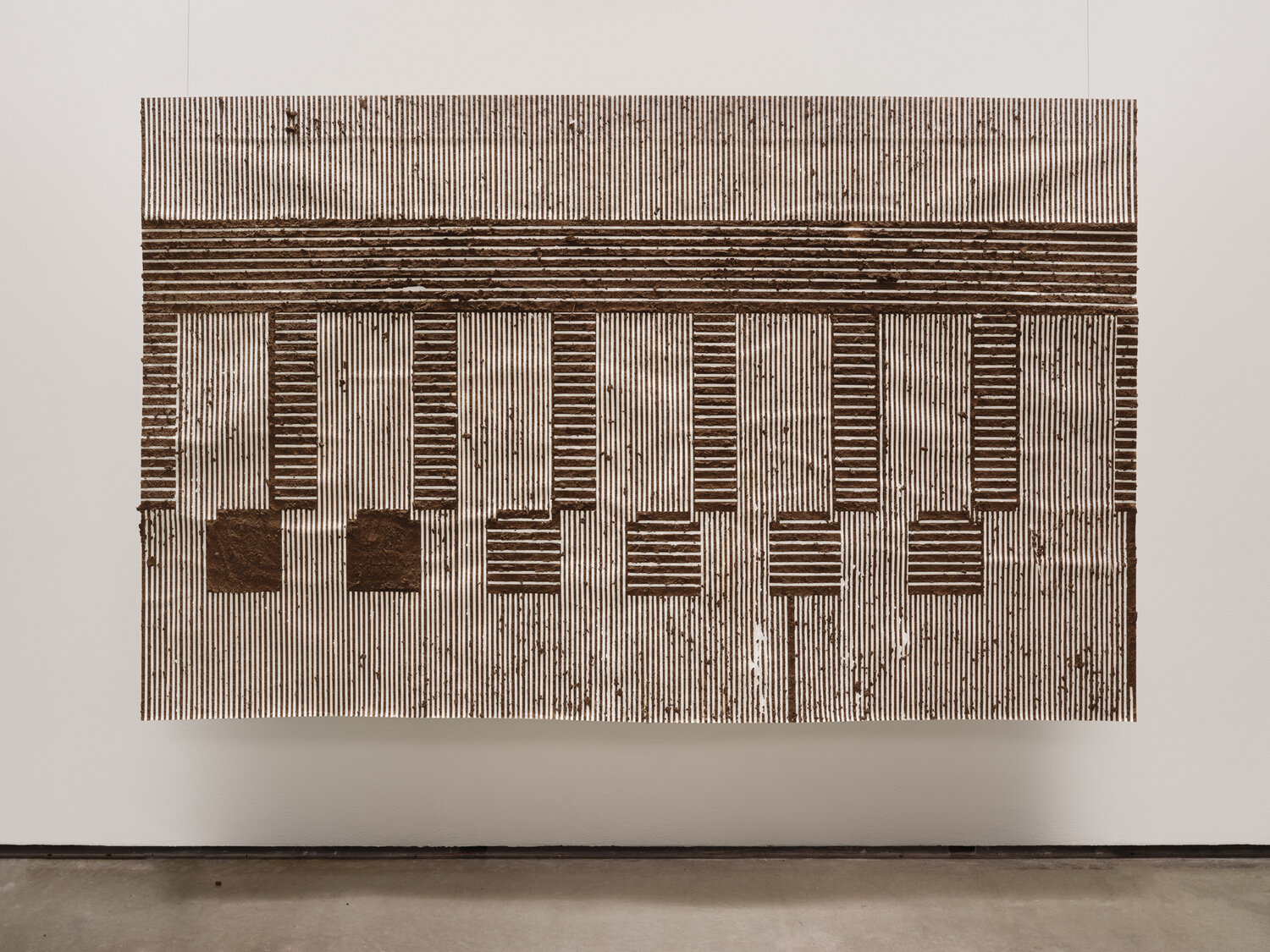





 Andy Goldsworthy, Earth Wall, 2014, Photograph by The Chronicle’s Sam Whiting.