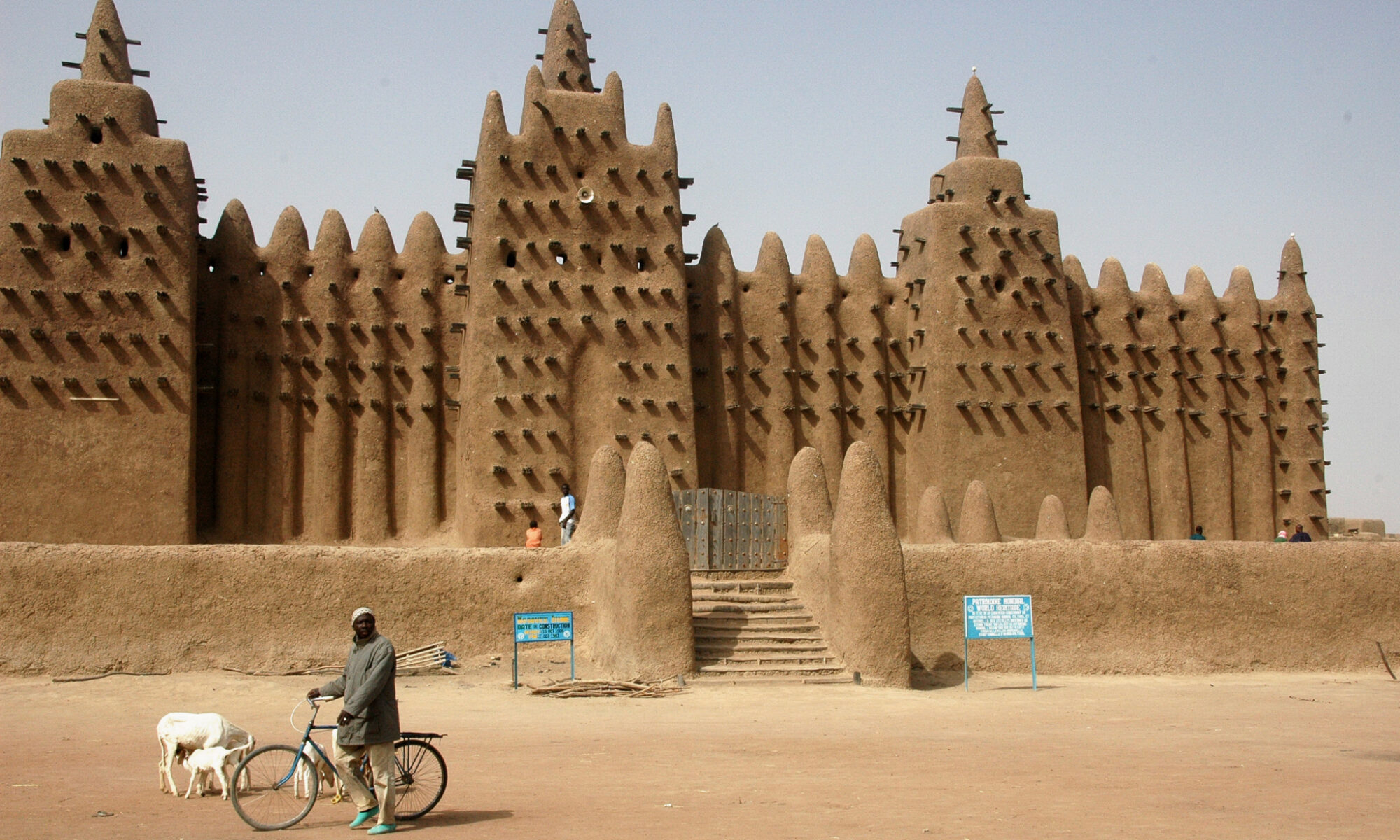
The use of unburnt mud bricks commonly known as ‘rukarakara’ in the construction of houses is to be banned, the Minister of Infrastructure, Stanislas Kamanzi, has said. The Minister made the disclosure Wednesday 18, while responding to queries raised by legislators about the new plan to develop Kigali City.
Mud Mosques of Mali
Belgian photograper Sebastian Schutyser spent nearly four years photographing the mud mosques of Mali. A collection of 200 such black & white photographs is now online at ArchNet. More at BLDGBLOG. Schutyser’s images have been collected in a book, co-written with Dorothee Gruner and Jean Dethier, entitled Banco: Adobe Mosques of the Inner Niger Delta.
Virtual Mud
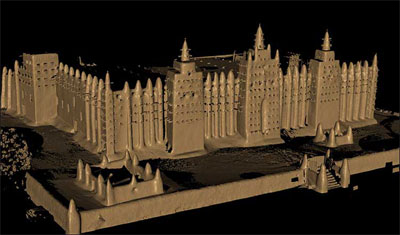
Heinz Ruther, professor of Geomatics at the University of Cape Town, has embarked on a project aimed both at preserving the sites, and also at making them accessible – in virtual form – to people across the continent who may not have the means to get there themselves. BBC | Africast [via]
Ecole de Tentou
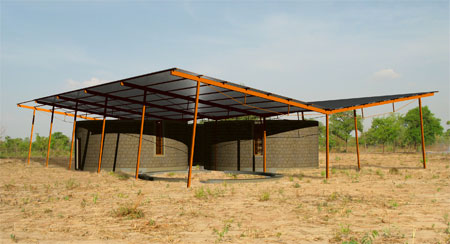
Ronald Rael, an architecture professor at the School of Architecture at Clemson University is working with the Utah based organization, Daily Dose foundation, former NBA player Soumaila Samake and villagers from Tentou, Mali, West Africa to design and build a school for the village’s 400 children using local construction techniques. Download press release (2.2mb .pdf)
West African Architecture
They are west Africa’s most exciting, ambitious buildings. Some of them have lasted 700 years, and they’re made of dirt.
The Wildlife Works EcoFactory
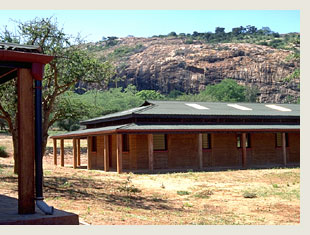
The Wildlife Works EcoFactory employs a team of eleven women sewing machine operators from the local community that were taught the skill of using modern electric sewing machines to produce Wildlife Works’ tees. To build the EcoFactory’s two buildings, we employed 150 local people for two years using Rammed Earth, and our construction team learned the skill of building thick, rammed-earth walls that keep the temperature constant and cool inside, no matter how hot it gets outside. The beauty of this eco-friendly solution is that it uses mostly soil from the site. [ Via African Architecture ]
Images From Ghana
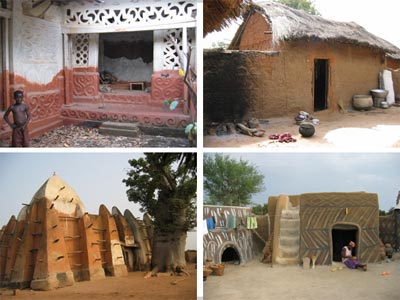
These images of Ghanaian Earth Architecture are by Keith Zawistowski and Marie Richard. The image in the upper left is a shrine house in the Ashanti Region, near Kumasi. It is made from earth on a bamboo frame, detailed with cut reeds and plastered with cow dung. The others are of various typologies from the northern region. View larger image
Earthen Refrigeration
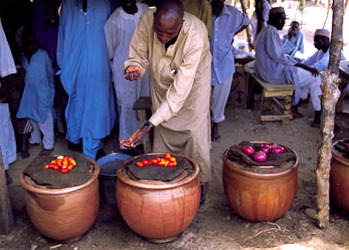
In a region where electricity is nonexistent and traditional clay pots are being replaced by aluminum and plastic containers, Mohammed Bah Abba has invented a clay pot in pot refrigeration system that, through evaporative cooling, dramatically extends the shelf-life of food.
Earthquake Devestates Morrocco
Thousands of homeless Moroccans struggled to rebuild their lives after a powerful earthquake that killed nearly 600 people forced survivors to spend the night in the open. Hopes dimmed of finding any more people alive in the rubble of devastated mud-brick homes in villages scattered around the Mediterranean port city of Al Hoceima. The quake, measuring 6.5 on the Richter scale, struck early on Tuesday as many people were sleeping in their houses.
The Architectural Review

The January issue of Architectural Review features sub-Saharan architecture in an essay with photographs by James Morris from his new book Butabu.