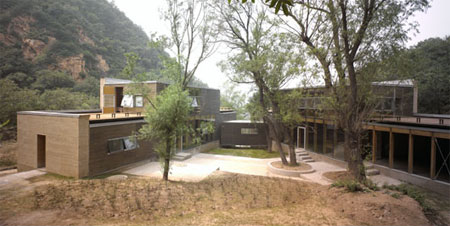
Split House

split.jpg

Located in the mountains of northern Beijing by the Great Wall, the Split House is designed by perhaps China’s most internationally acclaimed architect, Yung Ho Chang of Beijing’s first private architecture practice, Atelier Feichang Jianzhu. The house is split in the middle to bring in the scenery. A courtyard, or outdoor living area, is enclosed by the mountains on one side and the house, with its two split halves, on the other. The line between the natural landscape and manmade architecture is thus blurred. The angle between the two halves can be adjusted to fit the house onto various hill sites. The structure is made of laminated wood with rammed earth walls, which is well insulated with minimum environmental impact.
«atalhˆyuk Video

adobevideo.jpg

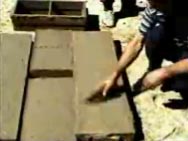
Local workers make mud bricks, dry them in the sun, and shape them into the walls of the experimental neolithic house. Watch the streaming video. The video is part of an archeological study of «atalhˆyuk, a Neolithic town from 9,000 years ago, located in modern-day Turkey. «atalhˆyuk means ‘forked mound’ and refers to the site’s east and west mounds, which formed as centuries of townspeople tore down and rebuilt the settlement’s mud-brick houses. No one knows what the townspeople called their home 9,000 years ago.

Drying Mud Bricks

mudbricks.jpg

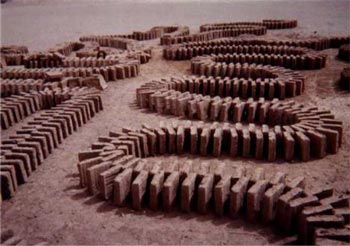
Sun dried mud bricks, called “Khesht” in Iran, are laid on their side to promote even drying. The patterns created in a landscape of mudbricks can also be considered as an aesthetic part of the process of building with earth. These bricks are being prepared for the restoration of the Naren Rampart in Yzad, Iran. Image by Dr. Hossein Massoud, 2001

Chinese Hakka Architecture

fujian_tulou_1.jpg

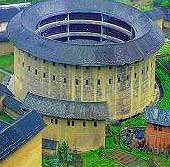
Regarded by architects as the cream of Chinese traditional residential architecture, tulou, or earth buildings, first appeared about 1,200 years ago, and were mostly completed in the Ming (1368-1644) and Qing (1644-1911) dynasties. They were built and inhabited by the Hakka people – a group belonging to the Han family who can trace their ancestors back more than 1,500 years to central and north China. During the hundreds of years of migration, the Hakka people tried to maintain their own culture and way of life, keeping their own unique dialect, custom and cuisine. They built the earth complexes to guard against invasion from local bandits and to protect their children from the influence of local communities. All the families of a Hakka clan lived together in an enclosed rammed earth building.

Filipino Adobe

Philippines1910web.jpg

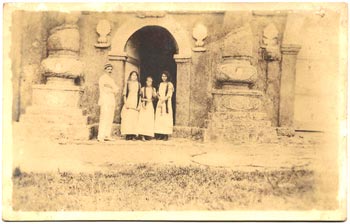
Photo of four people posing infront of a Spanish Colonial era adobe Paoay Church in Ilocos Norte, Philippines. c.1910.