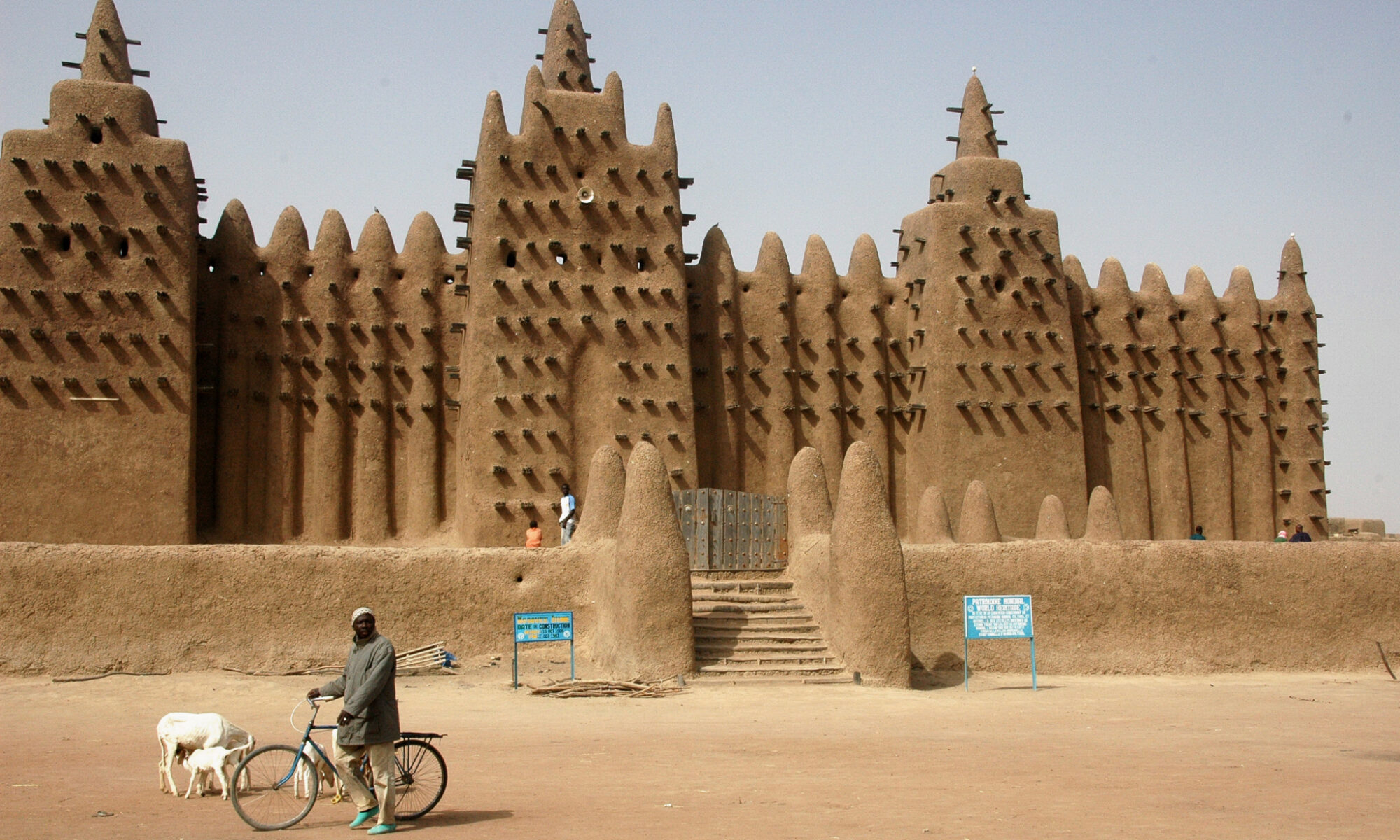

L’Association Nationale des Professionnels de la TERRE Crue

L’Association Nationale des Professionnels de la TERRE Crue fédère les acteurs et actrices de la construction en terre crue en France. Elle regroupe des artisans et des chefs d’entreprise, des producteurs de matériaux, des architectes, des ingénieurs, et des organismes de formation professionnelle. Elle accueille aussi des représentants d’organismes régionaux (parcs…) ou d’autres associations développant des activités dans le domaine de l’architecture de terre (valorisation des patrimoines nationaux, architecture contemporaine, recherche sur les matériaux et les techniques…).
Modern Concrete Grew from Traditional Rammed Earth

In the book Concrete: The Vision of a New Architecture Peter Collins describes how the origins of modern concrete evolved from technological developments pertaining directly to the traditional use of rammed earth in France. He writes:
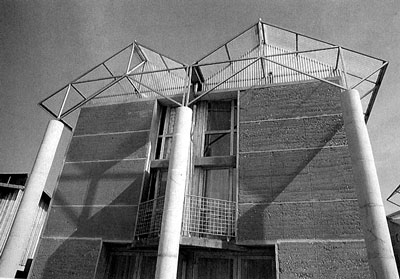
“…when concrete did again come into use as a building material, it evolved from an entirely independent, and much more humble origin: pisé [rammed earth]. The peculiarity of pisé construction thus lay not only in the economy of using earth as a building material, but in the process whereby a building was moulded into shape, and it was inevitable that sooner or later some far-sighted individuals should appreciate the revolutionary possibilities of this method of construction, and seek to extend it by improving on the material used. The most obvious improvement was to increase the cohesion of the earth by mixing in a binding material such as mortar, and this had in fact already been done by [Jean-Baptiste] Rondelet when repairing the château in Ain. It was left to others to experiment with suitable hard aggregates, and produce modern concrete, or, as it was termed in French, béton. The first of the pioneers was an ingenious but ambitions building labourer named François Cointeraux.” – Peter Collins, Concrete: The Vision of a New Architecture (Montreal: McGill-Queen’s University Press, 2004), 20-21.

Node 1 and Contour Crafting

“Node 1” is a conceptual architecture project by French Architect François Roche which lacks most of the usual architectural accoutrements: blueprints, material suppliers, subcontractors. Instead, Roche imagines a programmable assembly device dubbed the “viab,” a construction robot capable of improvising as it assembles walls, ducts, cables, and pipes. A viab would produce structures that are not set and specific, but impermanent and malleable – merely viable – made of a uniform, recyclable substance like adobe.

The closest thing to a viab today is a modest mud-working robot, called “contour crafter”, invented by Behrokh Khoshnevis, a professor of engineering at the University of Southern California. Two years ago, California-based architect Greg Lynn was talking to Khoshnevis about the same topic. [ 1 | 2 | 3 ]

CRATerre

CRATerre-EAG, The Center for the Research and Application of Earth Architecture, is part of the School of Architecture of Grenoble, France, which offers the only Masters Degree in Earth Architecture in the world. The website is only in French, but you can translate at babelfish.