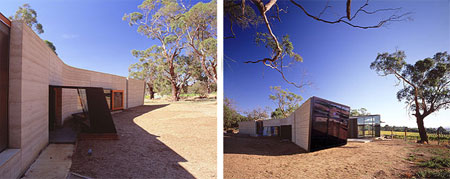
The Vineyard Residence, by John Wardle Architects, combines rammed earth with heavy timber framing and slim steelwork in the palette of materials. The design was awarded best residential building by the Royal Australian Institute of Architects.
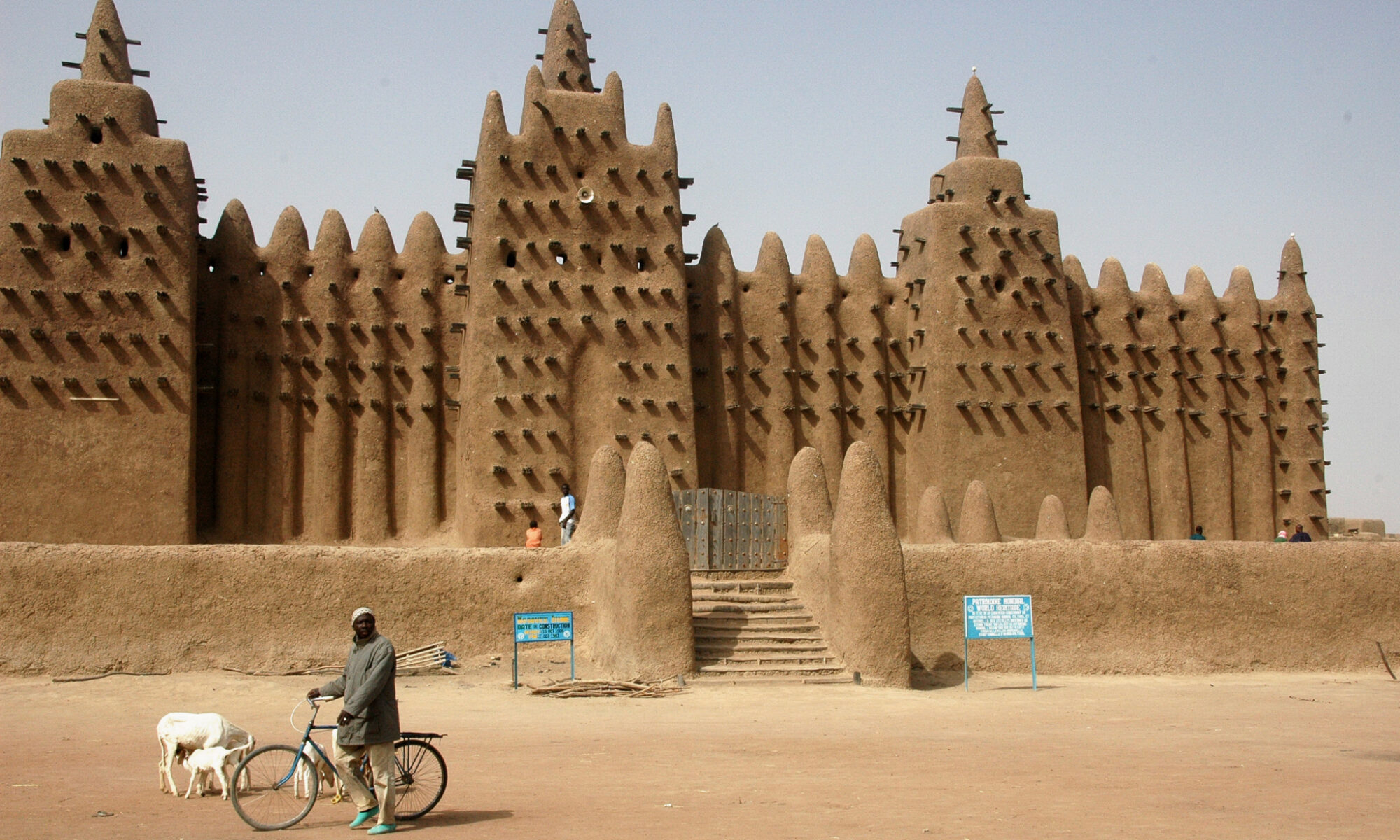
Architecture, Art, Design, and Culture using of mud, clay, soil, dirt & dust.
The Vineyard Residence, by John Wardle Architects, combines rammed earth with heavy timber framing and slim steelwork in the palette of materials. The design was awarded best residential building by the Royal Australian Institute of Architects.
Mudbrick houses, the traditional domain of conservationists and alternative-lifestyle devotees, are under threat from the Australian State Government’s five-star energy standard – which, ironically, was introduced to improve the environmental performance of homes.
Below are several links to Earth Building Resources in Australia:
The Earth Building Association of Australia
The History and Conservation of Pisé Buildings in the Australian Capital Territory
Make it Mudbricks, the Mudbrick Specialists
Abstracts for the Earth Build 2005 Conference have been posted online.
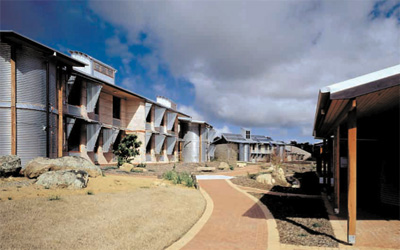
Rammed earth buildings at Charles Sturt University at Thurgoona will be listed for heritage protection under a draft heritage plan released for public debate. Unlike most heritage items, the innovative, award-winning buildings have been built over the past eight years and some are still under construction. Download a .pdf outlining the specifications of the buildings at Charles Sturt University
Read The history and conservation of pisé (Rammed Earth) buildings in the Australian Capital Territory written by Carol Cosgrove and Peter Dowling
The Faculty of Design, Architecture and Building at the University of Technology, Sydney extends an invitation to all researchers/practitioners involved in earth building to submit papers for the EarthBuild 2005 conference. The conference will be held at the university campus on 19th and 20th of January 2005, with site visits planned for the 21st of January.
Those wishing to present a paper at the conference should submit an abstract of not more than 500 words with title and name of the author. Separately please provide us with your name and full contact details (address, organization, tel/fax, email etc.) as well as a short description of your involvement with earth building.
Contributions for a 20-minute oral presentation at the conference will be selected on the basis of the abstracts submitted. It is intended that refereed and non-refereed papers be presented at the conference and all contributions will be published in the conference proceedings.
The conference language will be English.
Closing date for submissions of abstracts for papers is 1st July 2004.
Abstracts and enquiries should be emailed to g.moor@uts.edu.au
Conference information will be regularly updated on the Earth Building Research Forum web page.
For more information contact:
Dr. Kevan Heathcote and Gregory Moor
Faculty of Design, Architecture and Building
University of Technology, Sydney
702-730 Harris Street, Ultimo
PO Box 123, Broadway 2007
tel. 61 2 95148837
fax. 61 2 95148828
The ideal building material would be ‘borrowed’ from the environment and replaced after use. There would be little or no processing of the raw material and all the energy inputs would be directly, or indirectly, from the sun. This ideal material would also be cheap. Mud bricks come close to this ideal.
Wide-eyed and inquisitive, 25 first-year students moved into Charles Sturt Universitys residential rammed-earth cottages in Thurgoona, Australia. The Student Pavillion, which was the first new building, laid the foundation for demonstrating and gaining acceptance of an environmental design approach to the further development of the Thurgoona campus.
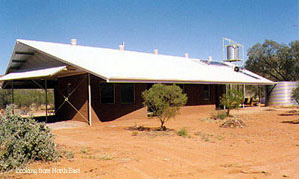
The first of several houses to for the Arrillhjere Corporation on aboriginal land, 30 killometres west of Alice Springs. It’s a mud brick house, designed to be energy efficient and suitable an Aboriginal lifestyle in central Australia.