Center for Alternative Technology

CAT.jpg

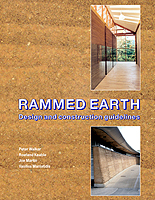
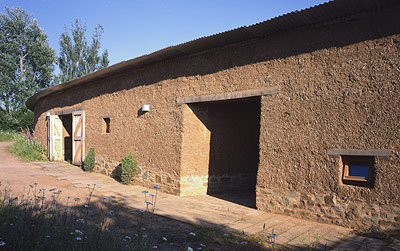
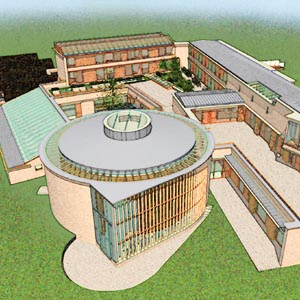
Work is about to begin on The Wales Institute for Sustainable Education (WISE), a new complex intended to showcase the very latest thinking in environmentally-conscious building design at the Centre for Alternative Technology (CAT), near Machynlleth in Wales. Among the innovative features of the building will be construction of rammed earth walls in the Institute’s lecture theatre. The 7.2m high rammed earth walls, which are load-bearing and made of excavated subsoil, exemplify this approach. The clay content of the soil means no additional binding material will have to be added. The walls are packed down in layers, using hand-held pneumatic compactors, between temporary formwork.

read more here: Rammed Earth at the Center for Alternative Technology
Earth Architecture in Portugal – Two New Publications

atp_small.jpg seminarioemt_small.jpg

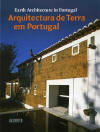
With the participation of 54 authors, the book Earth Architecture in Portugal is an assembly of essays and work by professionals with expertise on the topics of architecture and construction with earth. Topics include technology, materials, history, anthropology, conservation and particular attention is given to the contemporary architecture constructed of earth in the two last decades in Portugal. Publication is in English and Portuguese, 23 x 32 cm Hard Layer – 300 pages.

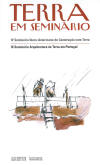
Terra em Seminário contains 70 essays presented in IV SIACOT and III SEMIN¡RIO OF EARTH ARCHITECTURE IN PORTUGAL. The publication offers a perspective on the current state of earthen architecture in an international context.

For purchase information contact www.centrodaterra.org or by emailing info@centrodaterra.org

The 5th International Photo Contest on Earth Architecture

conc2006.jpg

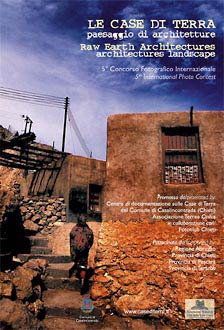
The 5th International Photo Contest on “Earth Architectures: architectures landscapes” is an initiative of Casalincontrada (Ch) Documentation Centre on Earth Architectures. The “rediscovery” of the knowledge linked to raw earth architecture recomposed in images, like tiles of a mosaic made of people, things, material and places. Images that can be of “surviving structures” but also “new scenarios”, architectures of the territory, memories and situations. Entry deadline: June 30, 2006

Node 1 and Contour Crafting

“Node 1” is a conceptual architecture project by French Architect François Roche which lacks most of the usual architectural accoutrements: blueprints, material suppliers, subcontractors. Instead, Roche imagines a programmable assembly device dubbed the “viab,” a construction robot capable of improvising as it assembles walls, ducts, cables, and pipes. A viab would produce structures that are not set and specific, but impermanent and malleable – merely viable – made of a uniform, recyclable substance like adobe.

The closest thing to a viab today is a modest mud-working robot, called “contour crafter”, invented by Behrokh Khoshnevis, a professor of engineering at the University of Southern California. Two years ago, California-based architect Greg Lynn was talking to Khoshnevis about the same topic. [ 1 | 2 | 3 ]

Earthen architecture in Iran and Central Asia Conference

Earthen architecture in Iran and Central Asia: its conservation, management, and relevance to contemporary society, a celebration of the life and work of Robert Byron, will be held at the Institute of Archaeology, University College London, 12-13th November 2005. The aim of the conference is to bring together individuals involved in the conservation and management of the archaeological and architectural legacy of earthen architecture in Iran and Central Asia, to discuss current approaches, practical applications, new projects and the impact of work on local communities and contemporary society.

IV SIACOT / III SEMIN¡RIO

O 4? Seminário Ibero-Americano de Construção com Terra e 3? Seminário de Arquitectura de Terra em Portugal, Convento da Orada, Monsaraz, Portugal, 7 > 12 Outubro 2005, reunirá mais de 300 especialistas na área, e terá como principais objectivos: contribuir para a melhoria na qualidade de construção e protecção do património; preparar mais adequadamente técnicos nacionais, regionais e locais a intervirem com maior conhecimento e responsabilidade no património em terra urbano e rural, assim como em áreas protegidas; aprofundar a investigação, logo contribuir para um desenvolvimento local mais sustentável, por meio de um maior conhecimento da conservação do património, da difusão de arquitectura contempor‚nea utilizando materiais tradicionais, da utilização de materiais com maior eficiÍncia energética, assim como de estratégias para formação local, com maior integração social.