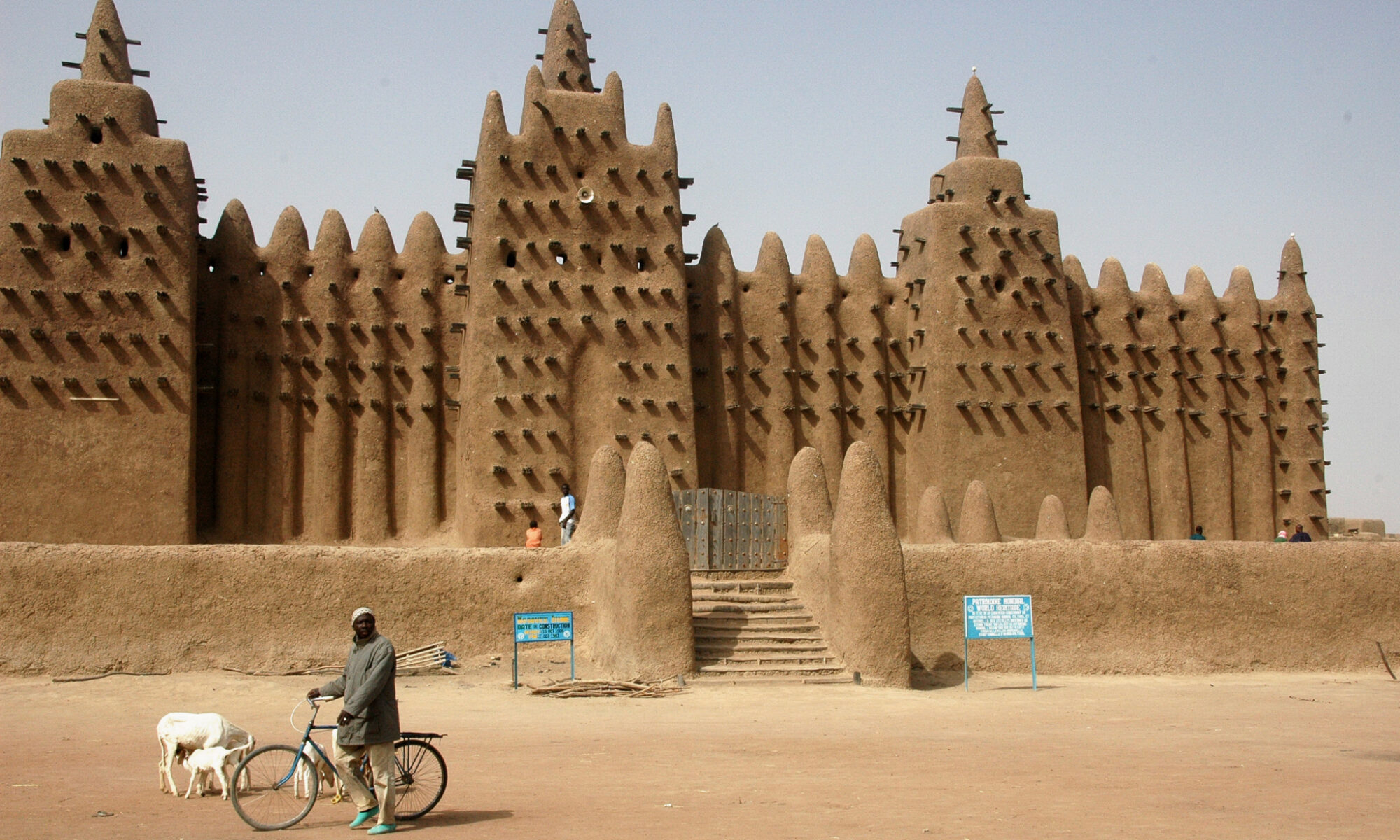
For the first time in hundreds of years, real adobe walls began rising at Tijeras Pueblo. The walls will eventually enclose the Tijeras Pueblo Education Center, an authentic adobe building that will house a museum, labs, educational displays and other information and activities.
Survey Finds 200 Historic Adobe Homes in South Alpine
A report by an historic preservation consultant, due to be released this summer, will declare South Alpine to have the largest collection of historic adobe homes in Texas outside of El Paso.
Design + Build in Marfa, Texas
NEW PROGRAM DATES FOR AREA SUMMER DESIGN+BUILD
JUNE 1 – JULY 1 2005
AREA is a summer research+build workshop that engages a 90 year old abandoned mud-brick building, located in the town of Marfa, Texas, as the testing grounds for questioning the notion of occupation, the theme of this years inquiry. Through a series of explorations that examine the process of making and unmaking in architecture, participants will design and build full-scale interventions that respond to a critical examination of place and program while addressing local/global and industrial/non-industrial agendas for architecture by employing raw earth as the primary building material in these investigations. Marfa serves as an ideal laboratory from where to study these issues. It is a town constructed almost entirely from mud-brick and transformed by rich historical, cultural and geographic forces. At 5,000 feet above sea level, it is one of the oldest cultivated areas in the United States. Located 30 miles from the U.S./Mexico border, Marfa is also home to the Chinati Foundation, an internationally renowned contemporary art museum, founded by Donald Judd, whose emphasis is on works in which art and the surrounding landscape are inextricably linked. Participants will have the opportunity to visit this extraordinary cultural and geographic landscape through a series of directed and self-guided field-studies. AREA is an initiative of the School of Architecture at Clemson University and made possible in part by the Adobe Alliance, a non-profit organization committed to the dissemination of traditional earth building technologies.
MORE INFORMATION AT: www.areainstitute.org
ADOBE 2004
The Second Annual Conference of the Adobe Association of the Southwest will take place May 21, 22 and 23 in El Rito, New Mexico on the campus of Northern New Mexico Community College in the recently renovated Cutting Hall Auditorium. It is a stately adobe building joining the two-story adobe South Dorm and Cafeteria.
Schedule:
Adel Fahmy, Cairo: “Old Traditions and New Improvements”
John Morony, Southwest Texas Junior College: “Adobe and Latent Heat; A Critical Connection”
Ronald Rael, Clemson University: “A Counter History of Modern Architecture” Luis Fernando Guerrero Baca, Univ. Autonima Metropolitana, Xochimilco with Francisco Uvina Contreras, Cornerstones Community Partnerships: “Conserving Adobe Architecture at the Camino Real de Tierra Adentro”
Dean Sherwin, Philadelphia: “Heavy and Slow, the Thermal Properties of Thick Wall Construction”
Reid Hayashi and Kristina Orchard-Hays, El Prado, NM: “Monolithic Adobe: A Viable and Inexpensive Building Method for the Southwest”
Arnie Valdez, San Luis, CO: “Adobe Education at UNM: Alternative Construction Methods and Materials”
Richard Burt and Charles Graham, Texas A&M: “The Earth Construction Course at Texas A&M University”
Barbara Narici, Milan, Italy: “Raw Earth Architecture in Italy between Tradition and Actuality; Geologika and Mud Interiors as an Ancient Energy in Today’s Immaterial Life”
Quentin Wilson, NNMCC: “Jacal y Fuerte, Wattle and Daub in NM”
Anita Otilia Rodriguez, Mexico and Taos: “La Enjarradora”
Mark Chalom, Santa Fe: “The Prisciantelli Home: Adobe Off the Grid”
Simone Swan, Santa Fe/Presidio: “Teaching Women in Obregon; Passing on the Legacy”
Pat Frazier, Abiquiu, NM: “Houses built by Pat and Felipe”
Steve Safken, Arizona: “Adobe: Compressive Structures and Materials” (Not Confirmed)
Susan Jerome, Mule Creek, NM: “Community Building at the Mudpit”
Dr. Mahmoud Ahmed Eissa, King Abdel Aziz University, Jeddah: “Ecological Aspects of the Courtyard House as a Passive Cooling System” (Not Confirmed)
Steve Burroughs, PhD, Canberra, “Affordable Earth Construction” (Pending)
Conference Schedule:
Friday, May 21, 2004
11AM to 1PM Registration
1:30PM to 4:30 PM Session I
5PM to 6:30PM Dinner
7PM to 9PM Social Hour
Saturday, May 22, 2004
9:30AM to 12M Session II
1:30PM to 5PM Tour
7PM to 9PM Session III
Sunday, May 23, 2004
9:30AM to 12M Session IV
Northern New Mexico Community College has dorm rooms, suites, and a cafeteria available at very reasonable prices. Contact Donald Martinez for reservations or local hotel/motel contacts at 505-581-4120 or donmart@mail.nnmcc.edu
The Conference registration cost is $30 for Association members and $45 for non-members. Charles Knight is the Conference Registrar at 505-581-0159 or mailto:cdkni@zianet.com
Contact Quentin Wilson, Conference Coordinator for other questions at 505-581-4156 or qwilson@mail.nnmcc.edu
The House That Clara Built
In 1943, Clara Alexander of Salem, Missouri, began constructing her rammed earth home. The overseer of the construction was Guy Eveland, a concrete and masonary expert. He had learned of the feasibility of this type of structure when he observed several of these houses while in France during World War I.
Alabama Rammed Earth
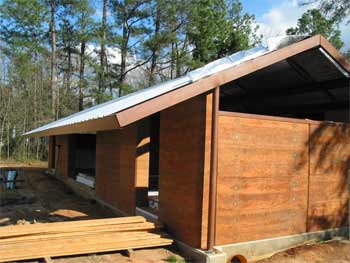
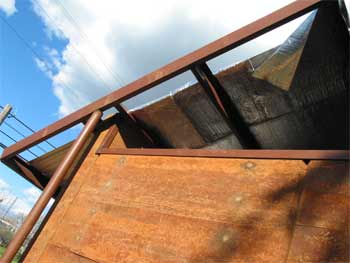
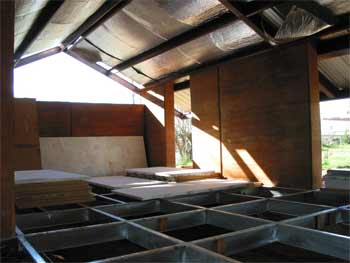
Designed by former students of the Rural Studio, this rammed earth house in Greensboro, Alabama has several interesting features. The walls of the house are not load-baring. The roof is supported by steel columns at the corners and the earth wall slides upwards between two steel beams on which the rafters sit. The floor is constructed with what seem to be foam sandwiched plywood flooring on large steel joists.
Robot May Build with Mud
In a laboratory in Los Angeles early this year, a robot armed with a concrete pump built its first wall. Just a small wall, about a yard wide, a foot high and an inch thick, but beautifully formed in a graceful oval sweep. Iranian born engineer Behrokh Khoshnevis has tested his prototype with cement but believes adobe, a mix of mud and straw that is dried by the Sun, could be suitable. The chief advantages of the Contour Crafting process over existing technologies are the superior surface finish that is realized and the greatly enhanced speed of fabrication. The success of the technology stems from the automated use of age-old tools normally wielded by hand, combined with conventional robotics and an innovative approach to building three-dimensional objects that allows rapid fabrication times. Professor Khoshnevis believes that his technology will make it possible to build a house from foundation to roof in less than 24 hours: “Our goal,” he says, “is to be able to completely construct a one-storey 185-square-metre home on site in one day, without using human hands.”
Juana Briones Historic House
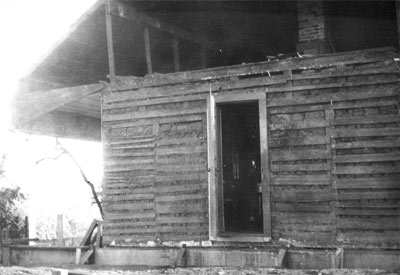
Juana Briones was known as a healer who raised a big family, opened her door to many in need and persevered to win a divorce from an abusive husband — something unheard of in the early 1800s. In 1844 she bought the 4,400-acre Rancho La Purisima Concepcion and lived there until not too long before her death in 1889. What Briones advocates have been trying to do for several years now is preserve the part of the house that’s built of a very unusual construction called encajonado, an old rammed-earth technique that exists in only three other houses in California. On the Juana Briones Heritage Foundation Website, the house is described as Palo Alto’s oldest, with a construction date of 1846. In May a judge is expected to issue a decision that will make the difference between a house repaired and a house demolished.
Call for Papers and Conference Announcement
The Second Annual Conference of the Adobe Association of the Southwest will take place May 21, 22 and 23 in El Rito, New Mexico on the campus of Northern New Mexico Community College.
Call for Papers Schedule:
One page (maximum) abstract due March 23, 2004
Notification of acceptance March 31, 2004
Full paper (5-page maximum) due April 23, 2004 for conference prepublication.
Presenters will have 20 minutes for presentation and 10 minutes to answer questions. Time limits will be carefully monitored.
The host institution can accomodate 2×2 slides in Carousels or Microsoft PowerPoint Presentations.
Topics of special interest are:
Affordable adobe construction
Thermal properties of earthen materials
Historical buildings of note in the United States
Historical builders of note in the United States
Historical architects/designers of note
Historical developers/planners of note
New projects
Adobe education
Manufacture and supply of construction materials
Conference Schedule:
Friday, May 21, 2004
11AM to 1PM Registration
1:30PM to 4:30 PM Session I
5PM to 6:30PM Dinner
7PM to 9PM Social Hour
Saturday, May 22, 2004
9:30AM to 12M Session II
1:30PM to 5PM Tour
7PM to 9PM Session III
Sunday, May 23, 2004
9:30AM to 12M Session IV
Northern New Mexico Community College has dorm rooms, suites, and a cafeteria available at very reasonable prices. Contact Donald Martinez for reservations at 505-581-4120 or donmart@mail.nnmcc.edu
The Conference registration cost is $30 for Association members and $45 for non-members. For more information contact Quentin Wilson at 505-581-4156 or qwilson@mail.nnmcc.edu
Clay – The Eternal Stuff Of Building
Mud is almost too basic to talk about, but humans have used it for more than 15,000 years to build things, so its value is inestimable. And, since most clay is free – there’s no commercial market (outside of artists’ specialty clays) competing for your dollars.