Monier Residence

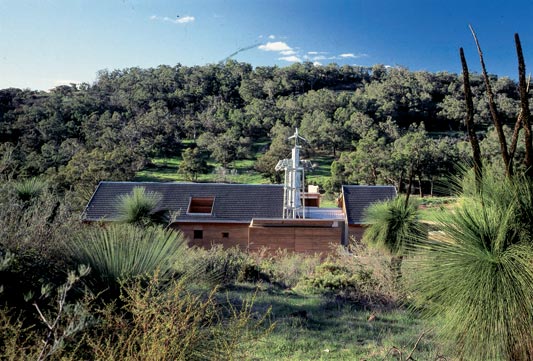
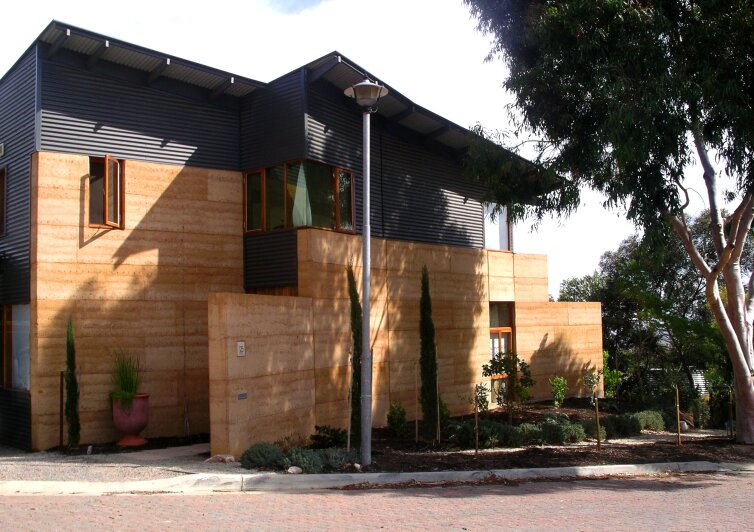
The Monier residence is a wood and rammed earth structure utilizes a variety of sustainable systems to produce its own energy and regulate its climate. The building is situated on a 4-acre site in Perth, West Australia and comprises 3 bedrooms and 2,500 square feet. Ackert Architecture designed the award winning structure “as a demonstration project to show how alternative energy and passive systems could be integrated to create a self sufficient home.”

Rammed Earth Bench

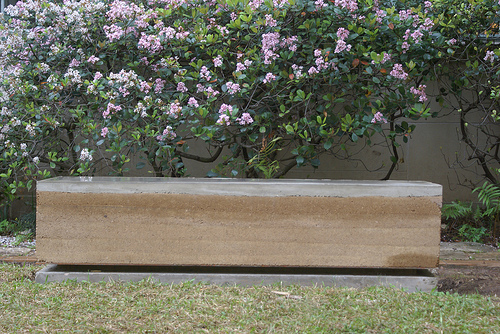
To introduce a hands-on understanding of materials, 12 advanced design students designed and constructed a rammed-earth bench in the Goldsmith Hall Courtyard. The rammed-earth investigation was one of three class investigations that explored the nature of materials in response to particular sites.

Save the Heritage of Hassan Fathy


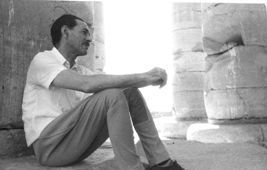
Hassan Fathy

Save the Heritage of Hassan Fathy is an International Association based in Geneva (Switzerland), founded in February 2008 to safeguard the heritage of the Egyptian architect, Hassan Fathy.
His works constitute a patrimony of outstanding value which belongs to the cultural world heritage. The Association’s objectives are the following:

– Raising the awareness of the public opinion about the importance of the work of the Egyptian architect
– Providing a platform of exchanges between the concerned Institutions (public and private) and Universities
– Promoting protection and conservation projects to safeguard this outstanding heritage

Napa Valley Rammed Earth House


Photos: Marion Brenner for The New York Times

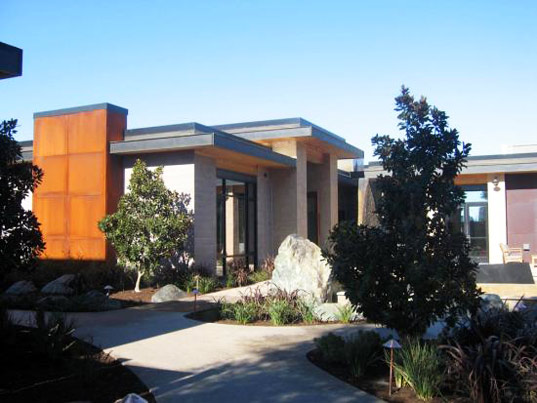
THE first clue that a visitor to Tatwina and Richard Lee’s hilltop property is headed somewhere unusual is the approach, as it’s known in landscape design parlance. The nearly half-mile of dusty road winds dramatically up an intermediary ridge of the Diamond Mountains above Napa Valley. Each turn raises the expectation that the house will soon appear, as houses normally do, but even when the gravel parking area at the top is finally reached, there’s no sign of a house or a garden, just a simple path of crushed stone edged with mounds of green-gray Sonoma sage and California lilac. This, it turns out, leads over a rise to a low, rammed-earth house hidden on the other side.

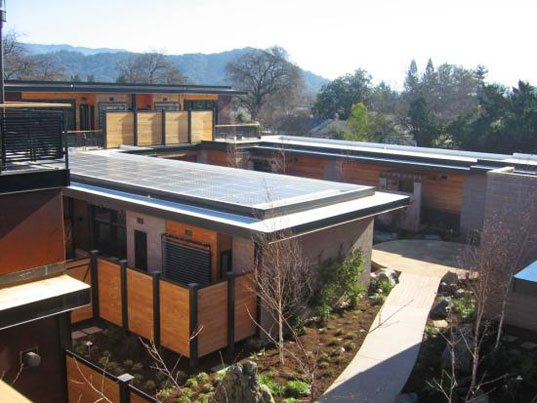
The house — really a line of four one-story buildings made of earth, concrete and steel and designed by Steven Harris Architects— sits in the depression between two knolls on a narrow, rocky peninsula, with steep, pine-covered hills swooping down on three sides to vineyards famous for their cabernet sauvignon.

Haus Ihlow

Berlin based architect Eike Roswag’s Haus Ihlow is a renovation and addition to a historic stone barn using rammed earth built in the country side near Berlin. It is the first load bearing housing project in Germany since the 1950s. The construction is based on the “Lehmbauregeln”, but build with surprisingly thin walls (30cm) and large openings for windows.

The house has passive solar heating with a 60 m2 hot water collector and can store 4,000 liters of water supplemented by a wood fire place, connected to a floor and wall heating system. The owners use rain water for toilets and do wastewater treatment before draining the water on their own ground. Roswag’s firm, werk_A has many other projects in rammed earth.

Ancient Rammed Earth Observaory

Only recently rediscovered. An ancient site in the port of Qingdao has revealed the oldest known observatory in China. The Chinese Astronomy Society, learned of the finding at its annual convention. Experts point to historical evidence, that the Langya Observatory in east China’s Shandong Province, was built during the Warring States Period— more than 22-hundred years ago. The three-storey structure stands about nine meters. The original structure was made of rammed earth. The observatory was evidently erected as a site for studying the stars as well as for monitoring conditions at sea. [ Watch ]