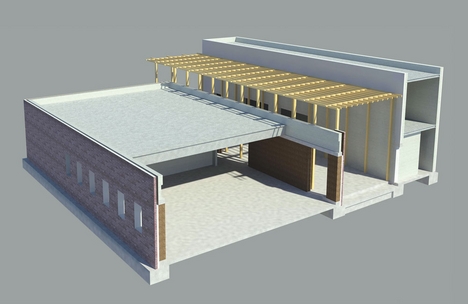
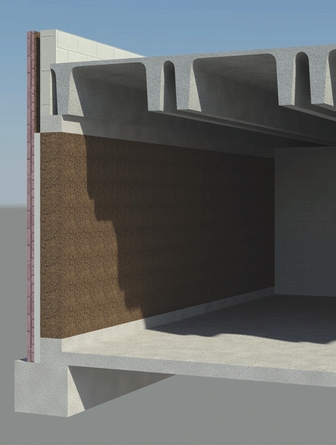
Johanna House

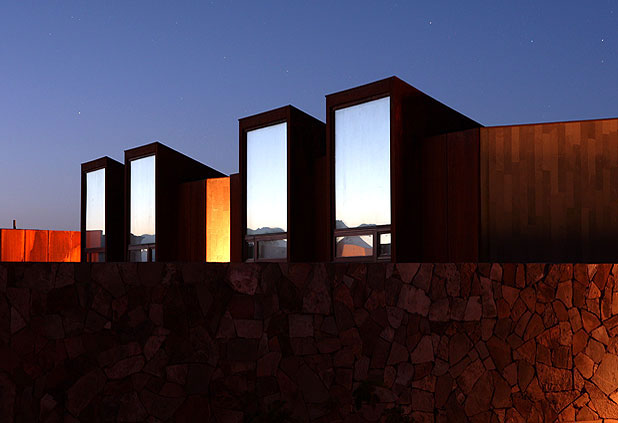
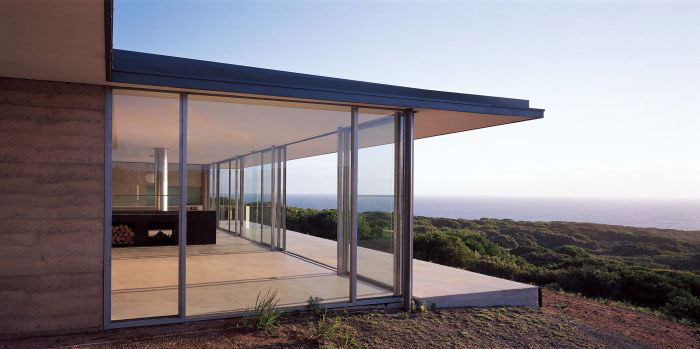
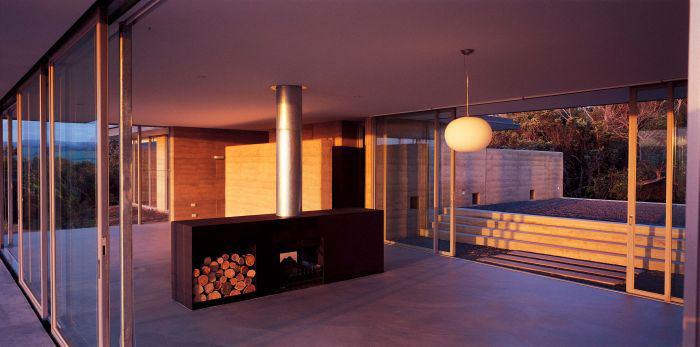
The Johanna House, designed by Nicholas Burns, is a 4 bedrooms, 2 bath house with an open kitchen, dining/living room and cellar located on Johanna beach, Victoria, Australia. The site is on a secluded 100 acres of pristine bush land adjoining the national park with extensive views of the ocean, protected wilderness with known endangered flora and fauna. No trees were cleared in the construction of the house.

Materials used were rammed earth, concrete, glass and steel to create a discrete insertion into the landscape, a journey of gradual and layered concealment and opening of the landscape and ocean; contrasting contraction and expansion, heavy and light, opaque and transparent. Pure geometry and detailing to create a stillness, a dematerialising interconnection with nature, landscape and the passing of time, place and present. More pictures of the construction process and the final result available here.

Chapel of Reconciliation

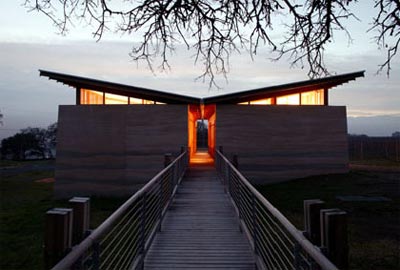
Built by architects Peter Sassenroth und Rudolf Reitermann in 1999, this small chapel made of rammed earth replaces the former Church of Reconciliation, a historicist church built in 1894 which happened to be situated on the death strip when the Berlin wall was erected in 1961. The old church stood there vacant and isolated, abused as a guarding tower for East German border patrol, until it was finally blown up by East Germany in 1987 – just two years before the wall eventually was torn down itself. the community of the former church decided it wanted to have its church back. The completed chapel is enveloped by a wall made of rammed earth, composed out of clay and smaller pieces of bricks of the exploded church. For more information visit the Chapel of Reconciliation home page.

Earth Architecture and Wine

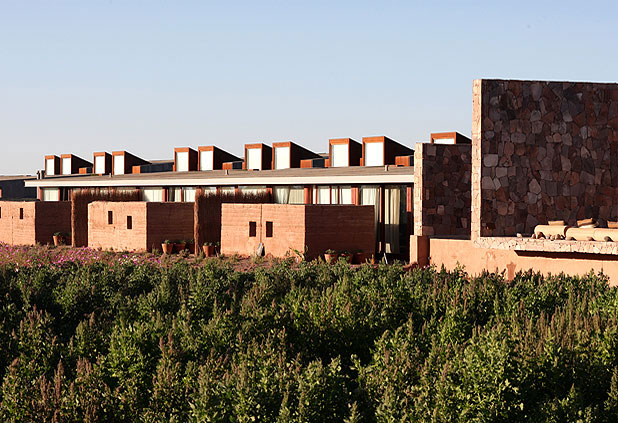
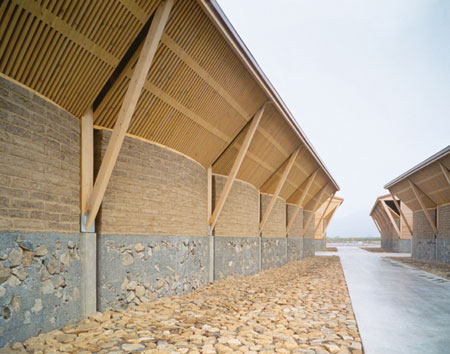
Many wineries and residences among vineyards employ earth in the construction of buildings. Often, the same earth to grow grapes is ideal for use as a building material.


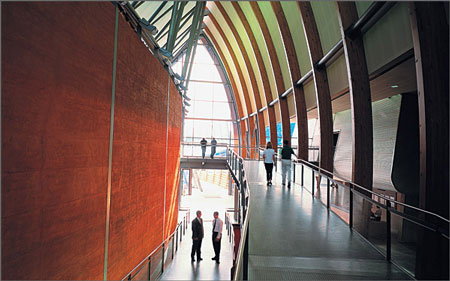
National Wine Centre


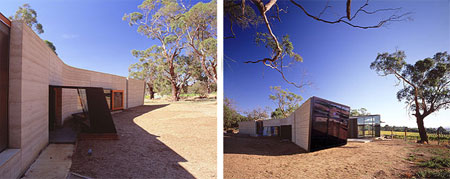
Vineyard Residence


Residence at Meteor Vineyards


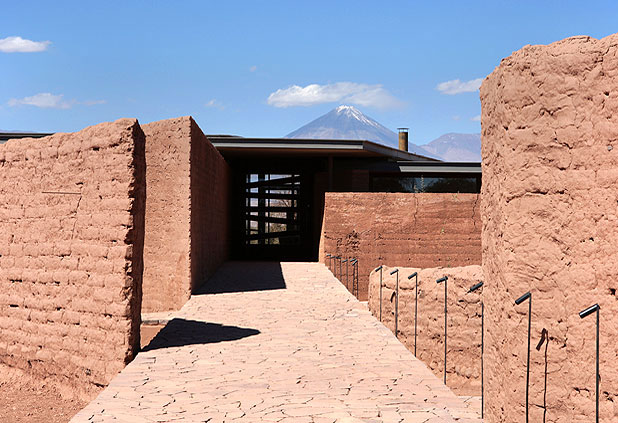
Bodega en Los Robles


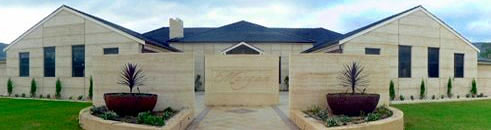
Margan Tasting Room and Restaurant

The list goes on and on: [ Fetzer Winery Administration Building | Moorooduc Estate | Texas Hills Vineyard | Adinfern Estate | Wing Canyon Vineyard | Home Hill Winery ]

Modern Concrete Grew from Traditional Rammed Earth

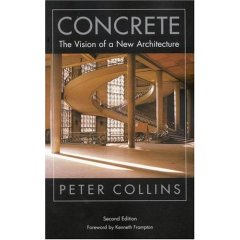
In the book Concrete: The Vision of a New Architecture Peter Collins describes how the origins of modern concrete evolved from technological developments pertaining directly to the traditional use of rammed earth in France. He writes:

“…when concrete did again come into use as a building material, it evolved from an entirely independent, and much more humble origin: pisé [rammed earth]. The peculiarity of pisé construction thus lay not only in the economy of using earth as a building material, but in the process whereby a building was moulded into shape, and it was inevitable that sooner or later some far-sighted individuals should appreciate the revolutionary possibilities of this method of construction, and seek to extend it by improving on the material used. The most obvious improvement was to increase the cohesion of the earth by mixing in a binding material such as mortar, and this had in fact already been done by [Jean-Baptiste] Rondelet when repairing the château in Ain. It was left to others to experiment with suitable hard aggregates, and produce modern concrete, or, as it was termed in French, béton. The first of the pioneers was an ingenious but ambitions building labourer named François Cointeraux.” – Peter Collins, Concrete: The Vision of a New Architecture (Montreal: McGill-Queen’s University Press, 2004), 20-21.

Rammed Earth: Oldest

Wikipedia notes:

“The Chinese were already familiar with the techniques of wall-building by the time of the Spring and Autumn Period, which began around the 8th century BC. During the Warring States Period from the 5th century BC to 221 BC, the states of Qi, Yan and Zhao all constructed extensive fortifications to defend their own borders. Built to withstand the attack of small arms such as swords and spears, these walls were made mostly by stamping earth and gravel between board frames.”

Is the Great Wall the oldest mud brick building in the world? If not, what is?

This article states:

“The year 2000 was to see the discovery in Lianyungang, Jiangsu Province of a township site of the Longshan Culture (c.2310-1810 BC). With its double encircling walls this find is further confirmation that the history of city building in antiquity can be traced back in China to the late Neolithic Age. The Longshan Culture is characterized by its burnished black pottery, examples of which were first unearthed in Longshan, Shandong Province in 1928. The Lianyungang site offers an insight into ancient building techniques through its finds of rammed earth foundations.”

Is this the oldest historical evidence of rammed earth? If not, how long has rammed earth been in use?

Start a discussion in the comments section below.

Frank Lloyd Wright Rammed Earth


In 1941 Frank Lloyd Wright began the Cooperative Homesteads project in Madison Heights, Detroit Michigan. The homes were to cost $1,400 and to keep the costs low they utilized berm and rammed earth construction. It is said that the would be occupants for the houses were drafted during World War II and construction ceased. Read More [ 1 | 2 ]

Rammed Earth & Modular Contained Earth

Alternative Construction: Rammed Earth & Modular Contained Earth is a 3-hour interactive online course examines the systems and materials associated with alternative construction, including scenarios on the uses of rammed earth and modular contained earth. It discusses their histories, environmental impacts, and construction methods. This is part of a series of courses concerning Alternative Construction: Contemporary Natural Building Methods.