House of 5 Dreams

house-of-five-dreams.jpg

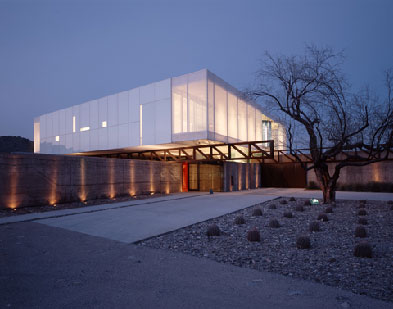
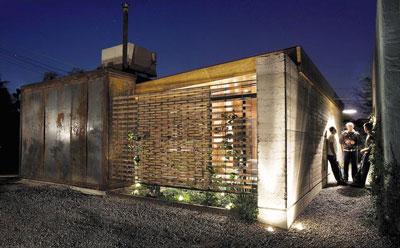
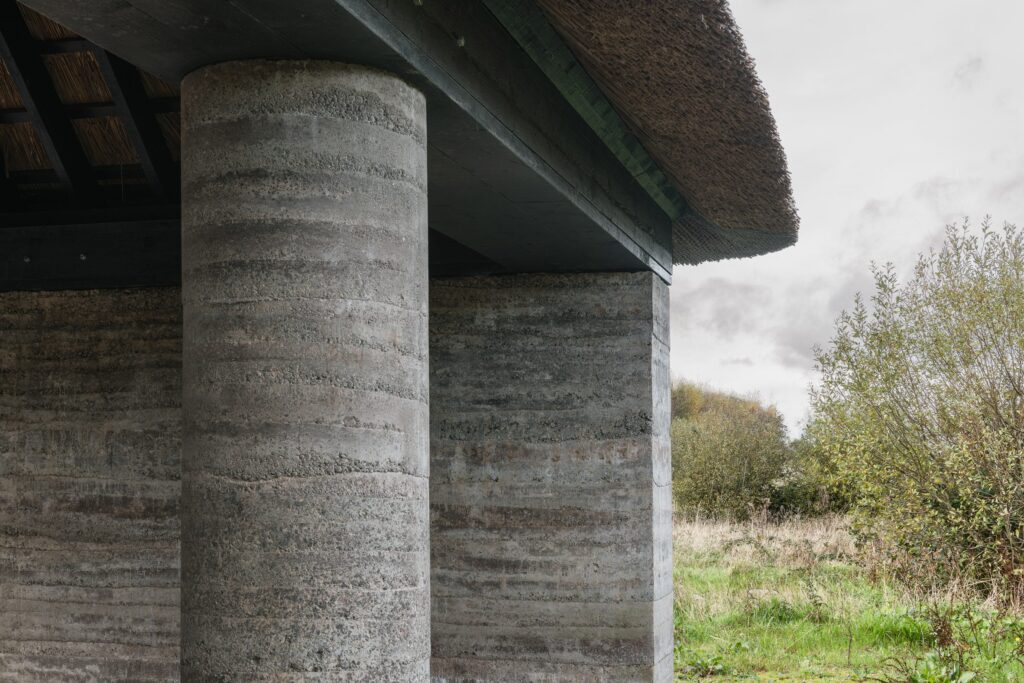
House of 5 Dreams, by Jones Studio is a 30,000 square foot residence/private museum created to serve the needs of a pair of prolific art and artifact collectors. Knowing that much of their collection had been excavated, the decision was made to place exhibition space below the horizon and contained within 4-foot thick rammed earth walls. Above the gallery, a floating residential pavillion is spatially composed of translucent light.

Rammed Earth in Spain Videos

Via google video, videographer Paul Jaquin has ammassed a collection of videos of rammed earth in spain. Read synopsis and watch the videos by clicking below:

Rammed earth at Lorca castle, a tour of the outside of the building, and a view across the valley.

Rammed earth wall at Palma del Rio in southern Spain. Constructed around 1171, and probably 6m high.

Conclusive proof that some rammed earth is absolutely fine in the rain. Here a castle at Alcala de Guadaira is observed in the middle of a rainstrorm with no detrimental effect to the fabric of the wall.

A video tour of Banos de la Encina castle, built in 967 from rammed earth.

Rammed earth wall at Novelda in southern Spain. This is a view inside a hole in the wall, proving that rammed earth can provide some arching or tensile action. Novelda castle was built around 1171 duringthe Almohad dynasty in Spain.

A tour of the inside of Villena castle in southern Spain. Constructed in rammed earth in 1172, it is a very well preserved rammed earth castle.

Rammed earth wall in Cordoba.
Center for Alternative Technology

CAT.jpg

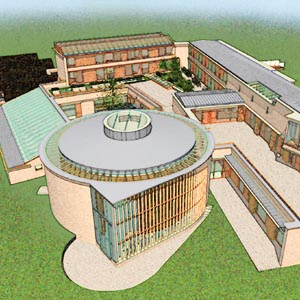
Work is about to begin on The Wales Institute for Sustainable Education (WISE), a new complex intended to showcase the very latest thinking in environmentally-conscious building design at the Centre for Alternative Technology (CAT), near Machynlleth in Wales. Among the innovative features of the building will be construction of rammed earth walls in the Institute’s lecture theatre. The 7.2m high rammed earth walls, which are load-bearing and made of excavated subsoil, exemplify this approach. The clay content of the soil means no additional binding material will have to be added. The walls are packed down in layers, using hand-held pneumatic compactors, between temporary formwork.

read more here: Rammed Earth at the Center for Alternative Technology

Irish Earthen Architecture

The Center for Irish Earthen Architecture was founded in response to the number of enquiries sent to the Plymouth centre of earthen architecture, regarding information, training and the techniques of cob, rammed earth,

adobe and wattle and daub. Along with the development and implementation of training courses for both the individual and academic institutions, the centre wishes to establish a monitoring system to deliver competence in earthen architecture to the wider audience.

via Dezeen

(Link/center is defunct now, but see this paper about earthen architecture in Ireland)

The Chapel of Reconciliation

CofR.jpg

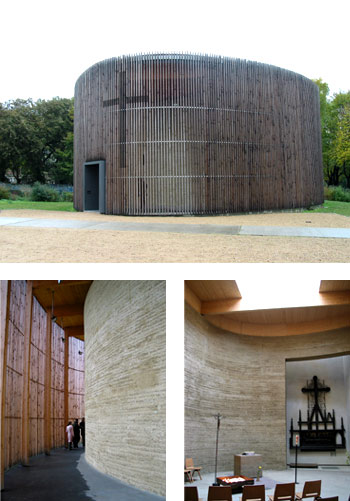
The Chapel of Reconciliation is both Germany’s first public rammed earth building in over 150 years as well as the first rammed earth German church. The building was built on the site of the former Church of Reconciliation, which was built in 1894 and was later destroyed, as it was surrounded by the wall dividing east and west Germany.

The rammed earth walls in the new church are made using clay mixed with the ground up remains of the former church. The building was designed by architects Rudolf Reiterman and Peter Sassenrath and constructed with help from Austrian rammed earth expert Martin Rauch.