FRANÇOIS COINTERAUX (1740-1830): PIONEER OF MODERN EARTHEN ARCHITECTURE

CALL FOR PAPERS
FRANÇOIS COINTERAUX (1740-1830), PIONEER OF MODERN EARTHEN ARCHITECTURE: Theory, Teaching and Dissemination of a Vernacular Technique, International Conference, Lyons, 10-12 May 2012

Organized by the Laboratoire de Recherche Historique Rhône-Alpes (LARHRA, UMR-CNRS 5190) and the Institut National d’Histoire de l’Art

From 1785 onwards, the builder and master mason François Cointeraux actively promoted a construction technique of vernacular origin, known as pisé de terre (or ‘rammed earth’), which was at that time confined to southeast France. His cahiers or fascicules from the Ecole d’architecture rurale (School of Rural Architecture), published in Paris in 1790-91, were rapidly translated into seven languages (German, Russian, Danish, English, Finnish, Italian and Portuguese). They attracted the attention of major architects such as Henry Holland (1745-1806) in England, Thomas Jefferson (1743-1826) in America, David Gilly (1748-1808) in Germany and Nicolaï L’vov (1751-1803) in Russia, founder of a flourishing school of earthen architecture in Tiukhili near Moscow, based on Cointeraux’s school of the Colisée in Paris. Through his publications, Cointeraux generated an almost universal interest for this material, as cheap as it was abundant, and encouraged its adaptation to rural or residential architecture.

This success can largely be explained by a desire to revive rural architecture, which was in perfect harmony with both the physiocrats’ line of thought and the actions of agricultural societies. However, Cointeraux never managed to popularise its use widely and lastingly in France. His numerous publications did not achieve their expected uptake with the institutions concerned. He is nonetheless representative of a culture of invention and innovation, highly characteristic of the first industrial revolution and the birth of modern architecture. The aim of the conference is to present a synthesis of the extensive research carried out on François Cointeraux over the course of the last twenty years and to re-situate his work in the wider context of the evolution of ideas and techniques.

Organization
Laurent Baridon, Université Lyon II, LARHRA (UMR 5190), Louis Cellauro, LARHRA, Jean-Philippe Garric, INHA / AUSSER, Gilbert Richaud, LARHRA Advisory board: Hubert Guillaud, Énsa de Grenoble / CRA-Terre, Miles Lewis, Faculty of Architecture, Melbourne University, Claude Mignot, Paris-IV / Centre André Chastel, Liliane Pérez-Hilaire, Centre d’Histoire des Techniques et de l’Environnement du CNAM, Antoine Picon, Harvard School of Design, LATTS

Submission procedures
Proposals (title, abstract of maximum one page, short CV) should be sent to the organizers at the following address: cointeraux.2012@orange.fr Or: Laurent Baridon, LARHRA, Institut des Sciences de l’Homme, 14 avenue Berthelot, F-69363 Lyon Cedex 07, France

The deadline for submissions is July 31, 2011. Results of the selection will be communicated to the authors one month later. The proceedings of the conference will be published in 2013.

RESTAPIA 2012: International Conference on Rammed Earth

RESTAPIA 2012 is an international congress on rammed earth, its conservation and, in general terms, on earthen constructive techniques and its conservation. It will take place on June 21st,22nd, 23rd 2012 at Valencia. This meeting aims to incentive sharing the restoration experiences of both monumental and non monumental architectural heritage made in the Iberian Peninsula and the rest of the world in order to learn from all these interventions and derive conclusions and perspectives for the future. Thus, it aims to represent an important milestone at international level in the reflection about the conservation and restoration of rammed earth architecture and earthen architecture in general.

The program of RESTAPIA 2012 includes keynote lectures given by international experts on the topic and the presentation of papers and posters during June 21st and 22nd 2012, and an added day of technical visits on June 23rd 2012.

Adobe for Women

Adobe for Women is a non-profit association, founded in 2011, whose goal is the recovery and education of earth construction techniques; this is our contribution to a more human and sustainable use of space and the planet’s resources. The goal of this Project is to build 20 sustainable houses in the indigenous village of San Juan Mixtepec, in the southern Mexican state of Oaxaca.

The houses are intended for 20 women in difficult circumstances who will participate in the building process. They will slowly appropriate their future home and simultaneously re find their self esteem, work abilities and hope that will transform the spaces into safe, caring places for their families.
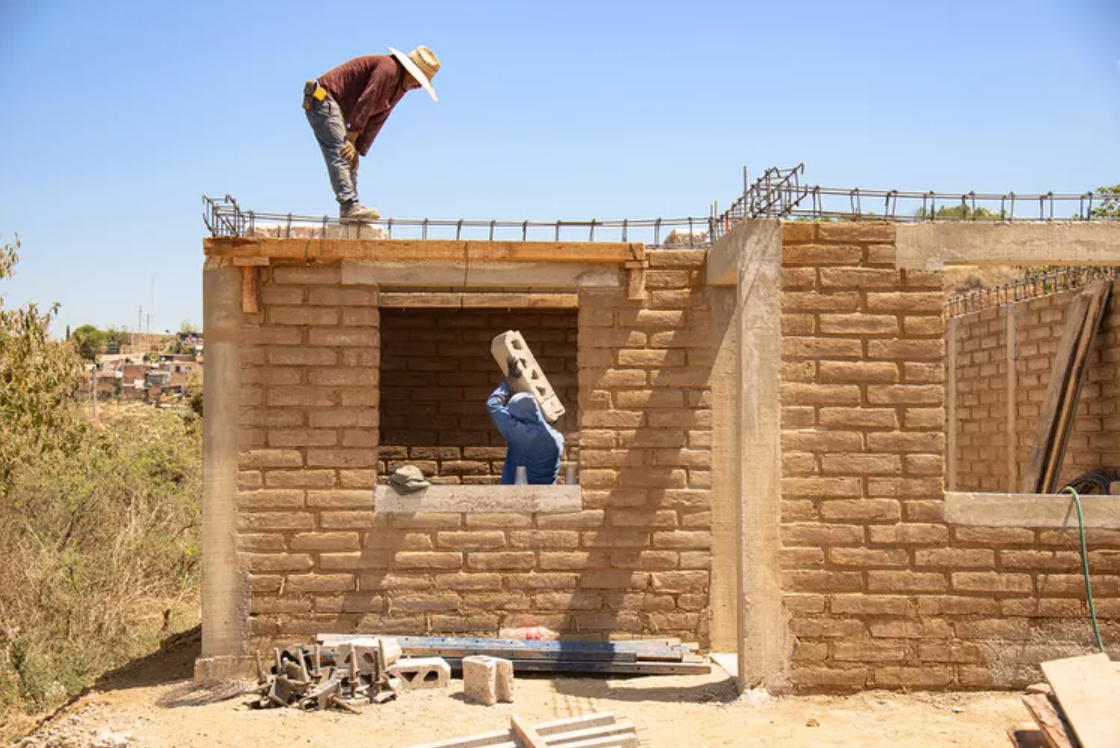
The houses are energy efficient and built with local materials such as adobe and bamboo.

[via Treehugger.com]

Juana Briones House Demolished

The Juana Briones House, a rare example of encajonado construction, parts of which were built in 1844, has been completely torn down by property owner Jaim Nulman, who fought off historic preservationists, latino activists, and descendants of Briones for years. Feminists joined in the struggle for the home’s preservation as well. Jeanne McDonnell, biographer of Juana Briones, stated that historic buildings associated with women are more likely to be demolished than those associated with men.

Bricks From Volcanic Ash

After weeks of enduring the ash brought on by Chile’s Puyehue volcano, one Argentine woman has decided to transform the grey sediment into something useful. Maria Irma Mansilla used the sediment and sand spewed by the volcano to create bricks. She hopes she and her neighbours will be able to produce them on a large scale to build homes for the poor. Watch

Sra Pou Vocational School

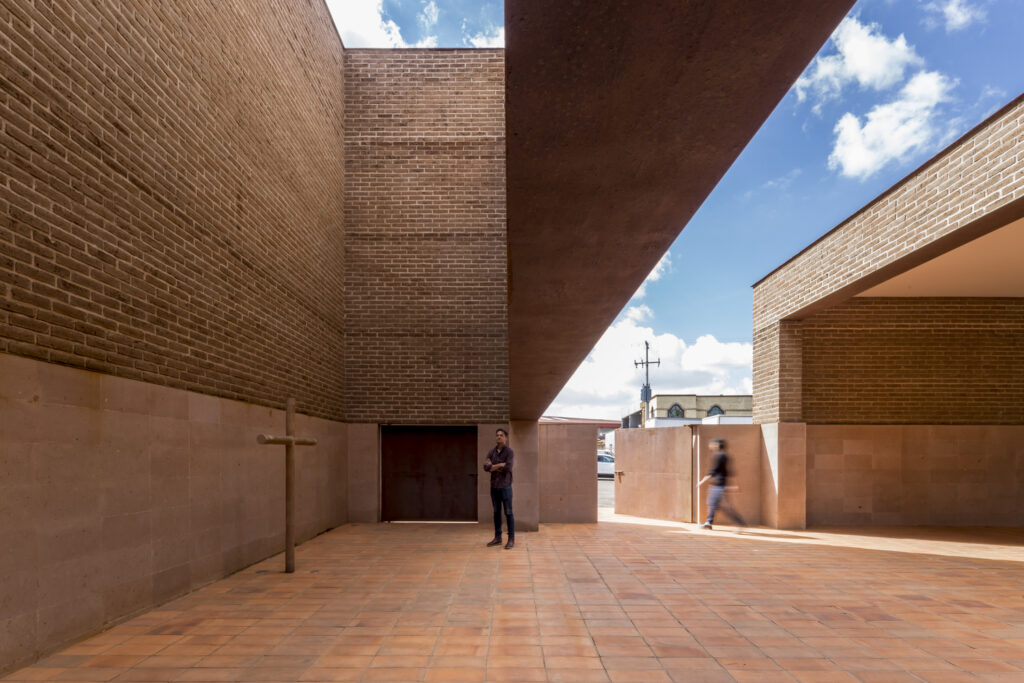
The Sra Pou vocational school in Sra Pou, Oudong, Cambodia by Finish architects Rudanko + Kankkunen is constructed of hand-dried blocks of the surrounding soil. The school serves as a business training centre and public hall.

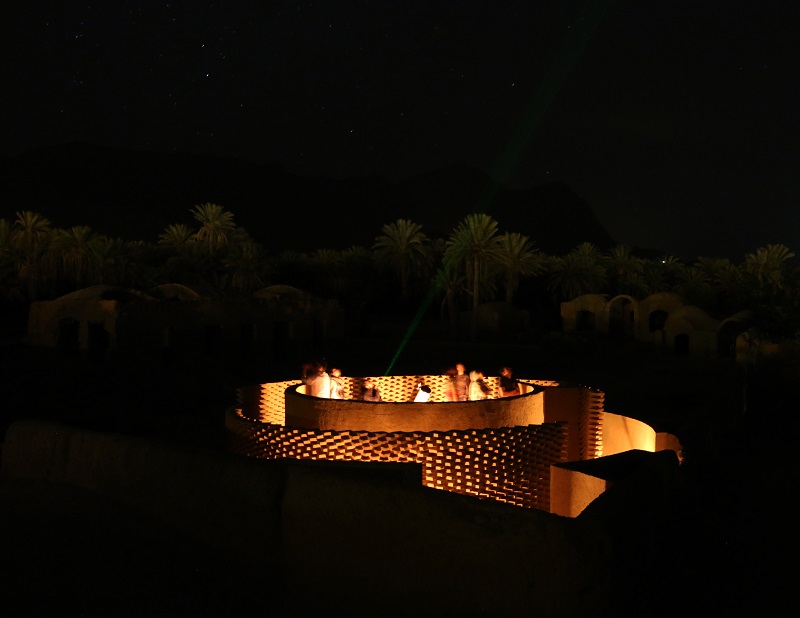
The soil block walls repeat the warm red shade of the surrounding earth. They are laid out with small holes, so that indirect sunlight and gentle wind come in to cool the spaces – and at night, the school glows like a lantern through these small openings. The whole community space is open, providing comfortable shaded outdoor space. The colorful handicraft doors are visible from far away and welcome visitors coming along the main road.

The 200m2 building cost $15,000 and was constructed by members of the community.

More at dezeen.com

The Hinterland House

The Hinterland House by http://www.morrispartnership.com.au/ is a rammed earth house designed to be in harmony with the Australian bush. No fences, screens or garden areas were incorporated to insure as little disturbance as possible to surrounding inhabitants. The local animal and plant life can continue to roam as freely as before the structure was built.

Along with rammed earth, the material palette includes spotted gum, rough recycled timber, concrete floors, corten steel and zincalume. Building environmental features include the earthen thermal mass, double glazing, shading and cross ventilation that mitigates against the need for air conditioning. Sustainability solutions include the use of worm farm waste treatment, solar heating and hot water, and the cellar pantry drawing cooled air through an underground chamber.

The Hinterland House program includes:

· Living/dining/kitchen core
· Clients’ separate bedroom suite
· Separate studio & study
· Separate guest accommodation

Alderney Stones

A new site-specific installation of works by Andy Goldsworthy opened on the island of Alderney, located in the Bailiwick of Guernsey in the English Channel Islands. Alderney Stones consists of an installation of 11 boulders spread across the landscape of Alderney.

Goldsworthy formed each 3-ton boulder from a mold of rammed earth and other materials sourced from the island, such as berries, seeds, old tools and discarded gloves.

Set in varying degrees of exposure to the elements, the stones will eventually erode, revealing the elements concealed inside, and ultimately return to the land from which they came.

Ahmed Baba Institute Library

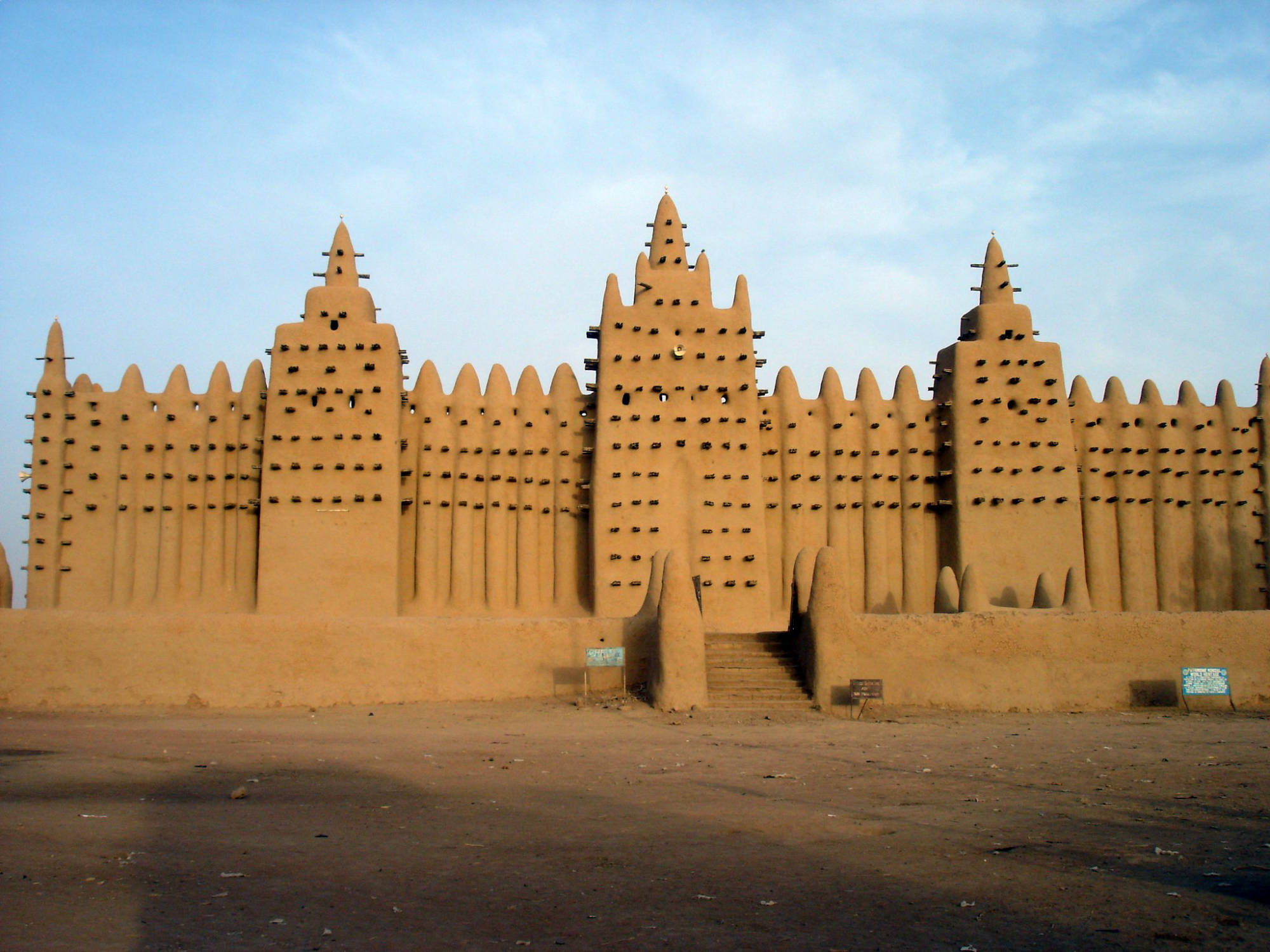
The new Ahmed Baba Institute of Higher Islamic Studies and Research, completed in 2009, introduces state-of-the-art techniques for conserving, exhibiting, and studying these famous Timbuktu manuscripts. dhk Architects of Cape Town designed phase one of the $8.36 million, 50,000-square-foot Institute, creating an archive of 20,000 manuscripts and a public library with reference materials on the culture of the region.

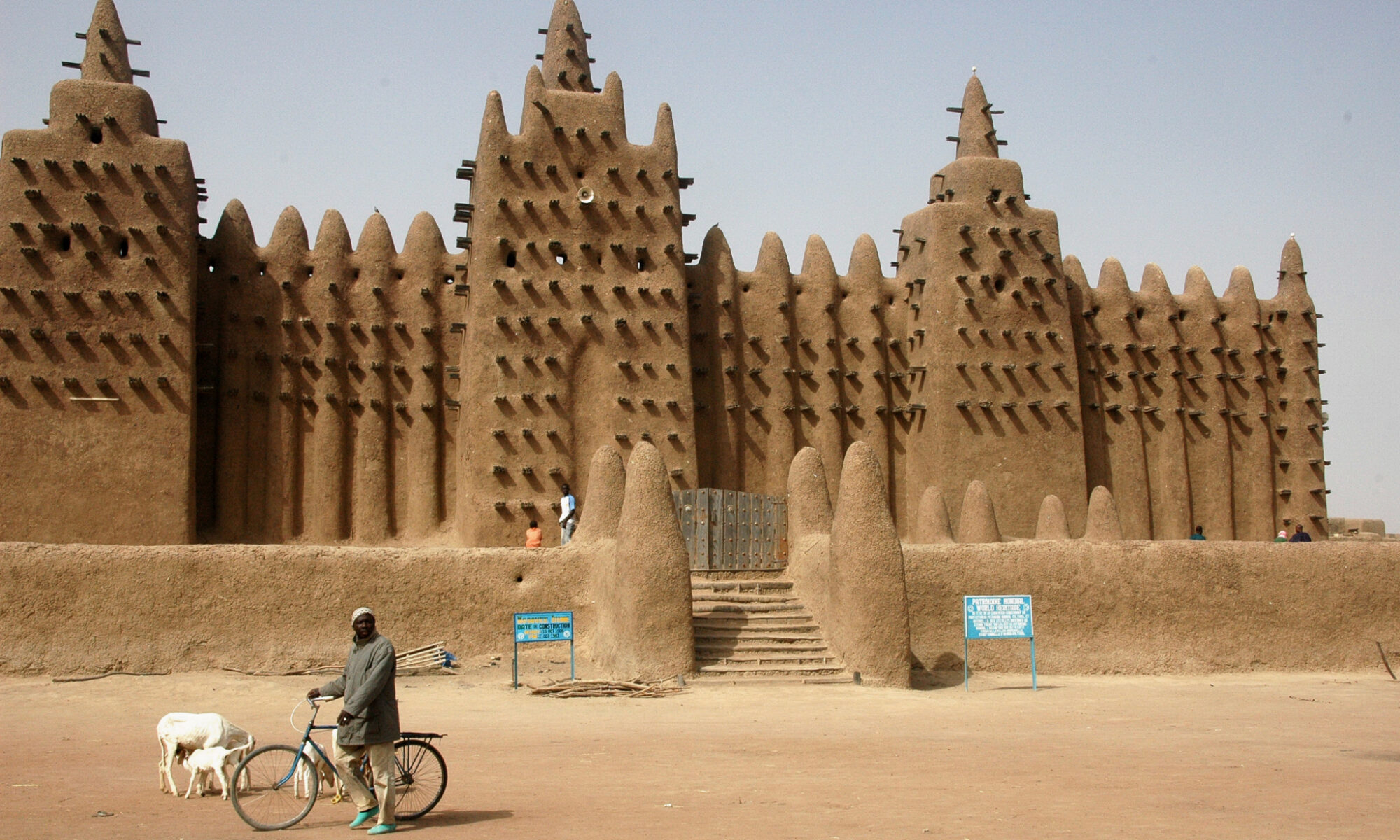
Andre Spies, the project architect for dhk, designed the institute and now heads his own practice in Cape Town called twothink architecture, which completed phase two — fitting out the interiors. To respect the vernacular architecture of the region, Spies chose to build primarily with mud, which requires maintenance after the annual rains. He found a local mason who mixed mud with concrete to make the facade rain-repellent, and he purchased mud bricks from craftsmen on the streets.

The introduction of a new building is challenging in the low-tech, mud-built setting of Timbuktu. Albakaye Ousmane Kounta, the Malian writer, poet, and storyteller, criticizes the building as “too modern.” Whereas fortresslike walls concealed the internal configuration of the former institute, the new one blurs inside and out with outdoor hallways arrayed along a “free plan.” This modern approach is uncommon in West Africa, where public and private spaces are strictly demarcated to keep out sand, roving donkeys, and itinerant people. The new design encourages access and openness, but it has drawbacks as well. In addition, some spaces — such as the auditorium — have rigid functions not easily adapted to other uses.

Read more at Architectural Record