Emerging Objects explores the frontiers of technology and material using traditional materials (clay, water, and wheat straw), to push the boundaries of sustainable and ecological construction in a two phase project that explores traditional clay craft at the scale of architecture and pottery. The end goal of this endeavor is to demonstrate that low-cost and low-labor construction that is accessible, economical and safe is possible. The project began in the contemporary borderlands along the Rio Grande watershed beginning in El Paso and Juarez and ended near the headwaters of the Rio Grande in Colorado’s San Luis Valley, which was the edge of the historic border between the U.S. and Mexico prior to 1848. The entire region has employed traditional pottery and earthen construction traditions for centuries. More at Mud Frontiers
The Farmer, the Architect and the Scientist
The Farmer, the Architect and the Scientist from The Gaia Foundation & ABN on Vimeo.
A new film, ‘The Farmer, the Architect and the Scientist’ tells the story of a seed hero. Dr Debal Deb is a pioneering ecologist committed to working with traditional farmers in eastern India to conserve indigenous seed diversity. Over almost two decades, Debal has managed to save 920 varieties of rice, all of which he stores in community based seed banks in West Bengal and Odisha for farmers. This film follows the construction of a new seed bank premises in Odisha, a venture that provides a potent symbol of Debal’s values.
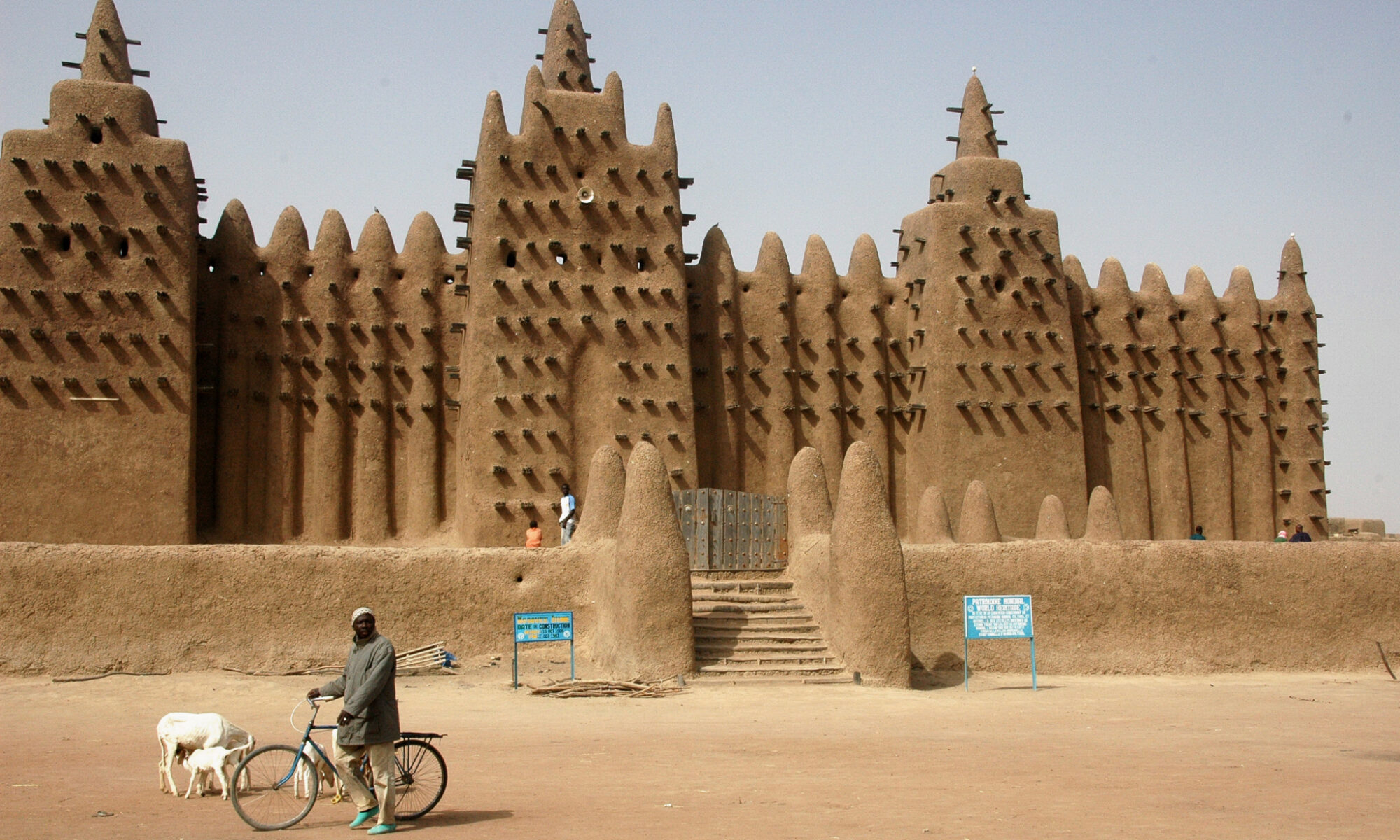
Shibam, Yemen
Experiencia MUVA
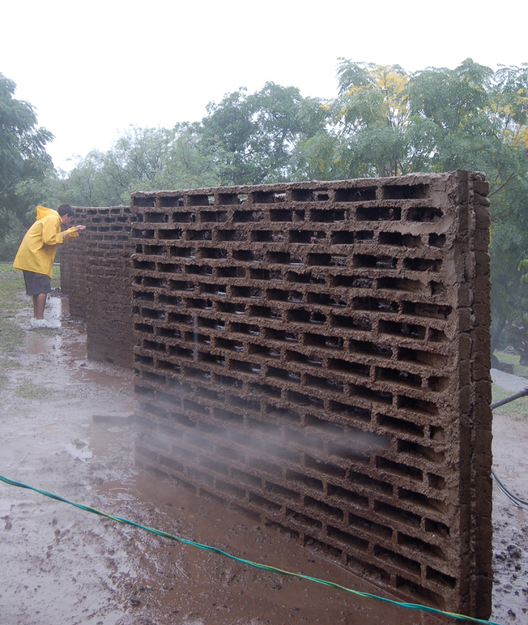
Using concrete and mud bricks, architects Solanito Benítez, Gloria Cabral, María Rovea y Ricardo Sargiotti have constructed a unique wall by hastening the erosion of the mud by washing it away once the concrete mortar had cured, leaving voids in the places where mud bricks were set.
Primary School Tanouan Ibi
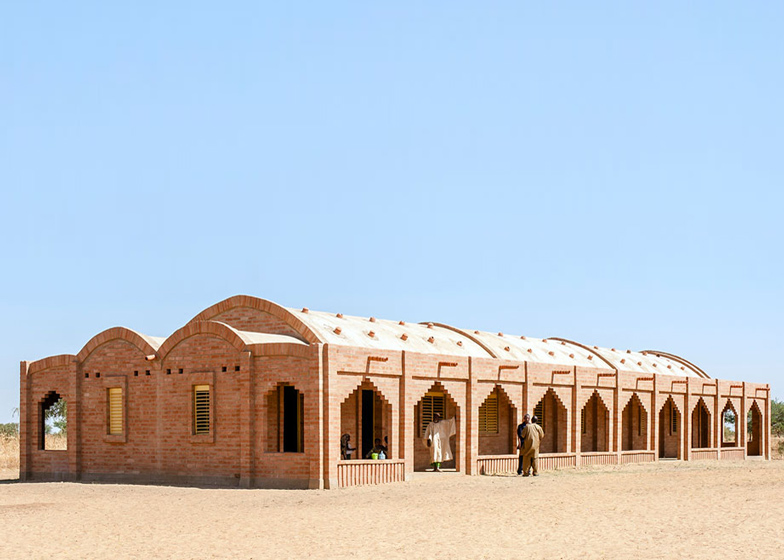
Dutch firm Levs Architecten used compressed earth blocks from local clay mines to build the barrel-vaulted structure of this primary school in the village of Tanouan Ibi.
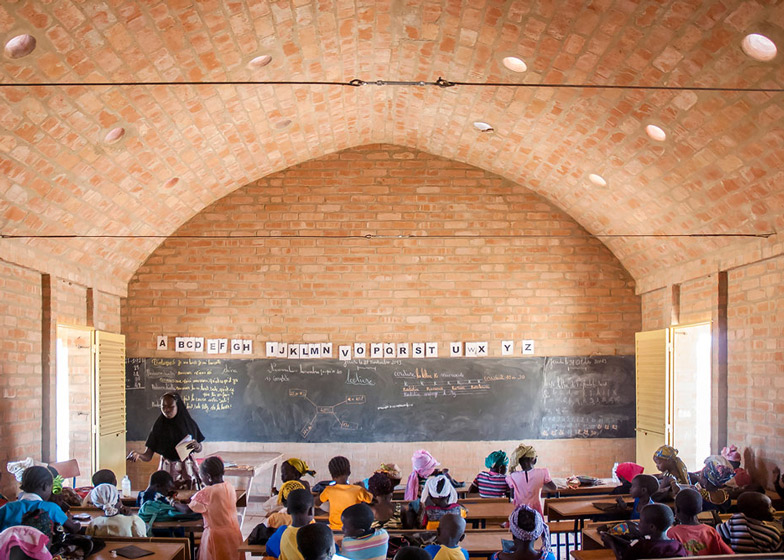
The architects enlisted students from a nearby university and members of the local community to help construct the building, using the compressed clay bricks to build walls, floors and roofing.
Iggy Azalea

Australian rap star Iggy Azalea grew up in a house that her father built by hand from mud bricks, surrounded by 5 hectares of land. She reminisces about it in her song Work:
You can hate it or love it
Hustle and the struggle is the only thing I’m trusting
Thorough bread in a mud brick before the budget
White chick on that Pac shit
My passion was ironic
And my dreams were uncommon
Swoon
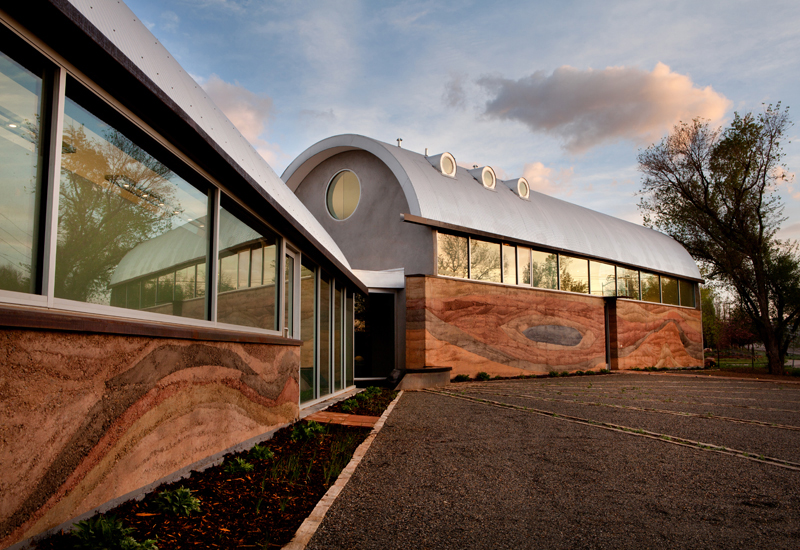
This Earth-inspired project by Tres Birds Workshop is a 7,000 sf private artist’s residency that uses 100% renewable resources, demonstrating fossil-free potential of the built environment. Four vertical geothermal wells were installed to transfer the Earth’s energy to the building’s heating and cooling system. A solar electric roof on the carport generates energy for interior LED lighting and electricity. To test the energy efficiency of the structure, a Home Energy Rating System (HERS) was performed, ranking it in the 74th percentile and exceeding code requirements by three times.
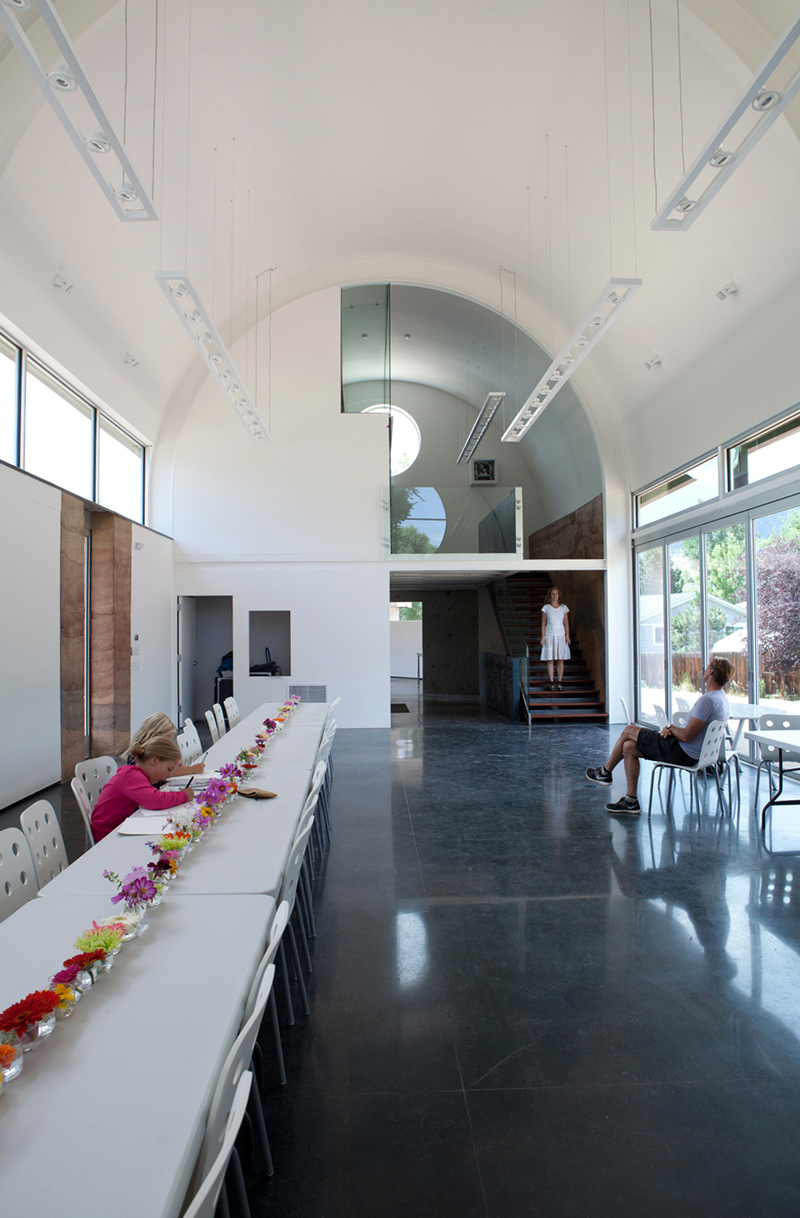
The structure was built using 200 tons of rammed Earth, a composite of regional dirt and pigments, compressed into 30” thick walls. This adds significant thermal mass to the building’s whole, optimal for temperature regulation. Bearing the structural load, these dense walls allow the space to exist free from obstructions, ideal for a simplified interior and exhibiting artwork.
More information at tresbirds.com/SWOON
Silent German Films on Earth Building
Ricola Herb Centre
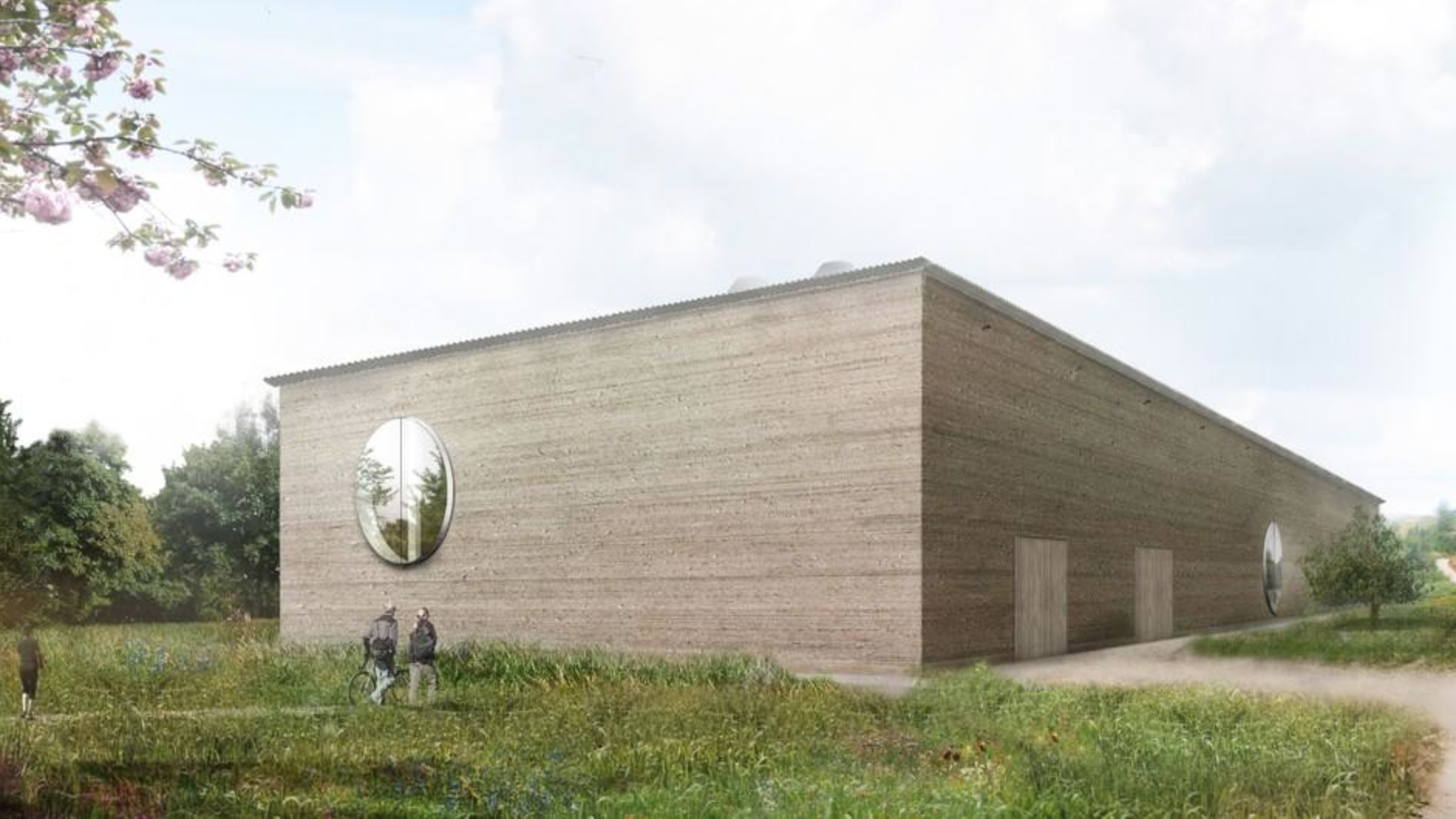
The Ricola Herb Centre in Laufen (Basel), Switzerland was designed in 2012 by renowned architects Herzog & de Mueron with a facade constructed by master clay builder Martin Rauch, the building is a high-volume long building with flat roof and façade built using the rammed earth. Façade elements made of compacted local clay sourced from the Laufen valley will form Europe’s largest loam building by 2014. From spring 2014, Ricola’s herb processing activities will be entirely carried out at a single location. Distinctive features of the brand new production building are high energy efficiency and state-of-the-art green building principles.
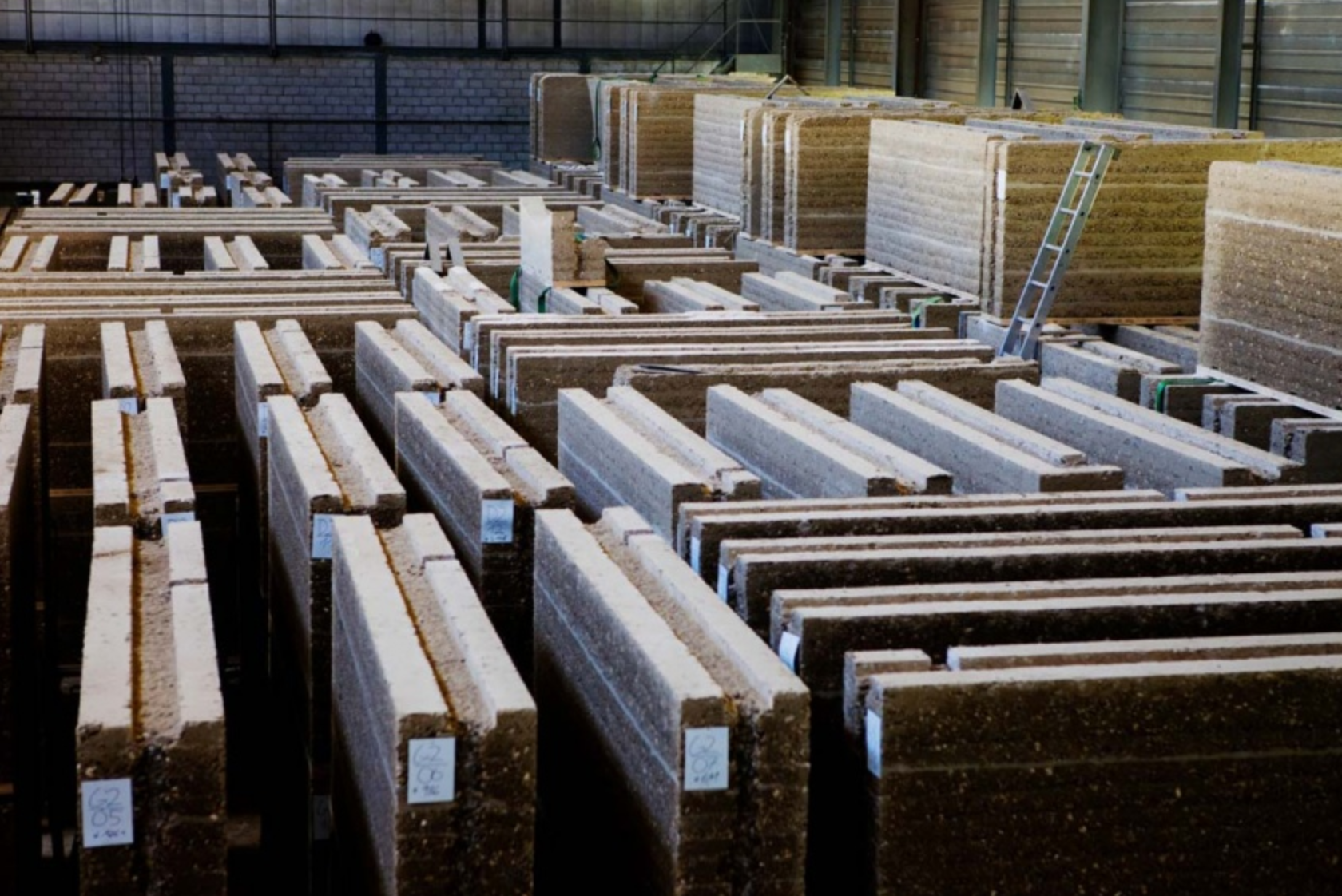
The new building reveals many aspects of Ricola’s strong commitment to its production location in Switzerland and at home in Laufen. Its self-appointed high goals for ecology and sustainability are consistently pursued: Logistics efficiency and the sensible use of resources are at the forefront for this project. The new building will be completely constructed using loam sourced from the Laufen valley. Lehm Ton Erde Baukunst GmbH (LTE), a specialist company based in the Vorarlberg alpine region in Switzerland, manufactures the prefabricated façade elements. Production is housed in a temporary hall in the neighboring town of Zwingen where LTE practices a newly developed procedure. No elements are used other than natural and organic earth from Laufen.
More information at: [ www.lehmtonerde.at/en/projects/project.php?pID=87 | www.ricola.com/en-ch/Meta/Media/Press-releases/Ricola-Herb-Center ]
Butabu: James Morris
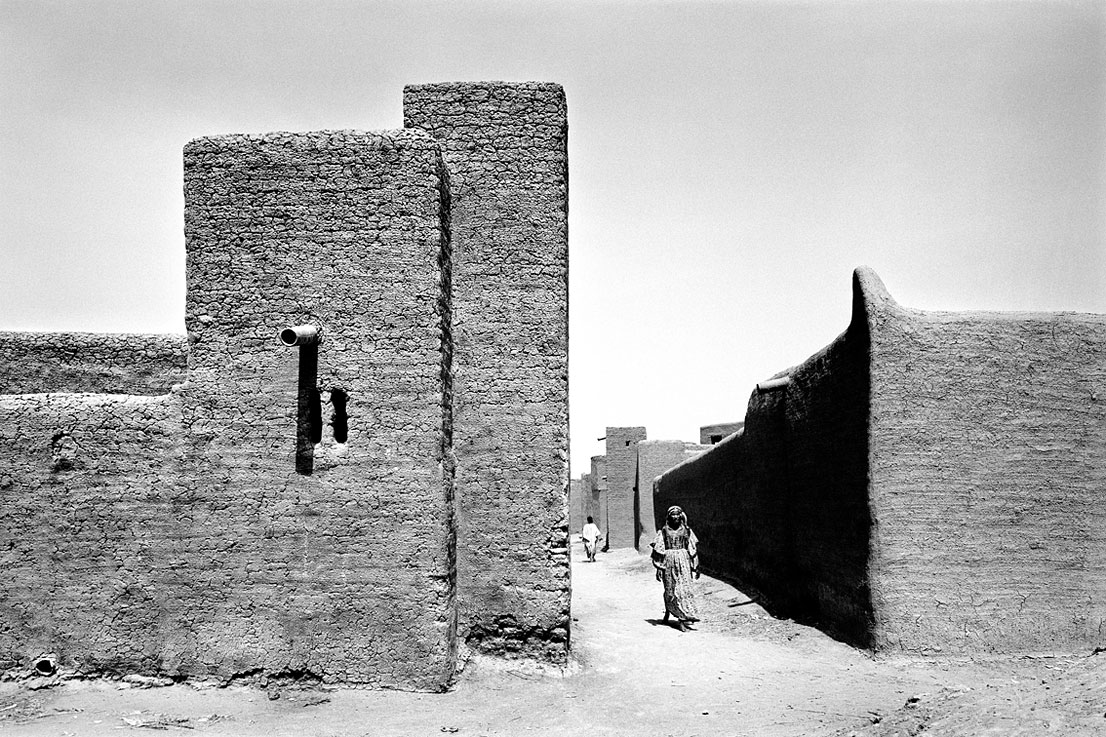
Butabu is the online portfolio of the earthen architecture of Sub-Saharan Africa as photographed by James Morris and published in a book by Princeton Architectural Press 2003 and Electa 2004.