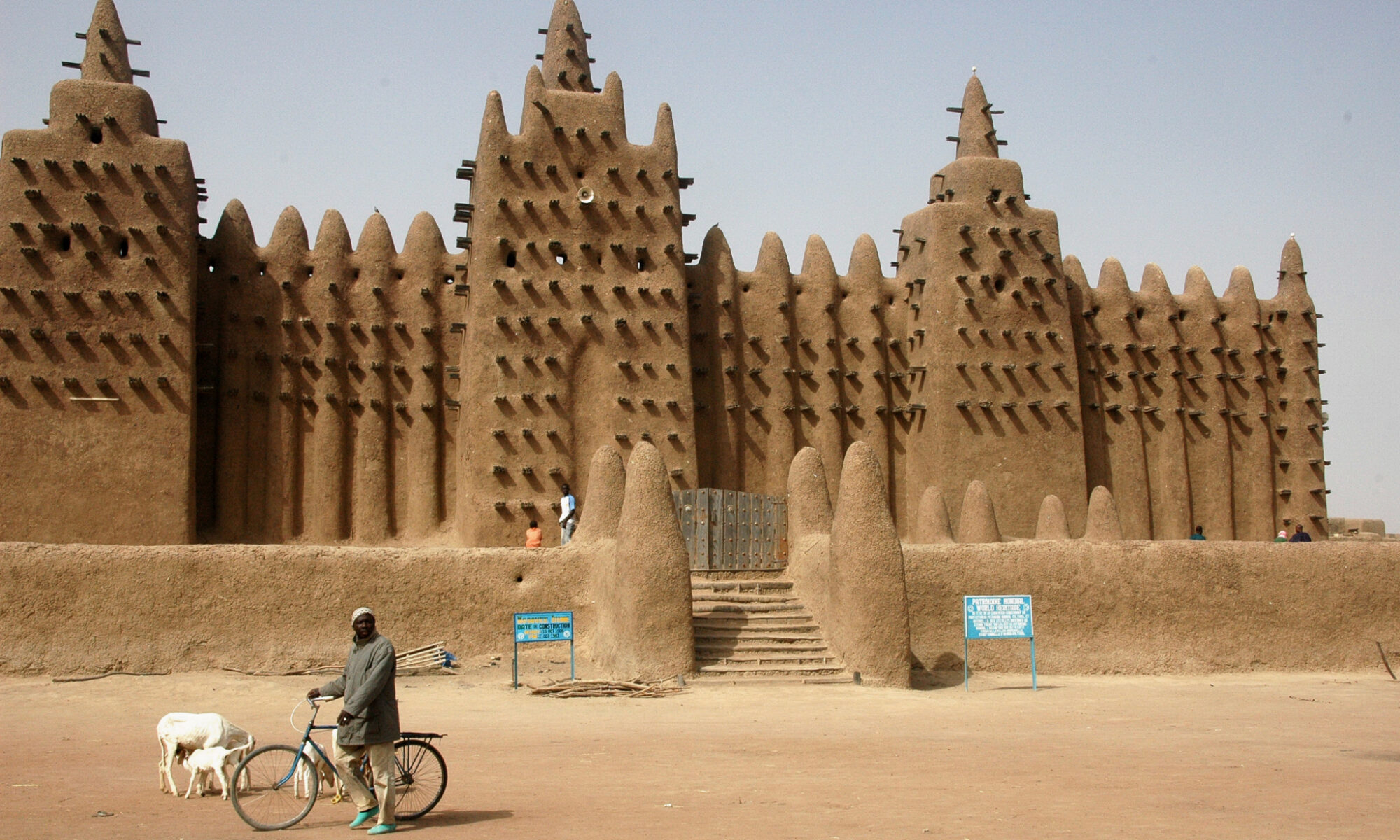
Only recently rediscovered. An ancient site in the port of Qingdao has revealed the oldest known observatory in China. The Chinese Astronomy Society, learned of the finding at its annual convention. Experts point to historical evidence, that the Langya Observatory in east China’s Shandong Province, was built during the Warring States Period— more than 22-hundred years ago. The three-storey structure stands about nine meters. The original structure was made of rammed earth. The observatory was evidently erected as a site for studying the stars as well as for monitoring conditions at sea. [ Watch ]
Adobe Conservation: A Preservation Handbook
Adobe Conservation: A Preservation Handbook
Cornerstones Community Partnerships in Santa Fe, New Mexico is devoted to the preservation of the architectural heritage and community traditions in New Mexico and the American Southwest. Through its nationally honored technical assistance, applied learning and traditional building skills programs, Cornerstones has assisted more than 300 rural Hispanic and Native American communities with the preservation of historic and culturally significant earthen buildings. Cornerstones has developed and utilized the techniques in this book throughout the American Southwest since 1986.
Historic Rammed Earth
Dr. Paul Jaquin at www.historicrammedearth.co.uk has revamped and improved his website. Visit the Historic Rammed Earth website for lots of information about the science of rammed earth and earth buildings, and studies of rammed earth in Nepal, Morocco, Spain and India.
North American Rammed Earth Builders’ Association
The North American Rammed Earth Builders’ Association (NAREBA) is a not for profit entity that offers the opportunity for its members to share in the passion for working with earthen materials and to contribute to the advancement of RE construction. NAREBA builders share a resource base of over 150 years of collective building experience and have committed to building RE walls with the highest standards in the industry.
How To Build a Compressed Earth Block Home
Hallock’s Colorado-based company, Earth Block Inc, has developed an especially efficient and affordable process for earth block production. “Earthen walls have always been the best,” Hallock said during a press tour of the Baja, Mexico facility where he oversees the production of compressed earth blocks (CEBs) for construction at The Villages of Loreto Bay. Compressed earth blocks were chosen for the new resort community because they can be made economically from local materials. CEBs are also energy-efficient and durable. “Bugs don’t eat them and they don’t burn,” Hallock said. The How-To begins here.
Tebogo Home for Handicapped Children
Orange Farm is a township in the southwest of Johannesburg. The social situation is characterised by poverty, AIDS and unemployment. The appearance of the development is dominated largely by buildings or shacks made mostly of sheet metal, corrugated iron or parts of cars. In summer it can become unbearably hot in these shacks (up to 45°C), while during winter nights it can be noticeably cold (to 2°C).
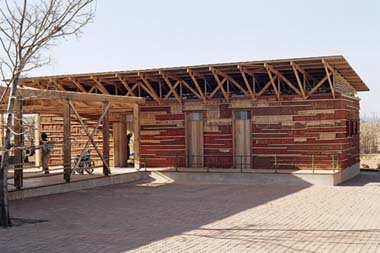
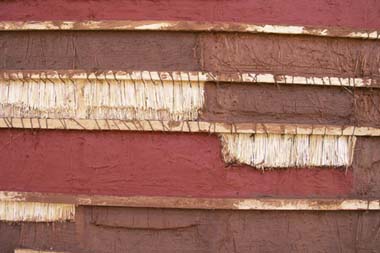
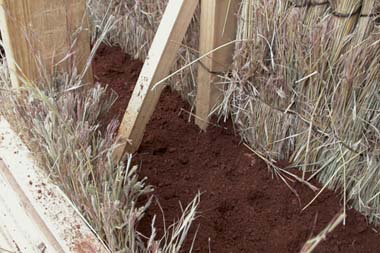
BASE habitat was commissioned by the Tebogo Home for Handicapped Children. The Austrian NGO SARCH set up this contact for us. The home for almost 50 children had become too small. In a group of 25 students we planned and built a dining building with a new kitchen, and a therapy building with sanitary facilities. A generously dimensioned pergola, a garden hall, connects the buildings with each other. The buildings we erected in Tebogo have a pleasant indoor climate throughout the year – without the use of energy. In this way we were able to reduce the fluctuation in temperature to only 9°C. Local workers, above all women, were integrated in the project. The building materials were acquired directly from the township: concrete blocks, earth, clay, straw, timber, grass mats – to strengthen the local economy and to make later repetition easier. One of the main aims was to make buildings that suited the needs of the children. They received a home that conveyed a sense of security and joy in living.
Clan Homes in Fujian
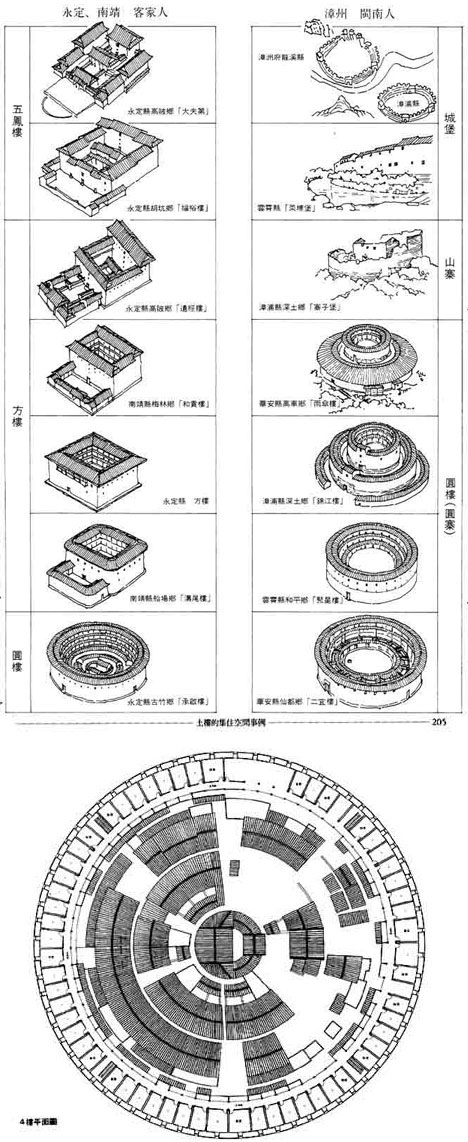
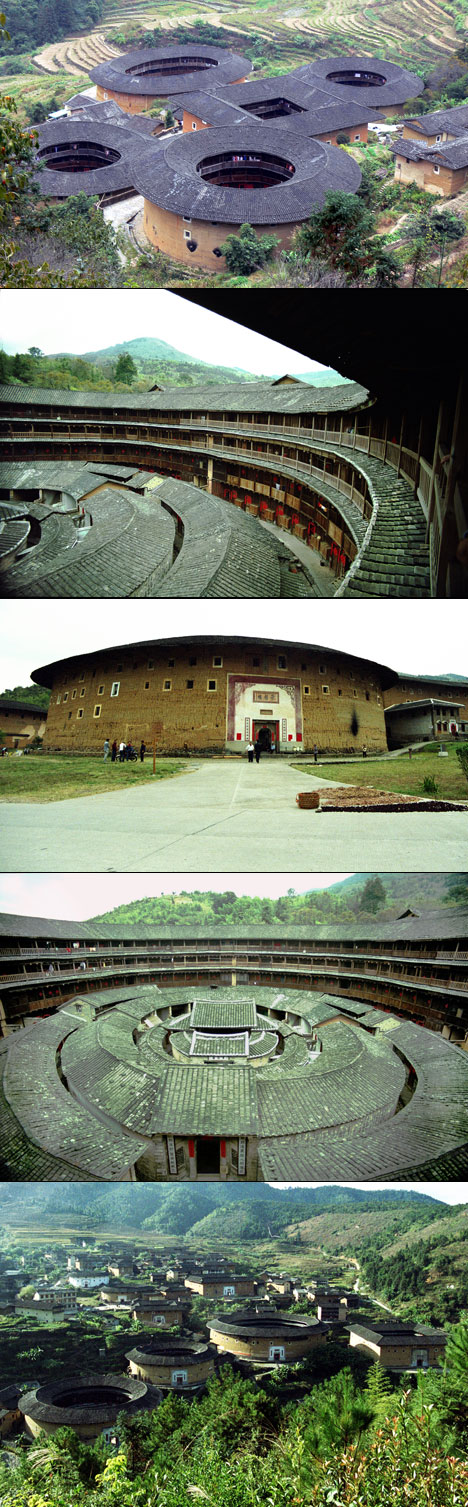
Clan homes in Fujian by Jens Aaberg-Jørgensen, originally published in Danish in ARKITEKTEN no. 28, November 2000, pp. 2–9, is an exceptional resource of photos, drawings and documentation of the round, rammed earth miniature circular castles, constructed from the 11th to 20th centuries that are shared by entire clans; their circular shapes, single point of entry, and weapons portholes were designed to optimize defense. As we reported previously, the structures were recently protected by UNESCO.
[ via Core 77 ]
Tolou added to UNESCO World Heritage List
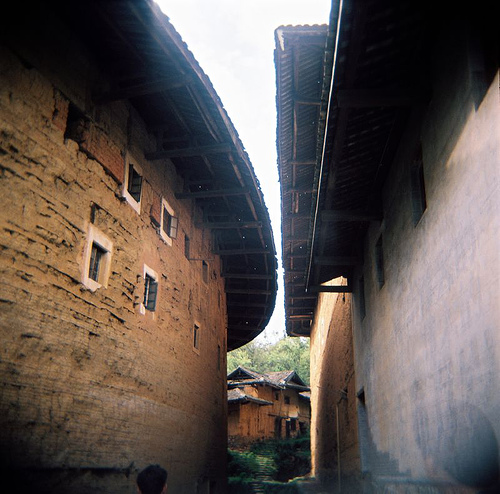
Tulou, the unique rammed earth buildings of Fujian Province in southeastern China, were added to the UNESCO World Heritage List on Sunday, during the 32nd session of the World Heritage Committee. According to the submission provided by China’s State Administration of Cultural Heritage, the Tulou buildings have been built since the 11th century. Designed to meet the requirements of a whole clan living together, they usually consist of a rammed earth outer wall and internal wooden framework, often of a circular configuration surrounding a central shrine.
A Mudbrick City Wall at Hattuša
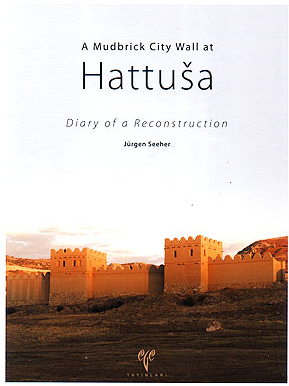
Situated in Central Anatolia, Hattuša remained the capital city of the Hittites from 1650/1600 to around 1200 BC. Here, as recently as 2003 to 2005, the German Archaeological Institute has rebuilt one stretch of the mudbrick city wall. The scope of this project in experimental archaeology has been to recreate a part of the wall using the same materials the Hittites had at hand when they built their original walls so long ago. Each step necessary for the construction was fully documented so as to enable us to assess not only the amount of building materials required but also the manpower and time the Hittites must have invested in the various tasks of construction.
This volume presents the results gleaned from this documentation. From the production of the first mudbrick to the dedication of the finished structure, each and every undertaking has been described in detail and is presented here accompanied by 573 illustrations.
For more information visit:
German Institute of Archaeology (In english, german and turkish)
Hattuscha-webpage (in English, German and Turkish)
This book is published also in German and Turkish:
Die Lehmziegel-Stadtmauer von Hattusa
Bericht über eine Rekonstruktion
ISBN 978-975-807-194-7
Hattusa Kerpic Kent Suru
Bir Rekonstrüksiyon Çal??mas?
ISBN 978-975-807-193-9
El Faro: The Citizens’ Initiative Pavilion
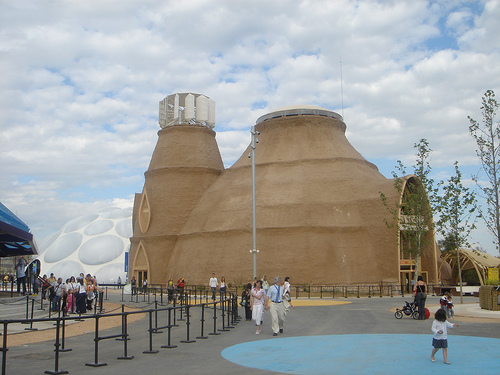
The architectural project of the Citizens’ Initiative Pavilion building is the work of the architect Ricardo Higueras for the Zaragoza Expo 2008.
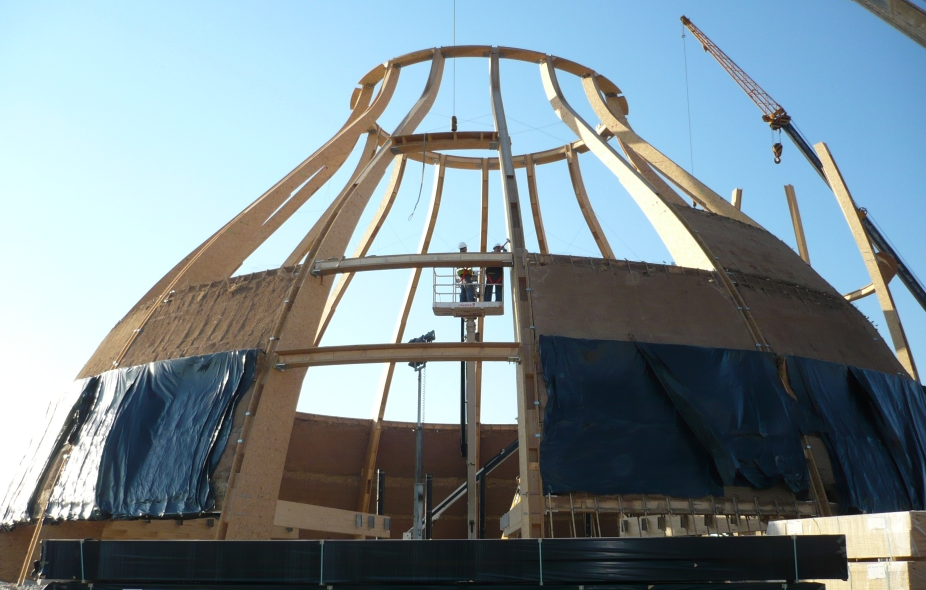
The pavilion building will be based on energy efficiency, recycling and sustainability. Both the building’s shape and its use are based on the traditional ceramic pitcher. The materials used are natural and come straight from the earth: straw, wood, and clay. Prefabricated clay-plastered panels were attached to a super-structure to enclose the pavillion. More photos in the photo gallery. [ Previously ]