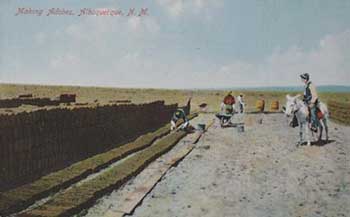
Making adobes in Albuquerque. Date unknown.
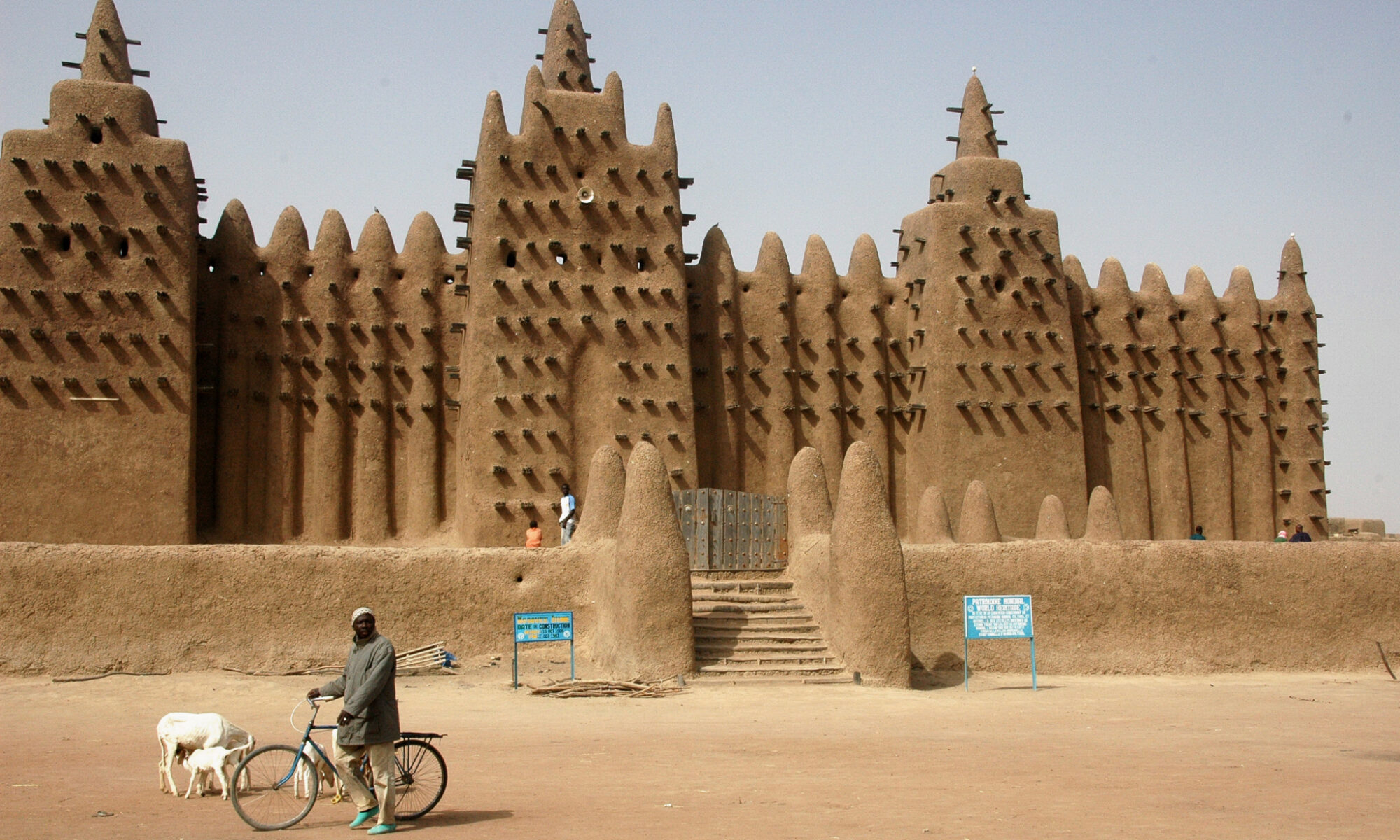
Architecture, Art, Design, and Culture using of mud, clay, soil, dirt & dust.
Making adobes in Albuquerque. Date unknown.
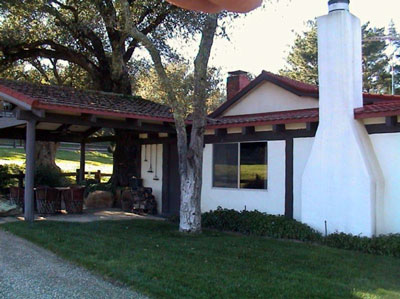
Rancho del Cielo, the former Western White House of the former president Ronald Reagan, where he spent more than a full year of his eight years in office, was first named Rancho de los Picos after Spanish settler Jose Jesus Pico, the last Mexican Governor of Alta California, who moved north from Mexico and built the original adobe house in 1871. The Pico family owned the property until 1941, when it was sold to Frank Flournoy for $6,000, who named the property Tip Top Ranch. In 1955, Roy and Rosalie Cornelius bought the ranch and purchased additional land to add to the property. The Reagans bought the 680-acre ranch in 1974 for $527,000, when Reagan’s second term as governor of California was coming to an end. The Young America’s Foundation bought the Ranch in 1998 to preserve it as an historical site.
Saddam Hussein was born in Tikrit, Iraq on April 28, 1937 and grew up in the town of Al Dawr, a mud-brick town on the banks of the Tigris River. Adobe dwellings in Iraq date back as far as 8000 b.c. The earliest known form molded adobe blocks are also in Iraq (5600 b.c).
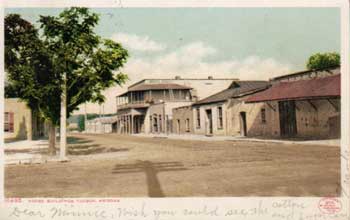
This photo-postcard from 1906 shows several adobe buildings in Tucson, Arizona including Hotel Hall with its wide balconies.
www.terracruda.com has some interesting examples of modern earth architecture. The site is only in Italian, but you can translate at babelfish.
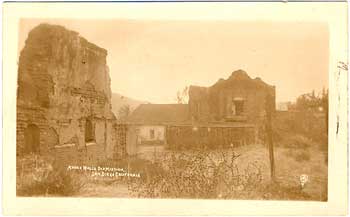
Adobe Walls at an Old Mission in San Diego, California, date unknown
Quentin Wilson is the “The Adobe Building Resource of Northern New Mexico”.
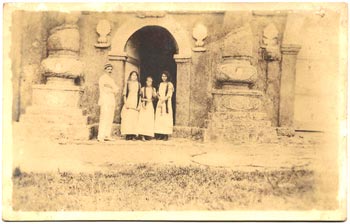
Photo of four people posing infront of a Spanish Colonial era adobe Paoay Church in Ilocos Norte, Philippines. c.1910.
Is this the oldest existing earth block building in Australia?
A University of Technology, Sydney engineering student recently returned from El Salvador where he coordinated construction of an earthquake-resistant mud brick building of his own design.