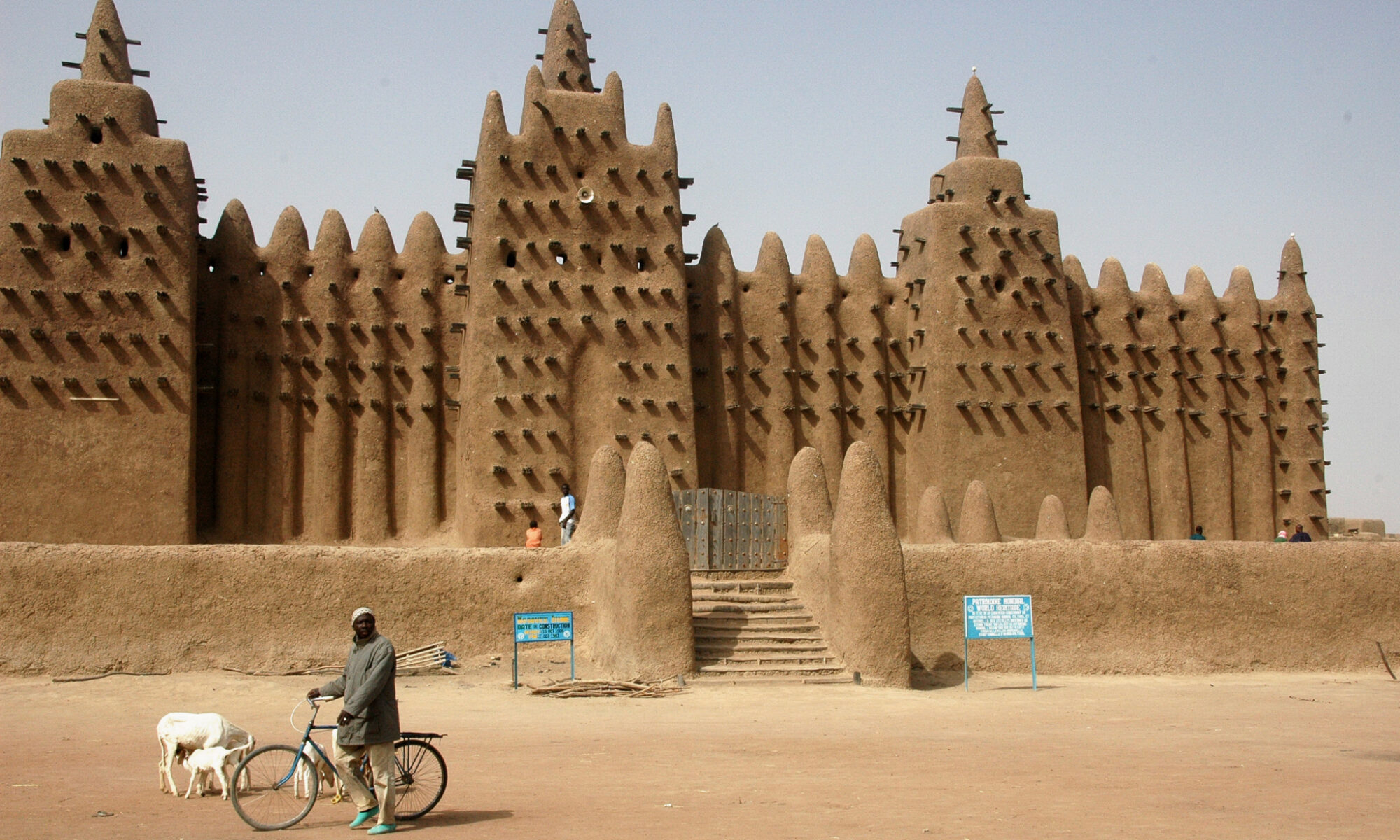
Great Wall of China

Builder: Imperial Chinese Dynasties (Qin, Han, Ming)
Location: Northern China
Primary Construction: 3rd Century BCE – 17th Century CE
Length: Over 21,196 km (13,000+ miles)
Construction: Rammed Earth, Stone, Brick
The Great Wall of China is one of the largest architectural and engineering systems ever constructed. Rather than a single continuous wall built at once, it is a network of defensive walls, watchtowers, fortresses, and natural barriers constructed over nearly two millennia to protect imperial China’s northern borders.
HISTORICAL CONTEXT
The Great Wall of China does not have a single architect because it was constructed across multiple dynasties over nearly 2,000 years. Instead, it represents evolving architectural authorship under different imperial rulers. Each dynasty functioned as both patron and designer, adapting the Wall to new political and military conditions.
Qin Dynasty – Qin Shi Huang (3rd Century BCE)
The first large-scale unification of defensive walls began under Qin Shi Huang in 221 BCE.
Qin Shi Huang was born in 259 BCE in the state of Qin during the Warring States period. Although he was not formally “educated” as an architect in the modern sense, he was trained as a ruler and military strategist. After conquering rival states, he unified China and centralized political authority. His administrative reforms standardized writing systems, currency, road systems, and infrastructure.
His motivation for building was strategic and political. Northern nomadic groups such as the Xiongnu threatened the stability of the newly unified empire. By linking previously independent regional walls into a continuous defense system, Qin Shi Huang aimed to secure territorial boundaries and demonstrate imperial strength.
Contribution:
Connected regional defensive walls into a larger unified system.
Established rammed earth as the primary construction method.
Used forced labor from soldiers, peasants, and prisoners.
Positioned walls along natural ridgelines for defensive advantage.
These early sections were constructed primarily from rammed earth. Soil was compacted in layers between wooden forms, creating dense, load-bearing defensive barriers.
Han Dynasty (206 BCE – 220 CE)
During the Han Dynasty, the Wall was expanded westward to protect Silk Road trade routes. Han emperors were administrators and military rulers, continuing Qin’s centralized governance model.
Contribution:
Extended Wall deeper into desert regions (Gansu corridor).
Used rammed earth mixed with gravel and reeds for added strength.
Integrated beacon towers for rapid communication.
The Han contribution emphasizes the Wall not only as defense but as economic infrastructure. It controlled trade taxation and secured caravan routes.
Ming Dynasty (1368–1644)
The most recognizable and well-preserved sections today were built during the Ming dynasty.
The Ming emperors were ruling after the fall of the Mongol-led Yuan Dynasty. Having experienced foreign rule, they were deeply invested in border security. Imperial engineers during this period functioned as state-trained builders and military designers.
Unlike earlier rammed earth walls, Ming engineers incorporated advanced masonry techniques.
Contribution:
Rebuilt large portions using fired brick and stone.
Created composite walls: brick exterior with rammed earth or rubble core.
Designed fortified passes with complex gatehouses.
Increased tower frequency for line-of-sight signaling.
Improved drainage systems to reduce erosion.
The Ming sections represent a technological evolution. The structure became thicker, taller, and more fortified. Towers included interior rooms, stairs, storage spaces, and defensive openings.
SITE & LANDSCAPE

The Wall stretches across mountains, deserts, and grasslands. It follows ridgelines to maximize visibility and reduce material needs. By working with the landscape, the Wall becomes both fortification and landform.
PROGRAM, MATERIALS, & FORM


The Great Wall is not a single building with square footage but a territorial-scale system. It extends more than 21,000 kilometers across northern China.
Program includes: Defensive walls, Watchtowers, Beacon towers, Fortified gates and passes, Military housing, Trade control checkpoints
Early Construction: Rammed earth (tamped soil between wooden forms), Gravel and reeds in desert regions
Later Construction (Ming): Fired brick facing, Stone foundations, Rammed earth or rubble core, Lime mortar
The process involved layering material in lifts and compacting each layer. The walls taper upward, creating structural stability through compressive mass.
The form of the Wall is linear and serpentine. It adapts to terrain rather than imposing a rigid geometry. Watchtowers create rhythmic intervals along the landscape. The thickness of the wall allows it to be inhabitable. Soldiers could move along its top, shelter inside towers, and defend through crenellations.
RAMMED EARTH CONSTRUCTION
Before brick and stone were widely used, large portions of the Wall were constructed using rammed earth. This method involved placing soil between wooden formwork and compacting it in layers using tampers. Each layer was compressed until it formed a dense, rock-like mass.
Rammed earth was ideal for several reasons. It used locally available soil, reducing transportation demands. It created extremely thick, load-bearing walls with high compressive strength. In arid climates, rammed earth proved durable and stable over centuries.
In many Ming sections, rammed earth forms the internal core of the wall, while brick and stone create a protective exterior shell. This composite system combines the mass and structural stability of earth with the weather resistance of masonry.
The Great Wall demonstrates that rammed earth can perform at massive territorial scale. It validates earth as a structural material capable of forming defensive infrastructure thousands of miles long.
CONCLUSION
The Great Wall of China demonstrates architecture at the scale of geography. It redefines what a “building” can be by functioning as territorial infrastructure.
It inspired later global fortification systems, use of rammed earth in defensive architecture, and integration of architecture with topography.
Architecturally, it proves that rammed earth is not primitive but structurally capable of massive construction. The material’s compressive strength, durability in arid climates, and availability made it ideal for large-scale defense.
Politically, the Wall symbolizes centralized authority and national identity. It reflects the ability of the state to mobilize labor and resources over generations.
Environmentally, it demonstrates sustainable construction through local material sourcing and terrain integration.
Ultimately, the Great Wall is not just a defensive barrier. It is a layered architectural narrative built over centuries, reflecting evolving technologies, political ambitions, and material intelligence. It stands as one of the earliest examples of architecture functioning simultaneously as engineering, infrastructure, cultural symbol, and landscape intervention
Image Credits:
UNESCO World Heritage Centre
Text Sources:
UNESCO World Heritage Centre. “The Great Wall.” https://whc.unesco.org/en/soc/3642
Magellan TV “Who Built the Great Wall of China and Why?” https://www.magellantv.com/articles/who-built-the-great-wall-of-china-and-why