Location: Oaxaca de Juárez, México
Year: 2022 | Sq Ft: 754 ft² (70 m²)
Architect: Espacio 18 Arquitectura – Carla Osorio and Mario Ávila
Construction: Adaptive reuse of adobe masonry reinforced with steel
Photographs: Camila Cossio, Espacio 18 Arquitectura via ArchDaily
Espacio 18 Arquitectura is a studio based in Oaxaca de Juárez, founded by Carla Osorio and Mario Ávila (1990), both Mexican architects educated and practicing primarily in Mexico, with projects extending to Tucson, Arizona. Their work is focused on close listening rooted in research and collaboration rather than formal preconception. Projects develop from context, client, and existing fabric rather than a repeated stylistic language. Structure is exposed when necessary, materials remain direct, and spatial decisions emerge from use.
“Every design becomes a personal portrait — shaped together… Each of our projects looks and feels different because each one emerges from a different story.” – https://www.espacio18.mx/about
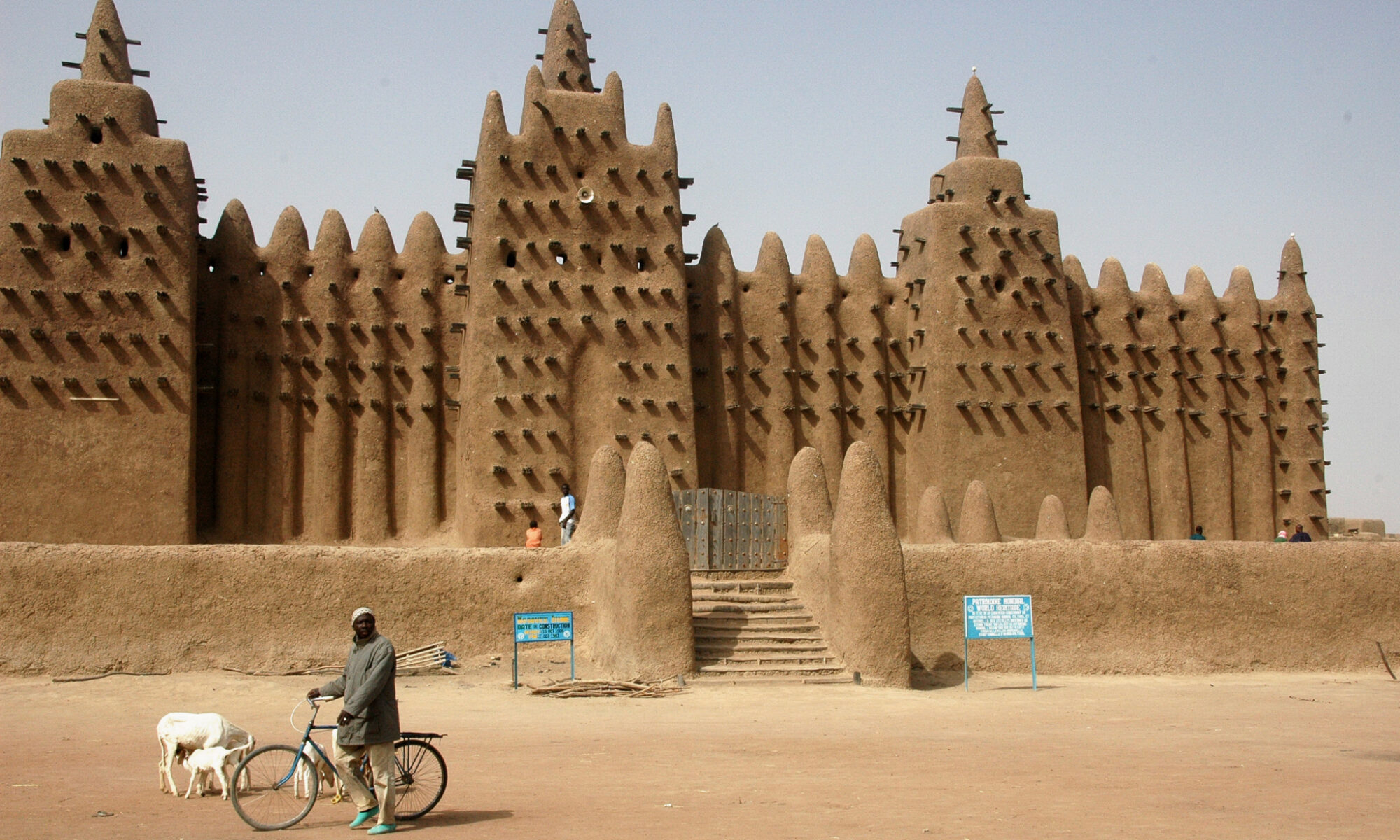
Masea Wheat & Corn Bakery (2021) and Plúmula Workshop House (2022) were among the projects that brought recognition to the firm. Masea gained attention for its careful reinterpretation of a traditional Oaxacan bakery through restrained material expression and spatial clarity, positioning everyday food production within a refined architectural framework. Plúmula became widely published for its adaptive reuse of adobe reinforced with a lightweight steel frame, clearly articulating a contemporary approach to earthen construction while maintaining strong ties to site and craft culture.
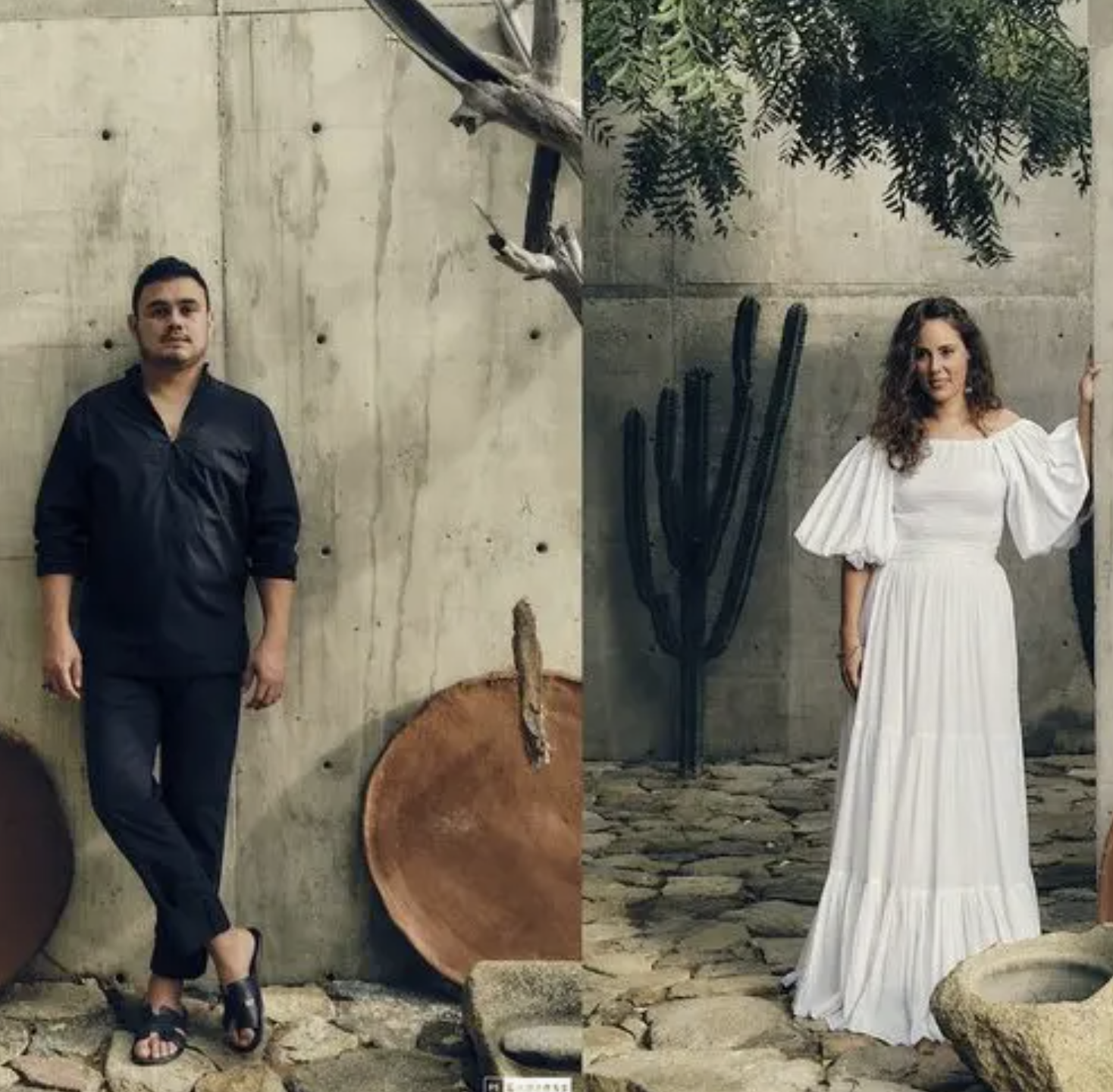
Carla Osorio and Mario Ávila | Photo: Metalocus
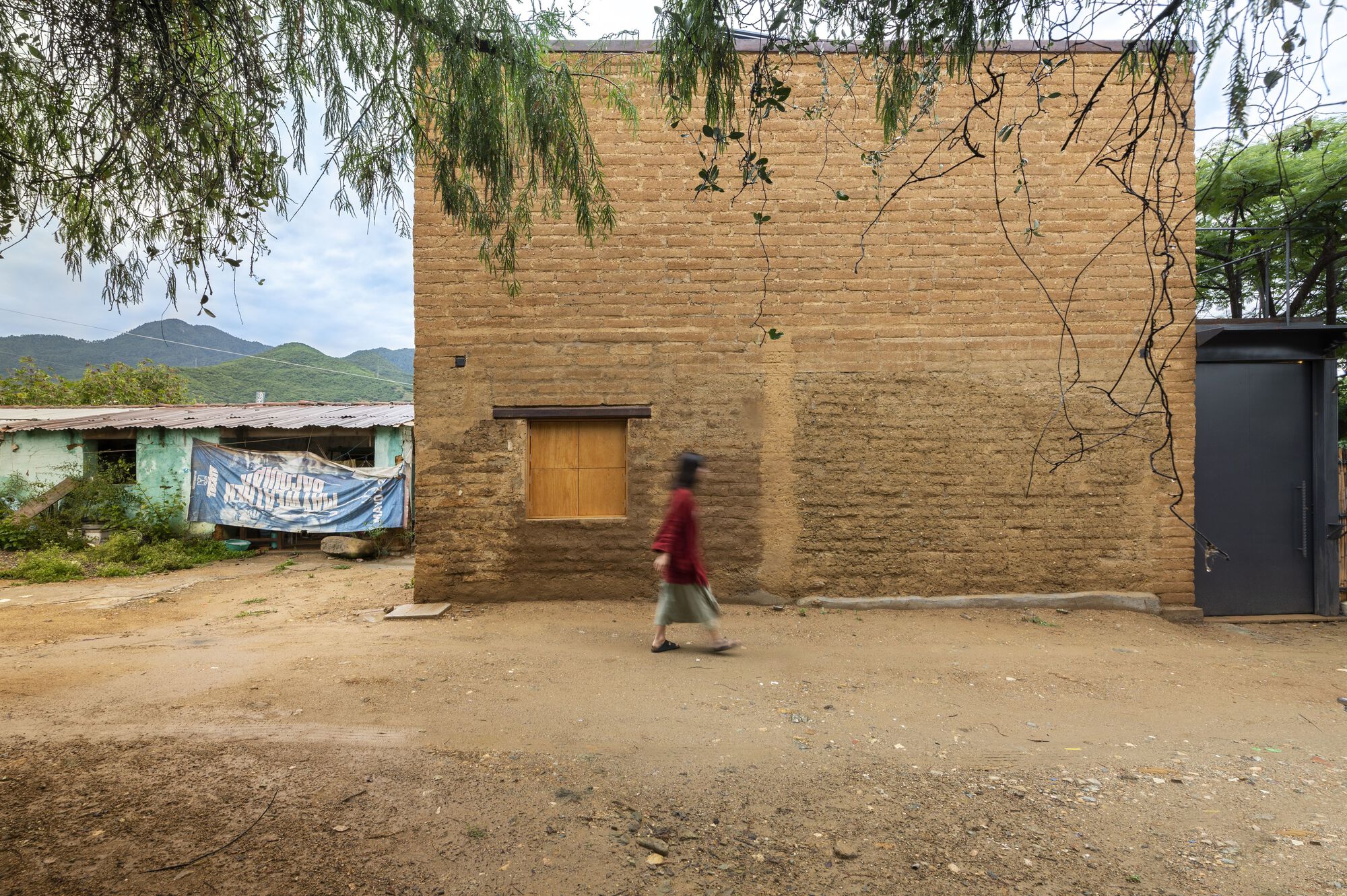
This project, the Plúmula Workshop House, began with an inherited half-house made of adobe masonry and a mature flamboyán tree. These two elements established both structure and center. The tree became the spatial anchor, the adobe the material foundation. The design emerges from an ethos of reinforcing what exists, stabilizing rather than replacing, and allowing the house to grow from its given condition.
The structure had stood unfinished for decades when Amy, a plastic artist, sought to transform the existing walls into a ceramics workshop, home, and space for gathering and rest during her visits to Mexico. The challenge was to retain the material character and history of the structure while completing it in a way that made it functional and structurally sound.
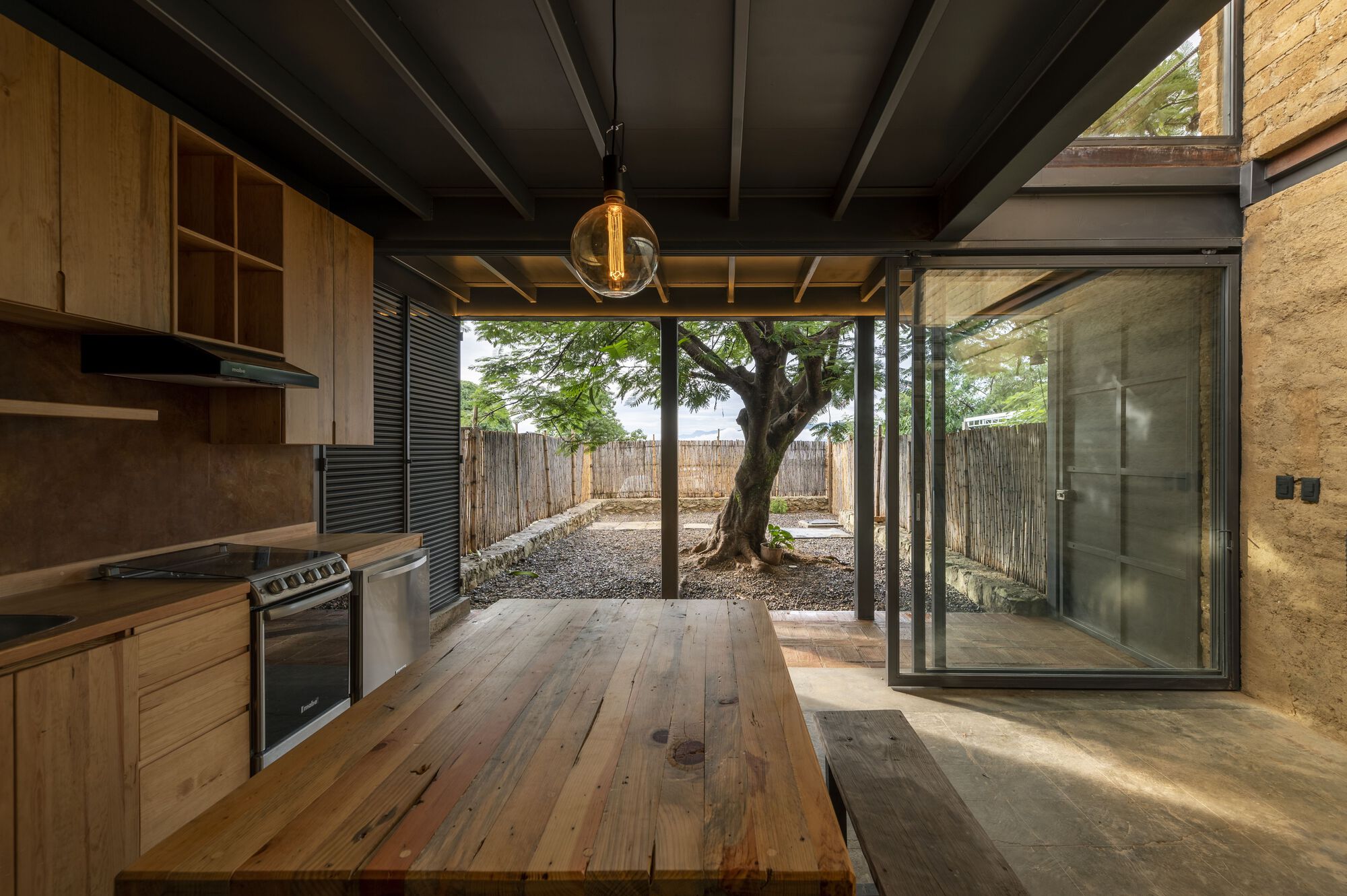
The response is careful and restrained. The original load bearing adobe walls remain as the primary enclosure and source of thermal mass. Lightweight exposed steel is inserted to stabilize the masonry, support new roof planes, and frame calibrated openings for doors, windows, and circulation. The connection between steel and adobe is left visible, clearly distinguishing what is existing from what is newly added. These moments cluster around the courtyard, areas of reinforcement, and points where light and movement enter the space. The rawness of both materials contributes to a sense of honesty and continuity with the site.
The material palette is local and deliberate, limited to adobe, steel, pine, and red brick. This restraint creates cohesion and warmth without excess. Environmental performance is integrated into the construction through thermal mass, a solar heater, rainwater harvesting, and LED lighting, allowing sustainability to operate quietly within the architecture itself.
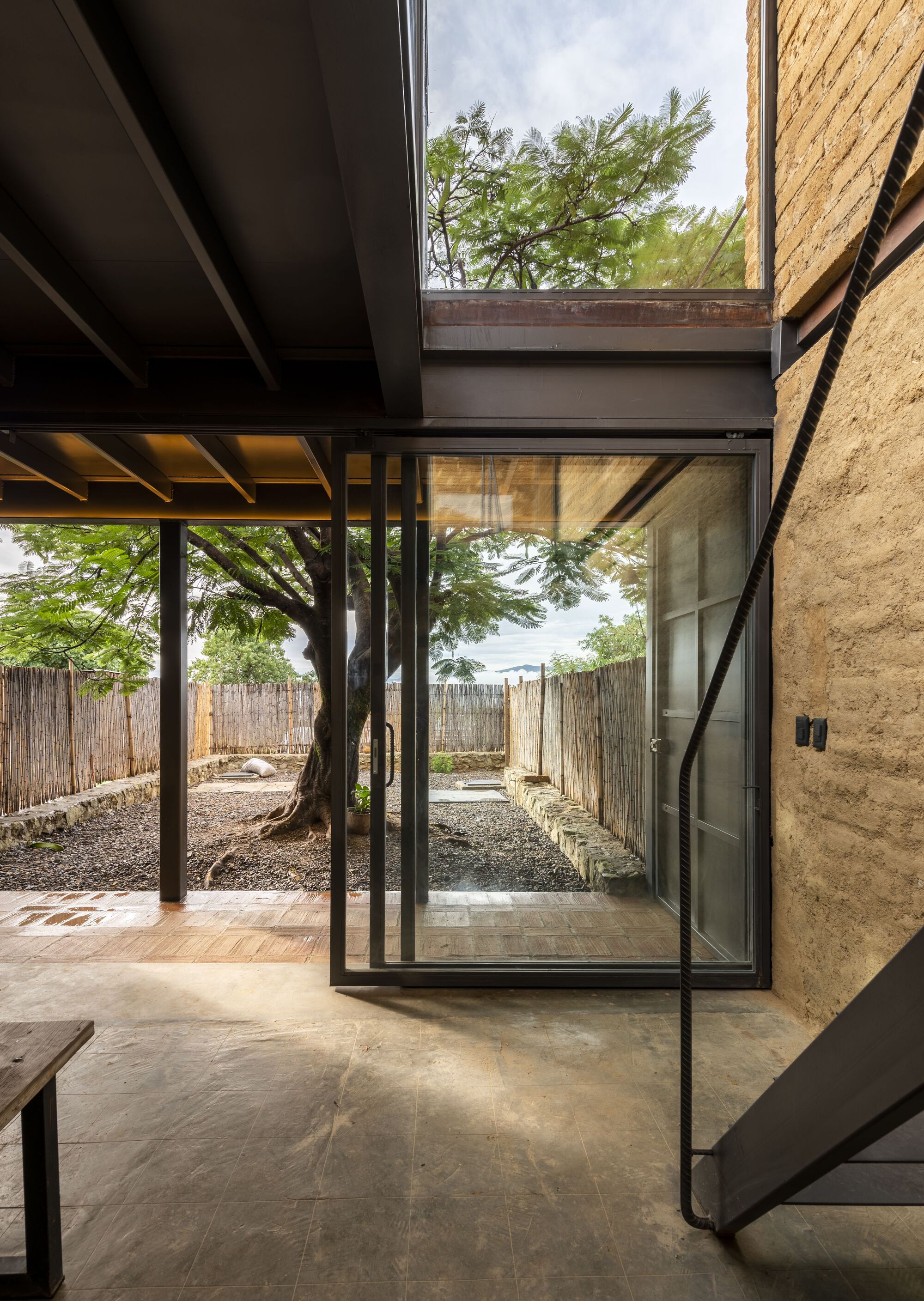
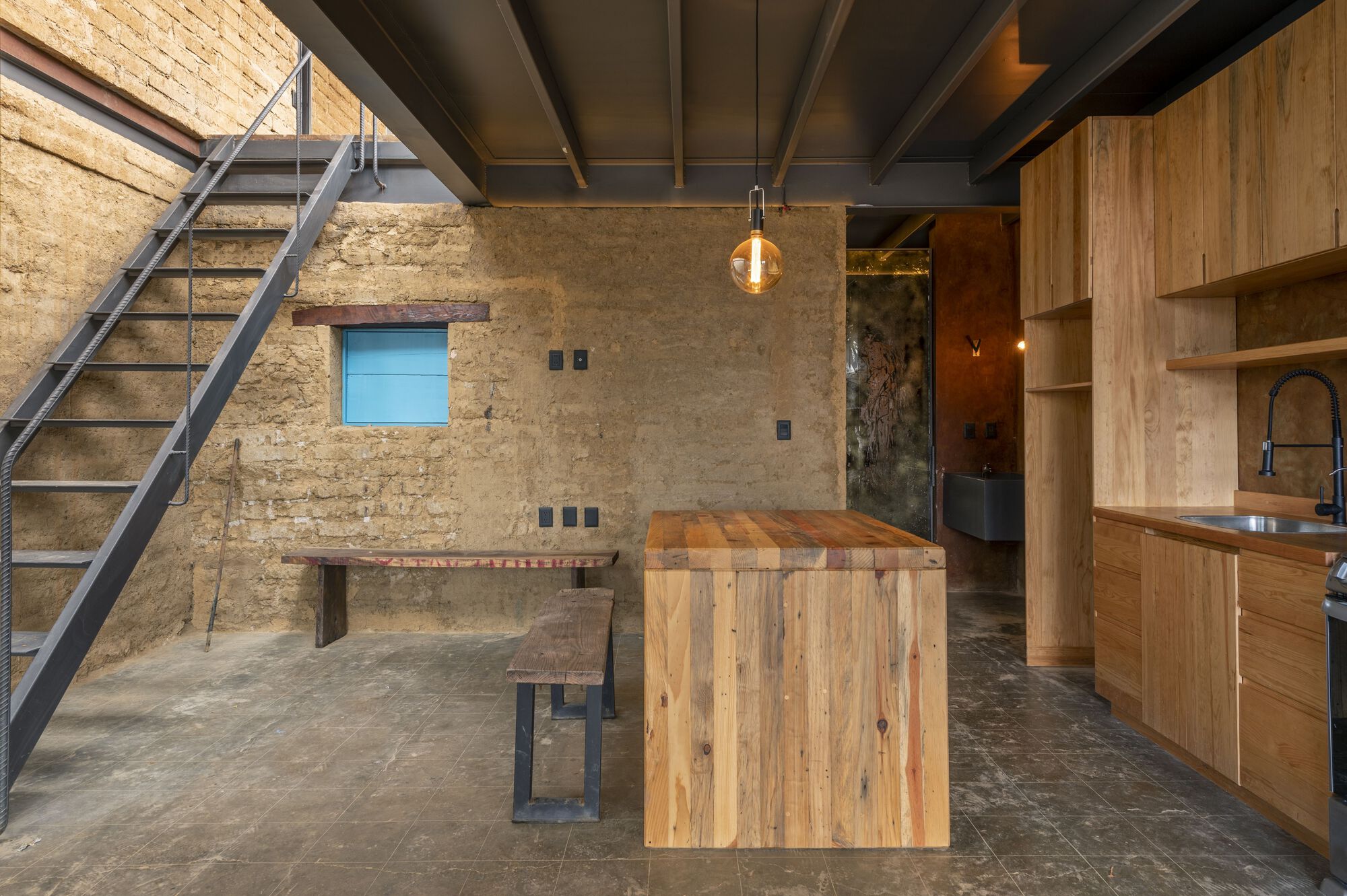
Within 754 square feet, the program is organized along the perimeter of a courtyard defined by the flamboyán tree. The ceramics workshop occupies the most open and light-filled edge, allowing production to extend outward when glazing is fully retracted. The bedroom is positioned for enclosure and privacy, set slightly back from the primary activity zones. Living and gathering spaces mediate between work and rest, allowing the house to shift between retreat and collective use. This arrangement directly reflects the client’s needs: a space to make, to pause, and to host. Circulation traces the courtyard edge, maintaining constant orientation to the center. Sliding glazing opens the interior directly to the courtyard, extending work and domestic life outward while enabling cross ventilation. The courtyard operates simultaneously as climatic regulator and spatial anchor.
Video Walk Through: Link
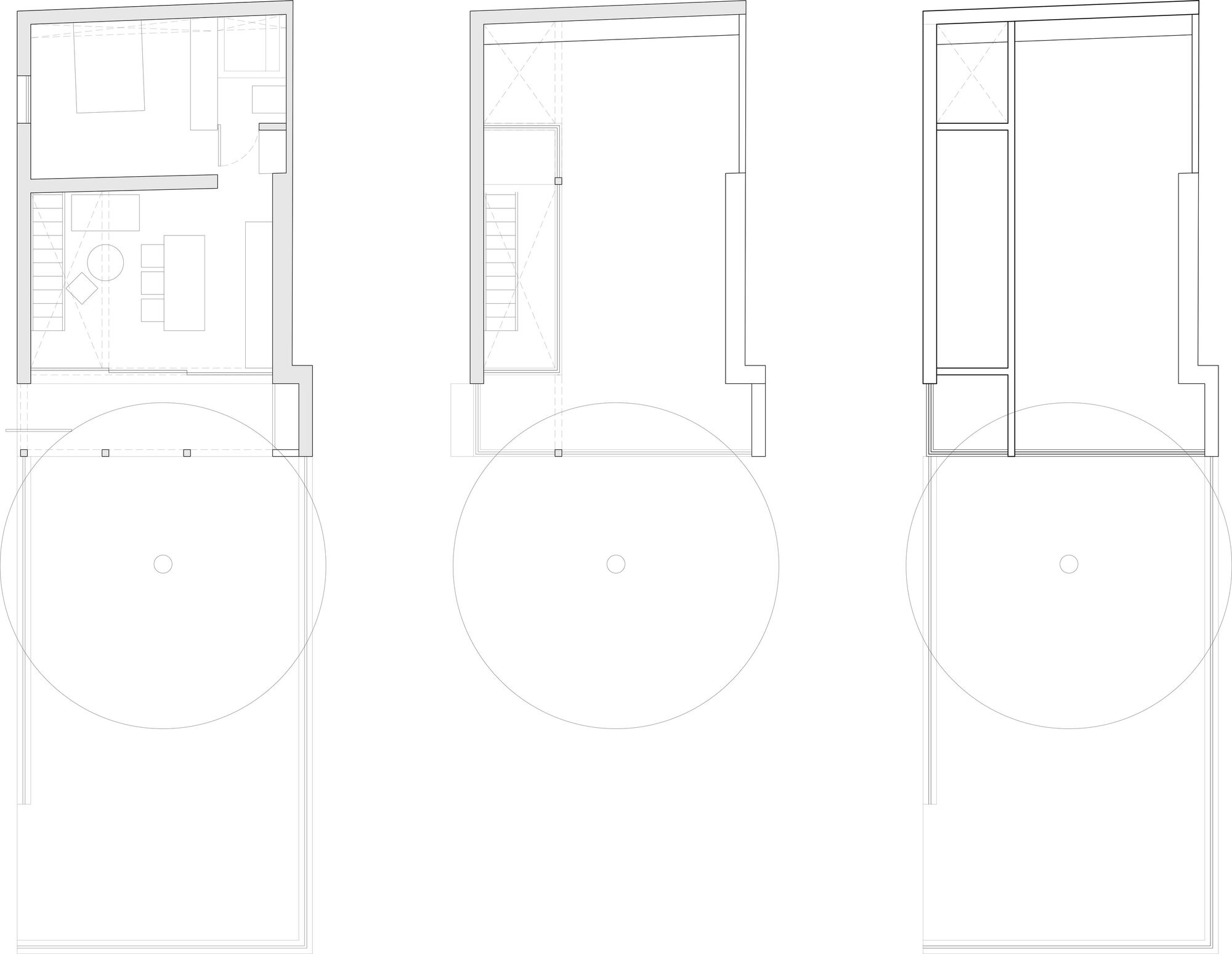

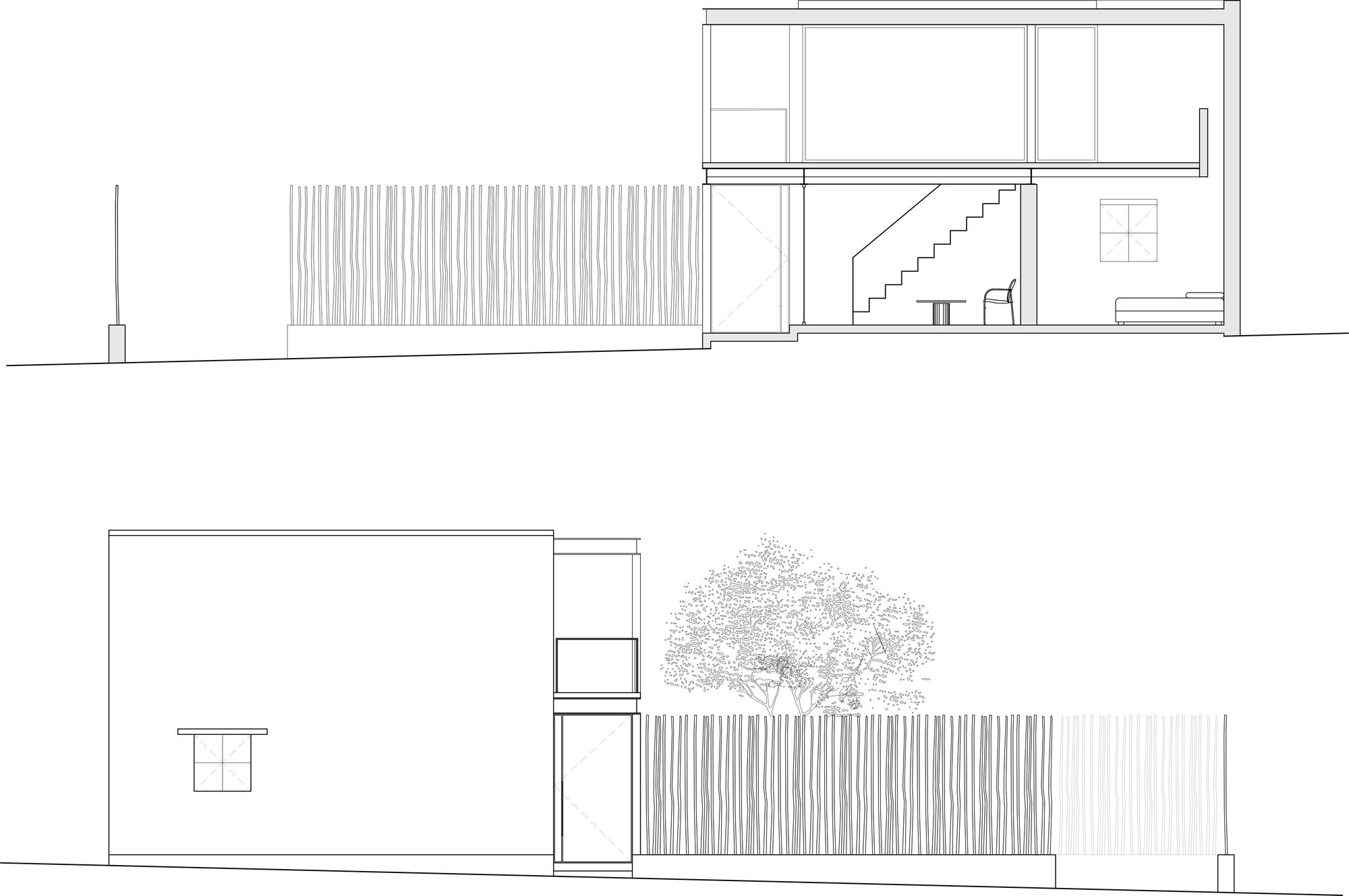
Drawings: Espacio 18 Arquitectura via ArchDaily
Plúmula transforms an unfinished structure into a calibrated environment for living and production. Its significance lies not in formal novelty but in structural clarity. By retaining adobe and reinforcing it with steel, the project demonstrates that adaptive reuse can operate as precise construction rather than surface preservation. It affirms the continued relevance of earthen architecture within contemporary practice and proposes a model of growth grounded in consolidation, restraint, and careful intervention.
Written By: Hitiksha Bansal
Sources:
Espacio 18. About. Espacio 18 Arquitectura, https://www.espacio18.mx/about. Accessed 17 Feb. 2026.
Frameweb. “How the Design of This Oaxaca House Workshop Leans into Its Surroundings.” Frameweb, https://frameweb.com/article/living/how-the-design-of-this-oaxaca-house-workshop-leans-into-its-surroundings. Accessed 17 Feb. 2026.
Arquitectura, Espacio 18. “Plumula Workshop House / Espacio 18 Arquitectura.” ArchDaily, 14 Oct. 2022, https://www.archdaily.com/989816/plumula-workshop-house-espacio-18-arquitectura. Accessed 17 Feb. 2026.
Zhiig. “Plúmula Workshop House.” Zhiig, https://www.zhiig.com/articles-and-projects/buildings/house/pl%C3%BAmula-workshop-house. Accessed 17 Feb. 2026.
Designboom. “Espacio 18’s Lightweight Steel Frame & Earth Structure Artist Getaway in Mexico.” designboom, 2 Oct. 2022, https://www.designboom.com/architecture/espacio-18-lightweight-steel-frame-earth-structure-artist-getaway-mexico-10-02-2022/. Accessed 17 Feb. 2026.
Dwell. “Plumula | Espacio 18 Mexico Artist’s Retreat / Brick and Adobe Home.” Dwell, https://www.dwell.com/article/plumula-espacio-18-mexico-artists-retreat-brick-and-adobe-home-mexico-a738dba1. Accessed 17 Feb. 2026.
Archello. “Oaxaca’s Plúmula Offers a Workshop, Meeting Place, Refuge, and Home Centered Around a Celebrated Flamboyan Tree.” Archello, https://archello.com/news/oaxacas-plumula-offers-a-workshop-meeting-place-refuge-and-home-centered-around-a-celebrated-flamboyan-tree. Accessed 17 Feb. 2026.
Espacio 18 Arquitectura. Oaxaca’s Plúmula Workshop House [Video]. YouTube, uploaded by Architecture and Design Channel (or actual uploader if known), https://www.youtube.com/watch?v=A6sUO5jRO0A. Accessed 17 Feb. 2026.
Metalocus. “Espacio 18 Arquitectura.” Metalocus, https://www.metalocus.es/es/autor/espacio-18-arquitectura. Accessed 17 Feb. 2026.
Volume Zero Competitions. “An Interview with Ar. Mario Ávila and Ar. Carla Osorio of Espacio 18 Arquitectura — The Jury of Little Big Loo 2025 Architecture Competition.” Volume Zero Competitions, https://volumezerocompetitions.com/blog-view/an-interview-with-ar-mario-avila-and-ar-carla-osorio-of-espacio-18-arquitectura-the-jury-of-little-big-loo-2025-architecture-competition. Accessed 17 Feb. 2026.