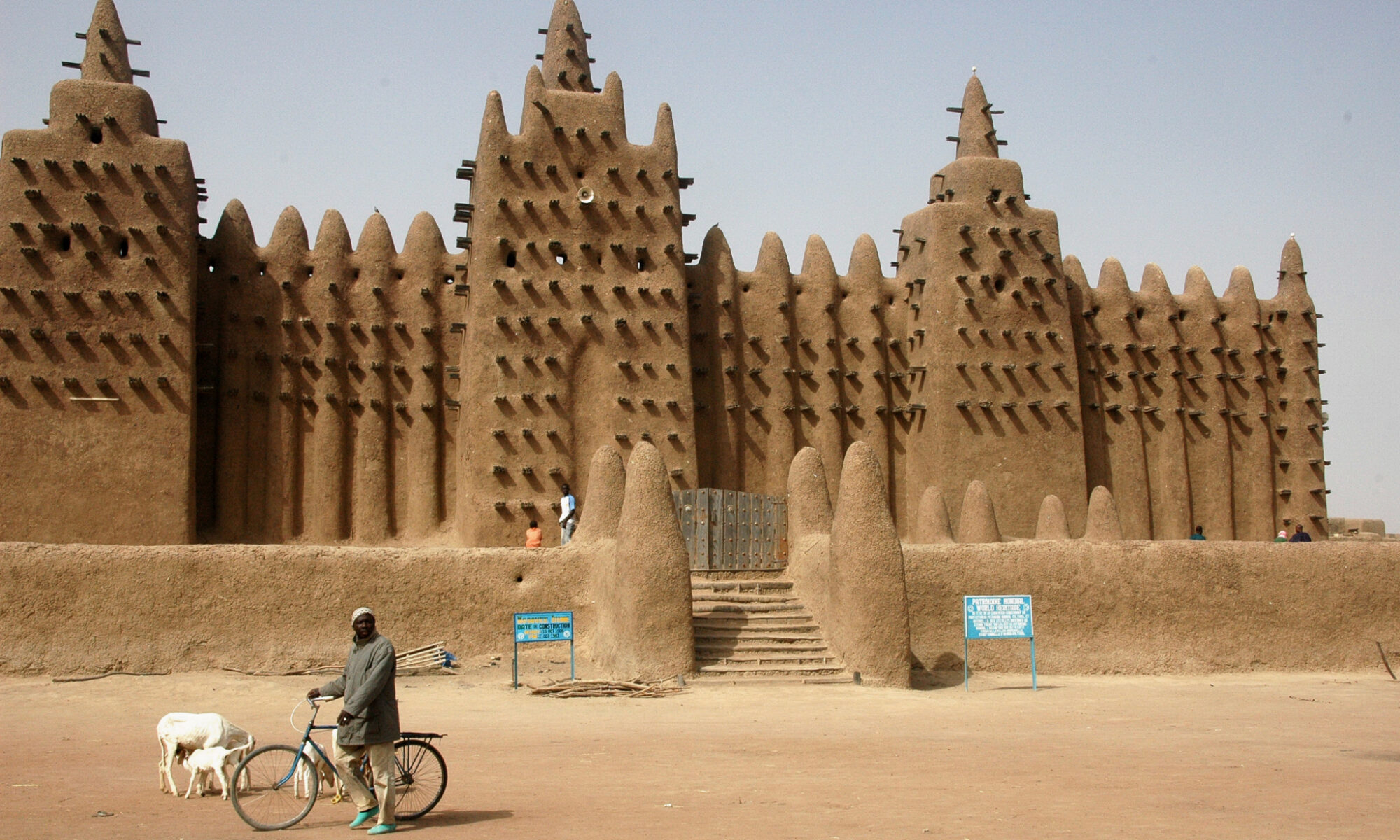
San Fernando, Colchagua Valley, Chile

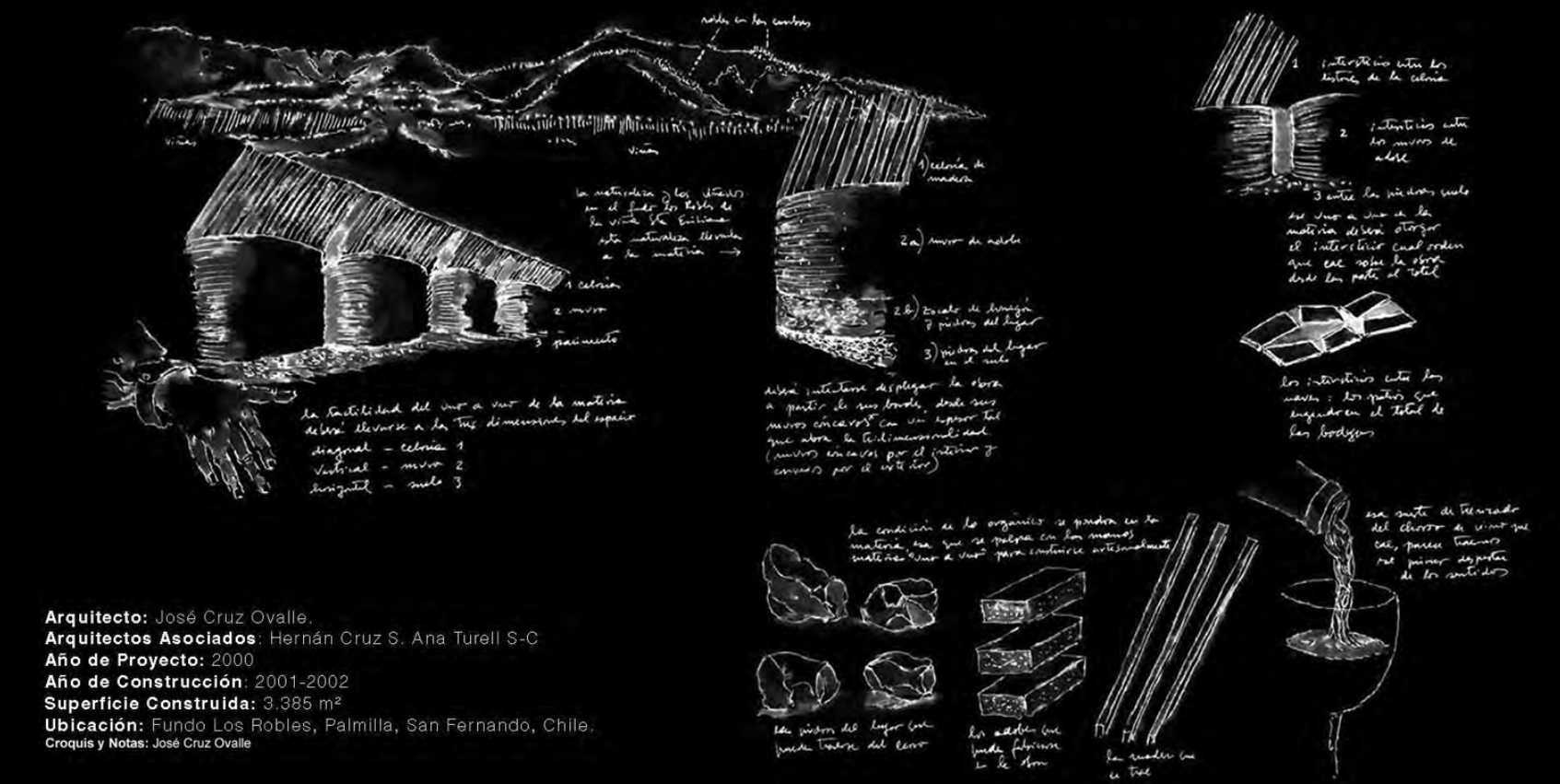
Bodega en Los Robles is located in central Chile, in a valley where the land is most suitable and prominently known for the cultivation of Carmenère and Cabernet Sauvignon. Designed by José Cruz Ovalle and associates Ana Turell and Hernán Cruz, this bodega stands as the first organic, autonomous, closed-system, non-contaminated vineyard in Chile.
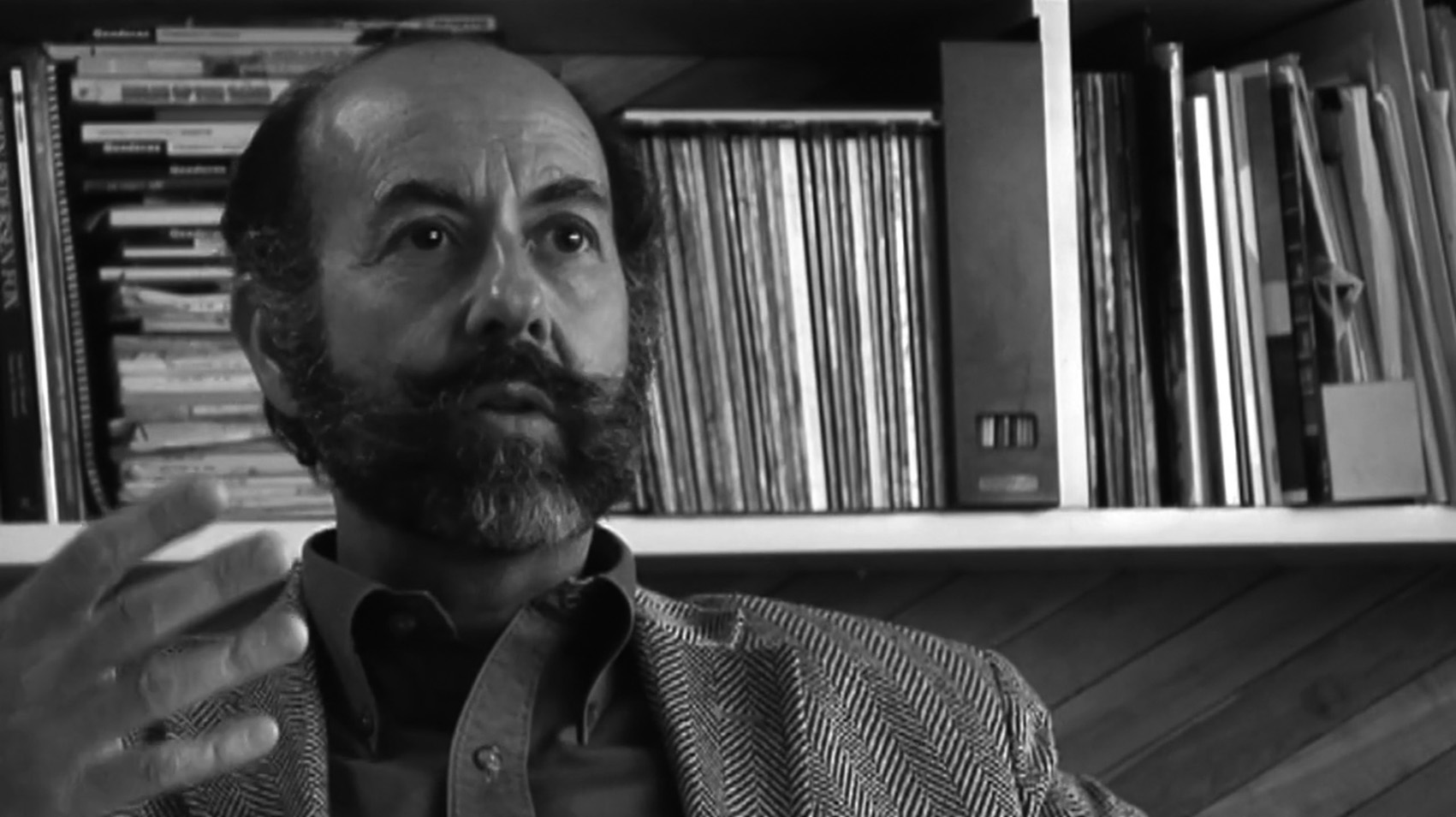
José Cruz Ovalle, born in Santiago de Chile, is a Chilean architect that is well know for his use of wood and designs that beautifully integrate nature, creating a harmonious relationship between nature and man. Coming from a family of architects, Ovalle attended Pontificia Universidad Católica de Valparaíso in Chile where he studied architecture, later transferring to la Universidad Politecnica de Cataluña in Barcelona where he received his degree. During his time in Barcelona, Ovalle opened his own practice in 1975 where he worked for 12 years before returning to Chile to open his Santiago-based studio José Cruz Ovalle y Asociados with wife Ana Turell, Hernán Cruz and Juan Purcell Mena.
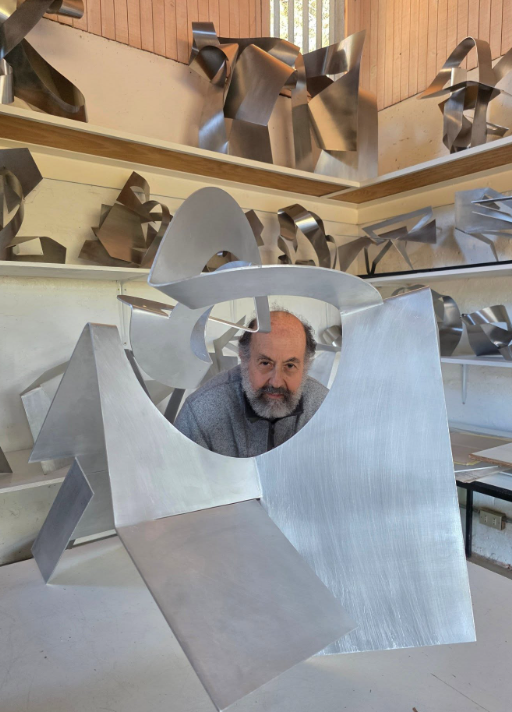
Part of Ovalle’s process consists of beginning with sculptures as a way of understanding the rhythm of material and form through physical senses. Much like his works, his sculptures display a complexity that he has very clearly mastered and is able to convey with ease. These dynamic forms are best seen in his manipulation of wood as both structural and sculptural elements in his designs. As a result, he has received many awards, one of them being the Spirit of Nature Wood Architecture Award in 2008 for his mastery of wood.
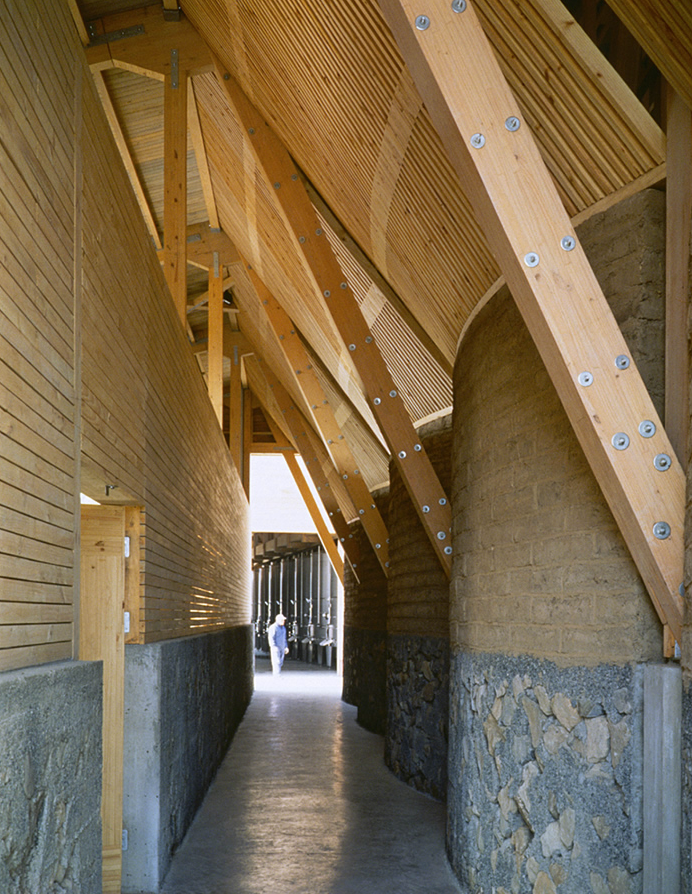
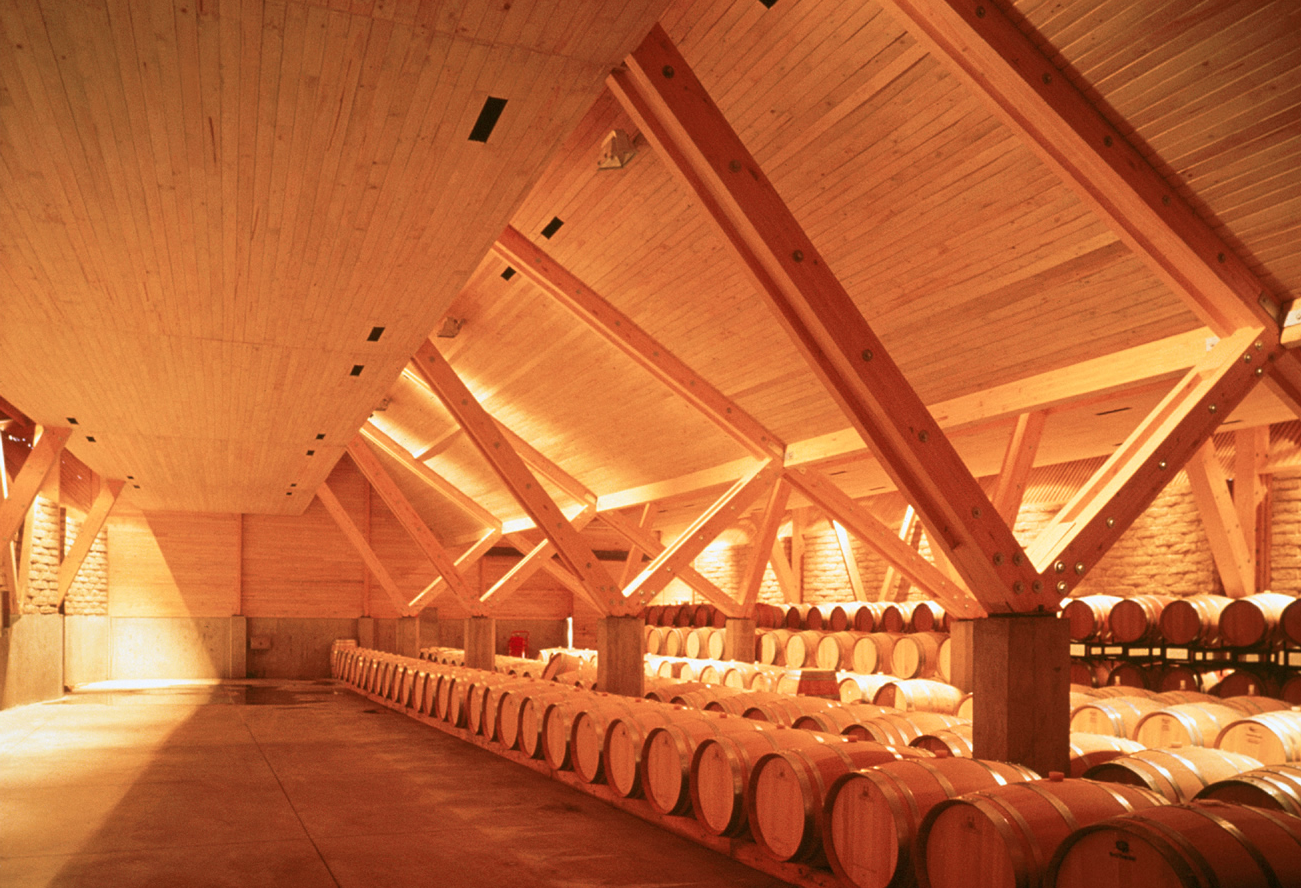
Built on Viñedos Santa Emiliana, the bodega was built between 2001 and 2002 and takes up approximately 3,385 sq.ft. of the vineyard. Ovalle and associates made use of natural and local materials to cultivate and emphasize the biodynamic unity between nature and man in the context of agricultural processes like wine production. The walls are made of zocalo de piedra con hormigon (base foundation of stones and concrete), adobe bricks and glulam wood. The main structure being made of laminated wood and topped with corrugated copper panels.
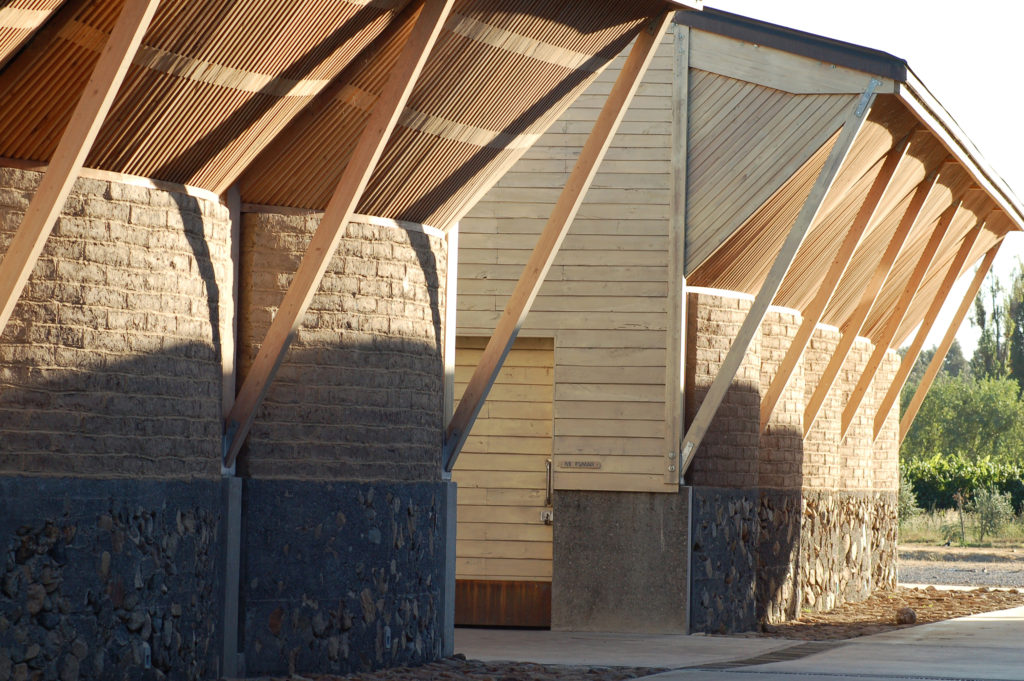
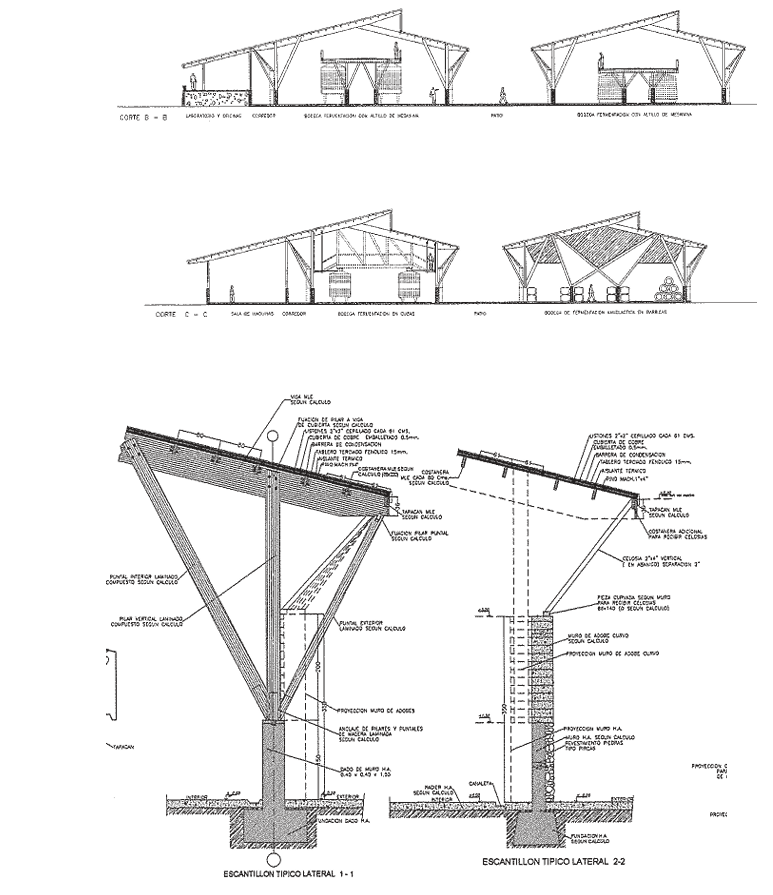
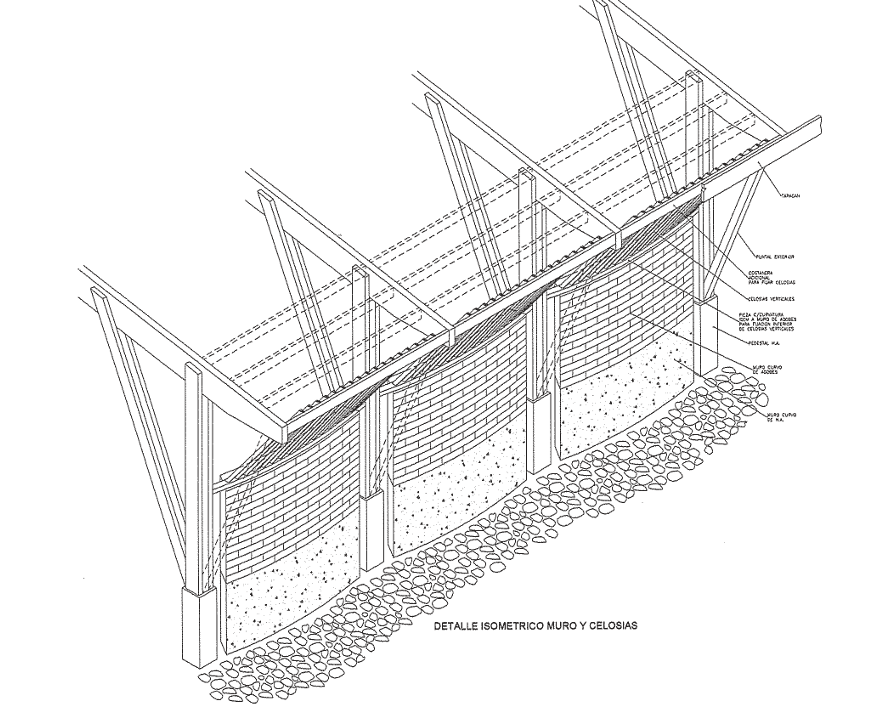
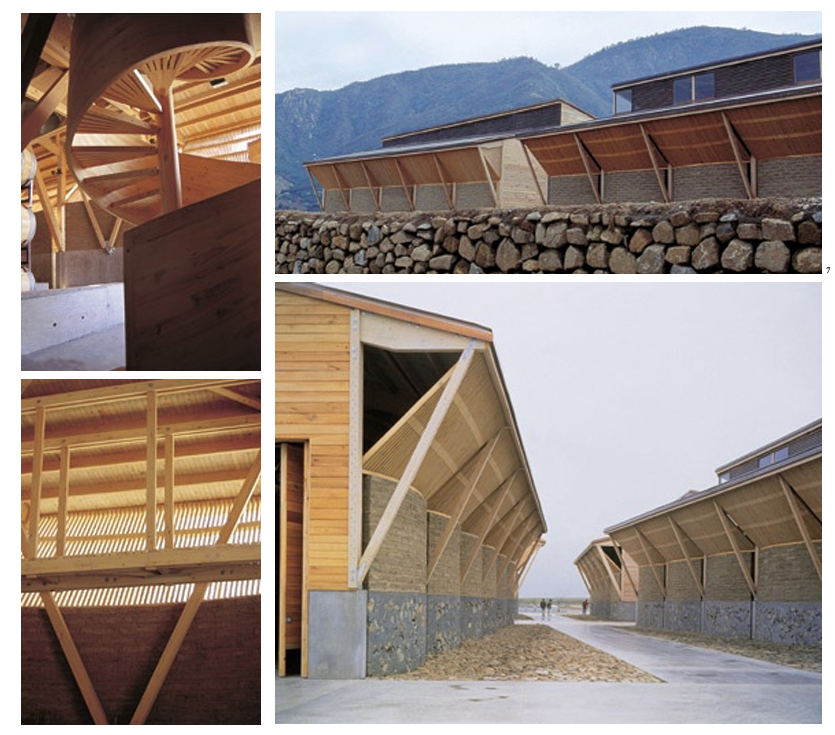
The form of the walls was created from the artisanal material, masa (paste/dough) typically associated with the adobe bricks and concrete. Here is where Ovalle’s sensibility makes its presence as the focus becomes the feeling of the masa with the hands and the body. Feelings that go beyond the construction process and later persist as the body inhabits and works in proximity to the material. In this case, however, the masa is not just the adobe or the hormigon, but the wood, the stones the copper roof finishings. Together these materials create harmonious spaces which users are able to connect with to the same capacity that they connect with the agricultural and vinification processes of their biodynamic practice.
Citations: