About Architect
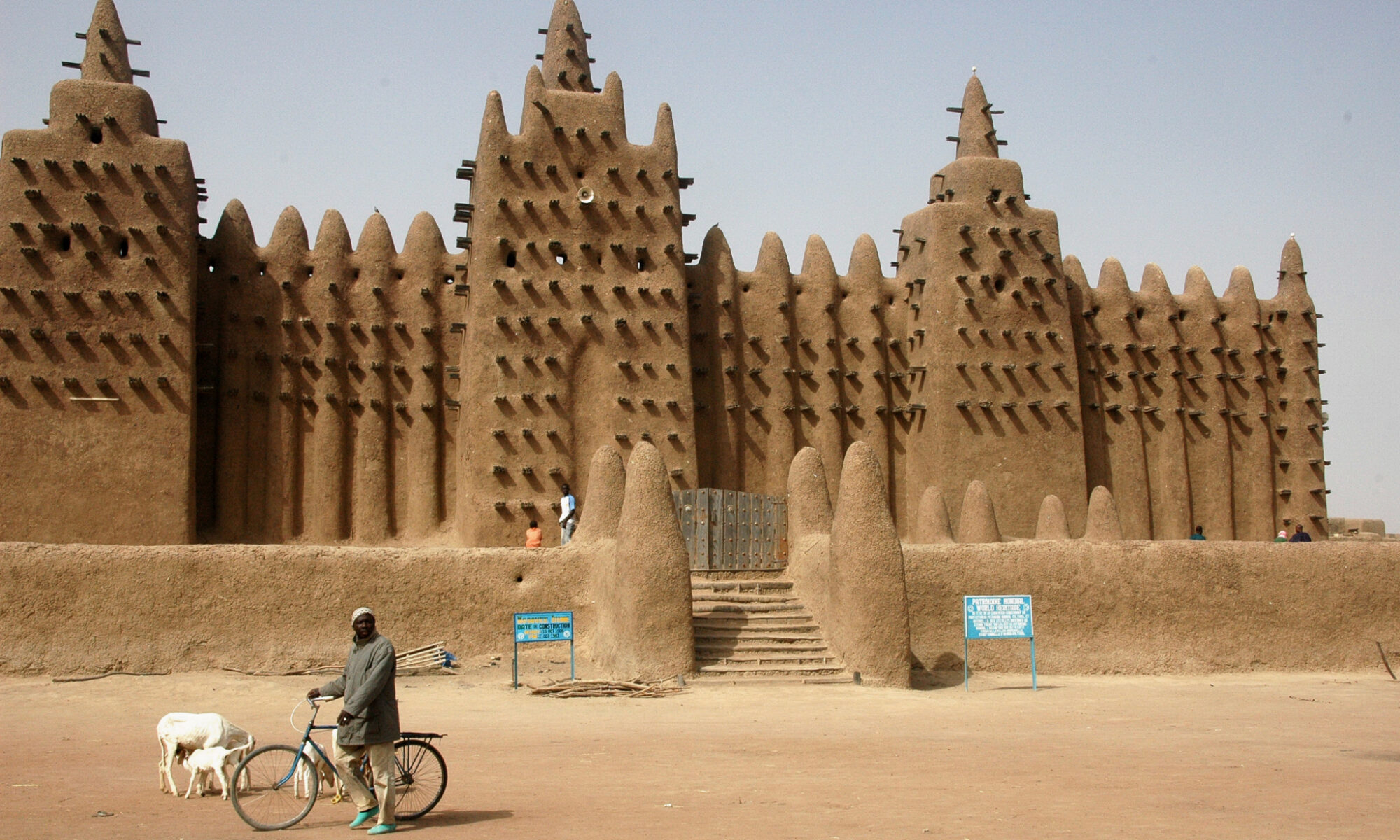
Brenas Doucerain Architectes is a Grenoble-based firm dedicated to the “frugality” and “essentiality” of construction.Their work focuses on the dialogue between architecture, local landscape, and human life. They believe matter is the substance of architecture. By using site-specific raw materials like rammed earth (pisé), they express the sensory and poetic qualities of the land without relying on artificial technology. The firm advocates for energy sobriety and low technologies. They treat architecture as a “frugal” tool—using only what is necessary to create human-scaled, adaptable spaces. Their designs utilize archetypal elements to bridge the gap between historical heritage and modern living, ensuring buildings are sustainable “traces in time.”
Program & Form
The site of the project is that of the courtyard of the current school group located in the center of town, dense tissue organized around the place of arms. The outdoor area reserved for elementary school children is closed between a dead end in the west and the existing Jules Ferry building in L to the east and north. Two beautiful plane trees inhabit this space.
Materials & Process
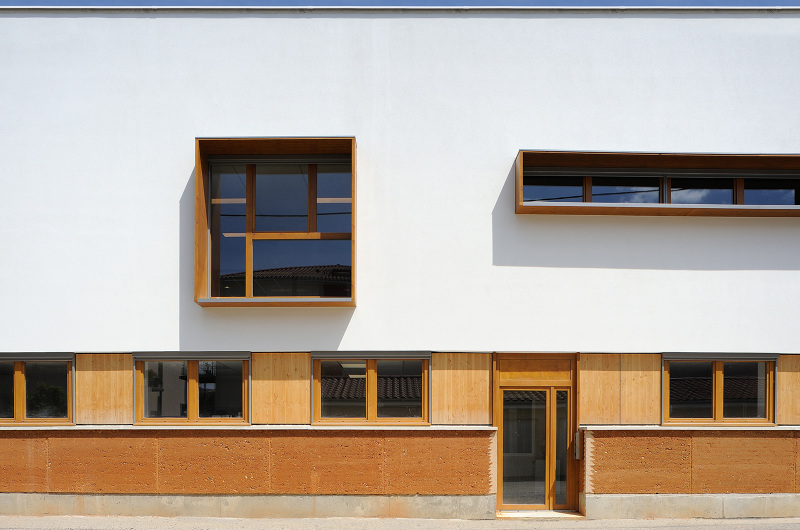
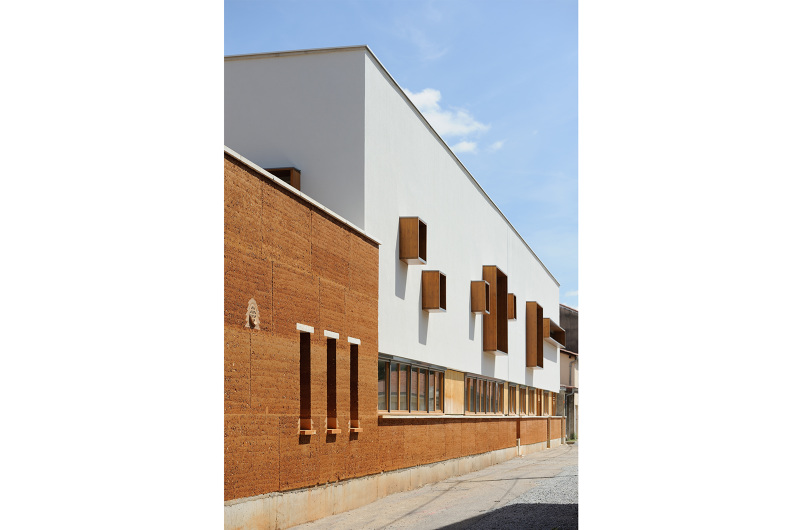
Traditional local rural architecture is built of rammed earth. The facade walls along the impasse, now demolished, had once been built with this local resource. The school group dating from the nineteenth century is built in masonry and the town hall located across the street. The new nursery school slips into an existing dense fabric, with a shoehorn, gently, between adobe walls and plane trees.
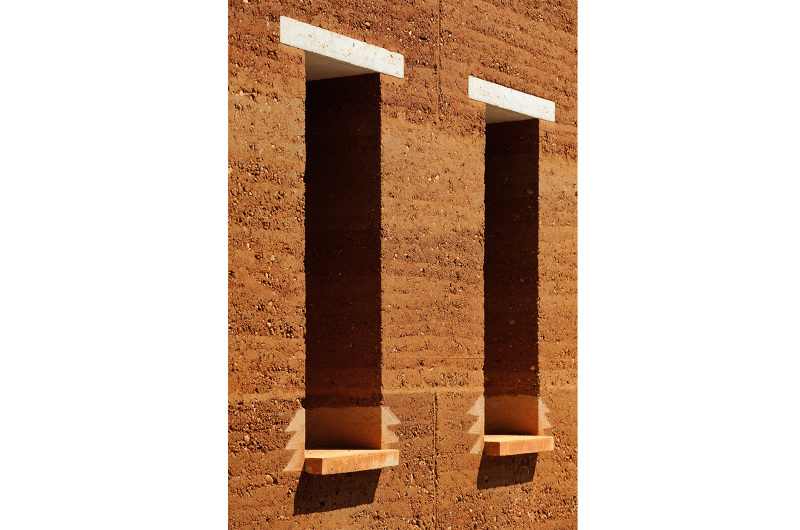

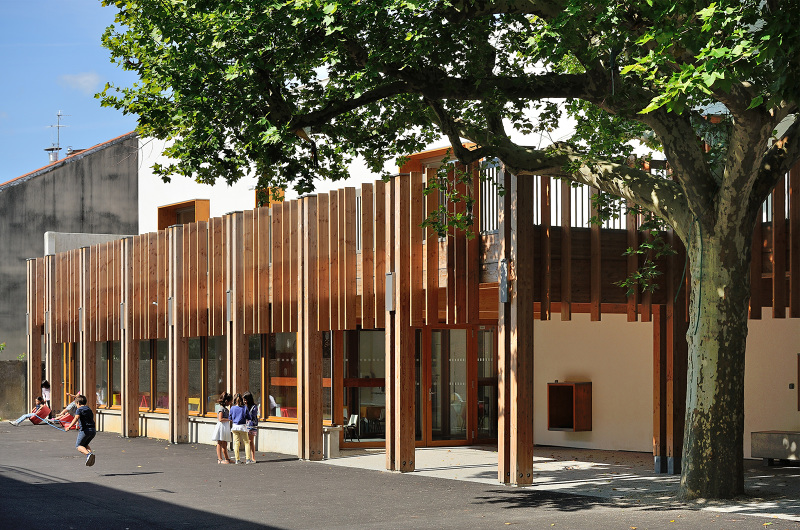
The project consists of a volume of R + 1 masonry and coated, slightly skewed to escape the plane trees of the yard. It is built along the impasse by a rammed wall forming basement which allows reconnecting with the vocabulary of the old walls, to implement an available resource on the spot, a clay and ocher earth.
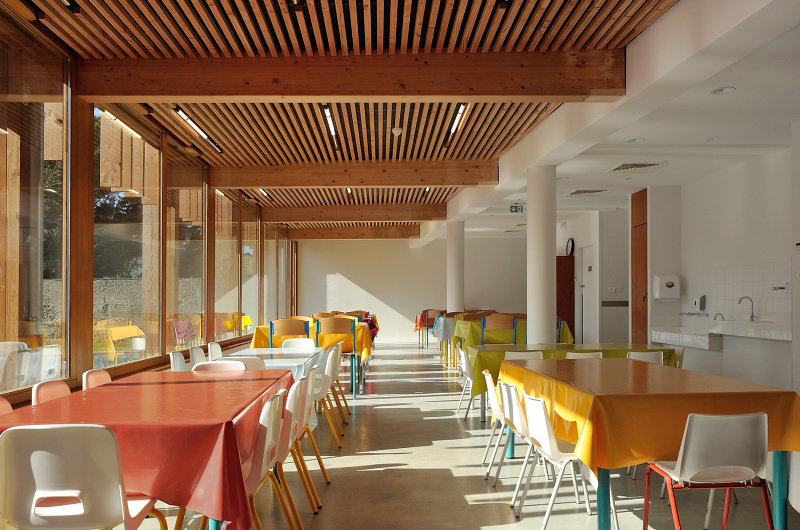
On the courtyard side, a lower wooden structure leans against it and offers a covered space, the courtyard and an additional outdoor area, on the terrace, accessible to children for accompanied and supervised educational activities. It helps to decongest the yard on frequented during recess. It is deformed at the right plane trees to avoid their extended roots, slips under their rowing to enjoy their shade. The structural principle is simple and implements pieces of local solid wood, stacked, juxtaposed, superimposed, like the construction game for children. The upright timber uprights act as a sunshade in the east.

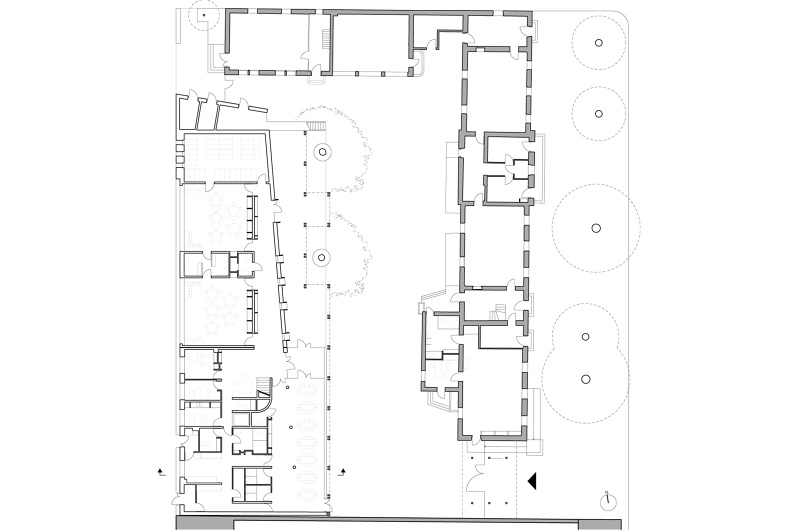
The organization of the spaces is done in a voluntarily long and stretched volume, which closes the courtside North while encroaching as little as possible on its surface. The distributive principle mono-oriented allows lighting the circulation naturally. Classrooms and activities are superimposed according to their decibel production; the changing room above the canteen, the library above the desks, the big classes above the little ones, and nothing above the restroom.
Inspiration
This project proves that rammed earth, an ancestral material, can meet rigorous modern public building codes through contemporary design. It is not only sustainable (low-carbon, recyclable) but also provides a warm, sensory environment that offers children a profound sense of psychological security. The architects demonstrate how to utilize “the soil beneath our feet” to create modern public spaces, moving away from a total reliance on concrete or industrial materials.