Gramazio and Kohler: Remote Material Deposition

Gramazio and Kohler is a research group based in ETH Zurich, Switzerland, who consider the “interlinking of data and material and the resulting implications for architectural design” [gramaziokohler.arch.ethz.ch]. Working between material, manufacturing logic, and the design process, the group uses technology, robots, and programming as a means to define a new architectural expression.
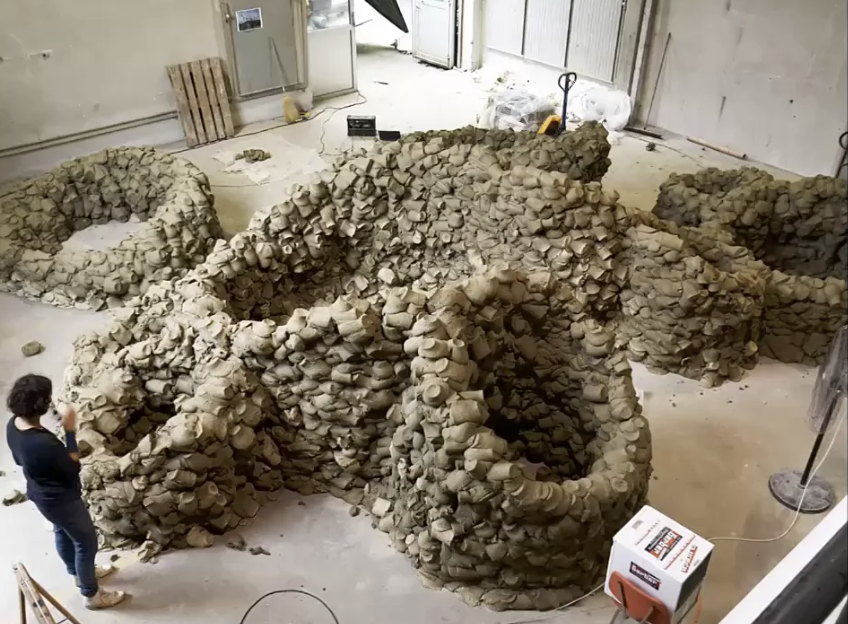
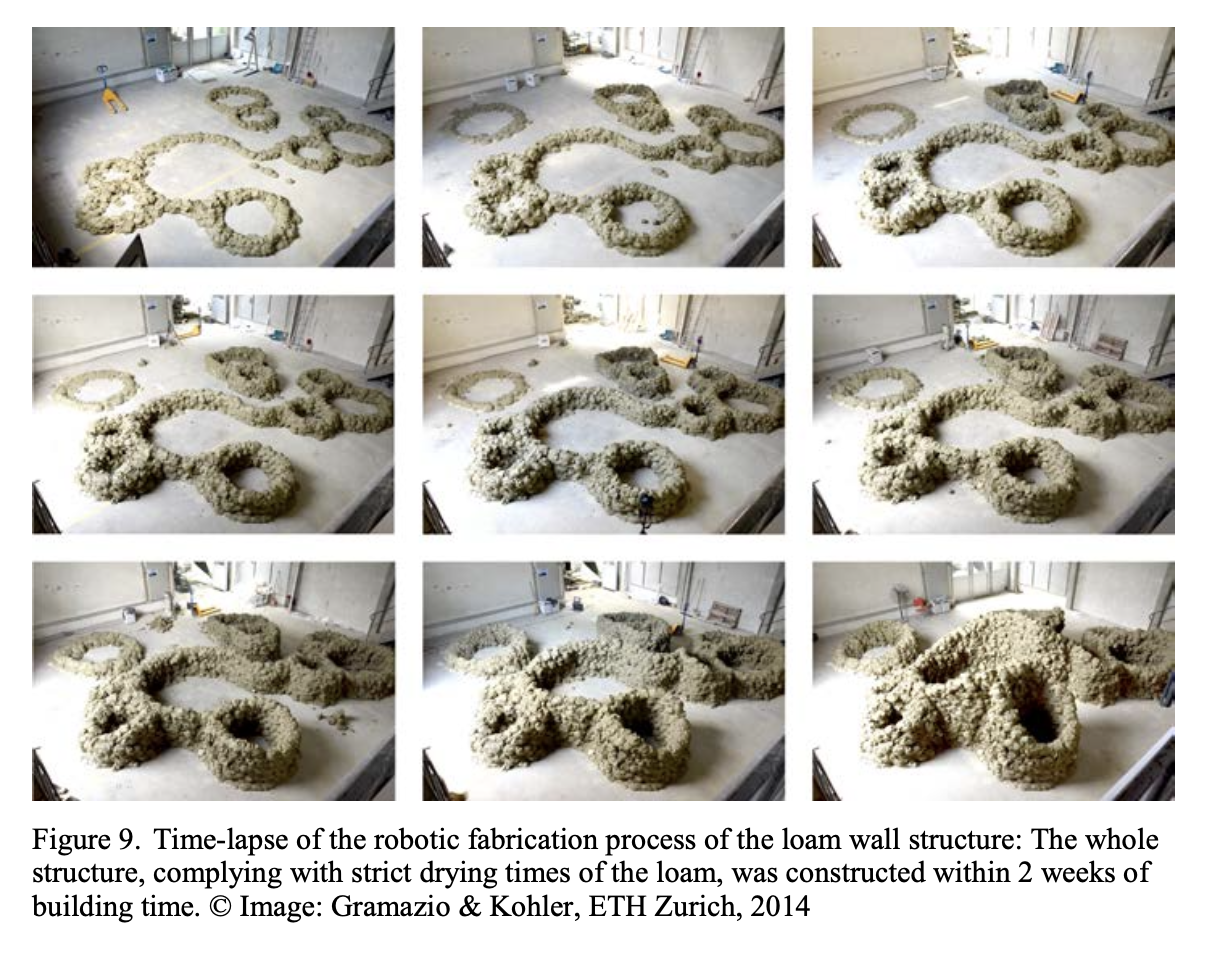
Remote Material Deposition Sitterwerk Timelapse

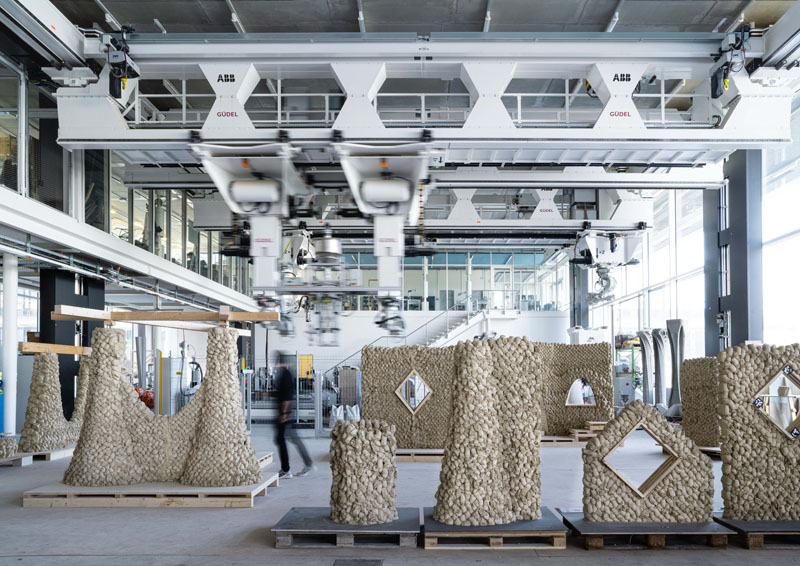
Interrogating methods and workspace limitations of the construction/build process, Remote Material Deposition literally builds from afar; “remote material”, as in material situated at a distance, and “deposition” as the ejection, depositing, and/or build up of a material.
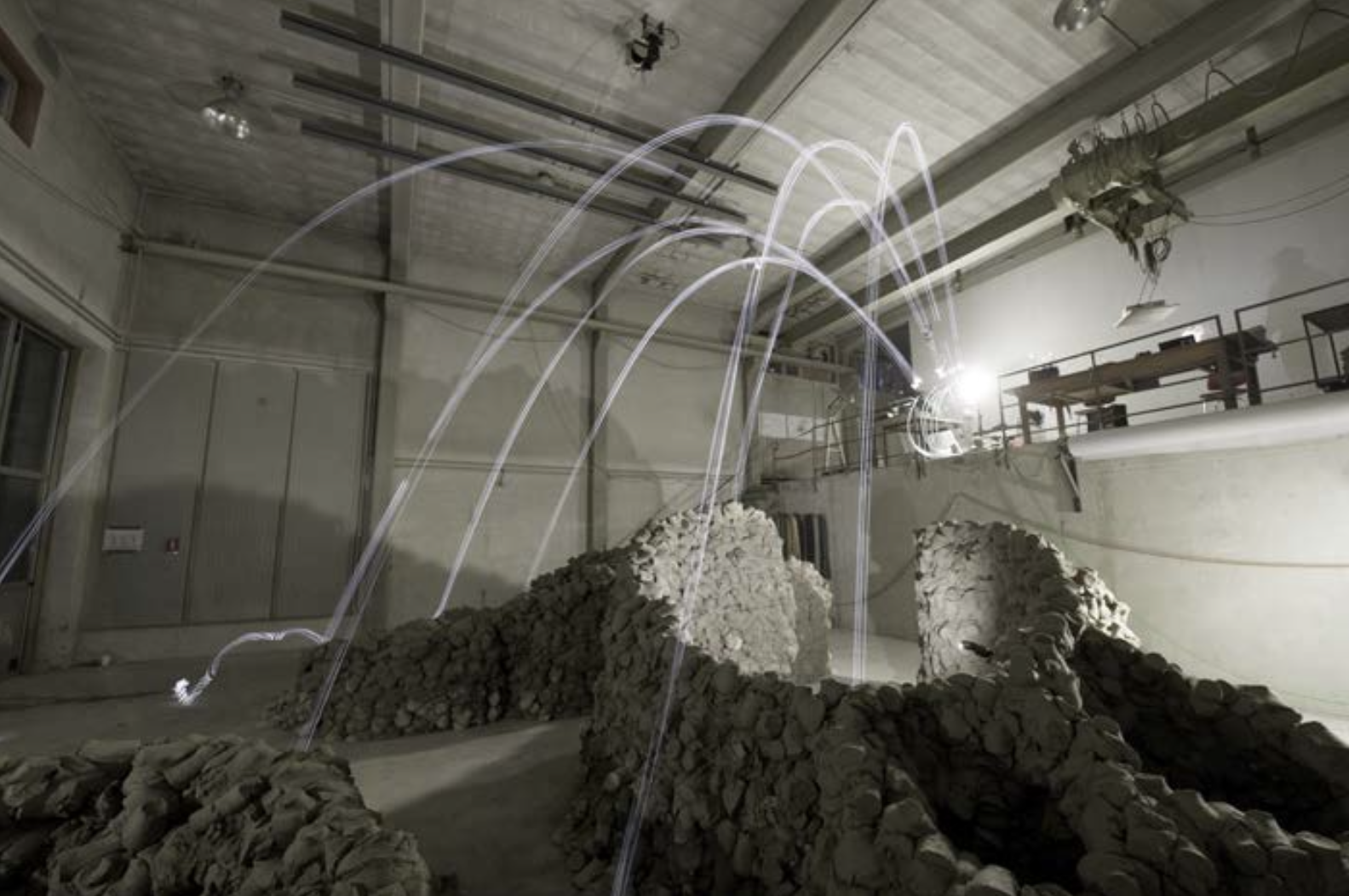
Ballistic trajectories of light projectiles through bulb exposure

A robotic catapulting device, which is hooked up to a camera sensor installed at a birds-eye view, is installed within in a confined workspace. The catapulting device is loaded with loam projectiles, a composite soil made of clay, sand, and silt. The material in this process must be able to adhere to its fellow material upon impact, and harden after. For this reason loam (mud, earth) was chosen as the primary building material. The loam is shaped in cylinders, as to maximize the colliding forces of impact in order to adhere to the existing materials that were “shot” before it. Below is a diagram of the workspace.
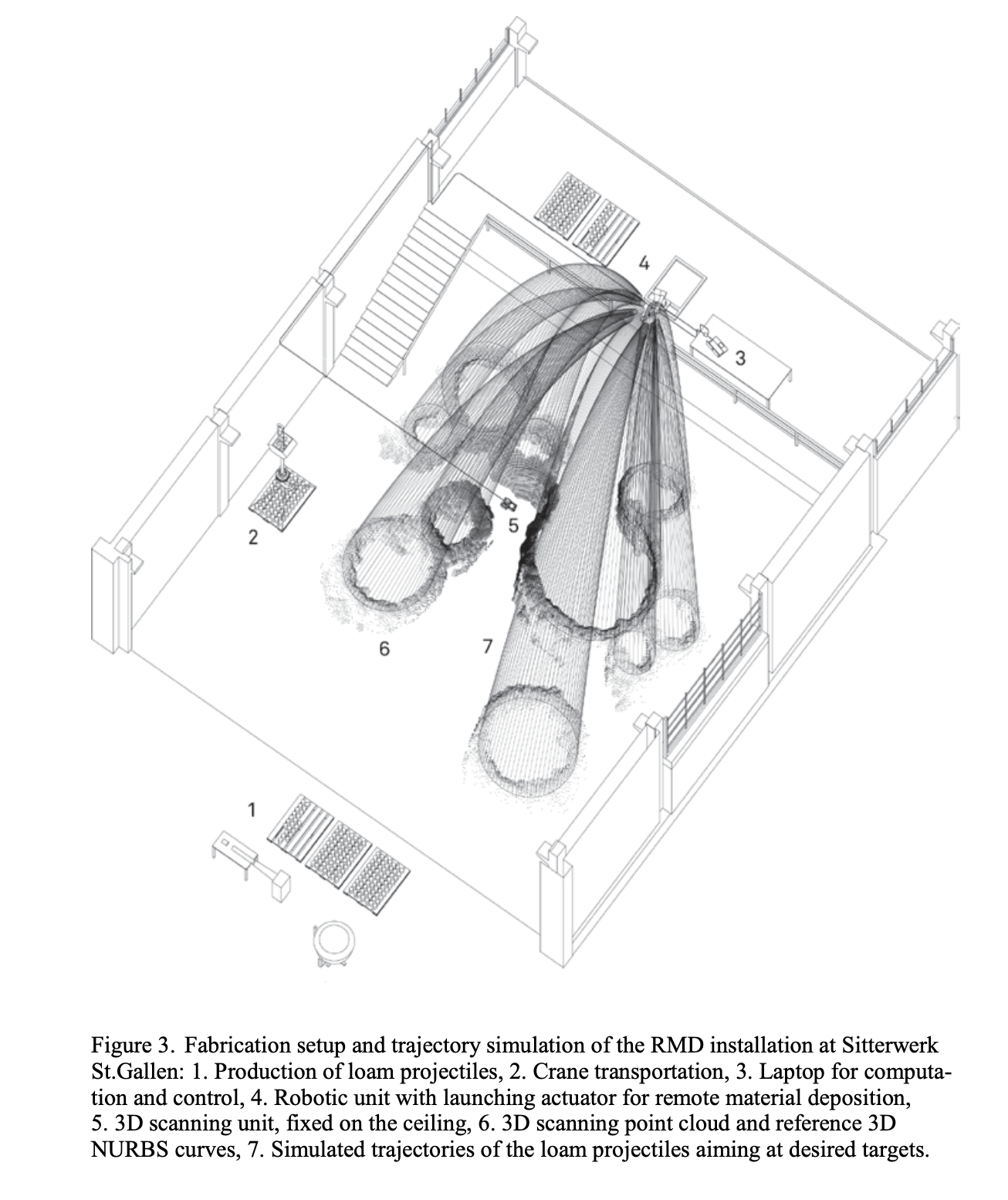
Since uncertainties are bound to occur with the depositing, or lack of depositing, of the loam projectiles the over head sensor captures the mistakes, uncertainty, and data from the build, sends that information back to the design system (computer), and adjusts for the next round of projectiles. Although a defined proposal for design is used to set up and initialize the machine, the construction and build process becomes the design process; the two are linked in a feedback loop.
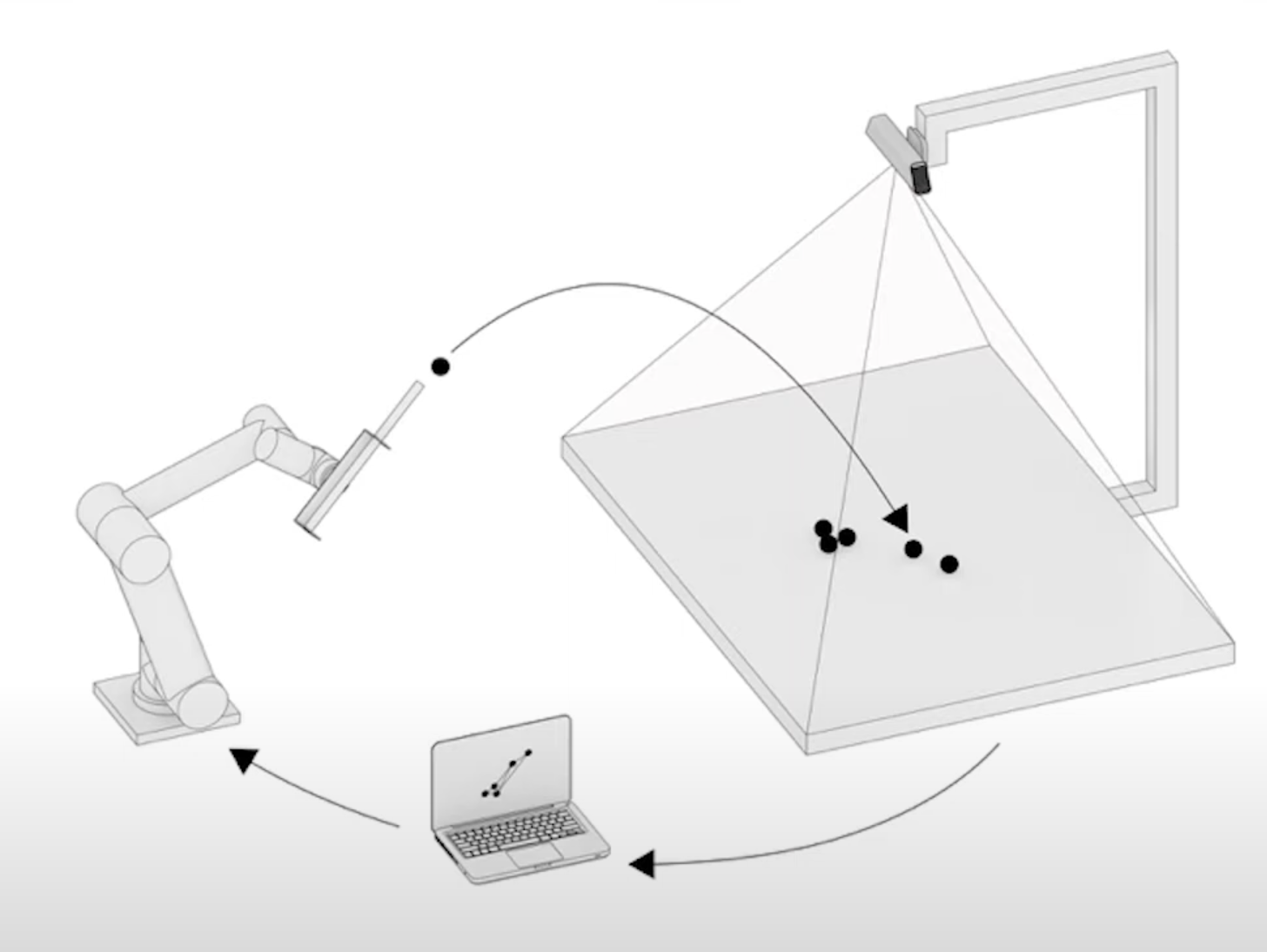
Design + Feedback loop

The use of earth/loam in this context is necessary for the method of construction applied, the adherence of projectiles, however the material and concept of this application can exist independently. What would the process of “ballistic architecture” look like at a much larger scale, if material were not a condition?

Consider the word “ballistics”: missiles, bombs, destruction. Countries such as Palestine and Afghanistan  (and so many more) have had entire historical and cultural identities destroyed through ballistic warfare and destruction of their architecture and built infrastructure. It is an incredible thought to place Gramazio and Kohler’s work in the context of ballistic creation. Instead of destroying each other through missiles and projectiles, can countries and nations build each other instead?

Size: 12 m × 12 m and a ceiling height of 7 m (interior construction space)

Year: 2014

Photos: ETH Zurich, Gramazio and Kohler, Michael Lyrenmann

Architects: Gramazio and Kohler

Students: unknown

References:

[1] https://gramaziokohler.arch.ethz.ch/web/e/lehre/277.html Gramazio Kohler website

[2] https://www.researchgate.net/publication/317340911_REMOTE_MATERIAL_DEPOSITION Conference Paper

[3] https://vimeo.com/100784860 Production video
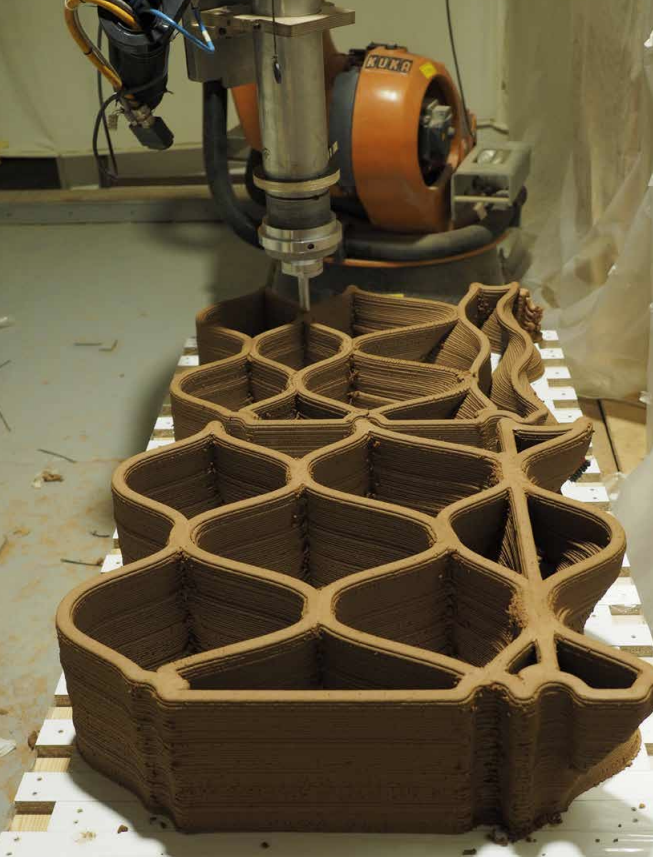
IAAC: Open Thesis Fabrication

image of 3d printing robot making curvy cellular forms out of clay
Image Source: OTF Booklet

Open Thesis Fabrication is a six-month applied research program for postgraduates at the Institute for advanced architecture of Catalonia.

The program focus is on combining additive manufacturing with construction technology to create sustainable architecture with key areas of research in robotic manufacturing, material research, and performance-based design.

The program works with non-governmental organizations to develop designs for use in African humanitarian contexts and is comprised of architects, engineers, designers, and professionals with previous knowledge of digital fabrication and computational design.

It’s learning objectives are for program participants to:

  • Gain experience in large-scale 3D printing
  • Develop skills in digital fabrication, computational design, and material research
  • Learn to provide architectural solutions considering various aspects of construction

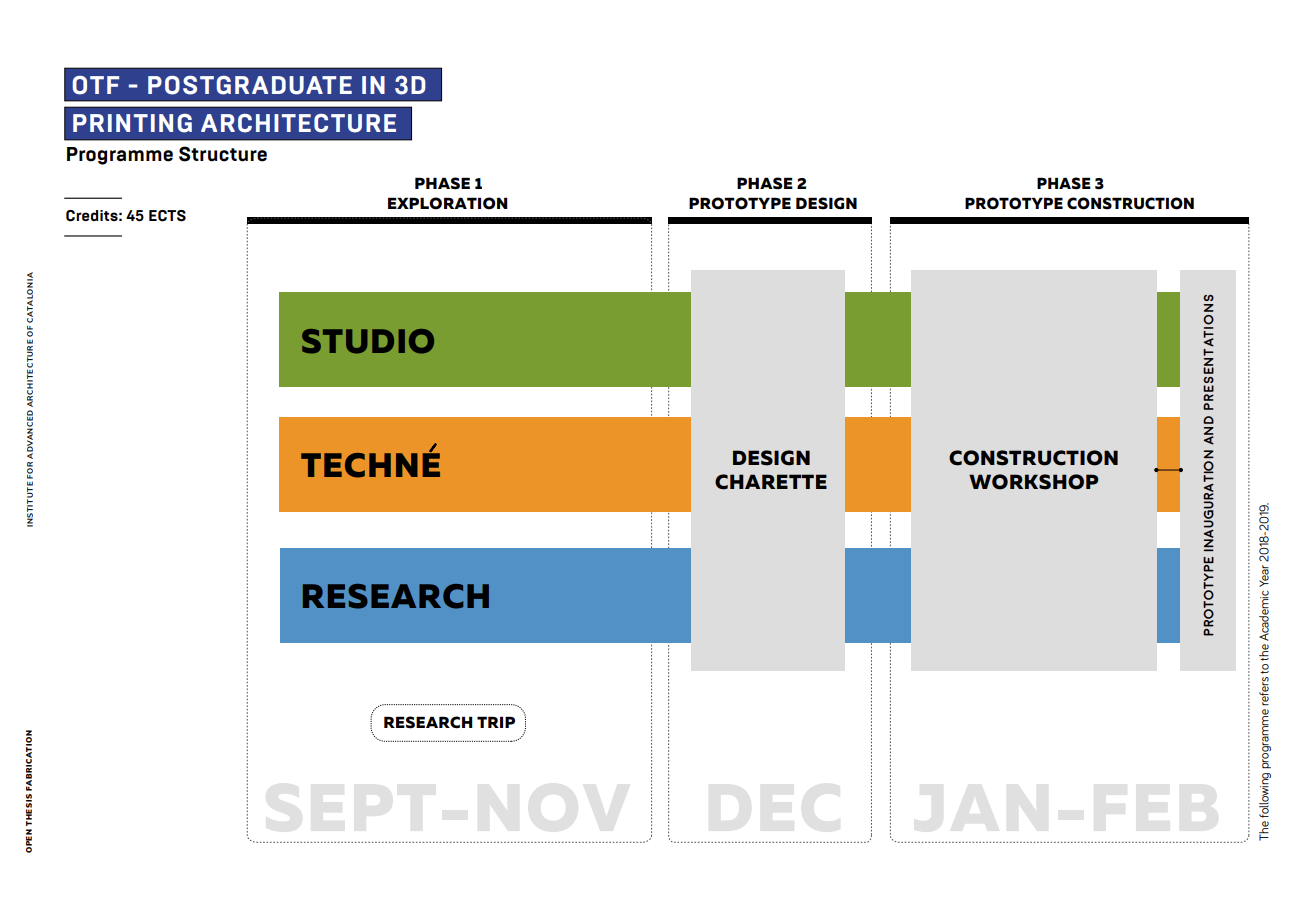
This is achieved through the implementation of three phases, Exploration, Prototype Design Charettes, and Prototype Construction.

chart that displays the phases of implementation and timeline
Image Source: OTF Booklet

Examples of projects that have been completed include:

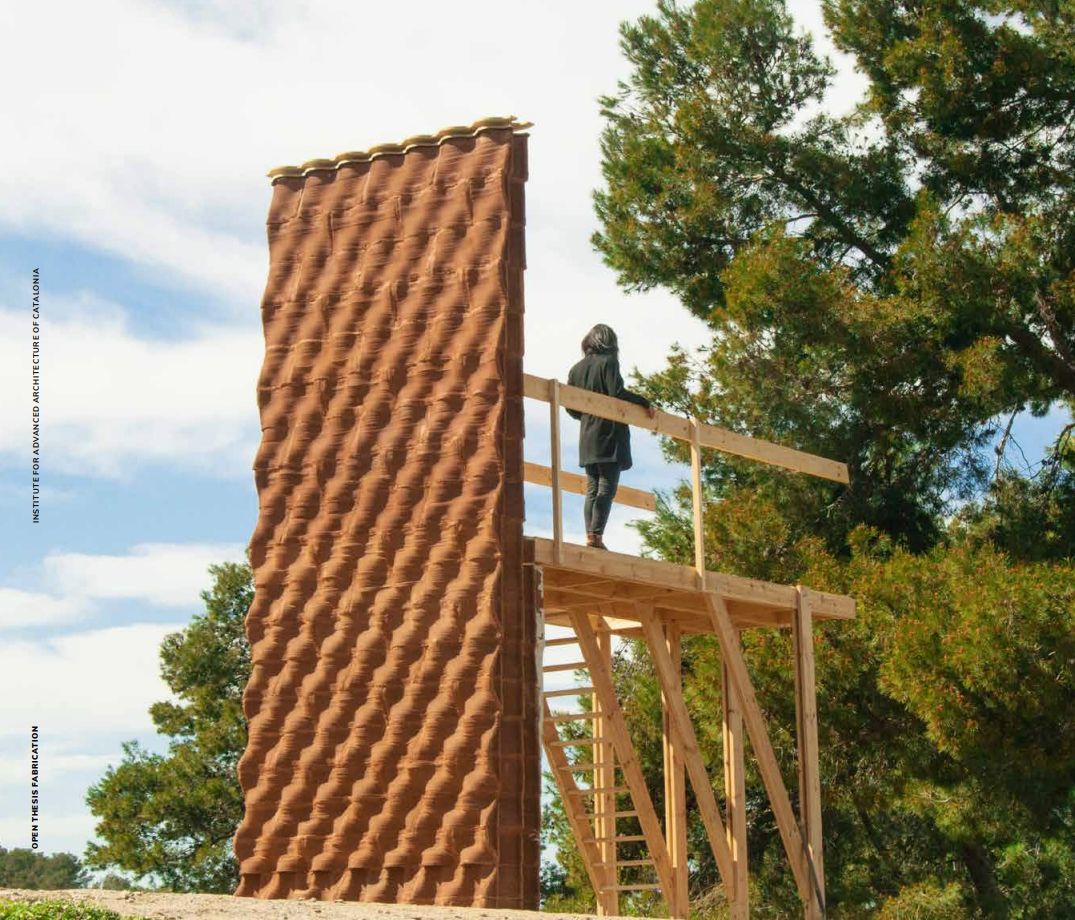
  • Digital Adobe – A 2-meter wide and 5-meter-high printed clay wall [2017-2018]
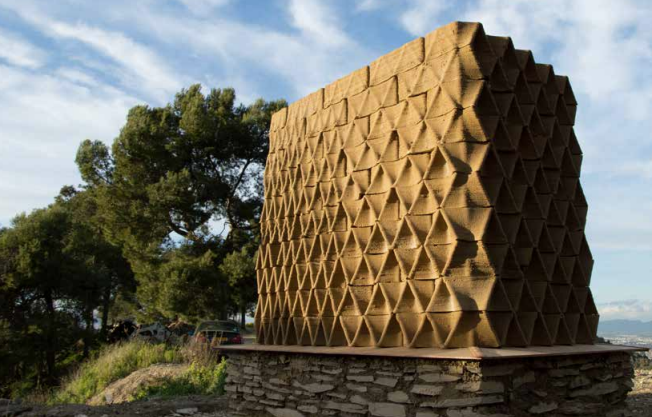
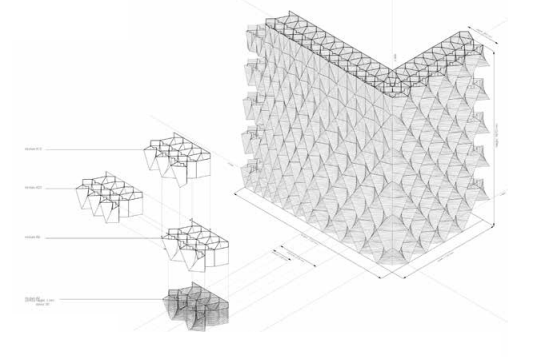
  • Terraperforma – A façade design of parametrically constructed modules optimized for solar radiation, wind behavior, and structural 3D printing [2016-2017]
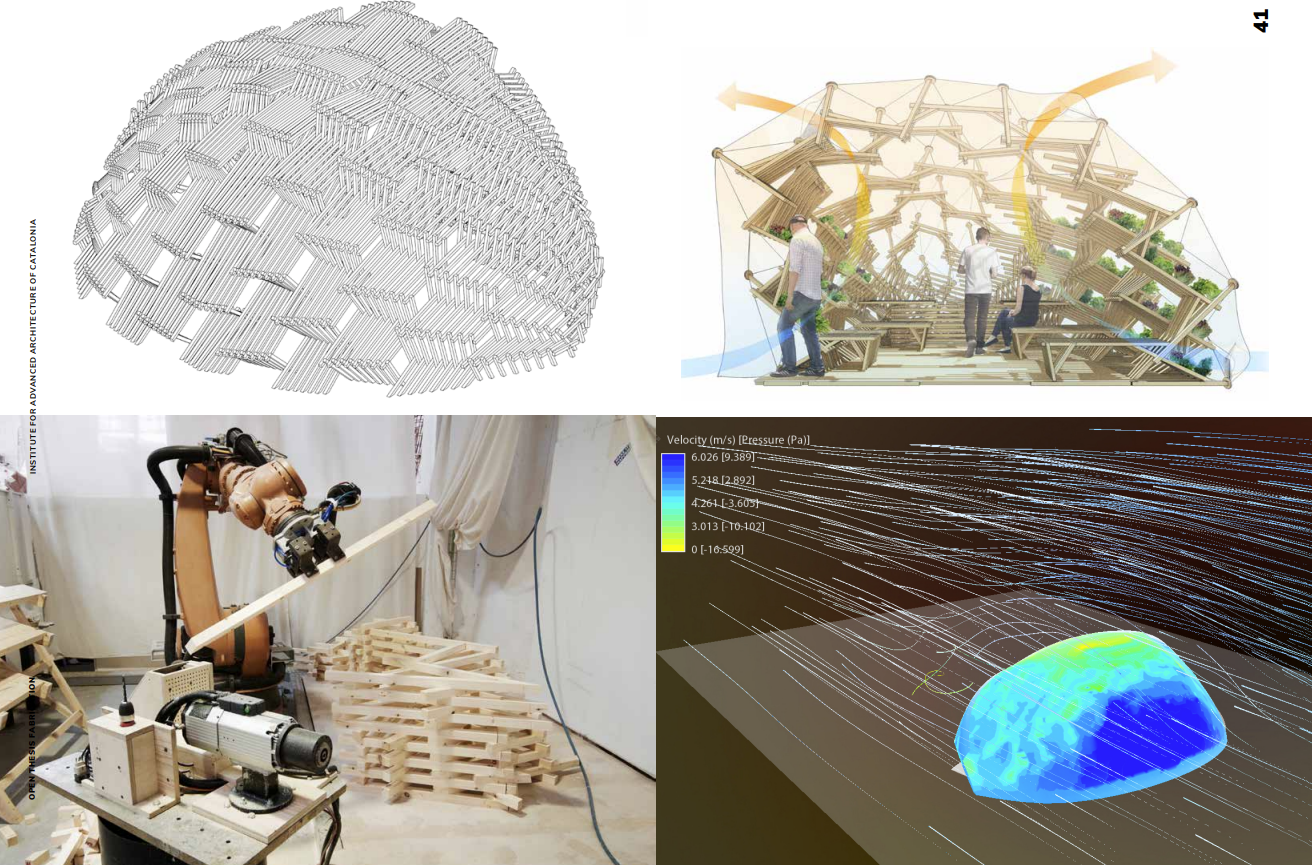
  • Digital Urban Orchard – A wooden pavilion made with digital and robotic fabrication divided into a wooden structure, aquaponic system, and silicon skin designed to capture the ideal solar radiation for winter and summer.
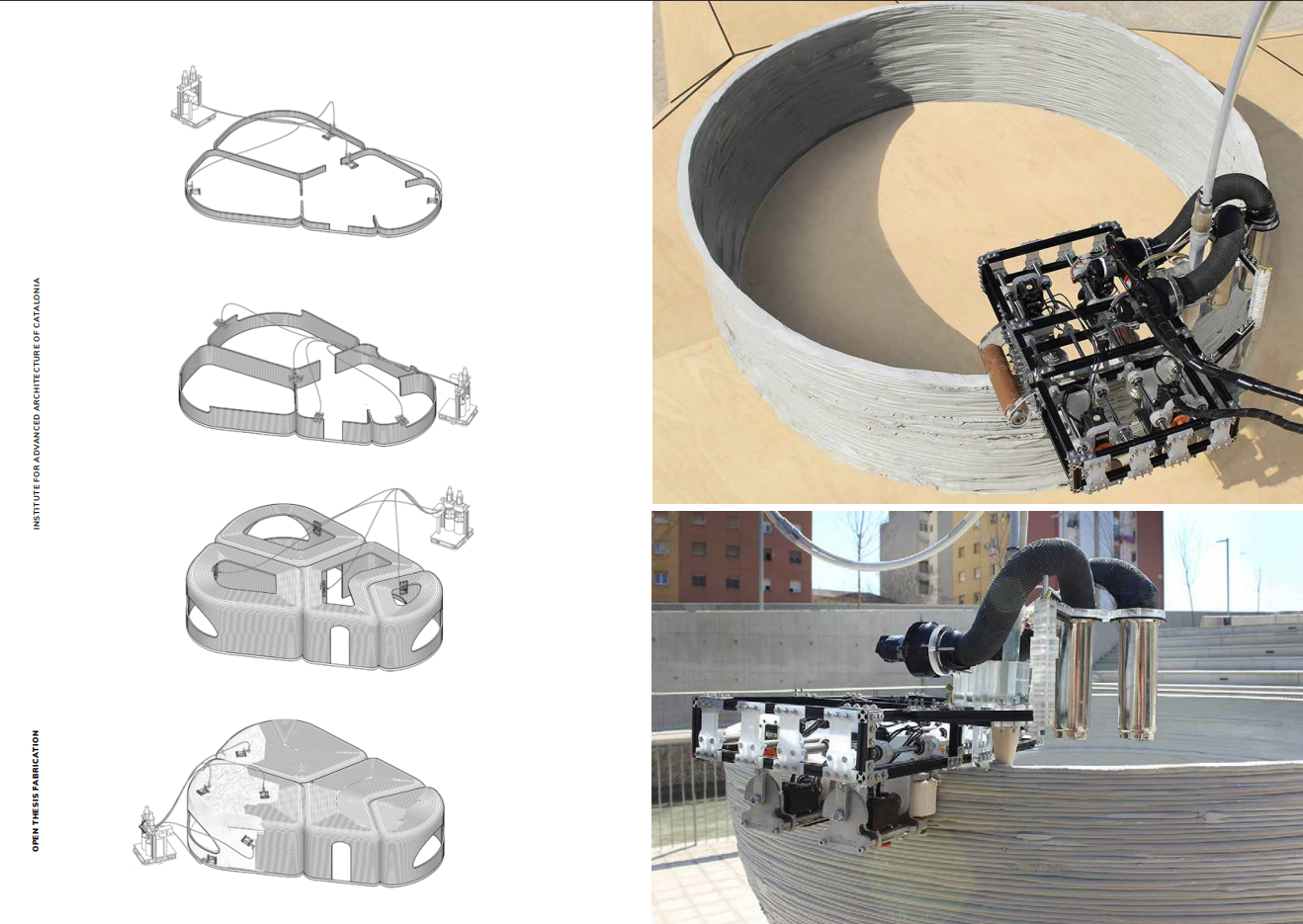
  • Minibuilders – a family of small-scale construction robots that are capable of constructing objects larger than itself in order to address the limitation found in additive manufacturing that often constrains the proportions of fabricated objects to the size of the machine.
Image Source: OTF Booklet


Image Source: OTF Booklet
schematic and images of mini robots being used to produce clay structures larger than the size of the machine
Image Source: OTF Booklet

For more information regarding tuition fees, how to apply, grading systems, etc., be sure to check out IAAC OTF resource guide: https://iaac.net/wp-content/uploads/2019/07/OTF_Booklet_2019-22-07-2.pdf


Impact Printing: Gramazio Kohler Research

Location:  ETH Zurich
Year:  2021-2024
​Research: Gramazio Kohler Research


Source: https://gramaziokohler.arch.ethz.ch/web/e/forschung/451.html

Impact printing is an innovative robotic construction method that creates full-scale, freeform structures using a custom earth-based material. Unlike traditional layer-based 3D printing, it employs high-velocity deposition, allowing for interlayer bonding at speeds of up to 10 meters per second. The environmentally friendly material consists mainly of locally sourced secondary materials with minimal mineral admixtures.

Currently, prototypes are being developed at ETH Zurich’s Robotic Fabrication Laboratory, with plans to integrate this technology into the HEAP autonomous excavator. The research also focuses on developing a digital design and construction strategy, utilizing advanced computational design and sensing methods. This work aims to enhance sustainable, mobile robotic construction, leading to groundbreaking techniques in the design and manufacturing of earthen structures.

Video


Source: https://www.research-collection.ethz.ch/handle/20.500.11850/668921

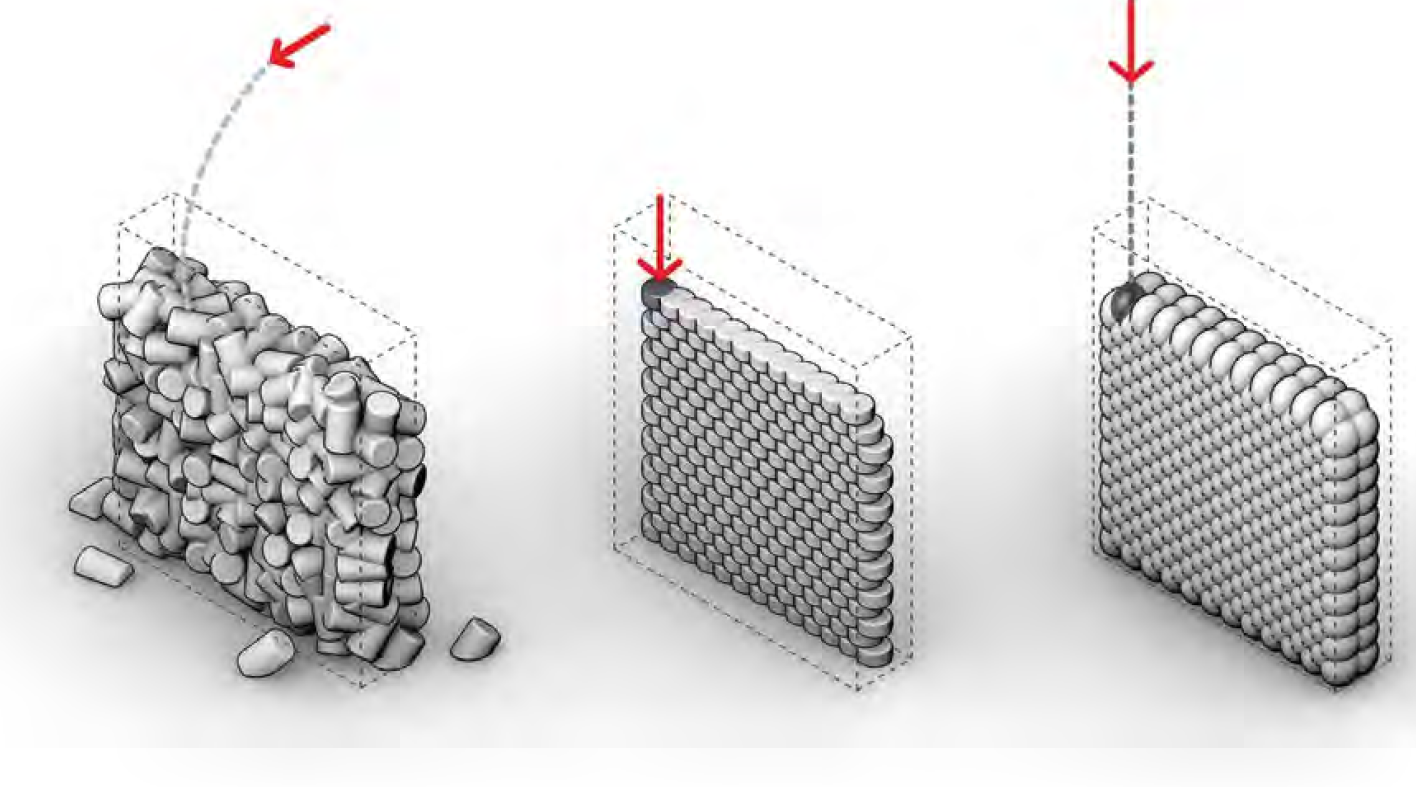
The diagram displays different concepts of earth material fabrication methods.

Left: ‘throwing’ technique used during Remote Material Deposition in 2014, Middle:‘pressing’ technique used during Clay Rotunda in 2021,  Right: ‘shooting’ technique currently investigated during Impact Printed Structures.

Source: https://www.research-collection.ethz.ch/handle/20.500.11850/668921

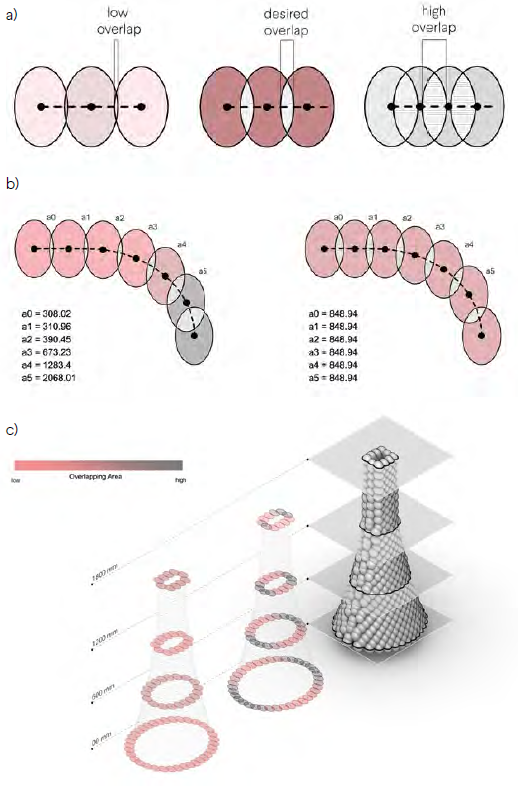
The diagram above illustrates the ideal overlap between each deposited component.

Source: https://www.research-collection.ethz.ch/handle/20.500.11850/668921

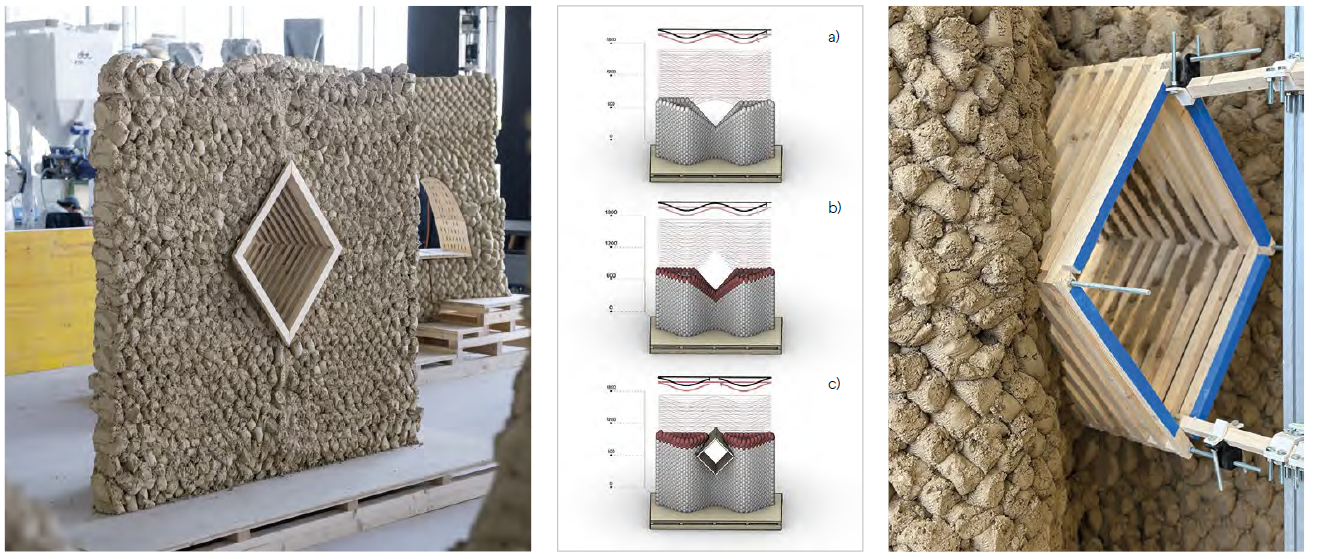
The photo above shows the process of printing a wall with a window embedded.

Radiolara Pavilion

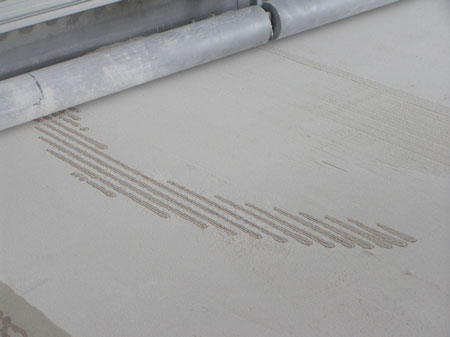
In a small shed on an industrial park near Pisa is a machine that can print buildings. The machine itself looks like a prototype for the automotive industry. Four columns independently support a frame with a single armature on it. Driven by CAD software installed on a dust-covered computer terminal, the armature moves just millimetres above a pile of sand, expressing a magnesium-based solution from hundreds of nozzles on its lower side. It makes four passes. The layer dries and Enrico Dini recalibrates the armature frame. The system deposits the sand and then inorganic binding ink. The exercise is repeated. The millennia-long process of laying down sedimentary rock is accelerated into a day. A building emerges.

The new material (inorganic binder + sand or mineral dust) has been subjected to traction, compression and bending tests. The results have been extraordinary and the artificial sandstone features excellent resistance properties. Effectively this process returns any type of sand or mineral dust back to its original compact stone state.

The binder transforms any kind of sand or marble dust into a stone-like material (i.e. a mineral with microcrystalline characteristics) with a resistance and traction superior to portland cement, to a point where there is no need to use iron to reinforce the structure. This artificial stone is chemically one hundred percent environmentally friendly.

The process is four times faster than conventional building, costs a third to a half as much as using Portland cement, creates little waste and is better for the environment. But its chief selling point may simply be that it makes creating Gaudiesque, curvy structures simple.

Read more at [ Blueprint Magazine | Dezeen | Previously ]

The Mud Tub

The Mud Tub, by Tom Gerhardt, is an experimental organic interface that allows people to control a computer while playing in the mud. By sloshing, squishing, pulling, punching, etc, in a tub of mud (yes, wet dirt), users control games, simulators, and expressive tools; interacting with a computer in a new, completely organic, way. Born out of a motivation to close the gap between our bodies and the digital world, the Mud Tub frees the traditional computer interaction model of it’s rigidity, allowing humans to use their highly developed sense of touch, and creative thinking skills in a more natural way.

Could building architecture with mud coincide control 3D printers producing earth buildings while being powered by the mud itself?

Here, Matt Parker’s Lumarca and Tom Gerhardt’s Mud Tub join forces to make some cool interactions happen.