Save the Heritage of Hassan Fathy


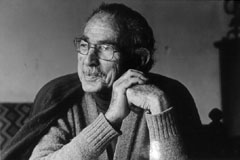
Hassan Fathy

Save the Heritage of Hassan Fathy is an International Association based in Geneva (Switzerland), founded in February 2008 to safeguard the heritage of the Egyptian architect, Hassan Fathy.
His works constitute a patrimony of outstanding value which belongs to the cultural world heritage. The Association’s objectives are the following:

– Raising the awareness of the public opinion about the importance of the work of the Egyptian architect
– Providing a platform of exchanges between the concerned Institutions (public and private) and Universities
– Promoting protection and conservation projects to safeguard this outstanding heritage

Save the Heritage of Hassan Fathy

Save the Heritage of Hassan Fathy is an International Association based in Geneva (Switzerland), founded in February 2008 to safeguard the heritage of the Egyptian architect, Hassan Fathy.
His works constitute a patrimony of outstanding value which belongs to the cultural world heritage. The Association’s objectives are the following:

  • Raising the awareness of the public opinion about the importance of the work of the Egyptian architect
  • Providing a platform of exchanges between the concerned Institutions (public and private) and Universities
  • Promoting protection and conservation projects to safeguard this outstanding heritage

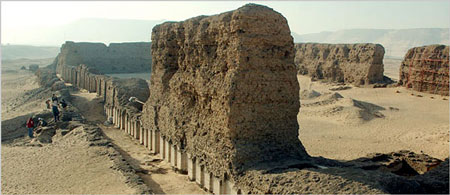
Shunet el-Zebib

Shunet-el-Zebib.jpg

photo: Institute of Fine Arts, N.Y.U./American Research Center in Egypt

Before the great pyramids, ancient Egyptian kings left less grandiose monuments to themselves: fortresslike sanctuaries enclosed by mud-brick walls. Inside these mortuary complexes, people presumably gathered to worship and perpetuate the memory of their departed ruler. The crumbling, almost vanished remains of such structures, archaeologists say, attest to the political hierarchy and religion of the newly unified Egyptian state, beginning more than 5,000 years ago.

[ NY Times article | audio slide show ]

Qurna Residents are Displaced Again

Bulldozers have moved in to demolish houses in the Egyptian village of Qurna (Gourna) which sits on top of dozens of pharaonic tombs in Luxor. The Egyptian government is determined to move the 3,200 families of the village to an alternative settlement it has built a few kilometres away. In 1945 the Egyptian government displaced the entire city to a New Gourna designed by the architect Hassan Fathy. “All of the architect’s best intentions, however, were no match for the avariciousness of the Gournis themselves, who took every opportunity possible to sabotage their new village in order to stay where they were and to continue their own crude but lucrative version of amateur archaeology.” Today New Gourna is almost abandoned and all what remains today of New Gourna is the mosque, market and a couple of houses. Perhaps history will repeat itself and the residents of Qurna will resist forced displacement. However if destruction of the village continues, an important history will be lost. [ images of New Gourna | Qurna ]

Oldest Mud Brick Structure in the World

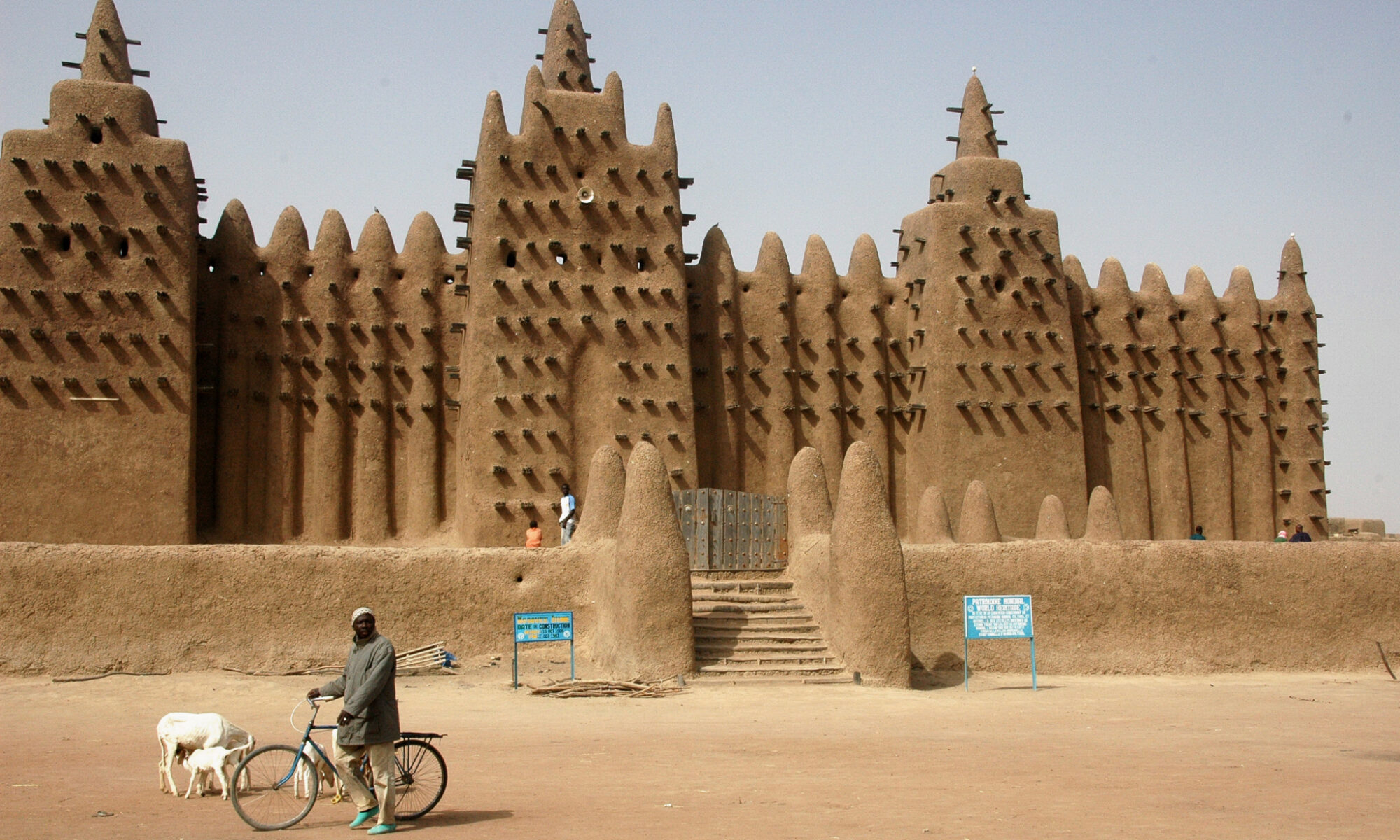
The ceremonial enclosure of Khasekhemwy–Hierakonpolis’ only standing monument is built entirely of sun-dried mud brick, with walls 5 meters (16.4 feet) thick and still preserved in places to its original imposing height of 9 meters (29.5 feet). It is the oldest freestanding mud-brick structure in the world. For the third time, it has been listed with the World Monument Fund as one of the world’s 100 most endangered monuments. Decorated on its exterior with a pattern of recessed paneling or niches and originally plastered white, it must have been a striking sight in its time. Almost 5,000 years later, it stands as a testament to the abilities of its builder, King Khasekhemwy, the last ruler of the Second Dynasty (ca. 2686 B.C.), but the reasons for which it was built remain a mystery.

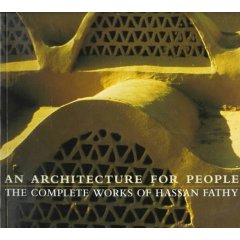
The Complete Works of Hassan Fathy

JamesSteele.jpg

An Architecture for People: The Complete Works of Hassan Fathy reviews the ideas and designs of Egyptian architect Hassan Fathy (1900-1989), best known for his striking Architecture for the Poor (University of Chicago, 1973), which described his efforts to create the village of New Gourna for 7,000 displaced Egyptian peasants known as the Gourni. Fathy sought to empathize with their lifeworld and to find architectural means whereby the new village would sustain their traditional way of life yet at the same time make life better by drawing on sustainable technology.

Steele, an architect himself, presents Fathy’s built projects and discusses the design philosophy underlying his work. Steele’s book is a tribute to Fathy as a compassionate designer and as a master craftsman who held strongly to traditional values and beliefs at a time when the historical amnesia and standardization of Modernist architecture dominated.

more…

Hassan Fathy

hs1.jpg

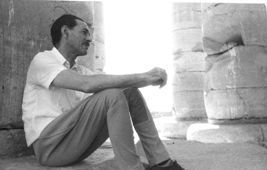
Hassan Fathy (1900–1989) was an Egyptian architect widely recognized as a pioneer of sustainable and vernacular architecture. His work challenged the dominance of modern industrial construction by advocating for the use of traditional building techniques, particularly adobe (mud brick), as a means of creating environmentally responsive and socially equitable architecture. 

Fathy’s approach was grounded in what he termed “appropriate technology,” emphasizing the use of locally available materials, passive environmental strategies, and the participation of local communities in the building process. Rather than imposing universal modernist solutions, he sought to develop a context-specific architecture that responded to climate, culture, and economic conditions. 

His most influential project, New Gourna Village (1946–1952) in Luxor, was conceived as a prototype for low-cost, community-oriented housing. The project integrated traditional Nubian construction methods—such as vaulted roofs, courtyards, and thick earthen walls—to provide passive cooling and thermal comfort in a hot arid climate. 

Although New Gourna faced social and political challenges and remained partially unrealized, it became a critical reference in architectural discourse. Through both the project and his seminal book Architecture for the Poor (1973), Fathy redefined architecture as a socially engaged practice, where material, climate, and human needs are intrinsically linked. 

Today, Fathy’s work is increasingly recognized for its relevance to contemporary issues of sustainability, climate adaptation, and equitable development. His legacy continues to influence architects seeking alternatives to resource-intensive construction, positioning him as a key figure in the global discourse on ecological and socially responsible design.

https://www.wmf.org/projects/new-gourna-village

https://en.wikipedia.org/wiki/Hassan_Fathy
Architecture for the Poor

fathy2.gif

Architecture for the Poor: An Experiment in Rural Egypt describes Hassan Fathy’s plan for building the village of New Gourna, near Luxor, Egypt, without the use of more modern and expensive materials such as steel and concrete. Using mud bricks, the native technique that Fathy learned in Nubia, and such traditional Egyptian architectural designs as enclosed courtyards and vaulted roofing, Fathy worked with the villagers to tailor his designs to their needs. He taught them how to work with the bricks, supervised the erection of the buildings, and encouraged the revival of such ancient crafts as claustra (lattice designs in the mudwork) to adorn the buildings.