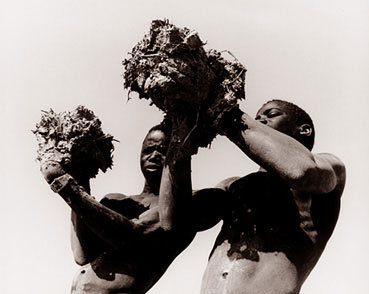
Stuart Redler exhibits black and white photographs of the people and earthen architecture of Mali, West Africa from November 16th to December 16th simultaneously in London and Timbuktu. photo by Stuart Redler
Architecture, Art, Design, and Culture using of mud, clay, soil, dirt & dust.
Stuart Redler exhibits black and white photographs of the people and earthen architecture of Mali, West Africa from November 16th to December 16th simultaneously in London and Timbuktu. photo by Stuart Redler
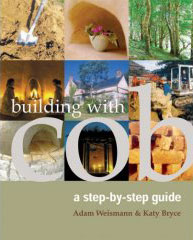
Cob building uses a simple mixture of clay subsoil, aggregate, straw, and water to create solid structural walls, built without shuttering or forms, on a stone plinth. This ancient practice has been used throughout Britain for centuries – in fact, the material is so strong and durable that it is currently in use for forty-five thousand houses in Cornwall, a county in southern England. Building With Cob: A Step-by-step Guide
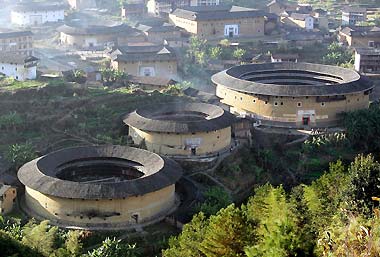
Aerial view of Earth buildings located at Chuxi Village, Xiayang town, Yongding County, in east China’s Fujian Province in this picture taken December 10, 2004. There are about 30,000 earth buildings, dating mostly from the Ming (1368-1644) and Qing (1644-1911) dynasties, in the Fujian Province, southern and eastern China.
I Love Cob is a website that, in addition to professing it’s love for this building tehnique, includes photo galleries and related links.
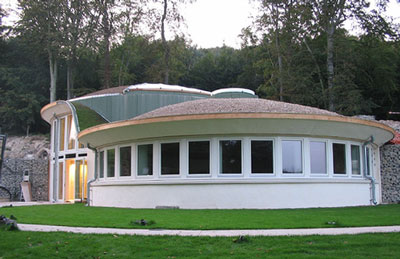
The Pines Calyx conference and training centre, an environmentally-friendly building made of chalk extracted from the White Cliffs, at St Margaret’s Bay in Kent, is said to be one of Europe’s “most sustainable and healthy” structures. [ photo set | press ]
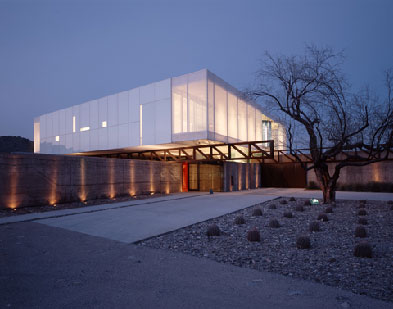
House of 5 Dreams, by Jones Studio is a 30,000 square foot residence/private museum created to serve the needs of a pair of prolific art and artifact collectors. Knowing that much of their collection had been excavated, the decision was made to place exhibition space below the horizon and contained within 4-foot thick rammed earth walls. Above the gallery, a floating residential pavillion is spatially composed of translucent light.
Via google video, videographer Paul Jaquin has ammassed a collection of videos of rammed earth in spain. Read synopsis and watch the videos by clicking below:
Rammed earth at Lorca castle, a tour of the outside of the building, and a view across the valley.
Rammed earth wall at Palma del Rio in southern Spain. Constructed around 1171, and probably 6m high.
Conclusive proof that some rammed earth is absolutely fine in the rain. Here a castle at Alcala de Guadaira is observed in the middle of a rainstrorm with no detrimental effect to the fabric of the wall.
A video tour of Banos de la Encina castle, built in 967 from rammed earth.
Rammed earth wall at Novelda in southern Spain. This is a view inside a hole in the wall, proving that rammed earth can provide some arching or tensile action. Novelda castle was built around 1171 duringthe Almohad dynasty in Spain.
A tour of the inside of Villena castle in southern Spain. Constructed in rammed earth in 1172, it is a very well preserved rammed earth castle.
Rammed earth wall in Cordoba.
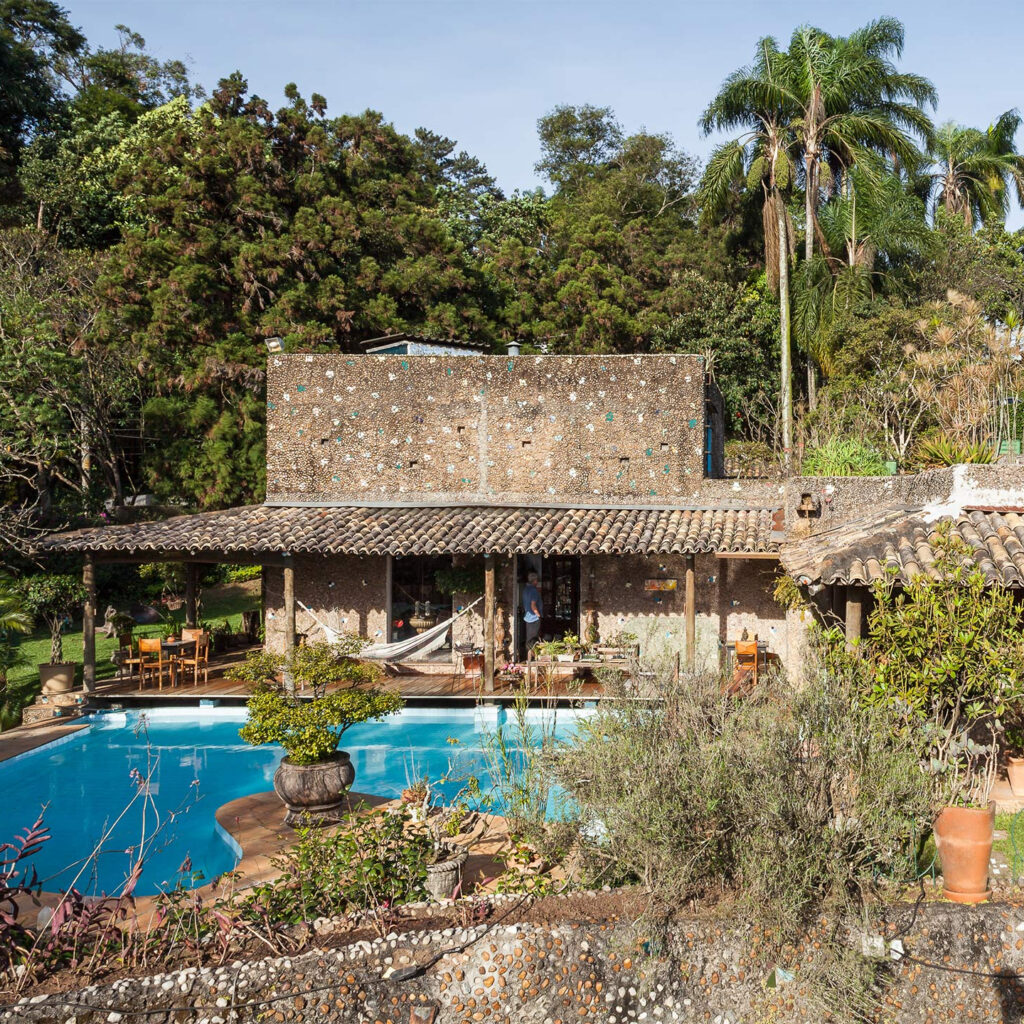
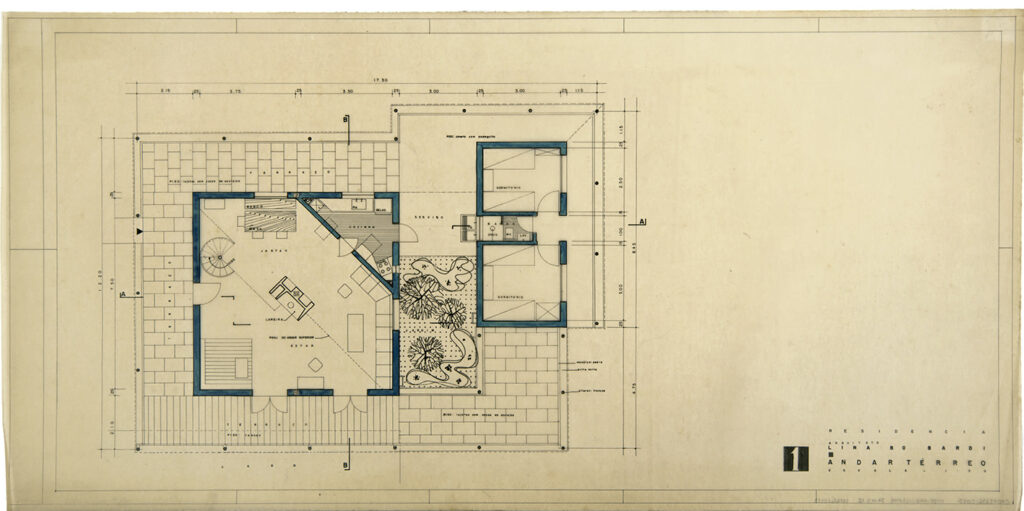
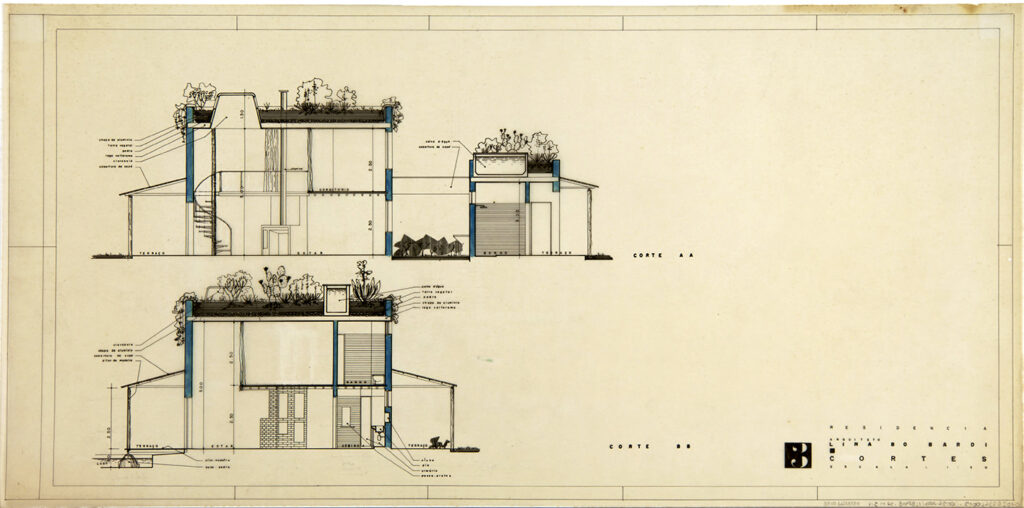
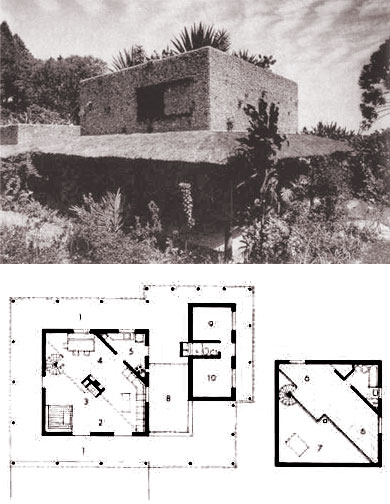
The Valeria P. Cirrel House was designed by Italian-born architect Lina Bardi and 1958 near Sao Paulo, Brazil. The adobe residence employed folk elements “highly unusual in the modernist vocabulary of the time” according to When Brazil Was Modern: A Guide to Architecture, 1928-1960.
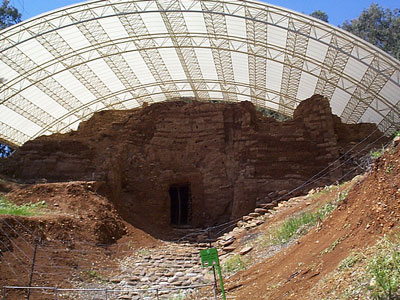
Tel Dan, one of the more important sites in the Golan Heights near the Israel-Lebanon border, is better known for the world’s oldest intact arched gateway, a 4,000-year-old, mud-brick structure now protected under a modern shelter, but the site is under possible threat from a possible errant Hezbollah missile.
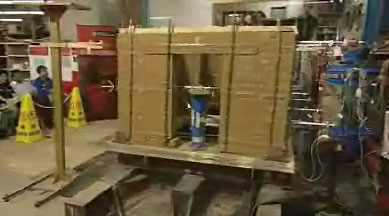
Quake Safe is a frame made from string, bamboo and wire, which can be either retrofitted into an existing adobe (mud brick) house or incorporated into a new house as it’s being built, in order to give it a much higher level of structural protection against earthquakes. The invention was created by Faculty of Engineering Ph.D Student at the University of Technology in Sydney, Dominic Dowling.
The frame is designed to be affordable to people who live in adobe houses, particularly the poorer rural communities of Central America.
[ interview | video ]