Andy Goldsworthy

Review: In 'Leaning Into the Wind — Andy Goldsworthy,' an Artist Grapples (Again) With Time - The New York Times

The artist Andy Goldsworthy in “Leaning Into the Wind.” Credit:Thomas Riedelscheimer/Magnolia Pictures

Andy Goldsworthy is an international based artist born in England.  His art process is known for integrating and creating with the natural environment. Working as both sculptor and photographer, Goldsworthy crafts his installations out of rocks, ice, leaves, or branches, cognizant that the landscape will change, then carefully documents the ephemeral collaborations with nature through photography.
Andy Goldsworthy’s installation Tree Fall

Andy Goldsworthy, “Tree Fall“, 2013

Goldsworthy has numerous art installation and creations.  However, his art installation, Earth Wall, utilizes rammed earth and eucalyptus branches to illustrate simulated layers of earthen materials as an art form and not as a structural material.

Andy Goldsworthy with an installation in San Francisco, tentatively titled Earth Wall. Photograph by The Chronicle's Sam Whiting.Andy Goldsworthy, Earth Wall, 2014, Photograph by The Chronicle’s Sam Whiting. 

In order to construct this installation Goldsworthy and his team collected curved eucalyptus branches from San Francisco’s Presidio. Then they installed a sphere of branches onto a wall before the formwork for the rammed earth wall is installed.

Eucalyptus branches from the Presidio installed before the formwork for the rammed earth wall is installed.

After which, a shutter formwork was constructed in front of the wall. Then locally sourced Presidio earth mixed is poured into the forms, and ramming begins. Rammers carefully compact earth around the twisted ball of  Eucalyptus branches. Once poured, the formwork is removed revealing a freshly packed rammed earth wall and the center point of the ball of gnarled eucalyptus branches.

Artist Andy Goldsworthy poses with the installation before beginning to dig out the earth surrounding the encased eucalyptus wood.

Once hardened, Goldsworthy excavates the rammed earth from around the gnarled eucalyptus wood.

Artist Andy Goldsworthy excavates the rammed earth from around the gnarled eucalyptus wood.

For a more detailed visualization view this video

Andy Goldsworthy continues exploring the relationship between art and the natural environment. His ability to become attuned to his environment mentally, physically, and emotionally, creates a unique perspective of the human  and natural world.

“We often forget that WE ARE NATURE. Nature is not something separate from us. So when we say that we have lost our connection to nature, we’ve lost our connection to ourselves.”

– Andy Goldsworthy
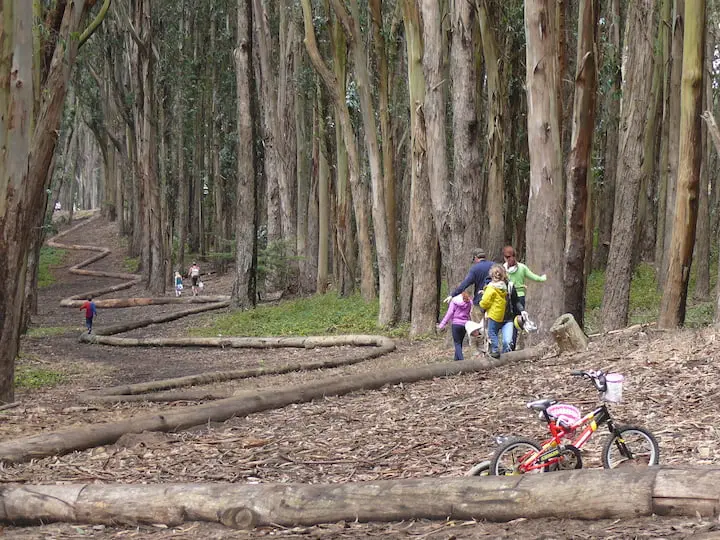
A family walking near Andy Goldsworthy’s Wood Line, with a bicycle in the foreground.

Andy Goldsworthy, “Wood Line“, 2011, Photograph by  Brian Vahey.


References:


Dineo Seshee Bopape

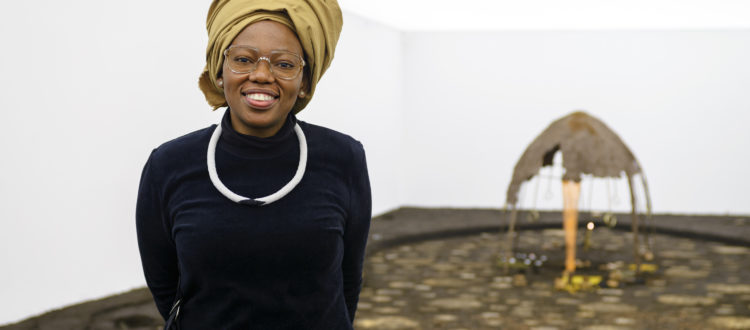
Dineo Seshee Bopape Portrait. Photo Curtesy of “Senator Recommends”

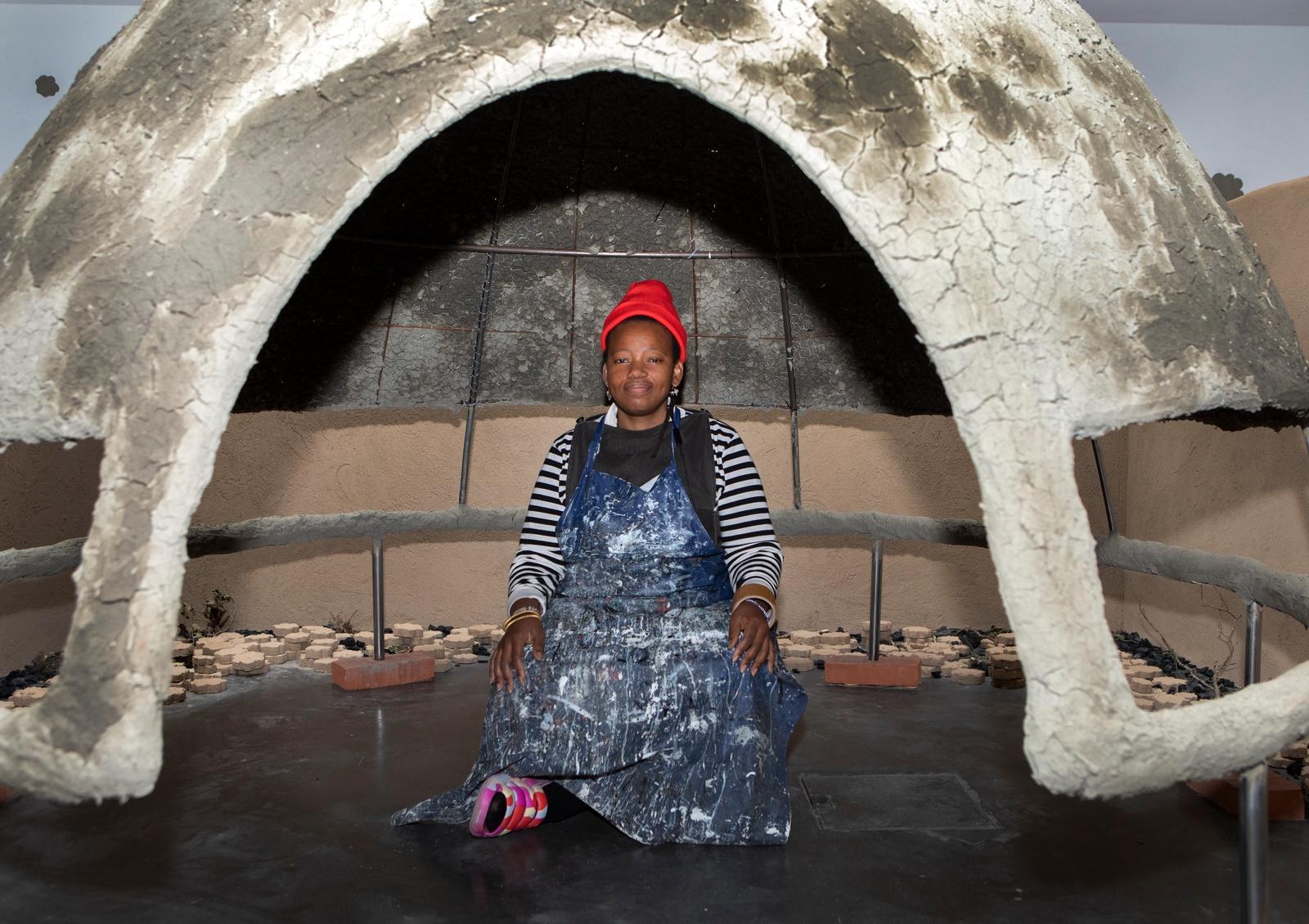
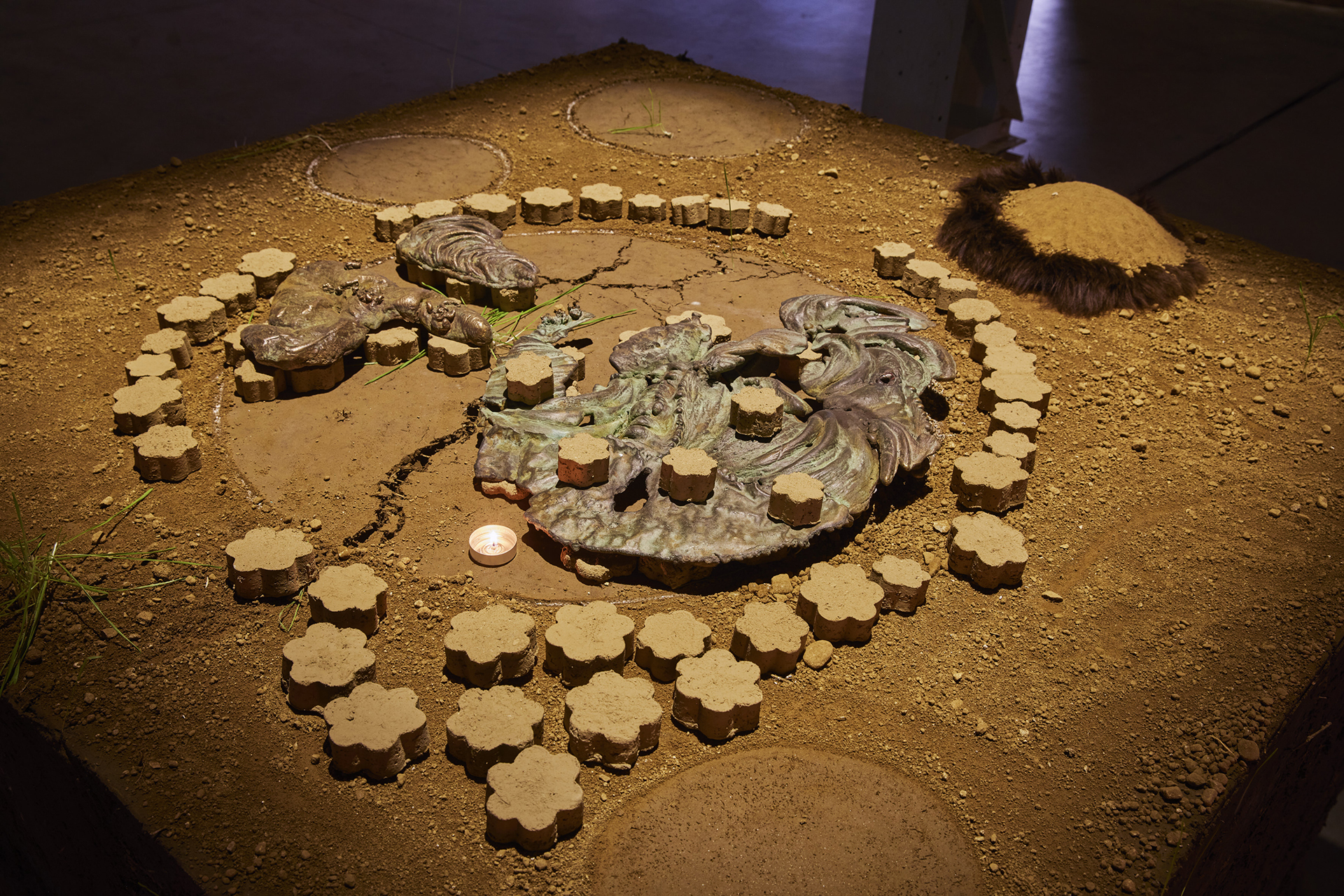
Dineo Seshee Bopape is a South African contemporary artist known for her multimedia installations, video art, sculptures, and performances, in which she incorporates organic materials like soil (EARTH), coal, ash, and clay.  Her environmental installations delve into themes of memory, identity, and belonging, pushing visitors to experience soil in a completely different way. 

Bopape’s art draws heavily on African cosmologies, oral histories, and indigenous knowledge systems, addressing the complexities of belonging and displacement. Born in Polokwane, South Africa, the artist takes from her own experience and weaves narratives that investigate archetypes and myths in which the female figure plays a central role.

Her practice reflects on the body, emotions, trauma, and the unseen or spiritual dimensions of life. Her installations evoke layered meanings and leave room for ambiguity. Viewers must therefore engage with both material and metaphor.

With memory, belonging, and place.

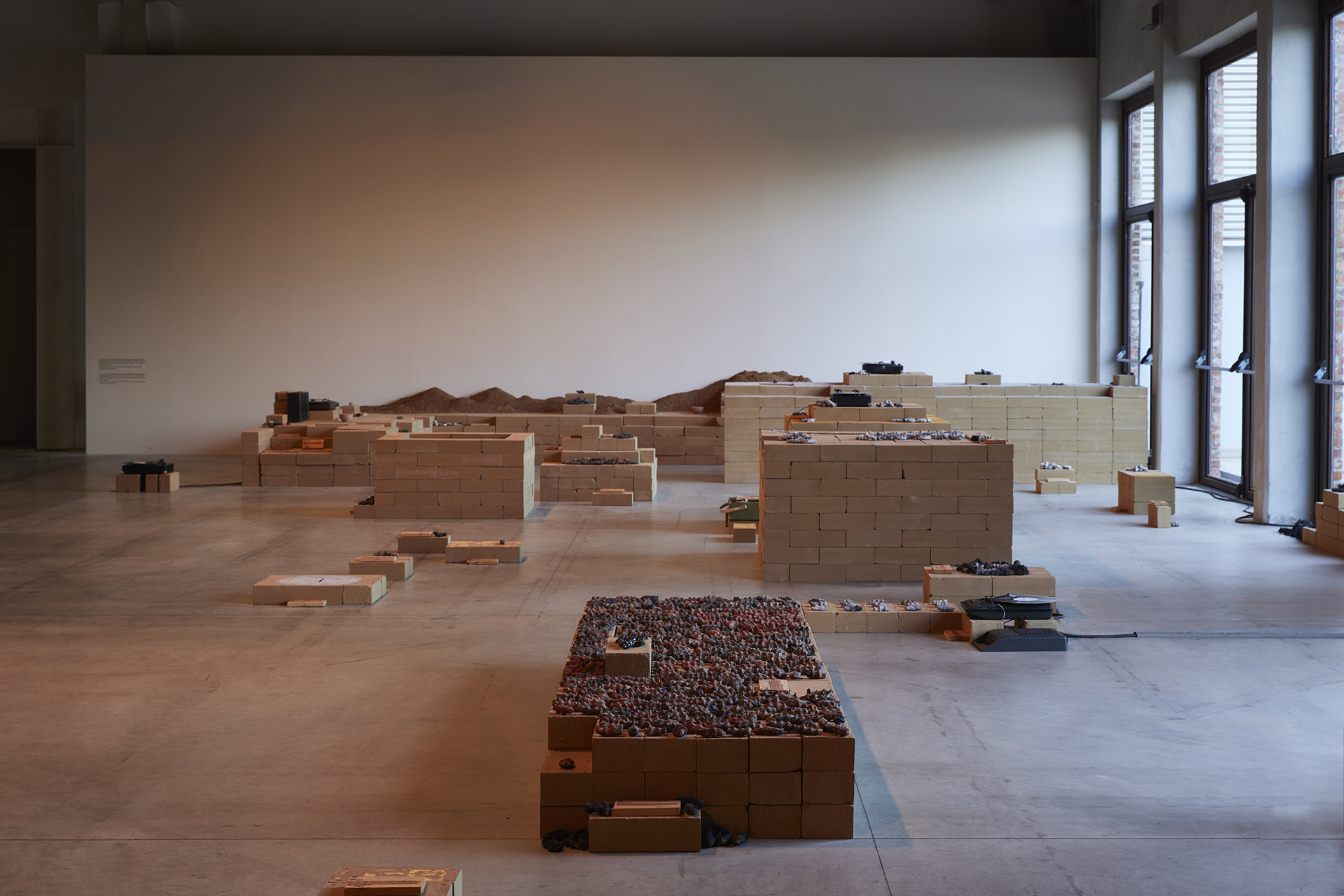
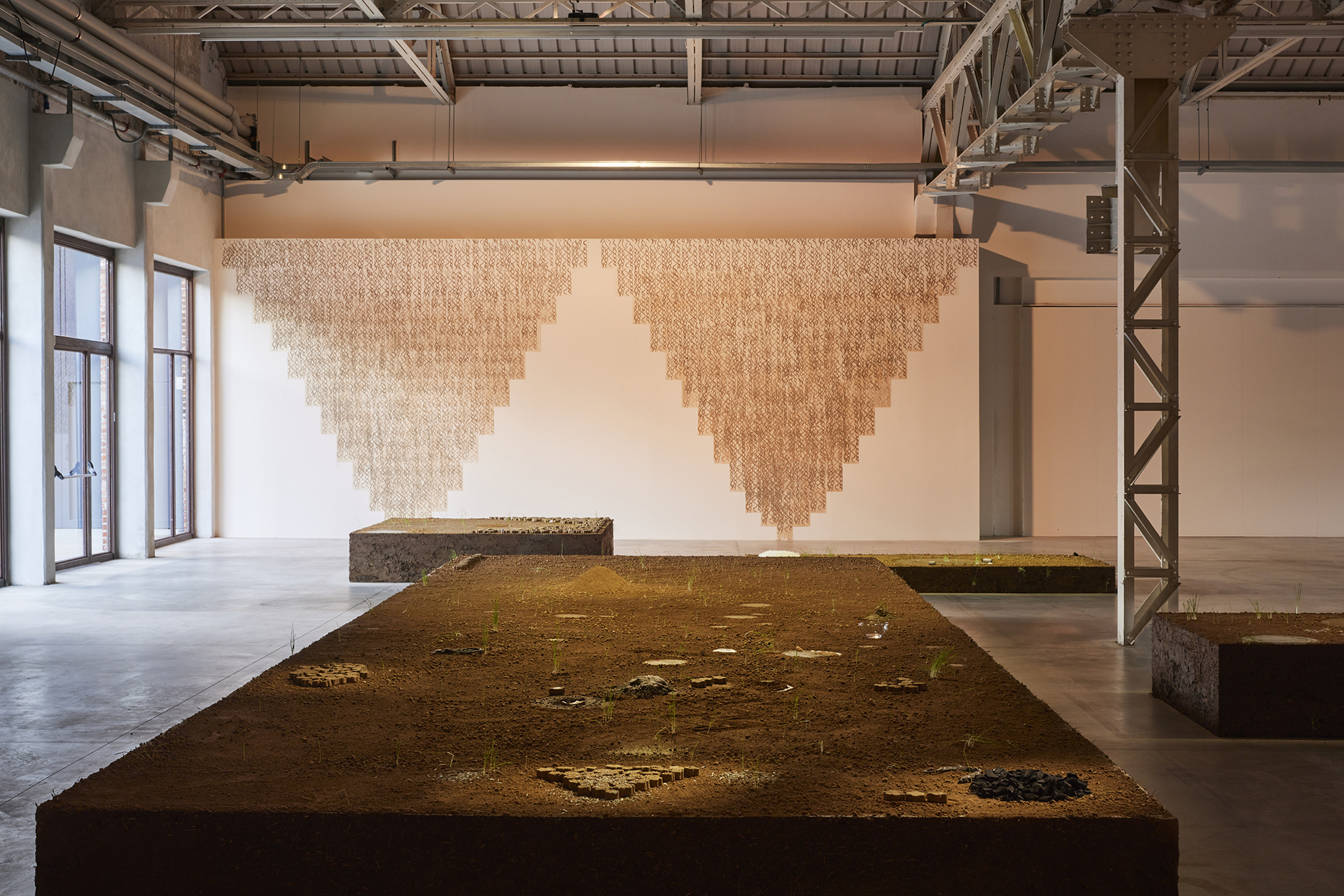
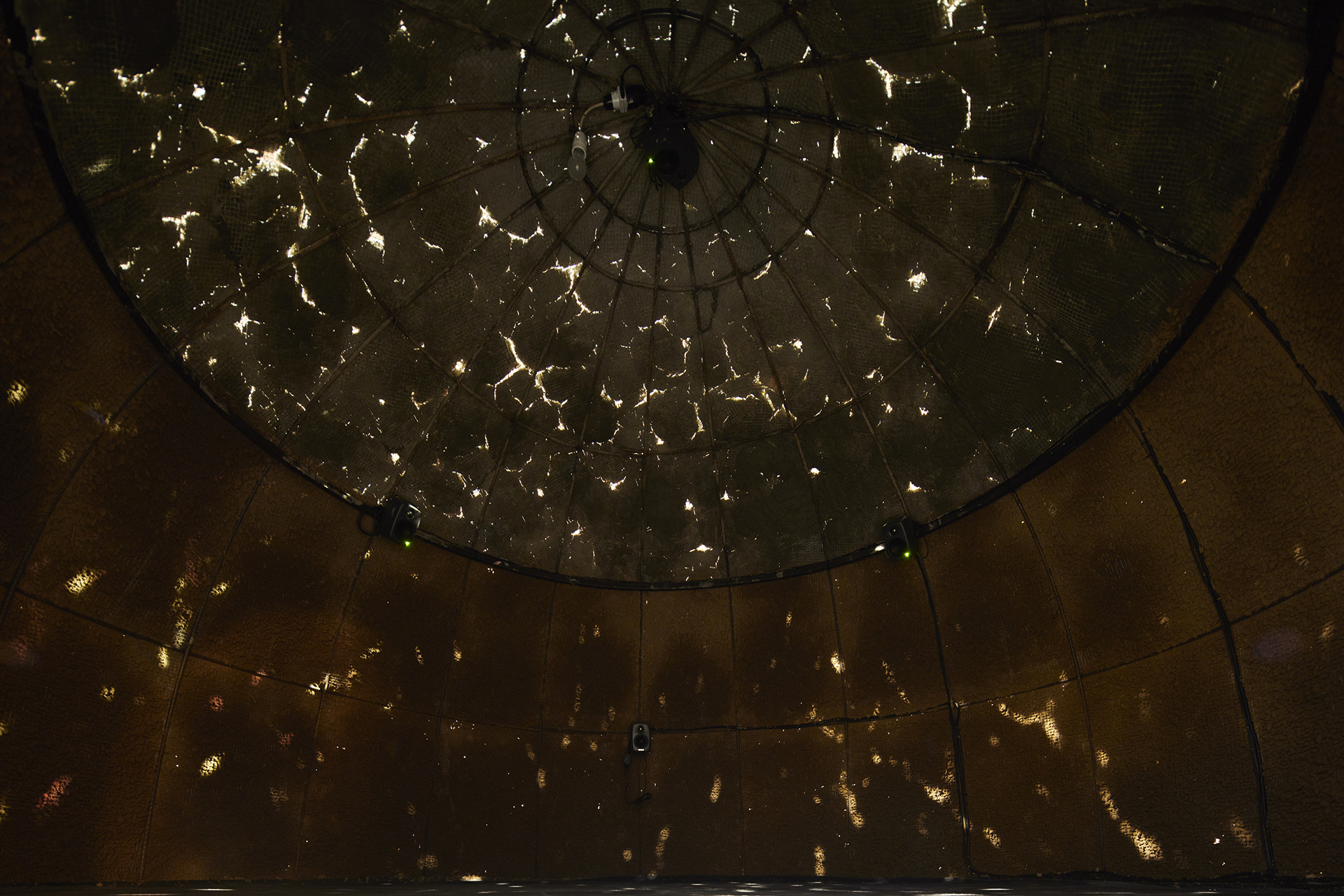
Her installations have been featured all around the world, making it toPirelli HangarBicocca’s gallery in Milan, Italy with  Born in the first light of the morning [moswara’marapo].

This exposition asks the question: What Memories are preserved in Stones, Water, and Earth?

Here, historical and geographical references are brought together, to reflect on the memory, and more specifically the transmission of memory through natural elements like water and earth, and the use of sounds and words as healing.   The installation draws on the symbolic use of earth, organic elements, and rituals, alluding to ancestral connections, healing practices, and African cosmologies. “Moswara’marapo” translates from Sesotho to “the smell of bones,” which adds a layer of meaning to the work, suggesting ideas of mortality, memory embedded in the earth, and the cycles of life and death.

“Born in the first light of the morning [moswara’marapo]” is just one example of the ways Dineo Seshee Bopape translates memory, spirituality, and materiality into powerful artistic experiences. But her work extends far beyond this single installation. From “Untitled (Of Occult Instability) [Feelings]” to  “More/Moreana,” Bopape’s art challenges us to engage deeply with themes of identity, healing, and historical trauma.

Her use of natural elements like soil, water, and ash does more than reflect the material world—it urges us to question our relationship with these elements. Her work invites us to consider how land and memory are intertwined and how ancestral knowledge persists within the earth and within us. Through her installations, Bopape reminds us that nature is not just a backdrop to human experience but a living archive that holds our histories, traumas, and hopes for transformation.

References

Rafa Esparza

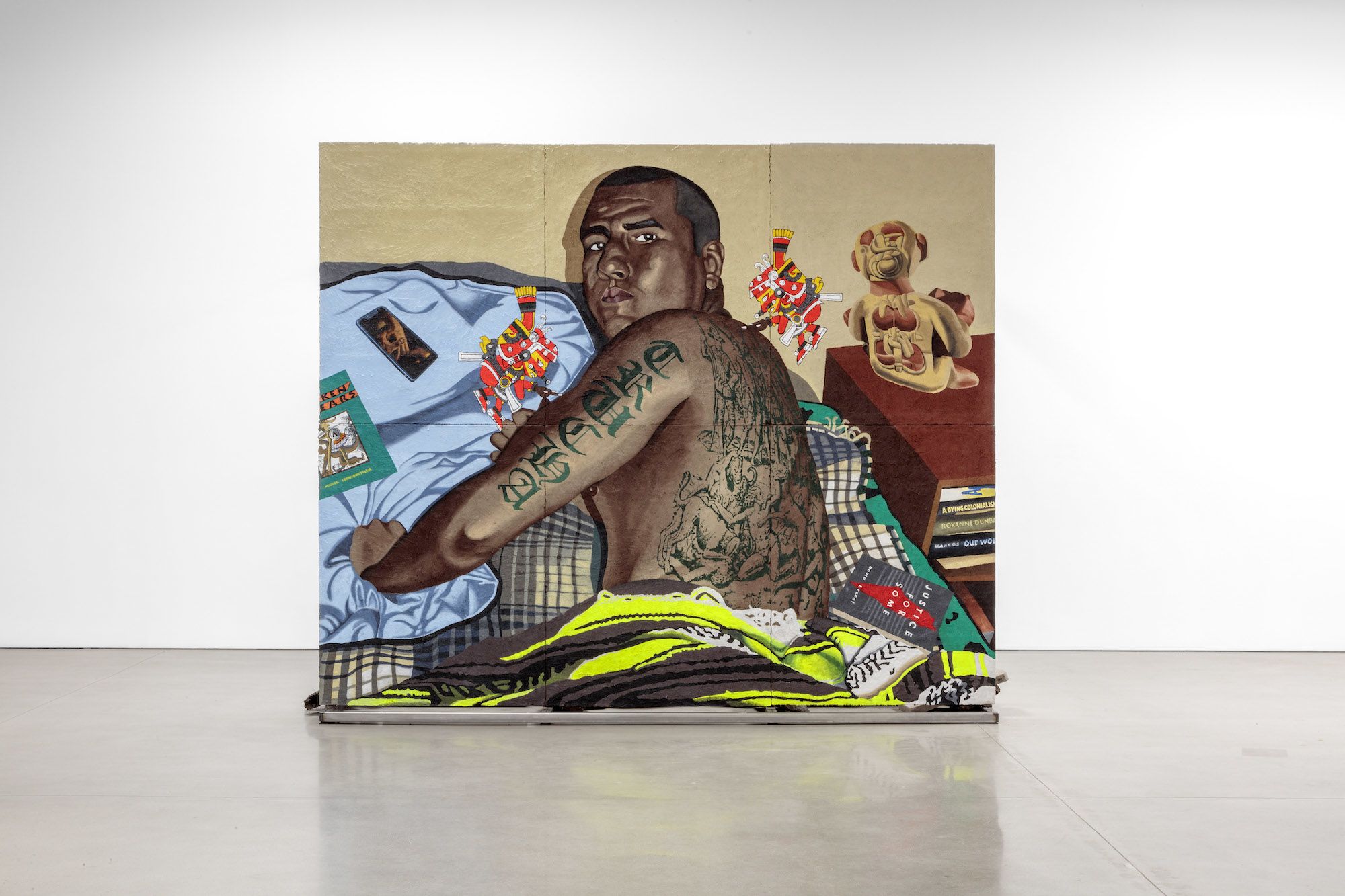
Rafa Esparza is a Los Angeles-based multidisciplinary artist, known for exploring the intersections of history, identity, and place through his work. Born and raised in East L.A., Esparza draws inspiration from his Mexican-American culture. His installations, performances, and sculptures delve into themes of colonization, queer identity, and environmental concerns, critiquing ideologies, power structures and binaries. Esparza frequently collaborates with other artists and his community, including his family members.

At the Edge of the Sun (2024), Jeffrey Deitch, Los Angeles

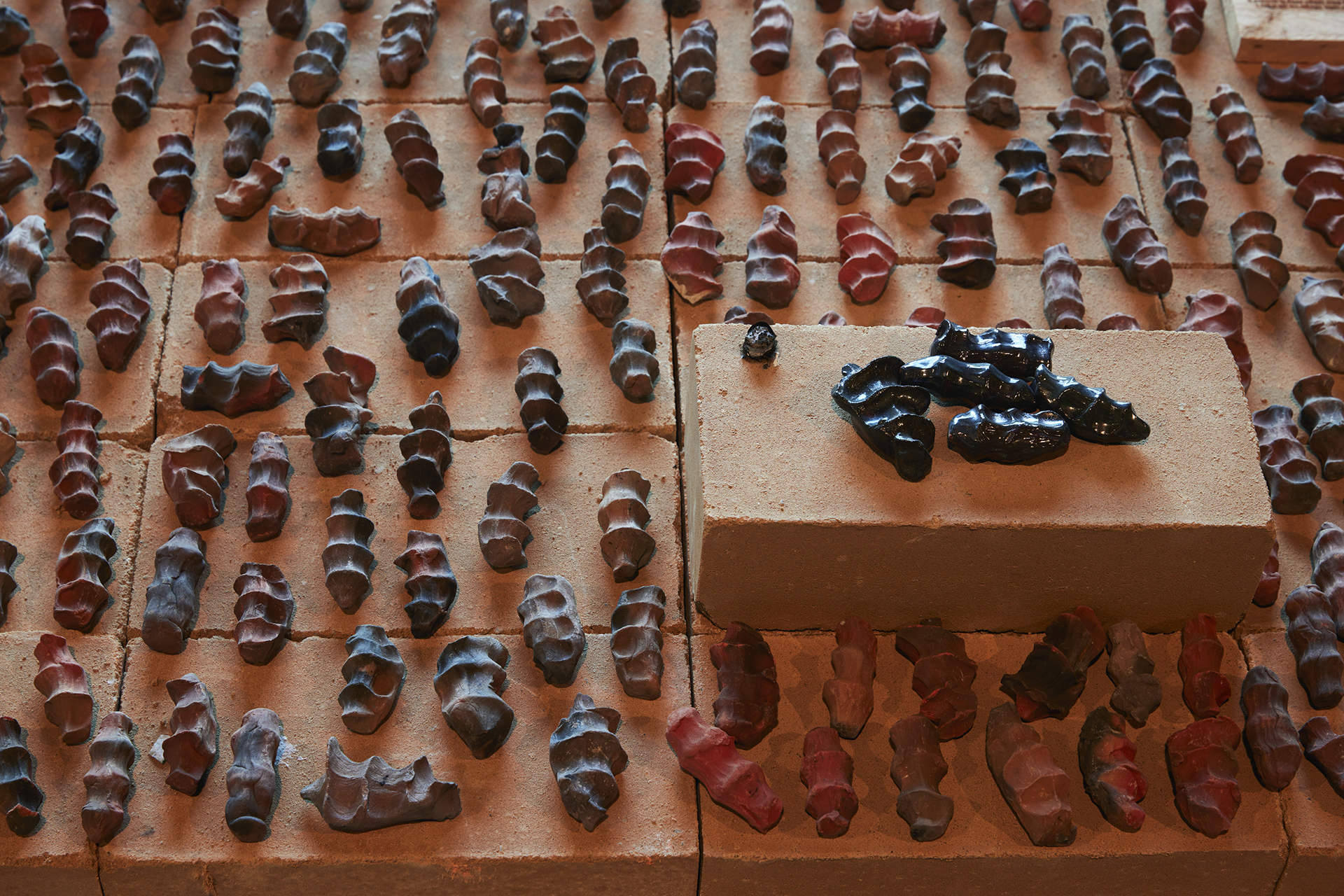
His most prominent works consists of building adobe structures in unconventional spaces, such as the Los Angeles River and art galleries. This in reference to both his familial roots and indigenous building traditions they also emphasize the labor and traditional skills involved.

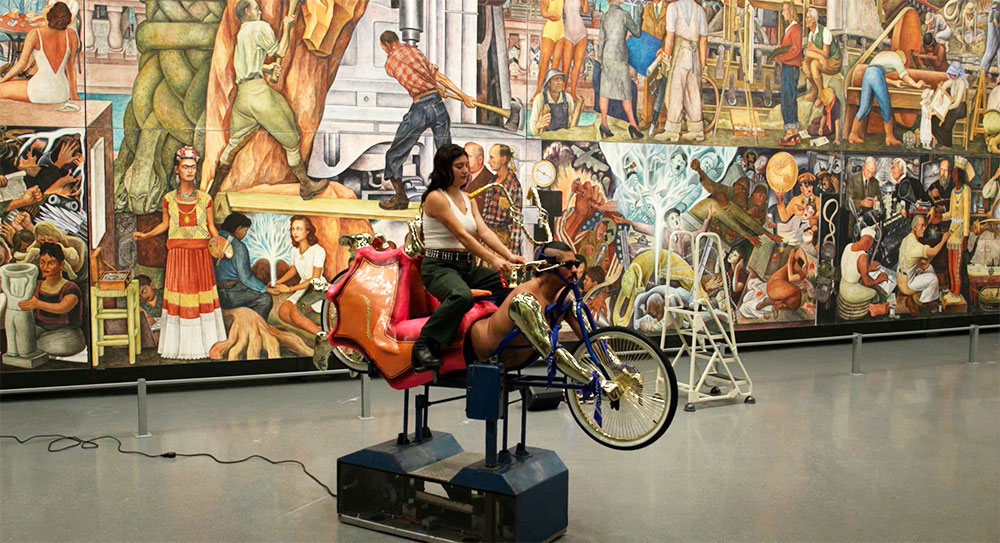
Corpo RanfLA: Terra Cruiser 4everz (2023), SFMOMA

“I just knew that adobe had a special place in his own personal history, and I thought it could be a good way to start  having conversations about some guidance that I needed at the time as a young person coming into adulthood. What it did, in fact, was allow us to share space without being at each other’s necks, while he passed down this way of working with land”

Rafa Esparza, on mending his relationship with his father through earth


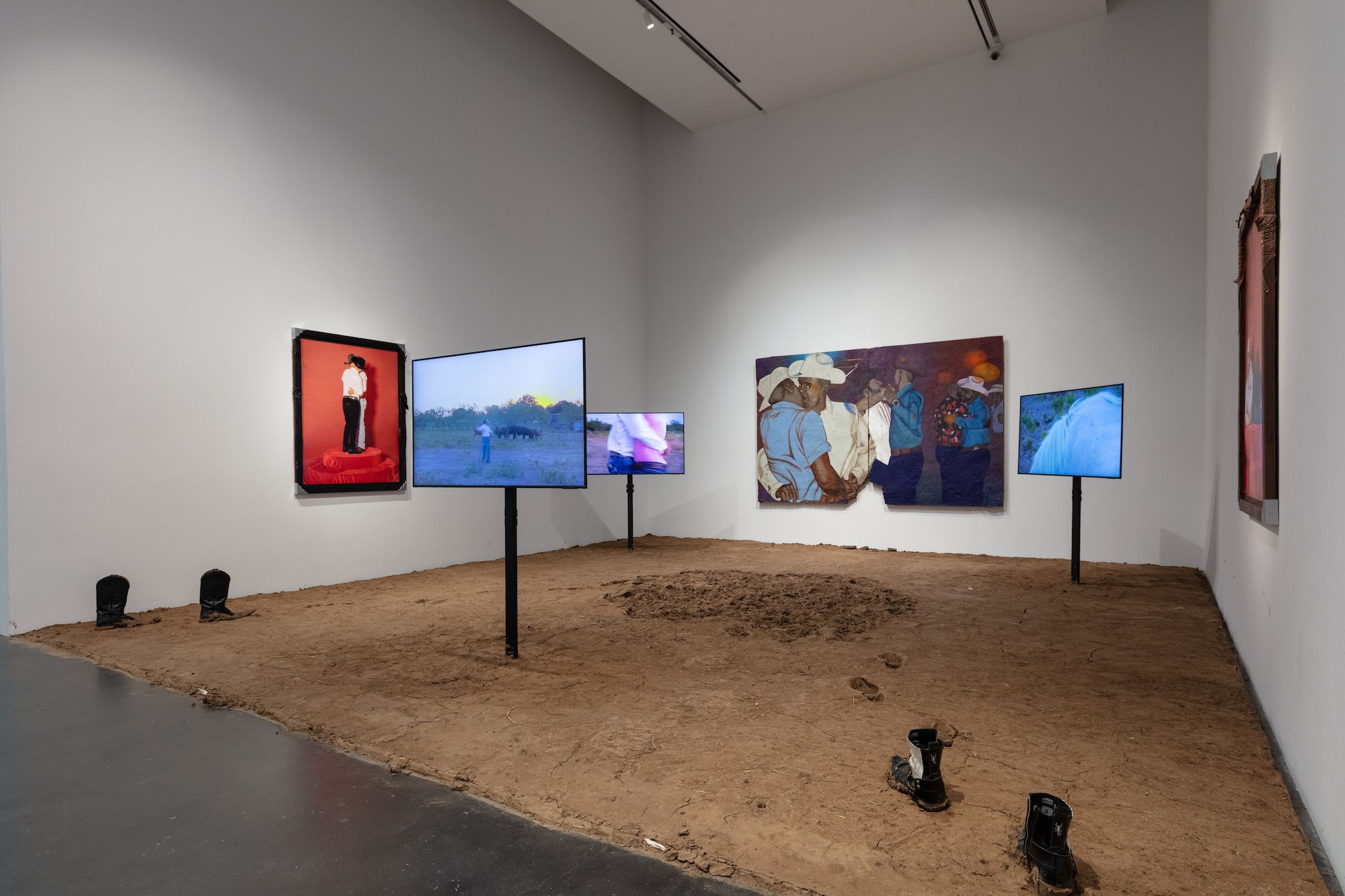
Cowboy (2023), Museum of Contemporary Art, Denver

Esparza challenges institutional frameworks and addresses socio-political issues (e.g. immigration, race, and marginalization). His work, at its core, is about storytelling and resistance, using art as a platform to engage with broader discussions on identity and systemic injustice.

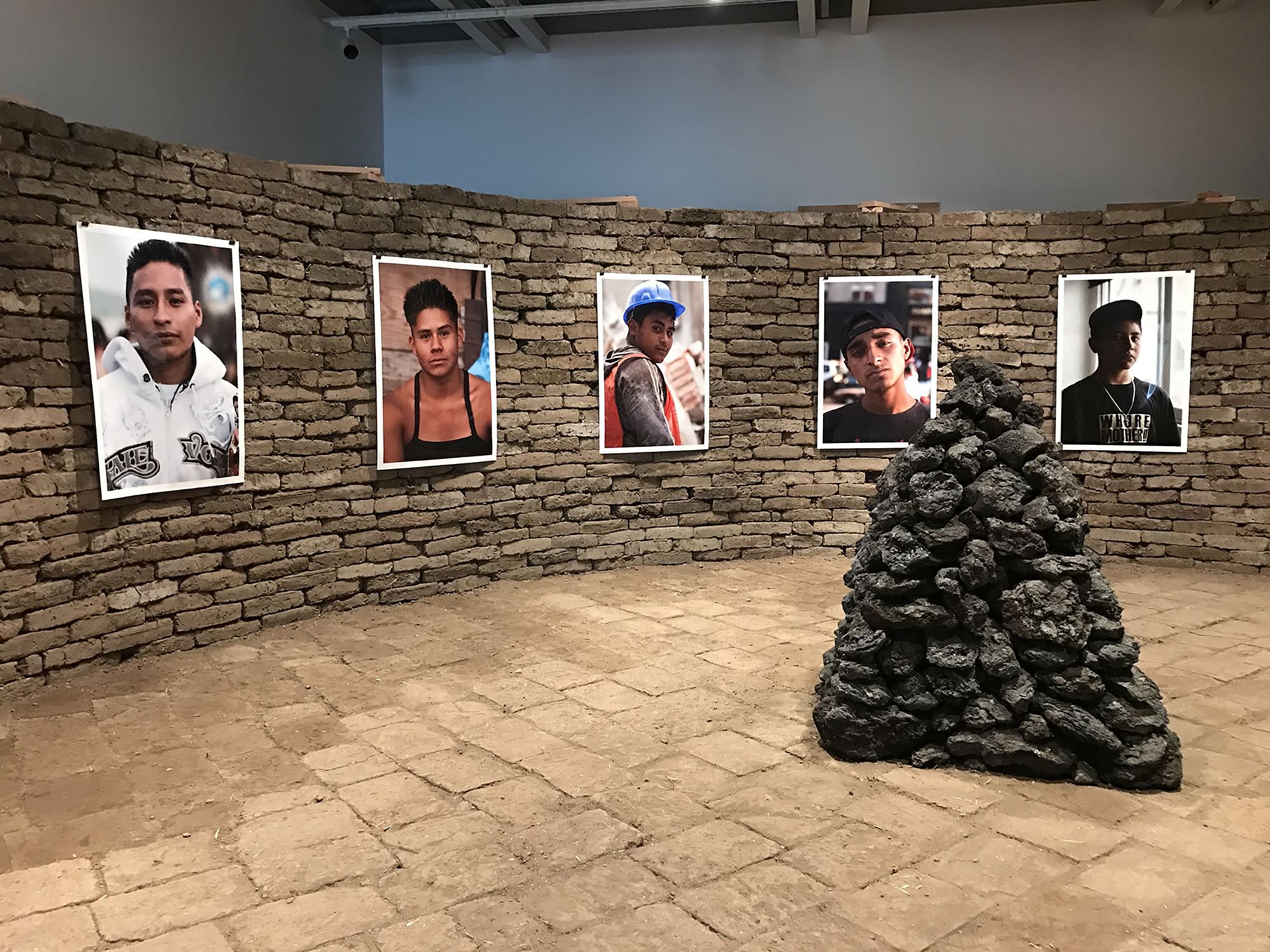
In Whitney’s 2017 Biennial, in New York City, Rafa Esparza’s Figure/Ground: Beyond the White Field, created an immersive microclimate.  What was once, a white cubed gallery is covered in what Esparza calls “brown matter,” adobes; a mixture of hay, clay, horse dung, and water from the LA River, baked under California sun, and transported across U.S. coast’s. By invitation fellow queer artists to become adoberos, and helped to collectively created nearly five thousand adobes for the installation.

Whitney Biennial (2017), Whitney Museum of American Art, New York

“Brown matter” or adobe is used not only in reference to skin color, but also a broad range of conversations on race, nationality, ethnicity, and gender and the intersections therein. Most especially, concerns surrounding the 2016 U.S. Presidential election of Trump.

To complete the installation, five other artists were invited to exhibit their mixed-media artwork within the adobe rotunda. The adobe rotunda plays is both an artwork itself and a space for exhibiting the work of others (figure and ground).

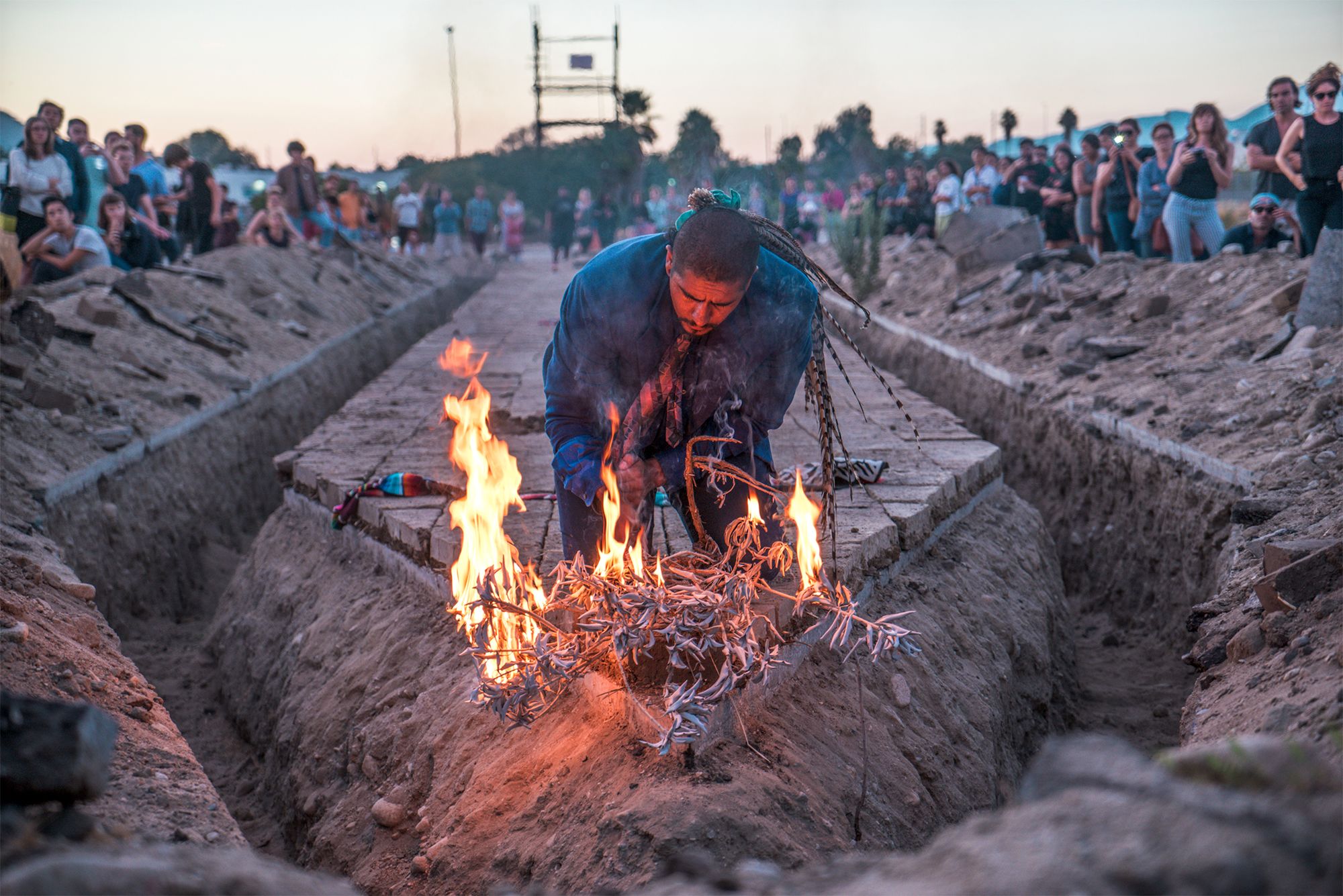
building: a simulacrum of power (2014), Bowtie Project, Los Angeles

References

Bahareque (alternatively spelled bareque, also known as quincha)

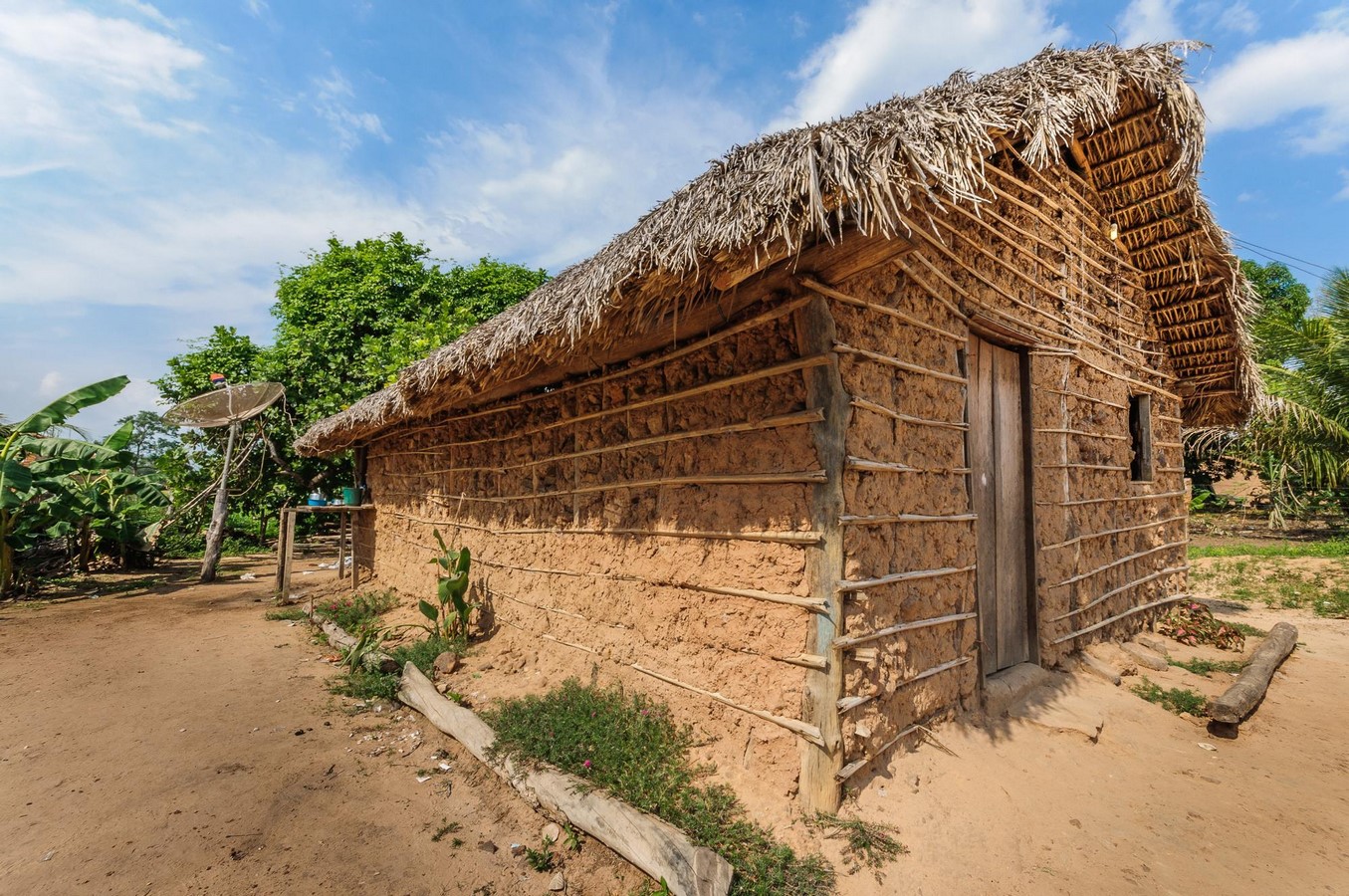
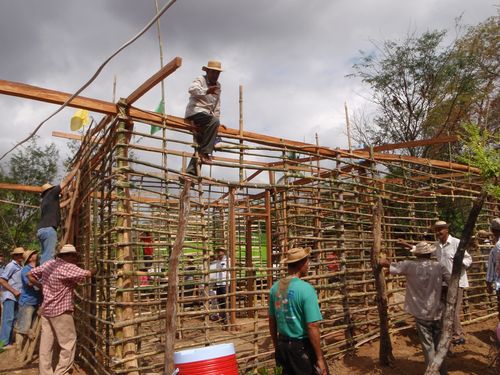
Casa de pau a pique, or a bahareque house in Brazil.

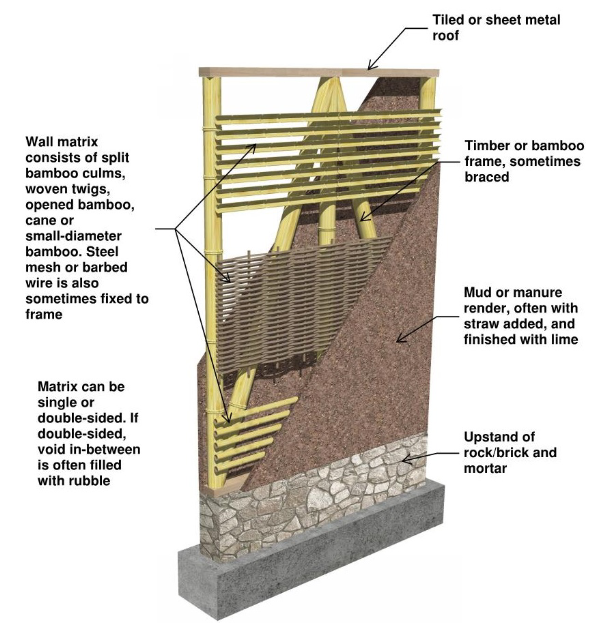
Bahareque is the Spanish name for what is known in English as wattle and daub, a method of building where wet loam is applied to an interwoven mesh of twigs, branches, bamboo, etc. Specifically, bahareque (also known as quincha) is a subset of the thrown loam technique, where the wet loam is applied by hand onto the organic skeleton. The loam of earth (a combination of clay, silt, and soil) and aggregate, usually straw. Bahareque describes a wide range of building techniques and types, and can be separated out into various local traditions across South America.

Traditional bahareque wall.

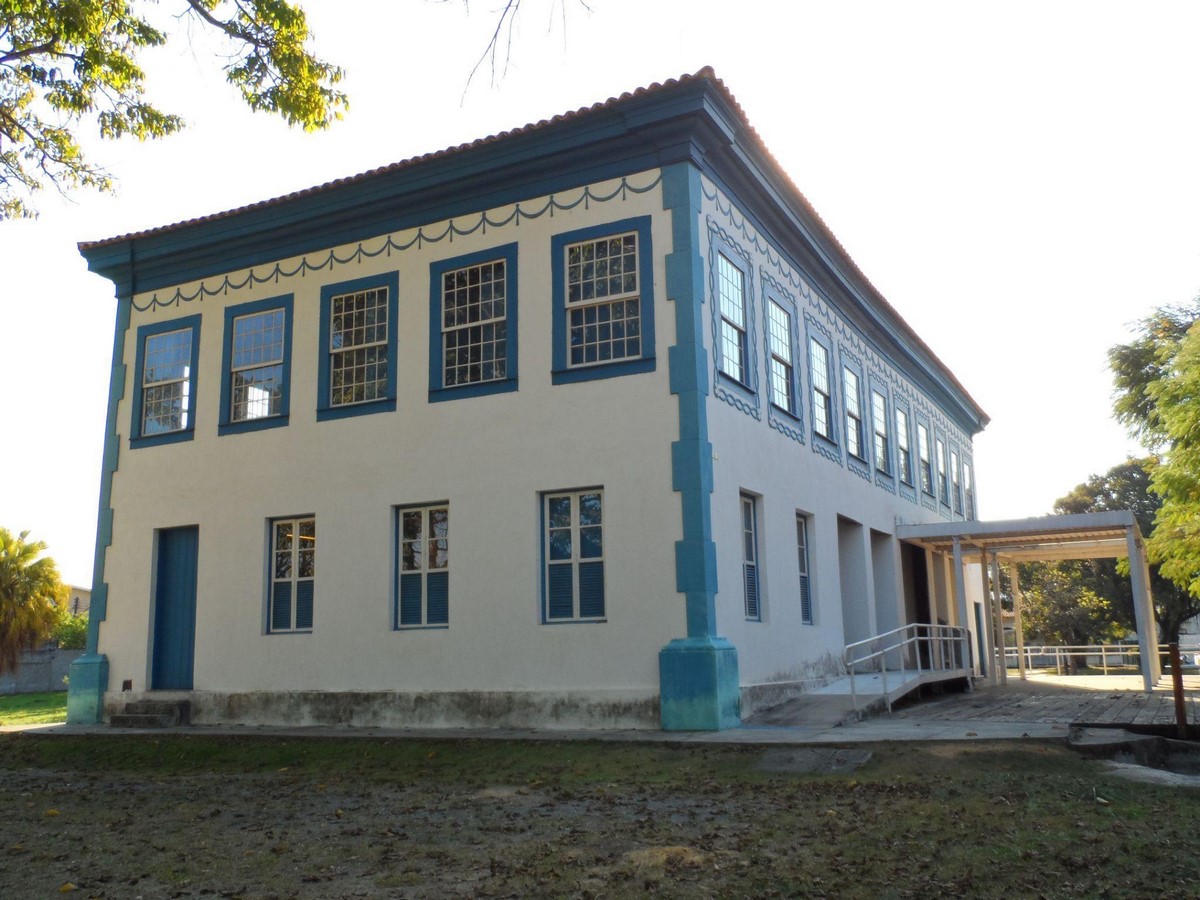
Originally combined with palm frond roofs, bahareque was often topped with tiled roofs after European colonization. It can be used in combination with other earthen architecture technologies, as seen in the image below.

Solar do Major Novaes, constructed with adobe on the lower floor and wattle and daub on the upper floor.

Bahareque is currently being explored as a low-cost housing typology. There are questions as to how well it can withstand seismic activity, but it is often proposed as a housing solution for earthquake stricken regions. Costa Rica, Ecuador, and Brazil have all introduced engineered bahareque (or cement bahareque) following devastating earthquakes.

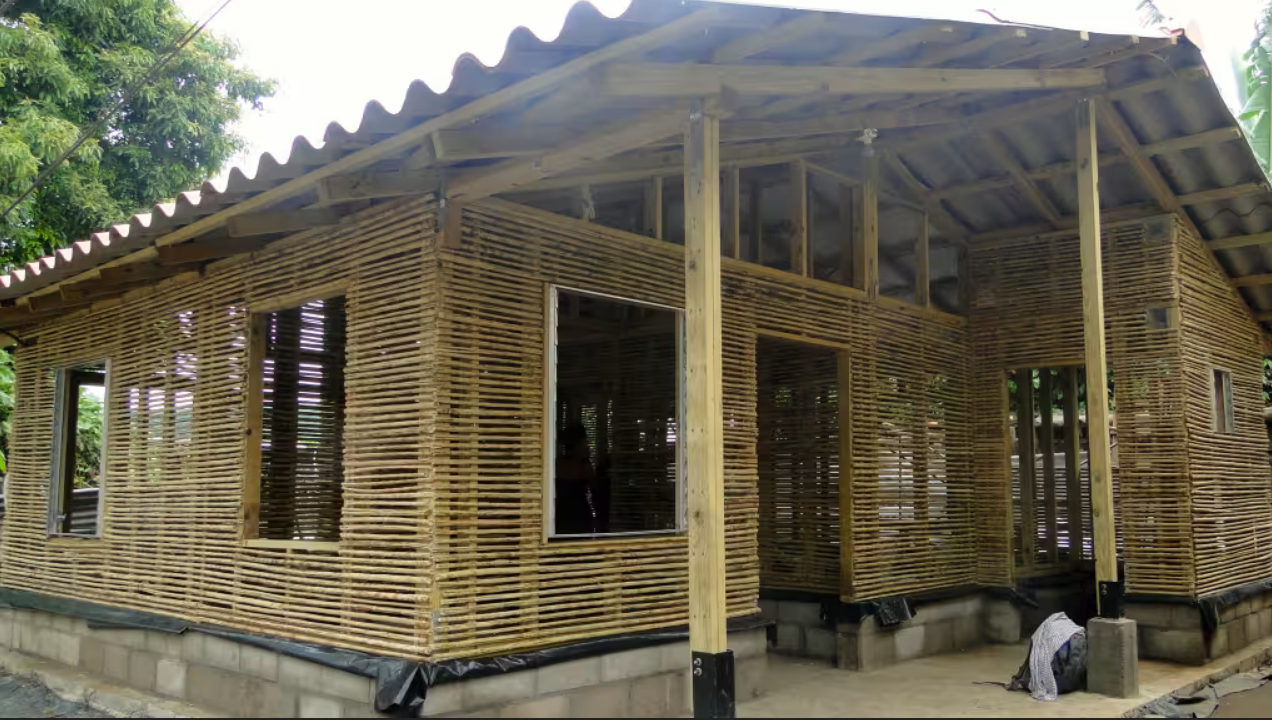
In Ecuador, where the matrix and frame for bahareque architecture is made of guadua bamboo, one of the strongest bamboo subspecies, there is promising contemporary research proving that bahareque is superior to masonry architecture both for earthquake safety and from a sustainability standpoint.

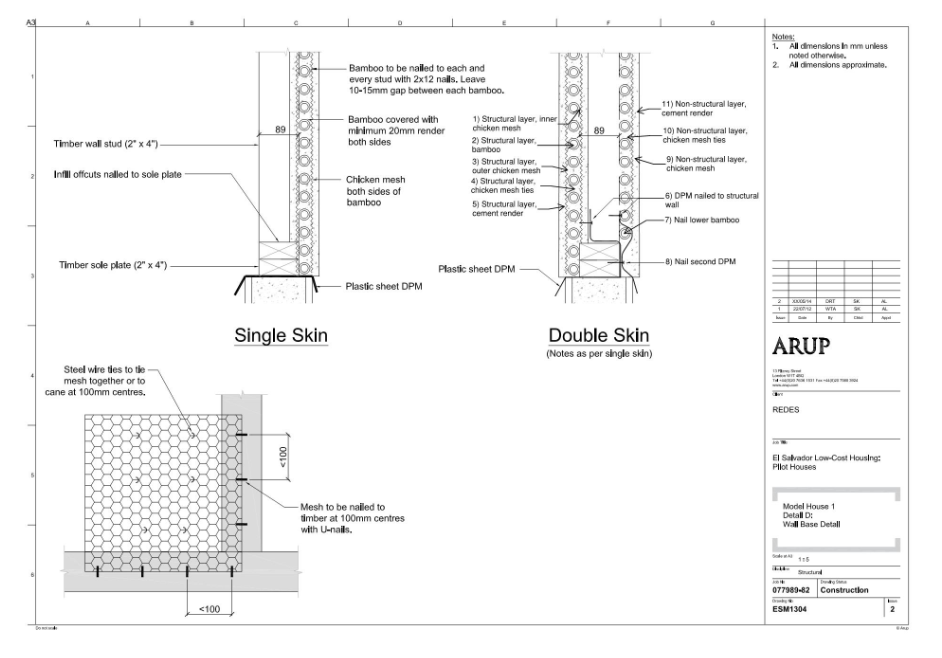
Bahareque houses designed by ARUP and REDES, before the plaster is applied to the bamboo matrix.
Construction documents of bahareque houses designed by ARUP.

References:

[1] http://www.crockerltd.net/adobe_big_one.htm

[2] https://www.seismico.org/bahareque

[3] https://www.researchgate.net/publication/282701710_Engineered_bamboo_houses_for_low-income_communities_in_Latin_America

[4] https://www.researchgate.net/publication/311583390_Design_Guide_for_Engineered_Bahareque_Housing/download

Munarq: Ca na Pua an Earthen Oasis


_DSF9091Image Source:  Munarq 

Project Start :  2021
Project End : 2024
Location : Binissalem, Mallorca, Spain.
Team :  Munarq Architects
Gross Floor Area:  300 m²

Ca na Pua is a sustainable earthen home built in Binissalem, Mallorca; an island off the shore of Spain’s Mediterranean Sea. Ca na Pua was designed by munarq, an architectural studio based in Mallorca founded by Rafel Munar and Pau Munar focused on the integration of architecture in the Mediterranean landscape. inclusion of the environment11

To construct this house munarq used an old local Mallorcan technique known as ballast.  During this process, aggregates of various sizes, stone, and lime are mixed together to create a strong base. Then an open diffusion membrane between two ballast to allow for waterproofing. Waterproofing supports the overall longevity of the building while maintaining a healthy indoor environment.


_DSC3186

_DSC31866h

_DSC3186d


The interior of the house uses a coat of earth and lime that creates hygrothermal environment environment. The earth-lime mixture acts as a natural buffer, absorbing and releasing moisture to maintain a comfortable and stable indoor climate.

_DSF9176

The roof is insulated using straw coverage laced between laminated wood beams. This setup creates a dense and well-integrated insulation layer that provides thermal resistance.

_DSF9197


There is an interaction with the built environment with the build patio or oasis shared within the home.


_DSF9006

IAAC: TOVA

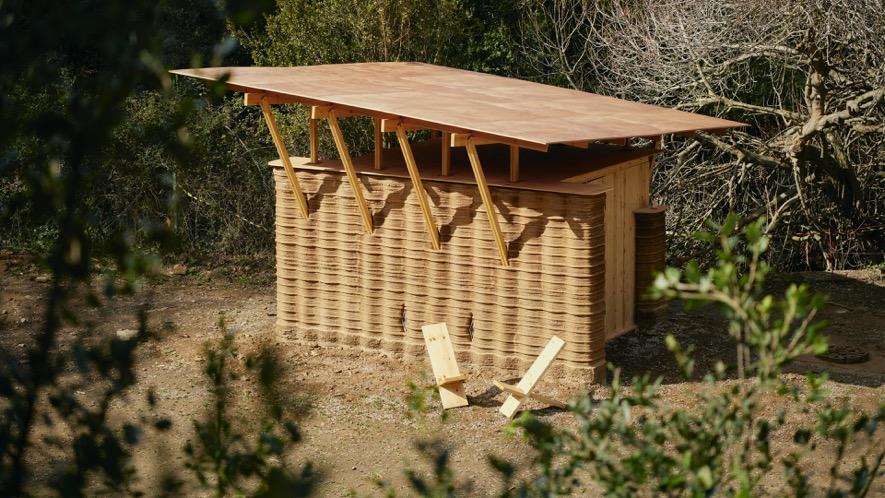
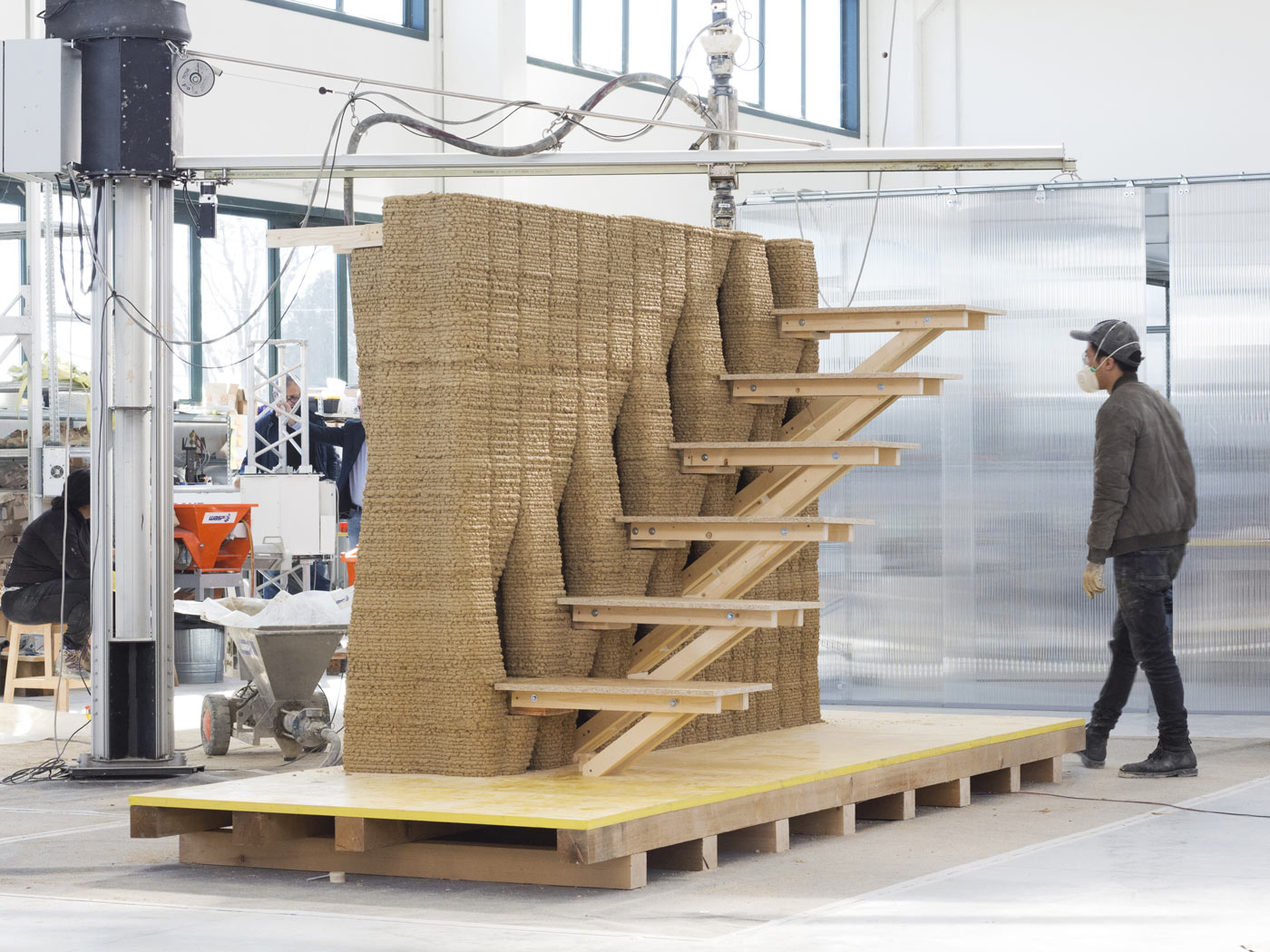
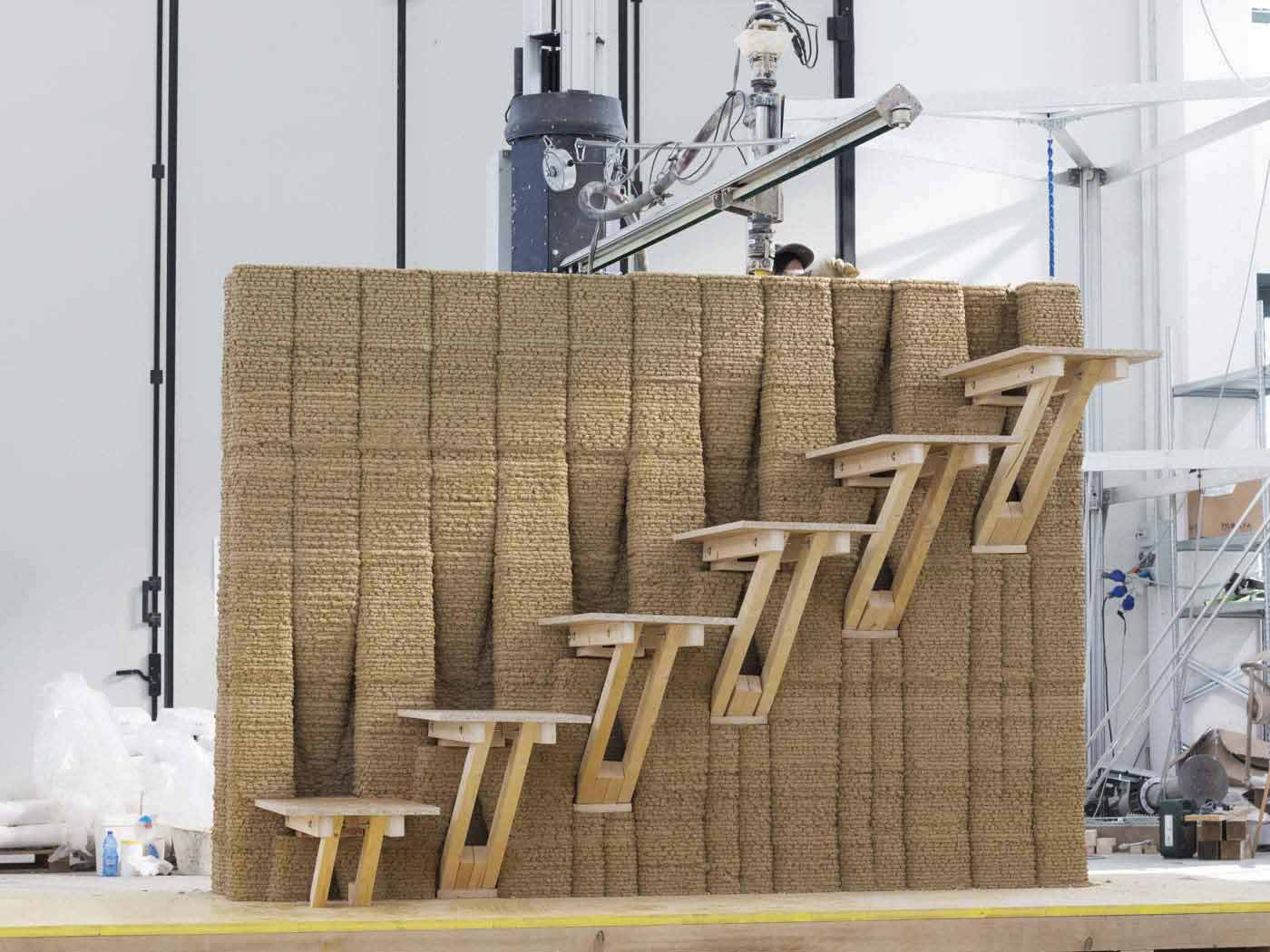
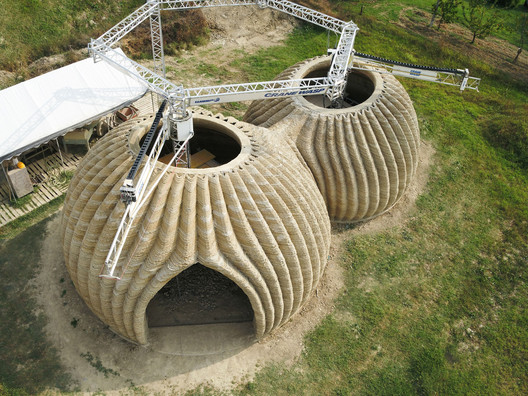
TOVA is the first architectural construction in Spain located in the facilities of IAAC Valldaura Labs, Barcelona, built with a Crane WASP, the architectural 3D printer. The project was completed in 2022. The construction can be completed within weeks using 100% local materials and local labor, zero waste and a close to virtually zero carbon emission footprint. This manufacturing system can be used anywhere in the world and can help to housing emergencies. The project has been developed by the team of students and researchers from the 3D Printing Architecture (3dPA) postgraduate program of the Institute for Advanced Architecture of Catalonia (IAAC).


Also, this project is one of the most sustainable and environmentally friendly construction forms that can be applied today. The construction took 7 weeks time to complete, a Crane WASP, the architectural 3D printer and km zero materials. The structure is made ofclay and water obtained on site. To ensure the longevity of the material in resistance to weather, a waterproof coating is added using raw extracted materials such as aloe and egg whites.

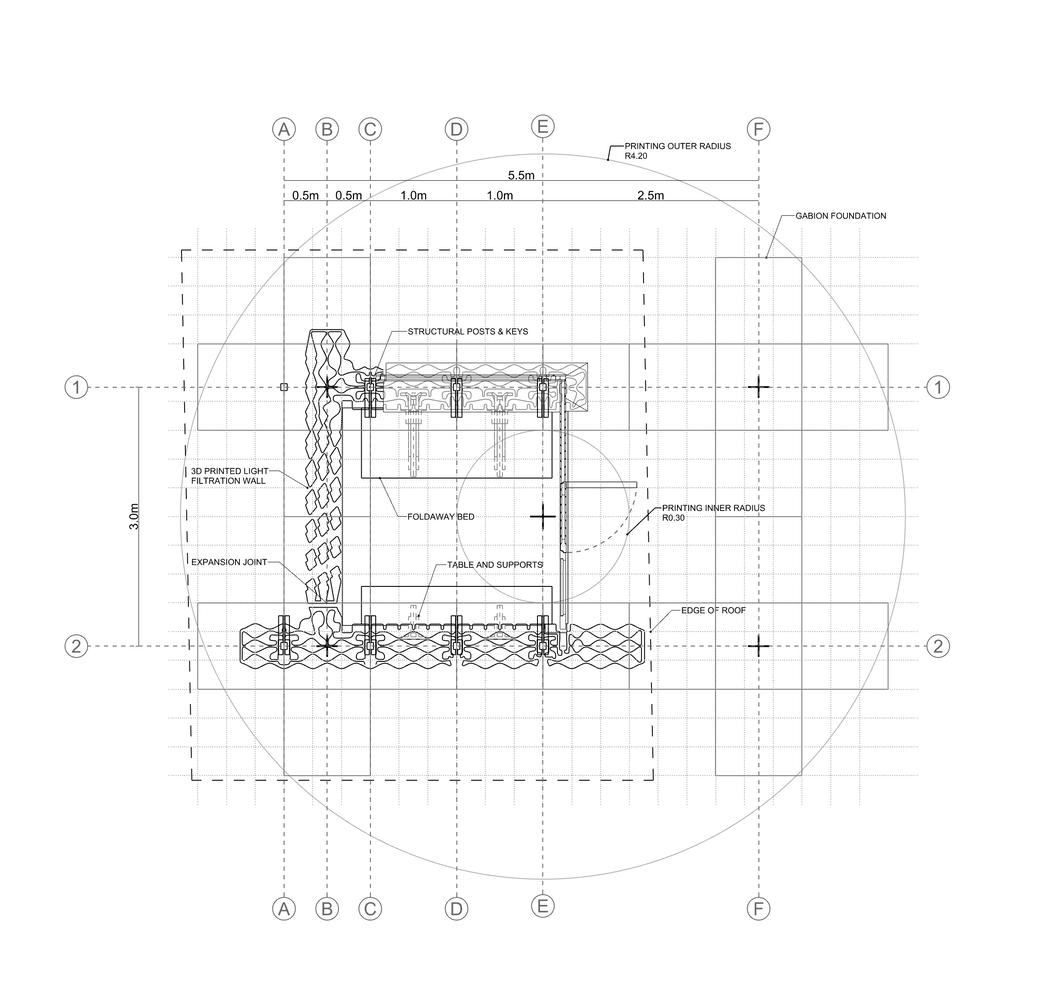
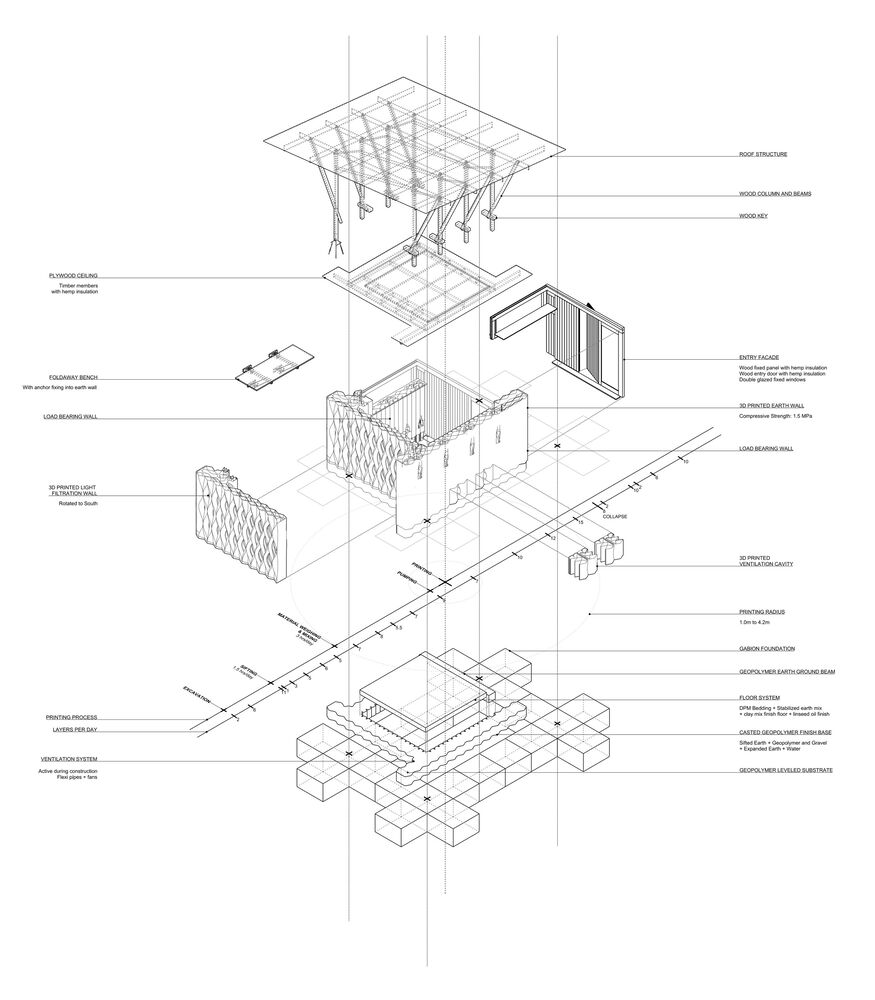
Thebuild area is 9 m2. The prototype took into account performative design strategies, conceived during a two-week design charette where students synthesized the lessons learned in the research phase to develop the components of the prototype: light openings, air flow, wall cavity ventilation, thermal conductivity, roof structure, built-in furniture, waterproofing and floor substructure.

The proposed design has different structural considerations in the roof beam system as well as the innate structure of the clay walls. The walls are designed to be braced with T and L joints, rather than straight lines. The resulting closed interior space is habitable, weather resistant and climatically adapted by the various design interventions.

Citation

https://iaac.net/project/3dpa-prototype-2022/

https://www.archdaily.com/988078/prototype-tova-posgrado-3d-printing-architecture-iaac


Anna Heringer: DESI Training Center

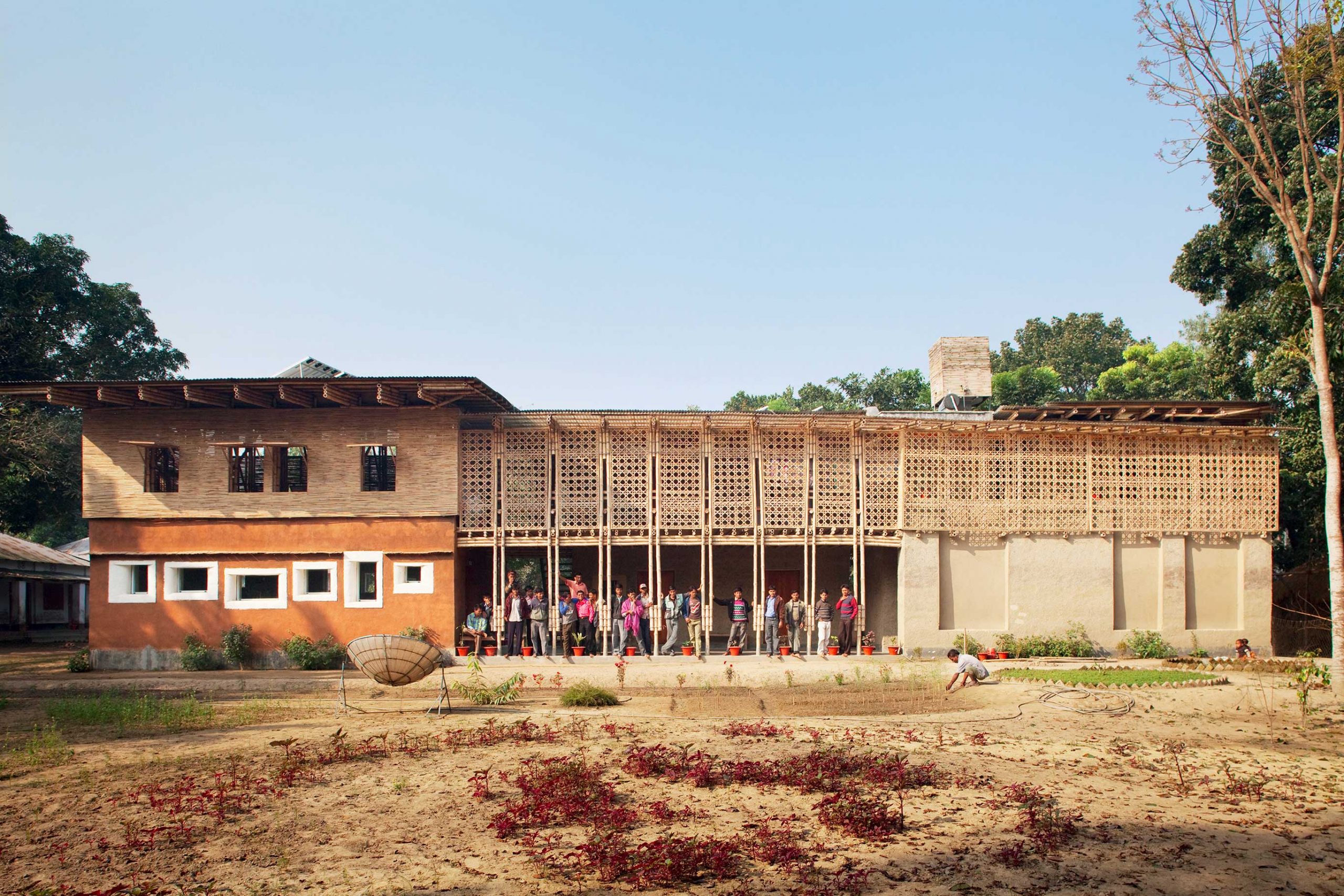
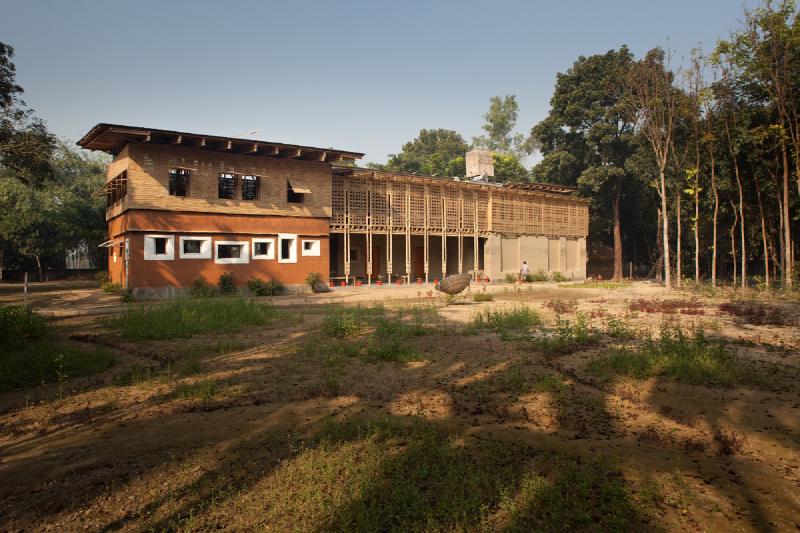
DESI Training Center, Rudrapur, Bangladesh

Built in 2008 in a small village called Rudrapur in Northern Bangladesh, the DESI (Dipshikha Electrical Skill Improvement) Training Center is a vocational school for electrical training. At the age of 19, the architect of this project, Anna Heringer, lived in Bangladesh for a year working with the NGO Dipshika on sustainable development. She quickly learned from her time in Bangladesh that the most successful development strategy is to “trust in existing, readily available resources and to make the best out of it instead of getting depended on external systems.”

The DESI Training Center uses traditional Bangladeshi homestead plans as basis for interrogation. As in many Central/South Asian home plans, the traditional Bangladeshi home consists of multiple structures possessing different programs situated around a central inner courtyard. The DESI building attempts to bring all of these different programs under one structure, while still utilizing traditional building methods.

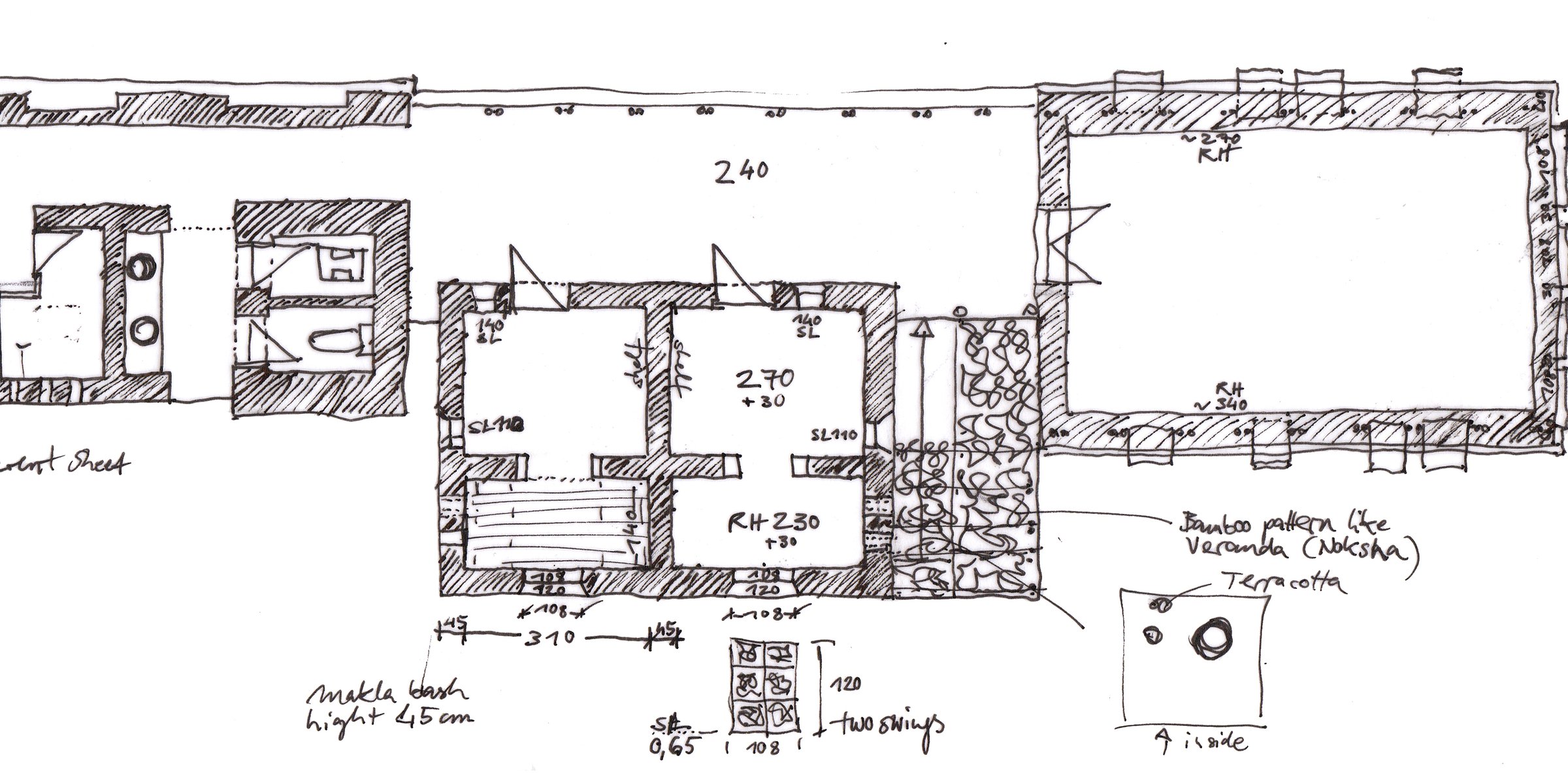
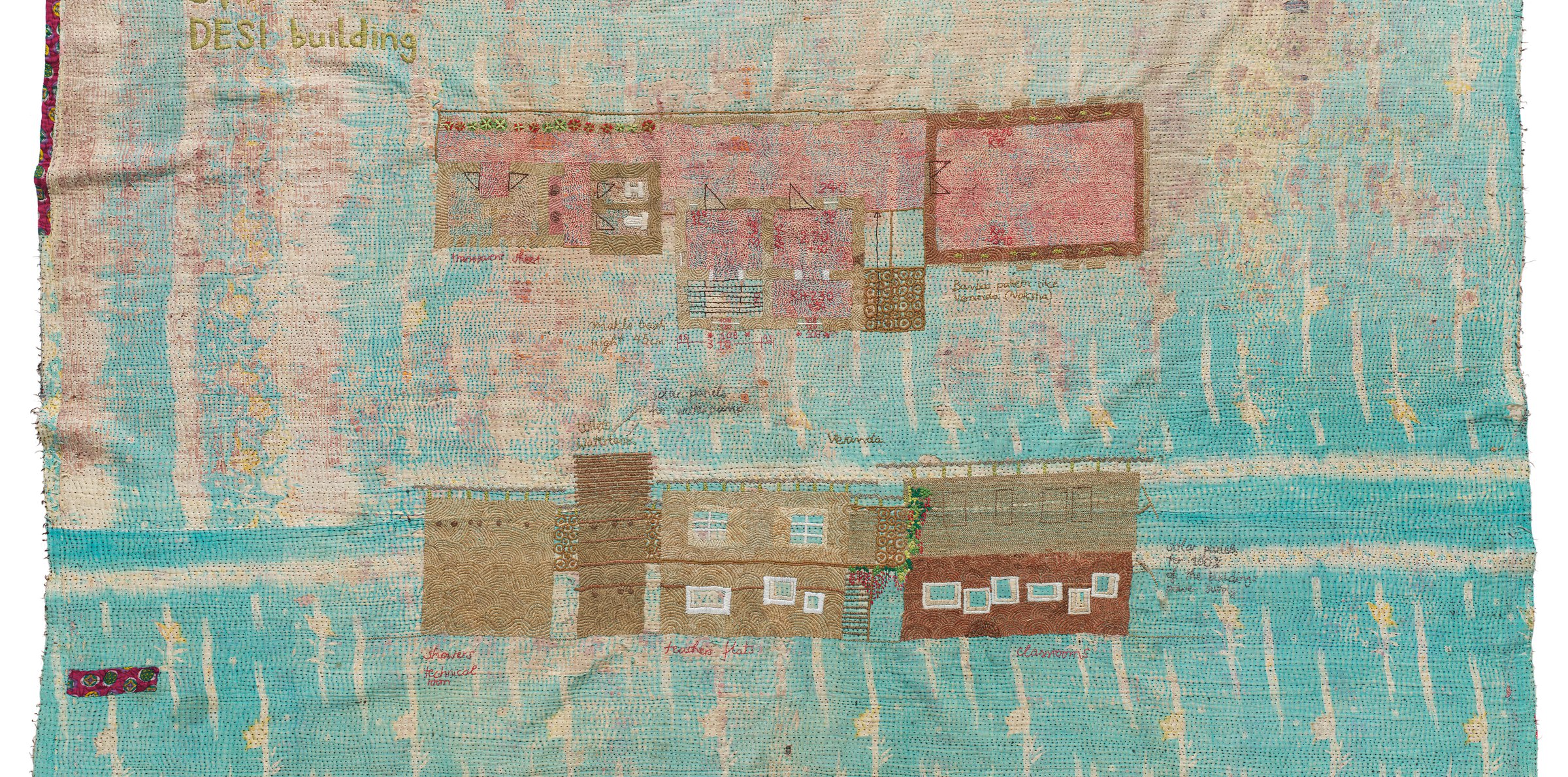
DESI Training Center plan

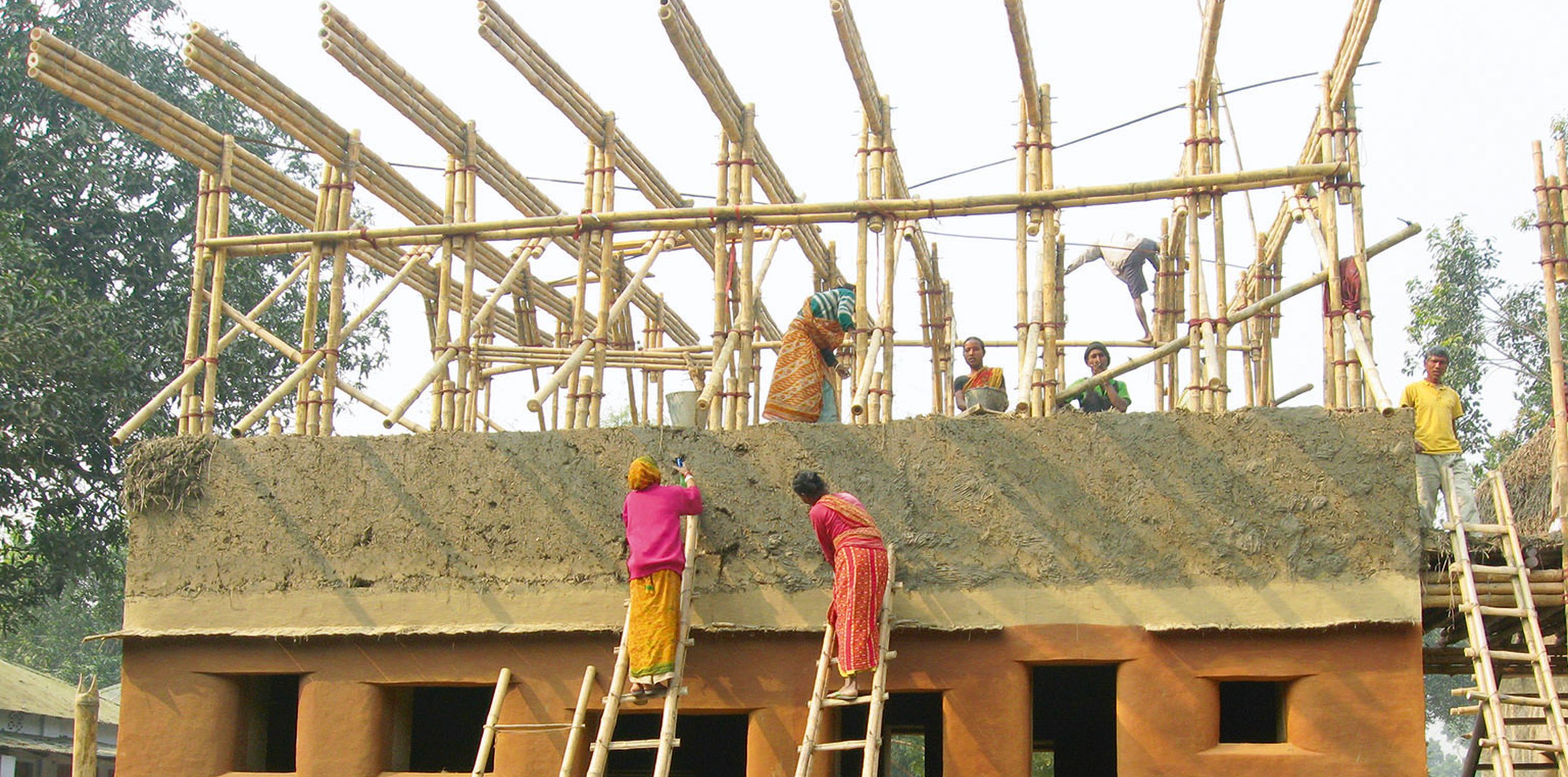
The buildings main structure comprises of wattle & daub techniques utilizing thick bamboo as a lattice frame work to capture and give form to the piled earth added by hand.

Wattle & daub construction
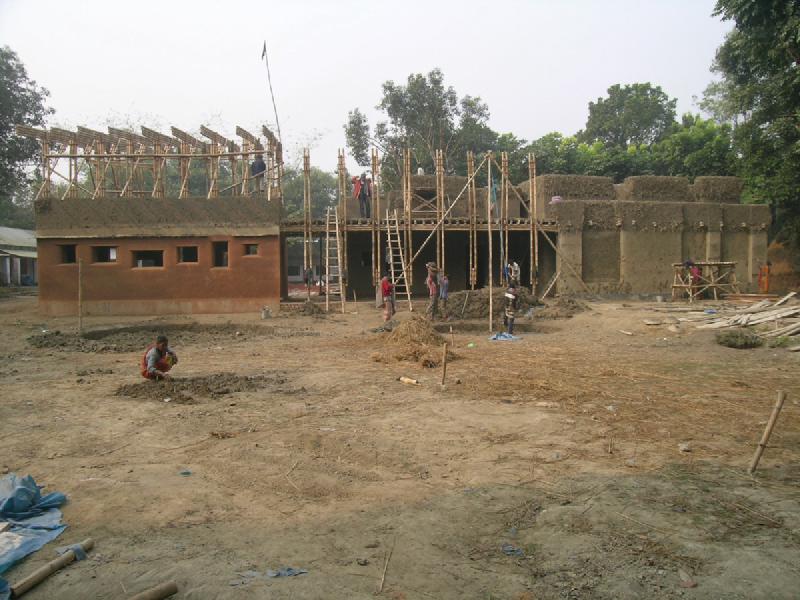
Build process

In the image above, notice the circular mounds of excavated earth in the foreground. It is beautiful to realize the connection between construction and construction site sharing the same environment and materials simultaneously in an act of reciprocity.

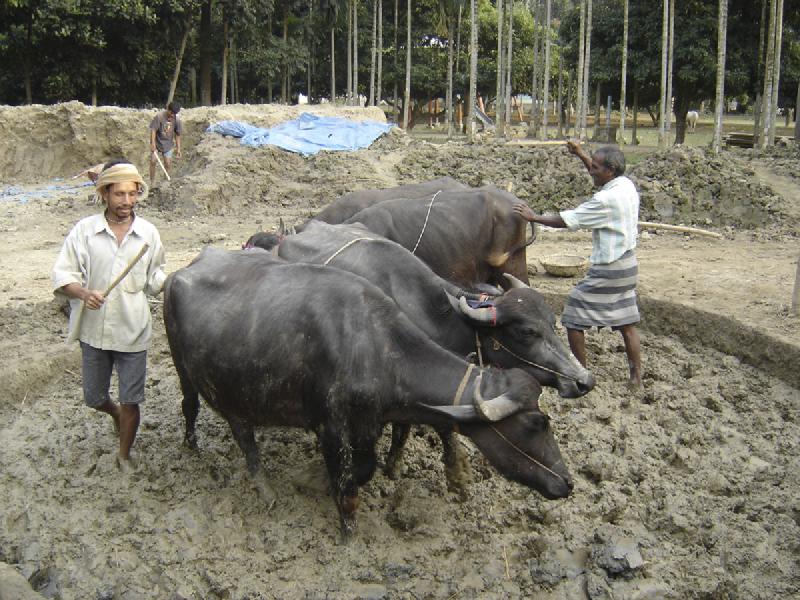
Cattle power

Although a school for electrical training, most of the labor and energy placed into the build were still based on analog and traditional technologies. Here cattle are used to mix the soil that is to be used for the daub, engaging local workers and craftsmen in the process of the entire project.

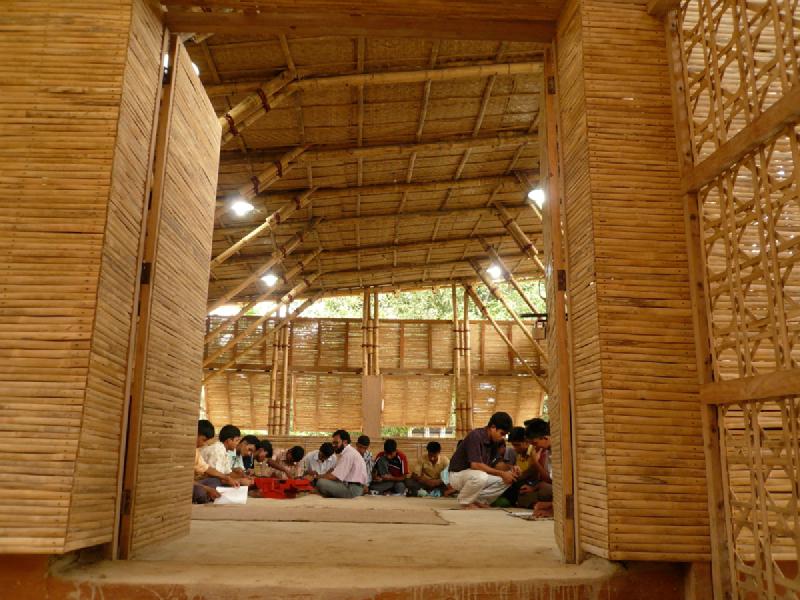
Classroom
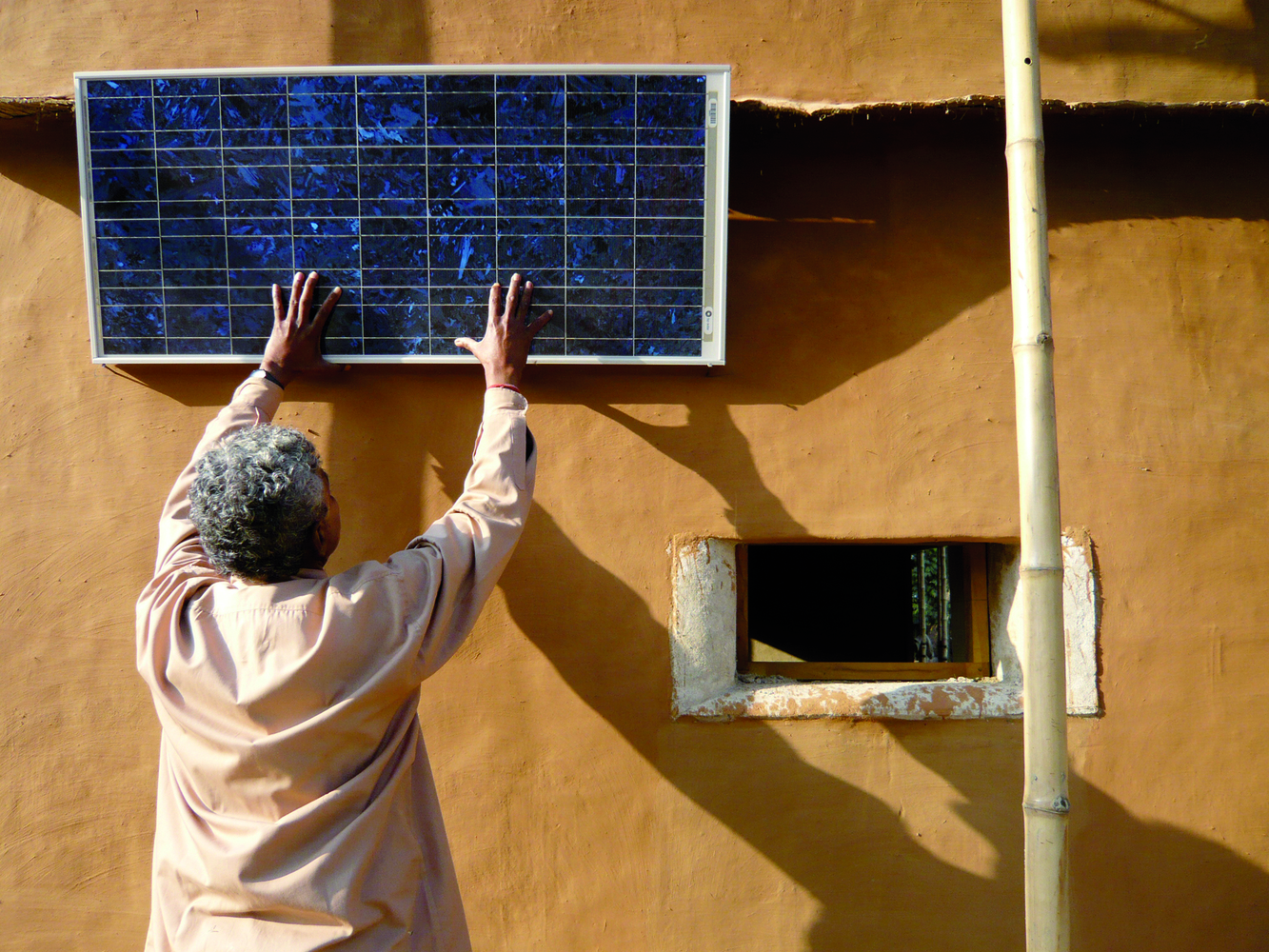
Solar panel installation

It is interesting to witness an environment that was built to serve technology, in this case electrical technology, not take the form of its inherent use. A college campus may design and build an “engineering” building to feel like “engineering”, to feel technologically modern and well equipped for the learning that will occur within its walls, however the DESI Training Center shows us how these ideas and typologies can sometimes misinform the design process, and ultimately the design problem at hand.

The entire building is hooked up to solar panels for power, producing  100% of the building’s energy needs. The heating system is based on solar thermal technologies, and solar power also powers the pump for accessing water from the onsite well. This also perhaps (reference needs to be checked) the first time modern sanitary unties + septic tanks have been integrated into an earthen structure in Bangladesh.

DESI Training Center

The DESI building houses two classrooms, two offices, and two residences for the school instructors. There is a separate bathroom with two showers and two toilets for the teachers and a bathroom facility with toilets and sinks on the ground floor for the students. [source] Bearing no loss in traditional culture, material, or forms of making, this building embodies the possibilities of a modern earthen architecture applied to a specific set of requirements, needs, and programs. The DESI Training Center acts as model to realize the full potential an earthen architecture can deliver humans in the modern age, without having to compromise many facets of modernity that are considered incompatible with earth.

Plan and section as embroidery

Size: 300m2

Location: Rudrapur, Dinajpur district, Bangladesh

Year: 2008

Photos: Team Rudrapur, B.K.S Inan,

Architects: Anna Heringer

References:

[1] https://www.anna-heringer.com/projects/desi-centre-bangladesh/ 

[2] https://divisare.com/projects/127081-anna-heringer-b-k-s-inan-desi

[3] https://www.archdaily.com/950704/desi-training-center-studio-anna-heringer

[4] https://archello.com/project/desi-dipshikha-electrical-skill-improvement

Wattle and Daub in the UK

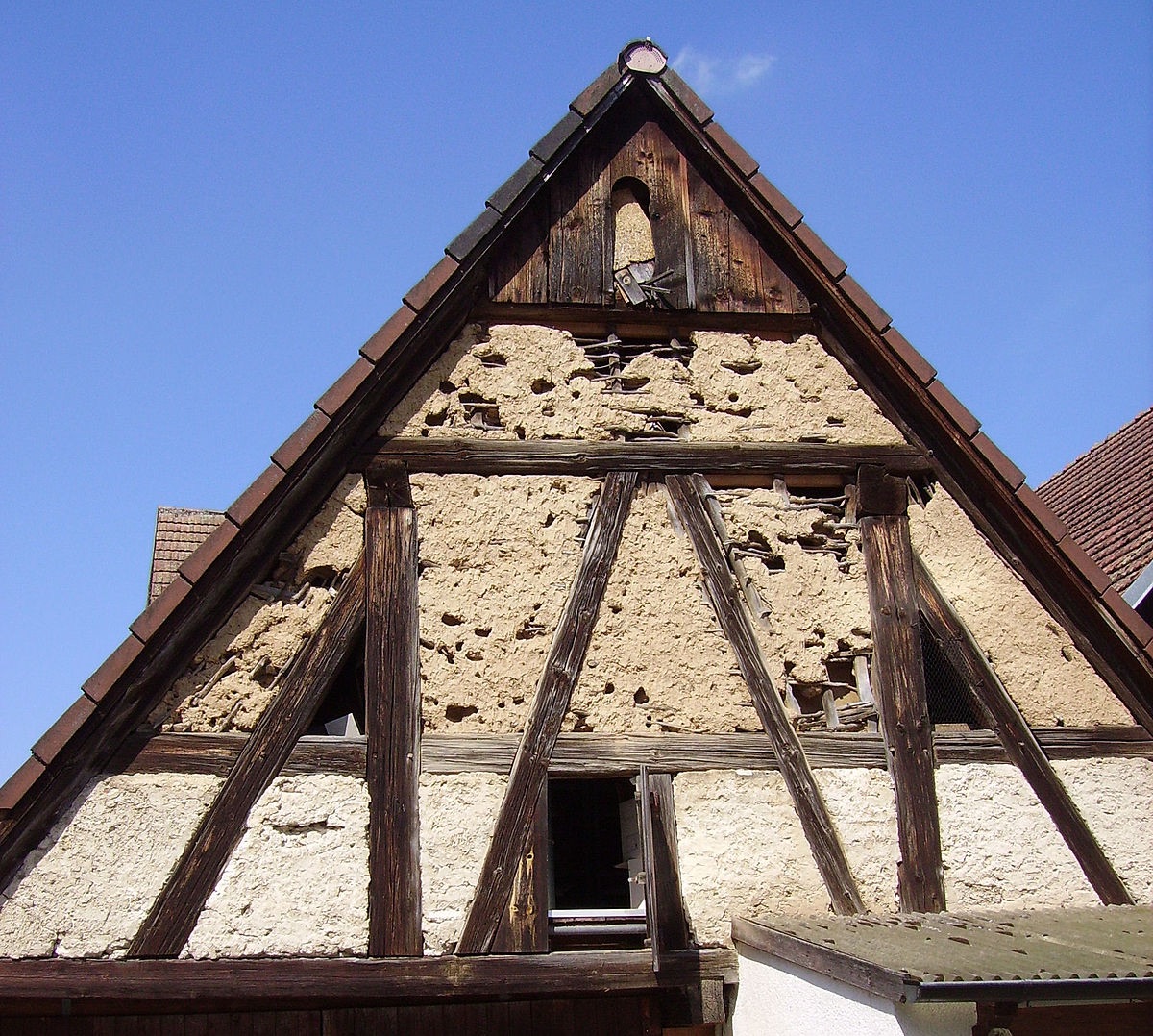
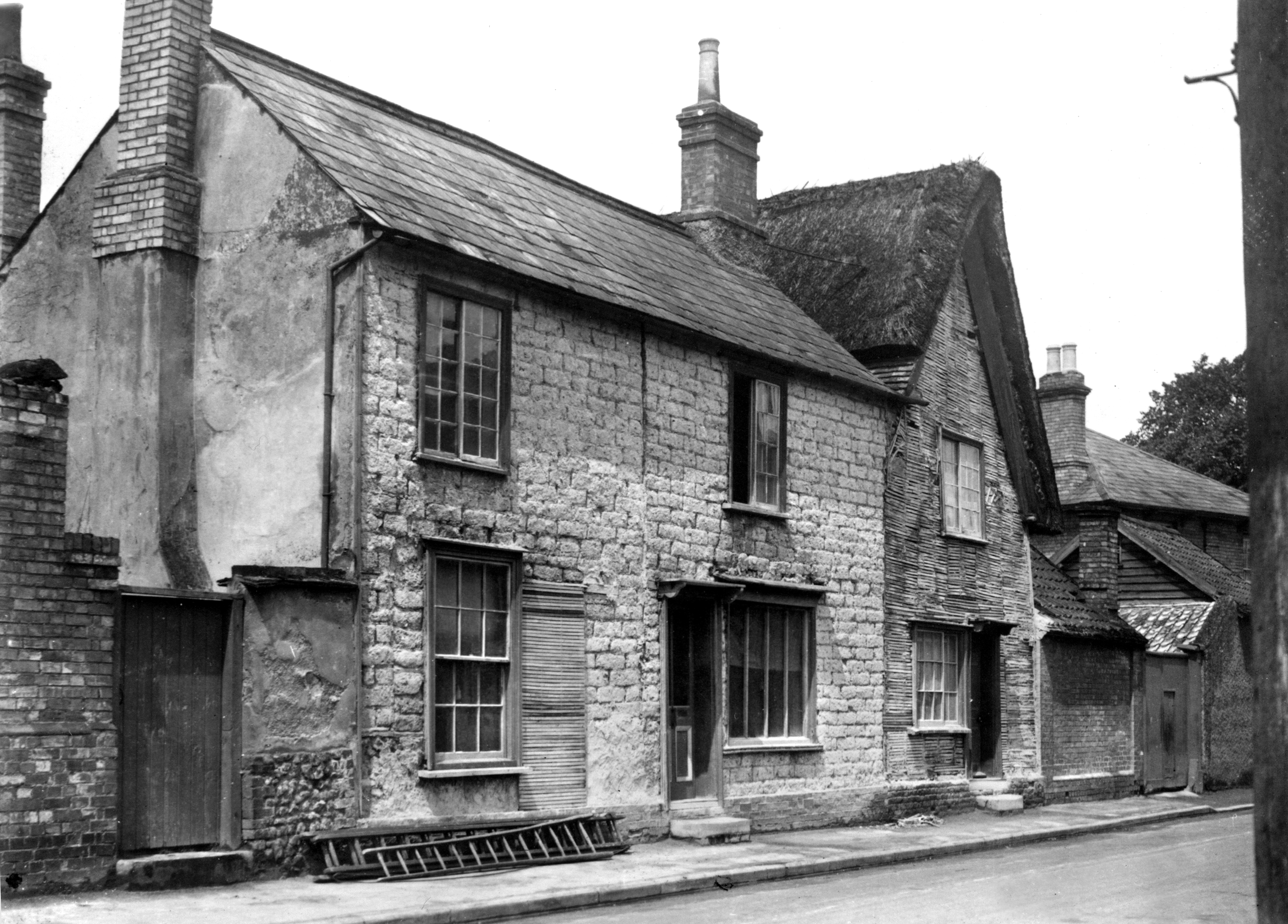
Wattle and daub is a traditional building technique that has been used in the UK for centuries, dating back to prehistoric times and continuing well into the 20th century. This method was particularly common in medieval timber-framed buildings and remains an important part of Britain’s architectural heritage.

Construction Method

Wattle and daub consists of two main components:

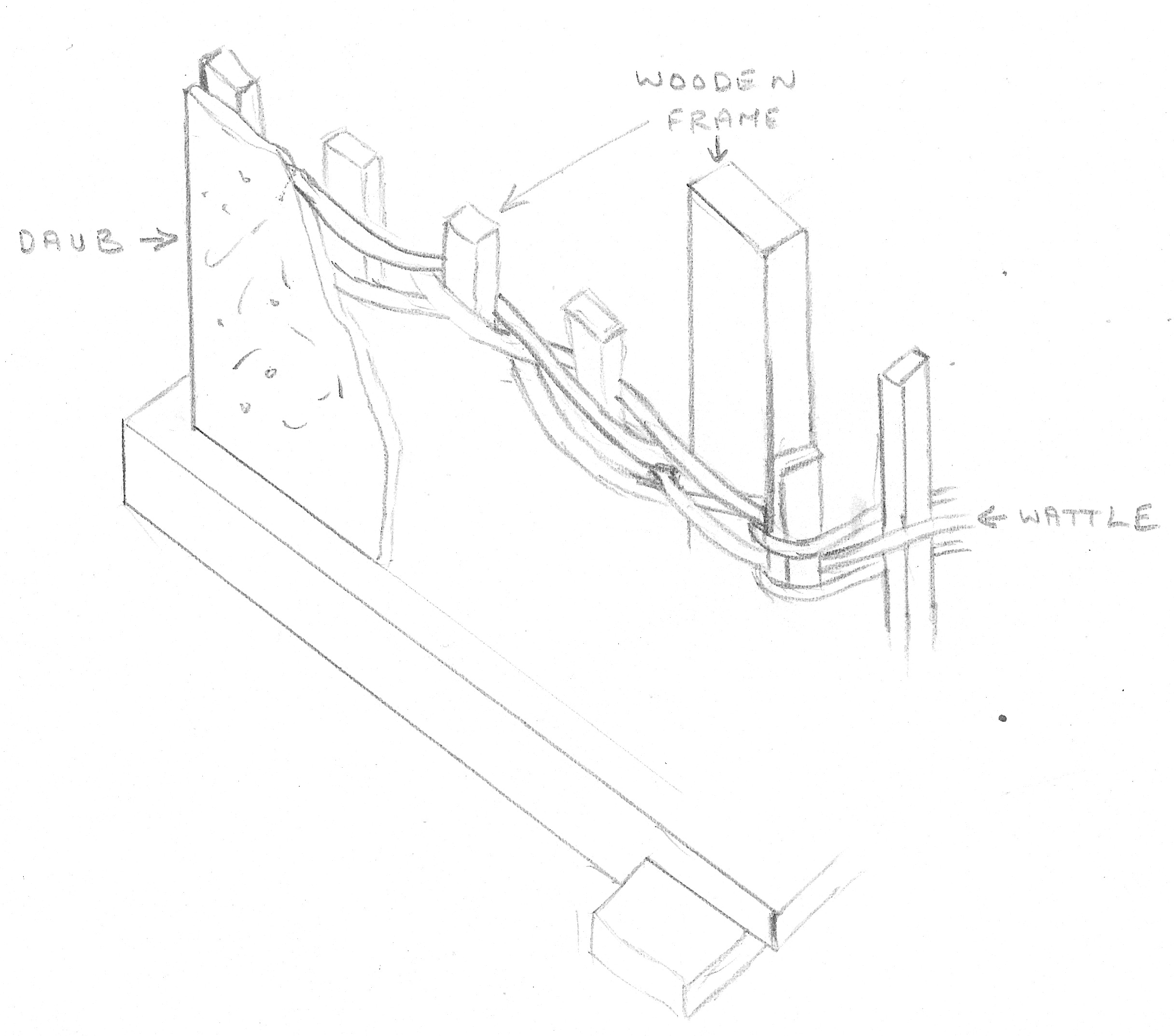
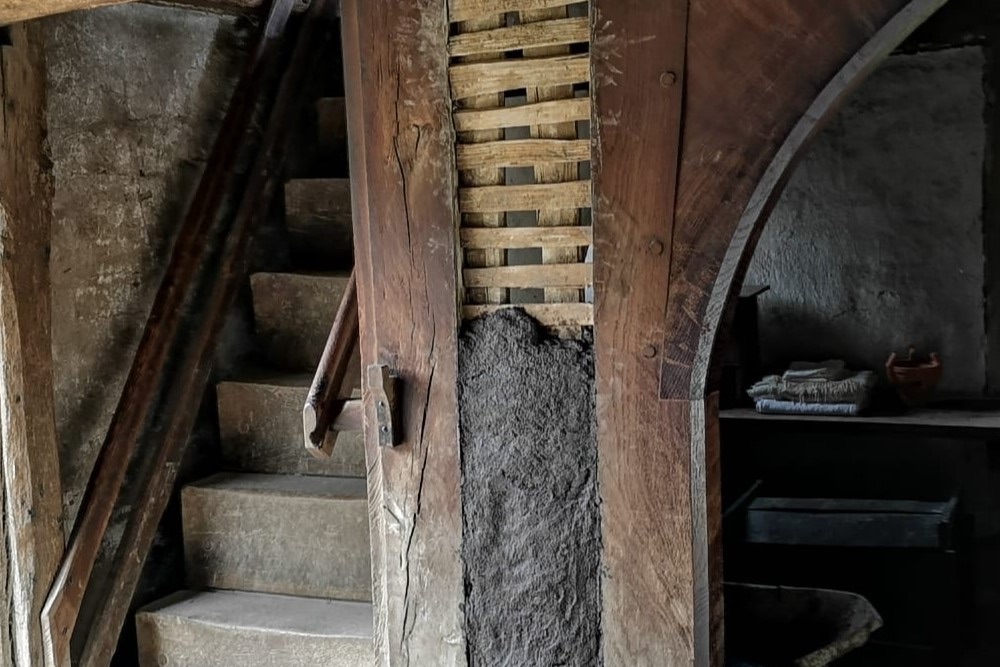
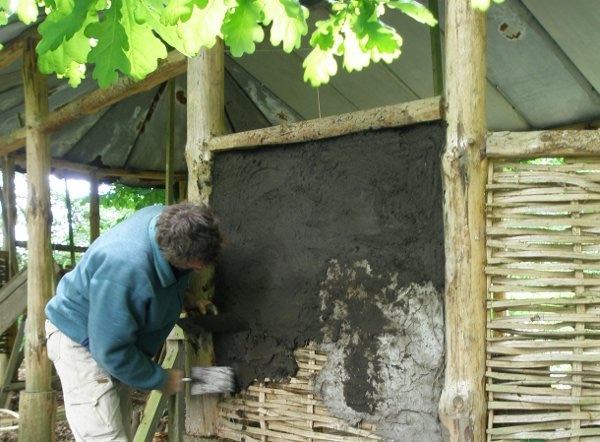
  1. Wattle: A lattice of wooden strips or branches (often hazel) woven between upright poles. This forms the structural framework for the wall.
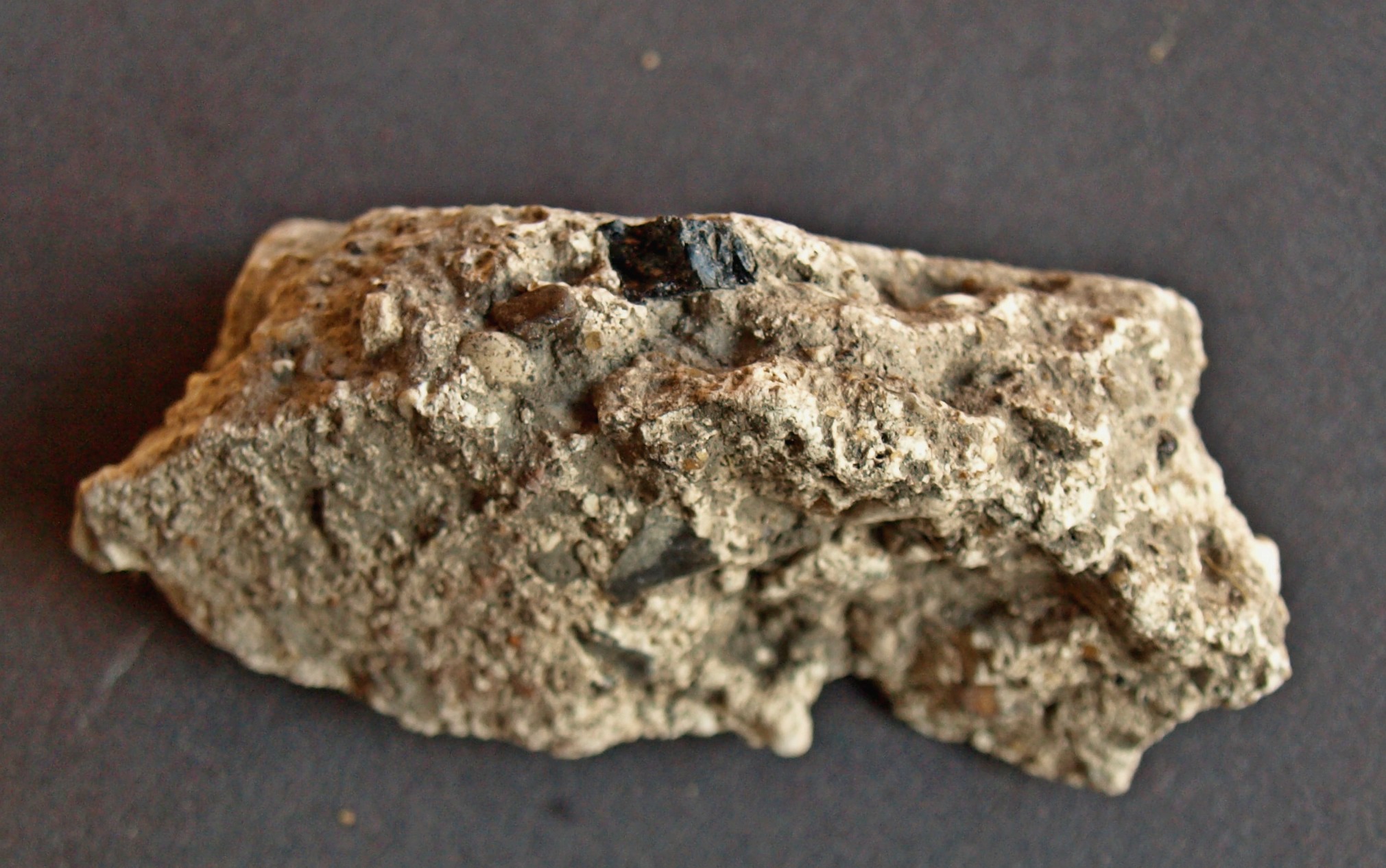
  2. Daub: A mixture of wet materials applied to the wattle. The daub typically consists of:
    • Binders: Clay, lime, or chalk dust
    • Aggregates: Earth, sand, or crushed stone
    • Reinforcement: Straw, hair, or other fibrous materials

The daub is applied in stages, first as balls pressed into the wattle from both sides, then allowed to dry before being scratched and covered with a lime plaster. Finally, the wall is often whitewashed for additional protection.

Advantages

Wattle and daub offers several benefits:

  1. Strong yet flexible, accommodating structural movement
  2. Good insulation properties
  3. Effective moisture management
  4. Durable when properly maintained

Historical Significance

Archaeological evidence of wattle and daub has been found in various locations across the UK, often associated with medieval manors and other important sites. In England, remains of Iron Age circular dwellings constructed using this method have been discovered.

Conservation and Modern Use

Many historic buildings in the UK still feature original wattle and daub panels, some up to 700 years old. Conservation efforts focus on preserving these panels, with repairs carried out using traditional techniques. Some heritage organizations, like the Weald & Downland Living Museum, offer courses in wattle and daub construction and repair.

In recent years, there has been renewed interest in wattle and daub as a sustainable building method for new timber-framed structures, due to its use of local, natural materials and low environmental impact.

Wattle and daub remains an important part of the UK’s architectural heritage, showcasing traditional craftsmanship and sustainable building practices that continue to be relevant today.


Sources

  1. https://www.meldrethhistory.org.uk/buildings/building_materials/wall-and-framework-materials/wattle-and-daub
  2. https://www.wealddown.co.uk/museum-news/wattle-and-daub/
  3. https://www.buildingconservation.com/articles/wattleanddaub/wattleanddaub.htm
  4. https://www.britannica.com/technology/wattle-and-daub
  5. https://www.lowimpact.org/categories/wattle-daub

WASP: Gaia

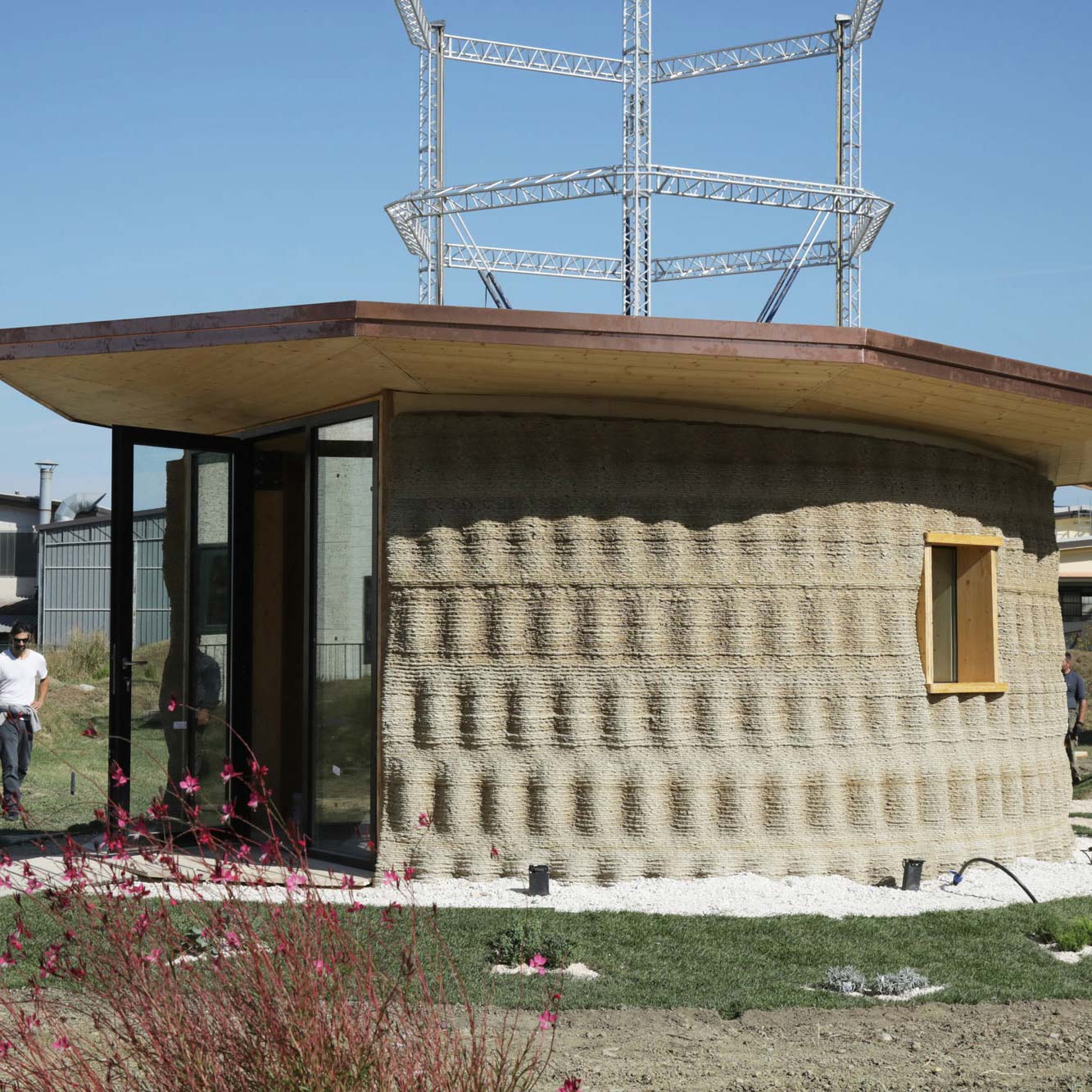
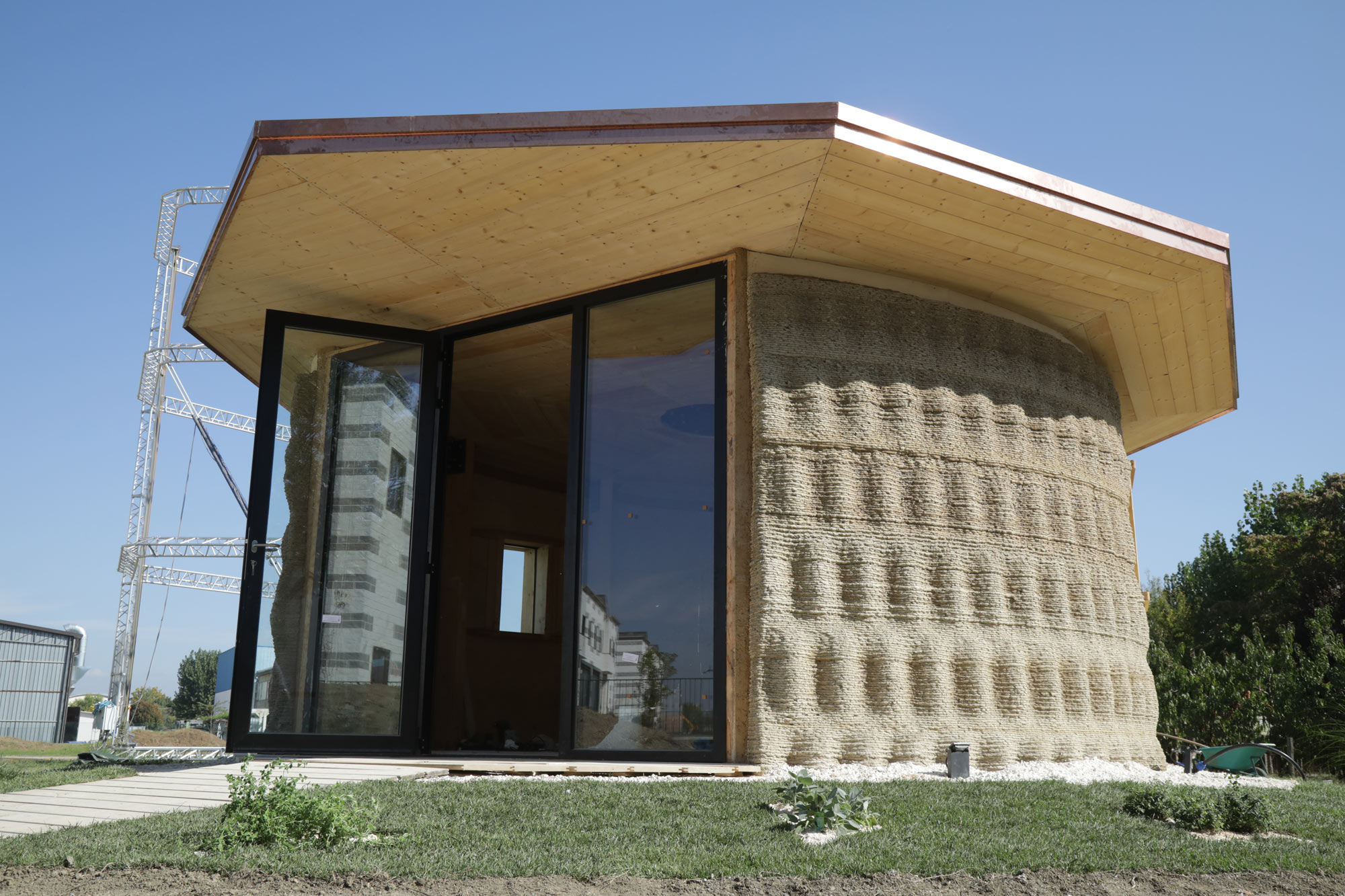
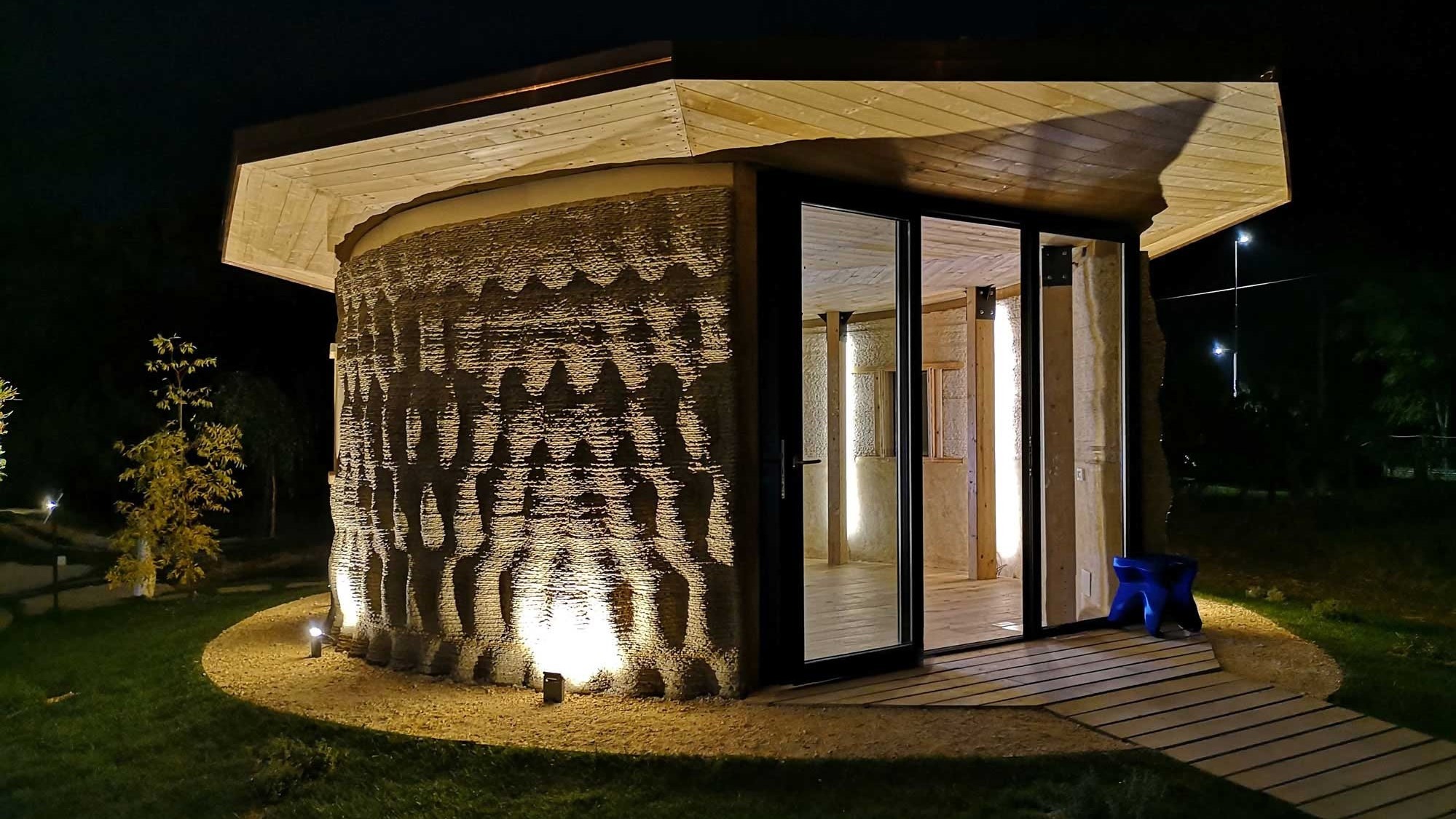
WASP (World’s Advanced Savings Project) has pioneered an innovative approach to sustainable architecture with their 3D-printed house called Gaia. This eco-friendly structure represents a significant advancement in sustainable construction and showcases the potential of using natural, locally-sourced materials in 3D printing technology.

Demonstration Video

First Layer Video

Materials and Composition

Gaia is built primarily using a mixture of:

  1. 25% local soil (30% clay, 40% silt, 30% sand)
  2. 40% chopped rice straw
  3. 25% rice husk
  4. 10% hydraulic lime

This composition utilizes natural waste materials from rice production, making it an environmentally conscious choice.

Construction Process

The house was 3D printed using the Crane WASP, a specialized 3D printer designed for on-site construction. The printing process took approximately 100 hours to complete 30 square meters of wall with a thickness of 40 cm.

Design and Performance

Gaia incorporates:

  1. Natural ventilation systems
  2. Thermo-acoustic insulation
  3. Bioclimatic efficiency

The structure maintains a comfortable temperature year-round without the need for heating or air conditioning systems, showcasing its energy efficiency.

Environmental Impact and Cost

Gaia demonstrates remarkable sustainability:

  1. Near-zero environmental impact
  2. Total material cost for the walls: €900
  3. Biodegradable construction materials
  4. Minimal carbon footprint

Significance and Future Implications

WASP’s Gaia project represents a significant step towards addressing global housing needs sustainably. By utilizing local materials and advanced 3D printing technology, this approach offers:

  1. A potential solution for rapid, low-cost housing construction
  2. Reduced environmental impact compared to traditional building methods
  3. Adaptability to various geographical locations and climates

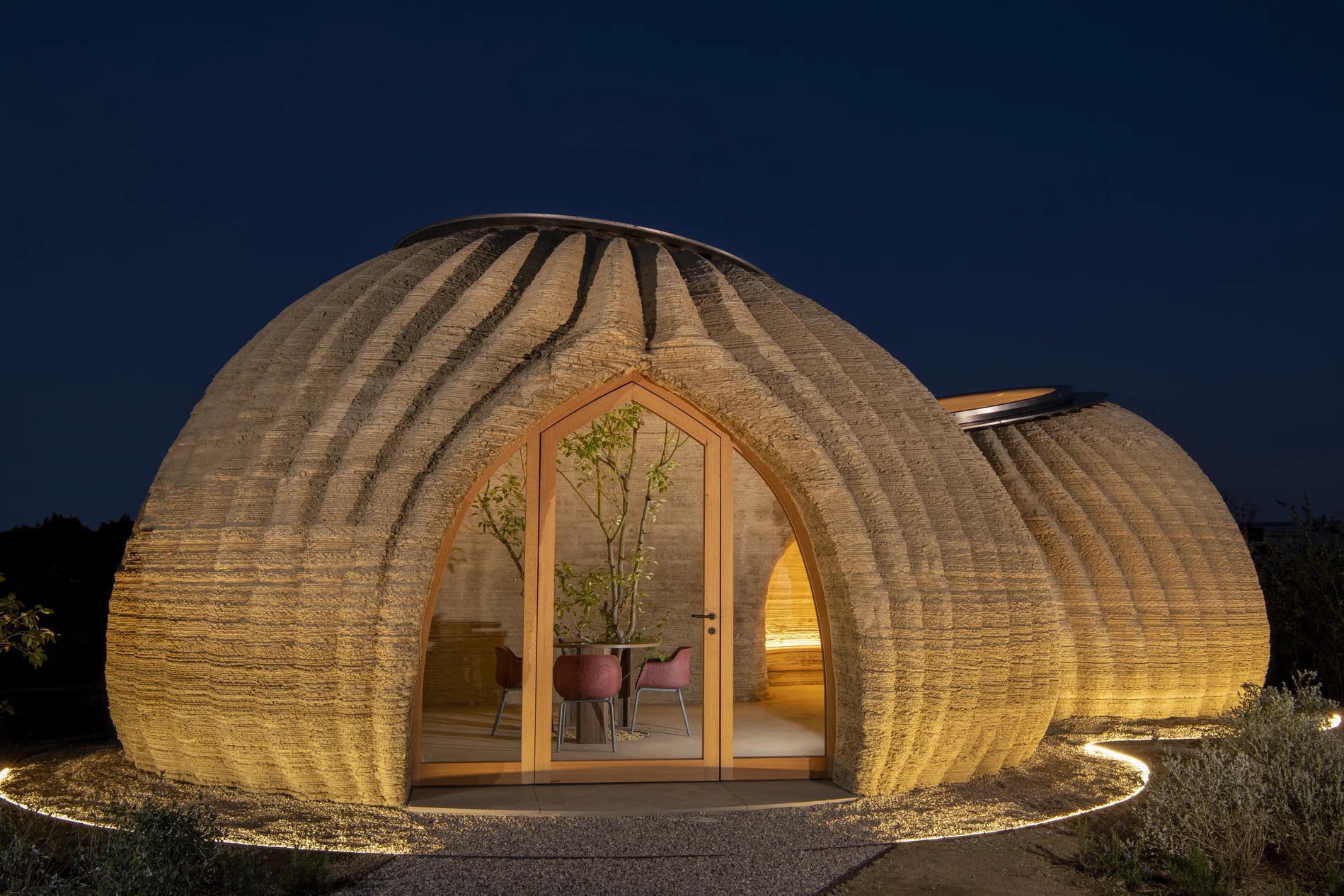
The success of Gaia has led to further developments, such as the TECLA project, which aims to create even more sustainable and scalable housing solutions.

WASP’s Gaia project demonstrates the viability of combining an ancient building practice and material (earth) with modern 3D printing technology, and might demonstrate one way to create sustainable, efficient, and cost-effective housing.


Sources

  1. https://www.designnuance.com/the-first-3d-printed-house-gaia-built-with-earth/
  2. https://www.3dwasp.com/en/3d-printed-house-gaia/
  3. https://www.archpaper.com/2019/04/gaia-house-facadesplus/
  4. https://3dprintingindustry.com/news/wasp-showcases-3d-printed-bio-building-at-we-are-nature-event-176687/
  5. https://www.3dnatives.com/en/wasp-moves-towards-sustainable-construction-by-3d-printing-soil/

Marcelo Cortes: Quincha and Teknobarro

Image Source: Marcelo Cortés
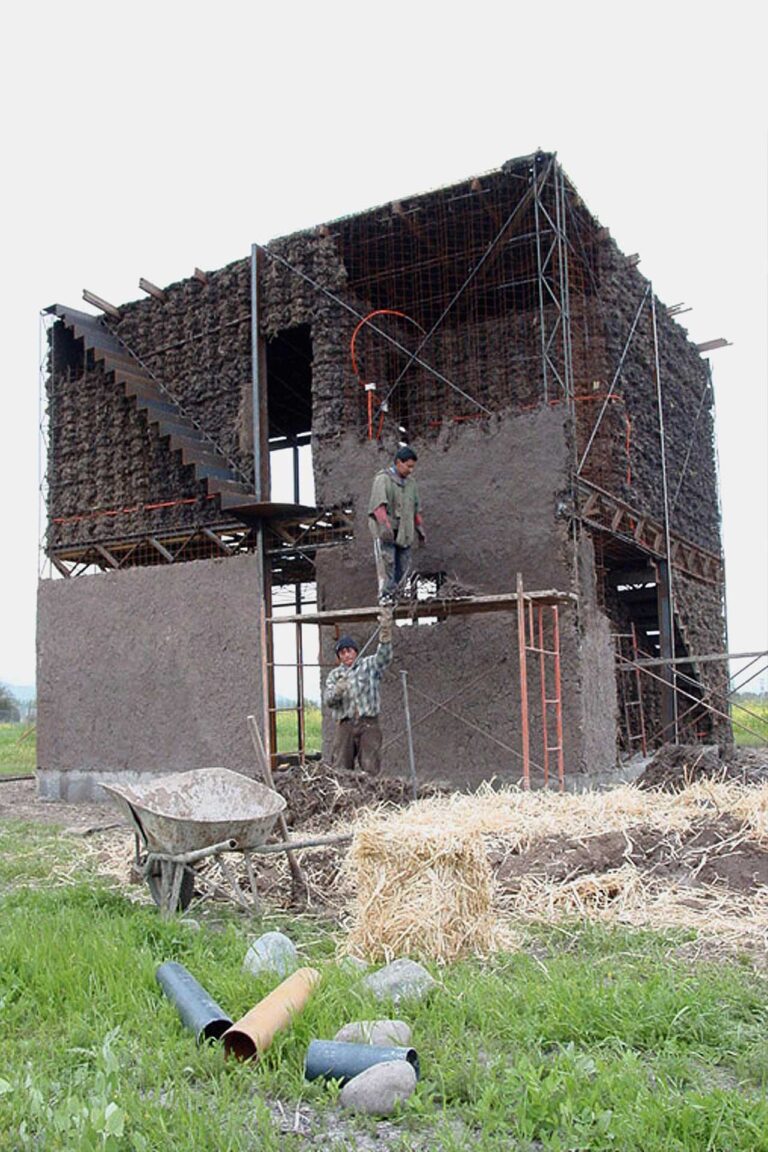
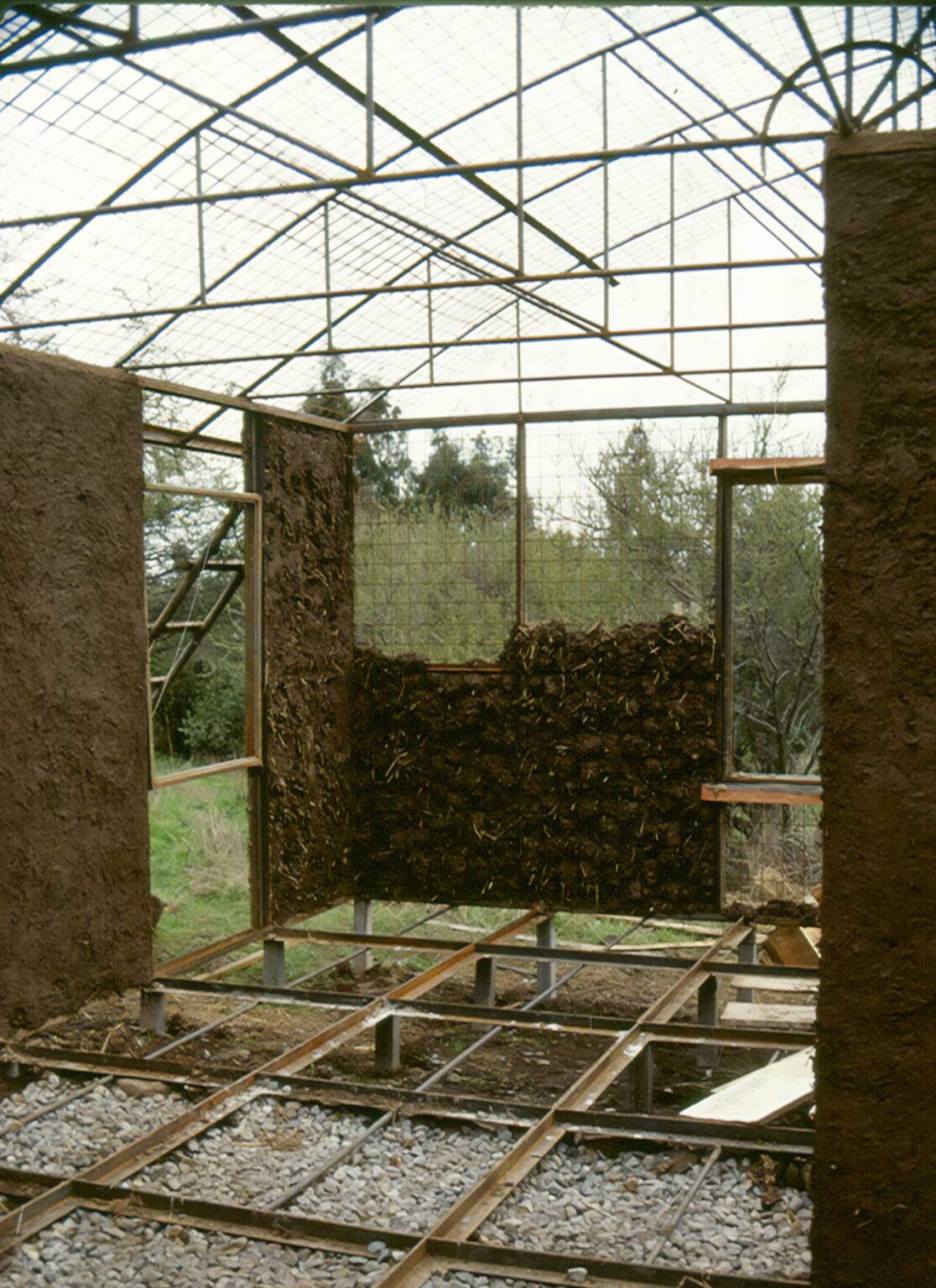
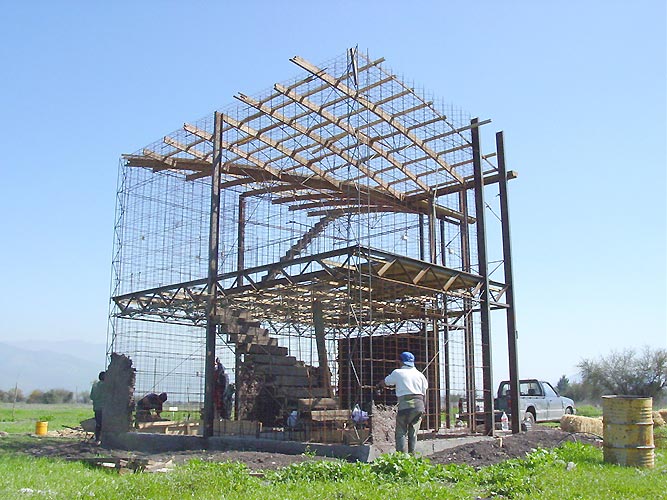
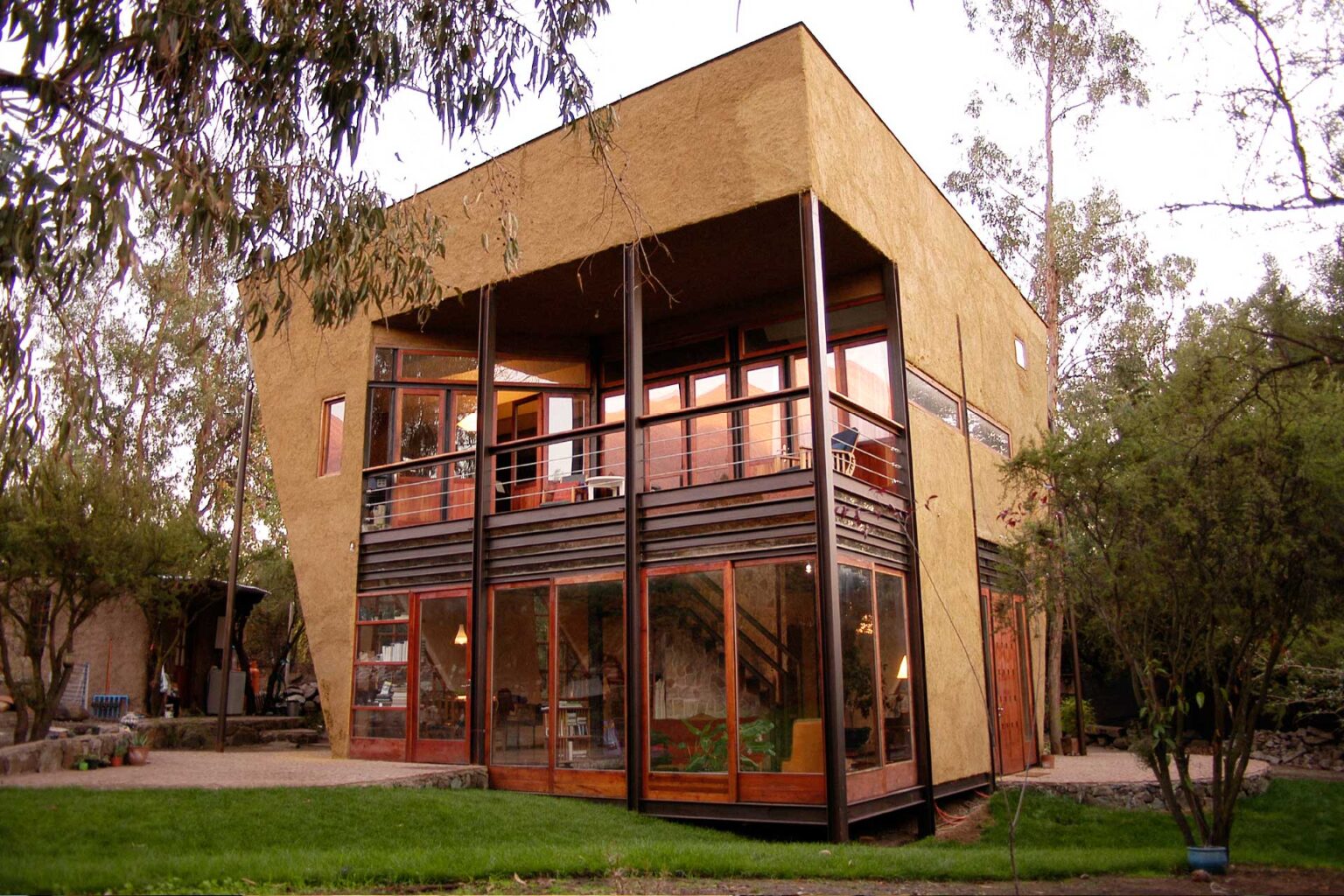
Chilean architect Marcelo Cortés is known for his construction technique called quincha metálica, that combines a steel frame and welded wire mesh with a mud mixture Cortés calls tecno-barro.

Image Source: No Tech Magazine
This construction method reimagines the wattle and daub building method known as quincha, a traditional technology that has existed in South America for at least 8,000 years.

Traditionally, a quincha structure is constructed by creating a framework, or wattle, of interwoven pieces of wood, cane, or bamboo. This matrix of vertical and horizontal members is then covered on both sides with a mixture of mud and straw, or daub, and finished with a thin lime plaster to create a weathertight building envelope in the form of wall or ceiling panels. The system results in a lightweight flexible structure that is inherently earthquake resistant.

Image Source: Marcelo Cortés
Cortés was inspired by the way that historic homes in the center of Santiago were constructed, which used metal wire to hold mud bricks within a wooden frame in place during earthquakes.

Image Source: Marcelo Cortés
In Cortés’s construction process, a framework of steel and welded wire mesh are erected into a framework and the steel is coated with an asphalt emulsion to prevent corrosion. He then applies a mud mixture he refers to as tecno-barro, that is stabilized with lime to reduce the volumetric expansion of clay and increase water impermeability. This technique allows him to create volumetric forms that have not been historically found in earthen construction

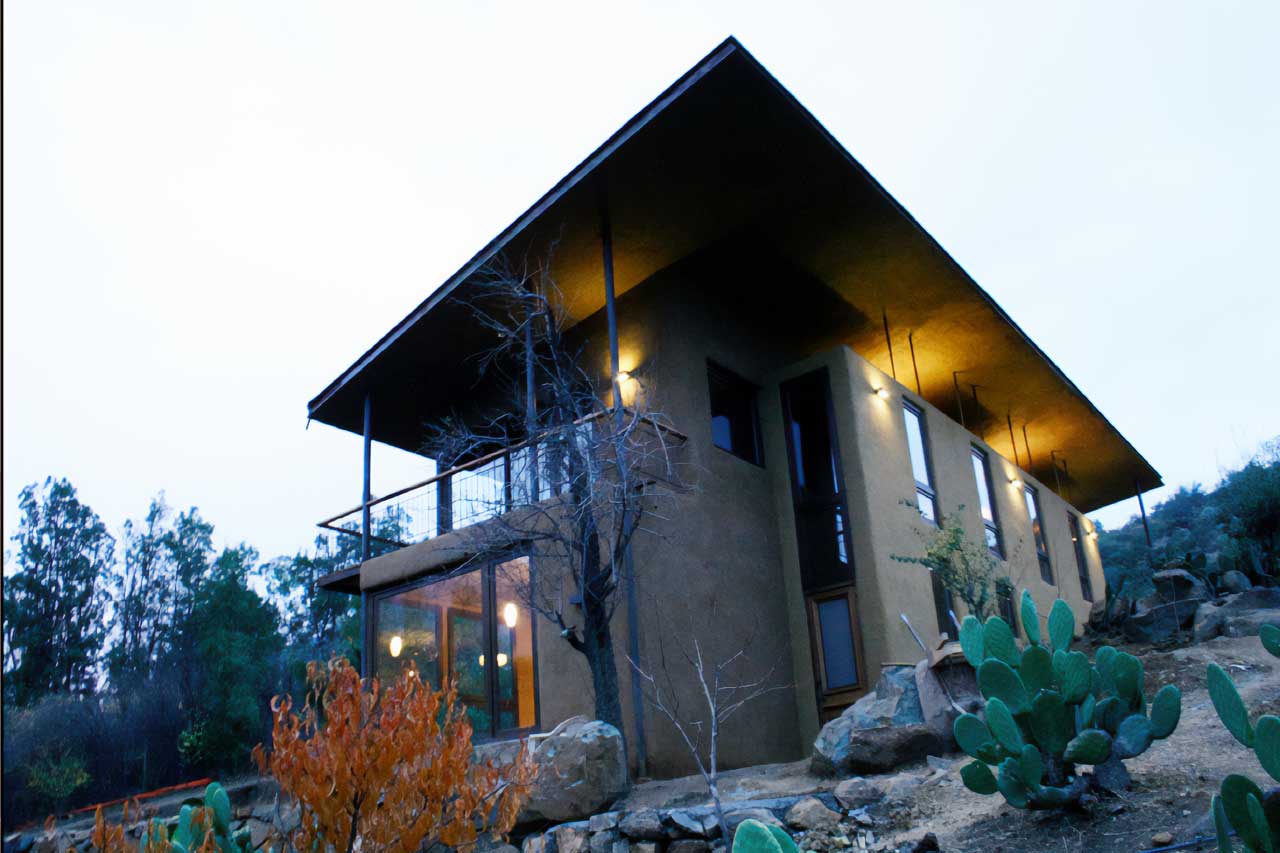
One example of the quincha metálica and tecno-barro technique can be found in the Peñalolén House, on the outskirts of Santiago, in a place called Peñalolén, Chile.

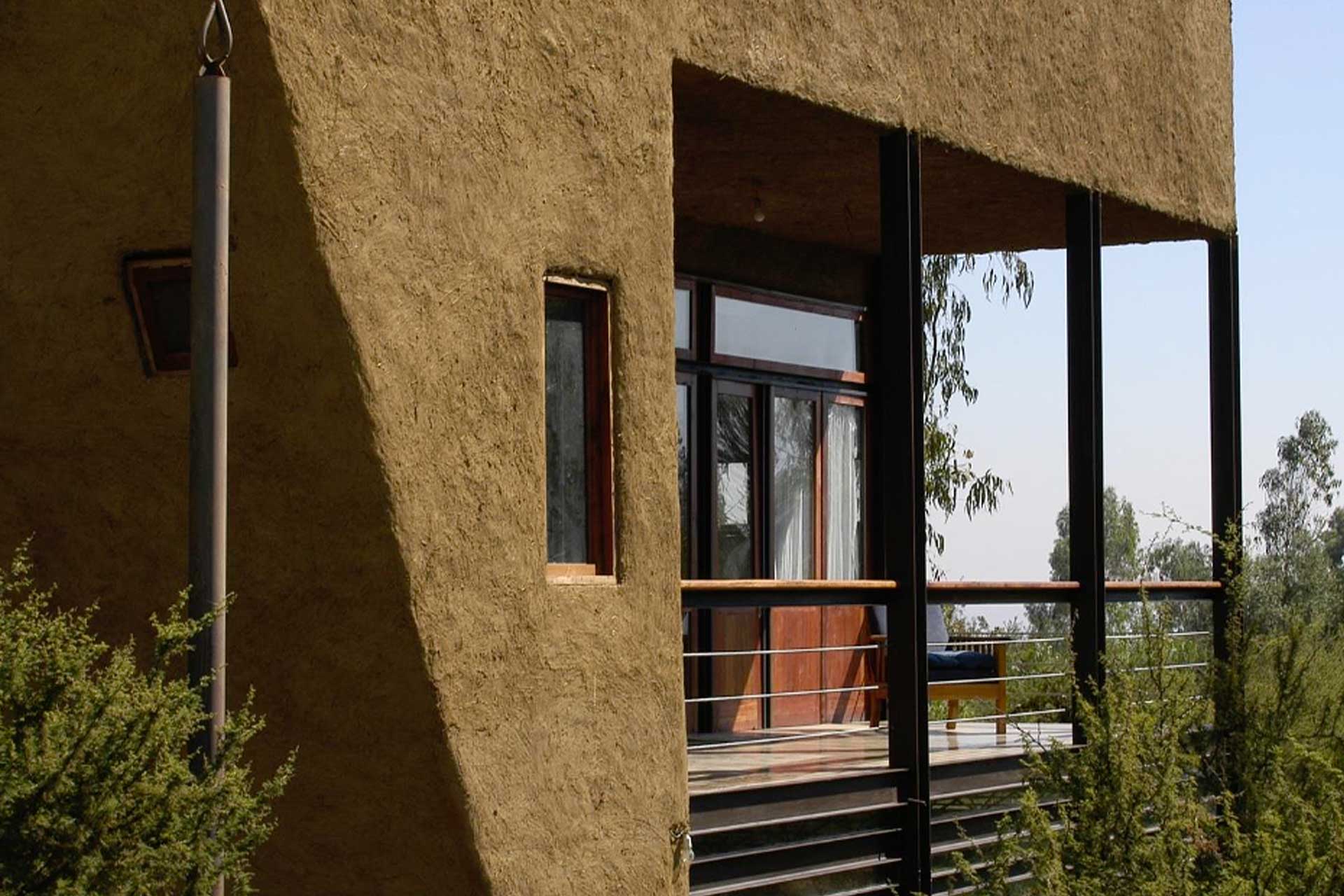
The Peñalolén House is a private residence that reinterprets traditional Chilean central valley architecture. It is approximately 1,075 square feet and designed to blend in with the environment and maximize the views of the Andes Mountains.

The home has canted walls to protect against solar gain and wind-driven rain. Its steel frame provides flexibility and earthquake resistance, while the thin mud skin remains lightweight.

This is one of many examples Cortés has been able to produce using this construction method.

Image Source: Marcelo Cortés
Marcelo Cortés is a renowned Chilean architect, constructor, and earth researcher. He graduated from the University of Chile and has since become a pioneering figure in contemporary earth architecture. Cortes holds the UNESCO Chair in earth architecture, constructive cultures, and sustainable habitat, reflecting his expertise and contributions to the field.

His innovative work in earthquake-resistant earth construction techniques has earned him international recognition. In 2016, Cortes received a tribute at TerraWorld as a world pioneer of contemporary earth architecture. The College of Architects of Chile awarded him the Fermín Vivaceta Rupio Award for his technological applications in architecture.

Cortes is also the founder of the ARCOT Network, which unites nine public and regional universities in Chile to establish an earth architecture chair. His research and practical innovations in reinforced earth techniques for seismic regions have been the subject of a doctoral thesis by Favio Gatti at the Polytechnic University of Catalonia, completed in 2023.

Citations

  1. Rael, Ron. Earth Architecture. Princeton Architectural Press, 2006.
  2. “Quincha.” Wikipedia, Wikimedia Foundation, https://en.wikipedia.org/wiki/Quincha.
  3. “Marcelo Cortés arquitecto. El desafío sísmico de las técnicas con tierra armada.” UPC Commonshttps://upcommons.upc.edu/handle/2117/404662?show=full.