Following the spread of Buddhism, Shikkui was first introduced to Japan from the Korean Peninsula in the 6th century. The original purpose was to provide a canvas for religious paintings. When Shikkui was first introduced to Japan, paper fibers were mostly likely used in place of hemp.
 Traditionally, the manufacturing of lime was energy intensive and lime was a valuable commodity in pre-industrial Japan. Therefore, it was used very sparingly. The Shikkui lime finish is usually applied a few millimeter thick over an earthen plaster, and in some cases, over a sand-lime plaster. It’s primary function is to protect earthen plastered walls from rain erosion. Depending on exposure, the lifespan of a Shikkui lime plaster is about 20 years. In this sense, it is a kind of sacrificial layer protecting a bamboo lattice and earthen plastered wall that will last over one-hundred years.
Shikkui was developed to allow large, uninterrupted earthen walls to be finished without joints. That is, by improving workability and moisture retention, Shikkui allows for the walls of castles and earthen store houses to be finished without interruption, so there are no joints in the finish lime plaster.
Through a chemical reaction with the carbon dioxide in the air, hydrated lime returns to limestone and provides a recalcitrant, weather resistant and dust free finish.
Seaweed glue is added to improve workability, that is, increase moisture retention and delay setup so that the plaster can be worked longer. (Seaweed glues are also added in earth plasters for the same reason.) Traditionally, dried seaweed was boiled and strained to produce glue, but now a powdered form is commonly available.

Fine hemp fibers reduce cracking and allow for a thin application.
Recipes vary according to the season (temperature and humidity) and craftsperson.

The following is a basic recipe for a Shikkui:
Hydrated Lime 20-23Kg (approx. 44-50lbs)
Powdered Tsunomata Seaweed Glue 500-1000g
Hemp Fibers 400-800g

Nakazaki Residence in Setouchi, Okayama, is an excellent example of exquisite craftsmanship, including fine plastering. Built over a period of 10 plus years during the early 1900’s, Nakazaki residence features traditional Japanese architecture with early western influences.
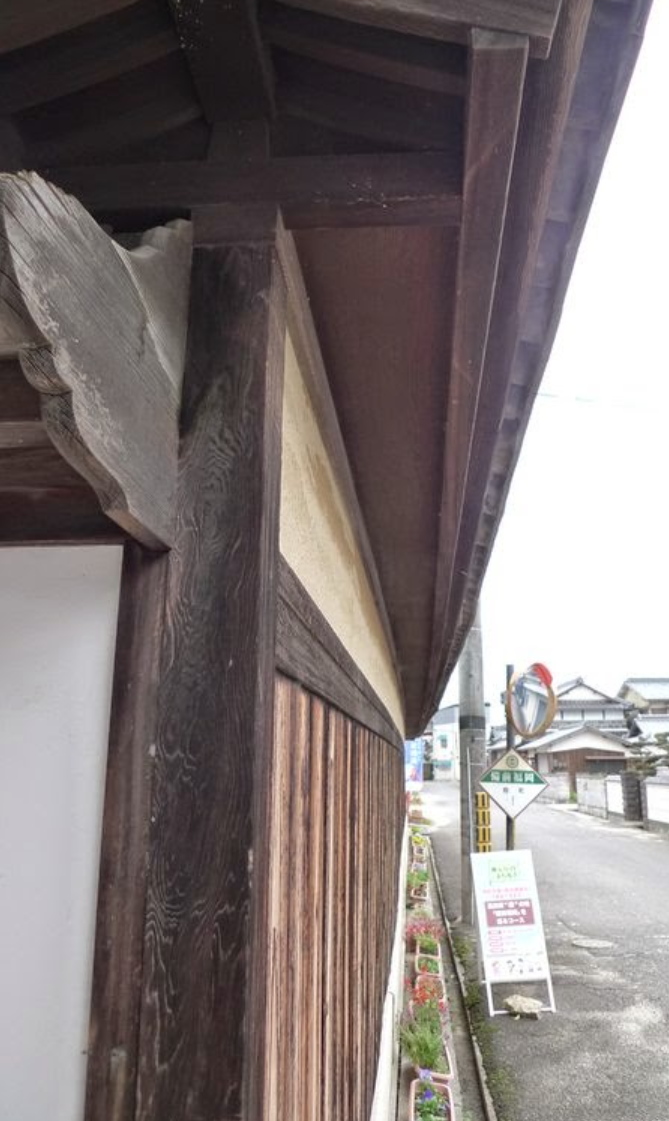
Nakazaki Residence in Setouchi, Okayama, is an excellent example of exquisite craftsmanship, including fine plastering. Built over a period of 10 plus years during the early 1900’s, Nakazaki residence features traditional Japanese architecture with early western influences.
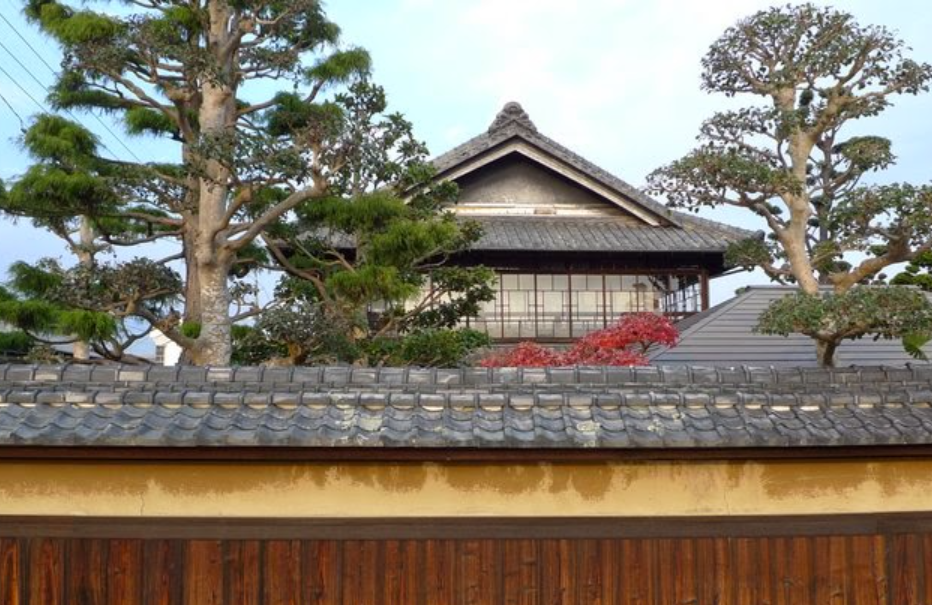
The defining characteristic of plastering in Kyoto is the use of color clays. The Kansai area of Japan is blessed with a variety of colored clays and these where incorporated into earthen plasters hundreds of years ago.
https://japaneseplastering.blogspot.com/
https://www.japaneseplastering.com/fundamentals/japanese-finishes