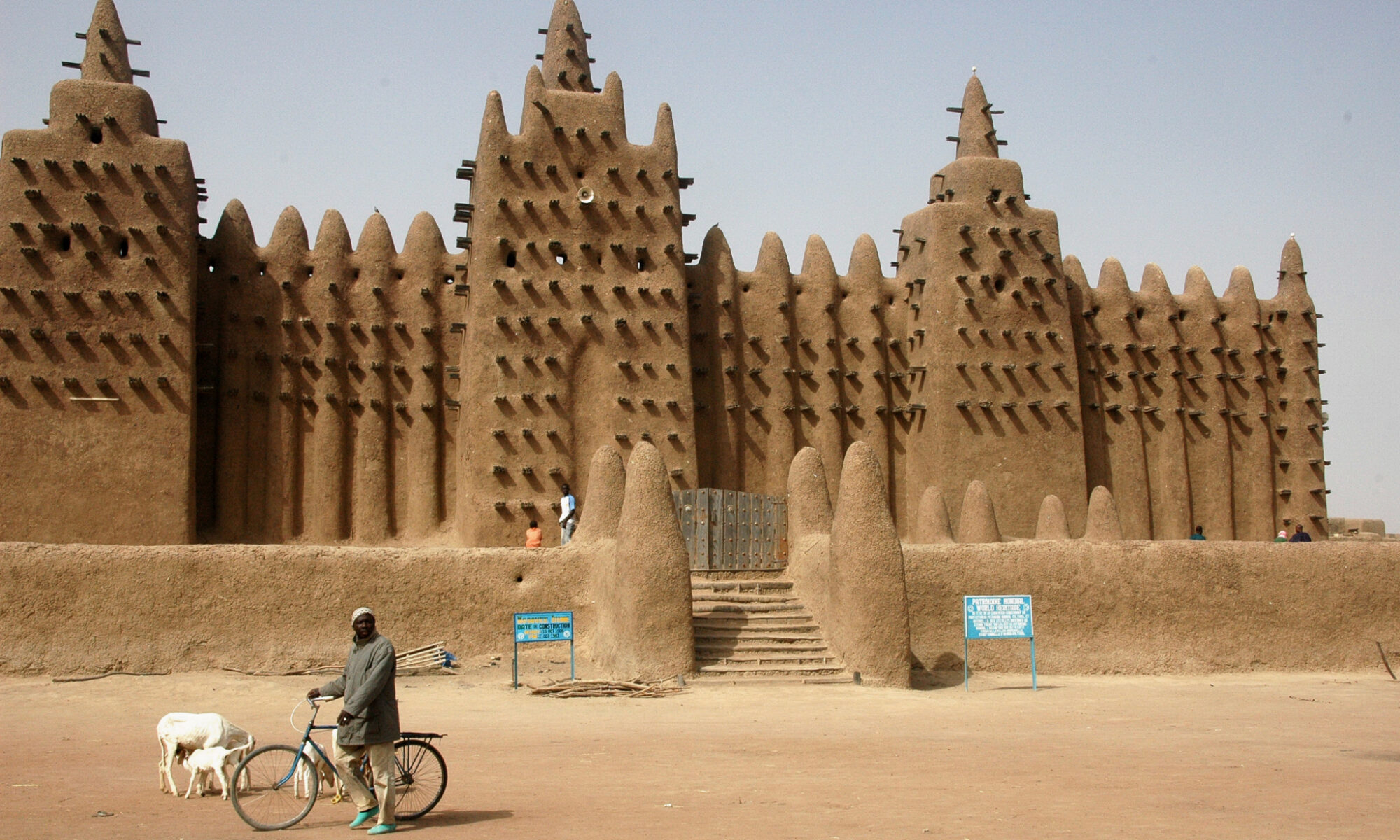
Robert Holton’s research on compressed earth blocks investigates how locally sourced earthen materials can support more sustainable, affordable, and equitable forms of housing in the US Gulf South. Across a series of architecture studios and technology-based courses at Louisiana State University, Holton frames earth construction as a response to several interconnected regional challenges: the shortage of affordable housing, the rising cost and carbon impact of industrialized building materials, the lack of skilled construction labor, and the increasing severity of climate-related storms in hot, humid coastal environments. Rather than treating earth as a material limited to historic or vernacular construction, the projects reposition compressed earth blocks as a contemporary architectural system capable of addressing material performance, environmental responsibility, and social accessibility.

The work began with an investigation into the properties of Southern Louisiana soil. Students tested local earth compositions, including sandy loam, loamy sand, and silty clay, to determine whether they fell within acceptable ranges for construction. Because some soil samples were near the margins of ideal building composition, students explored stabilizers and additives to improve strength, durability, and workability. These included cement, sand, hay, bagasse, coir, coconut fiber, and other natural materials. Bagasse, a by-product of the regional sugarcane industry, became especially significant as a sustainable additive that could strengthen blocks while reusing agricultural waste. Through crushing, sifting, mixing, compressing, curing, and testing, the research established a hands-on material process grounded in regional resources and climate conditions.

A central focus of the projects was the design and fabrication of interlocking compressed earth blocks. Students developed custom block geometries using molds, wood inserts, and manual compression methods such as the CINVA-Ram press. These blocks were designed not only as structural units, but also as spatial and environmental devices. Variations included L-shaped, T-shaped, U-shaped, diamond, H-shaped, Duck, Bow Tie, and Zig Zag blocks. Each geometry tested different possibilities for stacking, interlocking, bonding, porosity, light filtration, airflow, surface texture, and assembly logic.


The L-shaped wall, inspired by the windcatchers of Yazd, Iran used mirrored courses and angled voids to appear solid from the front while allowing light, air, and views to pass through from oblique angles. The H-shape block used vertical holes and all-thread rods to create a mechanically fastened wall without mortar, allowing light and air to filter through the assembly. The Duck block used horizontal voids and PVC fastening to create a more solid wall surface with improved dimensional accuracy. The Bow Tie block produced a deeper, textured surface through larger three-dimensional units, while the Zig Zag block relied on interlocking tabs and grooves, creating an undulating wall with strong visual depth but greater fabrication difficulty. Other assemblies explored solid surfaces, deep relief, undulating walls, and mechanically fastened systems.


The research also addressed the question of who can build with compressed earth blocks. Traditional masonry often depends on skilled labor and mortar-based construction, both of which can be costly and difficult to access. Holton’s projects therefore explored dry-stacked, interlocking, and mechanically fastened assemblies that could be constructed by students or minimally trained individuals. Mechanical systems using PVC voids, all-thread rods, anchors, nuts, and coupling devices allowed several wall prototypes to be assembled without mortar. These experiments demonstrated that earth block construction can become more accessible while still producing structurally stable wall assemblies. At the same time, the work revealed ongoing challenges, including block tolerance, surface irregularity, drying time, cracking, mold precision, and the need for further testing at larger building scales.


Together, these projects position compressed earth block construction as both a material research agenda and a design methodology. The work connects local soil, regional industry, student fabrication, architectural geometry, and housing prototypes into a broader argument for ecological and social responsibility. By combining full-scale making with architectural design, Holton’s research demonstrates that earthen materials can be reimagined for contemporary housing, offering a low-carbon, cost-conscious, and contextually responsive alternative to conventional construction in the US Gulf South.


Citations:
- Holton, R. (2023). “Earth made urban living: earthen construction materials and techniques for contemporary housing”, BTES.Holton, R. (2024).
- “EarthConstruction: Building Techniques Toward a More Equitable Architecture”, Earth USA Conference, Santa Fe, New Mexico.
- Holton, R., (2025) “Earth Construction: Alternative Building Strategies for More Equitable Housing”, Building Technology Educators’ Society 2025(1).