John Novotny, a Melbourne resident, has developed a very simple and innovative method of rammed earth construction that results in houses massively cheaper than conventional ones and with amazing environmental benefits. Mixing the ancient universal simplicity of earth with modern engineering principles, Novotny developed a concrete-jacket rammed-earth wall system (“Novoram”) that is simple to construct and structurally robust. The resulting walls are built mostly of earth but have a thin concrete jacket and concrete posts integrated into the wall.
Earth Architecture and Wine
Many wineries and residences among vineyards employ earth in the construction of buildings. Often, the same earth to grow grapes is ideal for use as a building material.
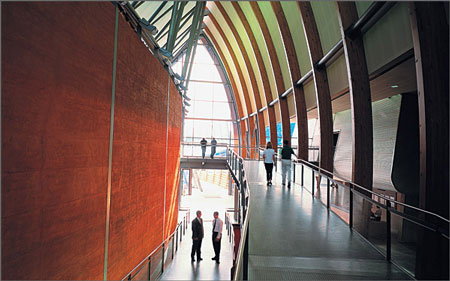
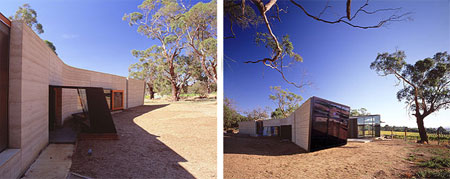
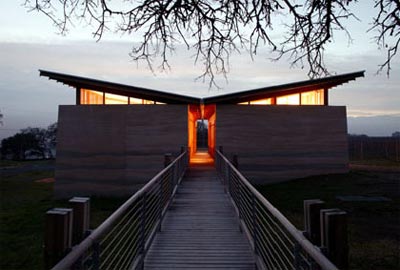
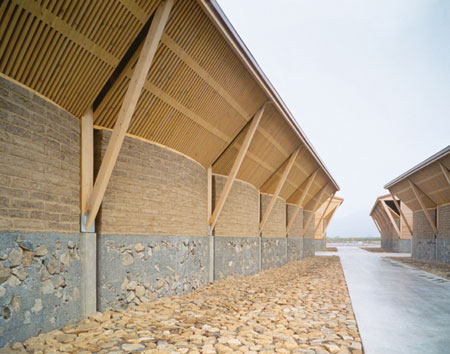
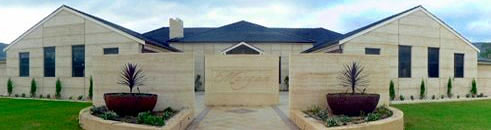
Margan Tasting Room and Restaurant
The list goes on and on: [ Fetzer Winery Administration Building | Moorooduc Estate | Texas Hills Vineyard | Adinfern Estate | Wing Canyon Vineyard | Home Hill Winery ]
Eartha

EARTHA, The East Anglian Regional Telluric Houses Association, is an organization whose aims and objectives are to encourage the development of expertise and understanding in all aspects of earth building in the east of England by:
Establishing a network of people from various professions and trades all of whom have an interest in the study, maintenance and promotion of earth buildings in the east of England: through links with ICOMOS it will join with other networks in the United Kingdom and worldwide.
Providing a forum for discussion of issues relating to earth building in the east of England.
Providing advice on the repair and maintenance of earth buildings through an information service, the publication of technical guidance and the organisation of practical demonstrations, exhibitions and seminars.
Establishing mutually beneficial links with groups and individuals working with earth buildings in the other parts of the Britain and abroad.
Collaborating with other networks to prepare and publish information manual covering all aspects of the construction, repair and maintenance of earth buildings including composite structures, daubs, renders and plasters.
Encouraging and supporting training in the field of earth building and associated skills.
Encouraging the revival of appropriate earth building techniques for new building construction and investigating the potential of the material for low energy buildings.
L’Association Nationale des Professionnels de la TERRE Crue

L’Association Nationale des Professionnels de la TERRE Crue fédère les acteurs et actrices de la construction en terre crue en France. Elle regroupe des artisans et des chefs d’entreprise, des producteurs de matériaux, des architectes, des ingénieurs, et des organismes de formation professionnelle. Elle accueille aussi des représentants d’organismes régionaux (parcs…) ou d’autres associations développant des activités dans le domaine de l’architecture de terre (valorisation des patrimoines nationaux, architecture contemporaine, recherche sur les matériaux et les techniques…).
Terra 2008 Program Schedule
The program schedule for the Terra 2008 International Conference on the Study and Conservation of Earthen Architectural Heritage in Bamako, Mali has been announced. Download here (PDF format).
http://www1.accorhotels.com.au/Novotel-Ningaloo/default_en.aspx
http://www.emediawire.com/releases/2007/11/emw570973.htm
Ait Benhaddou
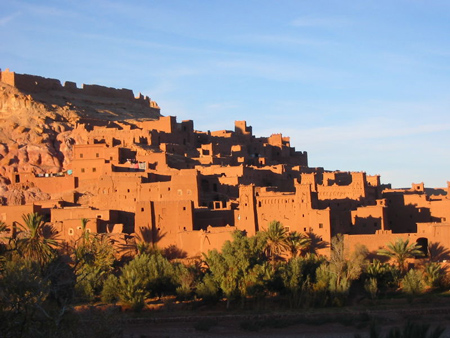
The Moroccan city of Aït Benhaddou is one of the most well-known earthen city in the world, at it is a UNESCO World Heritage Site and because it is an extremely photogenic city, was the setting for numerous movies including Lawrence of Arabia (1962), The Last Temptation of Christ (1988) and Gladiator (2000) to name a few.
Modern Concrete Grew from Traditional Rammed Earth
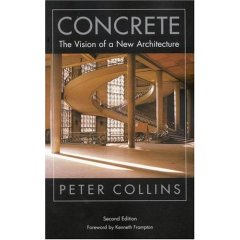
In the book Concrete: The Vision of a New Architecture
“…when concrete did again come into use as a building material, it evolved from an entirely independent, and much more humble origin: pisé [rammed earth]. The peculiarity of pisé construction thus lay not only in the economy of using earth as a building material, but in the process whereby a building was moulded into shape, and it was inevitable that sooner or later some far-sighted individuals should appreciate the revolutionary possibilities of this method of construction, and seek to extend it by improving on the material used. The most obvious improvement was to increase the cohesion of the earth by mixing in a binding material such as mortar, and this had in fact already been done by [Jean-Baptiste] Rondelet when repairing the château in Ain. It was left to others to experiment with suitable hard aggregates, and produce modern concrete, or, as it was termed in French, béton. The first of the pioneers was an ingenious but ambitions building labourer named François Cointeraux.” – Peter Collins, Concrete: The Vision of a New Architecture (Montreal: McGill-Queen’s University Press, 2004), 20-21.
The Future of Mud: A Tale of Houses and Lives in Djenne
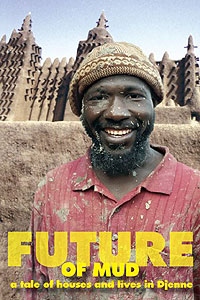
The Future of Mud: A Tale of Houses and Lives in Djenne, a new film by Susan Vogel and presented by the Musée National du Mali, is the story of Komusa, master mason and heir to the secrets of Djenne architecture. He hopes his son will continue the family profession and maintain their world heritage city – but Djenne is connected to a global world now, and competing ideas about the future have arrived. Documentary footage and staged scenes tell an intimate story of family tensions, contemporary building practices, and the precarious future of the renowned mud architecture of Mali.
Treehugger writes of the film:
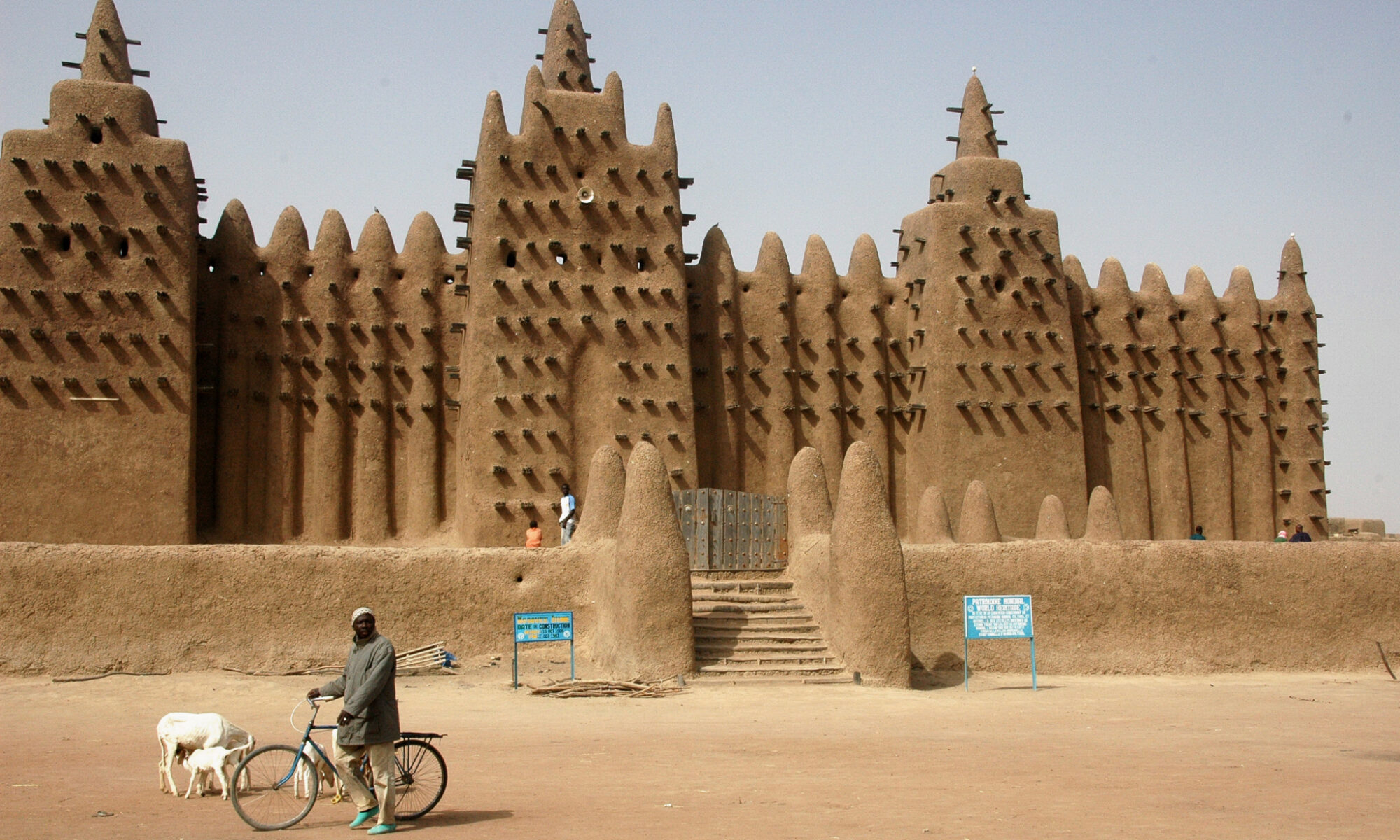
A “collective connection to earthen architecture is best seen in the film’s footage of the annual re-plastering of the town’s pride, the Great Mosque, which is the world’s largest earth building, in addition to being a distinguished UNESCO World Heritage site. The first earthen structure here on this site dates back to the 13th century and is re-plastered every year. The day-long, annual festival is truly a communal affair, with plenty of foreign tourists gawking on and filming the orderly chaos.”
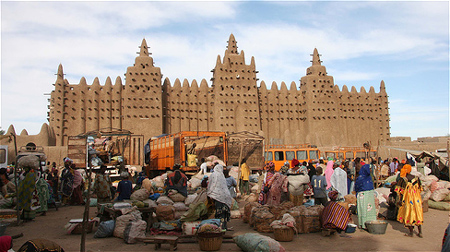
photo of the Great Mosque of Djenne by Ferdinand Reus
The Future of Mud: A Tale of Houses and Lives in Djenne
Co-Produced with Trevor Marchand and Samuel Sidibé.
Edited by Harry Kafka. Music by Issa Bagayogo. In Bamana, French, English with English subtitles. Color, 58 minutes. Distributed by FRIF.com. Available fall 2007.
4,000 Year Old Temple Unearthed in Peru
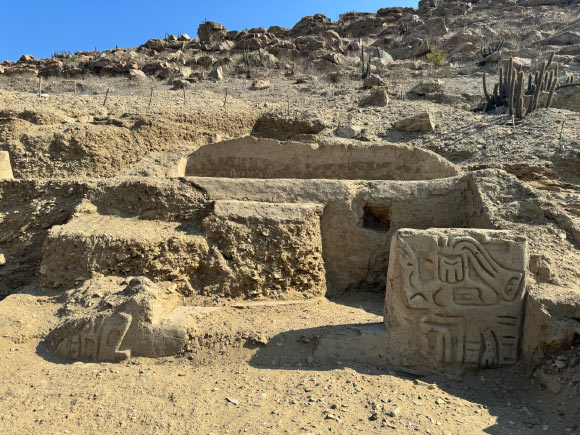 A 4,000-year-old ceremonial temple and associated performance space was recently uncovered at the archaeological site of La Otra Banda in the Zaña Valley, located in the Lambayeque region of northern Peru. The excavation, conducted in 2024 and led by archaeologist Luis Muro Ynoñán of the Field Museum and the Pontifical Catholic University of Peru, revealed the remains of a complex constructed primarily from mud and clay, buried beneath layers of sand.
The structure dates to approximately 2000–3000 BCE and is considered one of the earliest known examples of monumental religious architecture in the Andean region. It significantly predates later civilizations such as the Moche, Nazca, and Inca, including Machu Picchu by roughly 3,500 years.
Excavations revealed enclosed temple spaces alongside a small theater-like area featuring a stage platform and staircase, suggesting that the site was used for ritual performances, possibly for a restricted audience. Decorative elements include high-relief carvings of mythological figures, notably anthropomorphic beings with human bodies and bird-like features, which provide evidence of early symbolic and cosmological systems.
Archaeologists also discovered the skeletal remains of three individuals within the temple, one of whom appears to have been buried with offerings, indicating ritual funerary practices associated with the site.
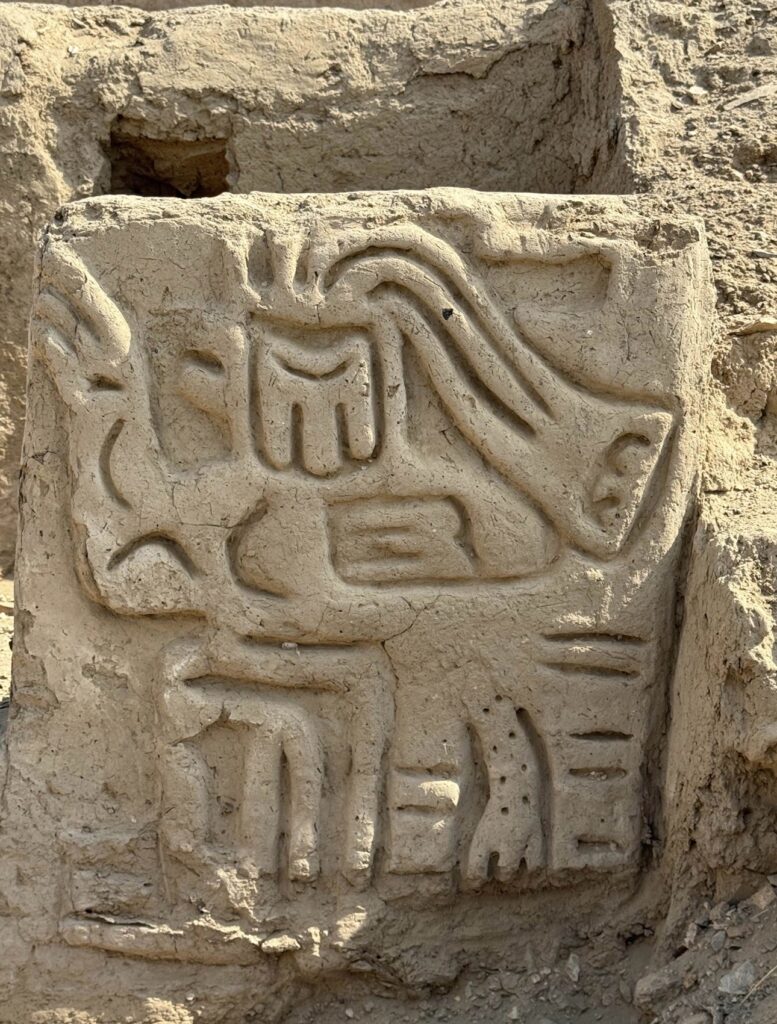
This discovery offers important insight into the emergence of organized religion in the Andes, suggesting that complex belief systems and ceremonial architectures were already developing in the region during the Initial Period. It highlights the role of architecture as a medium for ritual, performance, and social organization in early human societies.