The Earth Construction Handbook
Architecture, Art, Design, and Culture using of mud, clay, soil, dirt & dust.
The Earth Construction Handbook
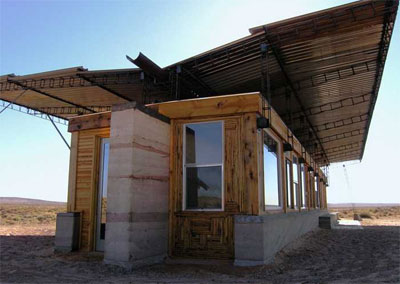
Building upon the vision of the late Samuel Mockbee and his Rural Studio, the mission of Design Build Bluff will challenge the perceived limitation os what can and should be done. Their most recent project is a house for Rosie, constructed of rammed earth. [ previously ]
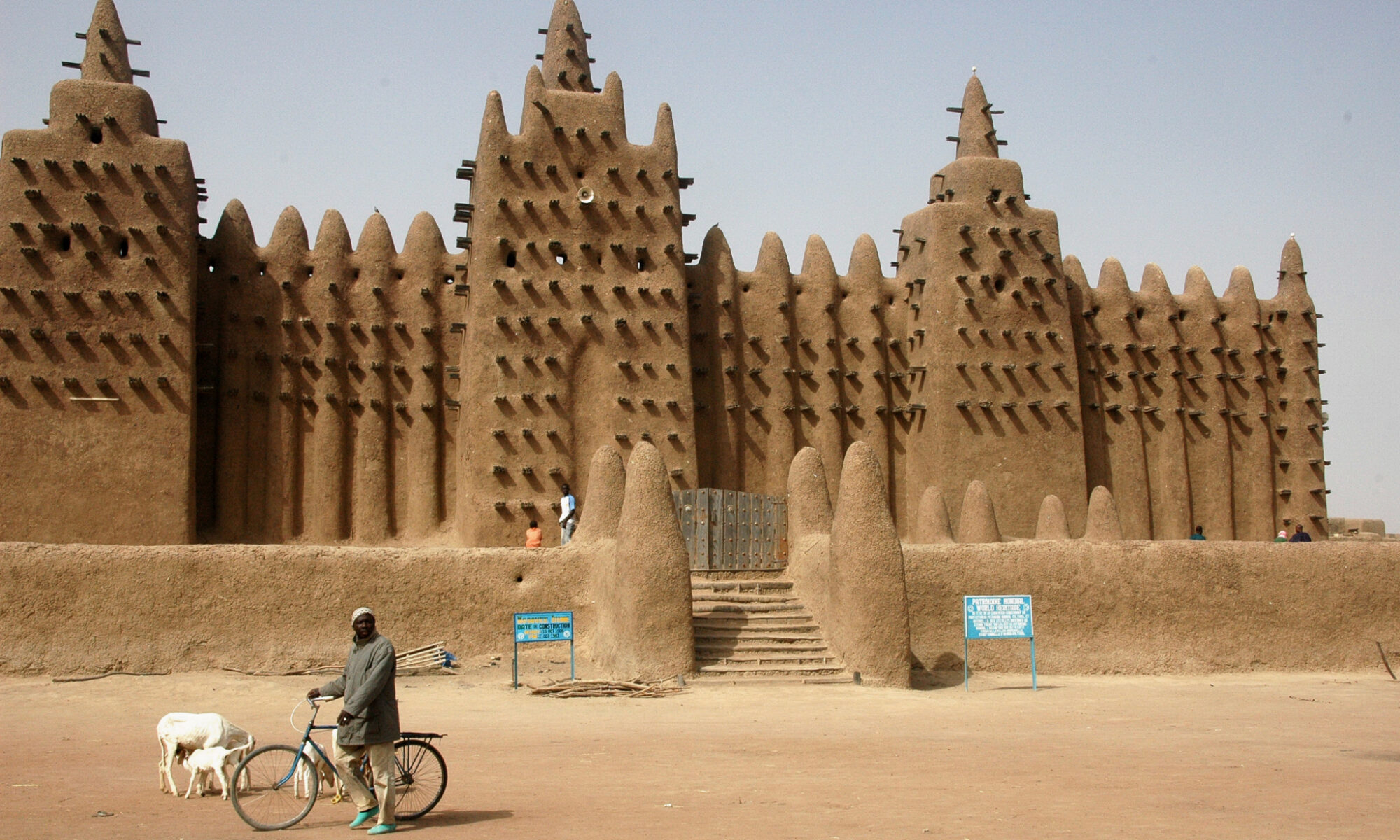
They are west Africa’s most exciting, ambitious buildings. Some of them have lasted 700 years, and they’re made of dirt.
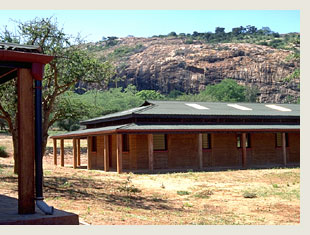
The Wildlife Works EcoFactory employs a team of eleven women sewing machine operators from the local community that were taught the skill of using modern electric sewing machines to produce Wildlife Works’ tees. To build the EcoFactory’s two buildings, we employed 150 local people for two years using Rammed Earth, and our construction team learned the skill of building thick, rammed-earth walls that keep the temperature constant and cool inside, no matter how hot it gets outside. The beauty of this eco-friendly solution is that it uses mostly soil from the site. [ Via African Architecture ]
The Adobe Association of the Southwest is an organization whose mission is to
champion earth construction of yesterday, today and tomorrow.
The Adobe Alliance is an organization committed to building low-cost energy efficient housing that is climatically and environmentally compatible and to fill widespread needs for sustainable, salubrious housing while enhancing the unique landscape of the Big Bend region of West Texas and other desert environments through the utilization of mud-brick as a primary material in these endeavors
On November 4-6, 2005, The Adobe Alliance will offer an intensive vault-building workshop. The group shall be limited to 20. We will build, as usual by hand, the beginnings of a vault since it takes two weeks to complete one. The first courses are the most difficult as it is essential to master the technique of inclining the first bricks properly against the back wall which will support part of the load of the vault (most of the load descends in exquisite equilibrium into the 18″ width of the earthen brick wall.) Hands-on instruction is given by project manager/ adobera Jesusita Jimenez and theory by Simone Swan, designer.Bring work clothes, hat, gloves, heavy shoes, sun protection, a bucket, a float and water. Primitive camping available on site but without water. Lodgings are available in Presidio and Ojinaga, Mexico (across the bridge). Potluck meals at Swan House and/or Thai catering. Participants are also invited during the three weeks prior to the workshop in order to build the sustaining walls for the vaulted roof. Interns receive room and board, first come first served! If an intern wishes to join our work in plastering between November 6th and 10th, please write us. Cost is $250 by October 20, $300 thereafter. Scholarships available. Download poster (PDF)
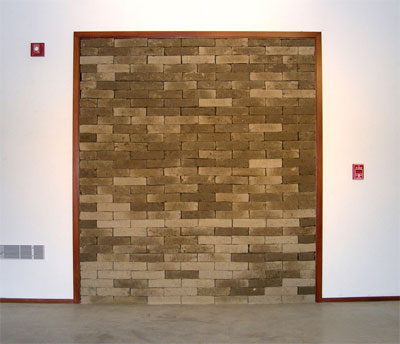
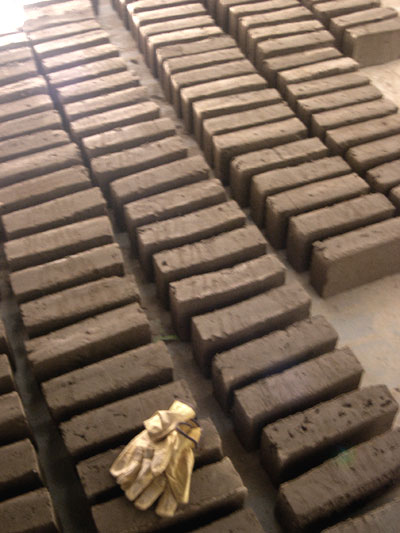
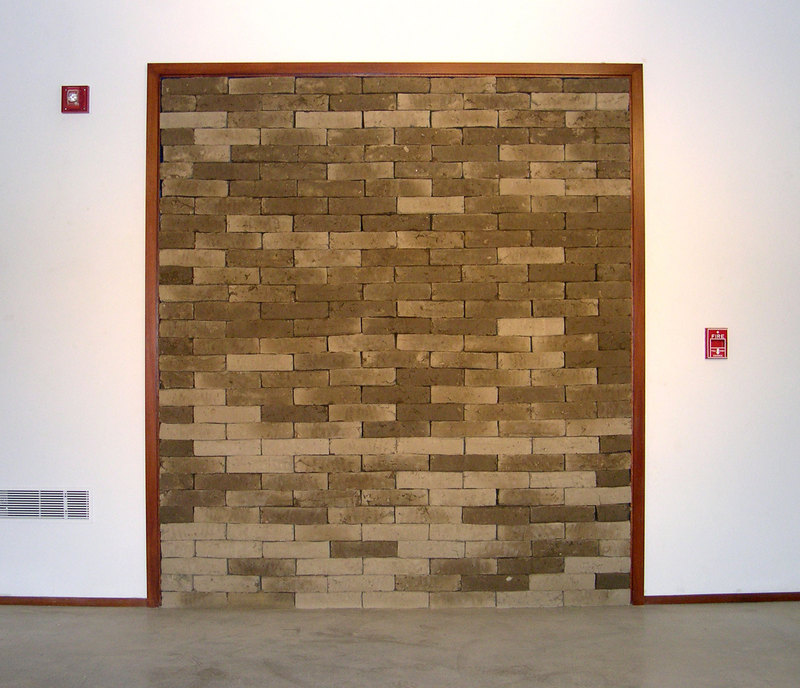
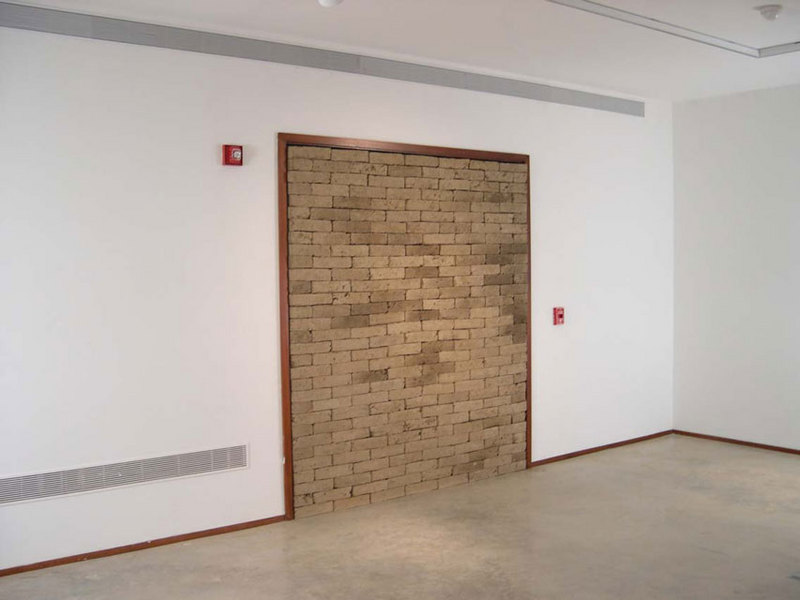
Ginger Krieg, Dharmesh Patel, Paul Puzzello and Juan Torres, Students from the Cranbrook Department of Architecture, are experimenting with Hand formed soil/clay bricks. (non-fired) They built a wall from the bricks utilizing random soil found in the Detroit metro area. The dimensions of the bricks were 3″ x 6″ x 12″ comprised of only sifted soil and water. In the 10-day project approximately 400 bricks were produced. More images 1| 2 | 3
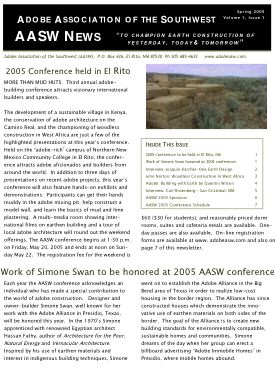
The Adobe Association of the Southwest releases it’s first newsletter in conjunction with the 3rd annual Conference. Click here to download the newsletter in .pdf format.
The Danish International Human Settlement Service has constructed several earth houses, called the The Lak’a Uta Project, on the Bolivian plateau. Together these houses make ‘Centro Lak’a Uta’. In the local language of Aymara ‘Lak’a Uta means ‘homes of earth’.