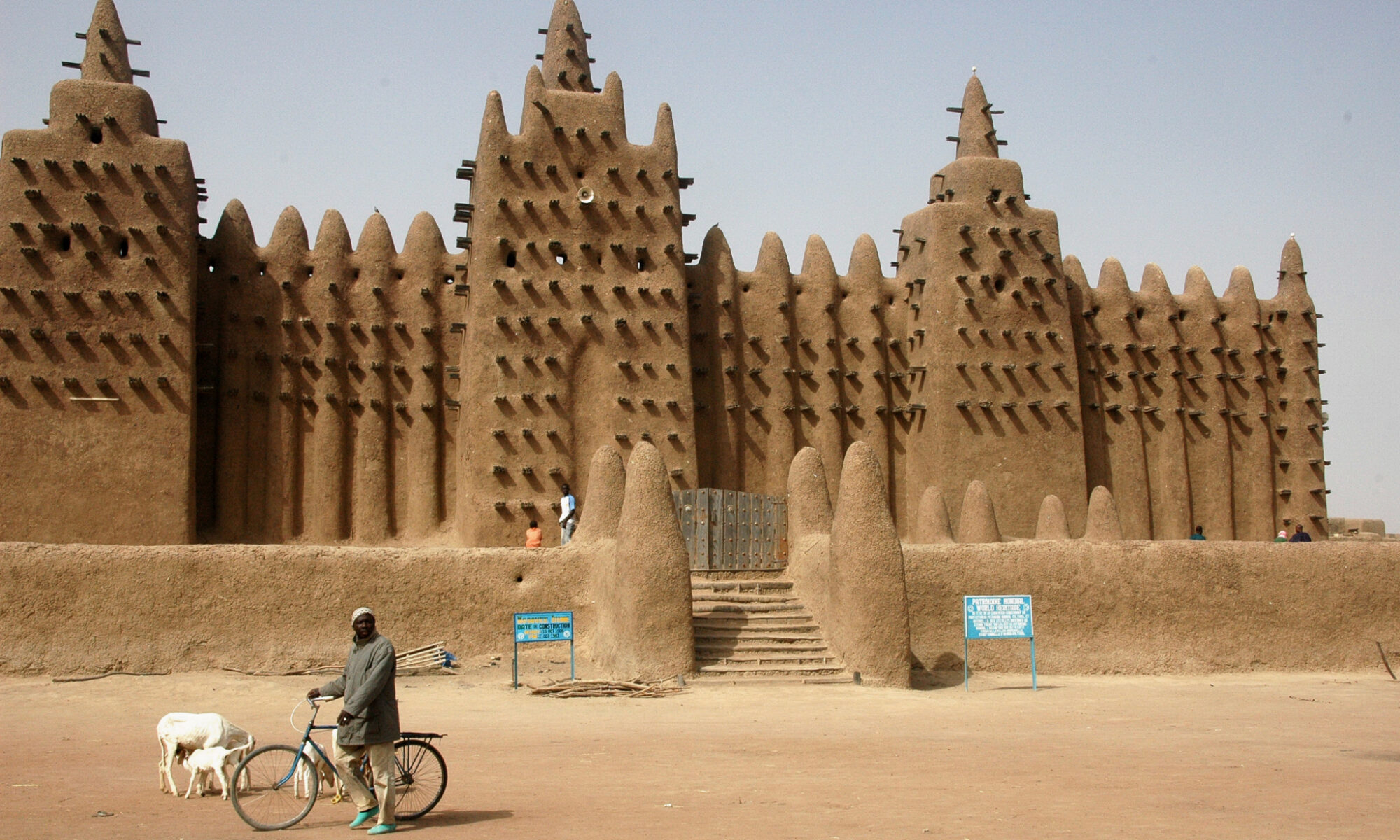

Californian David Easton (1948-2021) was a pioneer in the use of rammed earth in contemporary construction. David Easton first learned of rammed earth through a book titled “Build Your House of Earth” by G.F. Middleton. Trained as both an engineer and architect at Stanford University, Easton was surprised to learn that the “moist soil compacted directly into movable forms wielding immediately load-supporting walls,” claiming it “seemed too good to be true” [1].
Enamored by the little literature and research available on rammed earth, Easton set out to perfect the methods and applications of the material and founded his company, Rammed Earth Works, in 1976. In the 50 years since, Easton and Rammed Earth Works have worked on hundreds of both residential and commercial projects across the nation, cementing themselves as one of the world’s leading firms in the research and application of rammed earth construction technologies [2]. Easton’s company has also helped push the envelope to make the building codes around the nation be more accepting of rammed earth construction and developed various rammed earth technologies such as PISE (pneumatically impacted stabilized earth), Terratile, and the Easton (California) Forming System for rammed earth and cast elements [3].
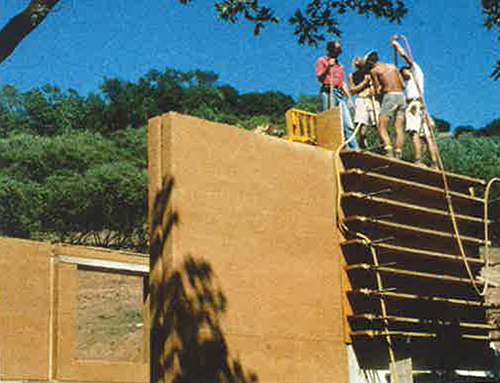

In 1996, Easton published The Rammed Earth House, an exploration of the history and modern use of rammed earth construction with beautiful photographs taken by Cynthia Wright of both modern and historical examples [4]. Easton has since revised The Rammed Earth House, and in the years since its initial publication, it has been widely accepted as one of the most informative and influential works on rammed earth, showing an ancient building technique that is exactly suitable for today’s resource-conscious and environmentally friendly building needs.

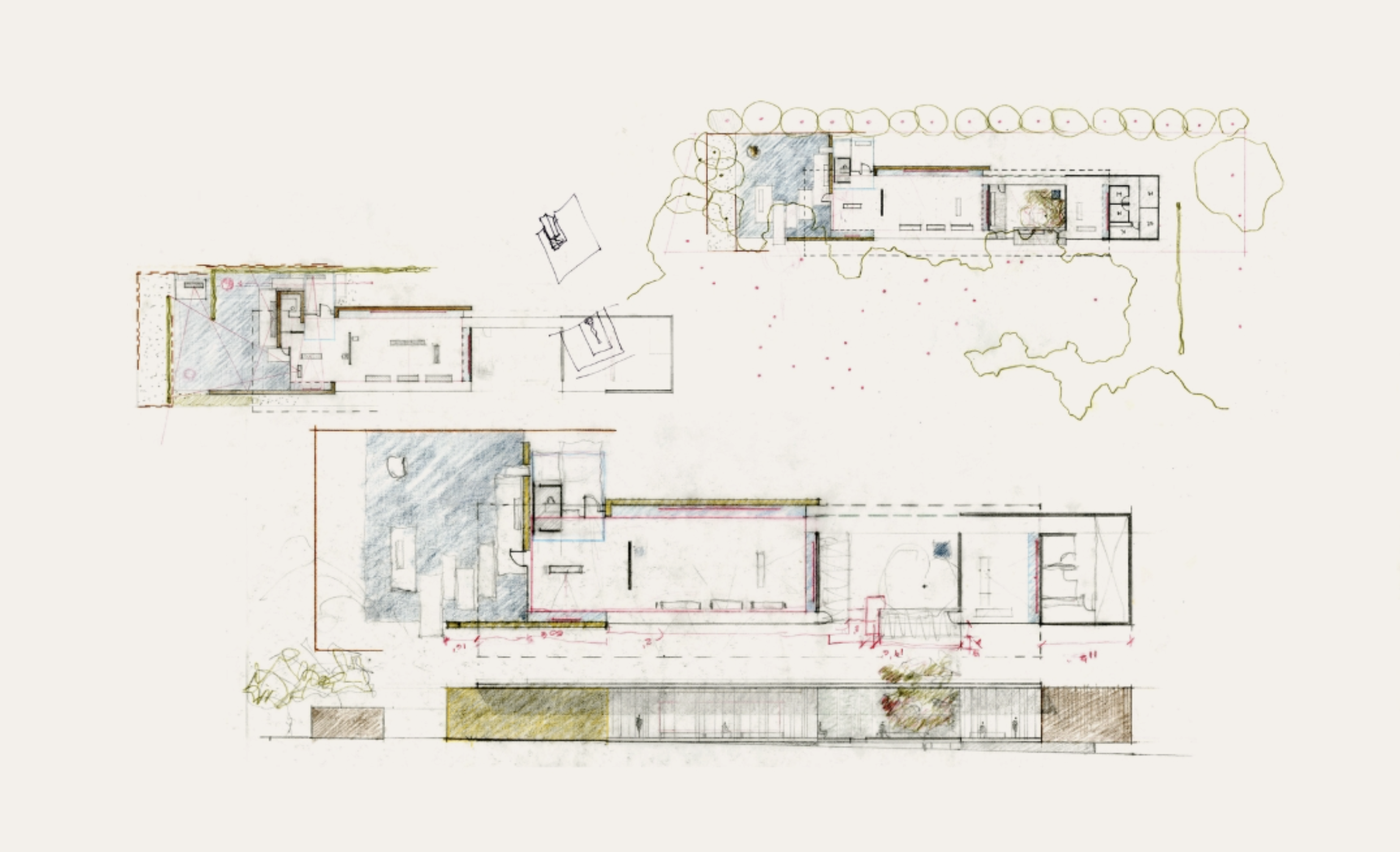
One of David Easton’s most notable rammed earth projects is the Windhover Contemplative Center at Stanford University. This project, designed to be a spiritual refuge on the college campus, was created in collaboration with architects Aidlin Darling and Andrea Cochran, as well as artist Nathan Oliveira.
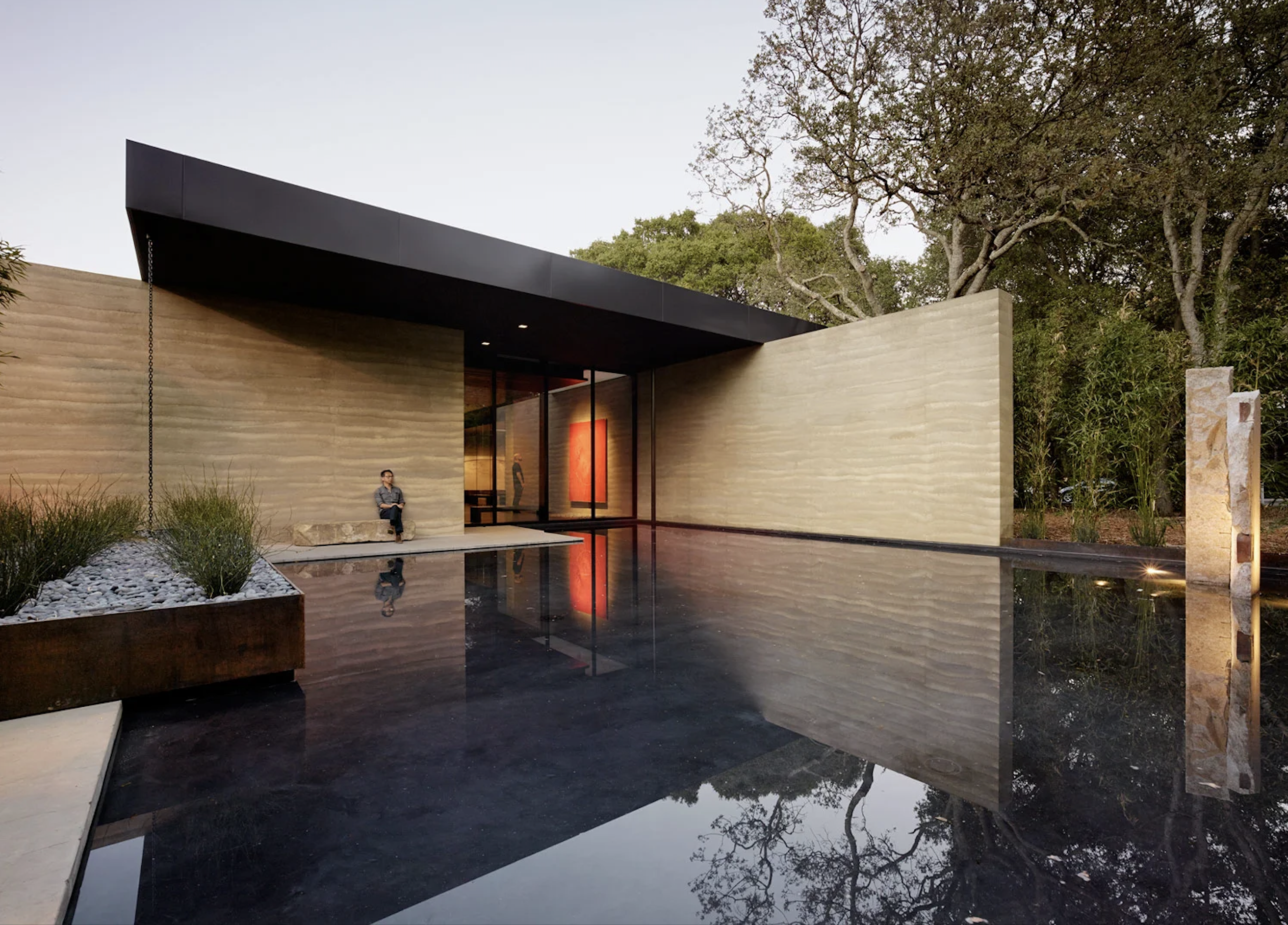
The project contains three large rammed earth walls designed to be a backdrop to Oliveria’s paintings. In the center of the largest wall, a 234,000 pound rammed earth wall 20 feet tall and 60 feet long, sits a large diptych painted by Oliveira.
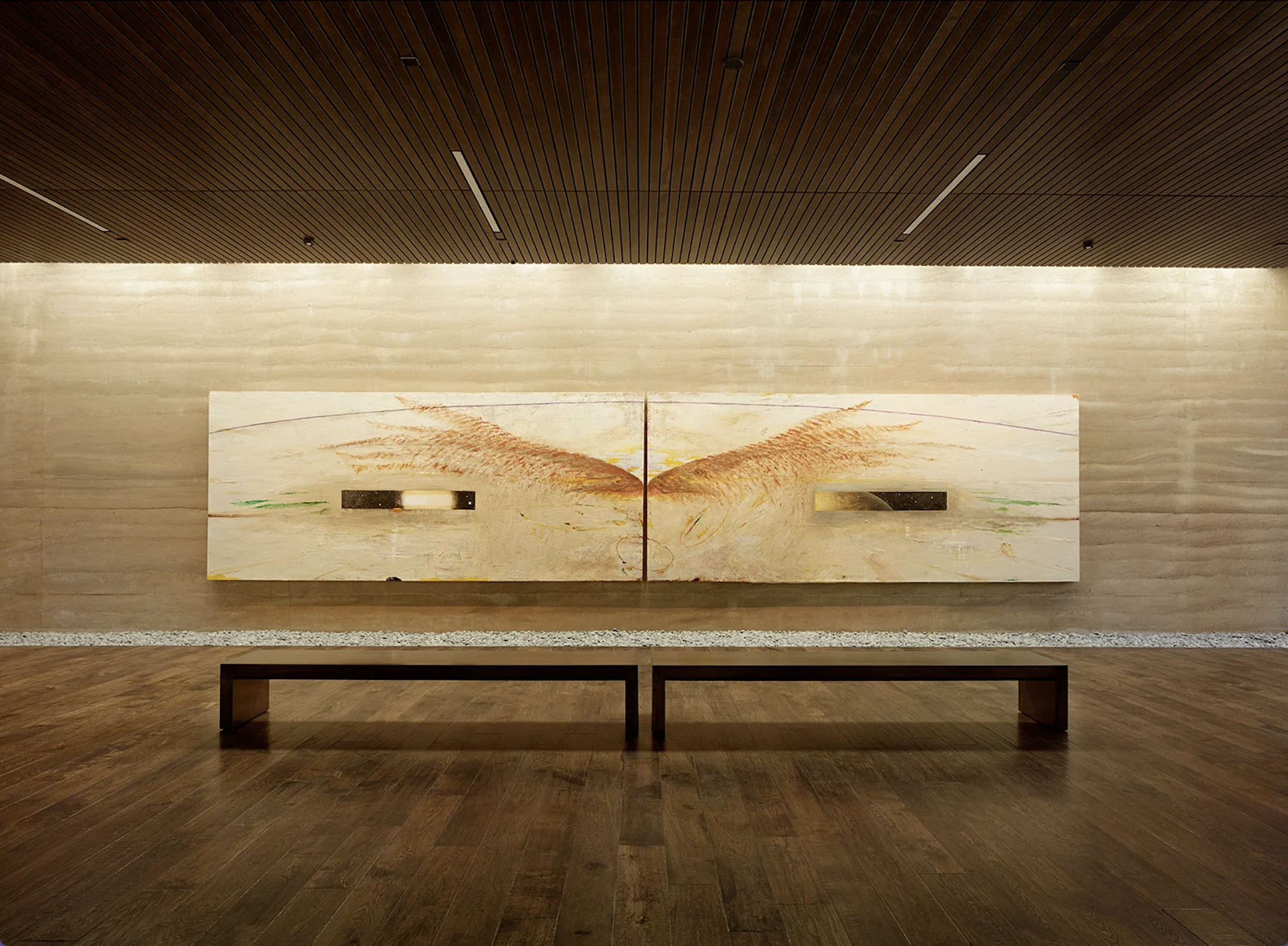
The project was extremely labor extensive: each wall was built “in 42 six-inch lifts pounded to four-inch courses by eight men on rammers.”
Sources:
- Block, David. “Looking at the Legacy of Legendary Earth Builder David Easton: February 25, 1948 — February 12, 2021.” Medium, 6 June 2021, davidyblock.medium.com/looking-at-the-legacy-of-legendary-earth-builder-david-easton-february-25-1948-february-12-b63e8c7677be. Accessed 16 Feb. 2026.
- English, Mark, AIA. “David Easton – 45 Years of Rammed Earth.” The Architects’ Take, 16 Nov. 2018,thearchitectstake.com/interviews/david-easton-45-years-of-rammed-earth-construction/. Accessed 16 Feb. 2026.
- Rammed Earth Works. “About Us.” Rammed Earth Works, www.rammedearthworks.com/about-us. Accessed 16 Feb. 2026.
- Aidlin Darling Design. “Windhover Contemplative Center.” Aidlin Darling Design, aidlindarlingdesign.com/projects/windhover-contemplative-center/. Accessed 16 Feb. 2026.
 is the first book to discuss and illustrate Swan’s architecture while also chronicling one of her annual workshops in author Dollens’ first-hand account. Swan studied with the great Egyptian architect