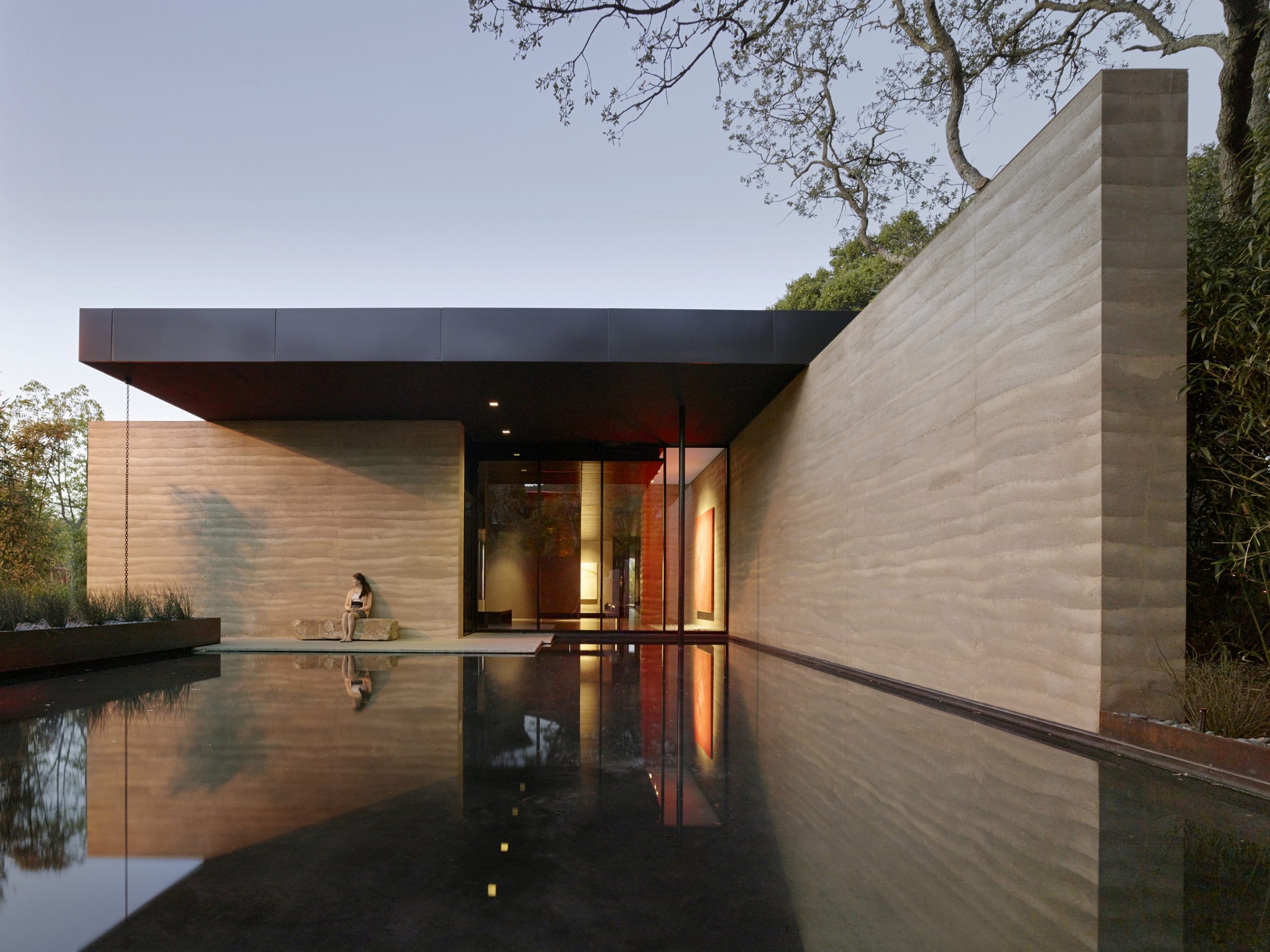
The Windhover Contemplative Center is a one-story, 4,000-square-foot spiritual refuge on the Stanford University campus. It was designed by the architecture firm Aidlin Darling Design and named after a series of paintings by artist Nathan Oliveira.
About the Architect

Aidlin Darling Design is an architecture firm based in San Francisco, California, founded in 1998. It was established by two partners, Joshua Aidlin and David Darling.
They earned their Bachelor of Architecture degrees from the University of Cincinnati, where they met as students. Their collaboration began with woodworking and furniture-making projects, which later developed into their architectural practice.
They see design as a multisensory experience, where the way something feels, smells, and sounds is as important as how it looks.
About the Architecture

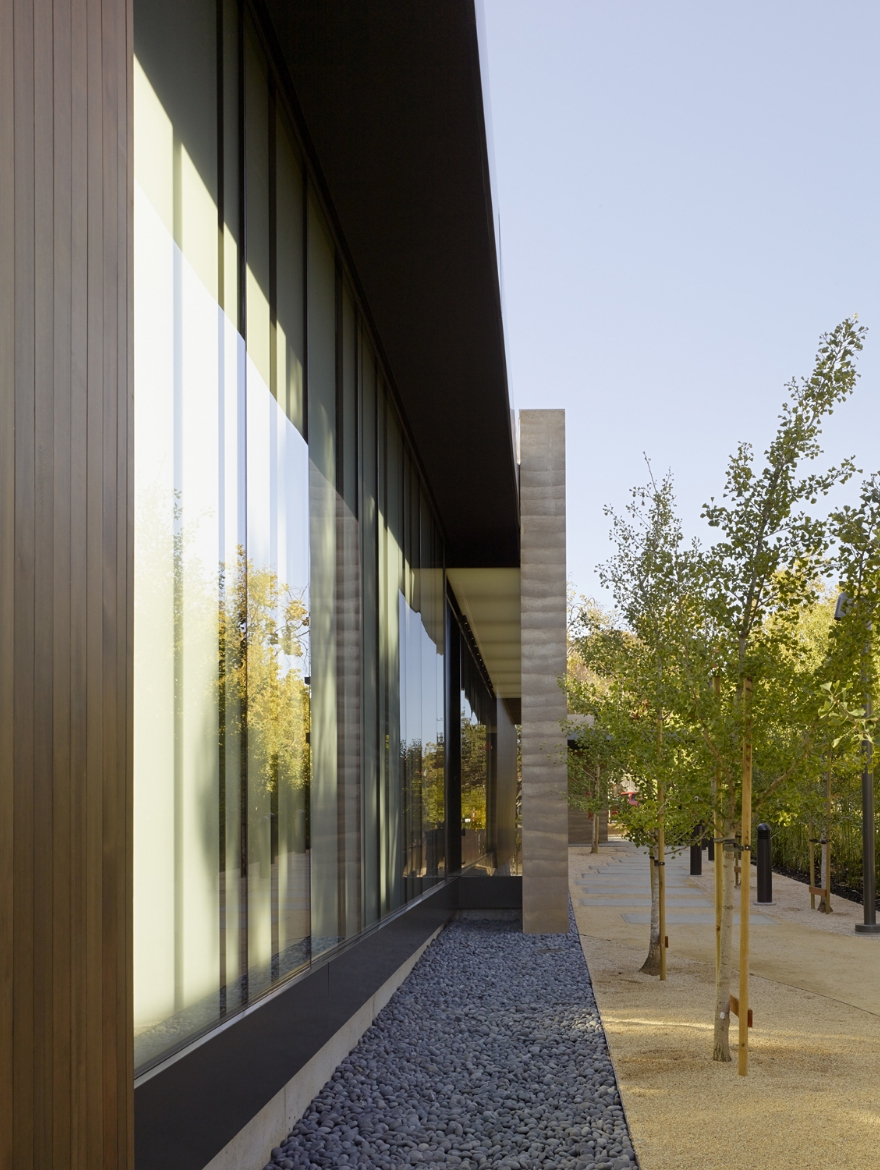
The building is situated beside a natural oak grove. Visitors enter through a long private garden, where a bamboo grove at the entrance separates the building from the outside world.
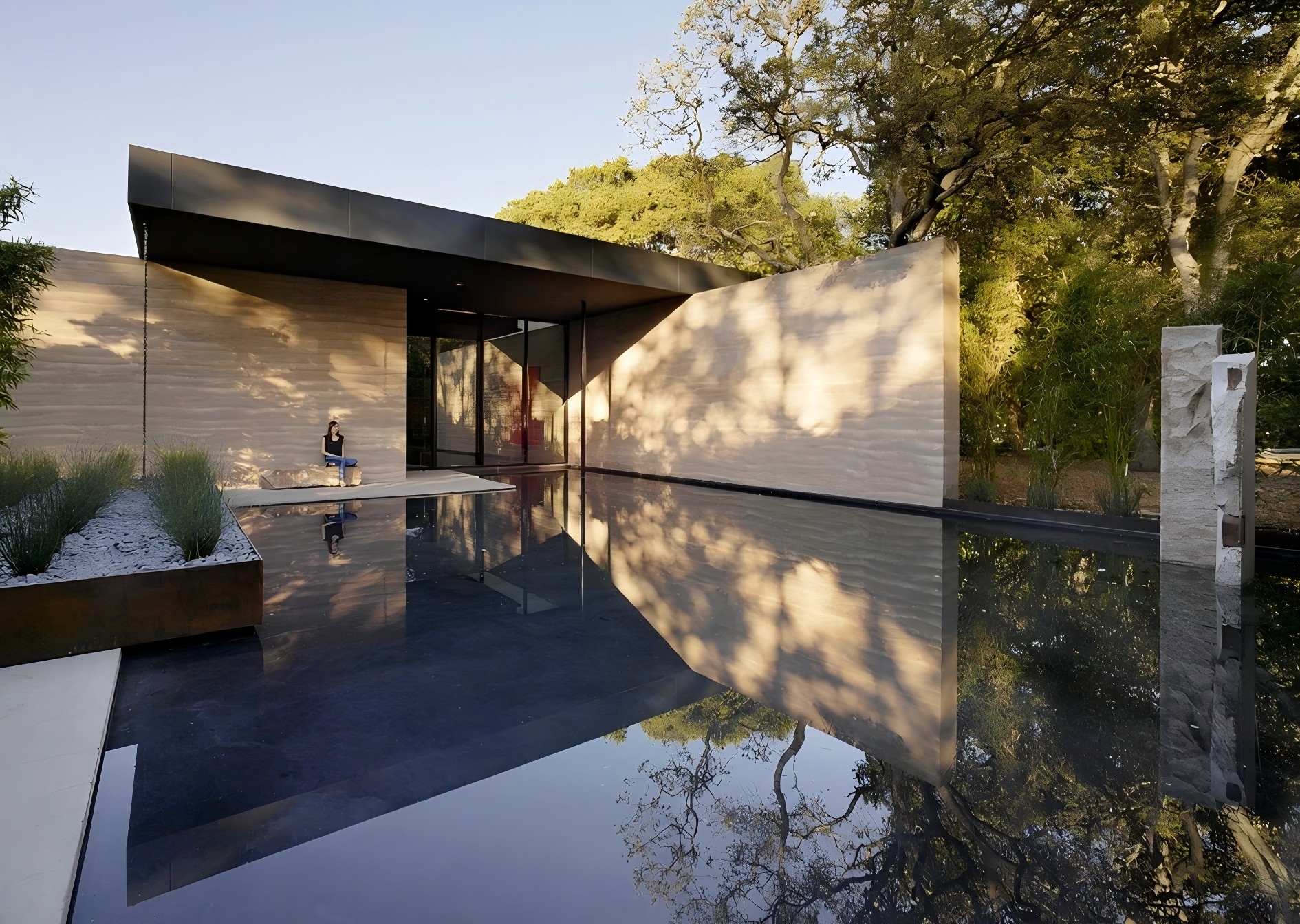
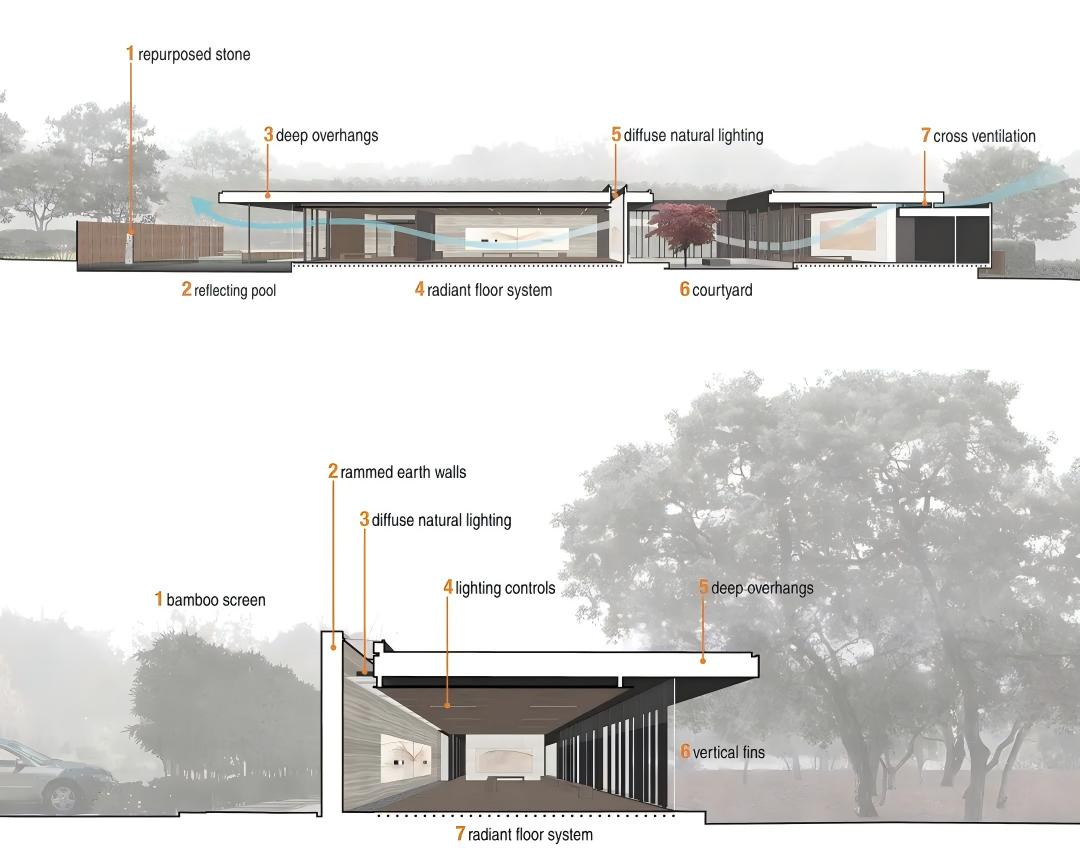
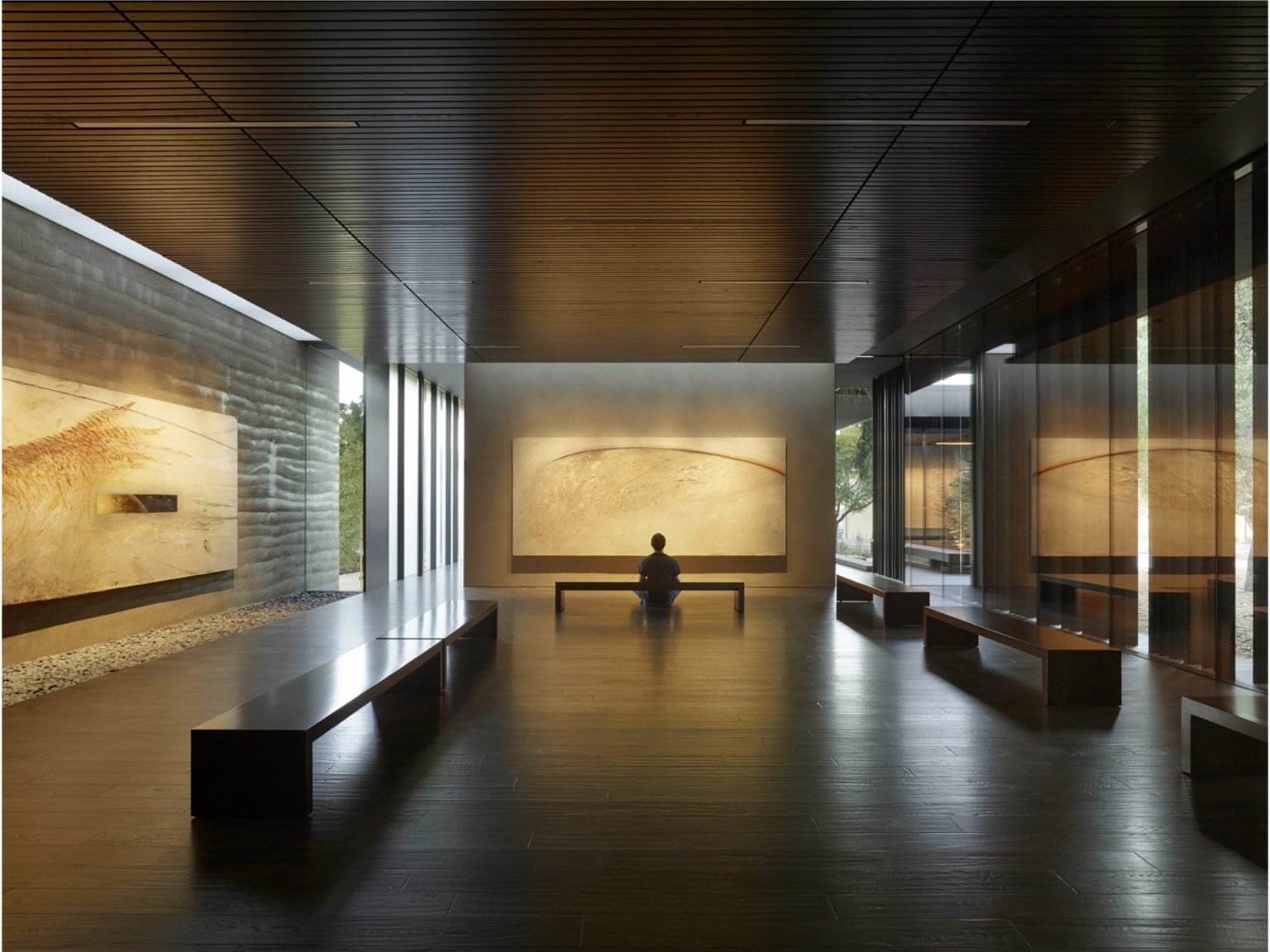
The building primarily uses rammed earth, stained oak wood, glass, and water elements to create a sensory and contemplative atmosphere. Inside the center, thick rammed earth walls and dark wood surfaces create a strong contrast with the light-filled eastern wall.

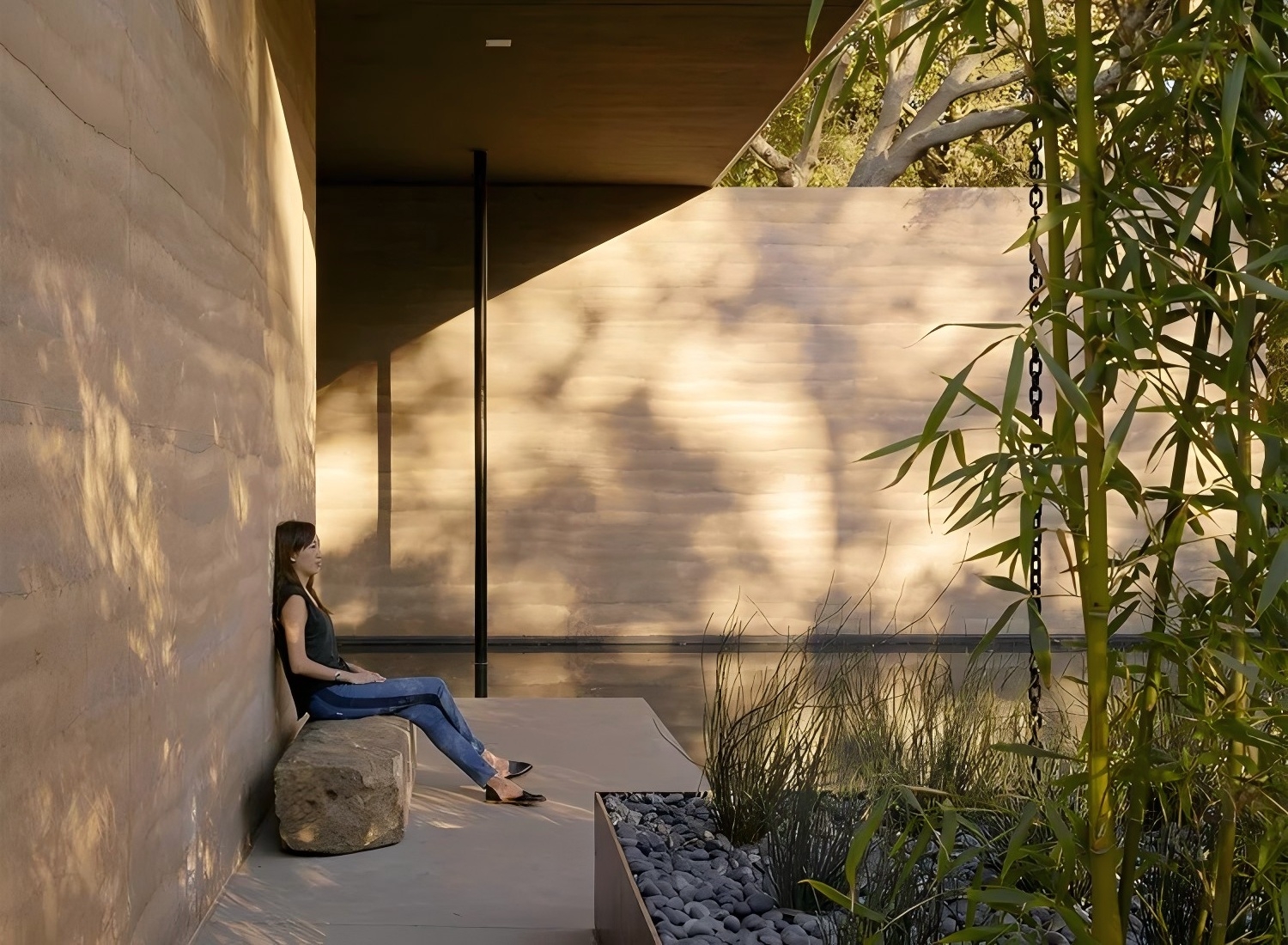
Water and landscape elements are integrated throughout the project: fountains within the interior and courtyards create a calm atmosphere, while a quiet reflecting pool and garden on the south side mirror the surrounding trees.
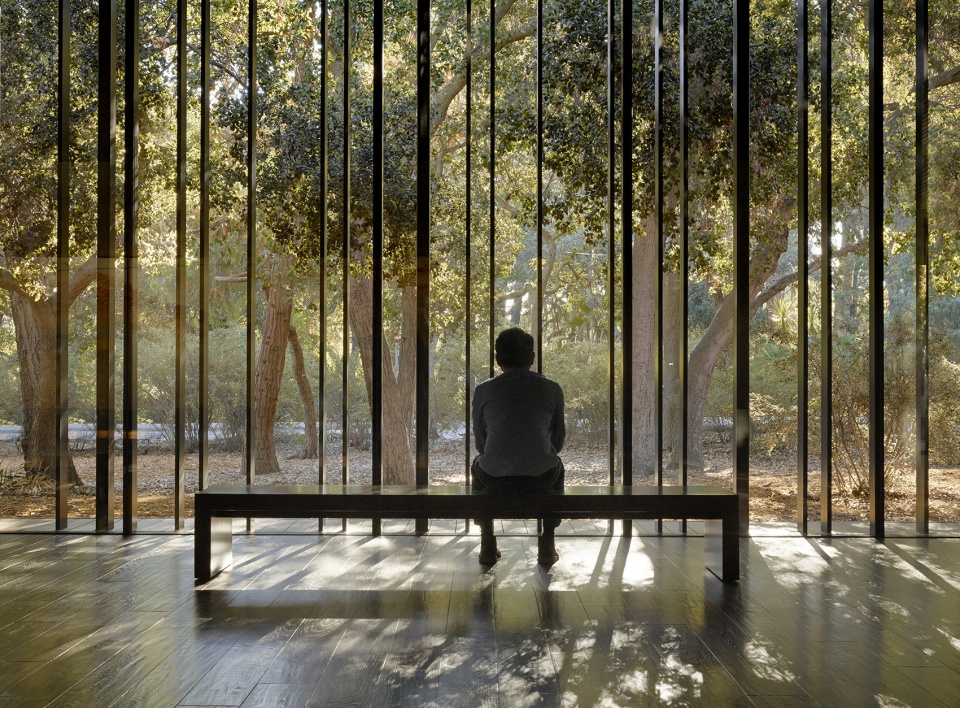

The outdoor meditation spaces blend seamlessly with the daily use of the center, reinforcing the connection between nature, art, and contemplation. The courtyards and the expansive glass curtain wall on the east allow visitors to view the paintings without entering the building, creating a peaceful place for the Stanford community both day and night.
About the Material
The rammed earth walls, ranging from 18 inches to 2 feet thick, were hand-tamped pneumatically in 6–8 inch lifts. The pressure was carefully controlled to create a variegated texture that reflects the construction process.

The soil beneath the building initially produced a rich brown color, similar to the sandstone buildings of Stanford’s original campus. While beautiful, the pure site soil proved too dominant for the artwork. Ultimately, a five-part blend was developed, with 20% of the material sourced directly from the site. The remaining ingredients included coarse sand, “birdseye” gravel, powdered rhyolite, decomposed granite, and Portland cement.
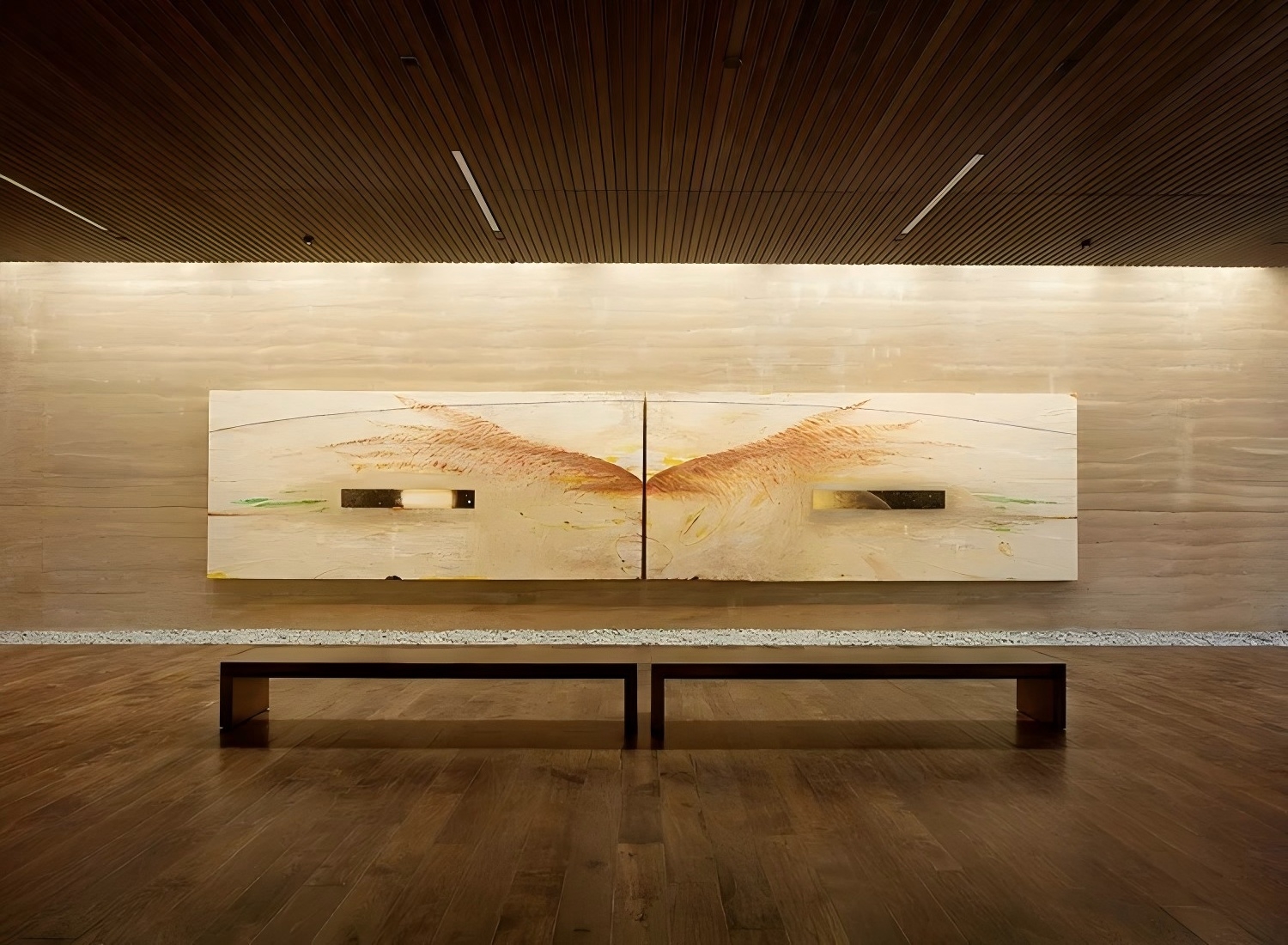
Oliveria’s Windhover Dyptich, 36 feet long and six feet high, hangs on 234,000 pounds of rammed earth-a wall twenty feet tall by sixty feet long. A wall this tall requires two form set-ups. With a stacked form you need to give careful consideration to the location of the stack point. Notice the cold joint runs right through the center of the painting.