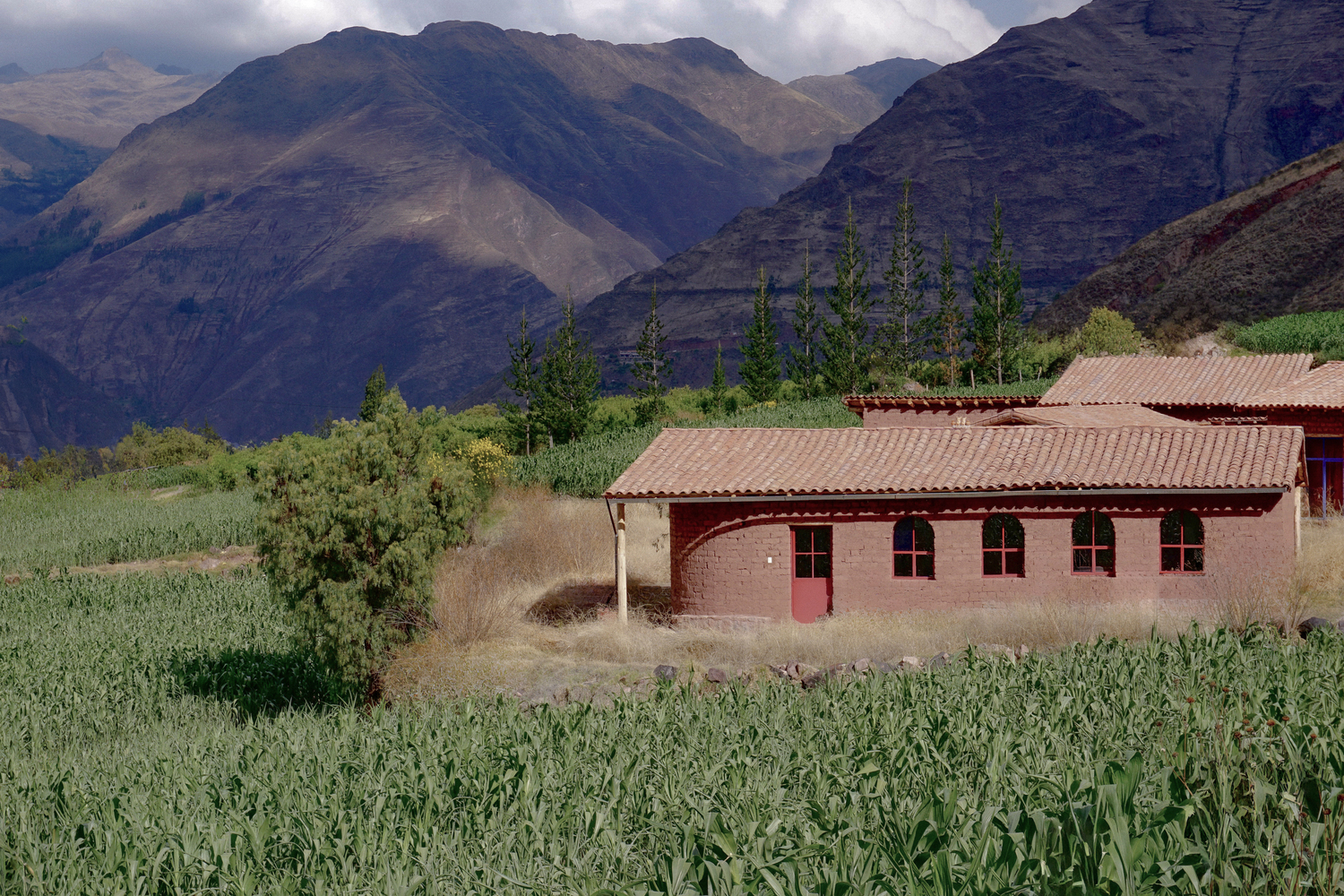
The Quincho Bernarda Community Center in Taray, Peru, is a 140m² collective space for residents that completes the KUSKA, a set of habitable structures situated in the South American Andean landscape. Designed in 2025 by Taller MACAA and led by architect and photographer Rafael Ortiz Santos, the Cusco-based practice focuses on residential and public architecture rooted in local context. The firm values the preservation of Andean cultural heritage by honoring traditional adobe construction techniques while regenerating existing buildings through sustainable materials and contemporary methods.
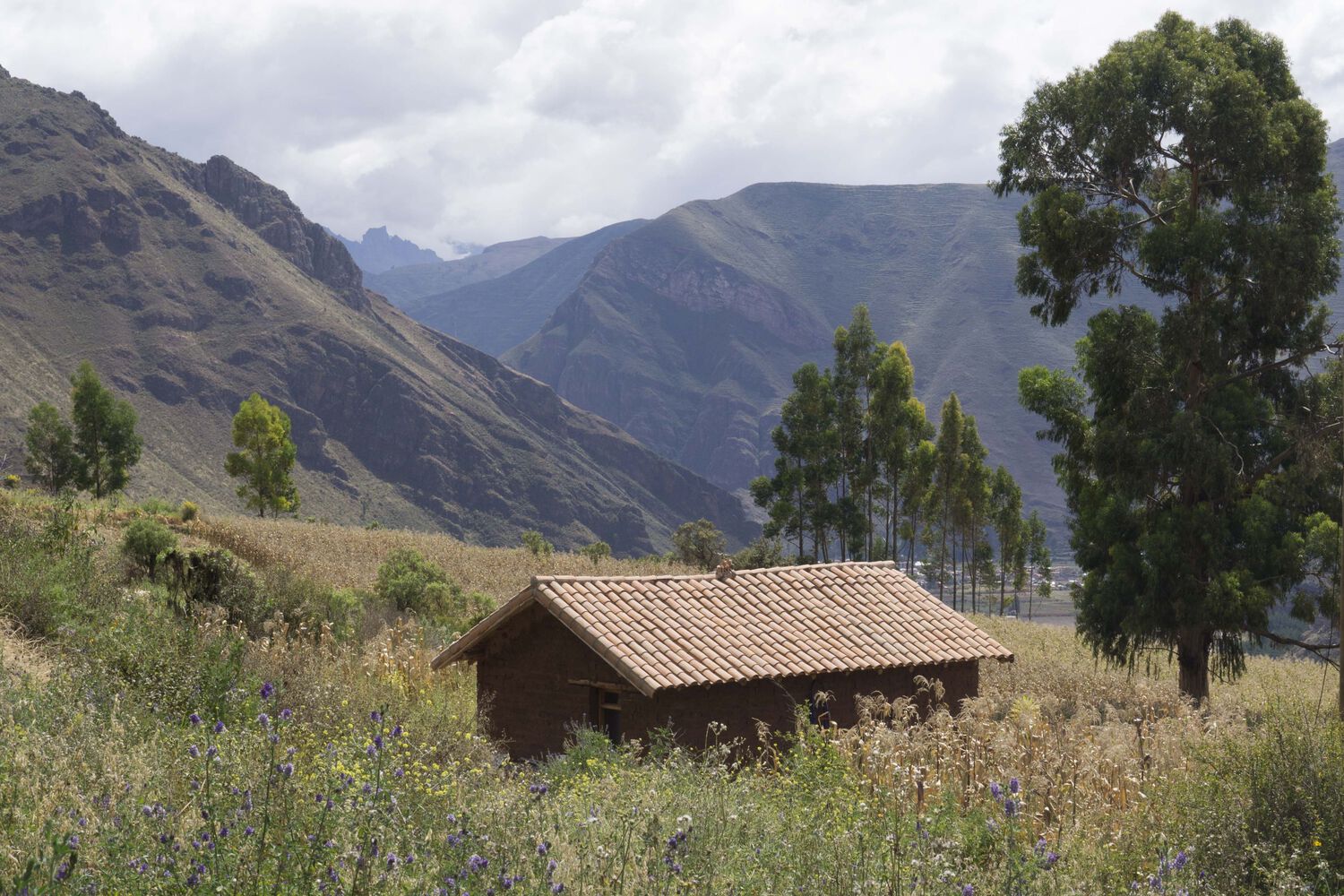
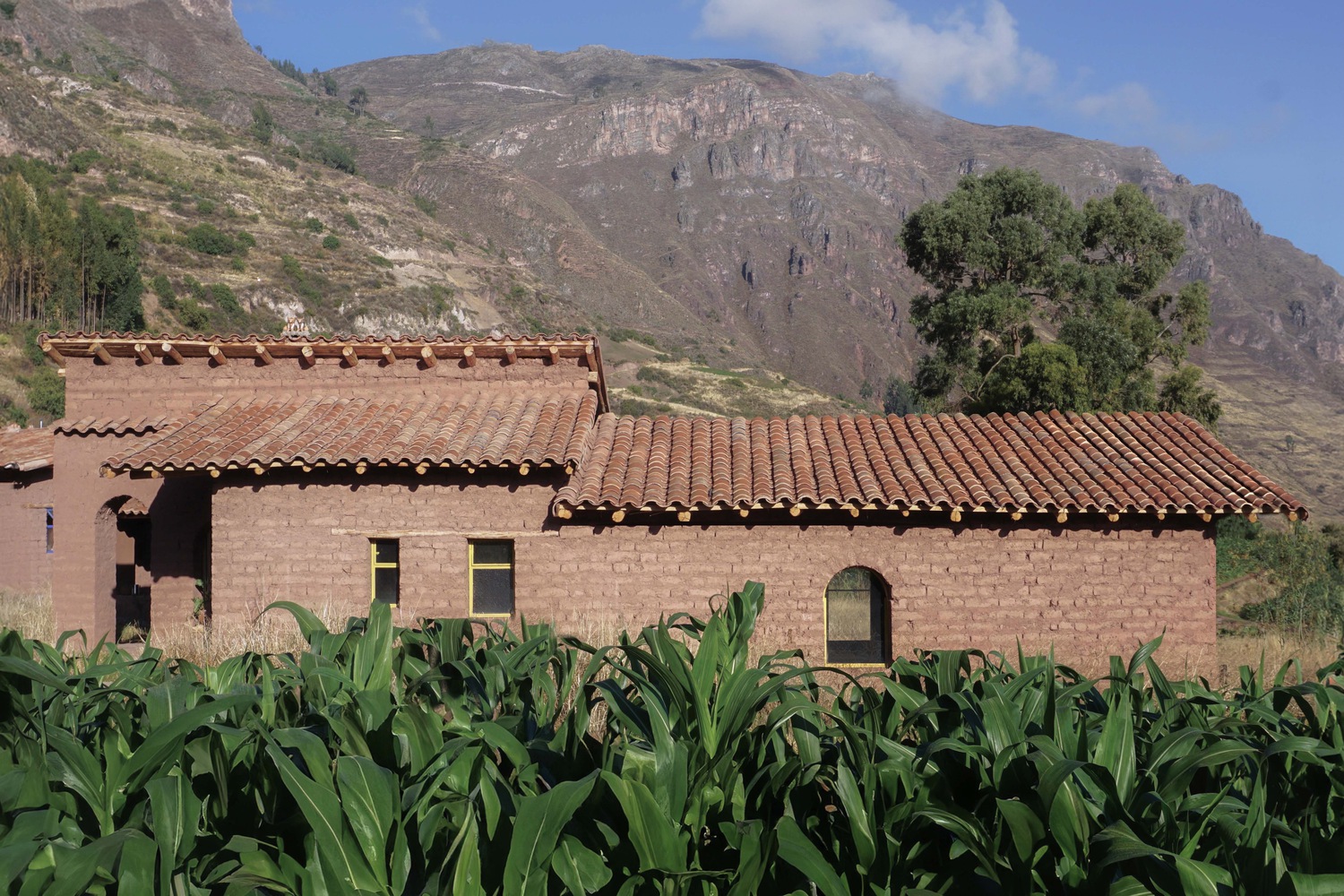
The Quincho Bernarda Community Center is part of the firm’s broader regeneration of KUSKA, which also includes the La Cabaña Feliciana and Hogar Florencia, two additional adobe structures that contribute to the revitalization of the village. Through these projects, the firm demonstrates a commitment to community-centered design, material continuity, and the long-term resilience of rural Andean settlements.
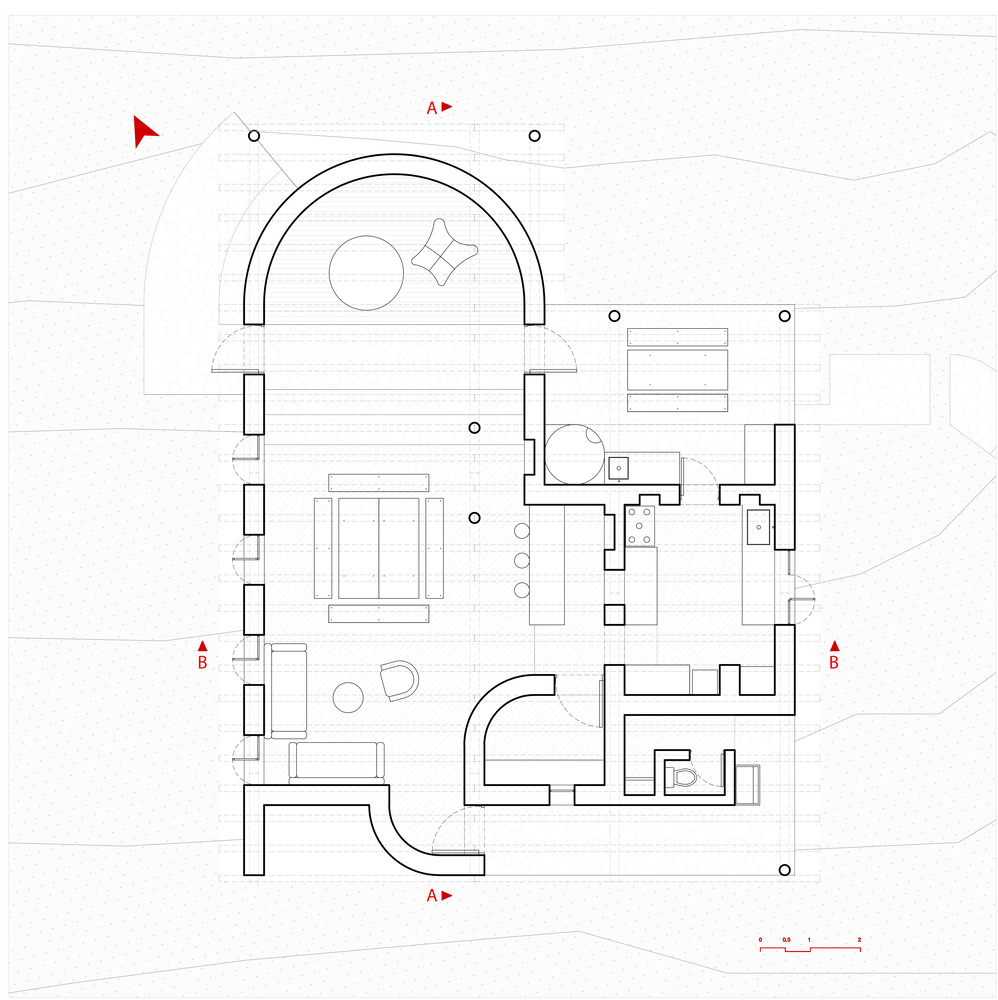
The term “Quincho” originates from an Argentine tradition describing a dedicated space in the home for gathering, eating, and socializing. This project reimagines that tradition through the spatial framework of a basilica, detached from its religious meaning and adapted into a shared domestic environment organized around a central nave, a kitchen, and two outdoor dining terraces.
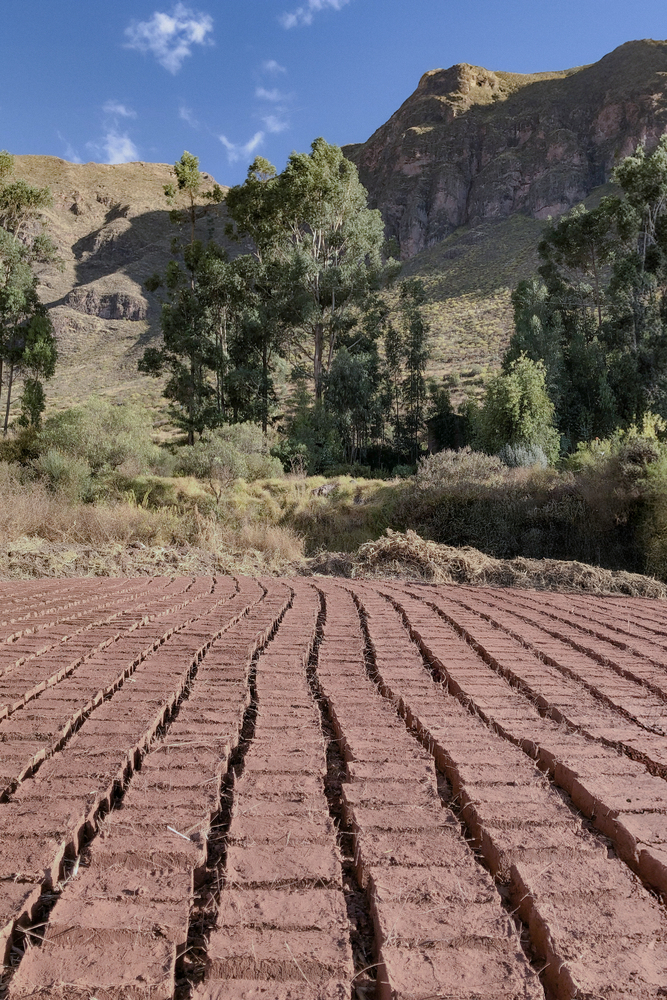
Across the center, locally sourced red adobe remains the primary material exposed as both structure and surface, expressing its mass, texture, and construction logic. Traditional load-bearing methods are combined with a contemporary spatial approach that highlights the material’s thermal, tactile, and structural strengths, resulting in an environment that feels both solid and inviting.
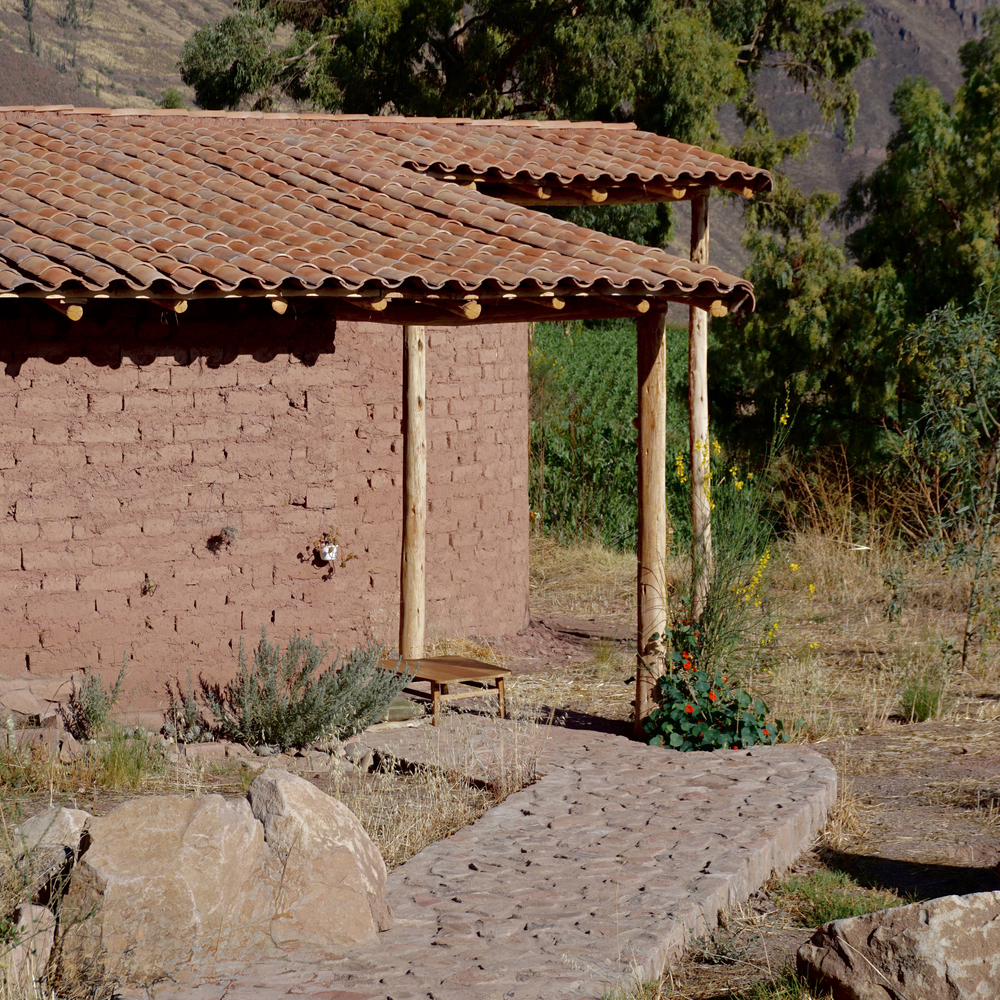
The project is arranged around a single main volume covered by a pitched tile roof. A ridge beam, supported by adobe walls and two eucalyptus columns, is positioned off the central axis of the hall, shifting the structural balance of the roof. This displacement creates a clear internal hierarchy while maintaining a free, continuous plan within the structure.
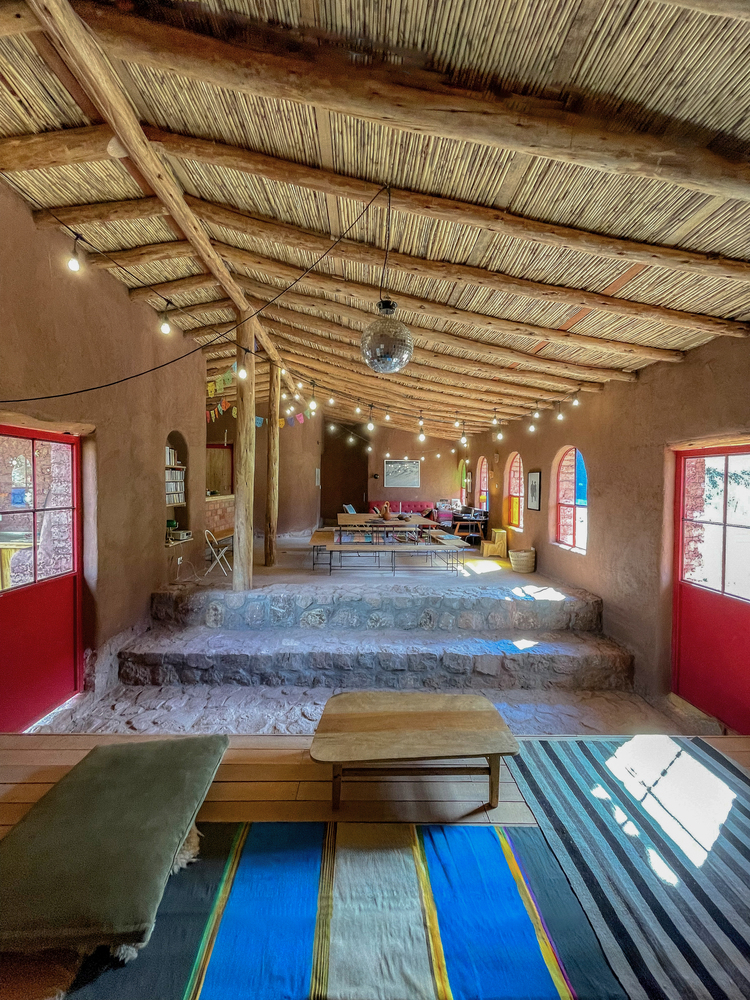
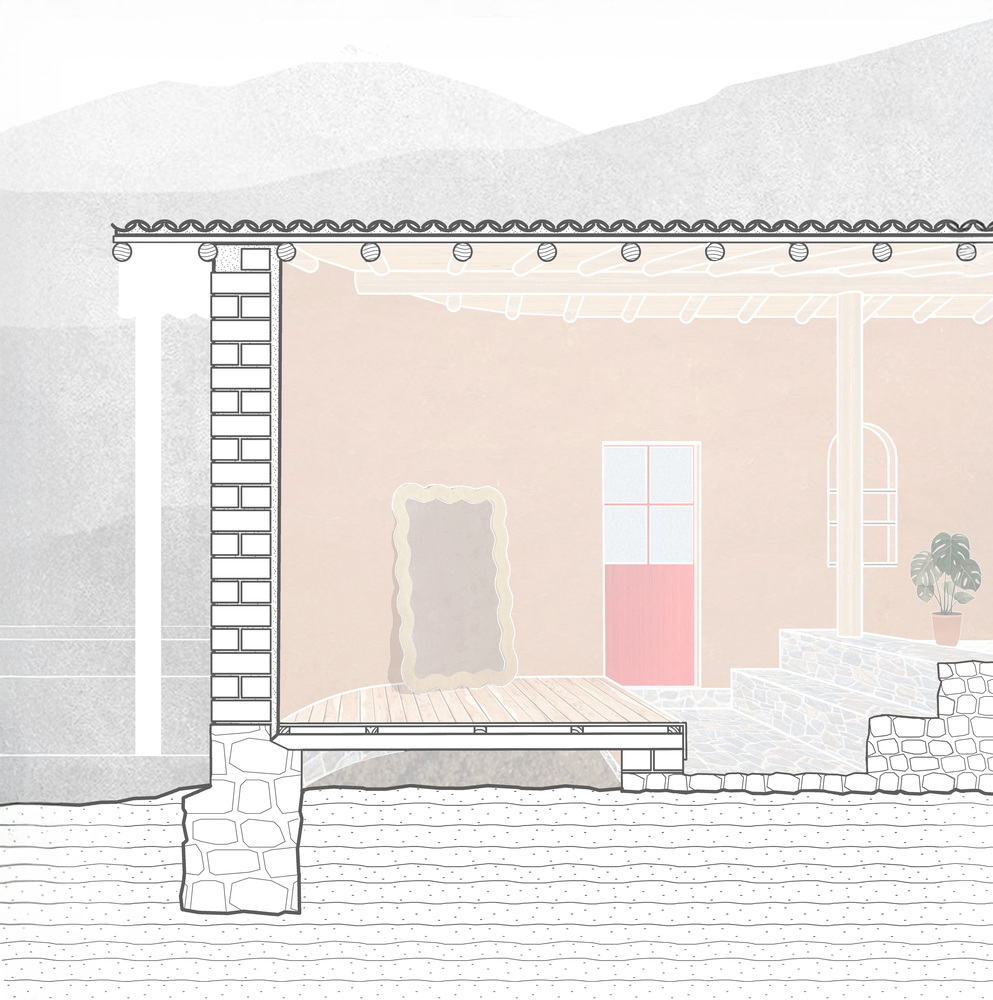
The main hall accommodates a lounge, a long communal table, and a bar that connects directly to the kitchen through both a pass-through opening and a door, while a small stage sits slightly below the primary floor level. Stone steps positioned between the hall and stage double as casual seating, allowing the space to shift easily between everyday use and cultural or community.
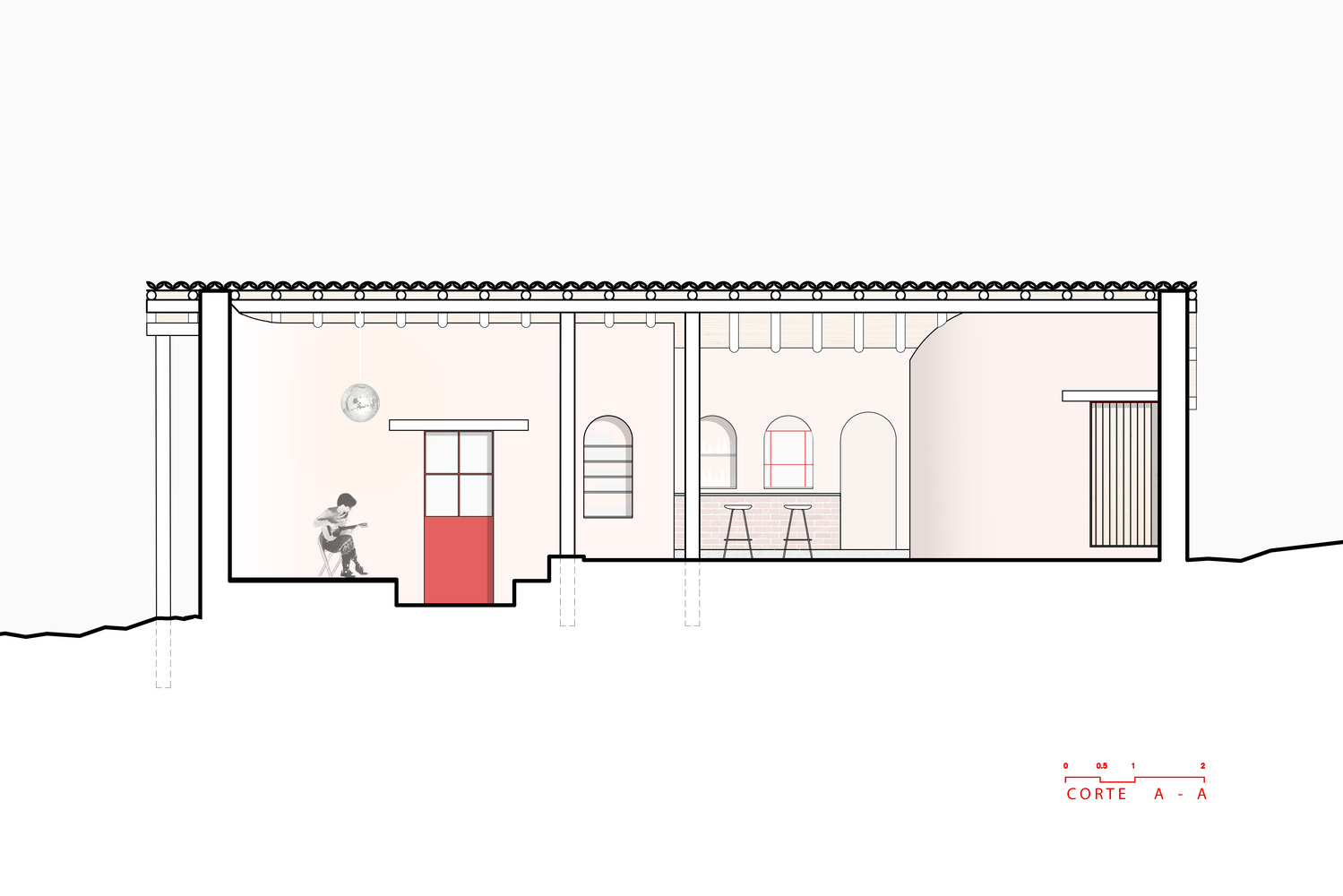
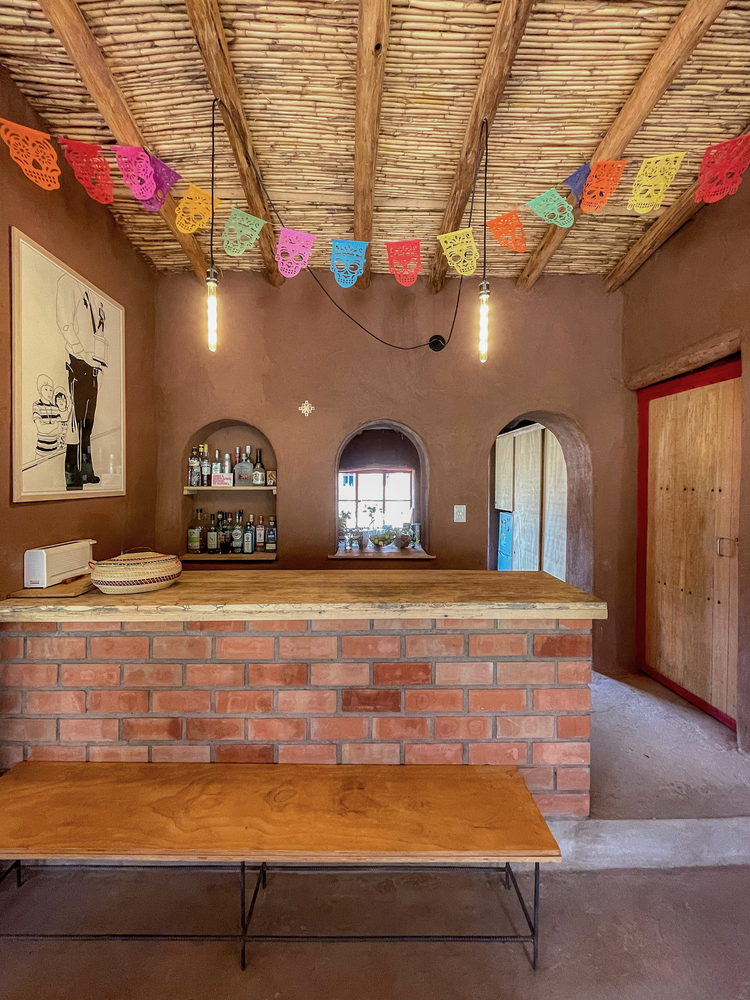
The use of arches replaced conventional lintels to span openings, improving structural performance under seismic conditions, while allowing for more continuous, open interiors. Within the kitchen, the thickness of the adobe walls is used to carve out built-in niches that seamlessly accommodate storage, and the use of curved walls not only introduces a sculptural presence but also shapes movement and reinforces the space’s sense of enclosure and cohesion.
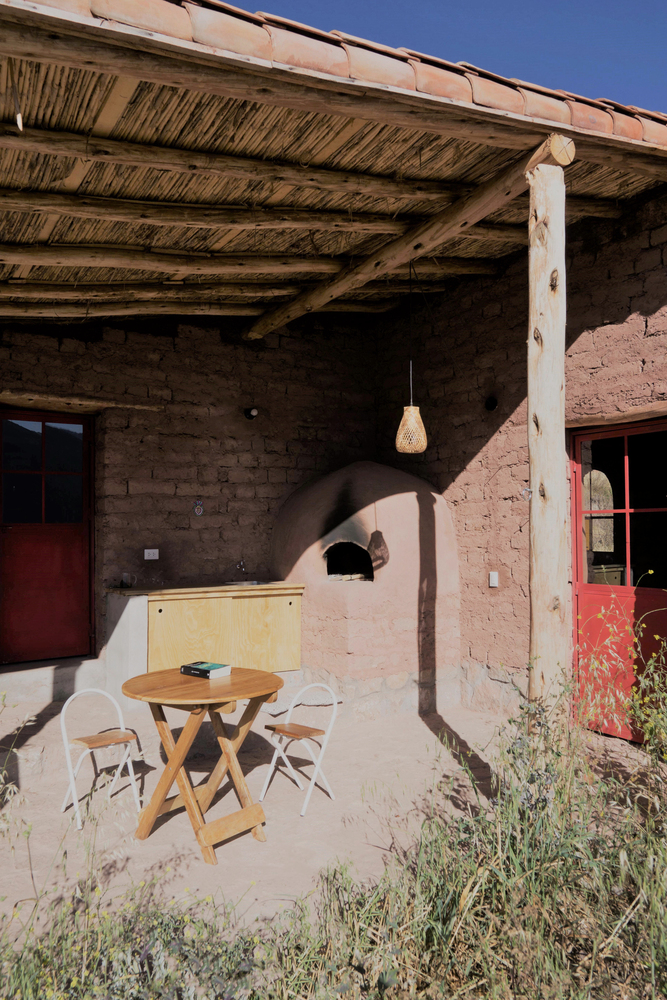
The center establishes a strong connection to the Andean terrain, with terraces that extend the interior outward into the landscape. These outdoor platforms are carefully oriented to receive the morning sun, allowing the spaces to warm gradually throughout the day and creating an inviting setting for early gatherings and shared meals. The northwest terrace, partially sheltered and shaped by the natural slope, frames views toward the Andes, reinforcing the building’s relationship to its surrounding geography.
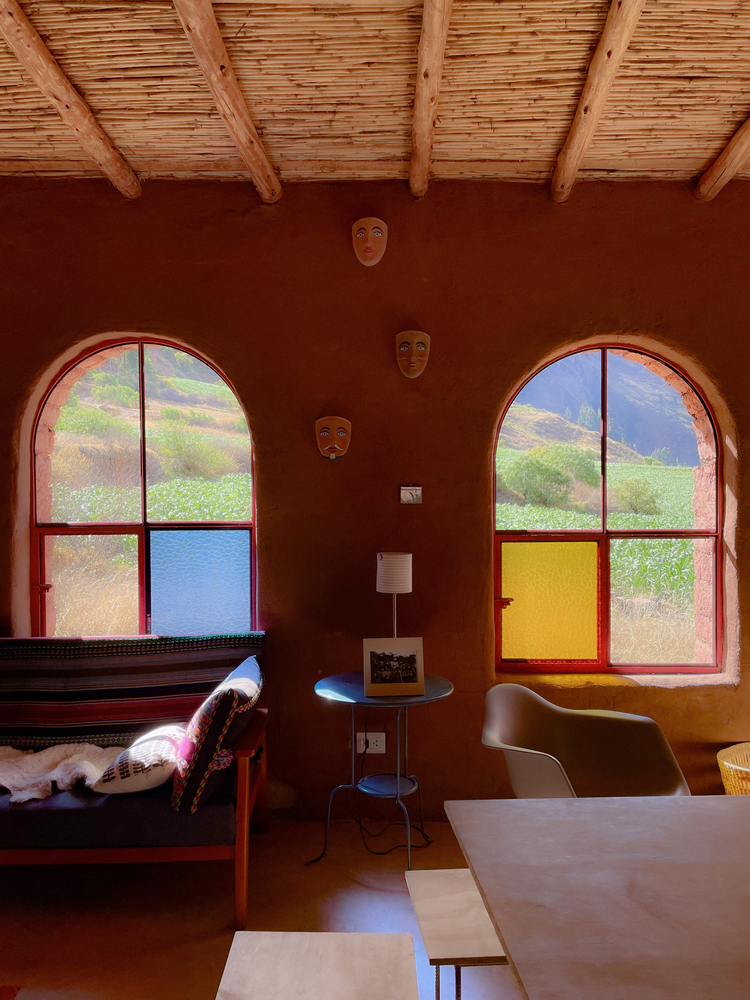
On the western elevation, panels of stained glass are embedded within the facade to catch the fading light of the afternoon. As the sun sets, these panes diffuse and refract its rays, casting saturated tones across the interior surfaces and enriching the atmosphere with warm blue and yellow colors that compliment the red adobe. Beyond their visual effect, the filtered light works in tandem with the adobe’s thermal mass, allowing the thick walls to absorb and slowly release heat accumulated throughout the day.
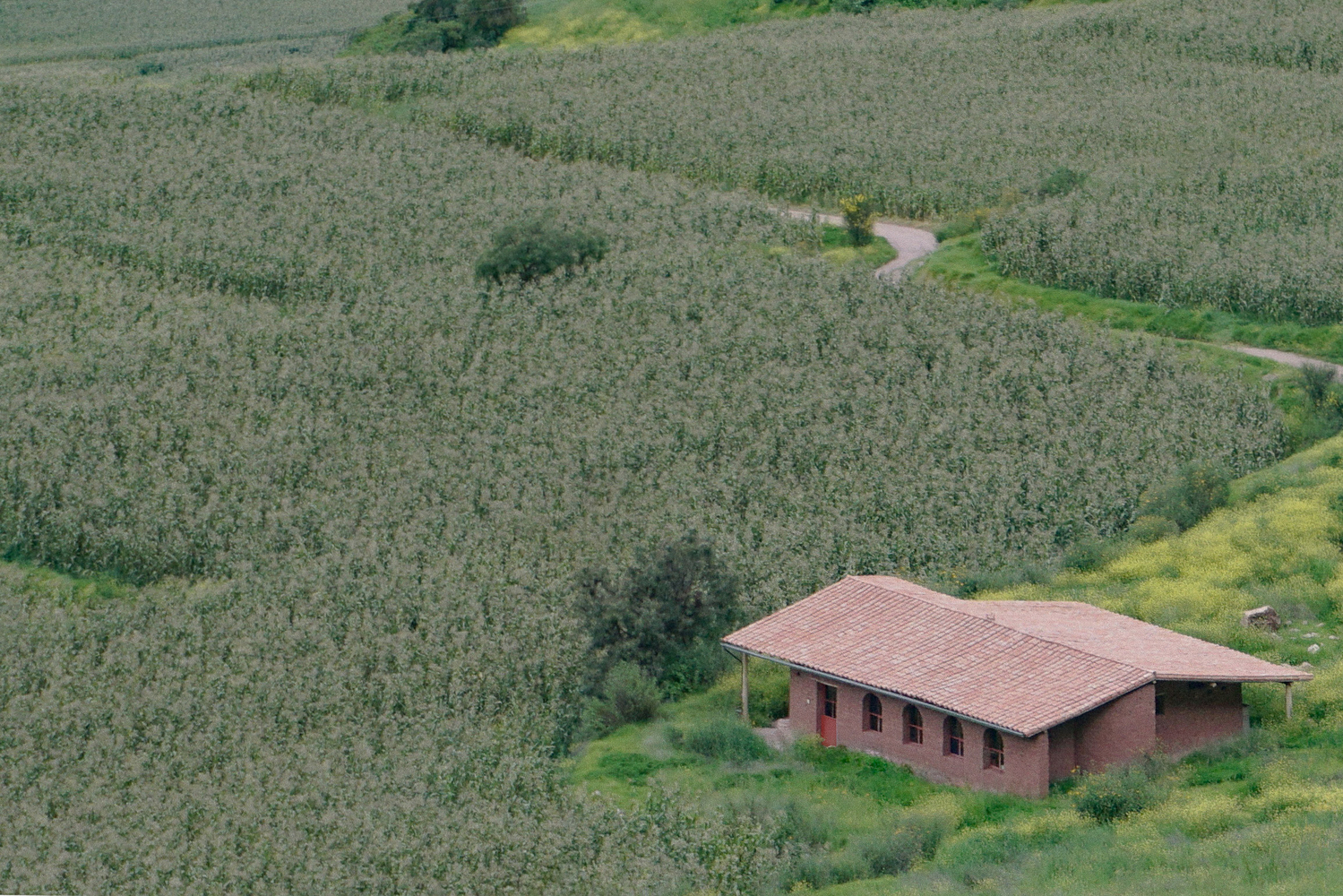
Ultimately, the Quincho Bernarda Community Center positions locally sourced construction not merely as a matter of economy or sustainability, but by reframing material as a mediator between interior and landscape, dissolving rigid boundaries and allowing climate, topography, and collective life to shape space. In doing so, it suggests that vernacular techniques are not nostalgic gestures, but active cultural frameworks capable of generating contemporary architecture grounded in place, memory, and communal identity.
Compiled by Fernanda Loyola Cardoso
Citations:
ArchDaily. “Quincho Bernarda Community Center / Taller MACAA (Misión de Arquitectura, Construcción y Arte en los Andes).” ArchDaily, January 5, 2026. https://www.archdaily.com/1037047/quincho-bernarda-community-center-taller-macaa-mision-de-arquitectura-construccion-y-arte-en-los-andes.
ArchDaily. “Feliciana Cabin / Taller MACAA.” ArchDaily, April 27, 2023. https://www.archdaily.com/1000057/feliciana-cabin-taller-macaa.
ArchDaily. “Hogar Florencia / Taller MACAA (Misión de Arquitectura, Construcción y Arte en los Andes).” ArchDaily en Español, May 15, 2025. https://www.archdaily.cl/cl/1030130/hogar-florencia-taller-macaa.
1 Year in Argentina. “Quincho.” 1 Year in Argentina (blog), April 6, 2014. https://1yearinargentina.com/tag/quincho/.