Chan Chan
Project Information
- Location: Near Trujillo, northern coast of Peru
- Cultural period: Chimú civilization | c. 9th–15th century
- Type: Adobe urban complex | Archaeological city
Chan Chan is an archaeological city located near Trujillo on the northern coast of Peru and served as the capital of the Chimú civilization between the 9th and 15th centuries. Built primarily of earthen materials, it represents one of the largest planned adobe urban complexes in the world. (UNESCO World Heritage Centre).
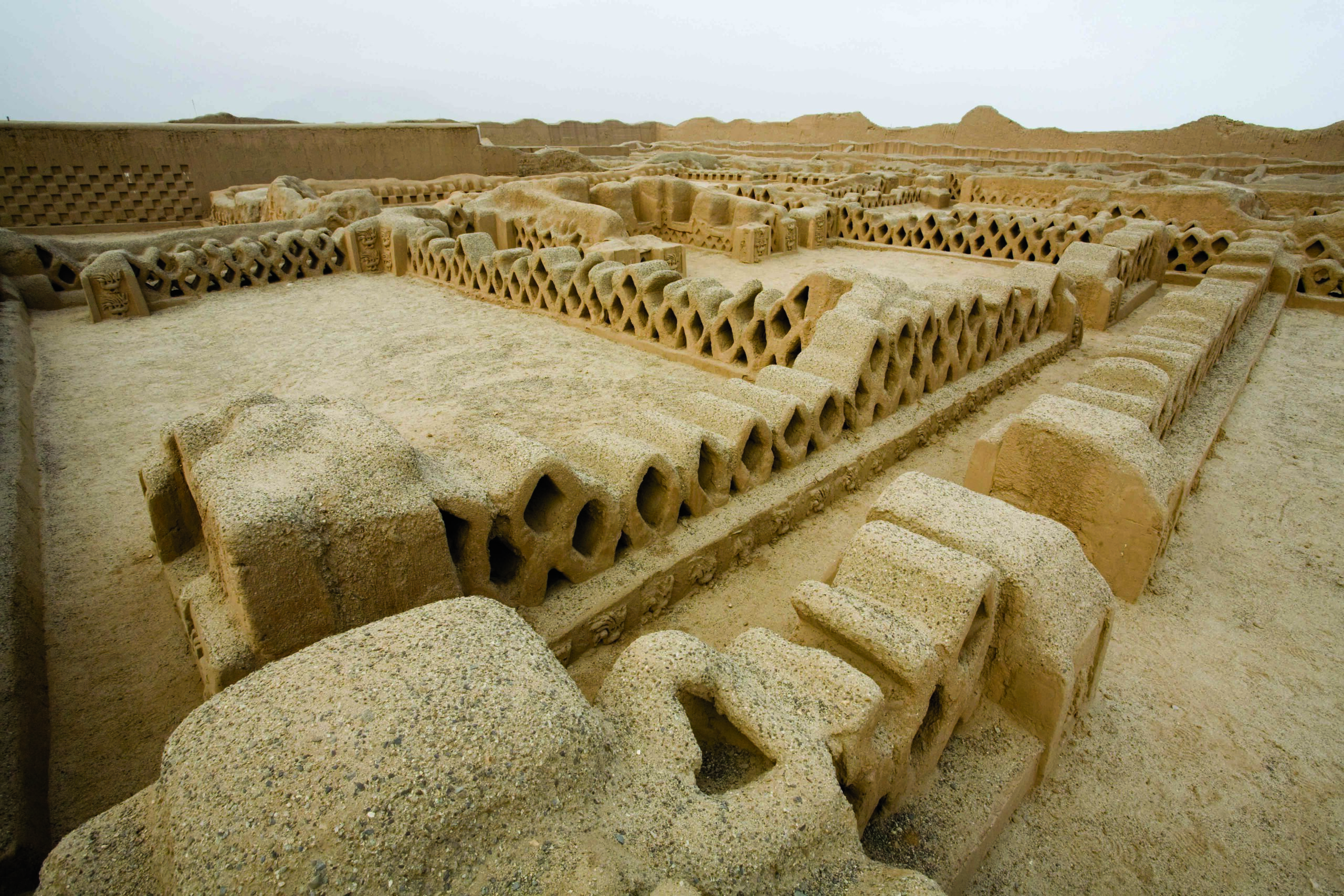
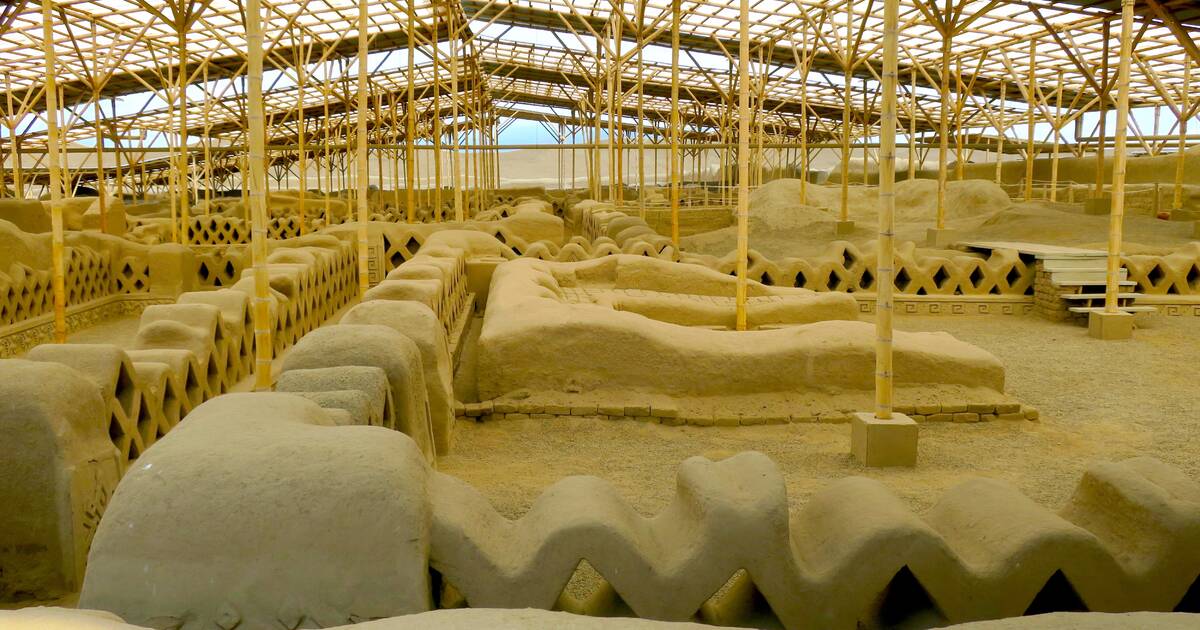
Figure 1 captures an interior view of a palace compound at Chan Chan, characterized by thick adobe walls, repetitive relief patterns, and a controlled spatial organization.
Site and environment
The city occupies a coastal desert landscape where survival depended on sophisticated water management. Canal systems diverted river water to support agriculture and urban life, making infrastructure inseparable from architectural form. The layout of Chan Chan, therefore, reflects both environmental constraint and hydraulic control.
The monumental core of Chan Chan covers approximately 6 km², with the broader city historically extending up to 20 km². This scale makes Chan Chan one of the largest earthen-built cities in the world and reflects the capacity of the centralized Chimú labor organization (World Monuments Fund).

Program
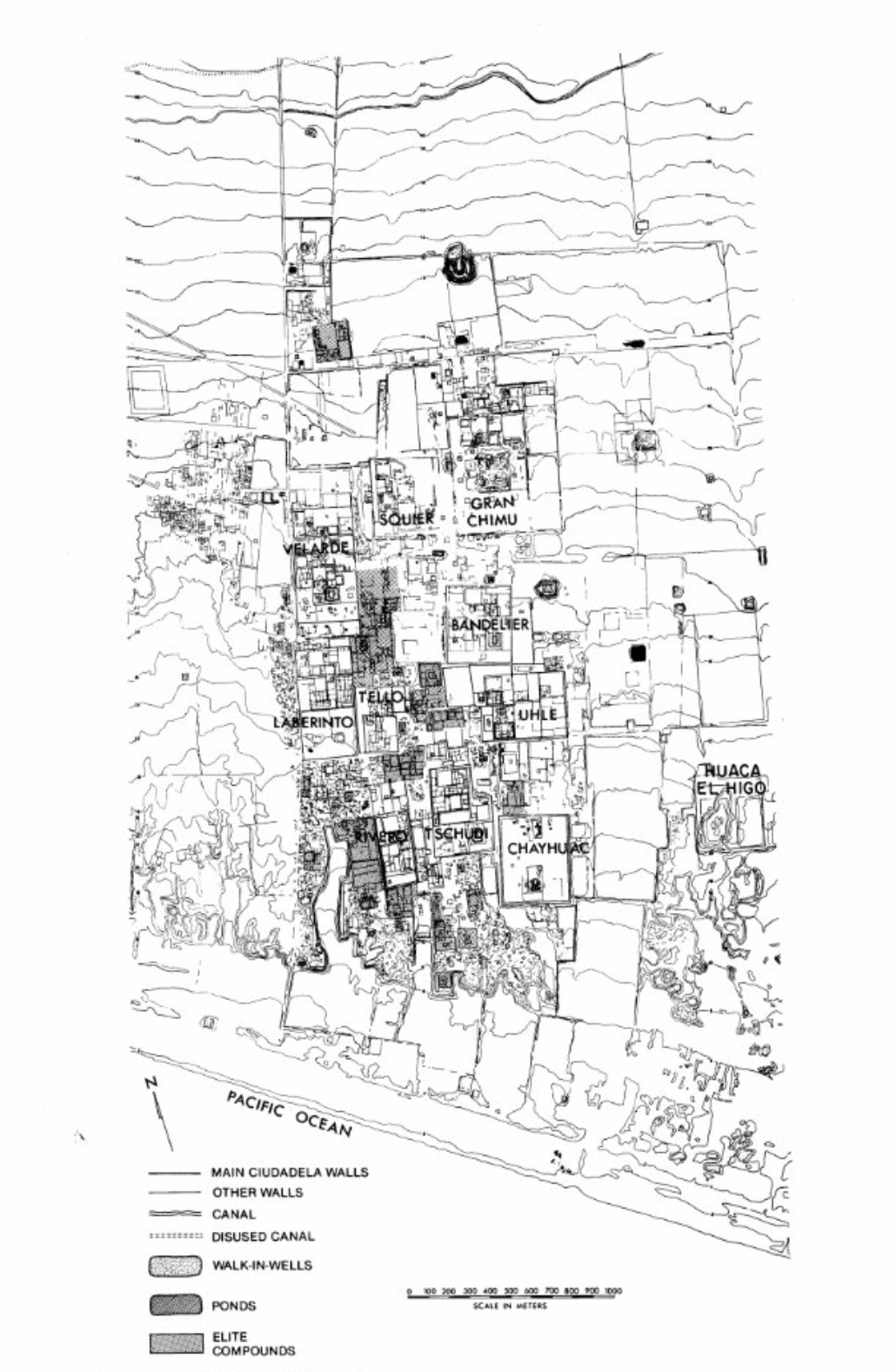
Chan Chan functioned as the administrative and ceremonial center of the Chimú Kingdom. The city is organized into nine large walled compounds, or ciudadelas, each operating as a palace complex containing spaces for governance, ritual activity, storage, and burial. Together, these components form an integrated urban system (UNESCO).

The builder
The Chimú civilization (Chimor)
Chan Chan was constructed by the Chimú civilization through a system of collective authorship rather than by a single architect. Originating from the northern coastal valleys of Peru, the Chimú developed architectural knowledge through established craft traditions and organized systems of shared labor that were transmitted and refined across generations. As the capital of the Chimú Kingdom, Chan Chan functioned not only as a place of habitation but also as an instrument of governance, reflecting the Chimú emphasis on using architecture to structure political authority and social order (Encyclopaedia Britannica).
Material
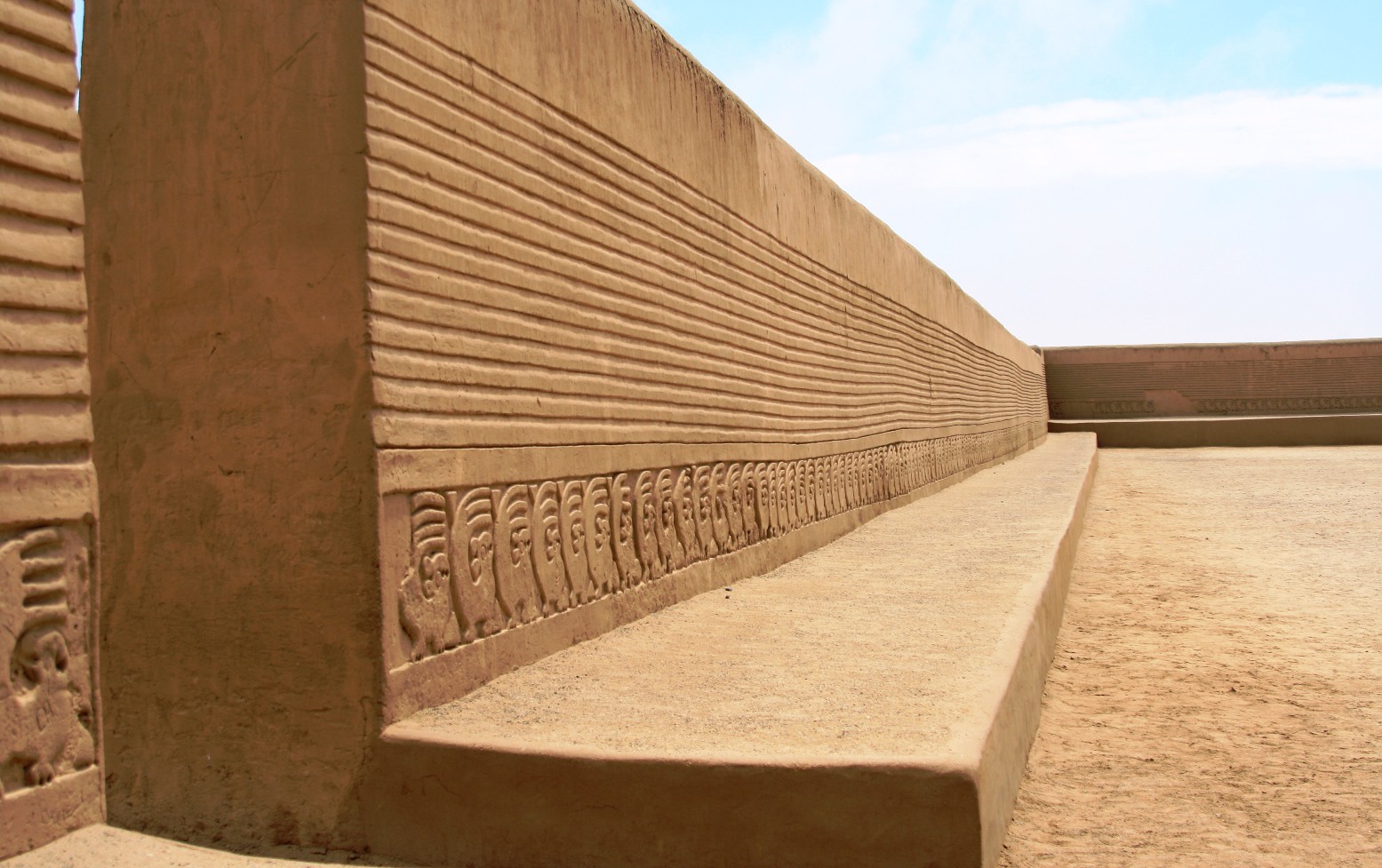
Chan Chan was constructed primarily of adobe and other earthen materials readily available in the surrounding desert environment. Thick load-bearing walls provided both structural mass and environmental buffering, while continuous low-relief friezes articulated many exterior surfaces with geometric and marine motifs. Together, these strategies suggest how Chimú builders integrated material performance with symbolic surface expression, linking construction practice to broader urban and cultural logics (World Monuments Fund).

Construction Process
Construction at Chan Chan was not a one-time building effort but a continuous, organized process that unfolded over many generations. Because the city was built primarily of earth, its walls and structures required regular maintenance, repair, and occasional rebuilding. In this sense, construction at Chan Chan was closely tied to long-term care and management rather than a single moment of completion. Contemporary conservation research likewise approaches the site through ongoing cycles of documentation, analysis, and response, recognizing the inherently changing nature of large-scale earthen environments (Getty Conservation Institute).
Spatial Organization
The urban form of Chan Chan is structured through large rectangular walled compounds, axial circulation routes, and layered courtyard sequences. Access into the individual ciudadelas is typically limited to narrow, highly controlled entry points. Within compounds such as Nik An, access is further structured through nested courtyard sequences and increasingly restricted zones, creating a clear progression from public to private areas. Together, these spatial arrangements suggest a carefully organized system of movement and visibility across the city. Rather than relying on vertical monumentality, authority is articulated through repetition, enclosure, and regulated access across the urban field (CyArk; World Monuments Fund).
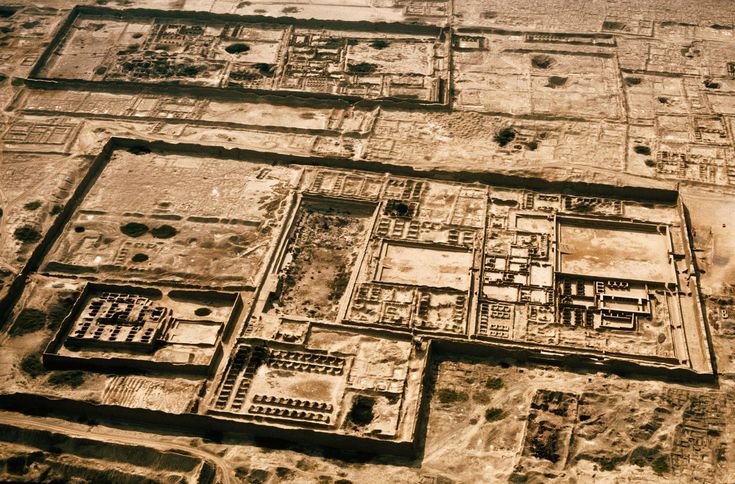

Figure 9 shows typological variations of audiencia compounds across multiple ciudadelas at Chan Chan, illustrating the standardized yet adaptable spatial module used in Chimú administrative architecture. An audiencia is a U-shaped administrative compound commonly found inside Chan Chan’s palace complexes (Academia).
Conclusion
Chan Chan demonstrates an architectural model in which power is organized through spatial order rather than a singular monumental form. Across the city, repetition, enclosure, and controlled access work together to structure movement and social hierarchy at the urban scale. The reliance on earthen construction further foregrounds processes of maintenance, adaptation, and environmental response, positioning the city less as a fixed monument than as an evolving infrastructural landscape. As such, Chan Chan offers a compelling precedent for understanding architecture as a collective and systemic practice embedded within broader cultural and ecological conditions.
Compiled by: Yiluo Li
Citations
https://www.britannica.com/topic/Chimu
https://www.cyark.org/projects/chan-chan/tapestry2
https://www.wmf.org/monuments/chan-chan
https://whc.unesco.org/en/list/366/
Photo credits
https://archaeology.org/issues/may-june-2023/features/peru-chimu-chan-chan/
https://www.academia.edu/26083419/The_Urban_Concept_of_Chan_Chan
https://www.cyark.org/projects/chan-chan/tapestry2
https://historia.nationalgeographic.com.es/a/chan-chan-gran-capital-barro-poderoso-reino-chimu_6850
https://www.sciencedirect.com/science/article/pii/S1296207409001149
https://whc.unesco.org/en/list/366/gallery/
https://whc.unesco.org/en/canopy/chanchan/
https://ufdcimages.uflib.ufl.edu/AA/00/02/88/23/00001/buildingchanchan00smai.pdf