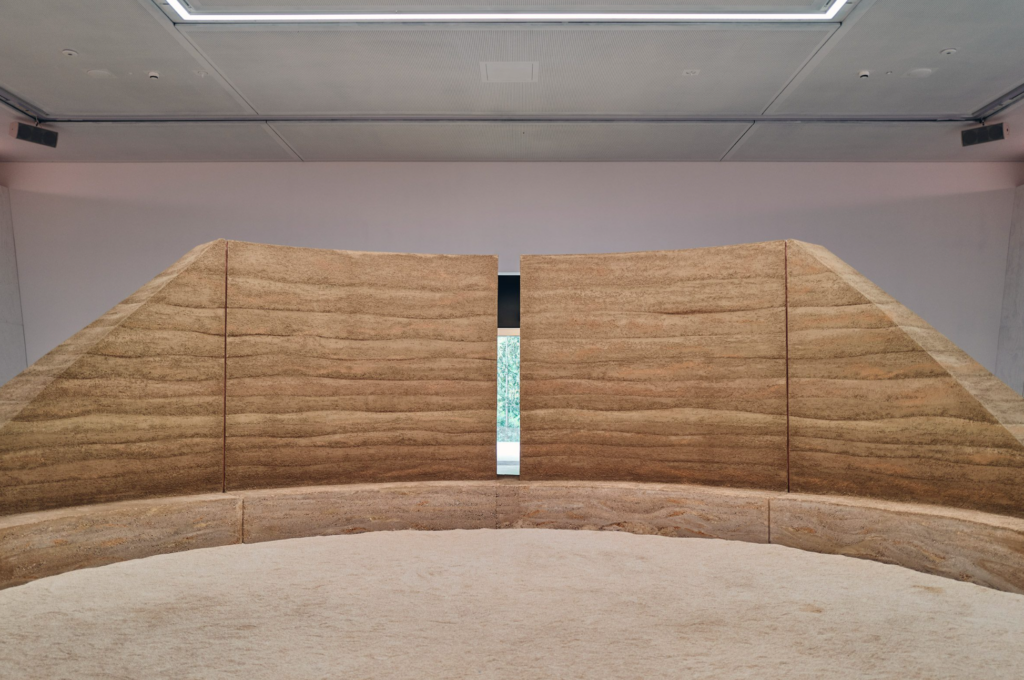
Australia‘s first all-Indigenous curatorial team at the Venice Architecture Biennale brought a distinctly Aboriginal design approach to its pavilion, a calming and inclusive space focused on the theme of Home. The three main creative directors are Michael Mossman, Emily McDaniel, and Jack Gillmer-Lilley.
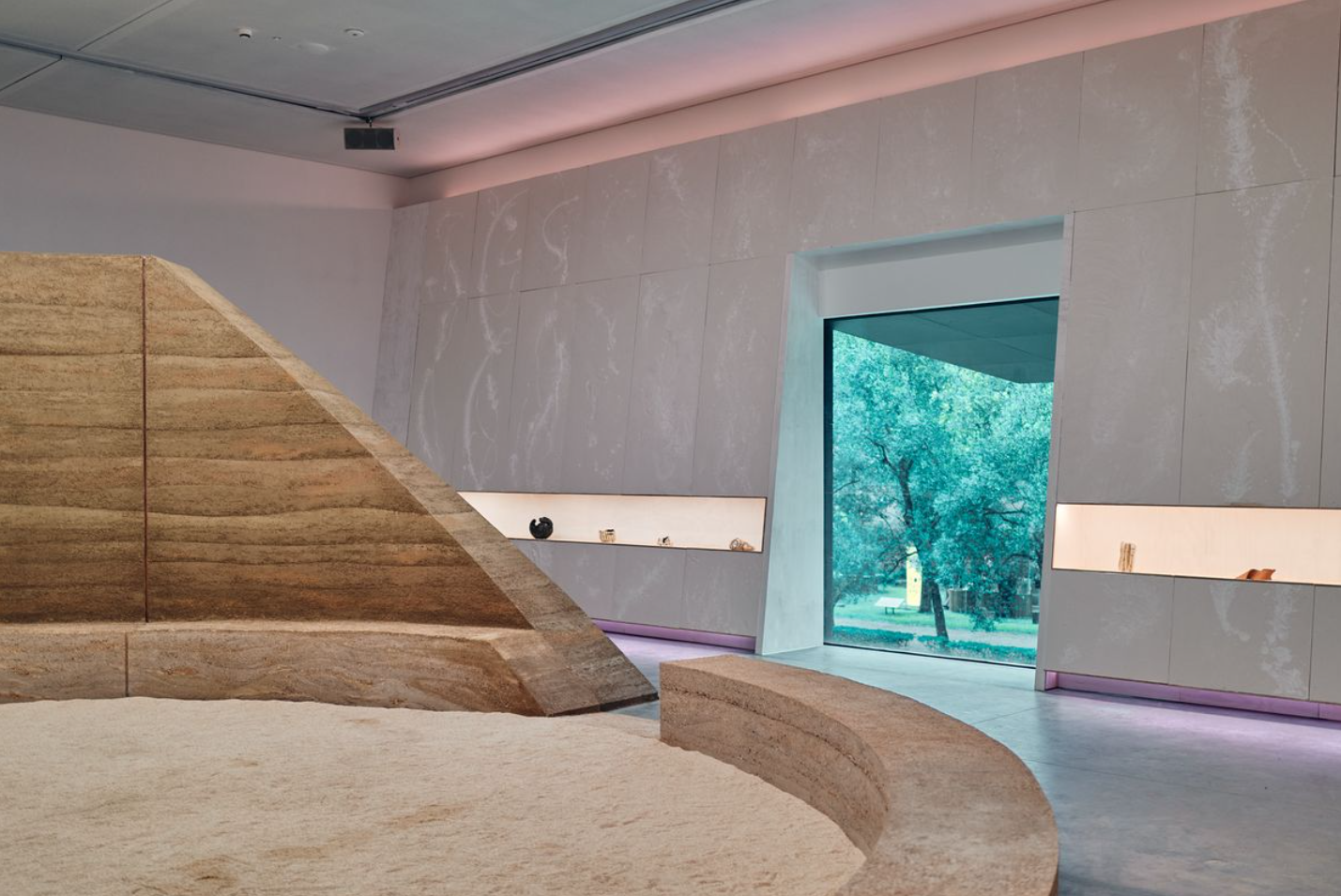
The Home pavilion is centred on a circular rammed-earth structure that serves as a gathering area and is surrounded by a display of small, sculptural objects.
Visitors to the pavilion are invited to engage in reflection while touching and holding the objects, which were created by architecture and design students from across the country in response to the idea of home.
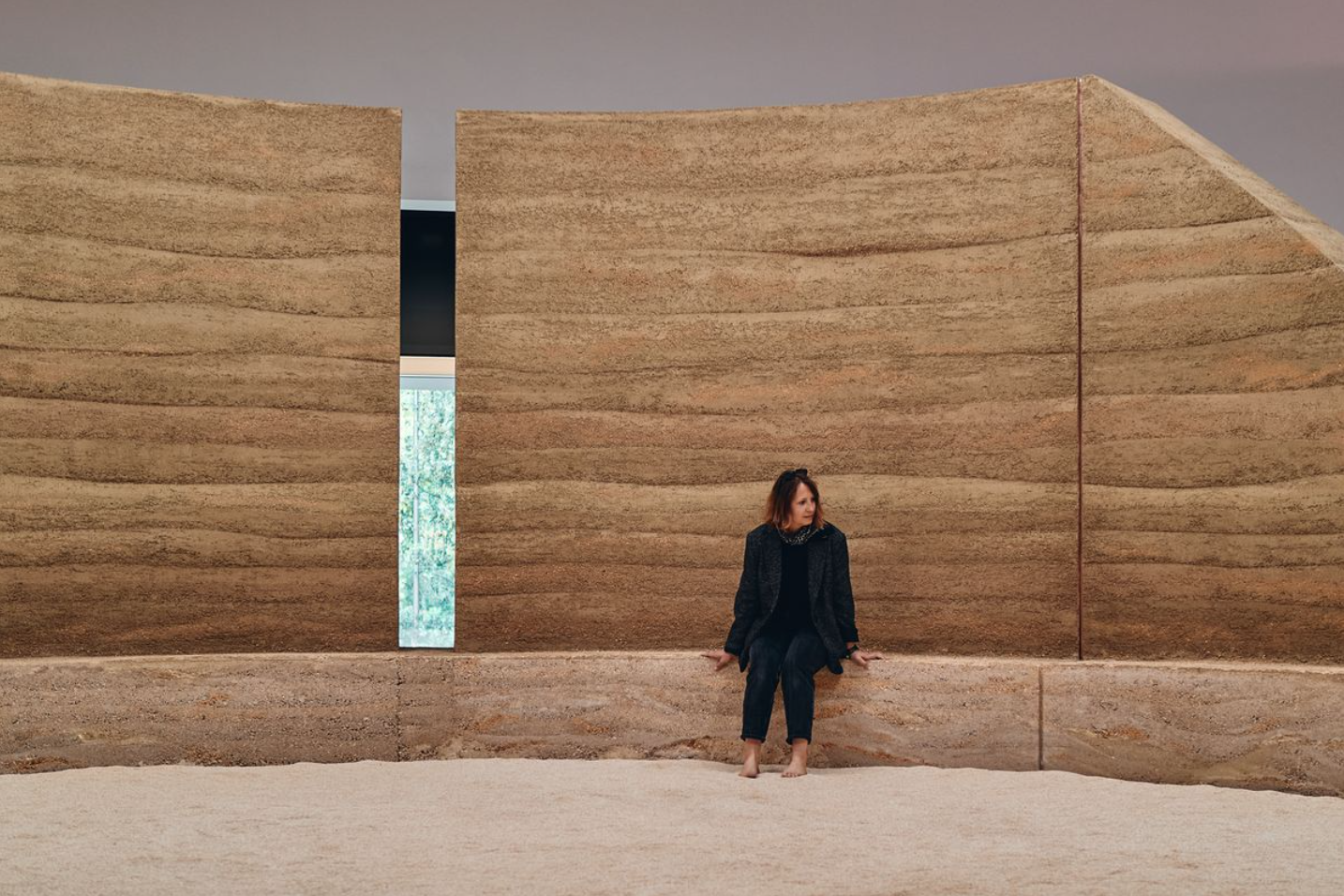
The pavilion came together through the application of the Australian First Nations practice of “yarning” – a purposeful way of relating to others and sharing knowledge that often happens in a yarning circle.

The student workshops began with two days of yarning, while the pavilion’s creative directors – Michael Mossman, Emily Mcdaniel and Jack Gillmer-Lilley – also took a similar approach over nine months to connect with a wider “creative sphere” of four First Nations architects and practitioners, all of whom came together to build the work in Venice with their own hands over many weeks.
They used materials entirely from Venice – mainly sand, soil and plaster – as they wanted to show respect for the land that they are visiting, rather than importing materials from Australia.

In the student workshops, the yarning approach meant not just sharing First Nations knowledge but inviting students to reflect on their own culture and how it related to their idea of home.
The 125 students involved were asked to find artists and artworks that they connected with, to converse, journal and draw, and to consider the acts of asking for permission before using materials and taking only as much as required.
Their works – dubbed “living objects” – show a multiplicity of ways of thinking about home. A black gypsum cement orb, titled Shanshui (Prophecy), is a meditation on geology and cultural tension, while the delicate teabag sculpture, sewn together with teabag threads, honours the forgotten and quotidian.
With both the student workshops and the pavilion itself, the curators have sought to expand understanding of Australian First Nations cultural practices to something based on values and approaches rather than a set aesthetic.
“We didn’t want to bring a false sense of Australiana to the pavilion,” Kerr said. “We wanted people to be able to find their own sense of place, their own sense of belonging, their own memories and their own identity. We didn’t want to impose an emotion.”
https://www.dezeen.com/2025/05/16/australia-pavilion-home-venice-architecture-biennale-2025/
https://www.unsw.edu.au/canberra/about-us/equity-diversity-inclusion/unsw-canberra-community-circle