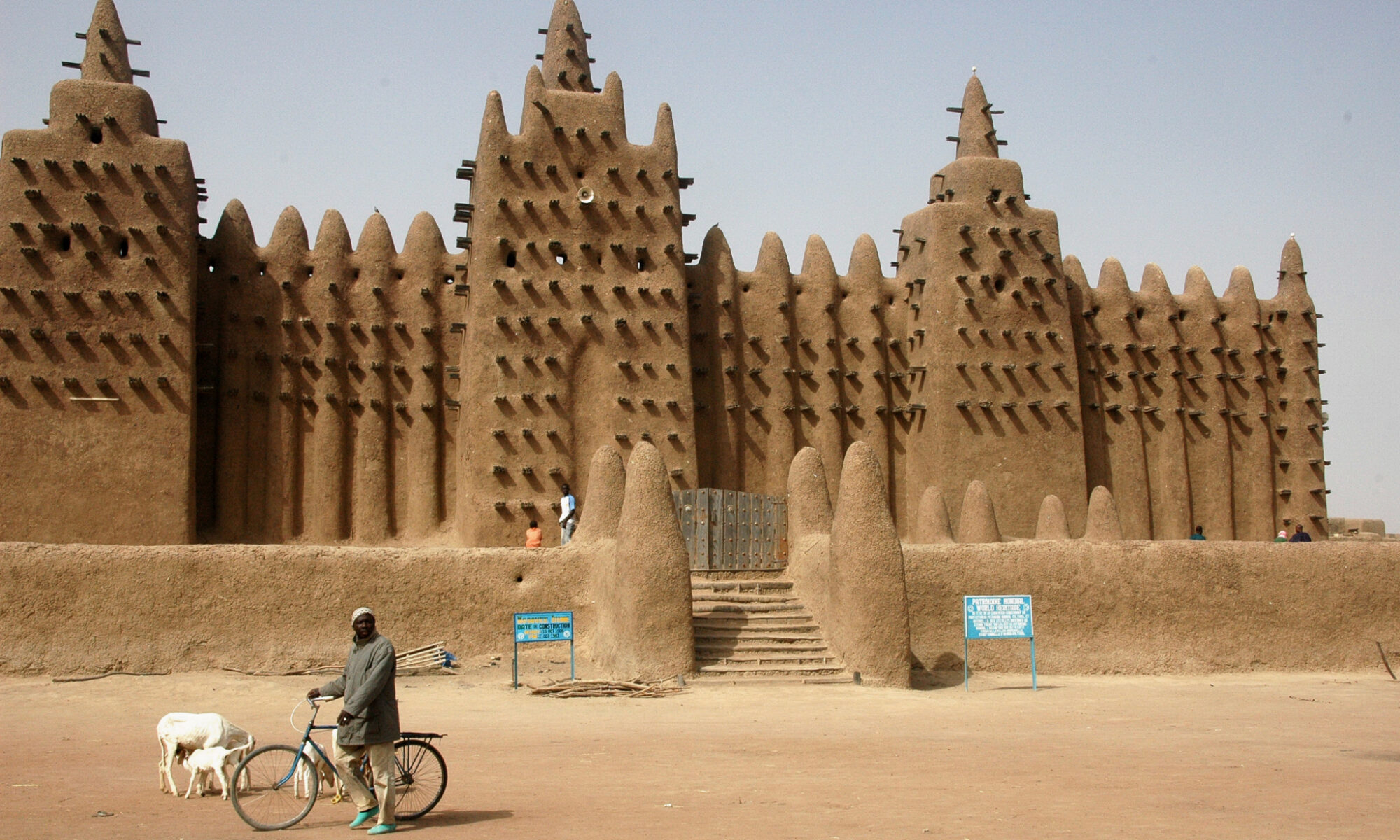
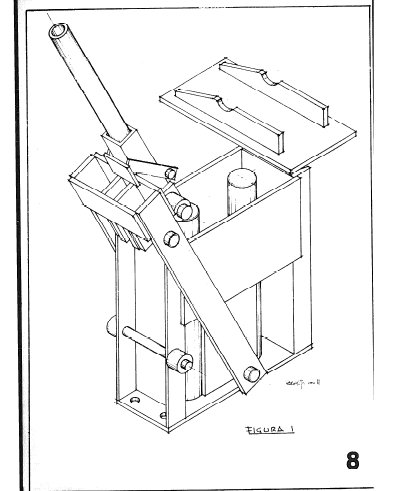
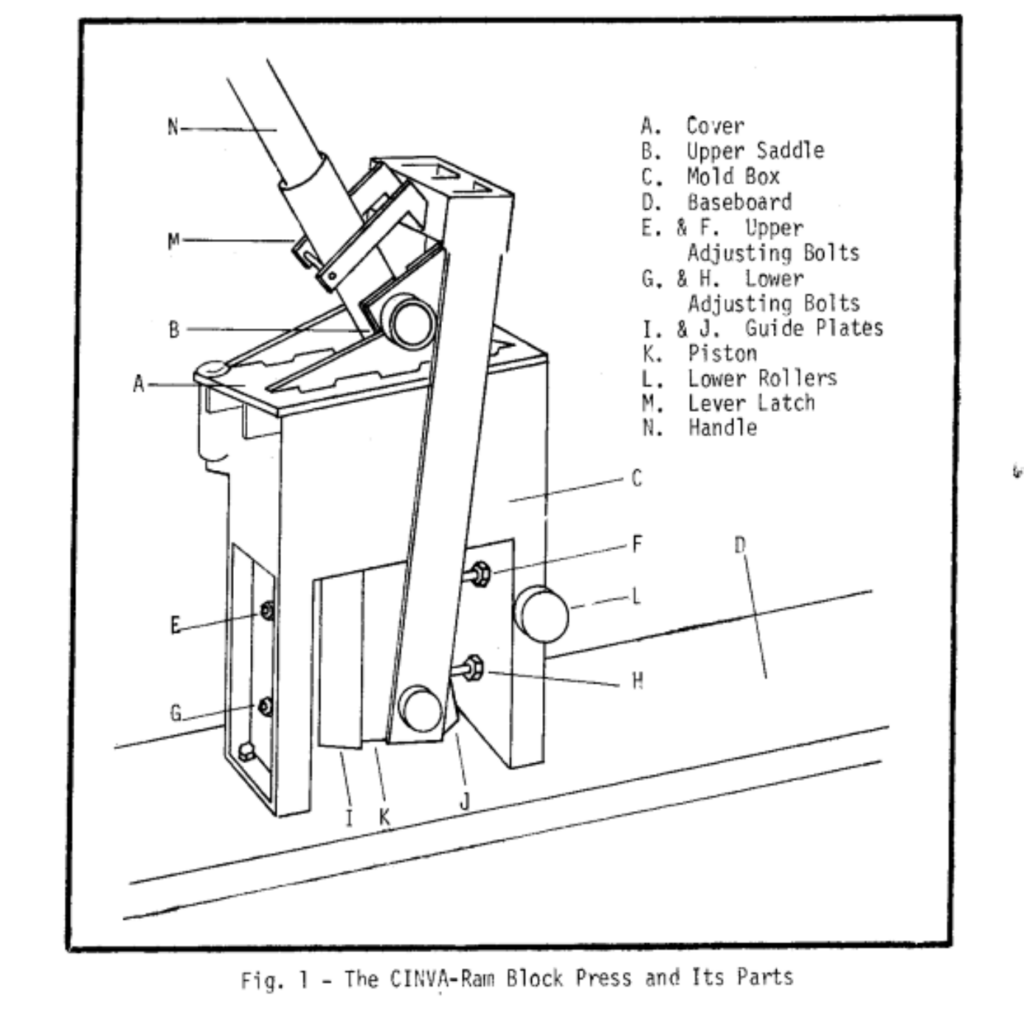
The CINVA Ram is a manually operated machine used to produce compressed earth blocks (CEBs)—solid building units made by pressing soil into a mold.
Instead of using industrial materials like concrete or fired bricks, the CINVA Ram uses local soil, mixed with water and sometimes small amounts of stabilizers such as cement or lime. The machine applies pressure to compress this mixture into dense, uniform blocks.
Unlike traditional bricks, which must be baked at very high temperatures in special ovens (called kilns) to become strong, CINVA Ram blocks are simply left to dry and harden in air. This makes the process more energy-efficient and accessible.
The CINVA Ram was developed in the 1956 at Centro Interamericano de Vivienda (CINVA) in Bogotá. It was developed by engineers at the institute, and is often associated with the work of Colombian engineer Raul Ramirez. It was created in response to growing housing shortages in Latin America. Many regions lacked access to industrial construction materials, creating a need for affordable and locally adaptable building methods. The device was later disseminated through international development programs and has since been used across Latin America, Africa, and Asia.
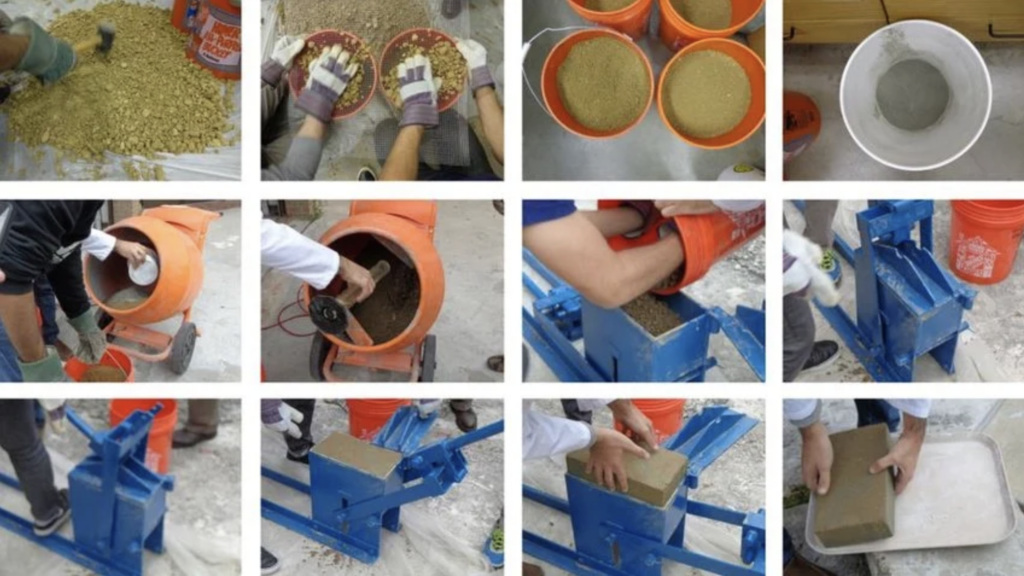
The process is simple and repeatable:
_ Prepare the soil
Soil is collected locally, sieved to remove large particles, and mixed with water. In some cases, a small amount of cement is added for stabilization.
_ Fill the mold
The mixture is placed into a metal mold within the press.
_ Apply pressure
A hand-operated lever compresses the soil into a dense block.
_ Remove and dry
The block is removed and left to air-dry until it hardens.
Through this process, raw earth is transformed into a standardized building unit that can be used similarly to conventional bricks.
The CINVA Ram is significant not only as a tool, but as a system of construction. It enables the use of local materials, allowing buildings to be made from soil found directly on-site, while also reducing energy consumption since no high-temperature heating is required. This makes the process both more sustainable and more accessible.
In addition, it supports affordable construction by minimizing reliance on industrial materials, and its manual operation allows individuals and communities to actively participate in the building process. However, the system also has limitations: it is labor-intensive, requires knowledge of soil composition, and is generally more suitable for small-scale or incremental construction rather than large urban developments.
The CINVA Ram is more than a machine—it is a method of building that begins with the ground itself. By transforming soil into durable construction units through a simple mechanical process, it offers an alternative to industrial building systems. As interest in sustainable and low-carbon architecture continues to grow, the CINVA Ram remains a relevant example of how construction can be local, accessible, and resource-efficient.
A demonstration of the compressed earth block production process using a CINVA Ram can be viewed here:
References
Engineering for Change. “CINVA Ram.”
Engineering for Change. “Compressed Earth Blocks Production.”
Houben, Hugo, and Hubert Guillaud. Earth Construction Handbook. Intermediate Technology Publications, 1994.
Minke, Gernot. Building with Earth: Design and Technology of a Sustainable Architecture. Birkhäuser, 2006.
Open Source Ecology. “Compressed Earth Block Press (CEB Press).”
YouTube. “CINVA Ram / Compressed Earth Block Demonstration.”