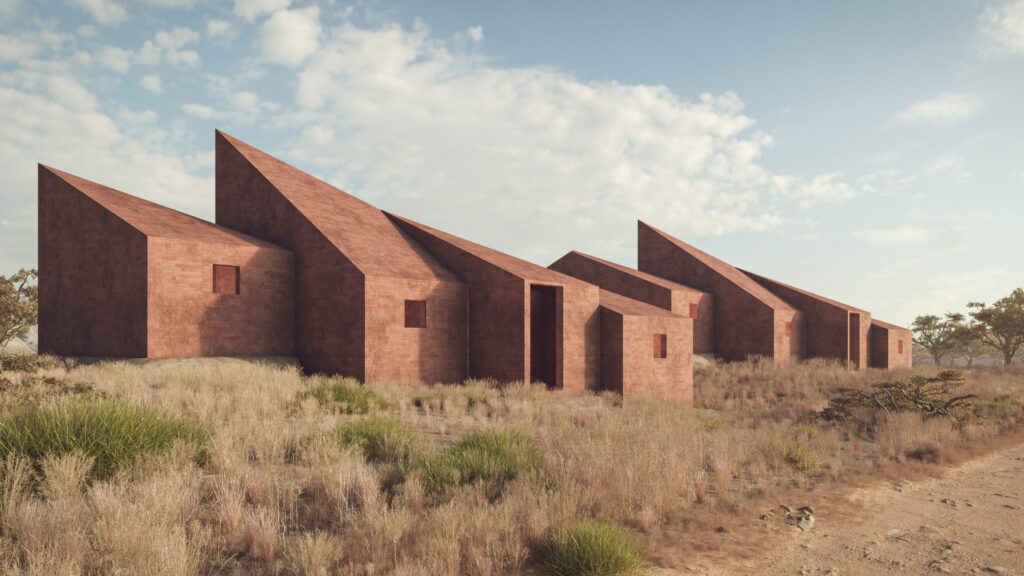
On the outskirts of Dakar, the Dakar Houses project proposes a new prototype of living and working for Moroso furniture craftsmen in Senegal. The units are conceived as hybrid live-work environments that house artisans and their families alongside integrated workshops, making visible the full spectrum of production, from welding to the intricate hand-weaving of pieces for Moroso’s M’Afrique Collection. Designed by Marc Thorpe, the project responds to both environmental conditions and social structures by grounding itself in local material practices and systems of community-based production, positioning architecture as both a spatial and economic framework.
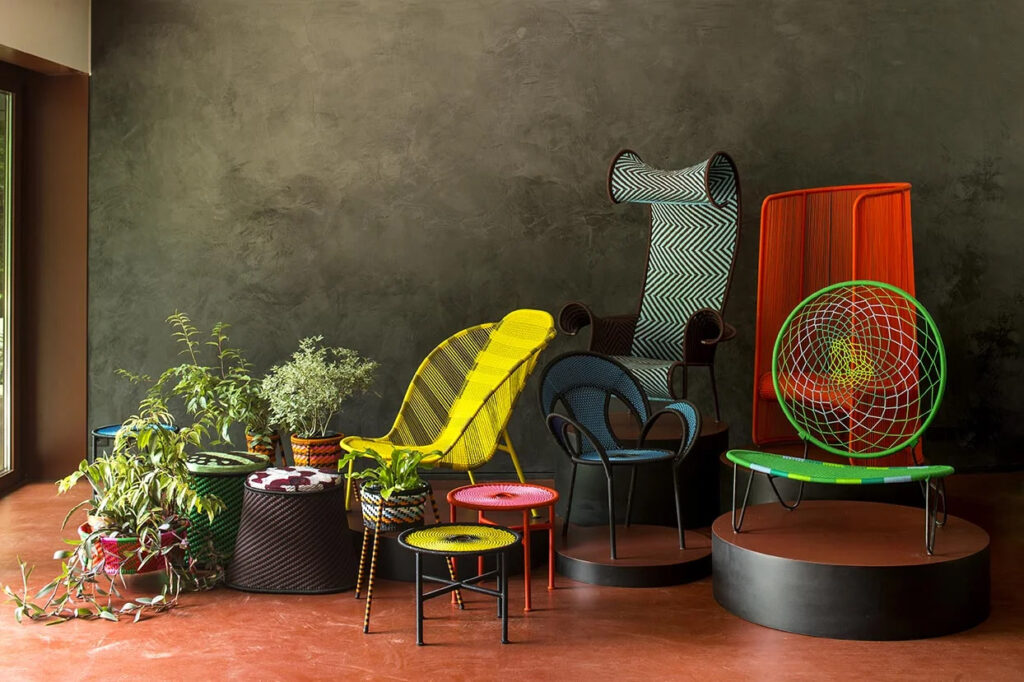
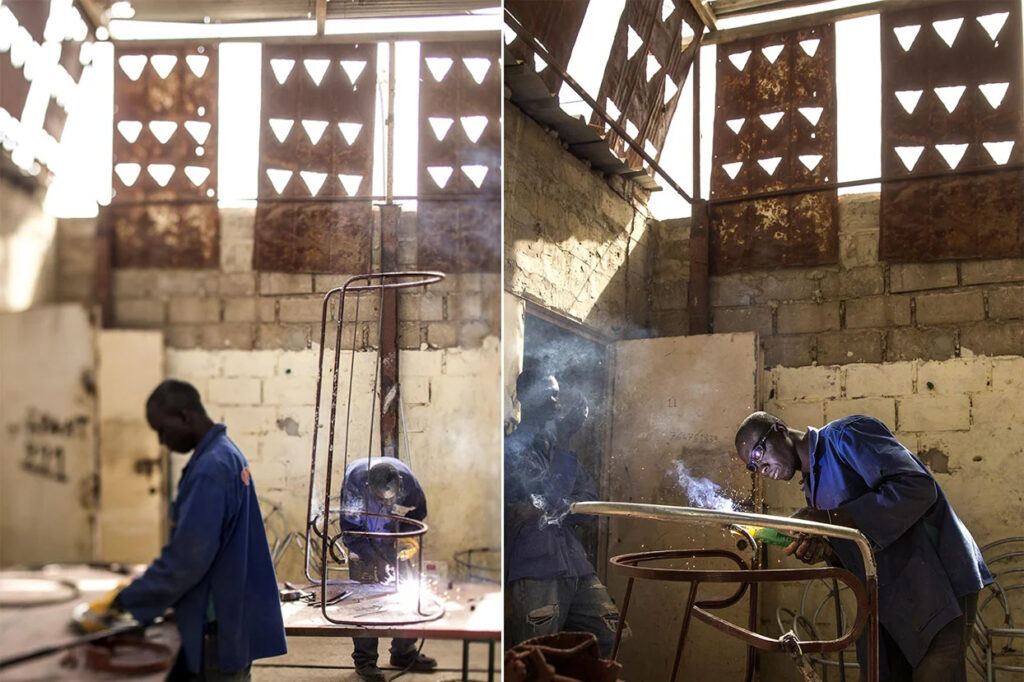
Founded in Italy in 1952, Moroso is internationally recognized for its collaborations with designers and its emphasis on experimental, high-quality furniture. For more than a decade, through its M’Afrique collection, the company has worked to actively promote and celebrate Senegalese artisans, foregrounding local handcraft within the global furniture industry. This connection to Senegal is further reinforced through Patrizia Moroso’s husband, Abdou Salam Gaye, whose cultural and artistic ties to the region have played a key role in shaping the company’s engagement there. The Dakar Houses project was commissioned by Abdou Salam Gaye, extending this long-standing relationship into architecture and proposing a spatial framework that supports both production and daily life.
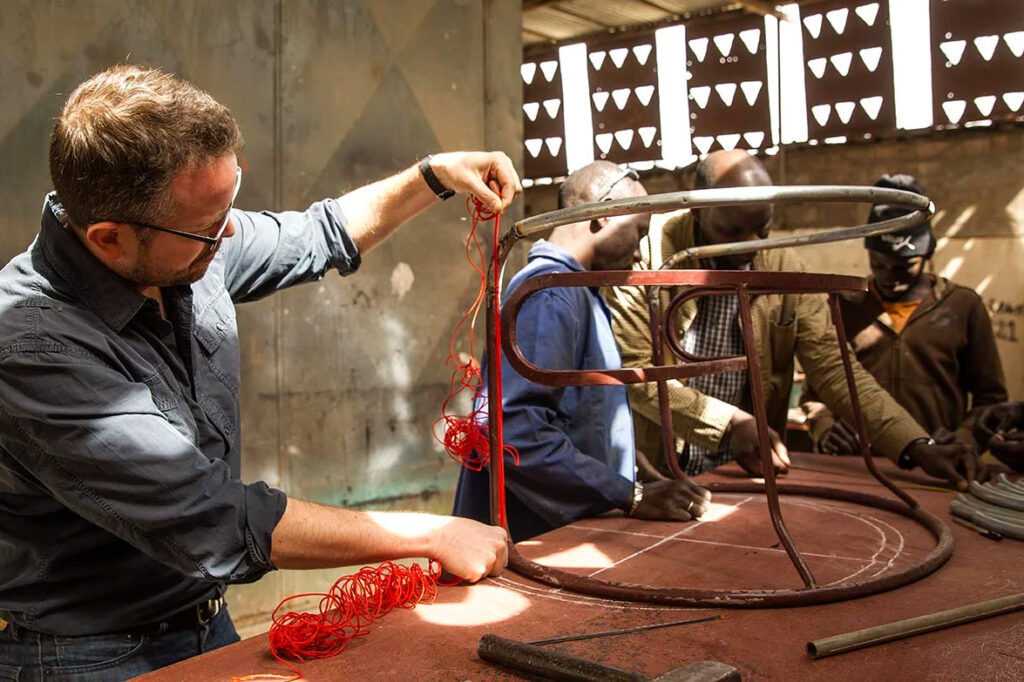
Marc Thorpe’s is a global architectural practice based out of New York, operating across furniture and product design exploring how material systems and cultural contexts can intersect. This multidisciplinary approach is evident in the Dakar Houses, where architecture is conceived as an evolving system tied to labor, community, and environment. In addition, the project planned for both Thorpe and Gaye’s furniture to be featured across the complexes. The project reflects his broader interest in bridging craft and industry while engaging local economies in meaningful ways.
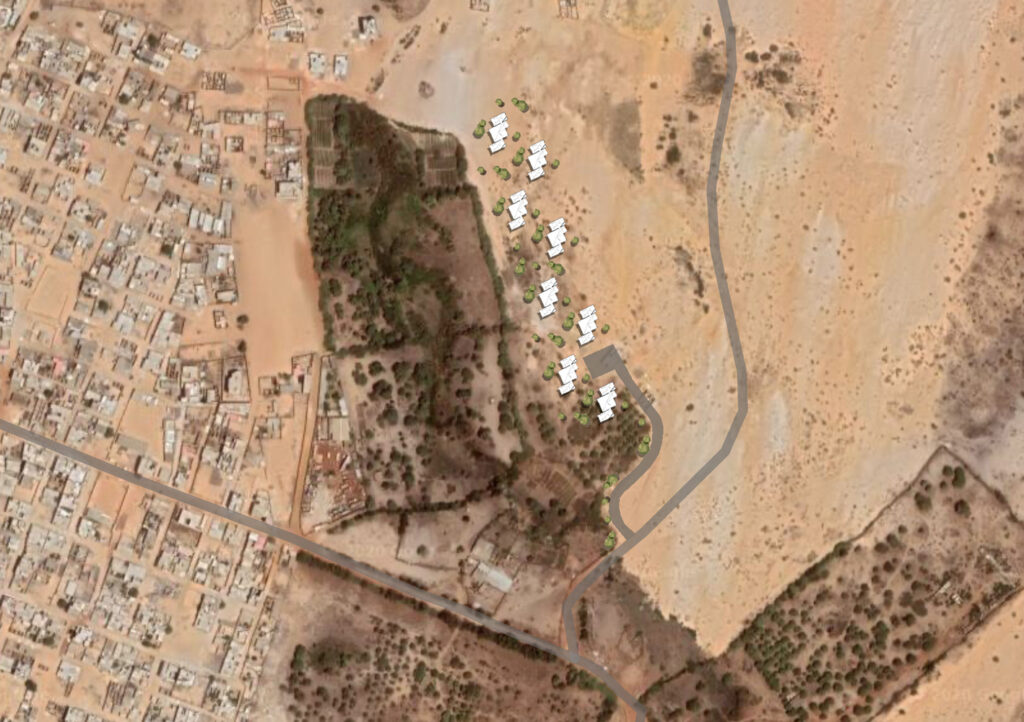
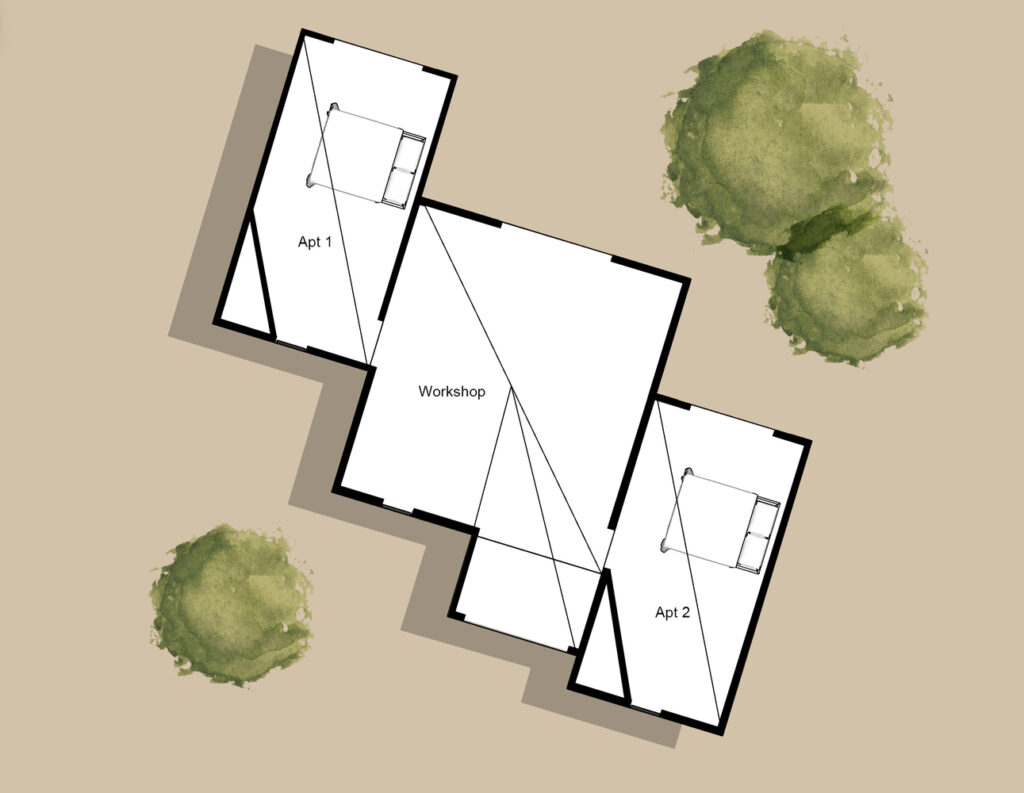
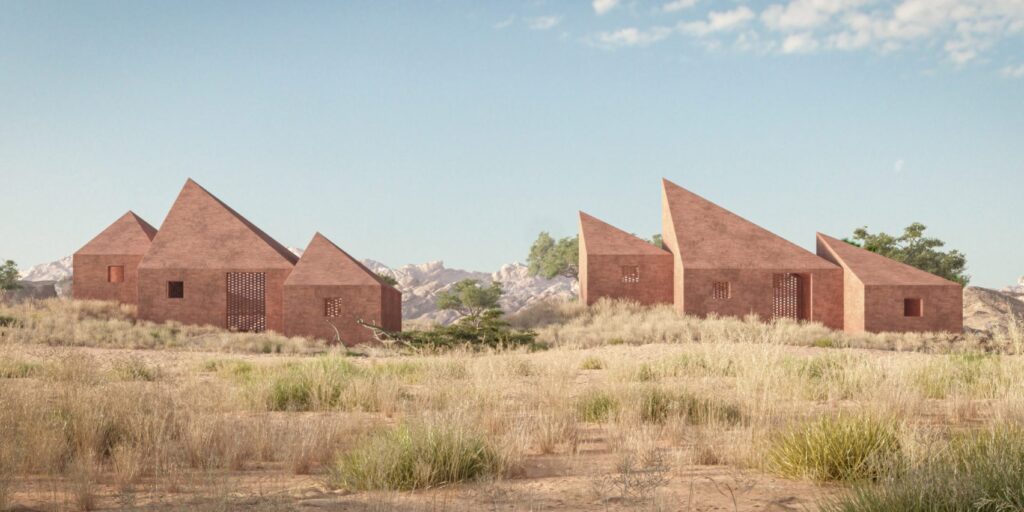
The project aims to create a work-based community in which living and production are fully integrated. The village is constructed of eight structures, each organized around a central workshop flanked by residential spaces, allowing artisans and their families to inhabit the same environment in which they work. This spatial arrangement redefines domestic architecture as an infrastructure for livelihood, enabling a collective system where economic activity and social life are intertwined. The aggregation of these units suggests a larger village model, one that can expand organically as production grows and new participants join the network.
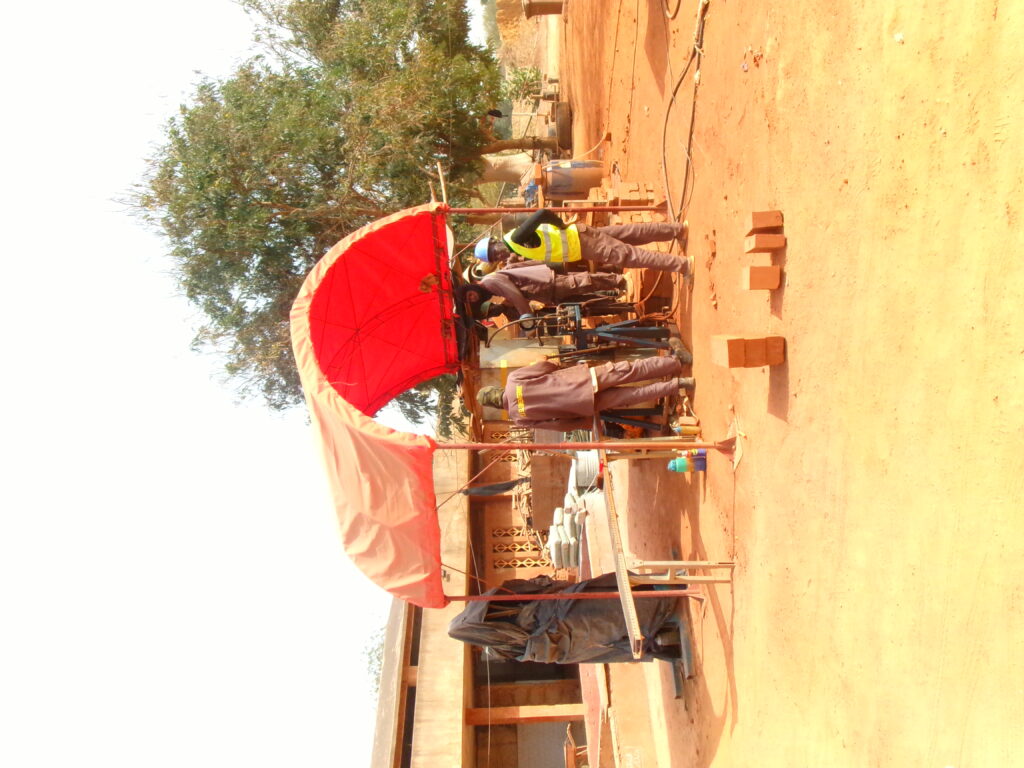
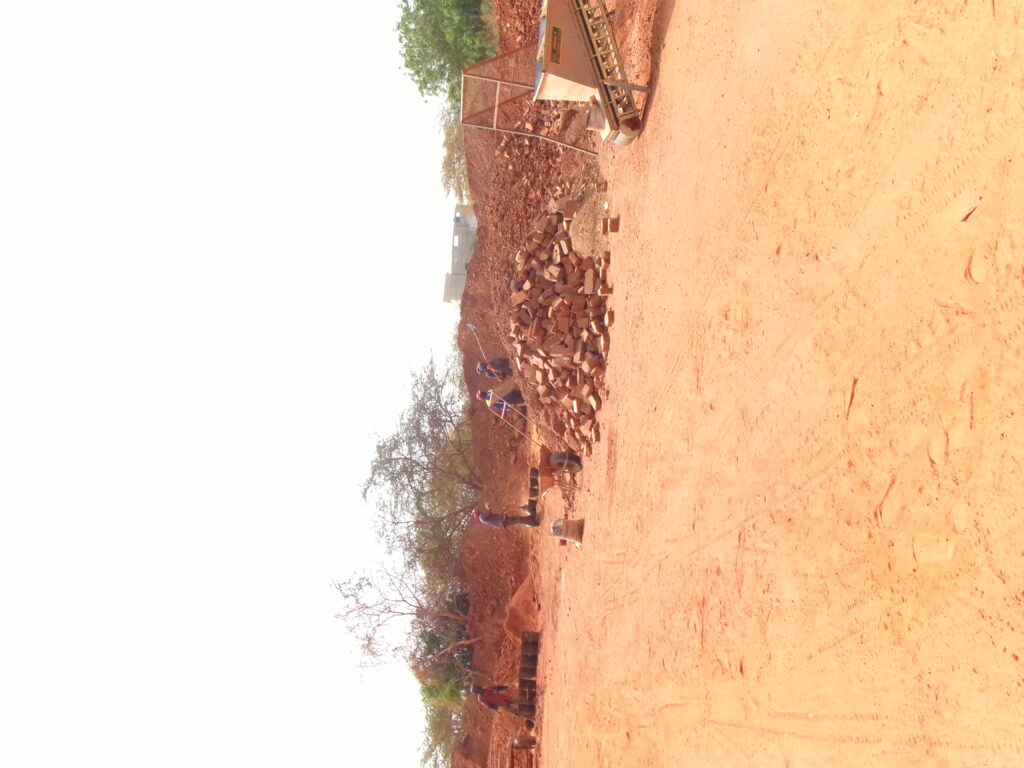
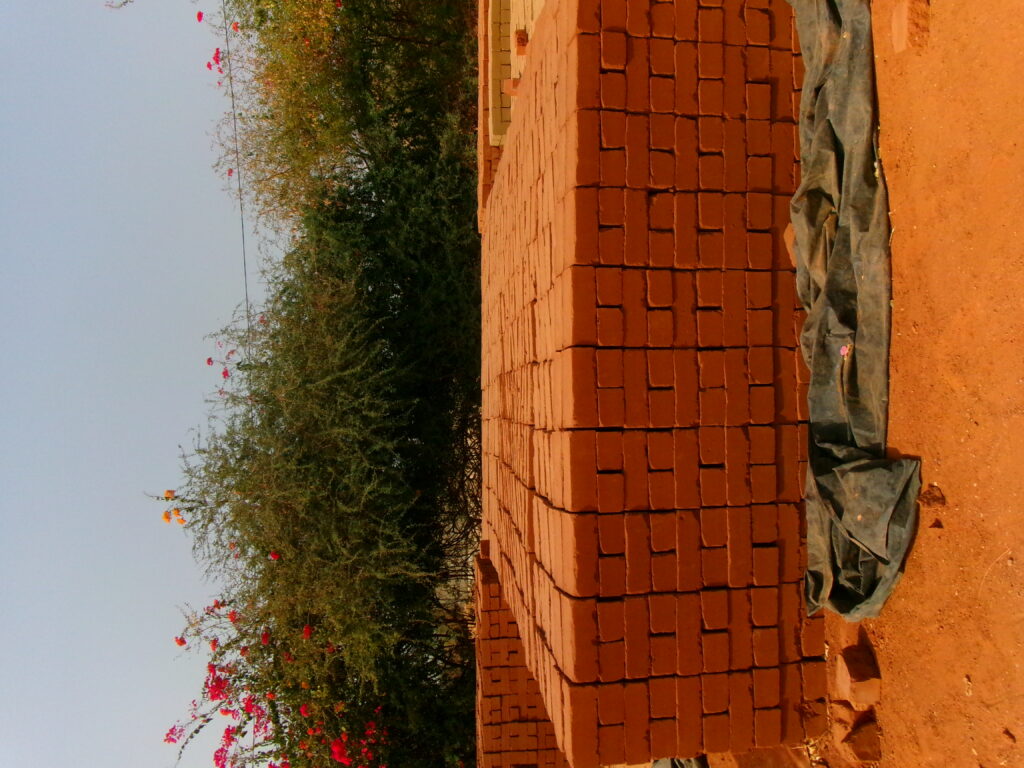
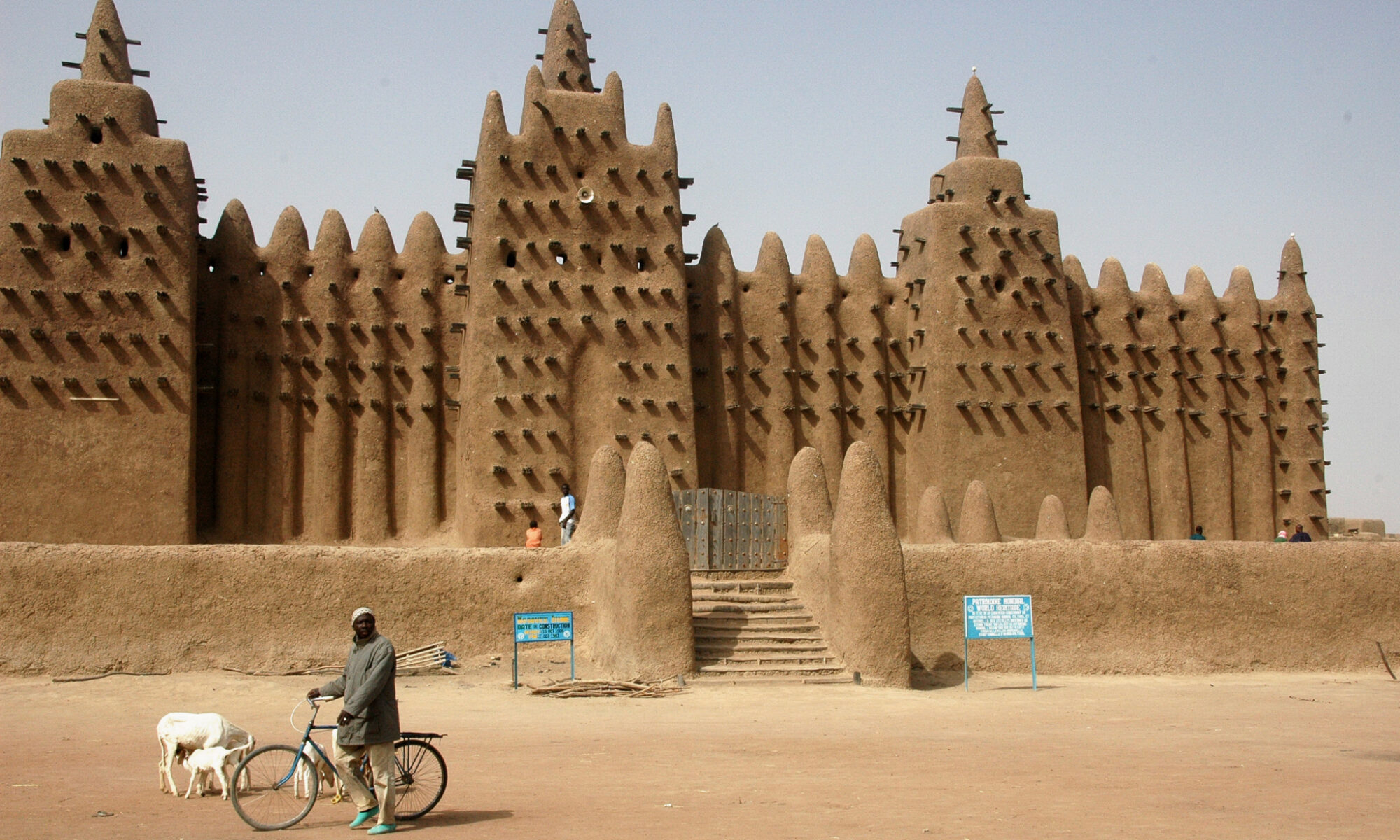
A defining aspect of the Dakar Houses is the use of compressed earth bricks, which ground the project in both environmental and cultural specificity. The material is sourced locally, significantly reducing the energy and cost associated with transportation, and it is produced through a low-impact process in which soil is compacted, shaped, and cured in the sun rather than fired. This method aligns with long-standing construction traditions in Senegal while also addressing contemporary concerns around sustainability. The thermal mass of the earth walls allows them to absorb heat during the day and release it gradually at night, stabilizing interior temperatures and minimizing the need for mechanical cooling.
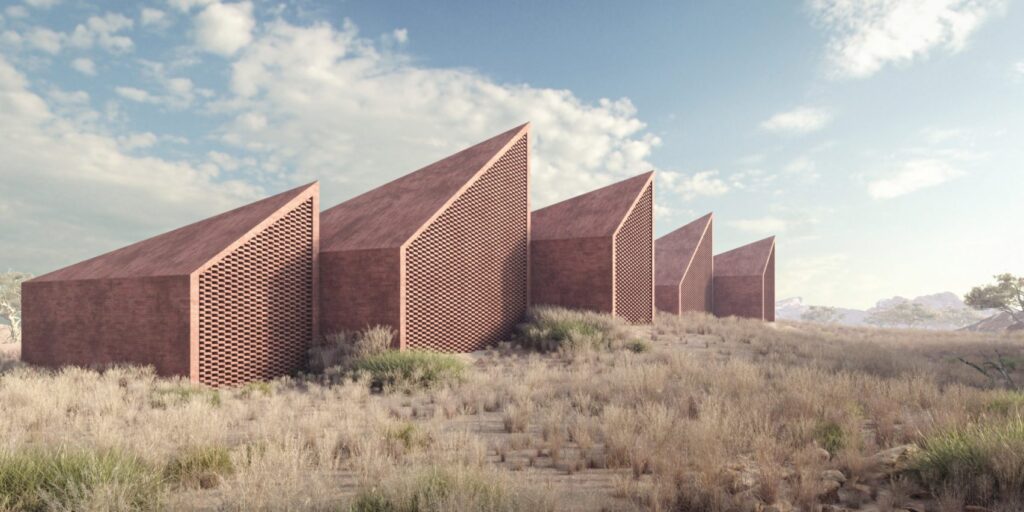
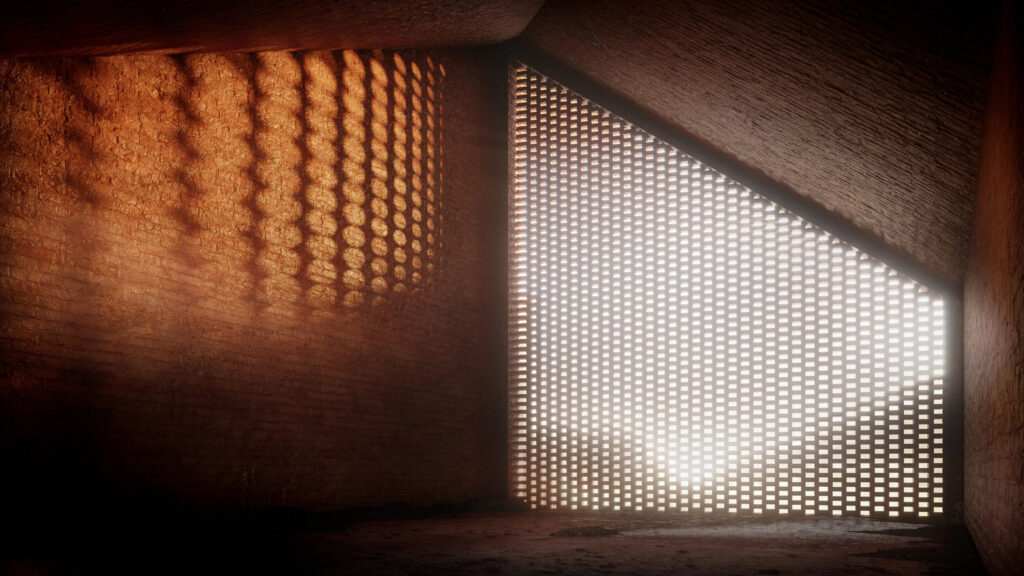
The architectural form further reinforces this environmental responsiveness. The buildings are composed of angular, pitched volumes that reference traditional African patterns while also shaping microclimates through shadow and airflow. Thick earthen walls, perforated surfaces, and carefully staggered masses work together to promote ventilation and reduce solar gain. These passive strategies transform the buildings into climate-regulating systems, demonstrating how material and form can operate together to produce comfort without reliance on technology.
The Dakar Houses operate simultaneously at multiple scales, linking material experimentation with broader social and economic frameworks. The use of earth construction highlights the viability of locally sourced, low-energy materials, while the integration of living and working spaces proposes a new architectural typology rooted in collective production. At an urban level, the project imagines a decentralized settlement organized around craft economies, and at a cultural level, it connects global design networks with local knowledge and labor.
Ultimately, the project presents architecture as a mediating force between environment, economy, and community. By embedding production within the domestic sphere and building, Marc Thorpe proposes a model in which design supports not only shelter, but also sustained ways of living and working.
Written by Fernanda Loyola Cardoso
Sources:
“Abdou Salam Gaye.” Say Who. https://saywho.co.uk/people/abdou-salam-gaye/.
Frearson, Amy. “Marc Thorpe Designs Dakar Houses for Moroso’s M’Afrique Artisans in Senegal.” Dezeen. March 17, 2020. https://www.marcthorpedesign.com/morosomafrique
Harrouk, Christele. “Marc Thorpe Proposes Houses for the Workers of Moroso on the Outskirts of Dakar, Senegal.” ArchDaily. April 7, 2020. https://www.archdaily.com/937014/marc-thorpe-proposes-houses-for-the-workers-of-moroso-on-the-outskirts-of-dakar-senegal.
Marc Thorpe Design. “Dakar House.” https://www.marcthorpedesign.com/dakar-house.
Marc Thorpe Design. “Moroso M’Afrique.” https://www.marcthorpedesign.com/morosomafrique.