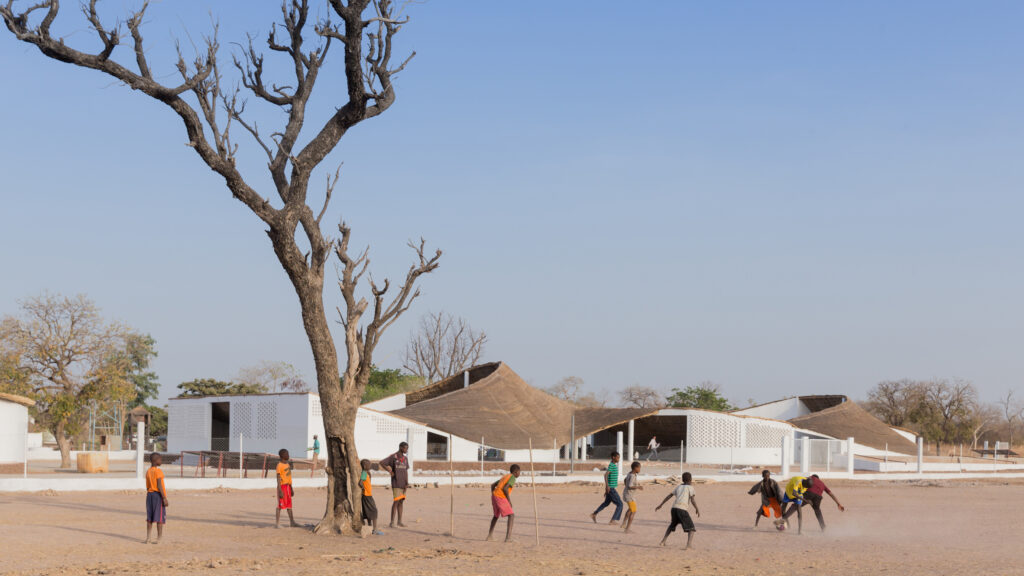
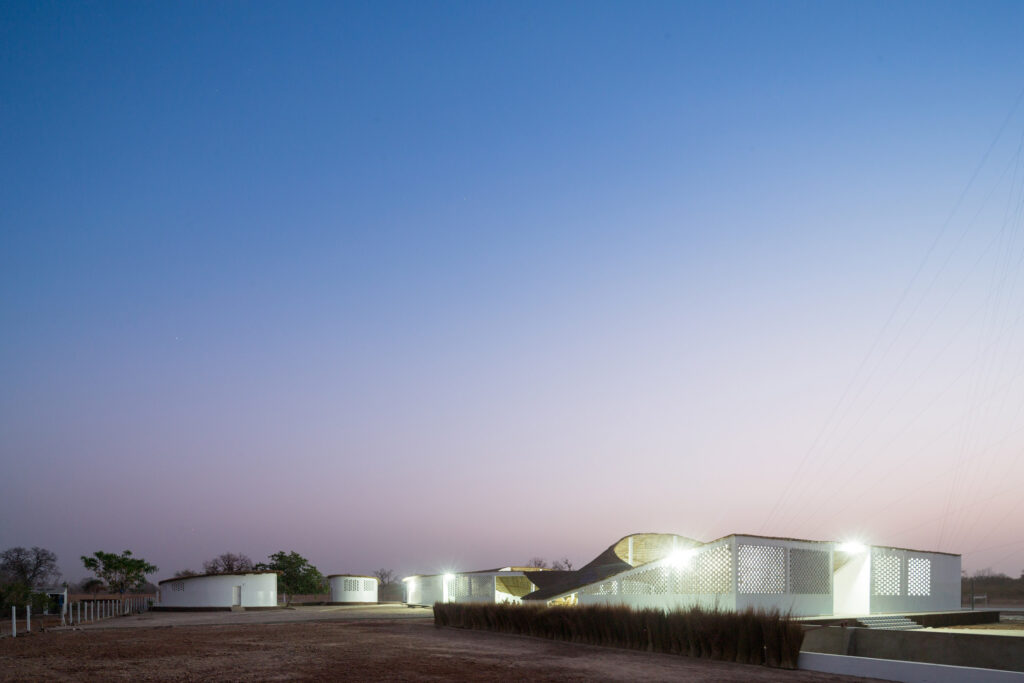
The cultural hub designed by Toshiko Mori was completed in 2015 in the rural village of Sinthian, Senegal. The project was developed with the Josef and Anni Albers Foundation and the nonprofit American Friends of Le Korsa. The goal of the project was to create a space where art, culture, and community activities could come together in a remote region.
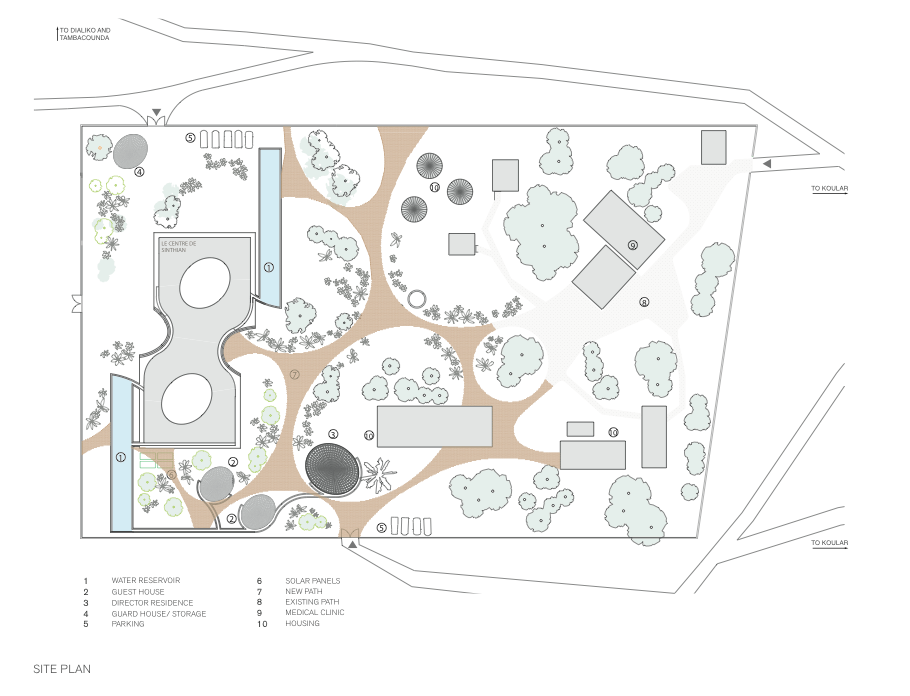
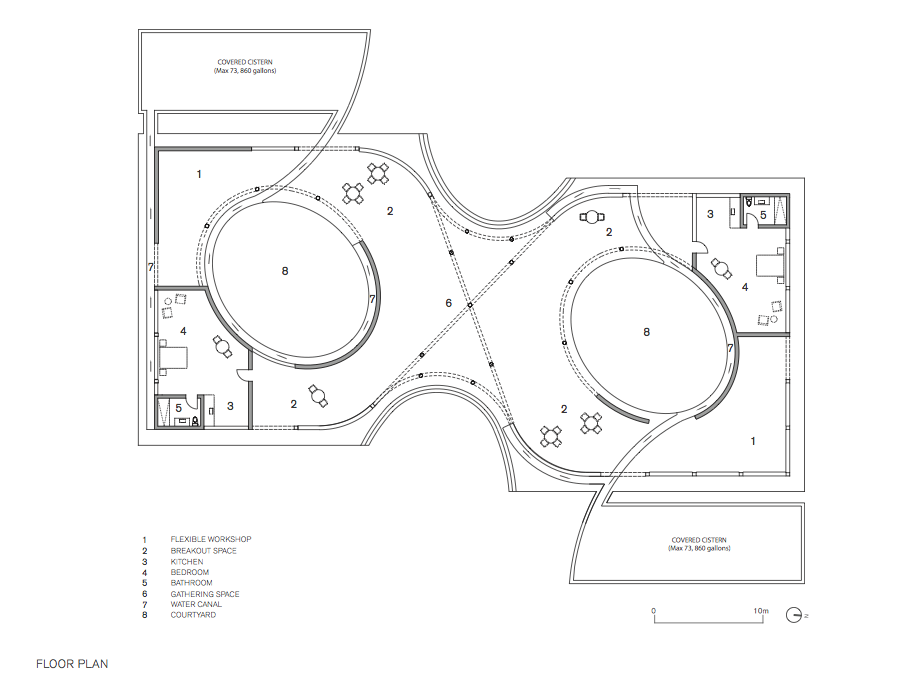
The cultural hub serves many roles for the village and surrounding communities. In addition to housing artists in residence, the building functions as a gathering space, performance venue, workshop space, and community center for cultural exchange and education. The building also supports programs such as agricultural training, public meetings, and local events, helping strengthen connections between villages in the region.
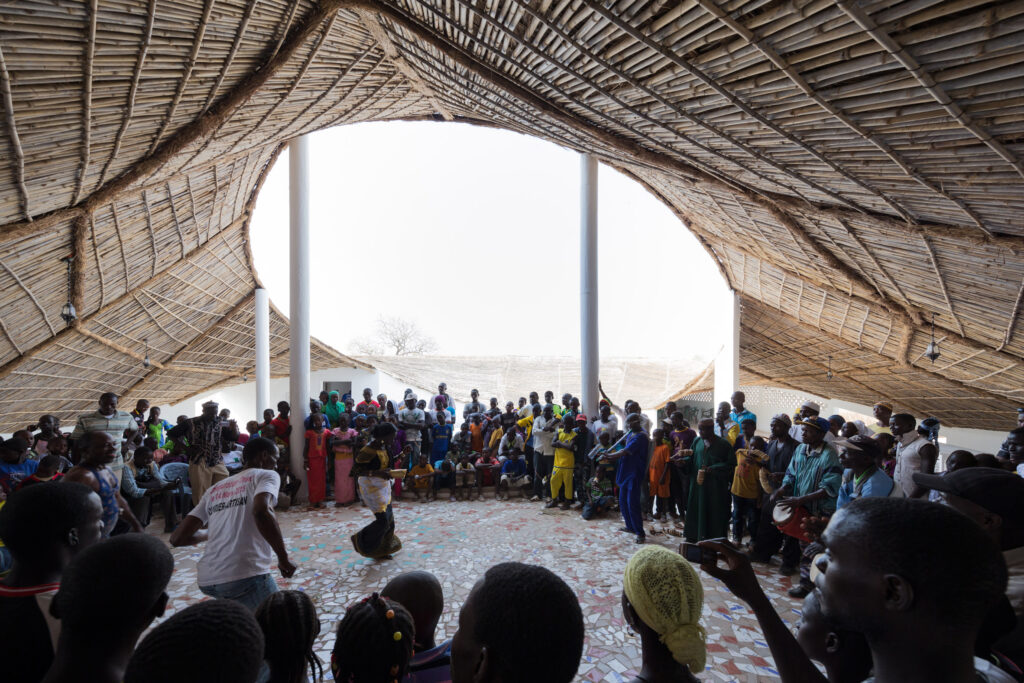
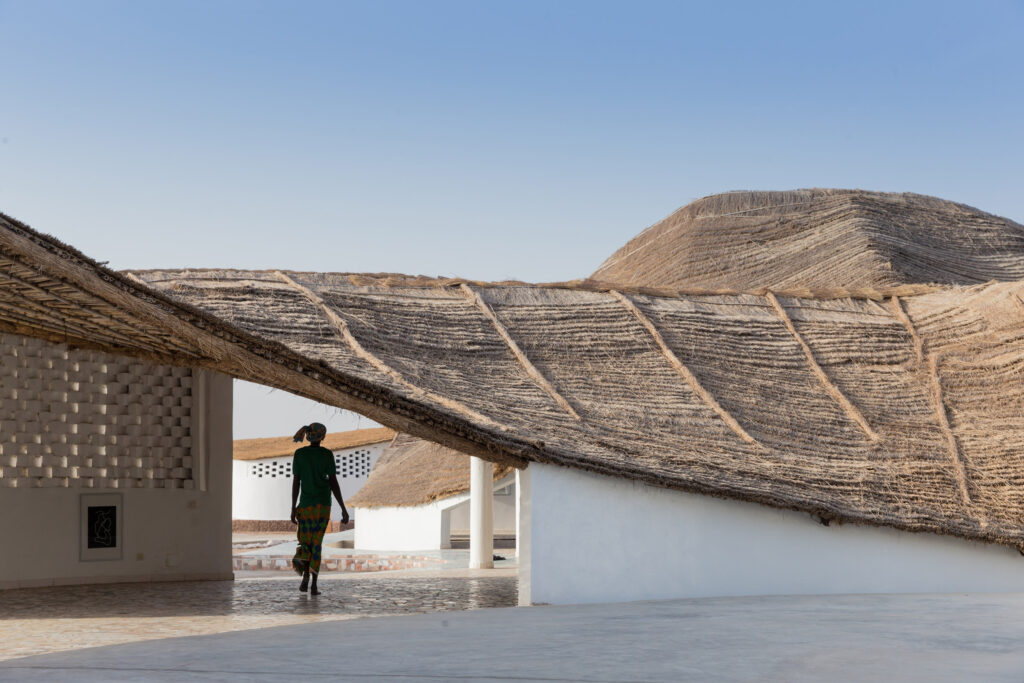
The architecture responds directly to the climate and local building traditions. The building is constructed mainly from locally sourced materials such as compressed earth blocks, bamboo, and thatch. These materials were chosen because they are sustainable and reflect the construction techniques already used in the region. Local workers and builders were also involved in the construction process, which helped transfer building knowledge and create a stronger sense of community ownership.
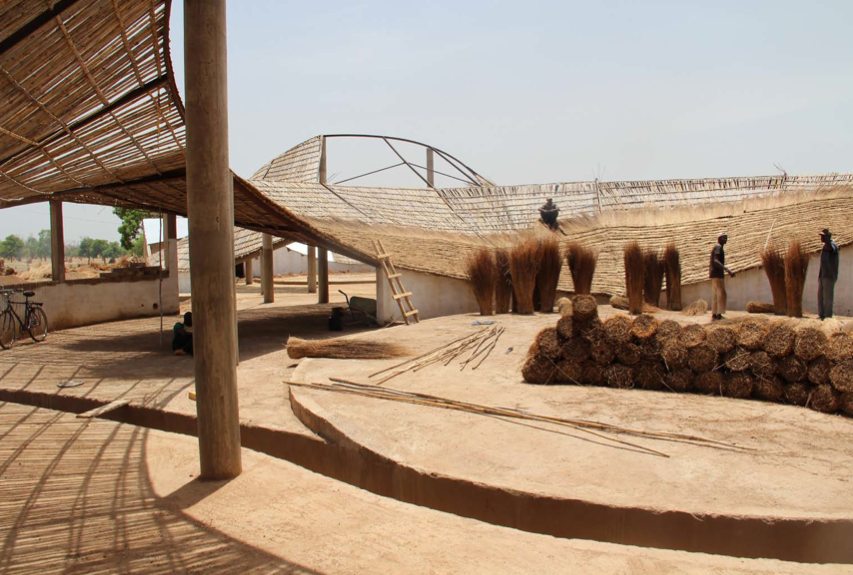
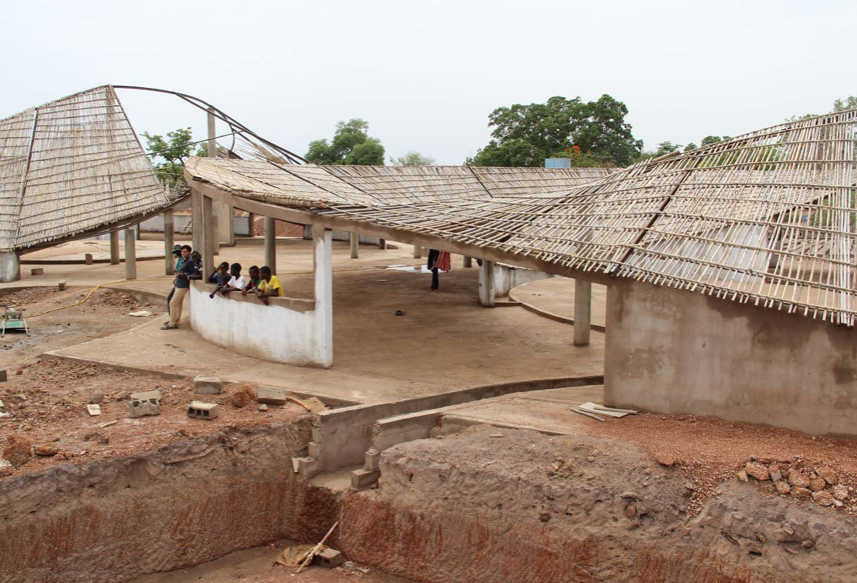
One of the most distinctive features of the project is its large curved roof. The design reinterprets the traditional pitched roof used in local architecture by inverting it, creating shaded spaces and courtyards around the building. The roof also plays an important environmental role by collecting rainwater and storing it in cisterns. This water can then be used during the long dry season, which is an important resource for the village.
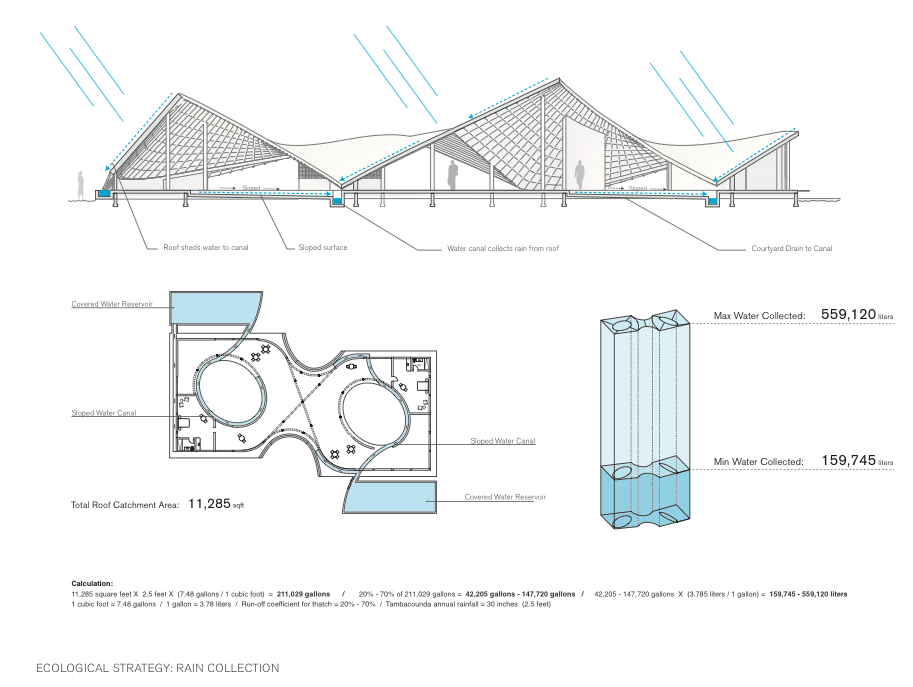
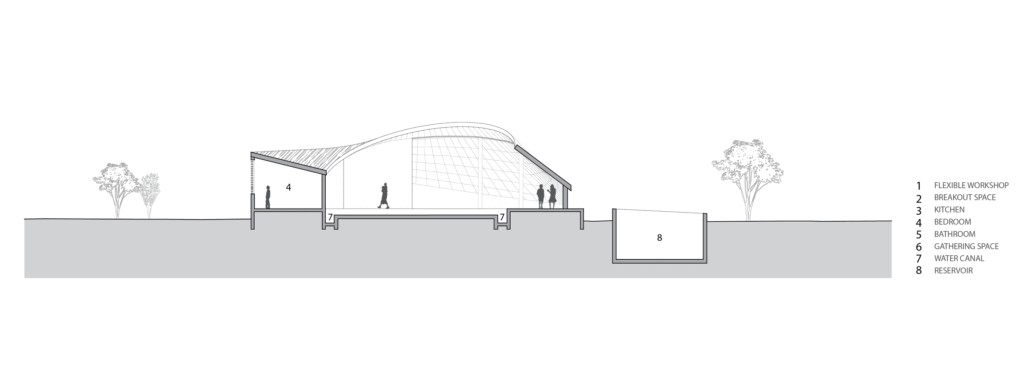
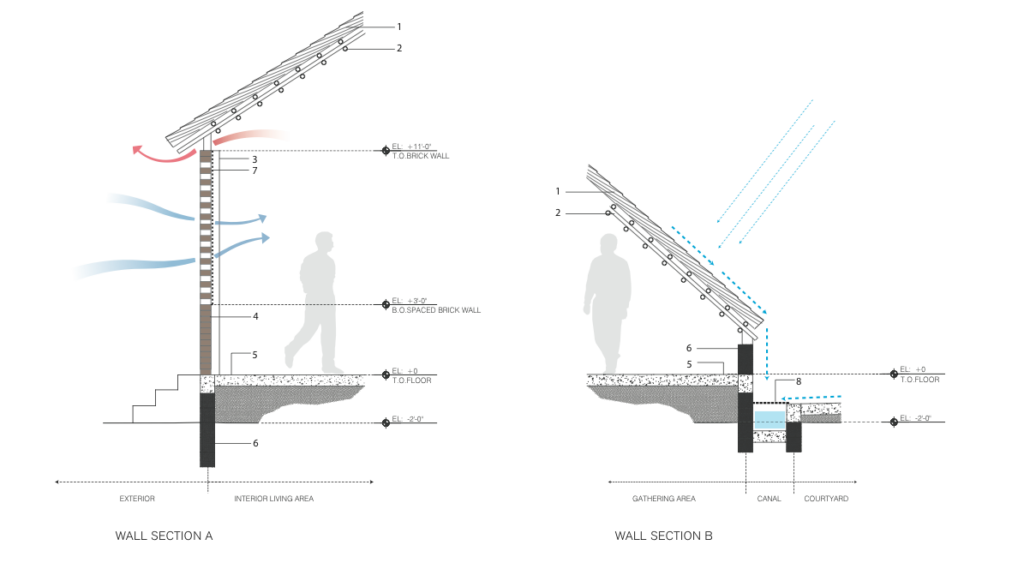
Passive climate strategies are also central to the design. Deep overhangs, open courtyards, and permeable earth brick walls help create natural ventilation and shaded outdoor spaces, keeping the building cool in the hot climate. Because of this passive design approach, the building can remain comfortable without relying heavily on mechanical systems.
What makes this cultural hub especially meaningful is how it connects architecture with social impact. The project supports art and creativity while also addressing practical needs such as water collection, education, and community gathering spaces. By combining local materials, climate-responsive design, and cultural programming, the project shows how architecture can support rural communities in meaningful ways.
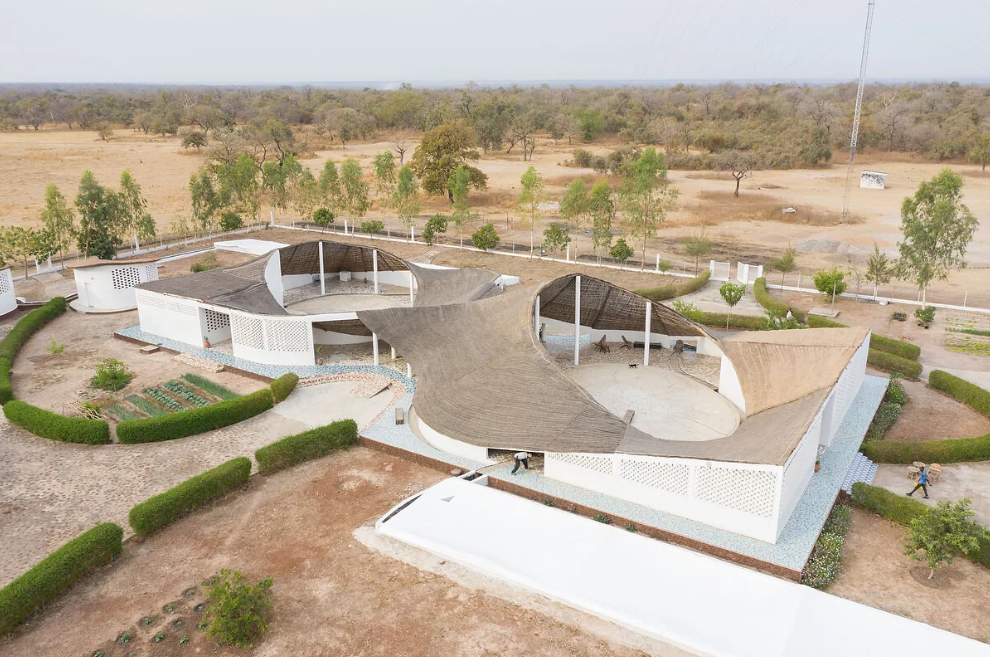
Overall, the cultural hub demonstrates how architecture can go beyond simply creating buildings. It becomes a platform for collaboration, cultural exchange, and sustainable development, connecting a small rural village to a wider global network through art and design.
Sources
Toshiko Mori Architect — Project page: https://tmarch.com/thread
Dezeen article: https://www.dezeen.com/2017/01/25/toshiko-mori-compressed-earth-bamboo-thatch-cultural-centre-senegal-africa-architecture/
ArchDaily project: https://www.archdaily.com/608096/new-artist-residency-in-senegal-toshiko-mori
Dovetail Magazine feature: https://dovetailmag.com/2023/01/destination-thread/