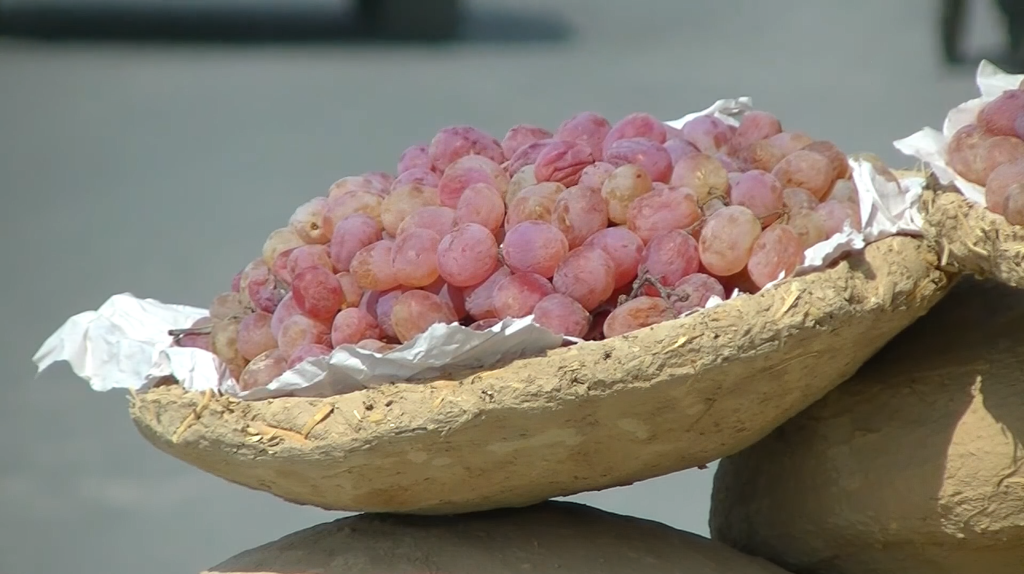
A paper-lined kangina, opened to access the grapes stored inside. Credit: Voice of America
Kangina (Dari: کنگینه, lit. ‘treasure‘), is the traditional Afghan technique of preserving fresh fruit, particularly grapes, in airtight discs formed from mud and straw.
This technique has been practiced for centuries, particularly in rural regions of central and northern Afghanistan, where access to imported fresh produce is limited during winter months. Grapes stored in kangina can remain fresh for up to six months, allowing communities to extend seasonal harvests and enabling merchants to transport fruit over long distances without spoilage.
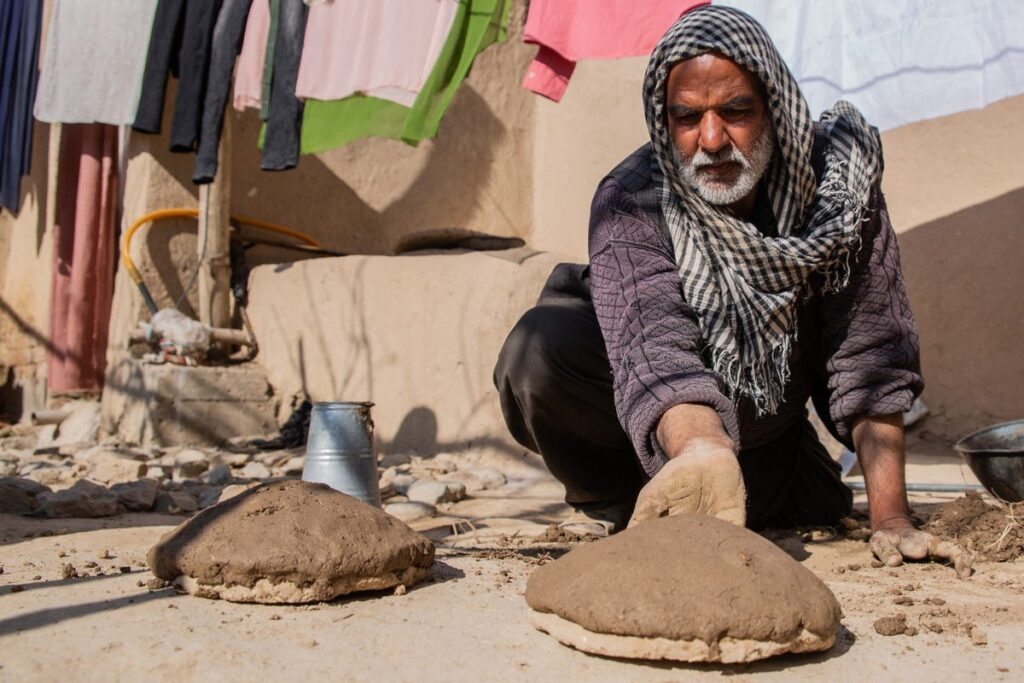
Ziaulhaq Ahmadi makes bowls of mud and straw for fresh grapes. Credit: Atlas Obscura
The container is formed by shaping two shallow, bowl-like shells from a mixture of clay-rich mud and straw, which are then dried in the sun. Fresh, undamaged grapes—typically thick-skinned varieties such as Taifi or Kishmishi—are placed inside before the two halves are sealed together with additional mud, creating an enclosed volume. The finished vessel is stored in a cool, dry environment, protected from direct sunlight.
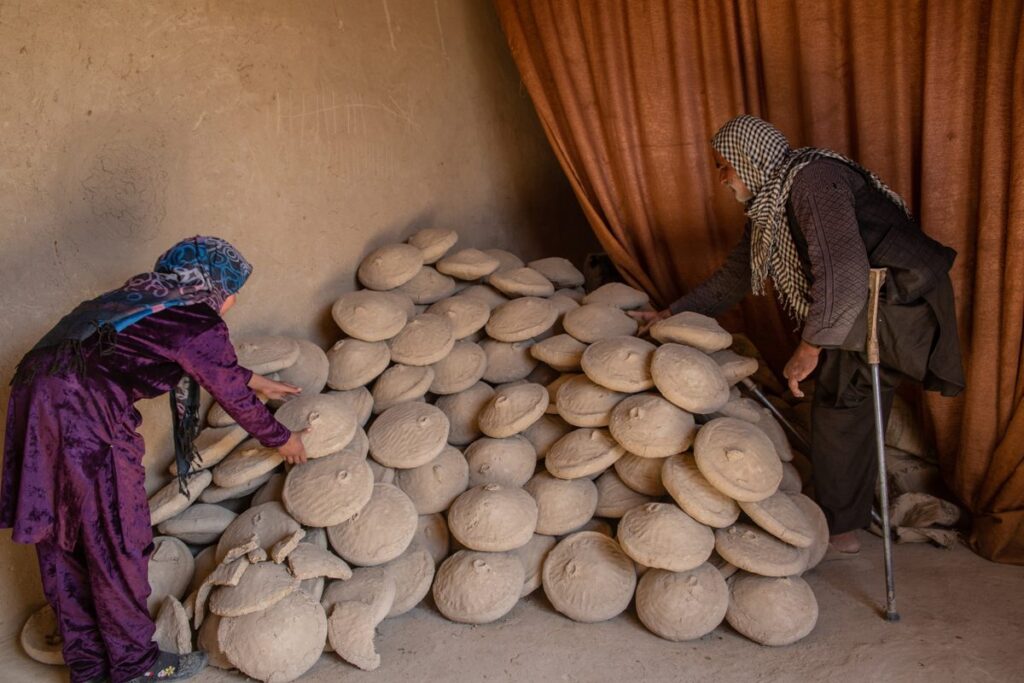
Sabsina shows where the family stores the kangina: in a dry, cold space, away from direct sunlight. Credit: Atlas Obscura
Kangina functions as a passive controlled-atmosphere system. Although the mud shell appears sealed, it remains microscopically porous, allowing a slow and continuous exchange of gases between the interior and exterior. Oxygen gradually diffuses into the container, enabling the grapes to remain alive, while carbon dioxide produced through respiration accumulates inside. This elevated concentration of carbon dioxide slows metabolic activity and inhibits the growth of fungi and bacteria, effectively delaying spoilage without the need for mechanical refrigeration.
At the same time, the material properties of the mud contribute to humidity regulation. The earthen shell absorbs excess moisture released by the fruit, preventing condensation and reducing conditions favorable to microbial growth. This balance of gas exchange and moisture control creates a stable internal microclimate that preserves the grapes’ freshness, texture, and nutritional quality over an extended period.
Historically, similar techniques have been documented as early as the twelfth century. In his Book of Agriculture, the Andalusian agronomist Ibn al-‘Awwam described methods of storing grapes in mud-sealed containers layered with straw, indicating a long-standing tradition of using earthen materials to regulate environmental conditions for food preservation.
Kangina remains an inexpensive, environmentally sustainable, and effective method of storage. It requires no external energy input and relies entirely on the intrinsic properties of natural materials. However, the containers are relatively heavy, fragile, and susceptible to absorbing external moisture, which can affect their durability and performance in certain conditions.